
Last Updated on August 26, 2026 by Mason Reed
Camping in high winds can range from noisy and uncomfortable to genuinely dangerous. A safer setup starts with a sheltered, well-drained campsite, a tent designed for the expected conditions, anchors matched to the ground, and every important guy point properly tensioned. Just as important, know when the weather has moved beyond what a tent should be expected to handle.
Quick Answer
To camp more safely in high winds, choose sheltered ground away from exposed ridges, dead trees, flooding hazards, and falling debris. Follow your tent manufacturer’s setup instructions, stake it immediately, use its structural guylines, and match anchors to the soil. There is no universal safe wind-speed limit for tents, so be ready to leave for substantial shelter if conditions worsen.
Key Takeaways
- Do not rely on a universal “safe” wind speed. Tent strength varies by model, setup, ground conditions, exposure, and gusts.
- Choose sheltered, well-drained ground, but avoid exposed ridges, cliff edges, dead trees, unstable branches, flood channels, and other hazards.
- Orient the tent according to its manufacturer’s guidance; the lowest, narrowest, or structurally strongest end commonly faces the prevailing wind.
- Use all important structural guylines and anchors that match the ground instead of relying on one universal stake or guyline angle.
- Never dig drainage or anchoring trenches around a tent. Use low-impact anchoring methods and follow local land-use rules.
- If wind, thunderstorms, falling branches, flying debris, damaged poles, or official weather warnings make the campsite unsafe, move to substantial shelter rather than trying to reinforce the tent indefinitely.
At a Glance
| Time Required | About 10–20 minutes for a careful pitch, plus regular checks as conditions change |
| Difficulty | Moderate; difficult or unsafe once wind becomes severe |
| Tools Needed | Tent instructions, full stake set, structural guylines, tensioners, extra anchors suited to the ground, and access to weather alerts |
| Cost | No extra cost if your tent already includes suitable guylines and anchors; specialty sand, snow, or soft-ground anchors may be needed for some trips |
Warning: A tent is not guaranteed protection from severe winds, falling trees, flying debris, tornadoes, or lightning. If an official warning is issued or the campsite becomes unsafe, move to a substantial building or other appropriate safer shelter rather than relying on additional stakes and guylines.
Disclosure: As an Amazon Associate I earn from qualifying purchases. Some links on this page are affiliate links, at no extra cost to you.
Choosing the Right Campsite
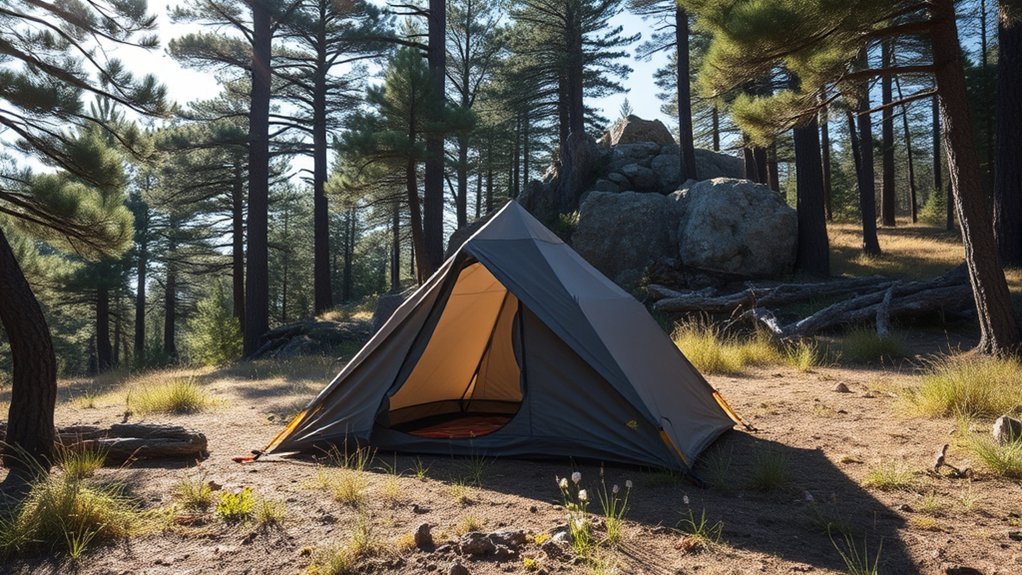
Site choice can matter as much as the tent itself. Look for an established or durable campsite with some protection from the prevailing wind, such as a terrain fold, hill, healthy stand of trees, or large stable boulders. The National Park Service campsite guidance recommends considering hazards such as wind, lightning, flooding, and dead trees before setting up.
Choose relatively level, well-drained ground, but do not confuse “higher and drier” with “highest available.” Exposed ridges, peaks, saddles, cliff edges, and open fields can receive stronger wind and greater lightning exposure. At the other extreme, low depressions, ravines, washes, dry streambeds, and drainage channels can collect rainwater or become flash-flood hazards.
Look up before you pitch. Stay well away from dead trees, broken limbs, leaning trees, or other objects that could fall during a gust. Healthy vegetation can reduce wind exposure, but a tree line is only useful when the trees themselves are not a hazard.
If camping in the backcountry, also follow local regulations and low-impact practices. Leave No Trace recommends established or durable surfaces and generally advises camping well away from lakes and streams where applicable.
Pro Tip: Before unloading everything, stand at the proposed tent spot for a few minutes. Watch vegetation, dust, clouds, and gust direction. A location that feels calm for 20 seconds may be exposed when the next gust arrives.
Tent Selection for High Winds
Wind performance depends on much more than tent weight. Shape, pole geometry, pole strength, fabric condition, number and placement of structural guy points, anchoring, site exposure, and the quality of the pitch all matter. Choose a tent intended for the season and conditions you expect, and read its setup instructions before the trip.
Note: Do not assume a tent is safe simply because someone gives it a wind-speed number. MSR states that it does not publish a specific wind-MPH threshold for its tents because real-world performance depends on several variables, including staking and guying.
Weight vs. Durability
Do not judge wind resistance by weight alone. Some lightweight shelters use efficient shapes and strong materials, while some heavier, tall tents present a large surface to the wind. Instead, examine the complete design.
- Low profile: A lower shelter generally exposes less area to the wind than a tall cabin-style tent.
- Strong pole structure: Multiple intersections or well-supported pole arcs can help the shelter retain its shape.
- Useful guy points: Structural guy points positioned near poles can transfer wind loads more effectively to the ground.
- Full, secure pitch: A well-designed tent can still fail if important stakes, pole-to-fly attachments, or guylines are skipped.
- Good condition: Cracked poles, worn webbing, torn fabric, damaged clips, or weakened cord reduce your safety margin.
Before leaving home, practice pitching the tent and inspect every component. Replace damaged poles, missing stakes, worn guylines, and broken tensioners before depending on the shelter in bad weather.
Freestanding vs. Non-Freestanding
Both freestanding and non-freestanding tents can work in wind when they are designed and pitched correctly.
- Freestanding tents: The pole structure can stand before every anchor is installed, which may simplify normal pitching. In wind, however, an unstaked freestanding tent can blow away quickly, so secure it immediately.
- Non-freestanding tents: These depend on stake placement and tension to maintain their shape. They can be very strong when properly pitched, but poor ground or weak anchors can compromise the entire structure.
- Either design: Follow the model-specific pitching sequence and use the structural guy points intended by the manufacturer.
Essential Features for Stability
For frequent use in exposed conditions, prioritize a low or aerodynamic profile, a robust pole structure, reinforced structural guy points, durable fabric, secure fly attachments, and anchors suitable for the environments you visit.
Many tents include hook-and-loop wraps or similar attachments beneath the rainfly that connect it to the poles. If your model uses them, fastening them can help the fly and pole structure work together. REI’s tent-setup guidance also recommends using structural guylines and periodically rechecking fly tension as weather changes.
Anchoring Techniques for Stability
Anchoring is what keeps wind loads connected to the ground. Instead of relying on one stake style or one universal angle, choose anchors for the surface and install them according to the tent and stake manufacturer’s directions.
- Use the correct anchor for the ground. Standard stakes may work well in firm soil. Wider or longer stakes can provide better holding power in soft ground, while sand and snow usually require broader anchors, buried anchors, or purpose-built sand/snow stakes.
- Use structural guylines. Run each line outward from the guy point in the direction that supports the nearby pole or panel rather than pulling the shelter sideways.
- Keep tension balanced. Make lines taut enough to support the shelter without distorting poles, seams, or fabric.
- Carry spares. Extra stakes, cord, and tensioners give you options if an anchor bends, pulls out, or cannot be used in the available ground.
- Check the pitch repeatedly. Wet fabric, changing soil, shifting wind, and repeated gusts can alter tension.
Choose Anchors for the Surface
| Ground | Better Approach |
|---|---|
| Firm soil | Use the tent’s suitable stakes, fully seated with the load applied in the intended direction. |
| Soft or loose soil | Use longer or higher-surface-area stakes where appropriate. |
| Sand | Use sand stakes or approved buried anchors designed for loose material. |
| Snow | Use snow stakes or properly placed deadman-style anchors suitable for snow conditions. |
| Rocky ground | Use manufacturer-approved alternative anchors where staking is impossible and local rules allow it. |
Do not dig trenches around the tent for drainage or wind reinforcement. Leave No Trace specifically advises against digging trenches around tents and recommends finding an appropriate campsite instead of reshaping one.
Pitching Strategies in Windy Conditions
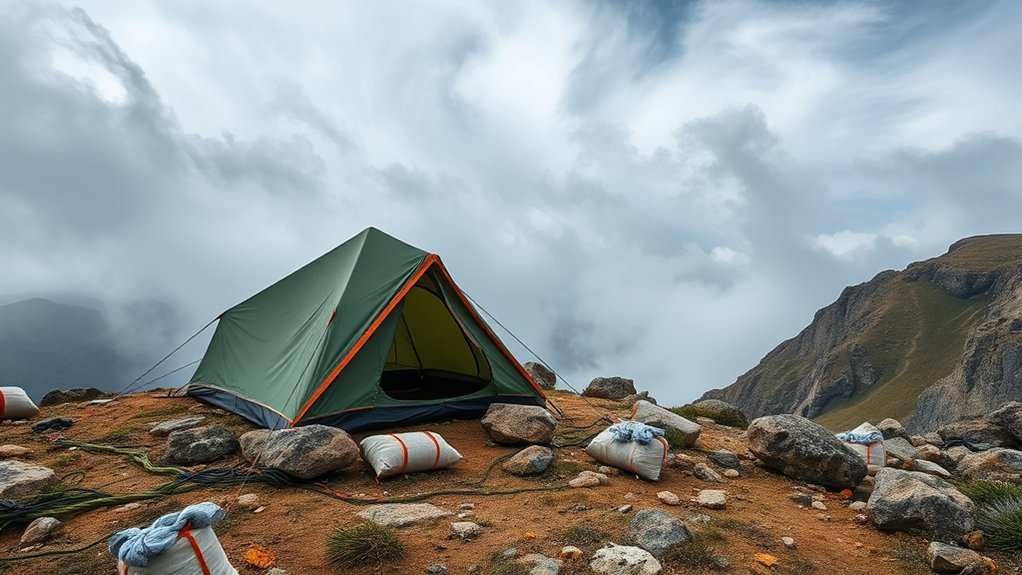
In strong wind, the tent is most vulnerable while loose fabric is being unpacked. Organize your gear before exposing the tent body and fly, and keep control of each component from the moment it comes out of its bag.
- Confirm the wind direction. Also look for signs that gust direction may change because of terrain.
- Orient the tent correctly. Follow the manufacturer’s instructions. For many tents, the lowest or narrowest end faces the prevailing wind; on some designs, the side supported by the strongest pole structure is the preferred windward side.
- Prepare poles and stakes. Have them within reach so loose fabric is not left flapping while you search for hardware.
- Secure the windward portion quickly. MSR recommends staking the windward side first during a windy pitch so the shelter stays under control.
- Build the pole structure. Keep loose fabric controlled and avoid letting partially connected poles twist in gusts.
- Attach the rainfly completely. Fasten any pole wraps, corner buckles, and other manufacturer-provided connections.
- Deploy the structural guylines. Start on the windward side, then stabilize the remaining sides so loads are balanced.
- Walk around the tent. Check for badly bowing poles, loose panels, poor stake alignment, slack guylines, or anything rubbing against sharp objects.
Pro Tip: If possible, practice this windy-weather pitching sequence at home in calm conditions. Knowing where every stake, buckle, guy point, and tensioner belongs reduces the time you spend handling loose fabric when the weather is bad.
Reinforcing Your Shelter
Reinforcement should strengthen the tent’s intended structure rather than improvise a completely different one. Use natural shelter where safe, activate the manufacturer’s structural guy points, improve weak ground anchors, and keep the pitch balanced.
Utilize Natural Windbreaks
Terrain can reduce direct wind exposure. Hills, stable boulders, vegetation, and terrain folds may create useful shelter, but evaluate the hazards around them before pitching.
- Positioning: Place the tent on the protected side of a safe windbreak while allowing enough distance for falling or rolling hazards.
- Tree assessment: Do not pitch under dead limbs, damaged trees, or unstable trunks. Gusts can turn branches into serious hazards.
- Topography: Prefer sheltered terrain over exposed peaks, ridges, saddles, and cliff edges.
- Wind funnels: Be cautious in narrow gaps, passes, gullies, or terrain features that may accelerate airflow.
- Changing direction: Reassess the site if the wind turns. A feature that protects one side of the tent may offer little protection after a major shift.
Secure Tent Guy Lines
Guylines stabilize the parts of a tent that stakes at floor level cannot support by themselves. Use the guy points intended for structural support, especially those associated with poles.
Pull each structural guyline outward in the direction recommended for that guy point and secure it to a reliable anchor. Use a tensioner or an adjustable knot so the line can be retightened. The line should be taut, but excessive tension can deform the shelter and create unnecessary stress.
There is no single stake or guyline angle that is correct for every tent and ground type. Follow your tent and stake instructions, and focus on achieving a strong load path from the tent’s structural guy point through the line to a firmly seated anchor.
| Check | What You Want to See |
|---|---|
| Guyline direction | Line supports the intended pole or panel instead of pulling it sideways. |
| Tension | Taut and supportive without distorting the tent. |
| Anchor | Firmly seated and not rotating or creeping out of the ground. |
| Fly | Evenly tensioned without uncontrolled flapping. |
| Poles | Retaining their intended shape rather than repeatedly folding or sharply bending. |
Weight Down Tent Corners
Extra weight can help control a tent during setup, but simply placing a random heavy object on each corner is not a substitute for correct staking and structural guying.
- During setup: A backpack or other heavy gear placed safely inside the tent can help keep the body controlled while you finish the pitch.
- Where stakes will not hold: Use purpose-made anchors suited to sand, snow, or the available terrain.
- With rocks or other natural objects: Use them only where permitted and without creating unstable piles or damaging the site.
Do not depend on a universal sandbag weight because the necessary holding force changes with the shelter, wind, gusts, soil, and anchor geometry. Do not dig perimeter trenches to secure the tent.
Preparing for Changing Weather
Check the weather before leaving home and again as close to departure as possible. Pay attention to both sustained wind and forecast gusts because a short, powerful gust can load the tent much more severely than a steady breeze.
The National Weather Service warns that high winds can cause flying debris, falling limbs, and other hazards. Do not treat an official Wind Advisory, High Wind Warning, Severe Thunderstorm Warning, Tornado Warning, or similar local alert as a challenge for your tent to withstand.
The National Weather Service notes that sustained winds around 40–50 mph can produce isolated wind damage. A tent should not be treated as reliable shelter when conditions reach a damaging-wind level.
Keep weather information accessible even after camp is established. If cellular coverage is poor, check forecasts before entering the area, speak with rangers or campground staff, and use another appropriate weather-alert method where available.
Watch for Wind Chill and Wet Clothing
Wind accelerates heat loss from exposed skin. Cold, wind, rain, and damp clothing together can create a hypothermia risk even when the temperature does not initially seem extreme. Keep insulating layers and sleeping gear dry, add wind-resistant outer layers when appropriate, and change out of wet clothing promptly.
Control Loose Gear
Anything light enough to blow away can become lost gear or a projectile. Secure camp chairs, cookware, bags, tarps, empty containers, clothing, and other loose objects before the wind increases. Keep essential items such as a headlamp, vehicle keys, shoes, warm layers, and emergency gear easy to reach in case you need to leave quickly.
Be Conservative With Fire and Cooking
Strong wind can carry sparks and make an open fire difficult to control. Check local fire restrictions before lighting anything, and avoid a campfire when wind or fire conditions make spark spread likely. The National Park Service warns that strong winds can rapidly turn a small campfire into a wildfire.
Never move a fuel-burning stove or heater into a tent simply because it is windy outside. Fire and carbon monoxide risks can become far more serious than the inconvenience of delaying a meal.
Know When to Leave the Tent
A strong pitch can reduce risk in ordinary windy weather, but there is a point where adding another stake is no longer the right response. Have a backup plan before that moment arrives.
Move to safer shelter or leave the campsite when one or more of these conditions develop:
- An official severe-weather or high-wind warning affecting your location tells you to seek shelter.
- Thunder is audible or lightning is occurring nearby.
- Tree limbs, rocks, signs, or other debris are falling or becoming airborne.
- Stakes repeatedly pull out despite using appropriate anchors.
- A pole bends severely, cracks, disconnects, or no longer retains its designed shape.
- Fabric, webbing, guy points, seams, or clips begin tearing or failing.
- The tent can no longer be kept under controlled, balanced tension.
- Floodwater, surf, runoff, or drainage begins threatening the site.
- You cannot safely remain warm and dry.
- You are no longer confident that you can exit safely if conditions worsen.
Warning: A tent does not provide lightning protection. If you hear thunder, follow local emergency guidance and move to an appropriate substantial building or enclosed hard-topped vehicle when available. Do not remain in a tent simply because it is well anchored.
Frequently Asked Questions
What types of tents are best for high-wind conditions?
Look for a tent intended for the conditions you expect, with a relatively low profile, strong pole structure, useful structural guy points, durable components, and a pitching system you understand. Do not assume that weight or an unofficial MPH claim by itself tells you how safe a tent will be.
How can I protect my gear from wind and rain?
Store vulnerable items in waterproof bags or dry bags, keep loose objects secured, and keep essential clothing and emergency gear within easy reach. Do not leave lightweight chairs, cookware, empty containers, clothing, or bags where gusts can carry them away.
Should I avoid camping near water in high winds?
Do not use “near water” as the only test. Consider flooding, rising water, surf, unstable banks, falling trees, wind exposure, and lightning. In backcountry areas, also follow land-manager rules and low-impact guidance about campsite distance from lakes and streams.
What additional safety precautions should I take during storms?
Monitor official weather alerts, know where safer shelter is located, keep shoes, headlamps, warm layers, and keys ready, secure loose objects, and leave early if conditions are deteriorating. During thunderstorms, do not rely on a tent for lightning protection.
How can I tell if my tent is securely anchored?
Walk around the entire shelter. Stakes or anchors should remain firmly seated, structural guylines should be taut without distorting the tent, poles should retain their intended shape, and the fly should not have uncontrolled loose panels. Recheck the setup after strong gusts and after the fabric gets wet.
How windy is too windy for tent camping?
There is no universal wind-speed cutoff that applies to every tent and campsite. Tent design, gusts, terrain, anchors, soil, setup quality, falling-debris risk, and manufacturer guidance all matter. If official warnings are issued, the shelter begins failing, debris is flying, or you cannot safely maintain the camp, move to safer shelter.
Is a tent safe during a thunderstorm?
No. A tent does not provide lightning protection. If you hear thunder, follow official lightning-safety guidance and move to an appropriate substantial building or enclosed hard-topped vehicle when one is available.
Conclusion
Safe high-wind camping is less about finding one magic stake angle or wind-speed number and more about making several good decisions together. Choose sheltered, well-drained terrain, inspect your equipment, follow your tent’s pitching instructions, use appropriate anchors and structural guylines, and keep monitoring the weather after camp is established.
Most importantly, know when to stop reinforcing the tent and move to safer shelter. A damaged pole, pulling anchors, falling branches, flying debris, thunderstorms, flooding, or an official severe-weather warning can turn a difficult camping night into an emergency. Your tent is replaceable; your safety comes first.
Sources
- U.S. National Park Service — Finding and Setting Up a Campsite — campsite selection, flooding, wind, and falling-tree hazards.
- MSR / Cascade Designs — How Much Wind Can My MSR Tent Withstand? — explains why a universal MPH threshold is not provided and why correct guying and staking matter.
- REI Expert Advice — How to Set Up a Tent — wind-aware campsite selection, stakes, structural guylines, and fly tension.
- National Weather Service — Wind Safety — high-wind hazards and wind-damage context.
- Leave No Trace — Leave What You Find — low-impact campsite practices and the recommendation not to dig tent trenches.
- U.S. National Park Service — Lightning Safety — explains why tents are not lightning-safe shelter.
