
Last Updated on July 28, 2026 by Mason Reed
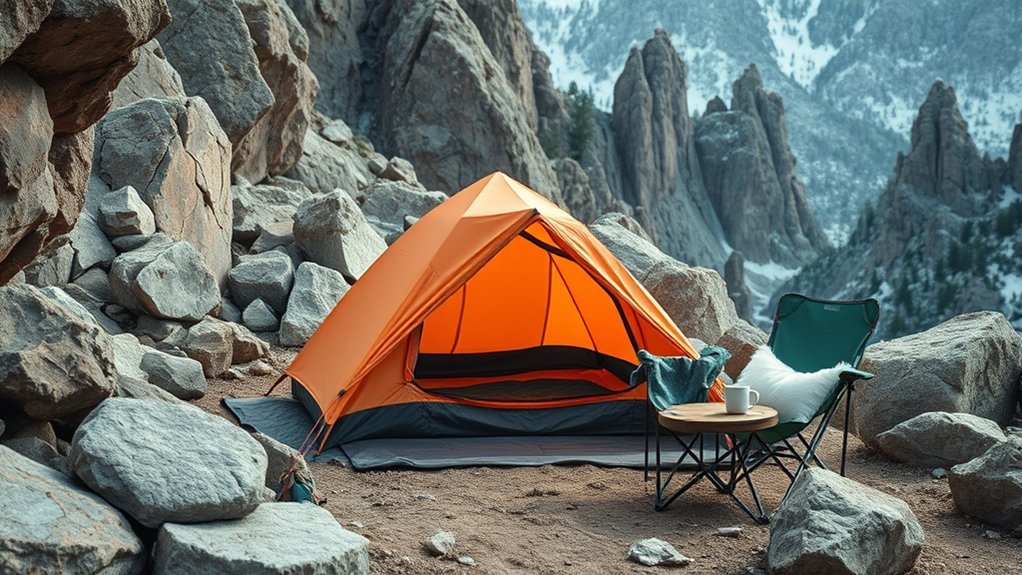
Camping on rocky ground takes more planning than pitching a tent on soft soil, but a rough campsite can still be safe and comfortable. The key is to choose durable, level ground, protect your tent floor, use an insulated sleeping pad, and match your anchoring method to the surface. Rocky soil may accept specialized stakes, while bare bedrock usually calls for well-tensioned guylines secured with stable rocks.
Quick Answer
Camping on rocky ground is safest and most comfortable when you choose a durable, level site outside rockfall and flood zones, protect the tent floor with a correctly sized footprint, use an insulated sleeping pad, and anchor every required point. On bare rock, use secure rock anchors and guylines rather than forcing stakes into solid stone.
Key Takeaways
- Choose an established or durable campsite with a level sleeping area and no obvious rockfall, runoff, or flash-flood exposure.
- Use a correctly sized footprint under the tent and put your sleeping pad inside the tent for cushioning and insulation.
- Use stakes only where the surface allows them; on bare rock, secure corners and guylines with stable rock anchors.
- Even freestanding tents should be anchored and guyed out when wind is possible.
- Treat natural water when potability is uncertain, even when a stream looks clear.
- Follow the campsite’s current rules for food storage, wildlife, waste, fires, permits, and designated camping areas.
At a Glance
| Time Required | About 15–30 minutes for a careful site check and tent pitch; longer in wind or when building rock anchors |
| Difficulty | Moderate |
| Tools Needed | Tent, footprint, sleeping pad, guylines, suitable stakes for rocky soil, optional mallet, and navigation/weather tools |
| Cost | Often no extra cost if your existing tent, pad, footprint, stakes, and guylines are suitable; otherwise the cost depends on which items need upgrading |
Disclosure: As an Amazon Associate I earn from qualifying purchases. Some links on this page are affiliate links, at no extra cost to you.
Essential Gear for Camping on Rocky Terrain
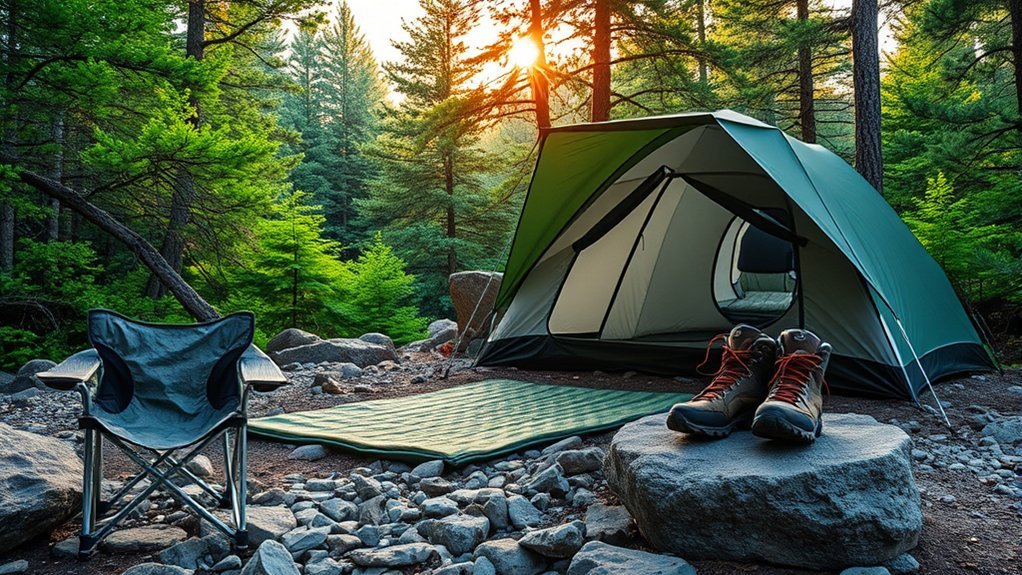
When camping on rocky terrain, prioritize equipment that protects your shelter and keeps you stable on uneven ground. A tent with a durable floor and strong pole structure is more useful here than simply choosing a fabric because it is labeled ripstop. A properly fitted footprint adds abrasion protection between the tent floor and rough ground.
Don’t skimp on footwear either. Supportive hiking boots or trail shoes with reliable traction can make loose rock, scree, and uneven approaches easier to manage. Trekking poles can add stability when you’re carrying a loaded pack over broken terrain.
Freestanding vs. Non-Freestanding Tents
A freestanding tent is often the easiest choice for exposed rock because its pole structure can stand before the shelter is staked. That does not mean it should be left unsecured. Wind can still lift or roll an unanchored freestanding tent, so secure the corners, vestibules, and manufacturer-designated guy points.
Non-freestanding and trekking-pole tents can also work on rocky campsites, but they depend more heavily on properly positioned tension points. Bring enough cordage to reach stable anchors when the normal stake position happens to sit on solid stone.
If you’re camping on rocky soil rather than bare bedrock, strong stakes suited to hard ground and a small stake mallet may help. Do not keep hammering a lightweight stake after it hits solid stone; move the anchor point slightly or switch to a rock-based anchor instead.
For navigation, carry an appropriate map, compass, GPS device, or offline mapping system and know how to use it. Rocky landscapes can make trails difficult to distinguish, particularly after storms or above tree line.
For cooking, a portable stove paired with lightweight, non-perishable food keeps meals simple. Check current fire restrictions before using any flame or stove and place the stove on a stable surface where it cannot tip.
Round out your kit with personal hygiene supplies, hand sanitizer, a first aid kit, repair tape, spare cordage, weather protection, and enough water-treatment capacity for the trip. Even biodegradable soap should be used away from natural water sources. Follow Leave No Trace principles to reduce damage to fragile mountain and desert environments.
Note: A footprint goes under the tent floor; your sleeping pad goes inside the tent. Keep the footprint completely beneath the tent rather than letting its edges stick out where they can collect rainwater.
Tips for Setting Up Your Camp
Start your setup before dark whenever possible. Walk the immediate area before unloading your gear and confirm that the site is both comfortable and safe. Look uphill as well as down: the flattest patch of ground is not a good campsite if loose rock, a cliff, drainage channel, dead tree, or flood-prone wash is directly above or beside it.
Once you have a safe site, position the shelter so its doors and strongest profile work with the expected wind according to the tent manufacturer’s instructions. Use a stable terrain feature as a windbreak only when it does not introduce another hazard such as rockfall or falling branches.
Pro Tip: Before pitching, inspect the sleeping area from several angles and gently move only loose, obvious debris that can be removed without disturbing the site. Avoid blindly sweeping bare hands across sharp stone, broken glass, cactus spines, or other hidden hazards.
Selecting the Right Location
Look first for an established campsite. Where dispersed camping is permitted, favor durable surfaces such as rock, gravel, compacted ground, dry grasses, or other surfaces allowed by local rules. Leave No Trace recommends protecting riparian areas by camping at least 200 feet from lakes and streams when local regulations do not require a different designated setup.
Choose a sleeping area that is as level as practical. Check that your head will not be significantly lower than your feet and lie down briefly before pitching if the slope is difficult to judge.
Avoid rebuilding the landscape to create a campsite. Large-scale rock moving, trenching, cutting vegetation, or excavating a platform causes unnecessary impact. If a site requires major construction to make it usable, find another one.
Effective Tent Anchoring Techniques
The right anchoring method depends on what is actually beneath you:
- Rocky soil: Try an appropriate hard-ground stake where there is enough soil depth. If you strike solid rock, move the point slightly rather than repeatedly hammering the stake.
- Big Rock, Little Rock: Extend a guyline from the tent, secure the line around or behind a small stable rock, and use a much larger rock to prevent the smaller anchor from sliding toward the tent. Keep the cord away from razor-sharp edges that could cut it.
- Direct rock anchor: Where practical, loop sufficiently strong cordage around a stable rock that cannot easily roll or shift. Do not rely on loose rocks perched on slopes.
- Deadman anchor: Use a buried horizontal anchor only in suitable sand, snow, or diggable soil, and only where digging is permitted. A deadman is not a solution for solid bedrock.
- Full guying: Use the shelter’s structural guy points and tension them evenly. Good guyline geometry usually matters more than simply adding random weight to the tent corners.
Check every anchor after the tent is fully pitched. A rock that felt heavy when placed may shift once a gust repeatedly loads the line.
How to Pitch a Tent on Solid Bedrock
- Lay down a correctly sized footprint without extending it beyond the tent floor.
- Position the tent and assemble the pole structure according to the manufacturer’s instructions.
- Immediately secure one or more corners if wind is present so the shelter cannot blow away.
- Extend the corner lines and guylines far enough to reach stable rocks.
- Build or position each rock anchor so pulling on the line loads the anchor toward the ground rather than tipping it over.
- Install the rainfly and tension all required points evenly.
- Walk around the tent and pull firmly—but not violently—on each line to check whether anything slides.
- Recheck the anchors after wind increases, rain wets the fly, or fabric tension changes.
Choosing the Right Location on Rocky Ground
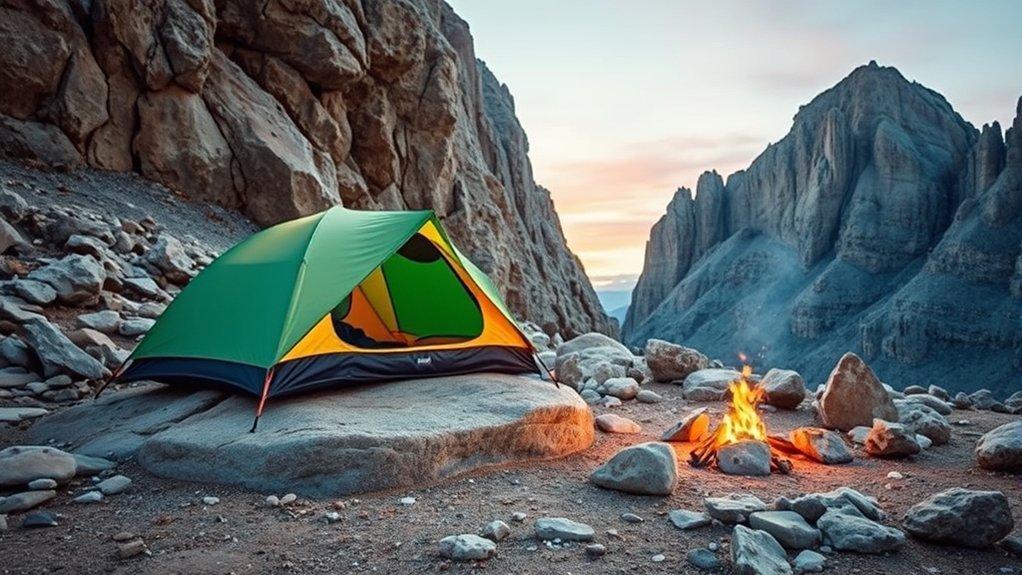
Site selection matters more than any piece of gear. A comfortable tent setup cannot compensate for an unstable cliff, flood channel, lightning-exposed ridge, or loose talus slope. Before unpacking, look at the terrain around, above, and below your proposed campsite.
Assess Ground Stability
- Look for Level Surfaces: Favor a level or gently sloped sleeping area where you will not slide toward one side of the tent overnight.
- Inspect the Surface: Avoid jagged projections, unstable slabs, loose scree, sharp debris, roots, and anything likely to puncture the tent floor.
- Avoid Drainages: Do not camp in depressions, washes, gullies, dry streambeds, or obvious runoff channels.
- Study the Terrain Above You: Stay away from loose slopes, unstable cliff faces, dead trees, avalanche paths, and other overhead hazards.
- Use Safe Wind Protection: Low terrain features can reduce exposure, but never trade wind protection for rockfall, falling-tree, flood, or lightning risk.
Check for Hazards
Inspect the full campsite rather than only the tent footprint. Look for unstable rocks, sharp edges, animal trails, dead branches, runoff marks, eroding slopes, and signs that water has recently moved through the area.
Warning: Never camp directly beneath loose scree, unstable overhangs, cliff faces, or visibly fractured rock. Rain, erosion, freeze-thaw cycles, and temperature changes can contribute to rockfall. Move to another campsite if the terrain above you looks unstable.
Also check whether the campsite could become isolated by rising water. In canyon country, a storm miles away can produce dangerous flooding even when little or no rain is falling directly over your tent.
Locate Water Sources
A nearby water source is useful, but your tent should not sit on the shoreline or in a drainage leading to it. Where dispersed camping is allowed, Leave No Trace recommends camping at least 200 feet from lakes and streams unless local rules specify otherwise.
Do not judge drinking-water safety by appearance. According to the Centers for Disease Control and Prevention’s backcountry water guidance, clear-looking water can still contain germs. If you are not certain a source is potable, treat the water before drinking, cooking, brushing your teeth, or preparing food.
Boiling is the most reliable method for killing germs. When boiling is not practical, CDC guidance recommends choosing an appropriate filtration and disinfection method and following the treatment manufacturer’s instructions. Carry a water purification system or treatment supplies that match the risks in your destination.
A clear mountain stream can still contain disease-causing germs. Appearance alone cannot tell you whether untreated backcountry water is safe to drink.
Safety Precautions for Rocky Camping
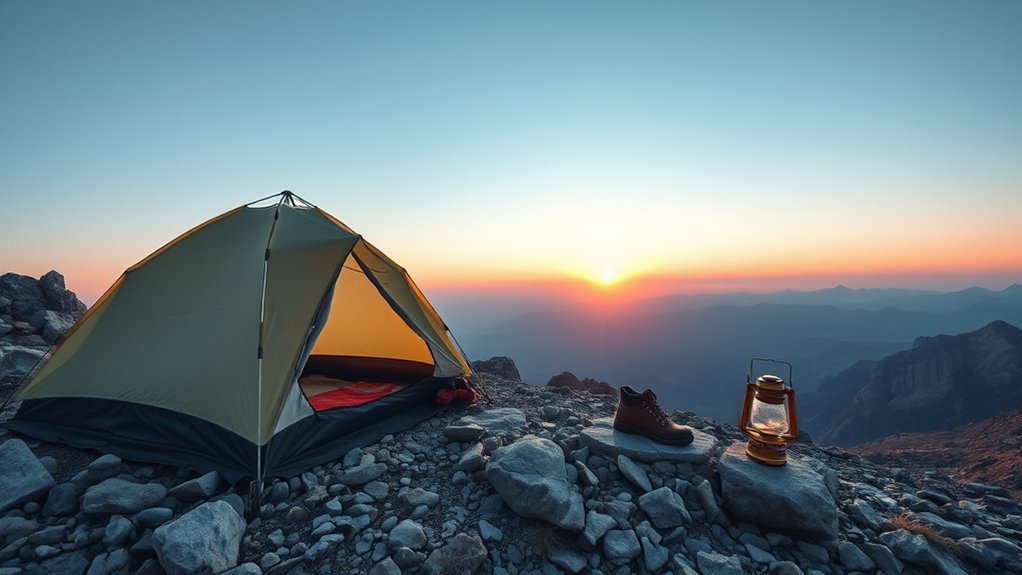
Rocky terrain adds more opportunities for slips, trips, cuts, ankle injuries, and damaged equipment. Wear footwear with dependable traction, slow down on loose rock, and use trekking poles where they improve your balance. Keep a first aid kit accessible rather than burying it at the bottom of your pack.
Stay hydrated and plan for sun exposure. High, rocky terrain can offer little shade, and weather can change rapidly even on a clear morning.
Wildlife and Food Storage
Keep food, garbage, cookware, toiletries, sunscreen, and other scented items secured according to the rules for the land you are visiting. An airtight food box alone is not necessarily an approved wildlife-storage system.
The National Park Service’s bear-food guidance notes that requirements vary by park. Some areas require bear-resistant canisters or food lockers, while others have different approved methods. Check the exact rules before your trip and never store food in your tent in bear country.
If you see wildlife, keep your distance, never feed it, and follow species- and location-specific guidance. Bear behavior and recommended responses can differ by species and situation, so generic advice should never replace the instructions for the park or wilderness area you are visiting.
Leave No Trace on Rocky Sites
Bare rock is durable underfoot, but the plants, biological soil crusts, mosses, alpine vegetation, and shoreline areas surrounding it may be extremely fragile. Concentrate your activity on existing or durable surfaces and avoid creating new tent pads by moving large amounts of rock or vegetation.
Pack out all trash and food scraps. Human-waste rules vary by destination, and some rocky or high-use areas require waste to be packed out because digging a proper cathole is impossible or prohibited. Check local regulations before leaving the trailhead.
Comfort Enhancements for Better Sleep
A good night’s sleep on rock depends far more on the sleeping system than on the tent itself. Use these four strategies:
- Use a quality sleeping pad: The pad cushions pressure points and provides thermal insulation from cold rock. Match its insulation rating and design to the temperatures you expect.
- Choose the right sleeping bag: Use a bag or quilt suited to the expected overnight temperature and conditions.
- Support your head and knees: A camping pillow or clothing-filled stuff sack can improve neck support. On slightly sloped terrain, a small amount of support under your knees may also reduce sliding and tension.
- Protect the tent floor: Place a properly sized footprint beneath the tent to reduce abrasion and moisture exposure. Keep every edge tucked beneath the shelter.
Before committing to the pitch, lie down on your sleeping pad for a minute. A site that looks flat while standing can contain a ridge or hollow that becomes obvious as soon as your weight is on it.
Note: A footprint protects the tent floor from abrasion, but it does not replace a sleeping pad. The pad is what provides most of the cushioning and ground insulation beneath your body.
Navigating Weather Challenges
Check the forecast before leaving and continue monitoring conditions during the trip. Rocky and alpine locations can expose a shelter to strong gusts, runoff, rapidly falling temperatures, lightning, hail, and flash flooding.
For wind, follow the tent manufacturer’s recommended orientation. In general, avoid pointing a large open door directly into strong wind, secure every required corner, and use the structural guylines designed to support the poles and fly. Re-tension the rainfly after it becomes wet because many tent fabrics change tension with moisture.
A durable rainfly helps keep driven rain out, but campsite drainage remains essential. Do not dig trenches around the shelter. Choose naturally well-drained ground instead.
Lightning Safety on Exposed Rock
A tent is not a safe lightning shelter. The National Park Service advises moving toward a substantial building or hard-topped vehicle when thunder is heard and avoiding exposed peaks, ridges, boulder fields, rocky outcrops, isolated trees, and bodies of water.
Warning: Do not rely on your tent, a shallow cave, or a rock overhang as lightning protection. If thunderstorms threaten exposed terrain, move toward safer shelter early rather than waiting for the storm to reach camp.
Flash-Flood Safety
Never pitch in a wash, narrow drainage, streambed, canyon bottom, or low spot that could suddenly carry water. Flash flooding can occur downstream from rain that falls miles away.
The National Park Service’s flash-flood guidance says warning signs can include worsening weather, thunder, water suddenly turning muddy, floating debris, rising water, stronger currents, or an increasing roar upstream.
If flooding begins, leave equipment behind and move to higher ground immediately. Do not enter or attempt to cross moving floodwater.
Troubleshooting a Rocky Campsite
The Stake Will Not Go In
Stop hammering once the stake repeatedly hits solid rock. Shift the point a few inches, try a suitable hard-ground stake if soil exists, or extend the guyline to a secure rock anchor. Forcing a lightweight stake can bend it without improving holding power.
The Rock Anchor Keeps Sliding
Use a larger, more stable anchor and improve the direction of pull. Avoid rounded rocks that can roll toward the tent. Check the line for sharp edges that could cut or abrade it.
The Tent Flaps in the Wind
Make sure the fly is centered, the structural guy points are being used, and tension is balanced around the shelter. Recheck every anchor rather than simply tightening one side as hard as possible.
Rain Runs Under the Tent
Do not trench around the shelter. Confirm that the footprint does not extend outside the tent floor, then move to better-drained ground if water is naturally flowing through the site.
The Sleeping Surface Is Too Rough
Do not depend on a pile of blankets to overcome a genuinely bad site. Look for another nearby durable surface first. Once the site is reasonable, use a supportive sleeping pad to handle the smaller irregularities.
Conditions Become Unsafe
Relocate rather than trying to save a poor campsite. Increasing rockfall, rising water, severe wind, nearby lightning, unstable anchors, fire activity, or rapidly worsening weather are all reasons to move while you still have a safe route out.
Fun Activities While Camping in Rocky Areas
Once your shelter is safely established, rocky landscapes can offer excellent opportunities to explore:
- Rock Climbing: Climb only where it is permitted and only with the training, equipment, partners, and route knowledge appropriate to the terrain. Do not treat unfamiliar cliffs or boulders as casual playground equipment.
- Nature Photography: Rock formations, changing light, distant ridgelines, and wildlife can create dramatic subjects without requiring you to leave durable surfaces.
- Stargazing: Remote rocky campsites often have darker skies than developed areas. Stay aware of cliff edges and uneven ground when moving around after dark.
- Fishing: Nearby lakes and streams can provide a relaxing option where fishing is permitted. Check current license, season, species, and access regulations before fishing.
Frequently Asked Questions
What types of tents work best on rocky ground?
A freestanding tent with a durable floor and strong pole structure is usually easiest because it can stand before every anchor is installed. Dome-style tents are a common choice. Regardless of design, anchor the shelter and use its structural guylines when wind is possible.
How do I clean my campsite after camping on rocks?
Pack out all trash, food scraps, cord pieces, tape, and other waste. Return any small rocks you moved for anchors when doing so will not disturb the site, and leave the area looking as natural as possible. Follow local waste-disposal rules and Leave No Trace practices.
Can I use a hammock on rocky terrain?
Yes, where hammocks are permitted and suitable healthy trees or purpose-built supports are available. Use tree-friendly straps and follow the hammock manufacturer’s setup requirements. Do not improvise by attaching a hammock to loose boulders, unstable rock features, or anchors you cannot verify are structurally sound.
What should I do if I encounter wildlife?
Keep your distance, never feed wildlife, and avoid blocking an animal’s travel route. If an animal approaches, follow the guidance for that species and location. For bears, do not run; stay calm and follow the current park or land-management agency instructions because recommendations can differ by species and situation.
How can I prevent injuries while hiking on rocky paths?
Wear footwear with reliable traction, slow down on loose or wet rock, keep your center of gravity controlled, and use trekking poles when they improve stability. Pay extra attention on descents, where loose stones and uneven steps can make slips and falls more likely.
Can I pitch a tent directly on bare rock?
Yes, when camping is permitted and the slab is level, stable, well drained, and outside rockfall or flood zones. Use a footprint to reduce abrasion and secure the tent with properly positioned guylines and stable rock anchors rather than trying to drive stakes into solid stone.
Does a freestanding tent need stakes on rocky ground?
It may stand without stakes, but it should still be anchored. A gust can move or roll an unsecured tent, and vestibules or structural guylines often require tension to work correctly. Use suitable stakes in rocky soil or secure lines to stable rock anchors on bedrock.
Should my ground tarp extend beyond the tent?
No. A footprint or tarp under the tent should stay completely beneath the floor. Material extending beyond the tent can catch rain and direct water underneath your shelter.
Conclusion
Camping on rocky ground does not have to mean a damaged tent or an uncomfortable night. Start with a safe, durable campsite, protect your tent floor, use a supportive sleeping pad, and anchor the shelter for the surface you actually have rather than forcing ordinary stakes into solid rock.
Keep looking beyond the tent itself. Rockfall, flash flooding, lightning, wildlife, wind, untreated water, and local camping rules can matter far more than whether the ground feels perfectly flat. With a careful site check and a secure pitch, rugged terrain can become a comfortable base for a memorable night outdoors.
Sources
- Leave No Trace: Travel & Camp on Durable Surfaces — durable campsite selection, minimum-impact practices, and water-source separation
- Centers for Disease Control and Prevention: Water Treatment While Hiking, Camping, or Traveling — backcountry drinking-water risks and treatment guidance
- National Park Service: Bear Safety — Storing Food — food, garbage, scented-item, and bear-resistant storage guidance
- National Park Service: Lightning Safety — thunderstorm shelter and exposed-terrain precautions
- National Park Service: Flash Floods — flash-flood warning signs, canyon hazards, and emergency response
- Big Agnes: Tent Setup Tips — tent staking, guyline use, wind preparation, and shelter stability
