

Last Updated on September 10, 2026 by Mason Reed
A flapping tent isn’t just annoying — it’s a sign your shelter isn’t set up to handle the wind, and left unchecked it can wear out fabric, loosen stakes, and cost you sleep. The fix usually comes down to three things: how you orient the tent, how tightly you stake and tension it, and whether you’ve picked a spot that shields you from direct gusts.
Quick Answer
To stop a tent from flapping, point its narrowest and lowest profile into the wind, stake it down at a 45-degree angle leaning away from the shelter, and tension non-stretch guylines anchored well beyond the footprint. Securing internal fly-to-pole velcro wraps, tightening the rainfly, and choosing natural windbreaks will eliminate most noise.
Key Takeaways
- Orient the tent’s smallest, most aerodynamic end toward the wind to cut its sail-like profile.
- Stake at a 45-degree angle angled away from the tent, windward side first, and weight stakes with rocks in gusty conditions.
- Always fasten the internal velcro tabs connecting the rainfly to the poles — this stops the fly from billowing against the frame.
- Keep guylines non-stretch (Dyneema or polyester), tensioned at roughly 45 degrees, and anchored beyond the tent footprint.
- Choose a campsite near natural wind blockers like dense trees or boulders, avoiding open ridgelines.
- Silence zippers, loose flaps, and door ties, which are frequent sources of high-frequency noise in gusty weather.
At a Glance
| Time Required | 10–15 minutes (initial setup or mid-night adjustment) |
| Difficulty | Easy / Beginner-friendly |
| Tools Needed | Tent stakes, Dyneema/Polyester guylines, Line tensioners, Heavy rocks or deadman anchors |
| Cost | $0 – $15 (for extra cordage or tensioners if needed) |
Disclosure: As an Amazon Associate I earn from qualifying purchases. Some links on this page are affiliate links, at no extra cost to you.
Understanding the Causes of Tent Flapping

Tent flapping mostly comes down to wind pressure pushing against loose or under-tensioned fabric. A tent’s shape and material matter significantly here: flat-panel designs made from traditional silnylon tend to catch wind and sag overnight as ambient humidity rises, whereas aerodynamic dome or tunnel shapes allow gusts to glide smoothly over the structure.
Four fixable factors drive most tent flapping:
- Under-tensioned fabric & hydro-stretch — guylines and stakes that aren’t pulled tight let panels ripple. Furthermore, nylon fabrics absorb dew and stretch cold, losing tension after dark.
- Unsecured internal fly loops — failing to wrap the internal velcro tabs on the underside of the rainfly around the tent poles leaves the fly floating freely against the frame.
- Loose components — unsecured door flaps, open vent zippers, and slack guy lines add extra movement and loud, high-frequency noise.
- Exposed siting — pitching on open ridgelines or exposed beaches without natural windbreaks subjects the fabric to the full, uninterrupted force of gusts.
Note: Site selection matters as much as gear. Camping in the lee of dense trees, boulders, or a low terrain swell — while staying clear of dead overhead branches — can cut wind pressure and flapping by more than half before you drive a single stake.
Selecting the Right Tent for Windy Conditions
When picking a tent for windy trips, balance overall weight against structural rigidity. A lightweight tent is easier to carry, but it requires solid pole architecture and strategic staking points to hold up against severe gusts.
Tent Weight Considerations
Heavier tents generally offer better storm resistance, which is why a dedicated 4-season tent with thicker poles and robust fabrics is the safest pick for alpine or winter conditions.
| Tent Type | Weight Distribution | Wind Durability |
|---|---|---|
| Ultralight (1-2 lbs) | Minimalist frame / Trekking pole support | Moderate to Low (requires expert guying) |
| 3-Season (3-5 lbs) | Balanced frame geometry | Moderate to High |
| 4-Season (6+ lbs) | Heavy-duty multi-pole geodesic dome | Very High |
Design Features & Fabric Selection
A tent’s shape dictates how it sheds wind. Streamlined shapes — low-profile wedges, geodesic domes, or semi-geodesic tunnels — cut wind resistance far better than tall, boxy cabin tents.
Fabric composition is equally critical. Traditional silicone-coated nylon (silnylon) stretches when exposed to rain or cold night air, requiring retensioning after dusk. Newer silicone-coated polyester (silpoly) resists water absorption and maintains tautness overnight without sagging. Look for reinforced pullout points, thick aluminum or carbon poles, and adjustable line tensioners to keep panels quiet.
Proper Tent Setup Techniques
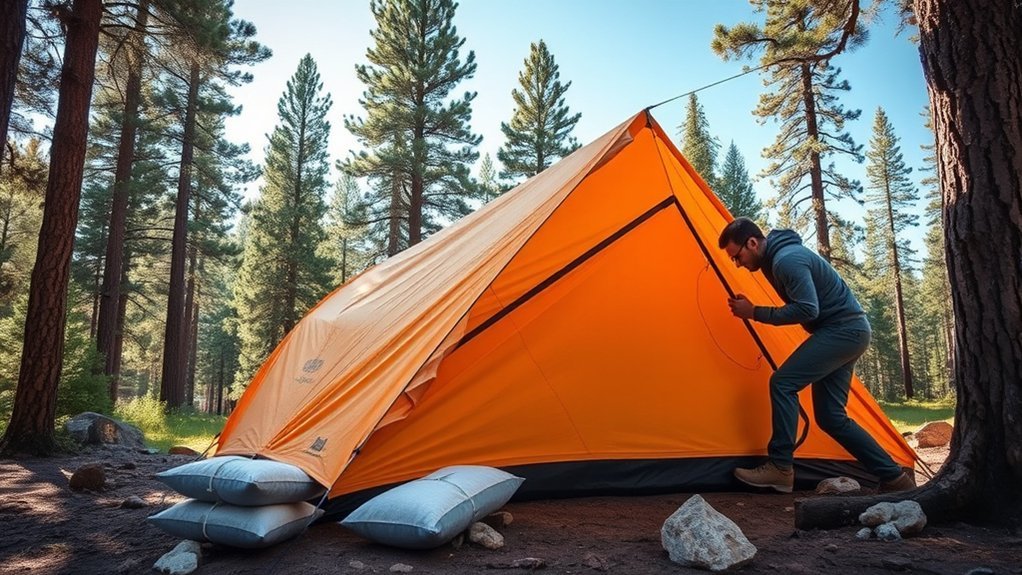
Proper setup technique matters as much as the tent itself. Always position the tent with its lowest, narrowest profile facing into the prevailing wind direction to minimize surface area.
| Setup Technique | Purpose |
|---|---|
| Aerodynamic Orientation | Directs wind over the shelter rather than trapping it |
| Internal Fly-to-Pole Velcro Wraps | Binds rainfly directly to the frame, stopping outer panel lift |
| Perimeter Guyline Tensioning | Distributes lateral load across all pole intersection points |
Start by staking the windward corners first so the shelter cannot catch air while you assemble the frame. Before pulling the rainfly tight over the top, climb partially inside or reach under the fly to attach all internal velcro wraps around the main poles. These small straps anchor the fly to the rigid frame; omitting them is the single most common cause of loud, rhythmic wall slapping.
Effective Anchoring Methods
Solid anchoring starts on the windward side. Drive stakes into the ground at a 45-degree angle leaning away from the tent. This orientation creates a 90-degree pull angle between the guyline and the stake, maximizing mechanical resistance against the soil.
- Push or hammer stakes flush: Leave as little of the stake head exposed as possible to reduce leverage that can pull the stake loose.
- Weight stakes with heavy rocks: Place large, flat rocks directly over windward stakes to lock them down in soft soil or high gusts.
- Select terrain-appropriate stakes: Use wide Y- or V-shaped aluminum stakes for soft dirt, thin nail-style steel stakes for hardpack, and snow/sand deadman anchors (or buried rocks/sacks) for loose environments.
- Double-peg critical corners: Drive a second stake at an opposing angle if a single anchor feels unstable.
Warning: Never rely on corner stakes alone during severe weather. High winds can pull stakes straight out of damp earth. Always combine stakes with fully extended perimeter guylines and heavy rock reinforcement.
Utilizing Guylines for Stability
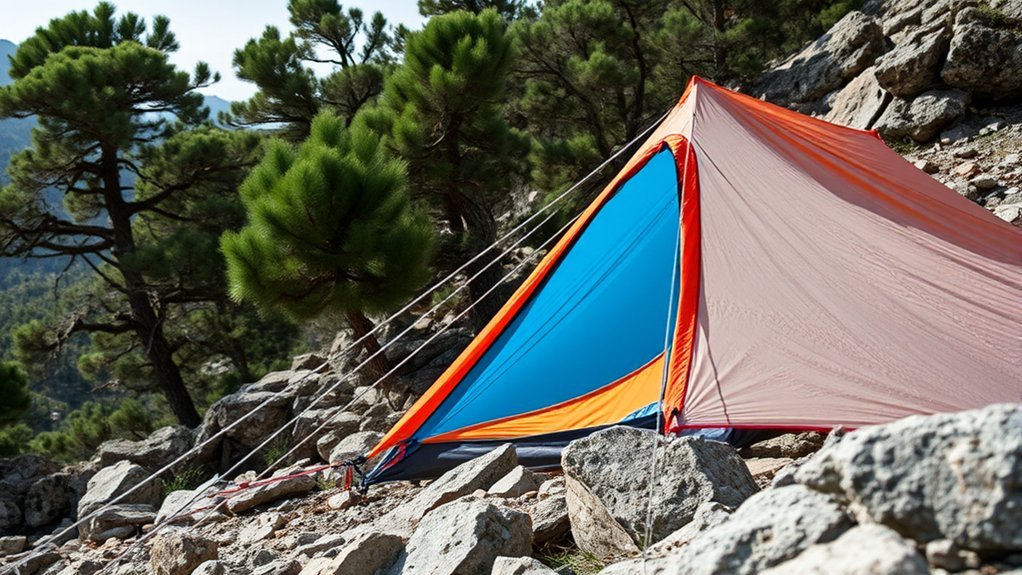
Guylines transfer wind energy from flexible tent fabric down into the ground. When properly guyed out, even lightweight tents remain drum-tight.
- Use low-stretch cordage: Choose static Dyneema (UHMWPE) or core-spun polyester cords. Stretchy nylon lines give way under heavy gusts, introducing slack.
- Extend lines at 45 degrees: Run guylines outward and downward at a 45-degree angle from the attachment point to equalize outward structural pulling force with downward clamping force.
- Anchor well beyond the footprint: Set stakes 3 to 5 feet out from the base for optimal tension geometry.
- Add inline shock cord loops (optional): Tying a small loop of thick surgical tubing or shock cord between the guyline and stake acts as a dampener to absorb sudden violent gusts without pulling the stake free.
Pro Tip: Master the Taut-Line Hitch or install lightweight aluminum line tensioners on every guyline. This allows you to quickly tighten slack lines from inside your sleeping bag without pulling stakes out in the middle of the night.
DIY Solutions to Minimize Noise
Once the tent is structurally staked, a few quick hacks eliminate small residual clatter:
- Silence zipper pulls: Metal zipper tabs clack violently in the wind. Cut off metal pulls and replace them with short loops of 2mm paracord, or tuck metal tabs into zipper garages.
- Clamp loose seams with tarp clips: Attach plastic tarp clips or tension clamps to mid-panel fabric sections that ripple, linking them directly to extra guy anchors.
- Secure door toggles: Ensure all unzipped doors are neatly rolled and tightly secured inside their designated retention toggles. Loose rolled doors act like wind sails.
- Close all zippers fully: An open zipper allows wind to pressurize the shelter interior, lifting the fly from the inside and causing severe vibration.
Troubleshooting a Flapping Tent Already Pitched
If your shelter is already up and flapping in the middle of the night, you don’t need to rebuild it from scratch. Walk the perimeter and systematically adjust your tensioners. Rain and temperature drops naturally cause nylon cordage and fabric to stretch during the night.
Push loose stakes back down at a full 45-degree angle leaning away from the tent and place heavy rocks on top. If one specific wall is bowing inward, do not simply tighten all corners evenly — add a dedicated mid-panel guyline directly to the windward attachment loop to pull that panel back out.
Additional Tips for a Quieter Camping Experience
- Tension the rainfly perimeter: Ensure the rainfly webbing straps at the pole tips are cranked down tight after the inner tent is fully pitched.
- Check the weather forecast: Note forecasted gust directions before pitching so you can position your narrow rear wall directly into incoming storms.
- Use earplugs: Even a perfectly pitched tent produces minor wind noise; high-quality foam earplugs guarantee uninterrupted sleep.
Frequently Asked Questions
Can I use a tarp to reduce tent noise?
Yes. Pitching a heavy-duty tarp low to the ground on the windward side creates a windbreak that redirects air currents over your tent. Ensure the tarp itself is guyed out with static cord to prevent it from becoming a secondary noise source.
How do weather conditions affect tent flapping?
High winds apply pressure against tent fabric, driving flapping. Additionally, rain and dropping nighttime temperatures cause traditional nylon fabrics to stretch and sag (hydro-stretch), creating extra slack that amplifies wind noise overnight.
What materials are best for quieter tents?
Silicone-coated polyester (silpoly) and Dyneema Composite Fabrics (DCF) are far quieter in high winds because they do not absorb moisture or stretch when wet. Heavier woven fabrics also damp vibrations better than ultralight 10D nylon.
Does tent shape influence wind resistance?
Yes. Low-profile dome, geodesic, and tunnel tents allow wind to glide over their rounded surfaces smoothly. High-walled, boxy cabin tents trap air like sails, resulting in severe flapping and potential structural damage.
Can I modify my tent for better performance?
Yes. You can upgrade to static Dyneema guylines, add line tensioners, replace metal zipper pulls with paracord, add shock-cord dampeners, and attach aftermarket tarp clips to add mid-panel guy points.
Conclusion
Stopping a tent from flapping comes down to a few core habits: orient its narrowest profile into the wind, stake anchors at a 45-degree angle leaning away from the shelter, attach all internal fly-to-pole velcro straps, and keep non-stretch guylines taut. Pair proper technique with smart site selection near natural windbreaks and simple fixes like silencing zipper pulls, and you’ll trade a noisy, sleepless night for a quiet, storm-proof campsite even when severe weather hits.
Sources
- Big Agnes — Tent Setup Tips — Official guidelines on stake placement and fabric tensioning
- Gossamer Gear — Shelter Tips for Windy Conditions — Strategic windward staking and guyline management
- MSR Gear Lab — Tent Staking 101 — Technical analysis on stake angles and holding power in storm conditions
- REI Co-op Expert Advice — How to Guy Out a Tent — Optimal guyline placement, knot selection, and tensioning geometry
