
Last Updated on August 26, 2026 by Mason Reed
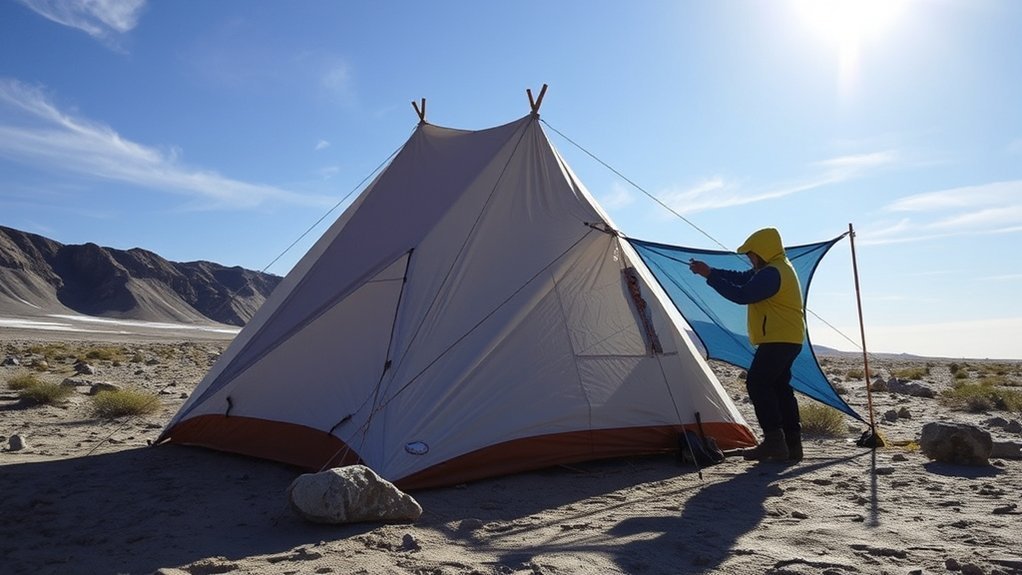
Tent camping in windy conditions can be comfortable and safe when you plan for the forecast, choose a protected campsite, and pitch your shelter exactly as it was designed to be pitched. The biggest gains usually come from proper site selection, suitable stakes or anchors, evenly tensioned guylines, a taut rainfly, and knowing when worsening weather means it is time to pack up.
Quick Answer
If you must tent-camp in wind, choose a sheltered, hazard-free site, pitch the tent exactly as its manufacturer recommends, stake every required point, and tension the rainfly and guylines evenly. Do not rely on a universal “safe wind speed”: tent limits vary. Pack up or move to hard shelter before conditions become unsafe.
Key Takeaways
- Check both sustained wind and forecast gusts before leaving and while you are at camp.
- Follow your tent manufacturer’s instructions for orientation, stakes, guylines, rainfly tension, and weather limits.
- In most ordinary soils, tent stakes hold best when driven straight into the ground rather than automatically angled at 45 degrees.
- Choose a sheltered, well-drained campsite away from exposed ridges, drainage channels, dead trees, and damaged branches.
- A tent is not reliable emergency shelter from dangerous high winds or lightning. Know where your safer shelter is before weather deteriorates.
At a Glance
| Time Required | Usually 15–30 minutes for an experienced camper; allow extra time when gusts make setup difficult. |
| Difficulty | Moderate; easier if you have practiced pitching the tent before the trip. |
| Tools Needed | Tent, poles, suitable stakes or terrain-specific anchors, guylines, tensioners, rainfly, and a small repair kit; an appropriate stake hammer is optional. |
| Cost | No extra cost if your tent already includes suitable stakes and guylines; upgraded stakes, cord, or sand/snow anchors vary by system. |
Warning: A tent is not a safe substitute for substantial shelter during dangerous high winds or a thunderstorm. If thunder or lightning develops, move to a substantial enclosed building or hard-topped vehicle when one is available. Do not wait until the storm is directly over the campsite.
Disclosure: As an Amazon Associate I earn from qualifying purchases. Some links on this page are affiliate links, at no extra cost to you.
Understand Wind Forecasts Before You Go
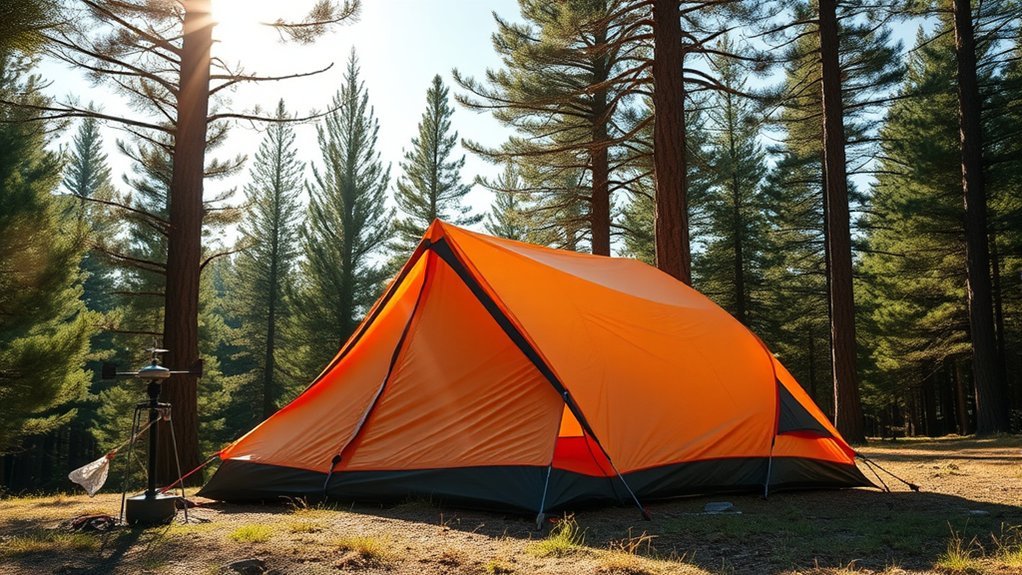
Before you leave for a camping trip, check the expected sustained wind, gusts, direction, precipitation, thunderstorms, and weather alerts. A calm average wind can still be accompanied by much stronger short-lived gusts, which are often what stress tent poles, guylines, and stakes.
The National Weather Service defines sustained wind using an average over a period of time, while a gust is a brief peak in wind speed. That distinction matters at camp because your shelter may experience the force of the gust rather than just the lower average shown in a basic forecast. See the National Weather Service wind glossary for official terminology.
The Beaufort Wind Scale is also useful for recognizing wind strength from visible conditions. For example, moving branches, swaying trees, blowing debris, and difficulty walking can tell you that conditions are becoming more serious even when you do not have a reliable signal.
Note: The Beaufort Scale describes wind conditions; it is not a tent-survival chart. There is no universal wind speed at which every camping tent becomes unsafe.
Local terrain can also change the wind you actually experience. Ridges, exposed shorelines, passes, valleys, and gaps between landforms may experience stronger or more turbulent flow than a general forecast suggests. In cold weather, wind also increases heat loss from exposed skin, so check wind chill when relevant.
Before heading into an area with limited phone service, save the forecast, know where you can receive updated alerts, and identify a safer shelter or exit route. A weather radio can provide another way to receive warnings where appropriate.
Choose the Right Tent for Wind Resistance
Understanding the forecast is only the first step. Your shelter should also be appropriate for the conditions you expect. A purpose-built camping or mountaineering tent is a better choice for windy weather than a tall recreational canopy or shelter with large vertical walls.
Useful characteristics often include:
- A relatively low profile that presents less surface area to the wind.
- A strong pole structure with multiple crossing or well-supported pole sections.
- Secure connections between the tent body, rainfly, and poles.
- Multiple reinforced guyout points located near pole-supported areas.
- A rainfly that can be tensioned firmly without touching the inner tent.
- Stakes or anchors appropriate for the ground where you will camp.
Smaller tents often expose less surface area than large cabin-style shelters, but size alone does not determine wind performance. Pole geometry, materials, fabric shape, guyout placement, pitch quality, and wind direction also matter.
Most importantly, read your tent’s instructions before the trip. The manufacturer’s recommended wind-facing side, stake arrangement, guy points, and rainfly setup should take priority over generic advice.
Secure Your Tent Properly With Quality Stakes
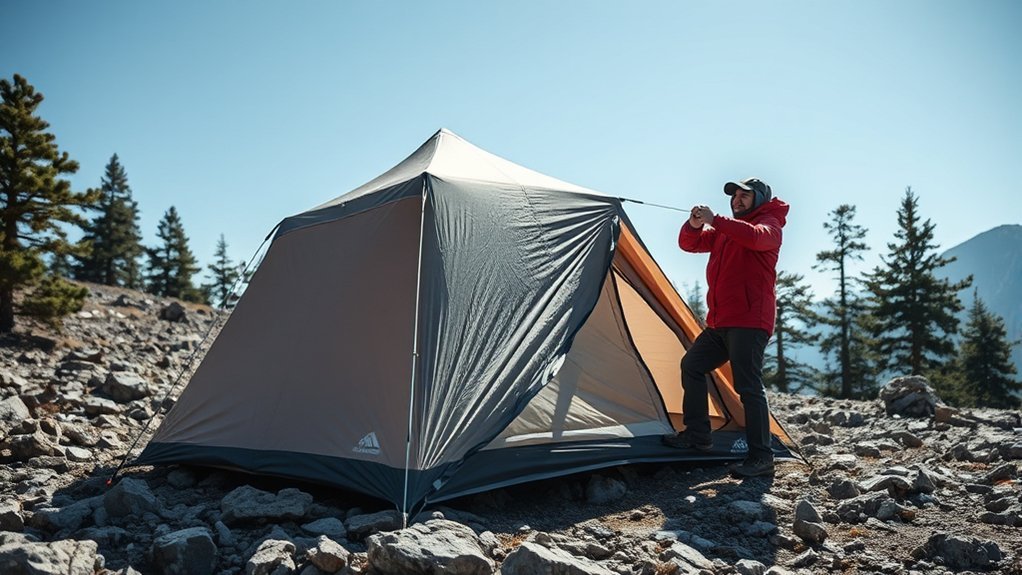
Good stakes are essential, but stake shape and placement matter just as much as material. A stake that works well in firm soil may perform poorly in sand, snow, mud, or loose gravel.
Choose Heavy-Duty Stakes
Aluminum stakes offer a useful balance of weight and strength for many camping situations, while heavier steel stakes can be useful where weight is less important. The correct design depends on the ground.
- Firm soil: Sturdy Y-, V-, nail-, or similar general-purpose stakes can work well.
- Loose sand: Use wide sand stakes, buried anchors, or another system recommended for sand.
- Snow: Use snow stakes, deadman anchors, or the method specified by the tent manufacturer.
- Very soft or wet ground: Longer or wider stakes may provide better holding area than short, narrow pegs.
Carry at least a few spare stakes in case one bends, disappears, or cannot be placed where you initially planned.
Proper Stake Placement Techniques
A blanket rule that every tent stake should be driven at 45 degrees is not reliable. REI’s tent setup guidance says that, in most ordinary soils, a stake provides maximum holding power when driven fully vertical. Some tent manufacturers may specify a different placement for a particular model, so always follow model-specific instructions first.
In wind, secure the tent body early instead of allowing an unstaked tent to become a sail. Start with the windward side if doing so matches the tent’s pitching method, then complete the remaining corners and fly points.
Push each stake deeply enough that only the amount required for attaching the loop or line remains exposed. If the soil does not hold a normal stake securely, change the anchor system rather than depending on a shallow peg.
Pro Tip: Test each important stake by applying firm tension in the same direction the tent will load it. If the stake rotates or pulls easily, reposition it or switch to a more suitable anchor before the wind increases.
Utilize Guy Lines Effectively for Stability
Guylines transfer wind load from the tent’s supported structure into the ground. Correctly placed lines can dramatically improve stability, but more tension is not always better. Lines should be firm and balanced rather than pulled so tightly that the tent or poles distort.
Importance of Taut Guylines
Use the tent’s reinforced guyout points, particularly those positioned over or near structural poles. At minimum, secure the windward guy points when windy weather is expected. For greater stability, use the other structural guy points as the manufacturer recommends.
Low-stretch guyline cord helps maintain consistent tension. Recheck the lines after temperature changes, rain, or a change in wind direction.
- Use reinforced, manufacturer-approved guyout points.
- Keep lines taut without visibly deforming the poles or fly.
- Retension the shelter when wind direction or weather changes.
Optimal Guyline Placement
There is no universal rule that every guyline should run at a 45-degree angle. REI recommends pulling a stabilizing guyline directly outward from the pole beneath the guyout point and, where possible, arranging the line so that it acts roughly perpendicular to the supported tent wall.
Set the stake far enough from the shelter to create useful leverage while keeping the line visible enough that people will not trip over it. Avoid tying guylines to dead trees, weak branches, loose objects, or anything that could move unexpectedly.
Reinforcement Techniques for Stability
For stronger wind, use all structural guy points supplied for the tent and increase anchor holding power where the ground requires it. Options may include longer stakes, wider stakes, sand or snow anchors, or properly placed deadman anchors.
Some tents also have hook-and-loop wraps underneath the rainfly that attach the fly to the poles. Fastening these as directed can help the fly and pole structure work together under wind load.
Check all tension points periodically. Slack fabric can flap loudly and place repeated shock loads on seams, poles, and guyout points.
Position Your Tent Wisely Against the Wind
Good campsite positioning can reduce wind loading before the first stake goes into the ground. Look for a naturally sheltered but well-drained location rather than the most exposed ridge, shoreline, saddle, or open field.
A hill, healthy stand of trees, or other terrain feature may provide a windbreak, but inspect the area carefully. The National Park Service campsite guidance recommends looking for hazards such as wind exposure and dead trees or branches before pitching.
Do not camp under dead, cracked, broken, or hanging limbs. Strong wind can turn an already damaged tree or branch into a serious falling-object hazard.
When orienting the tent, follow its manual first. Pointing the narrow end into the wind can reduce resistance on some designs, but the strongest pole-supported side may be the preferred wind-facing side on others. When wind is driving rain, keep the primary door or vestibule away from the prevailing wind unless the tent instructions specify another orientation.
Avoid low spots, ravines, dry washes, narrow drainage channels, and depressions that could collect or channel water. A site can be protected from wind and still be unsafe during heavy rain.
Reinforce Your Tent With Extra Weight
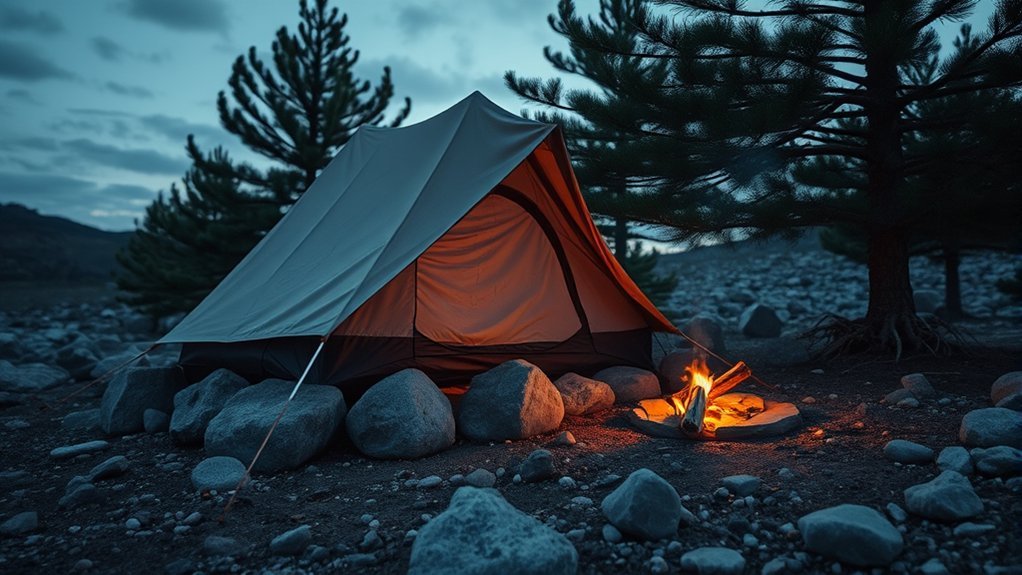
Extra weight can reduce movement inside a tent, but ballast should never replace correct stakes, anchors, poles, and guylines. A tent’s anchoring system is designed to transfer wind forces into the ground; loose weight inside the shelter does not perform the same job.
- Distribute backpacks and other equipment across the tent floor instead of stacking everything against one unsupported wall.
- Use terrain-specific stakes or anchors when ordinary stakes are pulling loose.
- If a tent manufacturer specifically permits rocks or another anchor method, secure them so they cannot roll, damage the fabric, or create a trip hazard.
Do not place loose rocks directly on the tent fabric or rely on improvised ballast where a sudden shift could damage the shelter. In very strong conditions, adding more weight is not a substitute for moving to a safer location.
Prepare for Quick Setup in Windy Conditions
A practiced setup is much easier to control when the wind is already blowing. Pitch the tent at home before the trip, read the instructions, and make sure the poles, stakes, guylines, rainfly, tensioners, and repair parts are present.
Gear Organization Pre-Setup
Keep small items contained so they cannot blow away. Stakes and tensioners are especially easy to lose in grass, sand, or darkness.
- Keep stakes in a dedicated stake bag or secure pocket.
- Keep guylines attached to the tent where the manufacturer permits it.
- Have the rainfly accessible before unpacking loose gear.
- Keep a pole repair sleeve and repair tape within reach.
If you use a separate footprint, keep it controlled until you are ready to put the tent on top of it. A loose tarp or groundsheet can become difficult to handle in a gust. Make sure no footprint or tarp extends beyond the tent floor where it could collect rainwater.
Efficient Pole Assembly Techniques
Practice the pole sequence before leaving home rather than trying to learn it in bad weather. When assembling shock-corded poles, seat each section carefully by hand instead of letting sections snap together forcefully, which can damage pole ends.
Color-coded poles, clips, sleeves, and webbing can make setup faster if your tent uses them. Know which end of the tent should face the prevailing wind before raising the structure.
Quick Stake Placement Strategy
When conditions are windy, secure the tent body before fully raising an unsupported structure. REI recommends staking the corners early so the tent does not behave like a kite during setup.
- Identify the correct tent orientation.
- Control or stake the first corners according to the tent’s pitching instructions.
- Assemble and seat the poles carefully.
- Attach the tent body and rainfly.
- Stake the remaining fly and vestibule points.
- Attach structural guylines and tension the shelter evenly.
- Walk around the tent once more and correct loose fabric, shifting stakes, or distorted poles.
Know When to Pack Up or Seek Shelter
There is no single wind speed that tells every camper when every tent must be abandoned. Tent size, design, pole material, guyout structure, soil, exposure, wind direction, gustiness, rain, and pitching quality all change the result.
Use your manufacturer’s stated limits if it provides them. If it does not, be conservative and watch what the shelter is actually doing.
Warning signs that it is time to reconsider the campsite include:
- Stakes repeatedly pulling or rotating despite using suitable anchors.
- Poles bending far out of their normal shape or repeatedly collapsing inward.
- Guyout points, seams, or fabric beginning to tear.
- The rainfly being forced against the inner tent despite correct tension.
- Falling branches, cracking trees, blowing debris, or rapidly worsening conditions.
- Official severe-weather, high-wind, flash-flood, or evacuation warnings affecting the campsite.
- Thunder or lightning approaching the area.
The safest time to leave an exposed campsite is before the weather becomes so severe that taking the tent down or reaching shelter becomes difficult.
If lightning threatens, the National Park Service advises moving to a substantial building or hard-topped vehicle when available. A tent is not safe lightning shelter.
Protect Your Cooking Area From Wind
Wind can reduce stove efficiency, move flames, and increase the chance of hot cookware tipping. Place the cooking area on a stable, level, noncombustible surface and follow the stove manufacturer’s clearance and ventilation requirements.
A natural barrier can sometimes reduce direct wind, but do not put a lit stove close to dry grass, tent fabric, leaves, or other combustible material.
Warning: Do not automatically wrap an accessory windscreen around an upright canister stove. Some designs can reflect enough heat toward the fuel canister to overheat it. Use only a windscreen or wind-protection system that your stove manufacturer specifically approves for that model.
For example, Cascade Designs/MSR warns against accessory windscreens on most of its upright canister stoves because an enclosed canister can overheat.
Here is a safer way to think about wind protection around a stove:
| Wind Protection | Use |
|---|---|
| Natural terrain barrier | Useful when it does not create a fire, falling-object, or ventilation hazard |
| Manufacturer-integrated wind protection | Use according to the stove manual |
| Accessory stove windscreen | Use only when specifically compatible with your stove configuration |
| Tent or enclosed vestibule | Do not use as a general cooking windbreak; operate the stove outdoors as directed by its manufacturer |
Monitor Weather Changes and Adjust Accordingly
Weather monitoring should continue after the tent is pitched. Check updated forecasts and alerts, especially when a front, thunderstorm, or strong-wind event is expected.
Do not use 25 mph, or any other single generic number, as an automatic tent-safety threshold. Instead:
- Check both sustained winds and gust forecasts.
- Follow any model-specific wind guidance supplied with your tent.
- Watch for stakes shifting, lines loosening, poles deforming, or fabric tearing.
- Retension the rainfly and guylines when weather changes.
- Keep an evacuation or shelter plan ready before conditions become severe.
The National Weather Service advises campers to remain weather-aware and know where safer shelter is located before threatening conditions arrive.
Maintain Your Gear for Longevity and Safety
Wind exposes small weaknesses quickly. Inspect your shelter before each trip so a worn line, cracked pole, damaged stake, or torn guyout does not fail when you need it most.
| Task | When to Do It |
|---|---|
| Inspect poles and pole joints | Before each trip and after severe weather |
| Check stakes and anchors | Before each trip |
| Inspect guylines and guyout points | Before each trip and after strong winds |
| Dry and clean the tent | After outings as needed |
| Inspect seam sealing | Periodically; repair according to manufacturer instructions |
| Carry a basic repair kit | Every trip |
Store the tent clean and completely dry in a cool place. Replace badly frayed guylines, damaged tensioners, bent stakes, and compromised poles before the next windy trip.
A small field kit containing the tent’s pole repair sleeve, compatible repair tape, spare cord, spare stakes, and a few appropriate patches can keep minor damage from becoming a complete shelter failure.
Frequently Asked Questions
What materials are best for tent stakes in windy conditions?
Aluminum is a good balance of weight and strength for many tents, while steel can provide a durable heavier option for car camping. Shape and ground compatibility matter as much as material. Wide sand stakes or snow anchors are usually more effective than ordinary narrow stakes in loose terrain.
How can I reduce noise inside my tent during strong winds?
Start outside the tent: tension the rainfly evenly, secure loose straps, and keep guylines firm so fabric cannot flap excessively. Make sure the fly is not sagging against the inner tent. Soft sleeping gear may absorb a little sound inside, and earplugs can help, but a suddenly noisier or violently flapping tent should also prompt a stability check.
Are there tents designed for stronger winds?
Yes. Many mountaineering and four-season tents use lower profiles, stronger pole structures, additional pole intersections, reinforced fabrics, and more structural guy points. However, no tent is invulnerable, and wind performance varies by model, pitch, terrain, direction, and gust strength.
What are the best weights to use for tent stabilization?
For a normal camping tent, proper stakes, terrain-specific anchors, and guylines should provide the main stability. Gear placed evenly inside may reduce movement but should not replace anchoring. In sand or snow, use anchors designed for that terrain rather than depending on loose improvised weights.
How do I ensure my rainfly fits snugly on my tent?
Attach every buckle, pole wrap, clip, stake loop, and guy point required by the instructions, then tension the fly evenly around the tent. Avoid over-tightening one corner. Recheck it after rain because some fly materials stretch when wet and may need retensioning.
How windy is too windy for tent camping?
There is no universal safe maximum for every tent. Check the manufacturer’s guidance and consider gusts, exposure, soil, tent design, and storm hazards. Repeatedly pulling stakes, severely bending poles, tearing fabric, falling branches, blowing debris, or official severe-weather warnings are reasons to leave before conditions get worse.
Which side of a tent should face the wind?
Follow your tent manufacturer’s instructions first. A narrow end often presents less surface area, but some tents should place their strongest pole-supported side into the wind. In wind-driven rain, it is also usually helpful to keep the main entrance away from the prevailing wind.
Can I put a windscreen around my camping stove?
Only if the stove manufacturer approves that windscreen for your exact stove configuration. Enclosing some upright canister stoves can reflect heat onto the fuel canister and cause dangerous overheating. Integrated or manufacturer-approved wind protection is the safer option.
Conclusion
Tent camping in windy conditions is less about one clever hack and more about getting several fundamentals right. Check the forecast and gusts, choose a sheltered but well-drained site, inspect overhead hazards, follow the tent’s intended wind orientation, use suitable stakes and anchors, and tension the rainfly and guylines evenly.
Most importantly, know the limits of your shelter. If stakes keep pulling out, poles are deforming, branches are falling, severe weather is approaching, or thunder and lightning develop, protecting the tent should become secondary to getting yourself to a safer location.
Sources
- REI Co-op — How to Set Up a Tent — stake placement, campsite orientation, rainfly tension, and guyline guidance.
- U.S. National Park Service — Finding and Setting Up a Campsite — wind exposure, flood-prone areas, dead branches, and campsite selection.
- National Weather Service — Beaufort Wind Scale — official wind-strength descriptions.
- National Weather Service — Camping Safety Tips — severe weather, lightning, flooding, and high-wind camping safety.
- Cascade Designs/MSR — Canister Stove Windscreen Safety — fuel-canister overheating risk.
- Sequoia & Kings Canyon National Parks — Camping Safety — lightning shelter and campground safety guidance.
