

Last Updated on August 26, 2026 by Mason Reed
Camping in bear country can be safe and rewarding when you plan for bears before you reach the trail or campsite. The most important steps are to check local regulations, prevent surprise encounters, secure every food or scented item, carry bear spray where it is permitted, and know how to respond if a bear approaches. Bear rules vary by park, species, season, and campsite, so posted regulations and ranger instructions always take priority over general advice.
Quick Answer
To camp safely in bear country, check local rules before you go, carry accessible bear spray where permitted, hike in a group and make noise, secure food and all scented items in approved bear-resistant storage, and separate sleeping, cooking, and storage areas as required. Never run from or intentionally approach a bear.
Key Takeaways
- Check the specific park, forest, or land-management agency for current bear activity, closures, food-storage rules, minimum wildlife distances, and bear-spray regulations.
- Prevent surprise encounters by hiking in a group, staying alert, and using your voice near blind corners, dense vegetation, streams, and other places where bears may not hear or see you coming.
- Store food, trash, toiletries, cookware, pet food, and other scented items exactly as local rules require; never keep them in your tent.
- Carry bear spray where legal and recommended, keep it immediately accessible, and know how to deploy it before an emergency.
- Your response to contact with a bear depends on whether the encounter is defensive or predatory and, in some situations, on the species involved.
At a Glance
| Time Required | Check regulations and practice your safety plan before the trip; stay bear-aware throughout your hike and camp stay. |
| Difficulty | Easy to moderate with preparation; backcountry trips require more planning and stricter food-storage discipline. |
| Tools Needed | Approved bear-resistant storage where required, accessible bear spray where permitted, resealable bags, and the current park or land-manager regulations. |
| Cost | Varies by trip and equipment. Some parks provide food lockers or loan/rental canisters; bear spray and personal bear-resistant containers are separate purchases or rentals. |
Warning: Bear-safety rules are location-specific. Posted closures, food-storage orders, ranger directions, minimum wildlife distances, and local bear-spray laws override generalized advice in this guide.
Disclosure: As an Amazon Associate I earn from qualifying purchases. Some links on this page are affiliate links, at no extra cost to you.
Understanding Bear Behavior
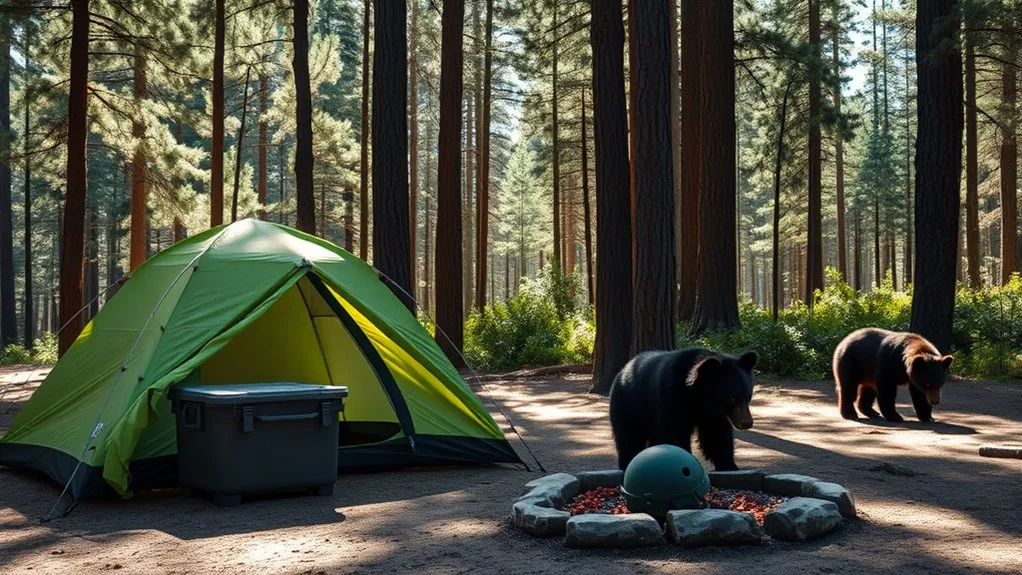
Understanding bear behavior helps you avoid turning a routine wildlife sighting into a dangerous encounter. Do not assume that every black bear or every grizzly will behave the same way. A bear’s reaction can depend on whether it is surprised, protecting cubs, guarding food, accustomed to people, curious, or behaving as a predator.
Watch for signs of recent bear activity such as fresh tracks, scat, digging, claw marks, torn logs, or heavily used animal trails. Be especially cautious near berry patches, waterways, dense vegetation, and animal carcasses. If you see or smell a carcass, leave the area rather than investigating it because a bear may be nearby and defending the food source.
Bears generally prefer to avoid unnecessary conflict, but any bear is a powerful wild animal. Never approach a bear for a photograph, never get between a mother and her cubs, and never assume that a bear which appears calm is safe to approach.
Note: Different parks can require very different viewing distances. Yellowstone, for example, requires visitors to remain at least 100 yards from bears, while Denali requires an even greater distance. Always follow the rule for the place you are visiting.
Hiking Safety in Bear Country
When hiking in bear country, prevention is safer than reacting to a close encounter. Before leaving the trailhead, review current bear activity, trail closures, food-storage orders, and ranger notices. While hiking, stay alert, keep children close, and avoid headphones or earbuds that prevent you from hearing wildlife around you.
Hiking with other people can reduce the chance of surprising a bear because a group is easier for a bear to hear, smell, and see. Talking naturally and calling out periodically is particularly useful near blind corners, dense brush, ridgelines, windy areas, and loud streams where a bear may not detect you early.
Be cautious around dawn, dusk, and at night where local guidance identifies increased bear activity. Running or biking quickly through poor-visibility bear habitat can also increase the chance of a sudden encounter.
Bear Awareness Levels
You can use the following practical planning scale to decide how much caution a trip requires. This is not an official government classification; local ranger alerts and regulations are the authority.
- No recent activity reported: Continue normal bear-country precautions because the absence of a report does not mean bears are absent.
- Possible or recent bear activity: Look carefully for tracks, scat, digging, carcasses, or posted warnings, and increase your awareness in low-visibility areas.
- Active bear area or posted alert: Follow all closures and ranger instructions, make your presence known, keep bear spray accessible where permitted, and be prepared to change your route.
Check with park rangers or the land-management agency before entering unfamiliar bear habitat. Conditions can change quickly when bears discover a food source, cubs are present, or seasonal feeding activity moves into an area.
Noise and Group Hiking
Human voices are more useful than relying on small bear bells alone. Talk with hiking partners and make extra noise before entering places where visibility or natural sound may prevent a bear from detecting you.
| Situation | Better Practice | Why It Helps |
|---|---|---|
| Solo Hiking | Stay highly alert, make your presence known, and keep bear spray accessible where permitted. | A solo hiker is generally quieter and easier for a bear to overlook. |
| Group Hiking | Stay together and talk naturally rather than spreading far apart. | Groups are easier for bears to detect and can reduce surprise encounters. |
| Blind Corners, Brush, Wind, or Streams | Call out or clap before moving through the low-visibility or noisy area. | Extra sound gives a nearby bear more opportunity to detect you before you are close. |
Pro Tip: If you suddenly notice fresh scat, tracks, digging, circling birds over a carcass, or repeated bear signs, do not treat the evidence as a sightseeing opportunity. Increase your distance and consider turning around.
Essential Bear Encounter Preparedness
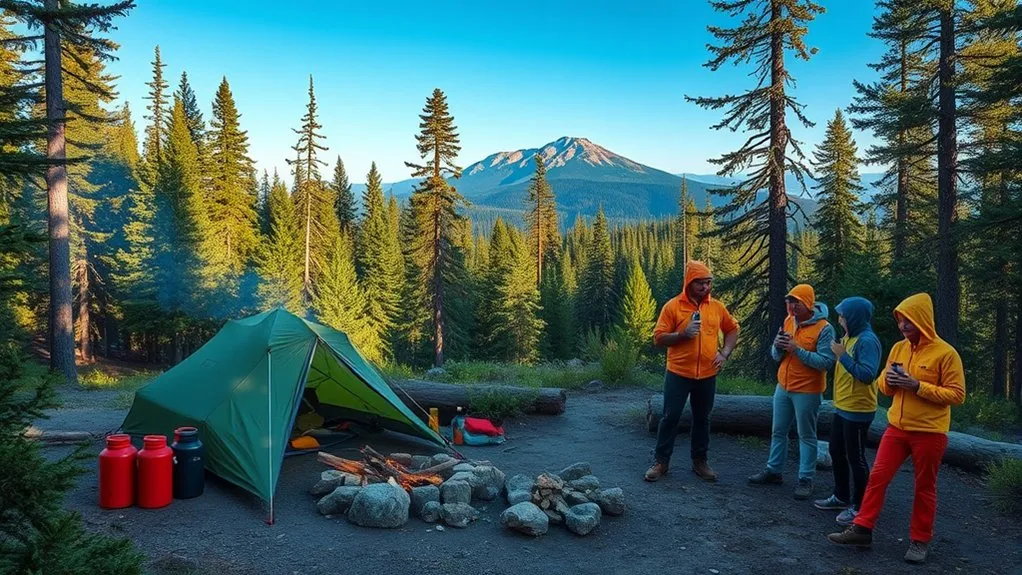
Preparing for a bear encounter means knowing what to do before adrenaline takes over. Prevention comes first, while bear spray is a last line of defense rather than a substitute for safe hiking and food storage.
A 2008 Alaska study examining 83 bear-spray incidents found that 98% of people carrying spray were uninjured during close-range encounters. The finding supports bear spray as an effective deterrent, but it does not guarantee the outcome of any individual encounter.
- Carry the right bear spray: In the United States, choose an EPA-registered product specifically labeled for deterring bear attacks. Check its expiration date and local rules before traveling.
- Keep it immediately accessible: Carry the canister in a belt or chest holster rather than inside your backpack.
- Practice before the trip: Know how to remove the safety clip and aim the canister without accidentally discharging it. Training canisters are useful where available.
- Use it during an aggressive charge or attack: Follow the product label and local agency guidance. Aim slightly downward to create a cloud in the bear’s path, accounting for wind, rain, cold, and spray range.
- Never use bear spray as campsite repellent: Do not spray tents, clothing, people, or equipment in an attempt to keep bears away.
What to Do if You See a Bear
If you notice a bear before it notices you, do not approach it. Quietly leave the area or make a wide detour while maintaining the distance required by local regulations.
If a bear is aware of you but is not acting aggressively, stay calm. Speak in a calm voice so it can identify you as human, keep your group together, pick up small children, and slowly increase your distance. Do not run, scream, climb a tree, throw food, or drop your pack.
What to Do if a Bear Charges
Do not run. Some charges stop before contact. Stand your ground, prepare your bear spray, and deploy it according to the label and local agency guidance when the bear enters effective range.
What to Do if a Bear Makes Contact
Your response depends on the circumstances:
- Defensive grizzly or brown bear attack: Current NPS guidance commonly recommends playing dead if physical contact occurs during a defensive attack. Lie on your stomach, protect the back of your neck, spread your legs to make it harder to roll you, and keep your pack on for protection. If the attack continues for an extended period or becomes clearly predatory, fight back.
- Black bear attack: NPS guidance advises fighting back rather than playing dead.
- Predatory or stalking attack by any bear: Fight back aggressively. Use bear spray and any available object, and seek a secure building or vehicle if one is immediately available.
- Bear entering or attacking your tent: Do not passively play dead. Fight back, make noise, and use bear spray if available and appropriate.
Warning: Encounter advice can differ by bear population and location. Before a trip, read the specific instructions issued by the park, wildlife agency, or land manager where you will be camping.
Food Storage and Campsite Management
Proper food storage protects people and bears. Bears that obtain human food can return repeatedly, damage property, become aggressive, and ultimately be removed or killed by wildlife managers. Food storage is therefore both a safety issue and a wildlife-protection responsibility.
Before camping, determine exactly which storage method is required. Some locations require bear-resistant canisters, some provide lockers or cables, some allow specified hanging methods, and some frontcountry campgrounds allow properly secured hard-sided vehicles.
Treat more than food as an attractant. Depending on local rules, scented items can include trash, beverages, toiletries, toothpaste, lip balm, soap, sunscreen, insect repellent, medications, cookware, grills, pet food, fuel, and food-contaminated containers.
Bear-Resistant Containers Usage
Use the term bear-resistant rather than bear-proof. No container should be assumed impossible for a bear to breach.
The Interagency Grizzly Bear Committee bear-resistant product program maintains information on tested products. Certification applies to specific models and does not automatically mean that a product is approved on every piece of public land. Always compare the exact model with the current list accepted by your destination.
Keep a canister or cooler fully closed and locked whenever it is not actively being used. Some certified coolers require padlocks, bolts, or other specified hardware before they are considered bear resistant.
Place storage where local regulations require it. For example, some NPS backcountry areas use a 100-yard separation between sleeping, cooking, and food-storage areas, while other locations use different distances or designated lockers.
Proper Hanging Techniques
Hanging food is not permitted or practical everywhere. If the land manager requires a canister or locker, a hanging food bag is not a substitute.
Where hanging is specifically allowed, follow the site’s required dimensions and equipment. A rule used in some locations is to suspend food at least 10 feet above the ground and about 4 feet horizontally from anything a bear can climb, but requirements vary. Whenever a designated bear cable, pole, locker, or canister is provided or required, use it instead of improvising your own system.
Clean Campsite Practices
Maintaining a clean campsite reduces the odors and rewards that can draw bears into camp:
- Secure food and scented items immediately: Do not leave coolers, groceries, trash, cookware, or toiletries unattended.
- Separate camp functions where required: In backcountry areas that use a camp triangle, keep your sleeping, cooking, and storage areas at the required distance from one another.
- Clean immediately after cooking: Remove food scraps and grease, clean cookware as required, and secure everything afterward.
- Manage wastewater correctly: Follow the area’s rules for straining, disposing of, or packing out dishwater and food particles.
- Store trash like food: Use bear-resistant trash facilities where provided or pack garbage out in approved storage.
- Never sleep with attractants: Do not bring food, snacks, toiletries, or scented trash into your tent.
Strategies for Reducing Attractants
Reducing attractants is one of the most effective ways to prevent a bear from investigating your campsite.
| Strategy | Details |
|---|---|
| Store Food Securely | Use the locker, canister, certified container, hanging system, or hard-sided vehicle specifically permitted at your destination. |
| Control Scented Items | Store toiletries, sunscreen, trash, cookware, pet food, and other odorous items with your food whenever local rules require it. |
| Manage Wastewater | Dispose of dishwater and food particles only by the method required by the campground or backcountry area. |
| Hang Food Only Where Allowed | Follow the site’s exact height and horizontal-clearance requirements or use provided bear cables. |
| Maintain Cleanliness | Clean spills and cooking areas promptly and never leave food, trash, or coolers unattended. |
Do not burn food scraps or trash unless the land manager specifically permits that method. Do not bury food waste. A bear’s sense of smell can lead it to improperly disposed attractants even when they are out of sight.
Community Resources and Engagement
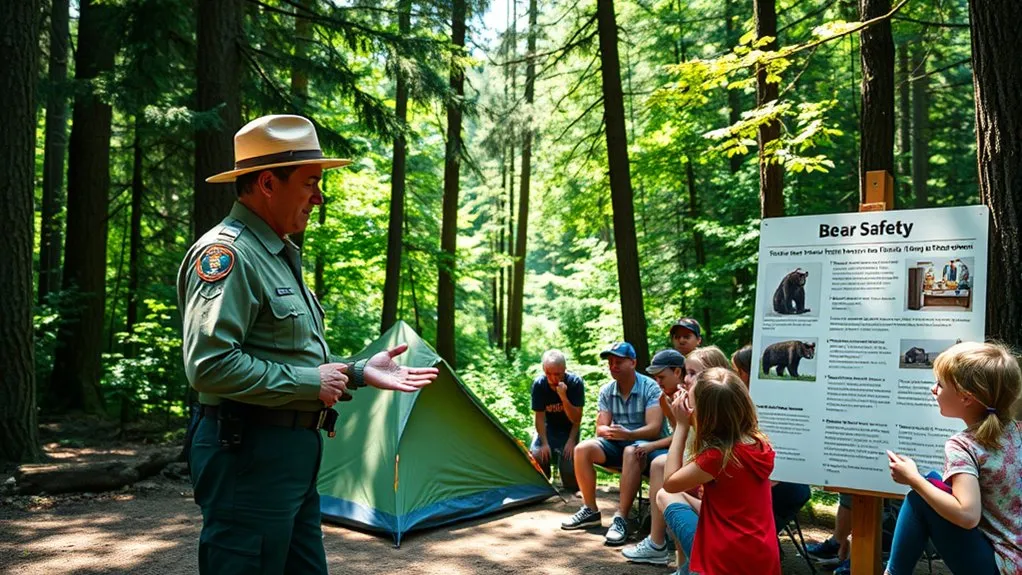
Local information is especially valuable because bear conditions and regulations can change from one trail or campground to another. Use official resources instead of relying only on general camping advice.
- Talk with rangers: Ask about current bear sightings, closures, carcasses, cub activity, approved food-storage methods, and emergency procedures.
- Attend safety programs: Ranger talks and outdoor-education programs can demonstrate bear-spray handling and food-storage techniques.
- Use park resources: Some destinations provide bear lockers, cables, or loan/rental canisters.
- Report problem encounters: Tell a ranger or wildlife authority about aggressive bears, bears obtaining human food, or serious encounters so managers can protect future visitors and wildlife.
Frequently Asked Questions
What Should I Do if I See a Bear While Hiking?
Do not approach or run. If the bear has not noticed you, quietly move away or detour. If it sees you but is not aggressive, stay calm, speak in a normal voice, keep your group together, and slowly increase your distance. Follow the minimum wildlife distance and encounter guidance for that park.
Can I Use My Car to Store Food While Camping?
Only where local rules allow it. Some frontcountry campgrounds permit unattended food and scented items inside a locked hard-sided vehicle with the windows completely closed. Other parks require food lockers or prohibit vehicle storage in certain circumstances. Never assume a vehicle is approved without checking the specific campground rules.
Are There Specific Bear-Resistant Canisters I Should Use?
Yes. Use a model accepted by the land manager for your destination. The IGBC maintains a current bear-resistant product program, but certification applies to exact products and does not automatically approve them for every park or forest. Verify the model and required locking method before your trip.
How Can I Tell if a Bear Is Nearby?
Look for fresh tracks, scat, claw marks, digging, torn logs, disturbed vegetation, or heavily used animal trails. A carcass, strong animal odor, or scavenging birds can also indicate a food source that may attract or be defended by a bear. If signs appear fresh, increase your distance rather than investigating.
Is Bear Spray Effective Against All Bear Species?
Bear spray has strong evidence as a non-lethal deterrent. A 2008 Alaska study included encounters with brown, black, and polar bears and found that 98% of people carrying spray were uninjured in close-range incidents. However, the study included very few polar-bear cases, and no deterrent guarantees safety. Follow local rules, especially in polar-bear country or parks where bear spray may be restricted.
What Items Should Be Stored as Bear Attractants?
In addition to food, many areas treat trash, beverages, toiletries, toothpaste, soap, sunscreen, insect repellent, medications, cookware, grills, pet food, and other scented items as attractants. Follow the site’s complete food-storage order because definitions vary.
What Should I Do if a Bear Comes Into My Campsite?
Secure food if you can do so safely, keep bear spray ready where permitted, and follow the local park’s response protocol. Do not offer food or abandon food to distract the bear. If a bear investigates or attacks an occupied tent, current NPS guidance for locations such as Denali advises making noise, fighting back, and being prepared to use bear spray.
Sources
- Grand Teton National Park — Safety in Bear Country — current guidance for hiking, encounters, bear spray, food storage, and campsite safety.
- Denali National Park — Bear Safety — current guidance on encounter behavior, backcountry food storage, camp separation, and wildlife distance.
- National Park Service — Bear Safety: Storing Food — general food, vehicle, trash, and bear-canister guidance.
- National Park Service — Bear Attacks — defensive, predatory, black-bear, and grizzly/brown-bear encounter guidance.
- Interagency Grizzly Bear Committee — Bear-Resistant Products — certification, product verification, locking, and local-approval guidance.
- Smith et al. — Efficacy of Bear Deterrent Spray in Alaska — peer-reviewed evidence behind the bear-spray effectiveness statistic.
Conclusion
Safe camping in bear country depends more on preparation and prevention than on reacting after a bear is already close. Check current local rules, hike alertly, avoid surprising bears, secure every attractant, keep bear spray accessible where it is legal and recommended, and know how defensive and predatory encounters differ. Most importantly, treat park regulations and ranger instructions as the final authority. Good bear safety protects your group while also helping keep wild bears from learning to associate campsites and people with food.

