

Last Updated on July 29, 2026 by Mason Reed
Solo tent camping can be calm, rewarding, and manageable when you plan for the fact that no partner is available to notice a problem or get help. Choose a trip that matches your skills, use a legal campsite, prepare for current conditions, share a detailed trip plan, and carry more than one way to navigate and communicate. Local rules and ranger guidance always take priority over general advice.
Quick Answer
For safer solo tent camping, start with a developed campground or familiar route, check weather and local alerts, inspect the site for overhead and flood hazards, secure food under local rules, leave a trip plan with a trusted contact, and carry navigation, first aid, lighting, and reliable emergency communication.
Key Takeaways
- Make your first solo trip short, close to help, and within your current camping and navigation skills.
- Check campground rules, closures, fire restrictions, wildlife notices, and the site-specific forecast before leaving.
- A tent protects you from weather, but it is not secure storage and it is not safe shelter from lightning.
- Store food, trash, toiletries, and other scented items exactly as the land manager requires.
- Leave a written trip plan, set a firm overdue time, and carry a backup communication method where cell service is unreliable.
At a Glance
| Time Required | 30–60 minutes for trip planning, plus a full practice setup at home |
| Difficulty | Beginner-friendly in a developed campground; advanced in remote or backcountry terrain |
| Tools Needed | Shelter and sleep system, navigation, headlamp, first aid kit, food and water supplies, weather layers, and emergency communication |
| Cost | Varies widely; use reliable gear you already know rather than buying unfamiliar equipment just before the trip |
Warning: No checklist removes all risk. Turn around, relocate, or cancel when weather, fire, flooding, wildlife activity, illness, equipment failure, or your own judgment says the trip is no longer within your safe limits.
Disclosure: As an Amazon Associate I earn from qualifying purchases. Some links on this page are affiliate links, at no extra cost to you.
Plan a Solo Camping Trip That Matches Your Skills
Your first solo trip should not also be your first time using a tent, navigating after dark, treating water, or cooking outdoors. Practice at home or on a trip with others before relying on those skills alone. A one-night stay in a staffed, developed campground near your vehicle is usually a better starting point than an isolated backcountry route.
Check Rules, Alerts, and Conditions
Before leaving, confirm the campground or land unit is open and that overnight camping is allowed. Review permit requirements, check-in procedures, quiet hours, fire restrictions, food-storage rules, water availability, road conditions, wildlife notices, and any seasonal hazards. Save the ranger station or land manager’s contact information offline.
Use a Simple Go-or-No-Go Check
Delay or change the trip when any of these conditions apply:
- You cannot set up the tent, use the stove, or operate your communication device without instructions.
- The forecast includes conditions beyond your shelter, clothing, driving, or navigation experience.
- Your route depends on a single phone app, a single light, or untreated natural water with no backup.
- You are sick, unusually tired, injured, or taking medication that affects balance, alertness, temperature control, or judgment.
- You have not told a trusted contact where you are going and when to seek help if you are overdue.
Choosing the Right Campsite
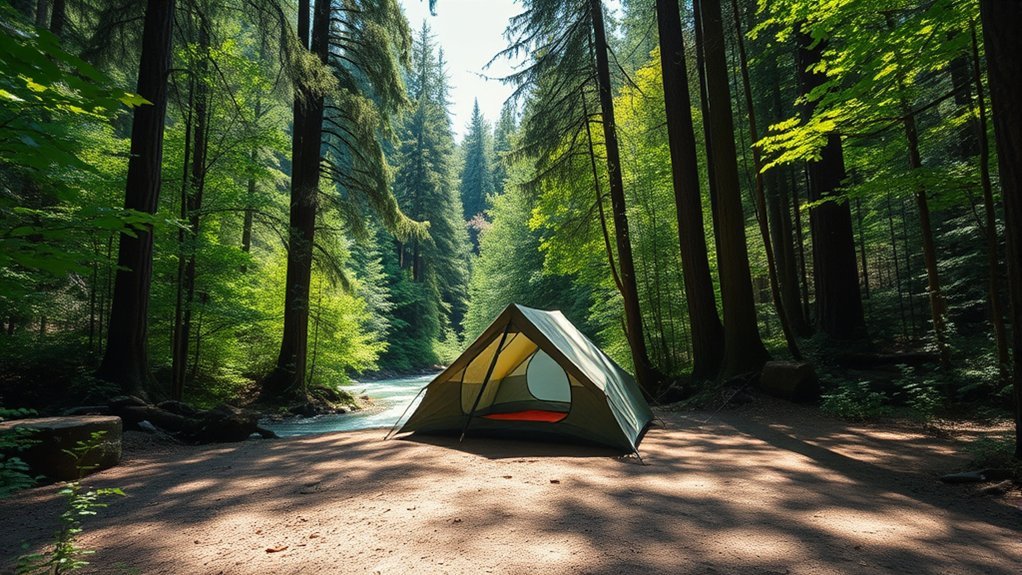
Use a designated tent pad or an established durable site whenever one is available. Before unloading, walk the full area and look up, down, and around. The National Park Service campsite guidance recommends checking for flash-flood exposure, lightning, wind, dead trees, falling branches, cliffs, and other local hazards.
- Look overhead: Do not pitch beneath dead, cracked, hanging, or storm-damaged branches. Avoid leaning or unstable trees.
- Check drainage: Stay out of dry washes, ravines, depressions, creek channels, and other low ground that could collect or channel water.
- Choose stable ground: Use a level, durable surface that is free of sharp rocks, ant nests, hidden holes, and loose debris.
- Consider wind: Natural terrain can reduce wind exposure, but do not trade wind protection for falling-tree, rockfall, or flood risk.
- Keep an escape route: Know how you will reach your vehicle, a substantial building, higher ground, or the campground host after dark.
- Respect water and vegetation: Use designated sites where provided. In dispersed areas, follow the land manager’s required setback from lakes, streams, trails, and other camps.
Note: “Camp 200 feet from water” is common backcountry guidance, not a universal rule for every campground. A designated campsite may be closer, while sensitive or flood-prone areas may require a greater distance. Follow posted rules and current ranger instructions.
Essential Gear for Safety
Solo camping gear should solve four basic problems: shelter from expected weather, warmth while resting, safe water and food, and a way to navigate or call for help. Reliability and familiarity matter more than packing the newest product.
Durable Tent and Sleep System
Choose a tent designed for the season, expected wind, group size, and campsite surface. There is no single waterproof rating that guarantees safety in every storm. Check the rainfly coverage, seam sealing, pole condition, stake compatibility, ventilation, and guyline points. Practice pitching it in daylight and wind before the trip.
Pair the tent with a sleeping bag or quilt suited to the expected low temperature and an insulated sleeping pad. Pack dry sleep clothing in a waterproof bag. Keep the shelter ventilated to reduce condensation, but do not assume ventilation makes fuel-burning equipment safe inside.
Navigation, Lighting, and Power
- Carry a paper map or other non-phone backup and know how to identify your campsite, trailhead, water sources, roads, and exit routes.
- Download maps for offline use before leaving service and keep the phone in low-power mode when practical.
- Use a headlamp so both hands remain free, and carry spare batteries or a second light.
- Bring a charged power bank and the correct cables, but do not treat battery-powered electronics as your only navigation or communication plan.
First Aid Kit Essentials
Customize your first aid kit for the trip length, environment, distance from help, and your medical needs. At minimum, consider adhesive bandages, sterile gauze, medical tape, antiseptic wipes, disposable gloves, blister care, an elastic wrap, tweezers, small scissors, an emergency blanket, and personal medications. Carry medications only when they are appropriate for you and use them as directed.
Keep the kit waterproof, easy to reach, and organized so you can use it with one hand or in low light. Check expiration dates and replace anything used, damaged, or wet. A kit is most useful when paired with current first aid and CPR training.
Emergency Communication Devices
A phone is useful where service exists, but remote coverage can be weak or absent. A satellite messenger may support check-ins, two-way text messaging, navigation, and SOS service depending on the model, subscription, battery, and view of the sky. A registered 406 MHz personal locator beacon is a dedicated distress device that alerts the search-and-rescue network when activated; it is not a casual messaging device.
- Register the beacon if registration is required and keep emergency contacts current.
- Learn the SOS procedure before the trip and protect the device from accidental activation.
- Carry it on your body or in an immediately reachable pocket, not buried in a pack you may lose.
- Keep enough battery reserve for the planned trip and a reasonable delay.
Pro Tip: Send a test check-in from home and confirm your trusted contact knows what the message looks like, what silence means, and when they should contact authorities.
Food, Water, and Cooking Basics
Carry enough potable water for the route, weather, cooking plan, and an unexpected delay. When using natural water, treat it with a method suitable for local risks and follow the product directions exactly. Bring a backup treatment method or enough extra water to leave safely if the primary method fails.
Keep cooking separate from sleeping gear and control every flame. Never use a charcoal grill, camp stove, lantern, or other fuel-burning appliance inside a tent, vehicle, or enclosed shelter unless the equipment is specifically designed and approved for that enclosed use. The U.S. Consumer Product Safety Commission warns that camping equipment can produce deadly carbon monoxide in enclosed spaces.
Preparing for Weather Conditions
Check the forecast for the exact campground and route, not only the nearest city. Review hourly temperatures, wind, precipitation, thunderstorms, flood watches, heat or cold advisories, air quality, and fire conditions. Continue checking during the trip when service or a weather radio is available.
| Condition | Preparation |
|---|---|
| Sudden Rain | Use a rainfly, waterproof critical gear, avoid flood channels, and know the route to higher ground. |
| Cold Nights | Pack dry layers, an adequate sleep system, food, and a plan to leave if you cannot stay warm. |
| High Heat | Increase water capacity, use shade, reduce exertion, and avoid the hottest part of the day. |
| Severe Storms | Know the nearest substantial building or hard-topped vehicle and be ready to leave early. |
| Smoke or Fire | Check official alerts and evacuation routes; do not camp where access could be cut off. |
Warning: A tent and an open picnic shelter are not safe from lightning. The National Weather Service advises moving to a substantial enclosed building or a hard-topped vehicle and waiting at least 30 minutes after the last thunder before returning.
Communicating Your Plans
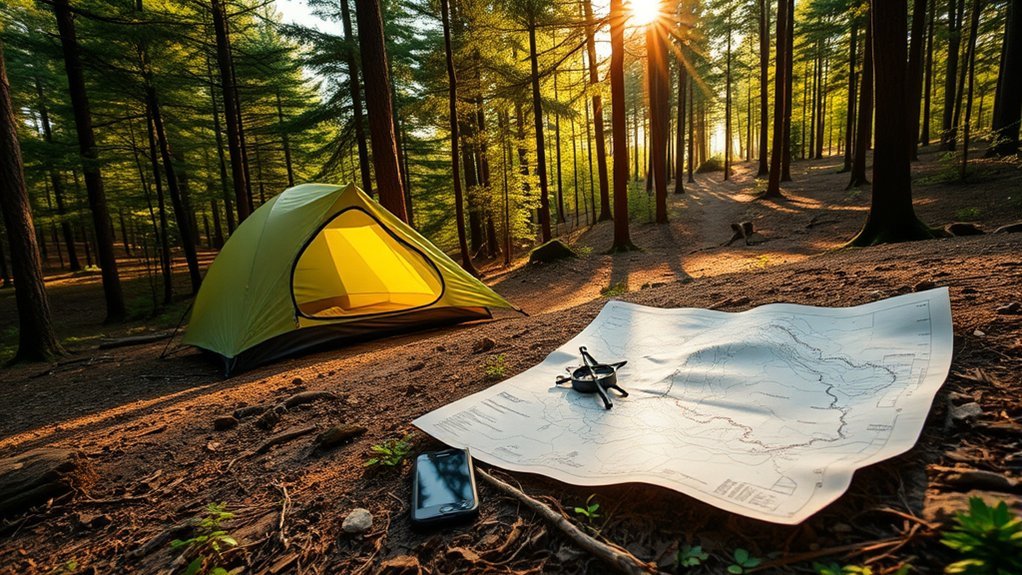
Before your solo camping adventure, give one reliable person a written plan and make sure they accept the responsibility. The National Park Service Trip Plan explains that accurate itinerary details can help search-and-rescue teams if you do not return as expected.
Notify a Trusted Contact
Choose someone who is not joining the trip and who will be available during your return window. Tell that person how you plan to check in, when you will be considered overdue, which authority to call, and that they should not begin an unsafe search on their own.
Share Complete Itinerary Details
- Your full name, phone number, emergency contacts, and relevant medical or mobility information you are comfortable sharing
- Campground, site number if known, permit number, route, trailhead, and backup destination
- Departure time, planned activities, check-in schedule, expected return time, and firm overdue time
- Vehicle make, model, color, license plate, and parking location
- Equipment colors, especially your tent, jacket, backpack, and vehicle
- Communication devices carried and how messages from them will appear
- Land manager, ranger station, county sheriff, or other appropriate local contact information
Update the Plan When It Changes
Send an update before taking a different route, moving campsites, extending the trip, or activating a backup plan. Location-sharing apps can help when service and battery power are available, but they do not replace a written itinerary. Always send a final “trip complete” message so your contact knows the plan is closed.
Note: A trip plan does not guarantee rescue. It works only when the information is accurate, the trusted contact understands the deadline, and the contact follows through when you are overdue.
Food Storage and Wildlife Safety
Food safety is also wildlife safety. Secure all food, trash, drinks, cookware with food residue, pet food, and scented items such as toothpaste, deodorant, sunscreen, and lip balm whenever they are not in immediate use.
There is no universal “hang it 10 feet high” rule. The National Park Service food-storage guidance notes that requirements vary: some locations require food lockers or approved bear-resistant containers, while others allow a specific hanging method. In some parks, hanging food is prohibited. Check the exact rule before packing.
- Never keep food or scented items in your tent.
- Use the provided locker, approved container, vehicle method, or hanging method required for that location.
- Keep the campsite clean and pack out food scraps, foil, wipes, and trash.
- Do not feed, approach, follow, corner, or try to photograph wildlife at close range.
- Learn the response for the species in the area; advice for bears, mountain lions, moose, snakes, and smaller animals is not interchangeable.
Warning: Do not depend on improvised scents, noise makers, or generic internet advice to deter wildlife. Follow the land manager’s current species-specific guidance and carry only legal deterrents you know how to use.
Keeping Valuables Secure
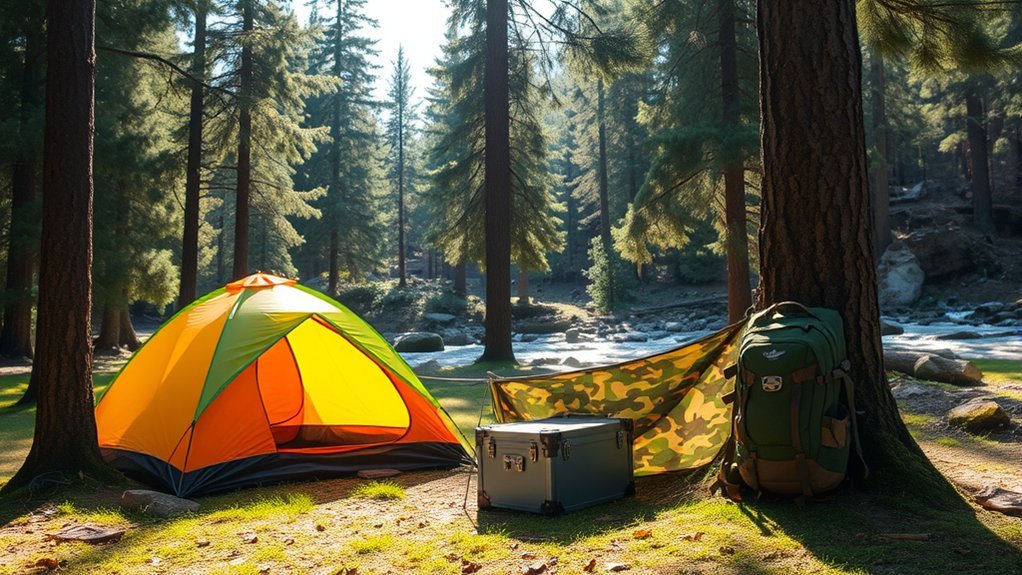
A tent provides privacy, not meaningful theft protection. Leave jewelry and unnecessary electronics at home. Keep identification, keys, payment cards, medication, and communication devices on your person or immediately accessible.
Treat your tent as shelter, not as a safe. The best theft prevention is to bring less, keep valuables out of sight, and use a locked hard-sided compartment when local rules allow.
- Lock high-value items out of sight in a vehicle trunk or other hard-sided compartment when appropriate for the location.
- Do not leave keys, identification, medication, or an emergency device in an unattended tent.
- Photograph important gear and record serial numbers before the trip.
- Ask the campground host or ranger about recent theft, wildlife break-ins, and recommended storage practices.
- Keep the campsite orderly so you can quickly notice missing gear or leave during an emergency.
Building Rapport With Fellow Campers
A brief introduction to the campground host or nearby campers can create a helpful layer of awareness. You may learn about weather changes, wildlife activity, damaged facilities, or local hazards. Keep the interaction friendly without sharing more personal information than necessary.
Do not feel obligated to announce that you are alone, reveal your exact schedule, invite strangers into your site, accept unwanted help, or continue a conversation that makes you uncomfortable. Set clear boundaries and move to a staffed or more populated area if needed.
First Aid Preparedness and Emergency Response
Supplies matter, but decisions matter more. Before the trip, learn how to control bleeding, clean and cover a wound, support a sprain, recognize heat and cold illness, respond to an allergic reaction, and perform CPR. Do not use equipment or techniques beyond your training unless emergency dispatch gives you instructions.
What to Do When Something Goes Wrong
- Stop and assess: Move away from immediate hazards such as traffic, fire, falling branches, floodwater, or unstable terrain.
- Call for help: Use 911 where service exists or activate the appropriate satellite SOS or PLB for a serious emergency.
- Give clear information: State your location, injury or hazard, time of incident, weather, equipment, and ability to move.
- Prevent a second problem: Stay warm or cool, conserve battery, make yourself visible, and avoid risky self-rescue when remaining in place is safer.
- Follow instructions: Keep the communication device available and follow dispatcher or rescue-team directions.
Note: Activate emergency services for a serious threat to life or safety, not merely for inconvenience. When you are unsure whether an injury, illness, fire, flood, or wildlife event is becoming dangerous, early professional guidance is safer than waiting for the situation to worsen.
Trusting Your Intuition
Your instincts are most useful when they lead to a specific safe action. If a person, animal, weather pattern, tree, slope, vehicle, or campsite feels wrong, pause and identify the concern. Move sites, return to your vehicle, contact the host or ranger, or leave the area before the situation escalates.
Set personal boundaries before the trip: which activities you will not attempt alone, how far you will travel from camp, what weather will make you leave, and how late you will stay out. A conservative decision may shorten the trip, but it protects your ability to camp again.
Practicing Leave No Trace Principles
Leave No Trace practices protect the environment, wildlife, other visitors, and your own campsite safety. Apply the land manager’s current rules rather than assuming the same method is allowed everywhere.
- Plan ahead and carry the equipment needed for local weather, waste, food storage, and fire rules.
- Travel and camp on durable surfaces and use established trails and campsites where available.
- Pack out all trash, leftover food, hygiene products, and toilet paper when required.
- Use toilets where available; otherwise follow the site’s exact human-waste rules and water setbacks.
- Leave plants, rocks, artifacts, and natural features as you found them.
- Observe wildlife from a distance and prevent animals from obtaining human food.
- Use a stove when fires are restricted or impacts would be high.
- Keep any permitted campfire small, attended, and inside the approved ring. Extinguish it completely with water, stir the ashes, add more water, and confirm everything is cold before leaving.
- Limit noise, lights, and campsite sprawl so other visitors can enjoy the area.
Pro Tip: Before leaving, stand where the tent was and scan the entire site. Pick up micro-trash, food crumbs, cord fragments, and anything that was not there when you arrived.
Frequently Asked Questions
What should I do if I encounter wildlife while camping?
Stay calm, give the animal space, secure food, and do not approach or feed it. Do not rely on one response for every species. Follow the park or land manager’s guidance for the animals present, because the correct response to a bear, mountain lion, moose, snake, or small food-conditioned animal can differ.
How can I keep my food safe from animals?
Follow the exact local food-storage rule. Use a provided locker, an approved bear-resistant container, an allowed vehicle method, or the required hanging method. Store trash, cookware, toiletries, and other scented items with the food. Never keep them in the tent, and never assume a universal hanging height is legal or effective.
Is it safe to camp alone as a beginner?
It can be reasonable when the trip is short, the campground is developed and staffed, conditions are mild, and you already know how to use your shelter, stove, navigation, lighting, and communication gear. A remote backcountry trip is not the best place to learn several new skills at once.
What are the best practices for campfire safety?
Check current restrictions, use only an approved fire ring, keep the fire small, clear nearby combustibles as required, and attend it at all times. Keep water ready. When finished, drown the fire, stir all material, add more water, and confirm the ashes and remaining wood are cold before leaving.
How do I choose a safe tent location?
Use a legal, established, level site when available. Look for dead branches and unstable trees overhead, flood channels and low spots below, cliffs or loose rocks nearby, and a clear route to shelter or higher ground. Follow designated-site boundaries and local water setbacks.
What if my phone has no service?
Do not wait until the trip to discover the gap. Carry offline navigation and, where the risk justifies it, a satellite messenger or registered personal locator beacon. Leave a trip plan with an overdue time so your contact can alert authorities even if you cannot send a message.
Should I tell other campers that I am alone?
You may introduce yourself to a campground host or trusted neighbor, but you do not need to broadcast that you are alone or share your full schedule. Keep personal details private, set boundaries, and move to a staffed or busier area when an interaction feels unsafe.
Can I cook inside my tent when it rains?
Do not use a typical fuel-burning camp stove, charcoal grill, lantern, or heater inside a tent or enclosed vehicle. Carbon monoxide, fire, and melted-fabric hazards can become deadly quickly. Use a legal, well-ventilated outdoor cooking area or change the meal plan.
Conclusion
Safer solo tent camping comes from conservative choices, not fearlessness. Match the trip to your skills, inspect the campsite, prepare for the forecast, secure food correctly, share a reliable trip plan, and carry practiced emergency tools. Stay flexible enough to leave when conditions change, and protect the place so the next camper finds it in good condition.
Sources
- National Park Service — Finding and Setting Up a Campsite — campsite layout and hazard checks
- National Park Service — Trip Plan — itinerary details, trusted contacts, and overdue response
- National Weather Service — Outdoor Lightning Safety — safe shelter and the 30-minute wait after thunder
- National Park Service — Storing Food — location-specific locker, canister, vehicle, and hanging rules
- NOAA SARSAT — 406 MHz Emergency Distress Beacons — personal locator beacon purpose and search-and-rescue alerts
- U.S. Consumer Product Safety Commission — Portable Heaters and Camping Equipment — carbon monoxide hazards in tents and vehicles
