
Last Updated on July 29, 2026 by Mason Reed
Solo female tent camping can be safe, rewarding, and confidence-building when you plan for the risks that apply to any person camping alone. Start with a developed campground, learn the site layout before dark, share a detailed trip plan, and carry more than one way to call for help. Good preparation matters more than fear-based gadgets or pretending that a tent is secure.
Quick Answer
For a safer first solo camping trip, reserve a developed site near other campers or a camp host, arrive in daylight, share your route and return time, download offline maps, keep emergency gear within reach, store food correctly, monitor weather, and leave immediately when a situation feels unsafe.
Key Takeaways
- Choose a legal, developed campground that matches your experience level; nearby campers and staff can make help easier to reach, but they do not guarantee safety.
- Give a trusted contact your exact campground, site number, route, vehicle details, check-in times, and instructions for what to do if you miss a check-in.
- Do not rely on one phone or app. Carry offline navigation, backup power, and a satellite device or registered personal locator beacon for truly remote trips.
- Keep food, scented items, weather, fire, wildlife, water, and medical risks in the same safety plan as personal security.
- Your comfort is enough reason to move, contact staff, or end the trip. You do not need to wait for proof that a situation is dangerous.
At a Glance
| Time Required | One focused planning session, plus enough daylight for check-in and setup |
| Difficulty | Beginner to moderate; start with one night near home |
| Tools Needed | Tent and sleep system, navigation, lighting, first aid, food and water, weather layers, communication device, backup power, whistle or personal alarm |
| Cost | Varies by campsite and gear; borrow, rent, or use gear you already trust before buying specialty equipment |
Disclosure: As an Amazon Associate I earn from qualifying purchases. Some links on this page are affiliate links, at no extra cost to you.
Choose the Right Campsite
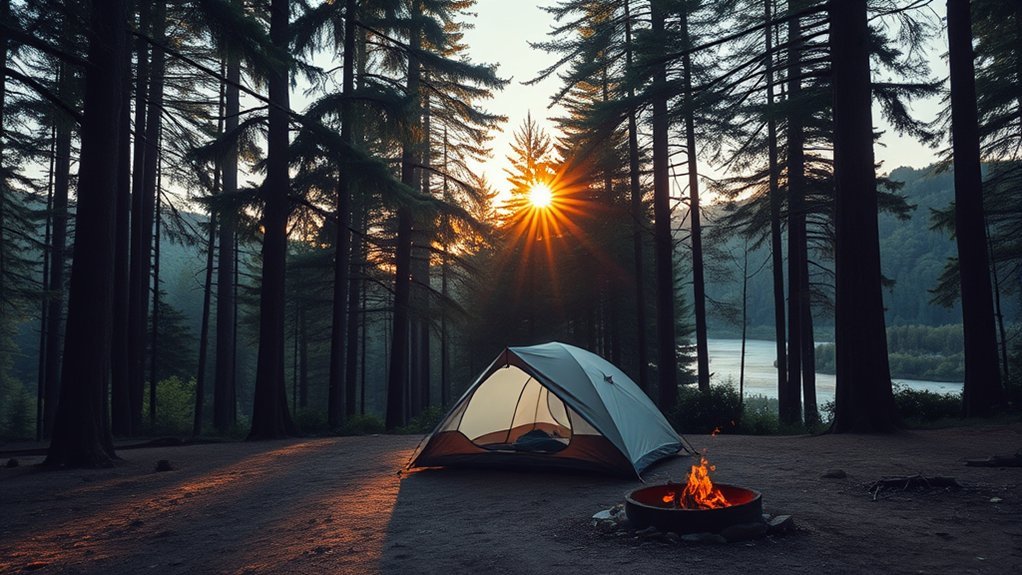
For a first solo female tent camping trip, a developed, reservable campground is usually easier to manage than a remote dispersed site. Look for a camp host, ranger presence, marked roads, potable water, toilets, posted emergency information, and other occupied sites. The National Park Service notes that developed campgrounds are well suited to less-experienced campers, while park websites and the official app are the best places to confirm current campground details.
Read recent campground notices before booking. Confirm opening dates, reservation rules, fire restrictions, wildlife requirements, drinking-water status, gate hours, and whether cellular service is available. Cell coverage shown on a carrier map may not work at your exact site.
Once you arrive, inspect the individual pad before unloading. Avoid dead or leaning trees, damaged branches overhead, low areas that could collect water, dry streambeds, cliff edges, unstable slopes, and sites beside fast traffic. Choose a spot where you can see the access road and reach your vehicle without crossing rough ground, while still keeping reasonable privacy from passersby.
Warning: A busy campground is not automatically a safe campground. If the site, neighboring behavior, staff response, weather, or access route concerns you, relocate or leave. Do not stay simply because you paid for the reservation.
Plan a Simple Trip
Make your first trip one night, close enough to home that leaving is easy. Pick a familiar season and a campground that does not require a long hike, difficult river crossing, four-wheel-drive access, or specialized backcountry skills. A short trip lets you learn how your tent, sleep system, stove, lighting, and personal routines work before you add distance or isolation.
Practice pitching the tent at home until you can set it up without help. Check every pole, stake, zipper, guyline, battery, and stove before departure. Pack simple meals that do not require complicated preparation, and bring enough ready-to-eat food to skip cooking if weather or fatigue makes a stove unsafe.
Arrive with enough daylight to check in, locate the host or ranger station, inspect the site, pitch the tent, store food, find the restroom, identify exits, and organize nighttime gear. Keep the itinerary light. One planned walk or activity is enough for a first trip; extra time gives you room to respond to weather, fatigue, or an uneasy campsite.
Pro Tip: Photograph the campground map, entrance sign, site number, and posted emergency contacts after you arrive. Send those images to your emergency contact while you still have service.
Trust Your Instincts and Use a Clear Exit Plan
Instinct is not proof that danger is present, but discomfort is still useful information. You may notice behavior, noise, weather, or access problems before you can explain exactly what feels wrong. Treat that feeling as a prompt to pause, move toward a safer location, contact staff, or leave.
| Scenario | Safer Response |
|---|---|
| Unidentified noise at night | Stay inside while you listen and use your light. Do not step into darkness impulsively. Call the host, ranger, or emergency services if the noise suggests a person, fire, severe weather, or a dangerous animal. |
| Uncomfortable interaction | End the conversation without debating. Move toward staff, a vehicle, or an occupied public area and contact someone you trust. |
| Feeling watched or followed | Do not return to an isolated tent site. Go to the host, ranger station, staffed facility, or your locked vehicle, then report the behavior from a safe place. |
| Unexpected visitor at the tent | Keep the tent or vehicle between you and the visitor when possible. Speak firmly, do not share that you are alone, and call for help if the person will not leave. |
| Fire, flood, violence, or immediate threat | Leave by the safest available route and call 911 or the local emergency number when service is available. Gear can be replaced. |
Decide your exit plan before dark. Keep your vehicle facing out when the site allows it, leave keys and shoes in the same reachable place, and avoid spreading gear so widely that departure becomes difficult. Do not post your exact campsite or live itinerary publicly while you are still there.
Share a Detailed Trip Plan With Loved Ones
Before leaving, give at least one trusted person enough information to recognize a missed return and start the right response. A vague message such as “I’m camping this weekend” is not enough. The National Park Service recommends leaving a travel itinerary with an emergency contact and telling that person when you expect to return.
Inform Contacts of Plans
Your written trip plan should include:
- Campground name, street address or entrance, site number, and reservation dates.
- Planned driving route, trail names, activity areas, and any alternate route.
- Your vehicle make, model, color, license plate, and parking location.
- Your tent color and a recent photo of the gear you will be using.
- Expected check-in times and the final time you expect to be home.
- Campground office, ranger station, sheriff, or park dispatch contact information.
- Medical details that emergency responders may need, shared only with someone you trust.
- The exact steps your contact should take if you miss a check-in.
Send an update when you reach the campground, whenever your campsite or route changes, and after you return safely. A check-in plan fails when your contact does not know whether to wait, call the campground, or contact emergency services.
Use GPS Coordinates Correctly
GPS coordinates identify a place; they do not automatically transmit your live location. Sending campsite coordinates can help your contact describe where you planned to stay, but real-time tracking requires a phone connection or a satellite messenger with an active service plan and a clear enough view of the sky.
Download the park or trail map before leaving service, and carry a paper map as backup. Save the coordinates for the campground entrance, your site, trailhead, vehicle, and nearest staffed location. Confirm that the coordinate format shown on your device matches the format your contact can read.
Set a Missed Check-In Protocol
Agree on a practical grace period for ordinary delays, then write down what happens next. For example, your contact might first call and text you, then call the campground or ranger station, and finally contact local emergency services if staff cannot confirm that you are safe. The plan should account for known dead zones instead of treating every lost signal as an emergency.
Note: Location-sharing apps are useful only while the phone has power and the required network connection. A screenshot of your trip plan, an offline map, and a separate emergency device provide stronger backup than continuous tracking alone.
Stay Aware of Your Surroundings
Awareness should help you make decisions, not keep you anxious all night. Learn what normal campground sounds and wildlife activity are like before dark. Introduce yourself briefly to the camp host or ranger, note which nearby sites are occupied, and identify the restroom, water point, exits, emergency phone, and any location with reliable service.
- Keep a headlamp, whistle or personal alarm, phone, keys, shoes, and warm layer in one reachable place.
- Avoid wearing noise-canceling headphones while walking alone near roads, trail junctions, or after dark.
- Lock valuables out of sight in a hard-sided vehicle when possible. A small padlock on a tent zipper may discourage casual opening, but fabric walls do not provide real security.
- Watch for changing clouds, wind, smoke, water levels, falling branches, wildlife behavior, and campground alerts.
- Do not tell unfamiliar people where you will hike, how long you will be gone, or that nobody expects you back soon.
- Use established trails and return before dark unless you have the skill, equipment, and route knowledge for night travel.
Confidence in solo camping comes from having clear choices: stay, move, call for help, or leave.
Prepare for Emergencies
Emergency preparation should cover injury, illness, getting lost, severe weather, fire, wildlife, vehicle trouble, and unwanted human behavior. Learn the campground’s address, site number, evacuation routes, and emergency procedures as soon as you arrive. In a life-threatening emergency, call 911 or the local emergency number when you have service and give the most precise location available.
Essential Safety Supplies
Use the National Park Service Ten Essentials as a starting system, then adapt it to the campground, weather, and length of your trip:
- Navigation: downloaded offline map, paper map, compass, and the skill to use them.
- Light: headlamp plus spare batteries; a second light is useful when camping alone.
- First aid: bandages, wound-cleaning supplies, blister care, pain reliever, allergy treatment you normally use, and personal medications.
- Weather protection: rain shell, warm layer, sun protection, and clothing suitable for the overnight low.
- Food and water: enough for the trip plus an emergency margin.
- Fire and repair: permitted fire-starting method, multi-tool, tape, tent repair materials, and spare cord.
- Emergency shelter: your tent plus a backup such as an emergency blanket when conditions warrant it.
- Signaling and power: whistle or personal alarm, charged phone, power bank, charging cables, and a remote-area communication device when needed.
Warning: A portable filter does not guarantee that untreated water is safe. The CDC says boiling is the best way to kill germs; when boiling is not possible, the next-best option is generally to filter and then disinfect according to product directions. Water contaminated with fuel or toxic chemicals requires a different source.
Emergency Communication Plan
Choose communication gear for the actual coverage at your destination. Test the device, update its software, charge it fully, and teach your emergency contact what messages or alerts they may receive.
| Option | What It Can and Cannot Do |
|---|---|
| Mobile phone | Can call or text where service exists and may support emergency features, but coverage and battery life are limited. |
| Two-way satellite messenger or satellite phone | Can send messages or request help beyond cellular coverage, depending on the device, subscription, satellite view, battery, and operating conditions. |
| 406 MHz personal locator beacon | A manually activated distress beacon for serious emergencies. It does not replace routine check-ins and must be registered with NOAA when U.S.-coded. |
| Whistle or personal alarm | Can attract nearby attention but does not contact dispatch or transmit your location. |
| Power bank or solar charger | Provides power only; it is not a communication device and cannot create a network signal. |
Reserve SOS functions for genuine emergencies and follow the device manufacturer’s instructions. After activating an SOS or personal locator beacon, remain in a safe, visible location when possible and watch for messages or rescuers. Do not cancel a response simply because conditions appear to improve unless the responding service instructs you how.
Manage Wildlife, Food, and Fire Risks
Wildlife rules are location-specific. Follow the campground’s instructions for food lockers, vehicles, approved bear-resistant containers, cooking areas, and waste. Store food, garbage, pet food, toiletries, sunscreen, lip balm, and other scented items whenever they are not in active use. Never keep food or scented products in the tent in bear country.
Where bear spray is recommended and legal, carry an approved product where it is immediately reachable and learn its operation before the trip. Bear spray is designed for aggressive bears, not as a substitute for human-directed pepper spray. Some parks restrict irritant sprays, so check the rules for the exact land unit before packing one.
Use only permitted stoves and fire rings. Check current restrictions on the day of arrival, keep water nearby, attend every flame, and extinguish a fire until the material is cool to the touch. Wind, drought, and local fire orders can change after you make a reservation.
Prepare for Weather and Environmental Hazards
Check the forecast, park alerts, air-quality notices, river conditions, and fire information before leaving home and again before you lose service. Pack for the overnight low, not only the daytime high. Leave early when an official warning, evacuation order, rapidly rising water, wildfire smoke, or unstable trees threaten the campground.
A tent does not protect you from lightning. When you hear thunder, move to a substantial enclosed building or a hard-topped vehicle and remain there for 30 minutes after the last thunder. Do not shelter under an isolated tree, beside water, or against metal fencing.
In hot weather, use shade, ventilation, water, and rest; a closed tent can heat quickly in direct sun. In cold or wet conditions, change out of damp clothing and protect your sleeping bag from moisture. Check yourself for ticks after time in brush or tall grass, and follow product directions when using insect repellent or treated clothing.
Use Layered Personal Security, Not One “Defense” Gadget
Personal security works best in layers: a suitable campground, a shared itinerary, daylight setup, awareness, reliable communication, accessible transportation, and a willingness to leave. A whistle, personal alarm, bright flashlight, and charged phone can help attract attention or create time to move toward safety, but no device guarantees protection.
Rules for firearms, knives, stun devices, human-directed pepper spray, and bear spray vary by state, federal land unit, campground, and facility. Check the exact regulations before the trip and follow every product label. Irritant sprays can blow back, contaminate a tent, or affect bystanders, so they require legal and practical consideration rather than casual advice.
If someone threatens, follows, exposes themselves to, enters the site of, or refuses to leave a solo camper, move to a staffed or populated area and contact campground staff or law enforcement. Preserve photos, messages, vehicle details, or witness information only when doing so does not delay escape.
Note: This is general outdoor-safety information, not legal advice or a guarantee of personal safety. Local rules and current conditions control.
Solo Female Camping Packing Checklist
- Tent you have already practiced pitching, footprint if required, stakes, guylines, and repair kit.
- Sleeping bag rated for expected conditions, sleeping pad, pillow, and dry sleep clothing.
- Headlamp, backup light, spare batteries, phone, charging cables, and power bank.
- Offline map, paper map, compass, campsite reservation, permits, and emergency contacts.
- First aid kit, personal medications, sanitation supplies, menstrual products, toilet kit, and hand cleaner.
- Drinking water, backup treatment method, simple food, stove where permitted, lighter, and utensils.
- Weather layers, rain gear, sun protection, insect repellent, sturdy footwear, and spare socks.
- Whistle or personal alarm and any legal, location-appropriate wildlife deterrent you know how to use.
- Food-storage container required by the campground, trash bags, and odor-resistant storage as needed.
- Vehicle emergency supplies for car camping, including tire tools, jumper pack or cables, and extra water.
Frequently Asked Questions
What should I pack for solo female tent camping?
Pack a tent and sleep system suited to the weather, navigation, lighting, first aid, food, water, treatment backup, clothing layers, communication gear, power, whistle or personal alarm, sanitation items, repair supplies, and every food-storage item required by the campground. Test critical gear before leaving.
How can I stay connected while camping in remote areas?
Do not assume a phone will work. Download offline maps, carry backup power, and consider a two-way satellite messenger, satellite phone, or registered personal locator beacon based on the trip. Give a trusted person a written itinerary and missed-check-in protocol before departure.
Are there specific gear recommendations for solo female campers?
The core gear is the same reliable equipment any solo camper needs. Prioritize items you can operate alone: a simple tent, two light sources, manageable water containers, accessible communication gear, a first aid kit matched to your skills, and a sleep system warm enough for the forecast low.
What self-defense options should I consider while camping alone?
Start with avoidance and escape: choose a suitable campground, keep transportation available, meet the host, carry a whistle or alarm, and leave early when behavior concerns you. Laws for weapons and sprays vary, and some parks prohibit items that are legal elsewhere. Verify local rules and obtain proper training before carrying any defensive tool.
How do I choose the right tent for solo camping?
Choose a weather-appropriate tent that you can carry, pitch, stake, ventilate, and pack without help. Check the floor length, interior room for essential gear, rainfly coverage, pole design, packed size, and wind setup. Practice at home and replace missing or damaged parts before the trip.
What should I do if I feel unsafe after dark?
Move toward a camp host, ranger, staffed building, occupied public area, or locked vehicle. Call someone you trust and report specific behavior to staff or law enforcement. Leave the campground when it is safe to drive. Do not confront a person or step into darkness merely to investigate a noise.
Is a tent lock enough to keep me safe?
No. A small zipper lock may deter casual opening, but a fabric tent is not a secure room and a lock can slow your exit. Keep valuables in a locked vehicle when possible, use the lock only as a minor layer, and rely on campground choice, awareness, communication, and a clear departure plan.
Conclusion
Solo camping as a woman does not require pretending that risk is absent or carrying a dramatic collection of defense gadgets. It requires a trip that matches your skills, a campsite you can leave easily, dependable communication, sound weather and wildlife habits, and clear boundaries with other people. Start small, practice your gear, share your plan, and treat leaving as a successful safety decision—not a failed adventure.
Sources
- National Park Service Trip Planning Guide — current trip planning, alerts, hazards, and preparation.
- National Park Service Ten Essentials — navigation, emergency equipment, backup power, and trip-plan guidance.
- National Park Service Bear Safety: Storing Food — bear-resistant storage and campsite food practices.
- National Weather Service Lightning Safety Outdoors — why tents are not lightning shelters and where to go.
- NOAA SARSAT 406 MHz Emergency Beacons — personal locator beacon purpose and emergency use.
- CDC Backcountry Water Treatment — boiling, filtration, disinfection, and chemical-contamination limits.

