

Last Updated on July 29, 2026 by Mason Reed
Family tent camping is easier when every item has a purpose and every adult knows the safety plan. A useful family camping checklist should cover shelter, sleep, food, water, clothing, lighting, first aid, weather, wildlife, sanitation, and activities—not just the tent. Adjust the list for your campground, trip length, forecast, children’s ages, and any medical needs.
Quick Answer
For family tent camping, pack a weather-ready tent, sleeping gear, layered clothing, lighting, safe cooking supplies, food and water, a first aid kit, medications, sun and insect protection, hygiene items, and simple activities. Check campground rules, weather alerts, fire restrictions, and wildlife-storage requirements before leaving home.
Key Takeaways
- Choose a tent with enough floor space for people and gear, then test it at home before the trip.
- Match sleeping bags and clothing to the expected overnight low, not just the season name on the gear.
- Keep perishable food at 40°F or below, separate raw foods, and store all food and scented items exactly as the campground requires.
- Never use a fuel-burning stove, lantern, grill, or heater inside a tent because carbon monoxide can build up without warning.
- Give each child a light, set campsite boundaries, and agree on a meeting place and emergency plan.
- Check the forecast, alerts, fire rules, water availability, restroom access, and cell coverage before you arrive.
At a Glance
| Time Required | About 1–3 hours for planning, packing, and testing gear; longer for a first trip |
| Difficulty | Easy to moderate, depending on weather, campsite access, and children’s ages |
| Tools Needed | Packing checklist, weather forecast, campground map and rules, cooler thermometer, food thermometer, mallet, repair kit, and lights |
| Cost | Varies widely; borrowing, renting, and using gear you already own can reduce first-trip costs |
Disclosure: As an Amazon Associate I earn from qualifying purchases. Some links on this page are affiliate links, at no extra cost to you.
Complete Family Tent Camping Checklist
Use this master list as a starting point. A developed campground with potable water, restrooms, a picnic table, and a food locker requires less equipment than a primitive site. Remove items you do not need, but do not skip safety equipment simply to save space.
| Category | Pack These Items |
|---|---|
| Shelter | Tent, rainfly, footprint or ground cloth, stakes, guylines, mallet, doormat, repair tape, seam sealer if needed |
| Sleep | Temperature-appropriate sleeping bags, pads or mattresses, pump, pillows, fitted sheets, extra blankets, sleepwear, earplugs |
| Kitchen | Outdoor stove and fuel, lighter, cookware, utensils, can opener, cutting board, knife, food thermometer, cooler thermometer, wash bins, soap, towels |
| Food and Water | Meal plan, snacks, drinking water or treatment method, cooler and ice, leakproof containers, wildlife-approved storage, trash bags |
| Safety | First aid kit, prescriptions, emergency contacts, map, compass or GPS, whistle, weather alerts, fire extinguisher where appropriate |
| Lighting and Power | Headlamp for each person, lantern, extra batteries, charging cables, power banks, optional solar lights |
| Clothing | Base layers, warm layer, rain shell, sun hat, warm hat, sturdy shoes, camp shoes, extra socks and underwear |
| Personal Care | Toothbrushes, toothpaste, hand sanitizer, toilet paper, towels, sunscreen, insect repellent, menstrual supplies, diapers if needed |
| Comfort and Activities | Folding chairs, tablecloth, hammock where allowed, books, cards, art supplies, balls, frisbee, nature scavenger hunt |
Pro Tip: Pack by zone rather than by person. Keep sleep gear together, kitchen gear together, and safety supplies in one clearly marked bin. That makes setup faster and helps everyone find items without emptying the vehicle.
Choose and Prepare the Campsite
Research Rules and Amenities
Before reserving, confirm the campsite’s maximum group size, vehicle limit, check-in time, quiet hours, pet rules, fire restrictions, food-storage requirements, and available facilities. Check whether the site has potable water, toilets, showers, a picnic table, a fire ring, electrical hookups, shade, and accessible paths. Families with toddlers may prefer a site away from steep drop-offs, fast water, and busy campground roads.
Download or print the campground map and save the ranger or host contact information. Cell service can be weak or absent, so do not rely on a phone as your only map, light, or emergency tool. The National Park Service Ten Essentials recommends backup navigation, illumination, insulation, first aid, food, water, and emergency shelter.
Check Weather and Conditions
Review the point forecast for the campground rather than the nearest city. Note the expected daytime high, overnight low, rain chance, wind, heat risk, and thunderstorm timing. Check again before departure because mountain, desert, and coastal weather can change quickly. Also review road closures, wildfire smoke, burn bans, flood warnings, and local wildlife notices.
Plan the Campsite Layout
On arrival, identify the safest place for the tent, kitchen, play area, and vehicle. Use the established tent pad when provided. Avoid dead or damaged overhead branches, drainage channels, low spots that collect water, anthills, and sharp debris. Keep children away from the stove, fire ring, guyline trip hazards, roads, cliffs, and water. Set one obvious family meeting point, such as the picnic table or vehicle.
Family Camping Tent Essentials
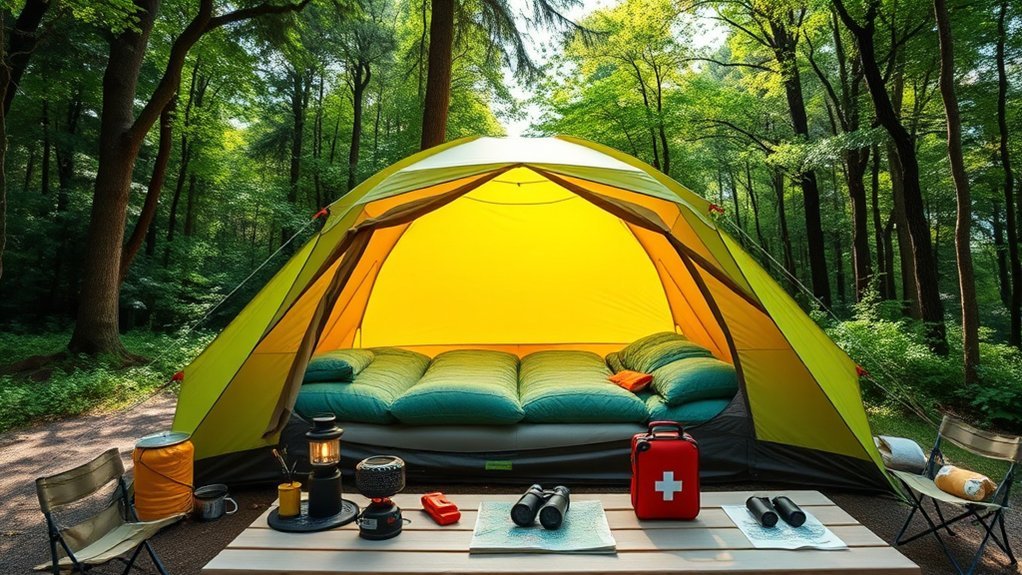
Choose a tent that fits every sleeper without forcing people against the walls. Manufacturer capacity ratings usually describe sleeping space, not extra room for bags, pets, or a portable crib. For car camping, many families are more comfortable in a tent rated for at least one additional person, provided the larger tent still fits the campground’s tent pad.
Tent Size and Layout
Check the floor dimensions instead of relying only on the person rating. Measure bulky items at home, including cots, double mattresses, and portable cribs. A tall cabin-style tent offers standing room and easier dressing, while a lower-profile dome may handle wind better. Canvas bell tents can provide generous space, but they are heavier, slower to dry, and may not fit every developed tent pad.
Weatherproofing and Setup Gear
- Footprint or ground cloth: Size it so no material extends beyond the tent floor, where it could collect runoff.
- Rainfly: Use the full rainfly when rain, dew, or wind is possible, and keep vents open to reduce condensation.
- Stakes and guylines: Bring stakes suited to the soil, plus a mallet and reflective cord where allowed.
- Repair supplies: Pack compatible patch material, strong tape, spare cord, and a small multitool.
- Entry control: Use a mat or small tarp at the door and keep shoes outside the sleeping area to reduce mud and sand.
Practice a full setup at home. Confirm that every pole, clip, stake, and fly attachment is present, then allow the tent to dry completely before repacking it.
Warning: Never operate a fuel-burning heater, stove, grill, or lantern inside a tent. Carbon monoxide is colorless and odorless, and dangerous levels can build up in enclosed camping spaces. Follow the U.S. Consumer Product Safety Commission’s camping-equipment guidance.
Camp Furniture and Sleeping Gear
Comfort matters because a cold, restless night can affect the whole family the next day. Build the sleep system from the ground up: insulation from the ground, a sleeping bag or blankets suited to the forecast, comfortable clothing, and enough room to move without touching wet tent walls.
Sleeping Comfort Essentials
- Sleeping pads, cots, or air mattresses: Pads insulate as well as cushion. Cots add height but may need protective feet so they do not damage the floor. Air mattresses are comfortable but can lose pressure as nighttime temperatures fall.
- Temperature-appropriate sleeping bags: Check the expected overnight low and the bag’s temperature information. A “3-season” label alone does not guarantee comfort in every spring, summer, or fall condition.
- Sheets and pillows: Moisture-wicking sheets and washable pillowcases can improve comfort on warm nights.
- Extra blankets and dry sleepwear: Keep one warm layer and dry socks reserved for bedtime, especially for children.
Inflate mattresses and inspect sleeping bags at home. Patch leaks before the trip and bring the correct pump, adapters, and spare batteries. Place a blanket or fitted sheet over vinyl mattresses to reduce clamminess.
Portable Seating Options
Pack a folding chair or camp stool for each family member when the site does not provide enough seating. Cup holders and storage pockets are useful around the picnic table and campfire. Choose stable chairs that match the user’s size and follow the manufacturer’s weight limit. Hammocks can create a quiet reading or rest space, but use only approved straps and trees, follow campground rules, and supervise children.
Organization and Storage Solutions
Clear, lidded bins make it easier to separate cookware, dry food, lighting, and personal items. A bin can double as a wash basin when it has been emptied and cleaned. Keep the first aid kit, medications, lights, and rain gear where adults can reach them immediately rather than burying them under bedding.
- Label bins on the lid and two sides.
- Use one small bag for each person’s nighttime items.
- Store wet clothing in a separate ventilated container until it can be dried.
- Keep scented toiletries with food if local wildlife rules require it.
Lighting, Power, Navigation, and Communication
Lighting for Every Person
Give each family member a headlamp or flashlight and teach children where to store it. Headlamps leave both hands free for walking, cooking, and bathroom trips. Add one lantern for the table or tent vestibule, but keep bright lights low and pointed toward the ground so they do not disturb nearby campers.
Pack spare batteries in a dry container. Solar string lights can mark a guyline or add gentle light, but they should not replace dependable headlamps. Avoid candles and open flames in or near tents.
Power Management
Charge phones, lights, watches, and power banks before leaving. Download maps, reservation details, and emergency information for offline use. Put phones in low-power or airplane mode when service is poor because repeated signal searching drains the battery. Keep one power bank reserved for communication rather than entertainment.
Emergency Communication Tools
Walkie-talkies can help family members communicate around a large campground, but they are not a reliable way to reach emergency services. Leave a trip plan with a trusted person, including the campground, site number, vehicle description, group members, planned activities, and expected return time. In remote areas, consider a personal locator beacon or satellite messenger and learn how to use it before the trip.
Note: A phone, walkie-talkie, or satellite device does not replace a trip plan, weather awareness, first aid supplies, or sound decisions. Help may be delayed even after an emergency signal is sent.
Camp Kitchen and Cookware
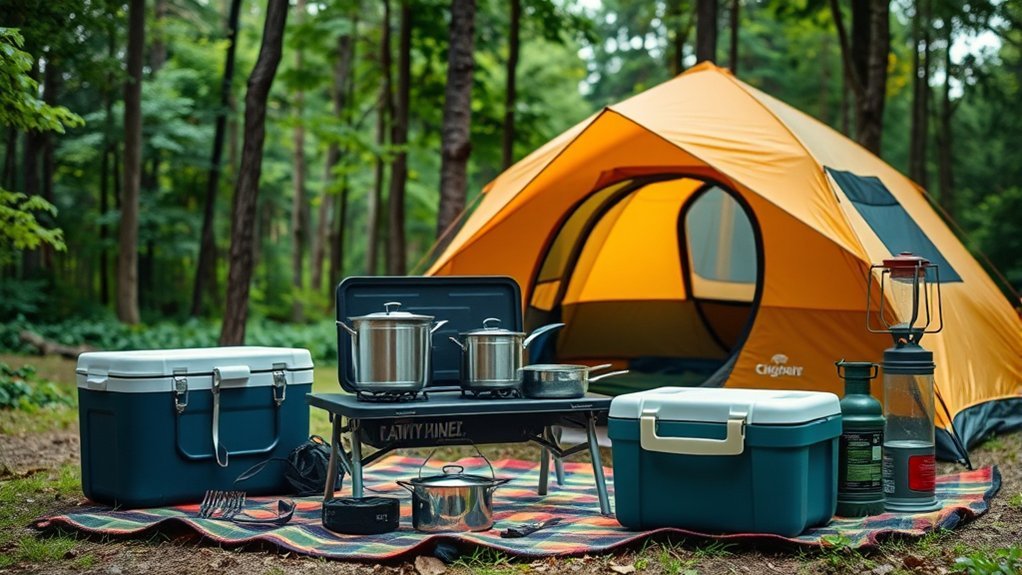
Plan simple meals that use a small number of ingredients and can be prepared before children become tired or hungry. Write the menu by day, then list every ingredient, condiment, utensil, and fuel item needed for each meal.
Essential Cooking Gear
- Outdoor camp stove: A stable two-burner stove is convenient for family car camping, but any stove should be used outdoors on a level surface and according to its manual.
- Cookware: Bring a skillet or cast iron pan, a small pot, lids, heat-safe utensils, and pot holders.
- Preparation tools: Pack a cutting board, chef’s knife with a cover, can opener, measuring cup, and food thermometer.
- Cleanup gear: Bring wash and rinse bins, biodegradable soap, sponge, towels, a strainer, and trash bags. Use soap away from lakes and streams and follow campground wastewater rules.
- Heavy-duty foil: Foil can simplify packet meals and protect food during cooking, but pack used foil out as trash.
- Leakproof containers: Use them to organize food and reduce spills and odors.
Cooler and Food Safety
Keep cold food at 40°F or below and place an appliance thermometer inside the cooler. Pack raw meat and poultry separately from ready-to-eat foods, ideally in a separate cooler or leakproof container at the bottom. Open the food cooler as little as possible and use a second cooler for drinks when practical.
Use a food thermometer instead of judging doneness by color. The USDA camping food-safety guide recommends 145°F for whole cuts of beef, pork, lamb, and veal followed by a three-minute rest, 160°F for ground meats, and 165°F for poultry. Wash hands or use an appropriate hand-cleaning method before food preparation and after handling raw meat.
Wildlife-Safe Food Storage
Store food, garbage, dirty cookware, pet food, and scented items exactly as the land manager requires. Depending on the campground, that may mean a provided food locker, an approved bear-resistant container, or a closed vehicle during permitted hours. Do not keep food or scented items in the tent.
Tree-hanging is not a universal solution. It may be prohibited, ineffective, or unnecessary where lockers or approved containers are required. Check the campground’s current instructions before the trip. The National Park Service food-storage guidance also advises securing food and scented items immediately, washing dishes promptly, and packing out all food waste.
Warning: Do not cook in the tent or use a stove to warm it. Keep children outside the cooking zone, turn pot handles inward, allow equipment to cool before storage, and inspect fuel connections for leaks according to the stove manual.
Water, Hygiene, and Waste
Drinking Water Plan
Confirm whether the campground’s water is potable and whether it will be available during your stay. Bring enough water for drinking, cooking, handwashing, and cleaning, plus a reasonable backup for delays or outages. Water needs vary with heat, activity, altitude, age, and health, so use location-specific guidance rather than one universal amount.
Do not drink untreated lake, river, or spring water. For primitive camping, use a treatment method appropriate for the local risks and follow the product instructions. Keep drinking containers separate from wash-water containers.
Personal Hygiene
Pack toothbrushes, toothpaste, hand sanitizer, toilet paper, towels, menstrual supplies, and any diapers or wipes needed. Biodegradable soap is still soap; do not use it directly in a lake or stream. Follow campground rules for sinks and greywater. In undeveloped areas, carry wash water away from natural water sources before using a small amount of soap.
Trash and Human Waste
Use developed toilets whenever they are available. If they are not, follow the land manager’s exact human-waste rules because some areas require pack-out systems. Where catholes are allowed, the Leave No Trace Center advises digging 6–8 inches deep and at least 200 feet from water, camp, and trails. Pack out wipes, diapers, hygiene products, and all trash.
Do not burn food scraps, plastic, foil, cans, wipes, or diapers. Clean the site before leaving, including crumbs, twist ties, bottle caps, and other small litter.
Safety and First Aid Essentials
A family safety plan should cover minor injuries, medical needs, fire, severe weather, separation, wildlife, water hazards, and the route to the nearest urgent care or emergency department. Adults should know who carries the first aid kit, who supervises children during setup and cooking, and who calls for help.
First Aid Kit Essentials
- Adhesive bandages in several sizes, sterile gauze, roller bandage, and medical tape
- Antiseptic wipes, antibiotic ointment if normally used, burn dressing, and blister care
- Tweezers, small scissors, disposable gloves, and an elastic wrap
- Age-appropriate pain relievers and antihistamines used according to labels or medical advice
- All personal prescriptions, inhalers, epinephrine auto-injectors, and written medical information
- Emergency contact details and any allergy or medical-action plans
Check expiration dates and replace used supplies after every trip. Keep medications at the temperature and security conditions stated on their labels. A first aid kit is for immediate care; serious symptoms, severe allergic reactions, breathing trouble, major bleeding, head injuries, and suspected poisoning require emergency help.
Child Safety at Camp
Set clear physical boundaries as soon as you arrive. Show children the campsite number, family meeting point, nearest restroom, and the adults who may help them. Young children should carry an identification card or wristband with a caregiver’s name and phone number, but avoid displaying unnecessary personal details.
- Use a buddy system for older children and direct adult supervision for younger children.
- Keep children within arm’s reach around fire, stoves, roads, cliffs, and water.
- Mark low guylines with reflective cord or cloth to reduce trips.
- Store knives, fuel, lighters, medications, and insect repellent out of children’s reach.
- Teach children never to approach, feed, or follow wildlife.
Sun and Bug Protection
Use shade, hats, sunglasses, and lightweight clothing as the first line of sun protection. Apply a broad-spectrum, water-resistant sunscreen with SPF 30 or higher to exposed skin and reapply about every two hours, as well as after swimming or heavy sweating, following the label. The American Academy of Dermatology provides current application guidance. Ask a pediatrician before using sunscreen on an infant younger than six months; shade and protective clothing are preferred.
Use an EPA-registered insect repellent and follow the label. The Centers for Disease Control and Prevention lists DEET, picaridin, IR3535, oil of lemon eucalyptus, PMD, and 2-undecanone as active ingredients in registered repellents. Do not use oil of lemon eucalyptus or PMD on children under age three. Apply sunscreen first and repellent second. Permethrin may be used on clothing and gear as directed, but not directly on skin.
Weather and Campfire Safety
Enable weather alerts and identify a substantial building or hard-topped vehicle that can serve as lightning shelter. A tent does not protect against lightning. At the first sound of thunder, move to safe shelter and remain there until at least 30 minutes after the last thunder. For severe thunderstorm or tornado warnings, follow campground and local emergency instructions immediately.
Build fires only where and when permitted. Keep water nearby, supervise the fire continuously, and keep children outside a clear safety zone. Before sleeping or leaving, drown the fire with water, stir the coals, add more water, and repeat until everything is cold to the touch. Never leave warm embers unattended.
A tent is shelter from rain and wind—not from lightning, carbon monoxide, flooding, falling branches, or extreme heat.
Clothing and Personal Items
Pack clothing as a system so each person can adjust as conditions change. Moisture-wicking base layers move sweat away from the skin, an insulating mid-layer adds warmth, and a waterproof or water-resistant shell blocks rain and wind. Avoid depending on one heavy item that becomes useless when wet.
- Footwear: Broken-in hiking shoes or boots for trails, plus easy camp shoes for dry areas.
- Socks and underwear: Bring extras and keep at least one pair dry for sleeping.
- Warm accessories: Pack a warm hat and light gloves when overnight temperatures may drop.
- Sun gear: Include a brimmed hat, sunglasses, and sun-protective clothing.
- Rain gear: Bring a jacket for every person and rain pants when prolonged rain is likely.
- Sleepwear: Reserve a dry set that is not worn around the campfire or during wet activities.
Add personal items such as glasses, contact-lens supplies, hearing-aid batteries, menstrual products, diapers, favorite comfort objects, and any mobility or sensory aids. Pack a few clothespins and a short drying line if the campground permits one.
Activities and Entertainment Options
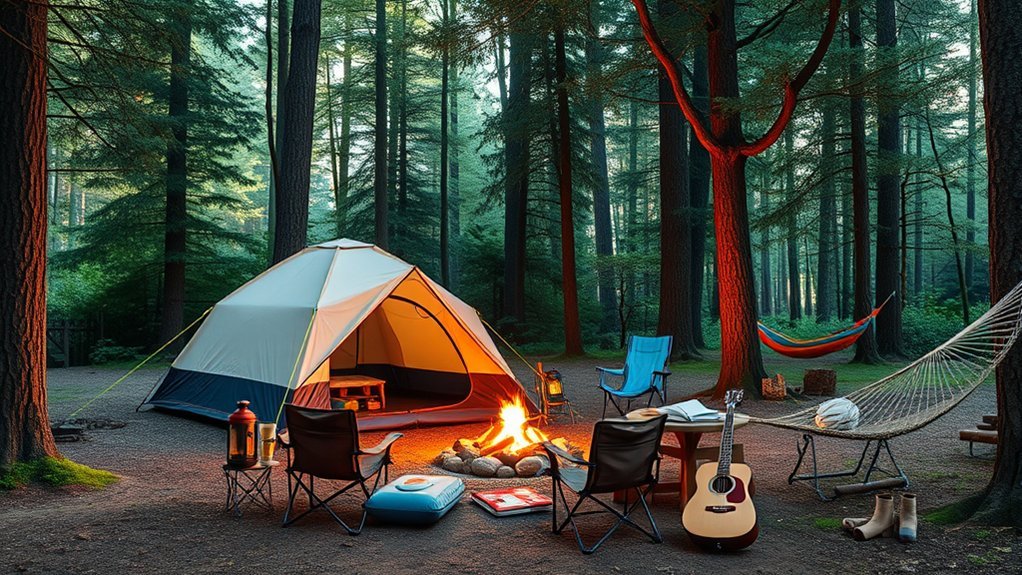
Bring a small mix of active, creative, and quiet activities. The goal is not to schedule every minute but to give the family simple options during meal preparation, bad weather, or evening downtime.
- Campfire stories: Share family stories, make up a group tale, or read aloud. Follow fire restrictions and use a lantern when fires are not allowed.
- Family games: Pack cards, compact board games, dice, or word games that work at a picnic table.
- Creative arts: Bring paper, colored pencils, nature journals, or simple craft supplies that do not create loose litter.
- Outdoor play: Pack a frisbee, soft ball, jump rope, or binoculars and choose a safe area away from roads and neighboring sites.
- Nature scavenger hunt: Look for colors, shapes, tracks, and sounds without collecting plants, rocks, nests, or cultural objects where removal is prohibited.
- Quiet time: Include books, puzzles, and a hammock or blanket for children who need a break from stimulation.
Plan at least one flexible indoor-or-tent activity for rain, but avoid running fuel-burning equipment in the tent. Keep electronics as a backup rather than the only entertainment, and save enough battery for navigation and communication.
Pre-Trip Planning and Preparation
Thorough planning reduces last-minute stress and helps adults notice missing safety items before the vehicle is loaded. Start with campsite research, then build the meal plan and packing list around the actual facilities and forecast.
| Task | Why It Matters |
|---|---|
| Research the campground | Confirms rules, amenities, hazards, check-in details, and food storage |
| Practice the tent setup | Finds missing or damaged parts before arrival |
| Test sleep gear and lights | Reveals leaks, dead batteries, fit problems, and missing adapters |
| Plan meals by day | Simplifies shopping, cooler packing, cooking, and cleanup |
| Review the weather and alerts | Guides clothing, shelter, activity, and evacuation decisions |
| Share a trip plan | Gives a trusted person useful information if the group is overdue |
| Pack and check medications | Prevents missed doses and expired emergency supplies |
About One Week Before
- Confirm the reservation, route, vehicle requirements, and cancellation policy.
- Inspect the tent, rainfly, poles, stakes, sleeping gear, stove, and cooler.
- Refill prescriptions and update the first aid kit.
- Choose meals and buy shelf-stable supplies.
- Discuss campsite rules and safety expectations with children.
The Day Before Departure
- Check the latest forecast, road conditions, alerts, and fire restrictions.
- Charge devices and power banks and install fresh batteries where needed.
- Chill food before placing it in the cooler and freeze ice packs.
- Load the vehicle so the tent, rain gear, first aid kit, food storage, and lights are easy to reach.
- Share the final trip plan with a trusted contact.
Arrival and Campsite Setup Order
- Inspect the site: Check for overhead hazards, drainage, sharp objects, insects, and safe boundaries.
- Secure children and pets: Assign one adult to supervise while the other begins setup.
- Set up the tent: Stake and guy it before unloading loose bedding, especially if wind or rain is approaching.
- Create the sleeping area: Inflate pads or mattresses and keep dry bedding inside.
- Secure food and scented items: Use the required locker, container, or vehicle storage immediately.
- Establish the kitchen: Place the stove on a stable outdoor surface away from the tent and play area.
- Set boundaries and lighting: Show children the restroom, meeting point, hazards, and nighttime route.
- Review the emergency plan: Confirm shelter locations, contact methods, and what to do if someone becomes separated.
Pro Tip: Arrive with at least a few hours of daylight whenever possible. Daylight makes it easier to inspect the site, find hazards, and teach children the campground layout before their first nighttime bathroom trip.
Common Family Camping Problems and Quick Fixes
Rain or a Wet Tent
Keep wet gear out of the sleeping area, increase ventilation, and wipe condensation with an absorbent towel. Do not let the footprint extend beyond the tent. If water flows through the site, move only when it is safe and permitted; never remain in a drainage channel or flood-prone wash.
A Colder-Than-Expected Night
Add dry layers, a warm hat, and insulation beneath the sleeper. Share extra blankets, but do not use a stove, lantern, grill, or unapproved heater in the tent. If anyone cannot stay warm, becomes confused, or stops shivering despite being cold, seek emergency help.
An Air Mattress Loses Pressure
Temperature changes can lower pressure even without a puncture. Add air after the mattress has cooled, check the valve, and use the repair kit if a leak is found. Put spare blankets or clothing beneath the sleeper for insulation until the repair holds.
A Child Becomes Overwhelmed
Lower expectations, offer food and water, and create a quiet rest space. Keep the first trip short and close to home. A successful family camping trip does not need a full schedule or a perfect night’s sleep.
No Cell Service
Use the downloaded map, follow the written trip plan, and contact a ranger, host, or emergency service through the most reliable available method. Do not leave the group or drive unfamiliar roads solely to search for a signal during dangerous weather.
Extra Tips for a Successful Camping Experience
- Reserve early when needed: Popular family-friendly campgrounds may fill quickly. Read the cancellation and release rules before booking.
- Keep the first trip simple: Choose one or two nights at a developed campground close to home.
- Test all gear: Set up the tent, light the stove outdoors, inflate mattresses, and check every flashlight before departure.
- Prepare easy meals: Do as much washing, chopping, and measuring at home as food-safety rules allow.
- Protect sleep: Keep bedtime familiar, bring comfort items, and reserve dry clothing for the tent.
- Build in family time: Use games, nature walks, cooking, and campfire stories to create shared memories without overplanning.
- Leave the site clean: Pack out food scraps and trash, extinguish fires completely, and inspect the area before departure.
Frequently Asked Questions
What should I consider when choosing a family camping location?
Check the drive time, site size, terrain, shade, restroom and water access, fire rules, wildlife-storage requirements, quiet hours, cell coverage, and nearby hazards. For a first trip, a developed campground close to home is usually easier than a remote primitive site.
How do I keep food safe from wildlife?
Follow the campground’s current storage rule. Use a provided locker, approved bear-resistant container, or permitted vehicle storage as directed. Secure food, garbage, cookware, pet food, and scented toiletries; never store them in the tent. Do not assume that hanging food from a tree is allowed or effective.
Are there age restrictions for camping activities?
There is no single age rule for all camping activities. Parks, outfitters, tours, boats, climbing areas, and rental equipment may set their own minimum ages, height limits, or weight limits. Check the specific provider’s rules and match each activity to the child’s skills, health, and supervision needs.
How should I manage trash and human waste while camping?
Use campground trash and toilet facilities when provided. Otherwise, pack out all trash and follow the land manager’s human-waste rules. Some areas allow properly placed catholes, while fragile or high-use areas may require a pack-out system. Wipes, diapers, hygiene products, and food scraps should be packed out.
What should I do during severe weather?
Monitor alerts and follow campground instructions. For lightning, leave the tent and enter a substantial building or hard-topped vehicle. For a severe thunderstorm or tornado warning, move immediately to the designated shelter. Avoid flood-prone low areas, washes, and moving water, and evacuate when officials direct you to leave.
What size tent is best for a family?
Measure the floor space needed by every sleeper and any cots, mattresses, pets, or portable cribs. For car camping, a tent rated for one more person than the group often provides useful gear space, but confirm that its footprint fits the assigned tent pad.
Can I use a portable heater inside the tent?
Do not use fuel-burning heaters, stoves, lanterns, grills, or charcoal inside a tent. They can create deadly carbon monoxide and fire hazards. Use temperature-appropriate sleeping bags, insulated pads, dry layers, and extra blankets instead.
How do I make a first family camping trip easier?
Choose a nearby developed campground, stay one or two nights, practice the tent setup at home, prepare easy meals, arrive in daylight, and keep expectations flexible. Bring familiar bedtime items and have a backup plan for unsafe weather or an exhausted child.
Conclusion
Successful family camping comes from thoughtful preparation, realistic expectations, and a clear safety plan. Pack shelter and sleep gear for the actual forecast, keep food cold and wildlife-secure, use stoves only outdoors, and give every family member simple rules for lights, boundaries, and emergencies. With a tested checklist and flexible schedule, your campsite can become a comfortable base for outdoor play, shared meals, and lasting family memories.
Sources
- National Park Service — Ten Essentials — general outdoor safety, navigation, lighting, water, and emergency preparation
- National Park Service — Storing Food — wildlife-safe storage of food, garbage, cookware, and scented items
- USDA Food Safety and Inspection Service — Food Safety While Hiking, Camping, and Boating — cooler temperatures, separation, and safe cooking temperatures
- Centers for Disease Control and Prevention — Preventing Mosquito Bites — registered repellents, child precautions, and permethrin-treated gear
- U.S. Consumer Product Safety Commission — Portable Heaters and Camping Equipment — carbon-monoxide risks from fuel-burning camping equipment
- National Weather Service — Campground Weather Safety and Preparedness — severe-weather planning, warnings, and shelter actions
