
Last Updated on July 29, 2026 by Mason Reed
State park tent camping is easier when you choose a site that matches your equipment, learn the park’s rules before leaving home, and organize your gear by function. A good plan covers reservations, shelter, food storage, water, weather, wildlife, fire restrictions, and an emergency backup—not just the tent and sleeping bag.
Quick Answer
To make state park tent camping easier, reserve the right type of campsite, confirm its size and amenities, test your equipment at home, and arrive before dark. Pack for changing weather, store food and scented items securely, follow current fire and pet rules, and use the assigned tent pad in developed campgrounds.
Key Takeaways
- Choose a developed, walk-in, primitive, or backcountry site that matches your experience and gear.
- Check the park’s official reservation window, cancellation policy, campsite dimensions, water status, and current alerts.
- Bring a complete sleep, cooking, lighting, sanitation, food-storage, weather, repair, and first-aid system.
- In a developed campground, pitch your tent on the assigned pad rather than creating a new site.
- Keep food, garbage, toiletries, and other scented items out of the tent and secured according to park rules.
- Prepare to camp without a fire because burn bans and local restrictions can change at any time.
At a Glance
| Planning Time | About 30–90 minutes after choosing a park, plus time to test and pack gear |
| Difficulty | Beginner-friendly at a developed campground; more advanced for hike-in or backcountry sites |
| Core Gear | Tent, stakes, sleeping system, lighting, water, food storage, cooking kit, weather layers, first aid, and repair supplies |
| Cost | Varies by park, season, reservation fee, equipment, transportation, food, and firewood |
Disclosure: As an Amazon Associate I earn from qualifying purchases. Some links on this page are affiliate links, at no extra cost to you.
Choosing the Right State Park for Tent Camping

Start by deciding what kind of camping experience you want. A developed campground is usually the easiest choice for beginners because it may provide a marked tent pad, parking, restrooms, drinking water, picnic tables, fire rings, and nearby staff. A primitive, walk-in, hike-in, or backcountry site may have few or none of those services.
Understand the Campsite Types
- Developed campsite: A numbered site with defined boundaries and at least some facilities.
- Walk-in campsite: A site reached by carrying gear a short distance from a parking area.
- Primitive campsite: A site with limited amenities, which may lack running water, electricity, toilets, or a prepared tent pad.
- Hike-in or backcountry campsite: A remote site reached by trail. It may require a permit, water treatment, animal-resistant food storage, navigation skills, and a more complete emergency plan.
- Group campsite: A larger site with different occupancy, vehicle, payment, and minimum-stay rules.
Before reserving, open the official park map and the description for the individual site. Check the tent-pad dimensions, maximum tent size, slope, shade, privacy, parking distance, vehicle limit, restroom distance, water access, generator areas, accessibility, and proximity to roads, playgrounds, trails, or water.
Do not assume that a site labeled “tent” is automatically suitable for your tent. A long cabin-style tent may not fit on a small pad, and some walk-in sites require carrying equipment farther than the map suggests.
Pro Tip: Save a screenshot or offline copy of the campground map, reservation confirmation, gate code, and campsite number. Cell service may disappear before you reach the entrance.
Compare Parks by Camping Style
Official park listings can help you compare different experiences. In Louisiana, for example, South Toledo Bend State Park lists non-hookup tent sites near Toledo Bend Reservoir. Fontainebleau State Park offers tent and primitive options near Lake Pontchartrain. Chicot State Park has backcountry camping, while Grand Isle State Park lists beach tent campsites.
These parks illustrate why site type matters. A lakeside developed site, a trailside backcountry site, and an exposed beach site require different stakes, shelter, water plans, and weather precautions. Always verify current operating status and campsite availability on the official park page before traveling.
Booking Your Campsite: Tips and Tricks
Reservation systems do not all release campsites on the same schedule. Many popular campgrounds use a six-month booking window, but some use shorter rolling windows, seasonal release dates, lotteries, staggered releases, or first-come, first-served inventory. Recreation.gov explains that the individual facility determines its booking window, so check the official listing for the exact park and campground.
- Find the official reservation service. Use the state park agency’s website rather than relying on an old blog post or map listing.
- Check the release date and time. Note the time zone as well as the date.
- Create your account early. Save your contact and payment details before popular sites are released.
- Choose backup sites and dates. Rank several acceptable campsites instead of depending on one location.
- Consider Sunday-through-Thursday stays. Midweek dates and shoulder seasons often provide more options.
- Read the individual site details. Confirm tent dimensions, occupancy, parking, pets, water, toilets, fires, generators, and accessibility.
- Review change and cancellation fees. Note the refund deadline, no-show rule, check-in time, and procedure for a late arrival.
California State Parks currently uses a rolling system that makes many campsites available six months in advance through ReserveCalifornia. That is a California policy, not a nationwide rule. Other park systems may work differently.
If your preferred campground is full, check the official availability calendar regularly because cancellations can return sites to inventory. Independent cancellation-monitoring services may also exist, but they are third-party tools, may charge fees, and do not reserve a campsite for you. You must still complete the booking through the park’s official system.
Cabins, yurts, group sites, walk-in sites, and nearby state parks can be useful alternatives when standard tent sites are unavailable. Before switching, compare the rules and total cost rather than assuming that every alternative includes the same facilities.
Note: Contact the park when a delay may cause a late arrival. Some systems release a reserved campsite after a stated no-show deadline.
Essential Gear for Tent Camping
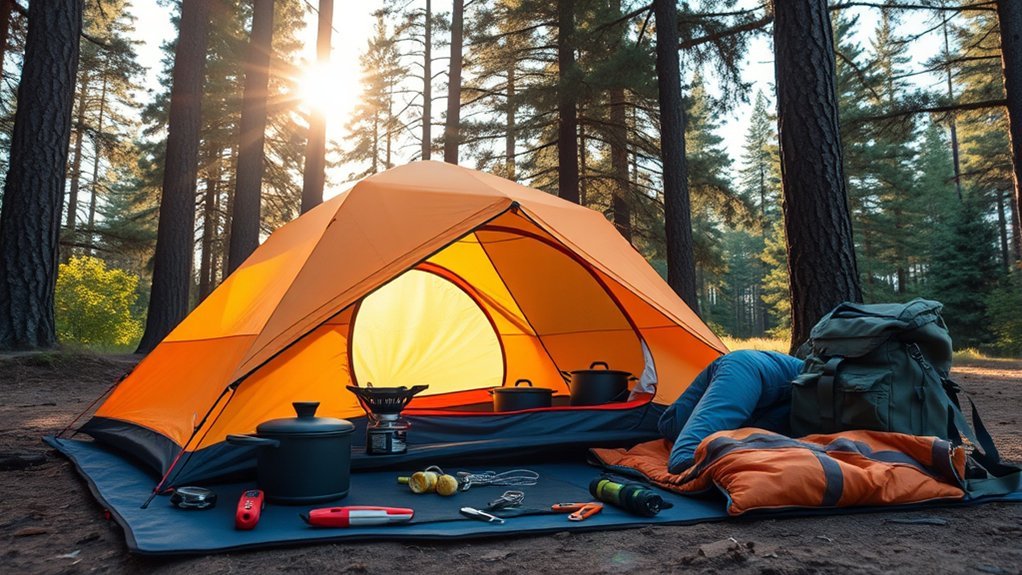
A complete camping system should keep you sheltered, warm, hydrated, fed, visible, organized, and prepared for basic problems. Adjust the list for the season, campsite type, trip length, local wildlife, and services listed by the park.
| Category | What to Pack |
|---|---|
| Shelter | Tent, rainfly, footprint if recommended, poles, stakes suited to the ground, guylines, mallet, and repair sleeve or splint |
| Sleep | Season-appropriate sleeping bag, insulated sleeping pad, pillow, sleep clothing, and optional blanket |
| Water | Filled containers, reusable bottles, backup water, and a treatment method when potable water is not confirmed |
| Food and Cooking | Food, cooler if appropriate, animal-resistant storage required by the park, camp stove, approved fuel, lighter, cookware, utensils, and a fire-free meal |
| Lighting | Headlamp for each camper, lantern, spare batteries, and a small backup light |
| Clothing | Quick-drying layers, insulation, rain jacket, extra socks, sleep clothes, sturdy footwear, sun hat, and cold-weather accessories as needed |
| Safety | First-aid kit, personal medication, whistle, map, weather-alert method, emergency contacts, sunscreen, insect repellent, and identification |
| Sanitation | Soap, hand sanitizer, toilet supplies, trash bags, dish tub, scraper, towel, and hygiene products |
| Repair and Organization | Duct tape, cord, multitool where legal, tent patches, spare stakes, waterproof bags, and labeled storage bins |
A mummy sleeping bag usually reduces unused air space and can be efficient in colder weather, while a rectangular bag offers more room. Choose by the manufacturer’s temperature rating and your expected nighttime low rather than by shape alone. Pair the bag with an insulated sleeping pad because compressed insulation beneath your body provides limited warmth.
A waterproof bivy, pack liner, or dry bag can provide backup protection for sleep gear, but it does not replace a properly pitched tent and rainfly. Some bivy systems can also collect condensation, so ventilation still matters.
Packing Strategies for a Successful Trip
Create a trip-specific packing list instead of reusing the same list for every park. A beach campground, cold mountain campground, humid forest, and primitive hike-in site require different equipment.
- Confirm what the park supplies. Check for potable water, picnic tables, fire rings, grills, food lockers, showers, electrical outlets, and trash collection.
- Test the tent at home. Pitch it with every pole, clip, stake, and guyline. Repair damage before the trip.
- Test the stove outdoors. Confirm that it lights correctly and that you have the correct fuel. Never test or operate a fuel-burning stove in a tent.
- Pack by activity. Keep sleep gear together, cooking gear together, and emergency items where they are immediately accessible.
- Protect critical items. Use waterproof bags or bins for sleep clothing, medication, maps, electronics, matches, and bedding.
- Load in setup order. Put the tent, footprint, stakes, and headlamps where you can reach them before unloading everything else.
- Bring simple activities. Cards, books, watercolors, wildlife journals, and nature guides provide screen-free options without adding much weight.
Renting or borrowing equipment can help you compare tent styles, sleeping pads, and camp stoves before buying. Practice with borrowed or rented gear before arriving at the park so you know how each item works.
The easiest campsite setup begins at home: test the shelter, organize gear by task, and pack the items needed first where they can be reached first.
Understanding Park Regulations and Safety
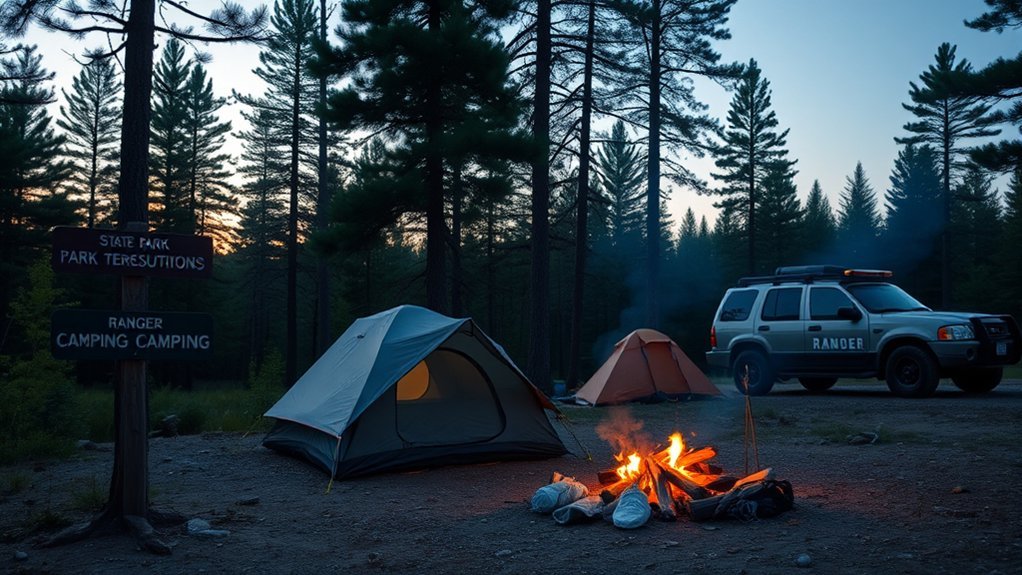
Every state park system—and often every campground—sets its own rules. Review the official park page again shortly before departure because closures, fire restrictions, water availability, wildlife orders, trail conditions, and program schedules can change after you make the reservation.
Rules to Check Before You Leave
- Check-in, checkout, gate, and quiet hours.
- Maximum people, tents, and vehicles per site.
- Parking locations and overflow-parking rules.
- Pet access, leash length, waste disposal, fees, and prohibited areas.
- Campfire, charcoal, stove, smoking, and firewood rules.
- Food-storage requirements and availability of food lockers.
- Generator hours and noise limits.
- Alcohol, glass-container, fishing, boating, and swimming rules.
- Rules for hammocks, clotheslines, drones, bicycles, and collecting natural objects.
- Emergency contacts, evacuation routes, and the nearest staffed facility.
Store the park office number and the address of the nearest urgent-care facility or hospital before entering an area with limited reception. Tell a trusted person where you are camping, your site number, who is traveling, and when you expect to return.
Warning: Never store food, garbage, cooking residue, toothpaste, deodorant, lip balm, medication, or other scented items in your tent. Use the park’s food locker, a locked hard-sided vehicle when allowed, or the animal-resistant storage method required for that location.
Food, Water, and Camp-Kitchen Safety
Confirm whether campground water is currently available and safe to drink. A faucet shown on a map may be seasonal, shut down, or under a boil notice. Carry enough water to reach the site and maintain a backup supply or treatment method when services are uncertain.
Prepare food on a stable surface away from the tent. Keep fuel canisters upright and follow the stove manufacturer’s clearance instructions. Do not operate a stove, charcoal grill, heater, or lantern that burns fuel inside a tent, vehicle, or other enclosed sleeping space.
Clean cooking equipment promptly, collect every food scrap, and store the cleaned equipment with other scented items when required. Do not pour greasy water beside the tent or place food waste in a fire ring.
Preparing for Weather Conditions
Use the National Weather Service point forecast for the campground or the closest available map point, not only a forecast for the nearest town. Check it while packing, before driving, and at least daily during the stay. Also review the park’s official alert page for local closures, floods, high winds, heat, wildfire smoke, or evacuation notices.
- Pack layers. Bring quick-drying base layers, insulation, and rain protection so you can adjust as temperatures change.
- Protect sleep gear. Keep sleeping bags and nighttime clothing in waterproof bags until the tent is fully pitched and dry.
- Plan for rain. Bring a fitted rainfly, waterproof jacket, appropriate footwear, and a tarp that can be used without damaging vegetation.
- Plan for heat. Seek shade, drink regularly, reduce strenuous activity during the hottest hours, and know the signs of heat illness.
- Plan for cold. Change out of wet clothing, eat enough food, use an insulated pad, and keep dry sleep clothes reserved for the tent.
- Plan for wind. Use every required stake and guyline, secure loose objects, and avoid exposed sites when high winds are forecast.
Warning: A tent does not provide protection from lightning. When thunder is heard, move to a substantial building or a hard-topped enclosed vehicle when available. Do not shelter beneath an isolated tree, beside water, or on an exposed ridge.
Avoid dry streambeds, washes, depressions, and areas showing flood debris when heavy rain is possible. Flash flooding can occur upstream even when little rain falls directly over the campground.
Before the trip, identify the safest available weather shelter and decide how you will receive warnings if mobile data fails. Options may include Wireless Emergency Alerts, a weather radio, park staff, campground hosts, or a nearby ranger station.
Setting Up Your Campsite Efficiently
Arrive with enough daylight to inspect the site, pitch the tent, prepare dinner, and learn the route to the restroom or emergency exit. After parking in the assigned space, check the campsite before unloading.
Developed Campground Setup
- Use the assigned tent area. Pitch on the designated pad or within the site boundary, even when another nearby patch looks flatter.
- Look overhead. Avoid damaged, hanging, dead, or storm-weakened limbs. Ask park staff for another site when an obvious overhead hazard cannot be avoided.
- Check drainage. Avoid depressions and visible channels where water may collect. Do not dig trenches around the tent.
- Lay out the footprint correctly. Keep it fully beneath the tent floor so it does not collect rainwater.
- Orient for wind. When the pad permits, place the tent’s lower or narrower end toward the expected wind and keep the door on the more sheltered side.
- Stake the corners. Tension the tent evenly before attaching and adjusting guylines.
- Attach the rainfly. Leave the designed ventilation openings unobstructed to reduce condensation.
- Separate campsite zones. Keep sleeping gear in the tent, cooking at the designated table or cooking area, and food in approved storage.
Primitive and Backcountry Site Selection
When park rules permit campers to select a dispersed or backcountry site, use durable surfaces and follow the area’s distance requirements. Leave No Trace recommends camping at least 200 feet—about 70 adult steps—from lakes and streams in applicable backcountry settings. That guidance does not authorize leaving a designated tent pad in a developed campground.
Pro Tip: Photograph the completed setup before dark. A quick image makes it easier to see where guylines, cooking equipment, water, and storage bins were placed if something must be found at night.
Common Tent-Setup Problems
- The tent sags: Re-center the poles, tighten corner webbing evenly, and adjust guylines after the fabric has been exposed to moisture.
- Rain reaches the floor: Check that the footprint is not extending beyond the tent and that the rainfly is correctly attached.
- Condensation forms inside: Open protected vents, avoid pressing bedding against the walls, and keep wet clothing outside the sleeping area.
- A pole cracks: Use the supplied repair sleeve or a temporary splint, then replace the damaged section after the trip.
- A stake will not hold: Use a stake suited to sand, hard soil, or loose ground. Do not tie the tent to living vegetation unless park rules permit it and the attachment will not cause damage.
- The site is unsafe or unsuitable: Speak with the campground host or park office instead of moving into an unassigned site.
Engaging in Park Activities and Exploration
After the campsite is secure, use the park’s official map, bulletin boards, visitor center, and ranger staff to plan activities. Confirm trail conditions, closing times, permits, swimming restrictions, and weather before leaving camp.
Ranger-Led Nature Programs
Ranger-led programs may include guided hikes, wildlife talks, history walks, birding, stargazing, junior ranger activities, and campfire programs. Schedules may change by season, staffing, weather, or fire restrictions, so check the current calendar after arrival.
These programs are useful for families and first-time visitors because rangers can explain local plants, animals, geology, cultural resources, and current safety concerns. Ask whether registration, a fee, insect protection, lighting, or specific footwear is required.
Trail Exploration Opportunities
Choose a trail that fits the least-experienced member of the group. Review distance, elevation change, surface, shade, water crossings, turnaround time, and accessibility rather than relying only on labels such as “easy” or “moderate.”
Carry water, a map, appropriate clothing, a light, and basic first aid even on short walks. Tell another person where you are going, remain on open trails, and turn around when weather, daylight, trail conditions, or a group member’s condition makes continuing unsafe.
Observe wildlife from a distance and never block an animal’s route. A camera or binoculars can improve wildlife viewing without approaching, feeding, calling, or surrounding the animal.
Visitor Center Activities
Visitor centers can provide current maps, trail reports, weather information, accessibility details, fire restrictions, wildlife notices, and emergency instructions. Exhibits may also explain the park’s ecology, history, archaeology, and conservation work.
Talk with visitor center staff, campground hosts, or rangers about suitable trails and programs. They can often identify quieter routes, family-friendly activities, accessible viewpoints, and areas temporarily affected by maintenance or wildlife activity.
Maintaining a Leave No Trace Ethic
Leave No Trace practices protect the campsite, reduce wildlife conflicts, and make the campground safer for the next visitor. Park rules take priority, but the seven Leave No Trace principles provide a useful general framework.
Proper Waste Disposal
- Pack out all trash. This includes food scraps, foil, wipes, bottle caps, cigarette butts, broken gear, and small pieces of packaging.
- Use provided bins correctly. Close wildlife-resistant lids and do not leave bags beside a full container.
- Keep food out of wastewater. Scrape dishes into the trash before washing.
- Follow restroom rules. Use the campground toilet when provided. In remote areas, follow the park’s exact human-waste instructions because soil, elevation, desert conditions, and permit rules can change the proper method.
- Inspect the site before leaving. Look beneath the table, around the fire ring, under the tent, and near the parking area.
Food Storage and Wildlife
Secure food, garbage, cookware, pet food, and scented products as soon as you arrive. Use the campground’s food locker when supplied. Otherwise, follow the park’s approved vehicle, canister, hanging, or animal-resistant cooler instructions. A normal soft cooler should not be treated as wildlife-resistant.
Never feed wildlife, leave food unattended, or bring scented items into the tent. Feeding and unsecured food can cause animals to associate campsites with meals, creating risks for campers and the animals.
Minimize Campfire Impact
Check current fire restrictions before buying wood or planning a meal. A campsite fire ring does not guarantee that fires are permitted that day. Keep a stove-based or no-cook meal available so the trip does not depend on a campfire.
- Use only an established fire ring or grill when fires are allowed.
- Keep the fire small and continuously attended.
- Keep water and a tool for stirring nearby.
- Do not burn food, foil, plastic, glass, cans, or garbage.
- Buy firewood near the destination or use certified heat-treated wood when required.
- Do not cut branches or collect wood unless the park specifically allows it.
- Drown and stir the fire until every coal and piece of wood is cool to the touch.
Don’t Move Firewood recommends buying wood where it will be burned or using certified heat-treated firewood to reduce the spread of invasive insects and diseases.
Warning: Never leave a campfire unattended, even briefly. Wind can carry embers beyond the fire ring, and restrictions may prohibit wood fires, charcoal, or certain stoves.
Tips for a Memorable Camping Experience
A memorable trip does not require a complicated schedule. It usually comes from reducing avoidable problems and leaving room to enjoy the park.
- Choose the right park and site. Match the campground to your tent, mobility, comfort level, preferred scenery, and planned activities.
- Arrive before dark. Daylight makes it easier to identify hazards, pitch the tent correctly, and learn the campground layout.
- Keep the first meal simple. Use a familiar stove meal or ready-to-eat option rather than attempting a complex campfire recipe after a long drive.
- Ask staff for local advice. Rangers and campground hosts may know about wildlife activity, trail conditions, scenic viewpoints, and current programs.
- Pack a few screen-free activities. Cards, books, art supplies, stargazing, and wildlife photography work well during quiet periods.
- Respect neighboring sites. Keep voices, music, lights, pets, and vehicle activity within campground rules, especially during quiet hours.
- Dry equipment after the trip. Air-dry the tent, rainfly, footprint, and sleeping gear before long-term storage to prevent odor, mildew, and coating damage.
Campfire recipes can add to the experience when fires are legal, but bring a stove or no-cook alternative. Weather and fire restrictions should determine how you cook—not the menu you planned at home.
Frequently Asked Questions
What should I do if I encounter wildlife while camping?
Stay calm, keep a safe distance, and do not feed, follow, surround, or approach the animal. Give it a clear escape route and avoid sudden movement. Follow the park’s species-specific instructions because the correct response differs for bears, mountain lions, snakes, bison, moose, and smaller animals. Report aggressive, injured, or food-conditioned wildlife to park staff.
Can I bring my pet camping in a state park?
Many state park campgrounds allow pets, but rules vary by park, campsite, trail, beach, cabin, and season. Check the official pet policy before booking. Keep the pet attended and controlled, use the required leash, remove waste, store pet food with human food, and prevent the pet from approaching wildlife or neighboring campsites.
Are campfires allowed at all state parks?
No. Fire rules vary by park and can change with weather, drought, air quality, or wildfire danger. Check the park’s current restrictions shortly before arrival. Use only an approved fire ring or grill, keep the fire attended, and extinguish it completely. Bring a stove-based or no-cook meal in case fires are prohibited.
What should I do in case of an emergency?
Call 911 when service is available and the situation requires immediate help. Give the park name, campground, campsite number, trail or landmark, number of people involved, and nature of the emergency. Contact a ranger, campground host, or park office when appropriate. Provide first aid within your training and move only when remaining in place creates greater danger.
How do I find out about park events and programs?
Check the park’s official event calendar, alert page, visitor center, entrance station, bulletin boards, newsletter, and verified social media accounts. Program schedules may change because of staffing, weather, wildlife activity, or fire restrictions, so confirm the time and meeting place after arriving.
How early should I reserve a state park campsite?
Check the official reservation page as soon as you choose a park. Many popular campgrounds release sites about six months ahead, but the window may be shorter, longer, staggered, seasonal, or first-come, first-served. Record the release date, release time, and time zone, then prepare several backup sites and dates.
What should I do if the campground has no cell service?
Download maps, reservations, park rules, weather information, and emergency contacts before leaving coverage. Tell a trusted person your itinerary and return time. Learn where the ranger station, host site, emergency phone, or nearest reliable signal is located. For remote travel, consider an appropriate satellite communication device and know how to use it.
How should I store food at a state park campsite?
Follow the park’s current food-storage order. Use a provided food locker when available or another approved method, such as a locked hard-sided vehicle or certified animal-resistant container when allowed. Store garbage, cookware, toiletries, medication, pet food, and other scented items with the food, and never keep them in the tent.
Conclusion
Successful state park tent camping depends more on preparation than expensive equipment. Choose the right site, verify current rules, test your shelter and stove, pack a complete sleep and safety system, and arrive with enough daylight to set up carefully. Once the essentials are handled, you can spend less time solving campsite problems and more time exploring trails, joining ranger programs, cooking outdoors, and enjoying the park.
Sources
- Recreation.gov FAQ — facility-specific campsite booking windows and reservation planning
- California State Parks ReserveCalifornia FAQ — California’s rolling six-month reservation system
- Leave No Trace: Travel and Camp on Durable Surfaces — designated campsites, durable surfaces, and backcountry distance guidance
- National Weather Service Campground Weather Safety — forecasts, weather monitoring, and alert preparation
- National Park Service Bear Safety: Storing Food — secure storage of food, garbage, and scented items
- Don’t Move Firewood — reducing the spread of invasive pests through local or certified heat-treated firewood
