

Last Updated on August 26, 2026 by Mason Reed
Tent camping in U.S. national parks comes with rules designed to protect visitors, wildlife, and fragile natural areas. The most important rule is to check the specific park before you go: campsite limits, permits, food storage, campfires, pets, quiet hours, and temporary closures can differ from one park or campground to another. Use the guidance below as your foundation, then follow the current rules posted by the park.
Quick Answer
When tent camping in a national park, camp only where permitted, follow your campsite or backcountry permit conditions, store food exactly as the park requires, obey current fire restrictions, keep wildlife at a safe distance, dispose of waste properly, respect quiet hours, and check park alerts before and during your trip.
Key Takeaways
- National park camping rules are not identical everywhere; the individual park’s current rules control.
- Camping outside designated sites or areas is generally prohibited unless the park specifically authorizes another form of camping.
- Food-storage requirements vary and may require lockers, approved bear-resistant containers, or another specified method.
- Campfires are allowed only where and when the park permits them, and temporary fire bans can change quickly.
- Reservations, permits, group limits, pets, generators, stay limits, and quiet hours can vary by campground.
- Check the park website, alerts, campground listing, and posted rules shortly before your trip.
Warning: Fire restrictions, wildlife closures, road conditions, food-storage orders, and campground rules can change after you make a reservation. Recheck official park alerts before leaving home and again when you arrive.
Disclosure: As an Amazon Associate I earn from qualifying purchases. Some links on this page are affiliate links, at no extra cost to you.
Understanding Camping Regulations in National Parks

National Park Service camping rules combine federal regulations with park-specific conditions. Under 36 CFR Part 2, a park superintendent may require permits, designate camping areas, set camping conditions, regulate food storage, and impose temporary restrictions when needed.
That means there is no single list of campsite fees, reservation windows, group limits, food-storage methods, or pet rules that applies to every national park campground. Before your trip, use the park’s official “Plan Your Visit” information and campground listing to confirm:
- whether reservations or permits are required;
- current campground and entrance fees;
- maximum people, tents, and vehicles allowed at your site;
- check-in, check-out, and maximum-stay rules;
- food and scented-item storage requirements;
- campfire, stove, charcoal, and firewood restrictions;
- pet and generator rules;
- potable water, toilets, trash, recycling, and other available facilities; and
- closures, weather hazards, road conditions, and other park alerts.
The National Park Service’s camping trip-planning guidance specifically recommends checking permits, group restrictions, outdoor conditions, food-storage requirements, fire regulations, and pet rules before setting out.
Frontcountry vs. Backcountry Camping
Frontcountry camping usually means staying in an established campground that you can reach by vehicle or a short walk. Sites commonly have defined boundaries and may include a picnic table, fire ring or grill, parking space, food locker, toilets, or water.
Backcountry or wilderness camping may involve hiking to designated sites or camping within a defined zone. Permit systems, campsite-selection rules, food storage, fires, human-waste disposal, and group limits can be much stricter. Never assume that frontcountry campground rules also apply in the backcountry.
The Importance of Designated Campsites
Using a designated campsite protects both you and the landscape. Federal NPS regulations generally prohibit camping outside designated sites or areas unless the park has specifically established another permitted camping system.
In developed campgrounds, staying within your assigned site prevents damage to surrounding vegetation and keeps tents, vehicles, cooking equipment, and other gear out of protected or unsafe areas. Established campgrounds may also provide restrooms, potable water, trash facilities, fire rings, food lockers, or other amenities, although facilities vary widely.
Backcountry camping works differently. Some parks require you to use numbered wilderness campsites, while others authorize camping within defined zones under a permit. Always follow the location, group-size, fire, food-storage, and sanitation conditions attached to your permit.
Pro Tip: Save the park’s rules and map for offline use before leaving home. Cell service can be weak or unavailable after you reach the campground or trailhead.
Reservations, Permits, Fees, and Campsite Limits
Do not assume every national park campsite opens for booking six months in advance. Some campgrounds use six-month booking windows, while others release some sites only weeks or days before arrival. Other sites may be first-come, first-served. Seasonal operating dates can also change from year to year.
Many federal campground reservations are handled through Recreation.gov, but the park’s official website should be your starting point because it explains which reservation system applies.
Campground fees also vary. Instead of budgeting around a national price range, check the exact nightly fee for your campground and site type. Group campsites, hookups, reservation fees, and other services may be priced differently.
Likewise, there is no single nationwide campsite-capacity rule. The maximum number of campers, vehicles, tents, RVs, or nights permitted at a site depends on the campground. Exceeding those limits can violate your reservation or camping conditions.
Wildlife Safety: Observing From a Distance
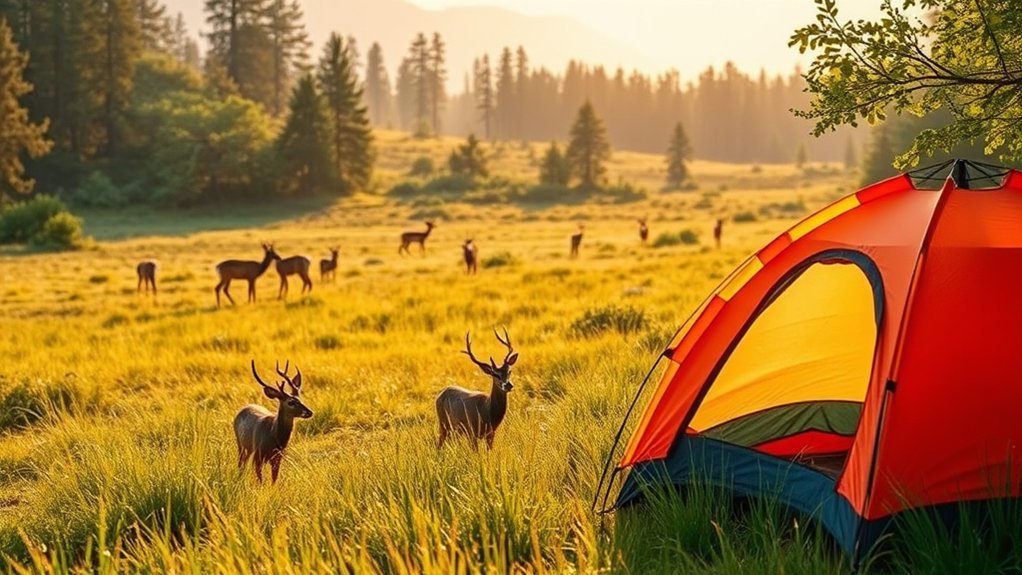
Wildlife safety starts with giving animals room. The National Park Service notes that many parks use minimum distances of about 25 yards from most wildlife and 100 yards from animals such as bears or wolves, but the required distance can differ by park or species. Always follow the specific park’s rule.
If an animal changes its behavior because of your presence, you are too close even if you believe you are outside a posted minimum distance. If wildlife approaches, move away and maintain the required space.
Use binoculars, a spotting scope, or a zoom lens for photography rather than approaching an animal. Never feed, touch, tease, chase, or intentionally disturb wildlife. These actions can endanger both visitors and animals. See the National Park Service’s wildlife safety guidance for more information.
Proper Food Storage to Prevent Wildlife Encounters
Proper food storage is one of the most important parts of safe camping. Wildlife can be attracted not only to meals but also to garbage, pet food, cooking equipment, toiletries, cosmetics, coolers, drinks, sunscreen, and other scented items.
Do not assume that a locked vehicle is always an approved storage location. According to the National Park Service’s bear and food-storage guidance, requirements differ by park. Some parks permit certain items to be stored in hard-sided vehicles under specified conditions; others require campground food lockers or approved bear-resistant containers.
- Store food, garbage, and scented items as soon as you arrive.
- Never keep food or scented items in your tent unless the park explicitly says otherwise.
- Do not leave food unattended.
- Keep your campsite free of crumbs and food scraps.
- Wash cooking equipment promptly and store it according to the park’s requirements.
- Secure trash and recyclables just as carefully as food.
- If a bear-resistant container is required, use a model accepted by that park and keep it properly closed.
Warning: A cooler marketed as “bear resistant” is not automatically legal food storage in every park. Use the method and equipment specified by the park you are visiting.
Fire Safety: Using Established Fire Rings
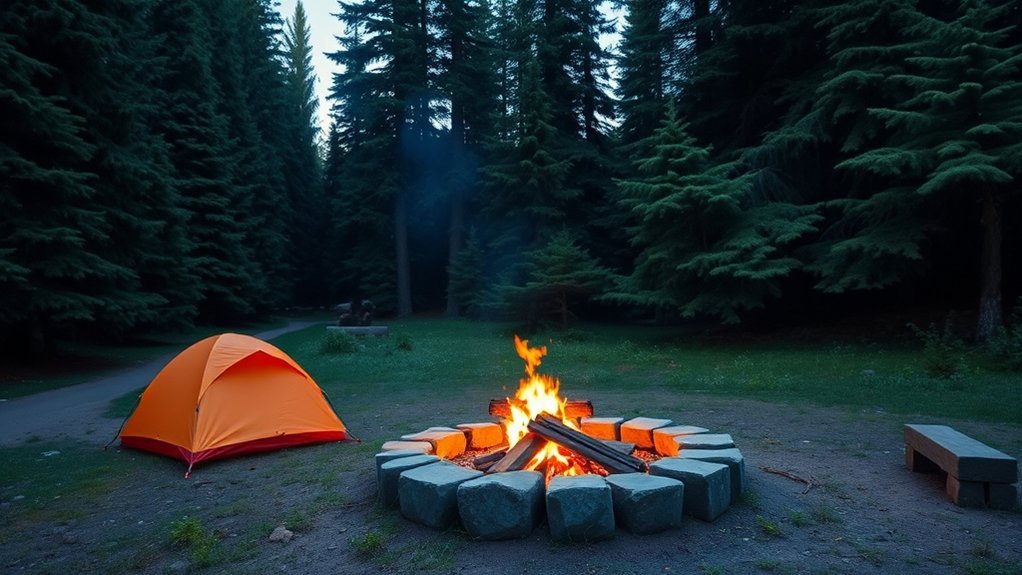
A fire ring does not automatically mean a fire is currently allowed. Under federal NPS fire regulations, fires may be used only in designated areas or receptacles and under conditions established by the park superintendent. Parks may prohibit fires temporarily when fire danger is high.
Before lighting anything, check the park’s current fire restrictions and posted campground notices. If fires are permitted:
- use only the area or fire receptacle authorized by the park;
- keep the fire attended at all times;
- keep flames and sparks under control;
- do not burn garbage, food scraps, plastics, batteries, aerosol containers, or other inappropriate material;
- fully extinguish the fire when you are finished and before sleeping or leaving the campsite; and
- follow all rules for charcoal disposal and stove use.
Firewood rules also vary. Moving untreated firewood long distances can spread invasive insects and diseases. The National Park Service recommends checking local restrictions and generally advises campers to buy firewood where they burn it or use certified heat-treated wood when permitted.
Do not collect branches, downed wood, cones, or other natural material unless the park specifically allows collection for campfire use.
Leave No Trace Principles for Camping
Camping in national parks comes with a responsibility to reduce your impact. Stay on durable surfaces and within the boundaries of your campsite, leave plants and natural features undisturbed, respect wildlife, and leave the area clean for the next visitor.
Pack out everything the park requires you to carry out. Food scraps are still trash even when they are biodegradable. An orange peel, coffee grounds, cooking grease, or leftover food can attract animals and alter their natural behavior.
Use reusable containers when practical to reduce waste, and avoid creating new tent pads, fire rings, trenches, furniture, or other campsite alterations.
Human Waste, Dishwater, and Sanitation
Sanitation rules deserve the same attention as food storage. Federal NPS regulations prohibit improper disposal of refuse and prohibit washing dishes, food, clothing, or other property at public water outlets unless the area is specifically designated for that purpose.
In undeveloped areas, federal regulations also restrict where human waste may be disposed of, and individual parks may impose stricter rules or require visitors to pack out human waste. Follow the exact instructions in your wilderness permit or park regulations rather than relying on one disposal method everywhere.
If a developed campground provides toilets, dishwashing stations, wastewater sinks, dump stations, or trash facilities, use them only as directed.
Packing Out Trash: Keeping the Park Clean
Proper trash disposal protects wildlife and keeps campsites usable. Treat food wrappers, scraps, grease, used hygiene items, and other waste as attractants until they are securely disposed of.
Importance of Trash Disposal
Follow the basic rule of packing out what you bring in whenever disposal facilities are unavailable. Never leave trash beside a full receptacle or abandon it in a food-storage locker, fire ring, toilet, or campsite.
- Use designated trash receptacles when available.
- Secure garbage from wildlife until you can dispose of it.
- Pack out all waste from remote areas when required.
- Never bury ordinary trash or food scraps.
- Leave your site at least as clean as you found it.
Recycling Options Available
Recycling availability differs by park and campground. If labeled recycling containers are provided, follow the posted sorting instructions. Do not assume that every campground accepts the same materials.
If recycling is unavailable, keep recyclable items secured with the rest of your waste and carry them out rather than leaving them beside campground bins. Reusable bottles, food containers, utensils, and storage bags can also reduce the amount of waste you generate during the trip.
Checking Weather Conditions Before Your Trip
Check the forecast before leaving home, but do not stop there. Mountain, desert, coastal, and high-elevation parks can experience fast changes in temperature, wind, storms, and precipitation.
- Review the forecast several days before departure.
- Check the park’s current conditions and alerts.
- Recheck conditions when you arrive.
- Pack layers appropriate for daytime and nighttime temperatures.
- Know whether thunderstorms, flash floods, extreme heat, snow, high winds, or other seasonal hazards are possible.
- Have a backup plan if conditions make your original itinerary unsafe.
Note: Cell coverage can be unreliable in national parks. Download useful maps and park information in advance, and consider an appropriate emergency communication option for remote trips.
Preparing for Natural Hazards in Campsites
Before pitching your tent, look around rather than simply choosing the flattest patch of ground. Weather, falling branches, flooding, unstable terrain, wildlife activity, and vegetation hazards can turn a convenient campsite into a dangerous one.
Identifying Natural Hazards
Inspect your campsite in daylight whenever possible. Look for broken glass, sharp objects, hazardous plants, unstable ground, dead limbs, falling-rock exposure, and evidence of recent flooding.
- Look overhead for dead or damaged branches.
- Avoid low areas or drainage channels that could collect water.
- Stay away from unstable slopes, cliff edges, and falling-rock zones.
- Watch for tracks, droppings, nests, burrows, or other signs of wildlife activity.
- Keep tents and flammable equipment safely separated from permitted fires and cooking areas.
Safe Campsite Selection
In a developed campground, keep your tent, gear, and vehicles within the assigned site and use established tent pads when required. Do not expand a campsite by clearing vegetation, digging trenches, leveling natural ground, or creating new parking areas.
In the backcountry, follow your permit’s campsite-location rules. Avoid dead trees, exposed ridges during lightning conditions, flood-prone ravines, and other obvious hazards. The National Park Service also recommends checking campsite conditions and potential hazards before setting up camp.
Emergency Preparedness Measures
Prepare for the possibility that cell service will not be available. Carry basic first-aid supplies, illumination, extra food and water appropriate to your trip, navigation tools, and emergency gear suitable for the environment.
Before a remote trip, leave an itinerary with a responsible person who is not traveling with you. Include your route, campsite or permit details, group members, vehicle information, planned return time, and instructions for contacting authorities if you do not return as expected.
Know where the nearest ranger station, visitor center, emergency phone, or evacuation route is located. For an immediate life-threatening emergency, call 911 when service is available.
Pets, Generators, Vehicles, and Other Campground Rules
Small campground rules are easy to overlook but can affect your entire stay.
Pets: Ordinary pets may be allowed in some developed campgrounds while being prohibited on trails, in wilderness areas, buildings, beaches, or other locations. Federal regulations generally require pets to be crated, caged, leashed no longer than six feet, or otherwise physically confined, but individual parks can impose additional closures and conditions.
Generators: Generator use can be limited to certain loops or specific hours, or prohibited entirely. Never assume generator hours match campground quiet hours.
Vehicles: Park only where your campsite or campground authorizes parking. Vehicle counts, RV lengths, trailer lengths, tow vehicles, and overflow parking rules vary.
Hammocks, clotheslines, and attachments: Some campgrounds restrict tying equipment to trees, signs, railings, or other vegetation and structures. Check before hanging anything.
Stay limits: Parks can establish consecutive-night and annual camping limits. Your reservation does not authorize you to exceed a park’s maximum stay.
Respecting Quiet Hours and Campground Etiquette
Quiet hours are posted at most developed campgrounds. A common period is around 10 p.m. to 6 a.m., and federal regulations prohibit unreasonable camping noise during that period, but individual campground hours may be different.
Follow the hours posted at your campground. Keep music, conversations, vehicle noise, generators, and other sound from disturbing nearby campers. Good etiquette matters outside quiet hours too.
Keep lights aimed downward and away from neighboring tents when possible. Do not cut through occupied campsites, allow your equipment to spread into neighboring sites, or leave a generator running where it disturbs others.
Stargazing, reading, or quiet conversation are good nighttime activities that let everyone enjoy the natural setting.
What to Check Before Leaving Home
- Confirm your campsite or permit dates and location.
- Read the campground or backcountry rules for that specific park.
- Check the number of people, tents, and vehicles your site permits.
- Verify food-storage requirements.
- Check current fire restrictions and allowed stove types.
- Confirm whether pets and generators are allowed.
- Review current closures, road conditions, weather, and wildlife alerts.
- Check whether drinking water and trash facilities are operating.
- Download maps and park information for offline access.
- Leave a trip plan with someone you trust if you will be in a remote area.
Frequently Asked Questions
Can I Bring My Pet Camping in National Parks?
Sometimes. Pet access is park-specific. A pet may be allowed in a developed campground but prohibited on nearby trails, in the backcountry, on beaches, or in buildings. Check the individual park’s pet regulations before bringing an animal and follow all leash, waste-disposal, and unattended-pet rules.
Are There Age Restrictions for Camping in National Parks?
There is no useful single age rule to apply to every National Park Service campground. Some parks require the reservation holder or at least one camper to meet a minimum age. Others have special rules for youth groups. Check the campground’s current reservation and permit conditions.
What Permits Do I Need for Backcountry Camping?
Permit requirements vary by park. Many parks require an overnight wilderness or backcountry permit, while others use designated zones, campsite reservations, or self-registration systems. Check the park’s official backcountry page before your trip and carry or display the permit as instructed.
Is There a Limit on the Number of Campers per Site?
Usually yes, but the number is campground-specific. Your reservation listing or campground regulations should state the maximum people, tents, and vehicles allowed. Group campsites normally have separate limits.
How Do I Report a Wildlife Sighting or Incident?
Routine sightings usually do not require an emergency report, but unusual, injured, aggressive, food-conditioned, or threatening wildlife should be reported to a ranger, campground host, or visitor center. For an immediate threat to human life, move to safety and call 911 when service is available.
Can I Sleep in My Vehicle Outside a National Park Campground?
Do not assume that sleeping in a vehicle at a pullout, trailhead, roadside parking area, or other location is allowed. Camping is generally restricted to designated sites or areas, and individual parks determine where overnight vehicle use is permitted.
Can I Have a Campfire if My Site Has a Fire Ring?
Not automatically. A fire ring only identifies an authorized receptacle when fires are currently permitted. Temporary fire restrictions or seasonal rules may prohibit wood or charcoal fires even at established campsites. Check current conditions before lighting a fire.
Do I Need a Bear Canister for National Park Camping?
Only where the park requires one. Some locations require approved bear-resistant containers, some provide food lockers, and others authorize different storage methods. Check the exact food-storage rule for your campground or backcountry area before packing.
Conclusion
Safe national park camping starts with one simple habit: check the rules for the exact park and campground you are visiting. Use designated camping areas, secure food and scented items as required, give wildlife plenty of room, obey fire restrictions, dispose of waste properly, prepare for weather and natural hazards, and respect neighboring campers.
Conditions can change quickly, so confirm official alerts shortly before your trip. A few minutes spent checking permits, food storage, fire rules, campsite limits, and current conditions can prevent fines, protect wildlife, and make your camping experience safer and more enjoyable.
Sources
- Electronic Code of Federal Regulations — 36 CFR Part 2 — federal NPS rules covering camping, food storage, fires, sanitation, wildlife, and pets.
- National Park Service — Before the Trip — permits, campground regulations, outdoor conditions, food storage, fires, pets, and emergency preparation.
- National Park Service — Finding and Setting Up a Campsite — campground selection, reservations, hazards, backcountry considerations, and campsite setup.
- National Park Service — Bear Safety: Storing Food — food, garbage, scented items, vehicles, lockers, and bear-resistant containers.
- National Park Service — Risks to People From Wildlife — wildlife viewing distances and safe behavior around animals.
- National Park Service — Don’t Move Firewood — invasive-pest risks, local firewood, and certified heat-treated wood.

