

Last Updated on July 22, 2026 by Mason Reed
When storms roll in while you’re tent camping, the single most important fact to understand is this: a tent does not protect you from lightning. Your real safety plan depends on getting to a hard-topped vehicle or substantial building before the storm arrives — and knowing what to do if you can’t.
Quick Answer
A tent offers no real protection from lightning. Your best move is reaching a hard-topped vehicle or building before a storm hits. If neither is available, move to low ground away from tall trees, stay off water and metal, and spread out from others by at least 30 feet.
Key Takeaways
- There is no truly safe place outdoors during a thunderstorm — a tent does not stop lightning or ground current.
- A hard-topped vehicle or substantial building is always safer than a tent; use the 30/30 rule to decide when to seek shelter.
- The “lightning crouch” is outdated advice that the National Weather Service no longer recommends as a primary safety measure.
- Choose low ground away from tall, isolated trees, ridgelines, and open fields when pitching a tent.
- If caught in the open, spread out from others by at least 30 feet to limit multiple-casualty strikes.
Disclosure: As an Amazon Associate I earn from qualifying purchases. Some links on this page are affiliate links, at no extra cost to you.
Planning Ahead for Storm Safety
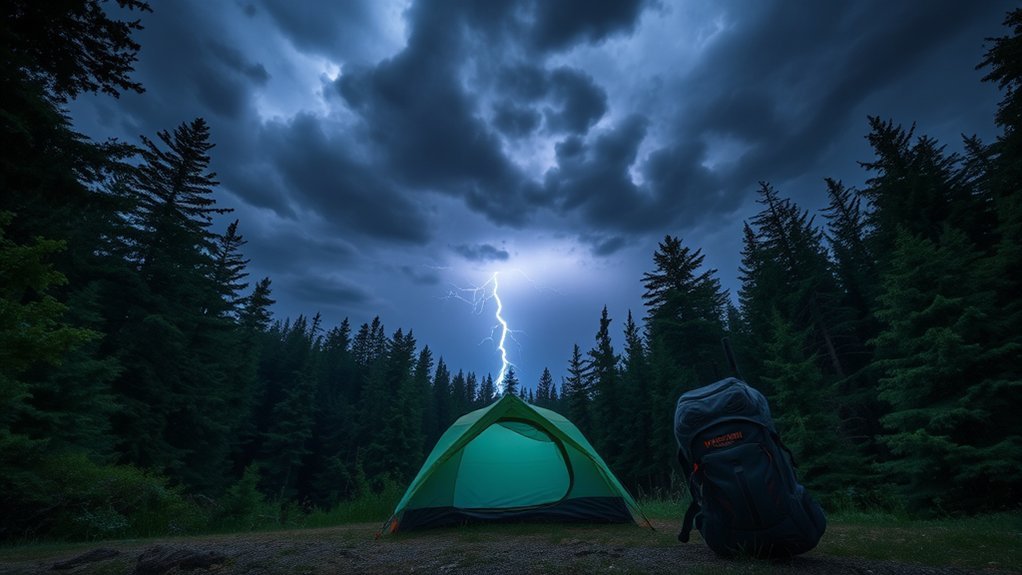
Before you head out, stay informed with a NOAA Weather Radio or a reliable weather app so you know what conditions are moving into your area. Identify the nearest hard-topped vehicle or substantial building before you ever pitch a tent — that’s your real shelter, not the tent itself. Build a simple plan with your group: who checks the forecast, where you’ll go if a storm approaches, and a non-negotiable turnaround time for hikes, since afternoon thunderstorms are common in many regions during summer.
Use the 30/30 rule to decide when to act: if the time between seeing lightning and hearing thunder is 30 seconds or less, you should already be heading to safety. Stay in shelter until 30 minutes have passed since the last thunder you heard. Pack a battery-powered weather radio and first aid supplies as part of your emergency kit, and remember that no method — including tent placement — eliminates the risk of a lightning strike outdoors.
Note: According to the National Weather Service, there is no safe place outdoors during a thunderstorm. The guidance below can reduce risk but cannot eliminate it.
Choosing the Right Tent Location
Since your tent won’t shield you from lightning, site selection is about reducing risk, not removing it. Pitch in a lower area — a valley or shallow depression — rather than flat, exposed ground or a ridgetop. Stay well away from tall, isolated trees, which can attract a strike that then jumps, or “sideflashes,” to nearby objects including tents. If you’re in a forest, camp near a stand of similarly sized trees rather than under the tallest one.
Check your site for hazards like dead branches overhead that could fall in wind. Natural features such as hills or dense, uniform woods can offer some buffering from wind and reduce your relative height compared to surroundings, but they do not make a location lightning-safe. Before you settle in, know your fastest route to a hard-topped vehicle or building, and be ready to move the moment conditions turn.
What to Do If You Can’t Reach Real Shelter
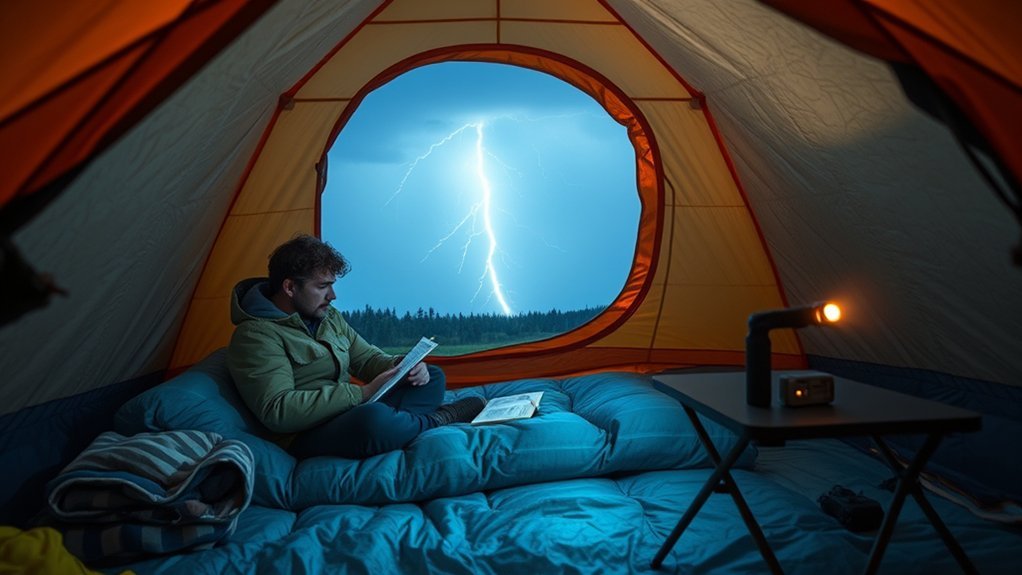
If a storm arrives and a vehicle or building genuinely isn’t reachable, your tent still won’t protect you from a direct strike or ground current — but staying low and away from tall objects can slightly reduce your exposure compared to standing in the open. Avoid touching tent poles or the tent’s fabric walls, since metal poles and wet fabric can conduct current. Keep your body off the bare ground where possible; a foam sleeping pad adds a thin layer of insulation, though it does not make the ground safe.
Warning: Don’t rely on your tent as a lightning shelter. The National Weather Service is explicit that tents provide no protection from lightning. If a hard-topped vehicle or substantial building is within reach, go there before the storm arrives — don’t wait it out in the tent.
The “lightning crouch” — squatting low with feet together — was once widely taught as a last-resort position. A 2008 analysis by the National Weather Service and the National Lightning Safety Council found it does little to reduce injury risk, and current guidance favors moving quickly to real shelter over crouching and waiting. If you truly have nowhere else to go, minimizing contact with the ground and avoiding being the tallest point in the area are reasonable precautions — but they are far less effective than reaching a vehicle or building.
Understanding Ground Currents and Risks
Ground current is one of the leading causes of lightning injury. When lightning strikes the earth, current spreads outward through the ground, and anyone in contact with the ground nearby can be affected — the wider your contact area, the greater the risk. This is part of why lying flat is more dangerous than standing: it maximizes ground contact.
Tent poles made of aluminum or fiberglass don’t meaningfully attract lightning the way a true lightning rod system does, but if lightning strikes a tall object nearby — like a tree or a metal pole — current can jump, or “sideflash,” to a tent several feet away. Wet ropes and guy lines are also efficient conductors and should be avoided during a storm. Understanding these risks is why site selection and staying away from tall objects matter more than anything you do inside the tent itself.
Emergency Preparedness and Response
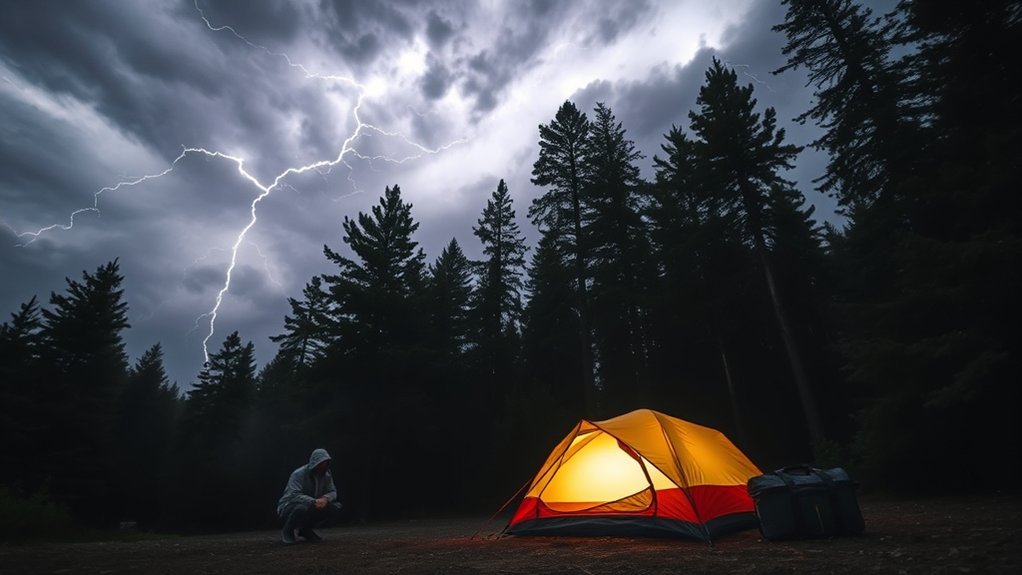
A solid emergency plan starts with monitoring conditions before and during your trip. Pack a kit with first aid supplies, a battery-powered NOAA weather radio, a flashlight with extra batteries, and a way to charge your phone. If you’re camping with a group, spread out from each other by at least 30 feet during an active storm — this limits how many people a single strike could affect.
If someone is struck by lightning, call emergency services immediately. Lightning strike victims do not carry an electrical charge, so it’s safe to touch them right away. Check for breathing and a pulse, and begin CPR if needed while you wait for help. Knowing basic first aid for shock and burns can make a meaningful difference before responders arrive.
| Essential Items | Purpose |
|---|---|
| First Aid Supplies | Treat injuries and provide care |
| NOAA Weather Radio | Stay updated on storm conditions |
| Flashlight & Batteries | Ensure visibility during power or storm outages |
Frequently Asked Questions
What should I do if lightning strikes near my campsite?
Stay calm and call emergency services immediately if anyone is hurt. It’s safe to touch a lightning strike victim right away, since they don’t retain an electrical charge. Check for breathing and begin CPR if needed. Move away from tall trees and away from your tent’s metal poles, and continue heading toward a hard-topped vehicle or building if one is accessible.
How can I tell if a storm is approaching?
Watch for darkening skies, building cumulus clouds, sudden wind shifts, and distant thunder. Use the 30/30 rule: if you hear thunder within 30 seconds of seeing lightning, seek shelter immediately. A portable weather radio or app can give you advance warning before visible signs appear.
Are there specific tent materials that offer better lightning protection?
No. According to the Lightning Protection Institute, no consumer tent material or pole design provides genuine lightning protection, even those with metal poles that resemble lightning rods. The only reliably safe options during a storm are a hard-topped vehicle or a substantial building with wiring and plumbing.
What items should I pack for lightning safety?
Pack a battery-powered NOAA weather radio, a first aid kit, a flashlight with extra batteries, and a portable phone charger. A whistle is useful for signaling if your group gets separated while moving to shelter.
Can I use my phone during a lightning storm?
A phone itself doesn’t attract lightning, but corded landlines and devices plugged into wall outlets do carry some risk indoors. Outdoors, your phone is a useful tool for tracking weather alerts and calling for help — the real priority is getting to safe shelter, not the phone.
Conclusion
When tent camping, understanding what actually protects you matters more than any single habit inside the tent. The National Weather Service estimates around 20 million cloud-to-ground lightning flashes strike the U.S. each year, and a tent isn’t a shield against any of them. Plan ahead, choose a lower site away from tall trees, and know your route to a hard-topped vehicle or building before a storm ever arrives. If you’re caught without real shelter, minimize ground contact, avoid tall objects, and spread out from others — and treat crouching as a last resort, not a plan. Being prepared and knowing current, accurate guidance is what actually keeps you safer, storm after storm.
Sources
- NOAA JetStream — Lightning FAQ — confirms tents offer no lightning protection and outlines outdoor risk-reduction steps
- NOAA National Severe Storms Laboratory — Lightning FAQ — source for U.S. cloud-to-ground flash frequency estimates
- National Weather Service — Lightning Safety Awareness Week — current fatality statistics and “When Thunder Roars, Go Indoors” guidance
- Lightning Protection Institute — confirms no tent material provides genuine lightning protection
