

Last Updated on July 29, 2026 by Mason Reed
Water under a tent usually comes from surface runoff, an oversized ground cloth, saturated soil, or a worn tent floor. The best defense is to choose a safe, durable campsite before rain begins, keep every footprint edge beneath the tent, and pitch the rainfly and guylines correctly. A cot or sleeping pad may protect your bedding, but it cannot correct a flooded site.
Quick Answer
Choose an established, flat or slightly crowned campsite outside depressions, washes, ravines, and visible drainage paths. Use a footprint slightly smaller than the tent floor, or fold a tarp fully underneath. Stake the tent and rainfly taut, re-tension them after rain begins, and never dig a drainage trench.
Key Takeaways
- Site selection matters more than any tarp, footprint, or waterproofing spray.
- No part of a footprint or ground tarp should stick out beyond the tent floor.
- Avoid depressions, drainage channels, ravines, dry washes, steep slopes, and visibly saturated ground.
- Keep the rainfly taut and separated from the tent body, using every required stake and guyline.
- Move to safer ground if water is rising or flowing; do not dig a trench around the tent.
At a Glance
| Time Required | About 10–20 minutes for site inspection and a careful pitch |
| Difficulty | Easy |
| Tools Needed | Fitted footprint or folded ground tarp, tent stakes, guylines, and optional stake mallet |
| Cost | $0 with existing gear; a replacement footprint or basic ground cloth commonly adds about $10–$50 |
Disclosure: As an Amazon Associate I earn from qualifying purchases. Some links on this page are affiliate links, at no extra cost to you.
Choosing the Right Campsite
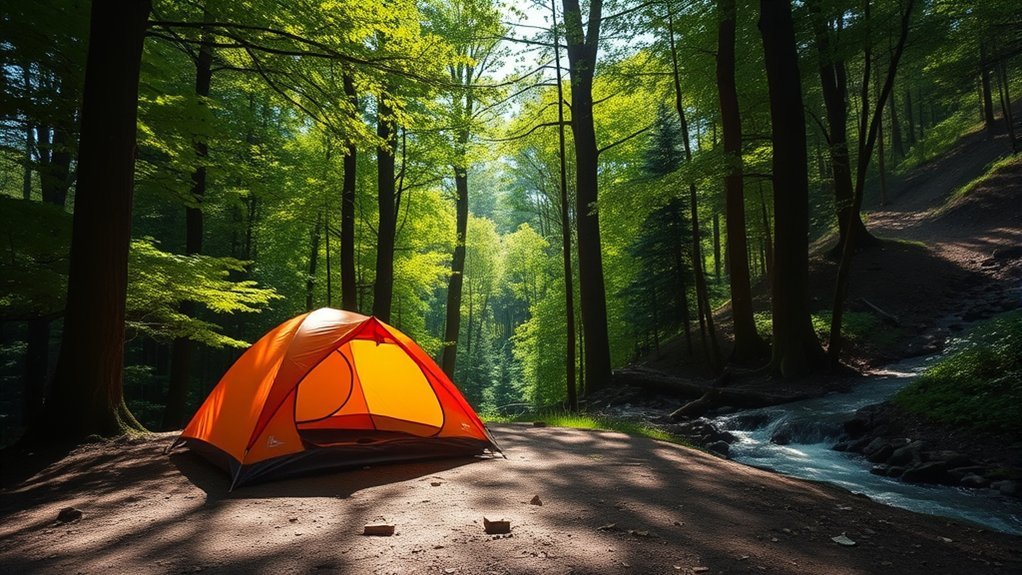
A dry tent starts with the ground beneath it. Use an established campsite or another durable surface allowed by the land manager. Leave No Trace recommends established campsites, rock, gravel, dry grass, or other durable surfaces rather than fragile vegetation.
Look for a nearly level area that is slightly crowned or gently graded so water can pass around it. Avoid bowl-shaped depressions, ravines, dry streambeds, washes, deep tire ruts, and channels between higher areas. These locations can collect runoff quickly even when rain falls somewhere upstream rather than directly over your tent.
Higher ground can be useful, but do not pitch on an exposed ridge, ledge, or peak where lightning and wind become greater hazards. The National Park Service advises campers to consider flash flooding, lightning, wind, dead branches, and nearby ravines when selecting a site.
A 60-Second Campsite Check
- Look down: Avoid puddles, mud, soggy moss, flattened debris, or water stains that show where rain has collected before.
- Look uphill: Check whether a slope, road, rock face, or compacted trail will send runoff toward the tent.
- Look around: Stay outside ravines, washes, flood channels, and low areas between hills.
- Look up: Do not camp beneath dead branches, leaning trees, or unstable rock.
- Check the rules: Use the designated tent pad when a campground provides one, even if another nearby spot looks drier.
Warning: Never remain in a wash, ravine, dry creek bed, or other flood channel when heavy rain or a flash-flood warning is possible. If water begins rising or flowing through camp, leave the tent and move to safer ground immediately.
Importance of a Properly Fitted Footprint
A footprint protects the tent floor from abrasion, sharp objects, mud, and some ground moisture. It does not make a poor campsite safe, and it cannot stop runoff that is already flowing beneath the shelter.
Proper Size Matters
The footprint should match the shape of the tent while remaining slightly smaller than the floor. A model-specific footprint normally provides the easiest fit. When using a general tarp or homemade ground cloth, fold or cut it so no edge is visible outside the tent.
An exposed edge acts like a rain catcher. Water lands on the material, follows it beneath the tent, and becomes trapped between two waterproof layers. REI recommends folding a full tarp completely under the tent-floor perimeter for this reason.
- Correct: The footprint is fully hidden beneath the tent floor.
- Too large: Material sticks out at a corner, side, door, or vestibule.
- Too small: Large areas of the floor remain exposed to abrasion.
- Poorly tensioned: Wrinkles create pockets where water and mud collect.
Note: Do not wrap a ground tarp up the outside of the tent walls. It can catch rain and direct it underneath. Follow the tent manufacturer’s instructions when a footprint has color-coded clips, buckles, or a specified coated side.
Edge and Attachment Alignment
A model-specific footprint may attach to the same corner points as the tent body. Align those attachment points without stretching the footprint beyond its intended shape. A plain tarp does not need its seams aligned with the tent seams; it only needs to lie smooth and remain inside the floor perimeter.
Before raising the poles, check all four corners. Pull any exposed material underneath and remove folds that could hold water. Inspect the ground cloth for holes, worn coating, or damaged attachment loops before each wet-weather trip.
Pro Tip: Set up the tent at home with its footprint and mark the correct folded size of a general tarp. That makes it easier to reproduce the right fit in darkness or rain.
Managing Water Trapped Between Layers
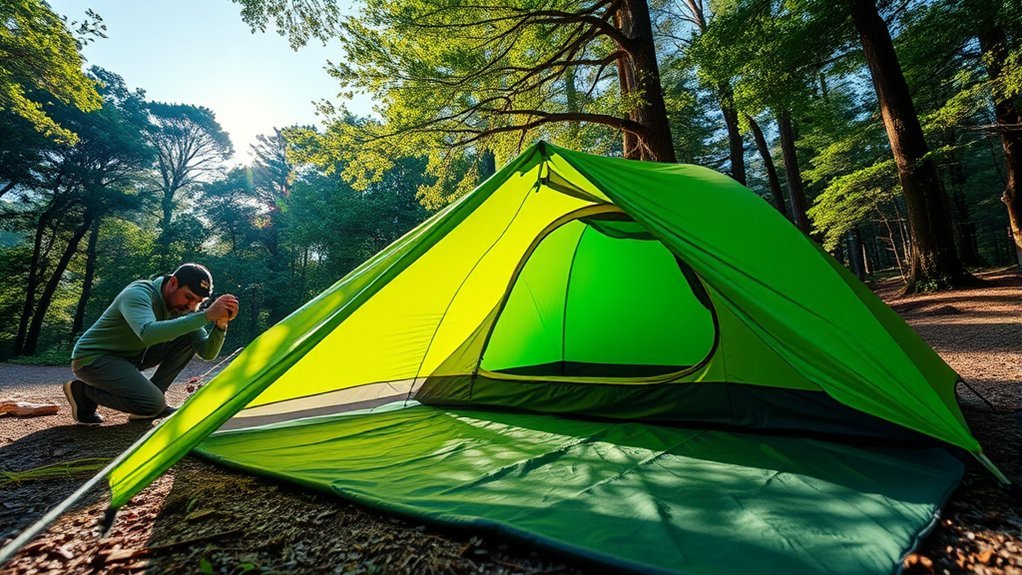
Water between the tent floor and footprint usually enters from the side. Common causes include an oversized ground cloth, runoff crossing the campsite, a fold that catches rain, or water draining from the vestibule onto an exposed corner.
Layer Management Techniques
- Hide every edge: Keep the footprint completely beneath the tent-floor outline.
- Smooth the material: Remove folds and pockets before installing the poles.
- Inspect the runoff path: Make sure rain cannot flow from uphill, a road, or a rock surface directly toward the footprint.
- Keep the layers clean: Small stones, twigs, and gritty soil can wear through both the footprint and tent floor.
- Dry both layers: Separate and dry the tent and footprint before storage to reduce mildew and coating damage.
Proper Pitching Practices
Spread the tent on the selected site and stake the corners according to its instructions. Install the poles carefully, attach the rainfly in the correct direction, and stake out the vestibules. Use the required guylines so the fly remains separated from the inner tent.
The fly should be taut but not stretched so hard that the seams or attachment points are strained. Some nylon fabrics relax after becoming wet. During a long storm, inspect the pitch and tighten adjustable straps and guylines as needed. Big Agnes recommends re-staking and re-tensioning a rainfly that begins to sag in heavy rain.
Weather Awareness During Setup
Check the forecast, campground alerts, radar, and local flash-flood information before choosing a site. Conditions several miles uphill can affect a creek, canyon, or wash even when your immediate campsite receives little rain.
If rain is approaching, organize the tent parts before opening the tent bag. Place the footprint, stake the tent body, install the poles, and add the rainfly without leaving the inner tent exposed longer than necessary. Keep sleeping bags and dry clothing sealed until the shelter is secure.
Avoiding Camping on Slopes or Uneven Ground
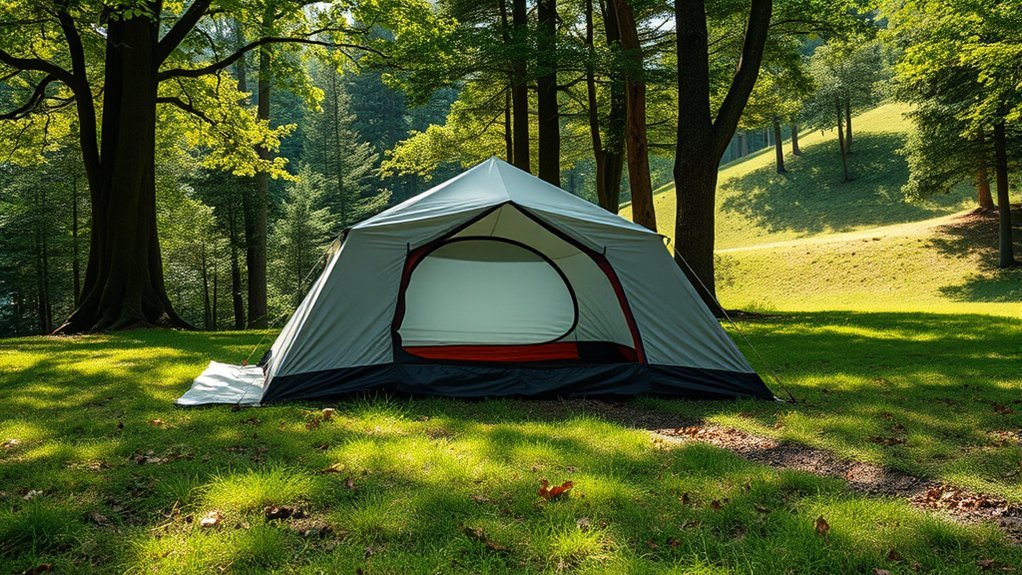
A steep or uneven slope can cause three problems: runoff may cross the tent, occupants may slide toward one wall, and body weight may press the floor harder against wet ground. Choose a nearly level site whenever possible.
A slight crown or very mild grade is different from pitching on a hillside. A crown lets water pass around the sleeping area without placing the tent in an obvious flow path. If the only permitted tent pad has a mild tilt, place your head on the higher end for comfort and keep the door and vestibule away from the direction of runoff.
Do not assume that the entrance must always face downhill. Position it where water will not flow through the doorway, and turn it away from the expected wind-driven rain when the tent design allows.
The most effective waterproofing step happens before the tent is unpacked: choose ground where rain will pass around the shelter instead of beneath it.
Understanding Saturated Ground and a High Water Table
A high water table means underground water is close to the surface. Campers usually cannot measure it directly, but they can recognize saturated ground. Warning signs include standing water, soft mud, water appearing when the soil is pressed, deep footprints filling with water, and broad areas that remain wet after nearby ground has dried.
Prolonged rainfall, clay-rich soil, poor surface drainage, snowmelt, and nearby wetlands may all contribute to saturation. Being close to a lake or river does not automatically mean the tent floor will flood, but low banks and floodplains can become dangerous when water rises.
If the ground is already saturated, a thicker footprint will not solve the underlying problem. Use another designated tent pad or move to a durable site with better drainage. Never build a platform, move large amounts of soil, or alter vegetation to manufacture a dry campsite.
Maintaining Your Tent’s Waterproofing
Inspect the tent before a trip rather than relying on a fixed one-, two-, or three-year treatment schedule. Use the tent manufacturer’s care instructions because fabric coatings, seam tape, and sealants vary by model.
Pre-Trip Waterproofing Check
- Pitch the tent at home on a clean surface.
- Inspect the floor, lower walls, rainfly, zippers, and seams in good light.
- Look for peeling seam tape, flaking or sticky coatings, pinholes, worn corners, and damaged fabric.
- Spray the exterior gently with a hose or wait for rain, then check for localized drips.
- Let the tent dry fully before packing it away.
A wet-looking inner fly is often condensation rather than a leak. A true seam leak normally produces a repeatable drip or wet line at the same location. A damaged floor may show a localized wet patch where pressure from a knee, cot leg, or heavy gear presses it against water below.
Clean and reproof the tent only with products compatible with its fabric and coating. Nikwax recommends checking whether the fabric still repels water and treating a clean tent when repellency has declined. If the seam tape is peeling or the coating is failing, consult the tent manufacturer before applying a general seam sealer.
Always store the tent clean and completely dry in a cool location. Long-term damp storage can cause odor, mildew, coating separation, and permanent waterproofing damage.
Elevating Your Sleeping Area
A sleeping pad, camp bed, or cot can keep bedding away from a damp floor, but it does not stop water from collecting beneath the tent. Treat elevation as a backup layer of protection rather than a drainage solution.
- Use a sleeping pad that is appropriate for the weather and ground conditions.
- Place waterproof gear sacks beneath vulnerable clothing or electronics rather than loose fabric bags.
- Keep sleeping bags away from the tent walls, where condensation may collect.
- Use protective pads beneath cot legs when required so concentrated pressure does not damage the floor.
- Move wet footwear and rain gear into the vestibule without blocking the door or ventilation.
Note: If water is flowing beneath the tent or rising around the campsite, protecting the sleeping bag is not enough. Move people and essential gear to safer ground.
Additional Protective Measures
A properly installed rainfly is the first extra layer of protection. Attach it in the correct direction, stake the vestibules, open protected vents, and use the guylines specified in the manual. A taut fly sheds water and is less likely to touch the inner tent.
An overhead tarp can create a dry entry or cooking area when local rules and conditions allow. Pitch it high enough that it does not rub against the tent, angle it so runoff leaves the campsite, and secure it for the expected wind. Do not direct tarp runoff toward your own tent, a neighboring campsite, a trail, or a water source.
Warning: Do not dig a trench around the tent. Leave No Trace guidance says good campsites should be found rather than made, and trenches can damage vegetation, increase erosion, violate site rules, and redirect water toward other campers.
Keep the tent ventilated as weather permits. Moisture from breathing, damp clothing, and wet gear can condense on the inner surface of a cool rainfly. Ventilation will not remove all condensation during humid rain, but it can reduce dripping and help prevent condensation from being mistaken for a floor leak.
What to Do If Water Is Already Pooling Under the Tent
- Check for immediate danger. Leave at once if water is rising, flowing, carrying debris, or entering from a ravine, creek, wash, or hillside.
- Protect essential gear. Place sleeping bags, dry clothing, phones, batteries, and medical supplies in waterproof bags or on the highest dry surface.
- Inspect the footprint edges. If an edge sticks out and conditions are safe, pull or fold it beneath the tent without lifting the shelter into the wind.
- Check the rainfly. Tighten sagging fly straps and guylines, and make sure fly runoff is not landing on an exposed footprint corner.
- Inspect the site. Look for water entering from uphill, a road, a compacted path, a rock slab, or a nearby tarp.
- Relocate when necessary. If pooling continues or the ground is saturated, move to another permitted site instead of trying to rebuild the drainage.
- Dry the shelter later. Separate the footprint, floor, and fly as soon as conditions permit and dry every layer before storage.
Diagnosing Water Around Your Tent
Water Is Between the Footprint and Tent Floor
The footprint is probably protruding beyond the tent, folded into a catch basin, or sitting in a runoff path. Hide every edge and move the tent if water continues crossing the site.
The Rainfly Is Damp Across a Large Area
This is usually condensation. Increase protected ventilation, keep wet gear outside the sleeping area, and prevent sleeping bags from touching the walls.
A Drip Appears at One Seam or Corner
A seam, zipper cover, corner, or attachment point may be leaking. Mark the location, dry the tent, and use the repair method recommended for that fabric and coating.
The Floor Becomes Wet Under a Knee, Cot Leg, or Heavy Bag
Pressure may be forcing water through a worn coating or small damaged area. Move the weight, protect the floor, relocate from pooled water, and inspect the coating after the trip.
Water Enters Through the Door
The vestibule may be facing wind-driven rain, the door may sit in a low spot, or the vestibule fabric may be draining toward the opening. Reposition loose gear, close the fly correctly, and move the tent if the doorway lies in a drainage path.
Best Practices for Tent Setup
- Check the forecast, park alerts, and flash-flood risk.
- Use an established or designated campsite whenever one is available.
- Select durable ground outside depressions, ravines, washes, and runoff channels.
- Check overhead for dead branches and other falling hazards.
- Remove only small loose objects that could puncture the floor; do not excavate or reshape the site.
- Place a correctly sized footprint entirely beneath the tent floor.
- Stake the tent body and install the poles according to the manual.
- Attach the rainfly, stake the vestibules, and use the required guylines.
- Orient the entrance away from runoff and expected wind-driven rain.
- Recheck footprint edges, fly tension, and drainage after rain begins.
- Keep wet gear out of the sleeping area and maintain protected ventilation.
- Move to safer ground if water rises or flows through the campsite.
Frequently Asked Questions
What should I do if it rains unexpectedly while camping?
Install and tension the rainfly, close doors facing the rain, secure loose guylines, and place vulnerable gear in waterproof bags. Check whether the footprint sticks out beyond the floor. If runoff begins crossing the campsite or water starts rising, move to safer ground instead of trying to divert it with a trench.
Can I use a tarp instead of a footprint groundsheet?
Yes. Use a durable waterproof tarp and fold or cut it so it is slightly smaller than the tent floor. No edge should remain visible outside the floor perimeter. A protruding tarp can collect rain and funnel it beneath the tent.
How often should I reapply waterproofing treatments?
Inspect the tent before major trips and treat it when water stops beading, a compatible manufacturer recommends treatment, or testing reveals a loss of water resistance. Usage, UV exposure, storage, fabric, and coating type matter more than a universal calendar interval.
Is it safe to camp near a river or stream?
Use designated campground sites and follow local rules. In undeveloped backcountry areas, Leave No Trace generally recommends camping at least 200 feet from lakes and streams. Stay outside floodplains, dry channels, ravines, and banks that show debris or previous high-water marks.
What materials are best for a footprint groundsheet?
Common choices include coated nylon, polyester, polyethylene, and lightweight building-wrap materials used for homemade footprints. Choose a material that balances weight, puncture resistance, waterproofing, and packed size. A model-specific footprint provides the most reliable shape and attachment points.
Why is water trapped between my footprint and tent?
The footprint may be too large, an edge may have unfolded, or runoff may be crossing the campsite. Water can also drain from a vestibule or overhead tarp onto an exposed corner. Tuck every edge beneath the floor and relocate if the site remains in a flow path.
Will a cot stop water from pooling under my tent?
No. A cot can lift your bedding above a damp floor, but it does not change the way water moves beneath the tent. Use protective pads under the legs when required, and move the shelter if the site is flooding or the ground is saturated.
Conclusion
To stop water from pooling under your tent, begin with a durable campsite outside low spots and drainage channels. Keep the footprint slightly smaller than the tent floor, pitch the rainfly taut, use the required guylines, and recheck the setup after rain begins. Maintain the tent according to its manufacturer’s instructions, but remember that no coating or tarp can make a flood-prone site safe.
If water starts rising or flowing through camp, protect people first and move to safer ground. Do not dig trenches or alter the site. Careful site selection, correct footprint placement, and a well-tensioned shelter provide a safer and more reliable solution.
Sources
- Leave No Trace: Travel and Camp on Durable Surfaces — durable campsites, water-source distance, and low-impact site selection
- U.S. National Park Service: Finding and Setting Up a Campsite — flash-flood, wind, lightning, ravine, and overhead-hazard guidance
- REI Expert Advice: How to Set Up a Tent — footprint sizing, tarp folding, campsite selection, and rain orientation
- REI Expert Advice: What Is a Tent Footprint? — footprint materials, fit, durability, and purpose
- Big Agnes: Tent Setup and Rain Tips — rainfly tension, guylines, ventilation, and wet-weather adjustments
- Nikwax: Cleaning, Waterproofing, and UV Protecting a Tent — inspection, cleaning, reproofing, and drying instructions
