
Last Updated on July 29, 2026 by Mason Reed
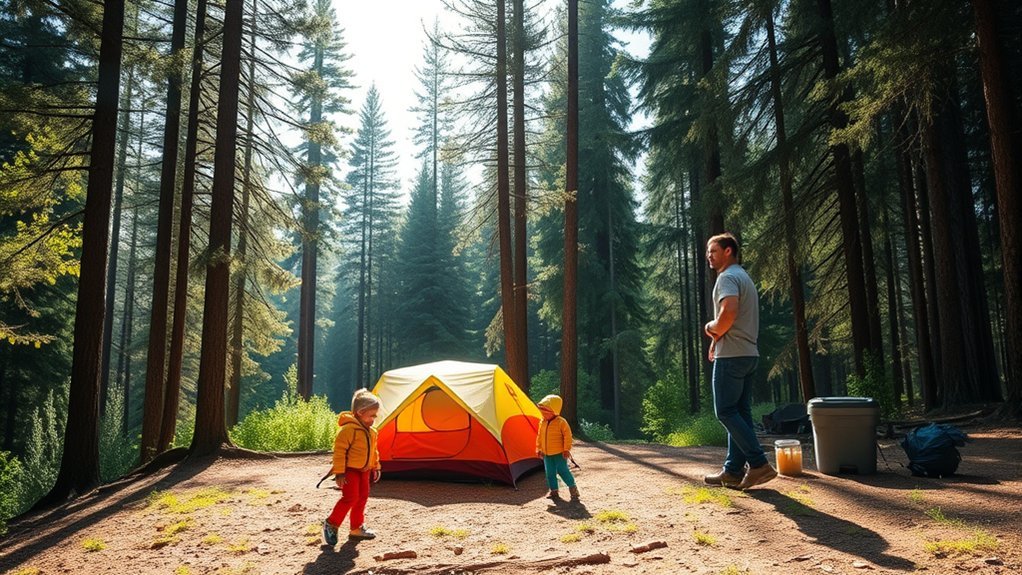
Camping in bear country with kids can be safe and rewarding when adults plan for local conditions, control every food odor, keep children close, and know how to respond before a bear appears. The goal is not to “bear-proof” the trip—no method removes all risk—but to prevent surprise encounters and keep bears from associating people with food.
Quick Answer
Check local bear alerts and food-storage rules, keep every scented item out of the tent, supervise children closely, make human noise on trails, and carry accessible bear spray where it is recommended and allowed. During an encounter, do not run; gather the family, pick up small children, and follow species- and behavior-specific guidance.
Key Takeaways
- Local park or forest rules come first because food-storage methods, bear-spray rules, and wildlife distances vary by location.
- Food, trash, toiletries, cookware, pet food, drinks, and other scented items never belong in a tent.
- Keep children beside an adult, especially near blind corners, streams, dense brush, berry patches, or fresh bear sign.
- Do not run from a bear. Pick up small children, keep the group together, speak calmly, and slowly create distance when the bear allows it.
- Play dead only in the correct situation—generally a defensive grizzly or brown bear attack. Fight back during a black bear attack, a predatory attack, or any attack inside a tent.
At a Glance
| Time Required | About 30–60 minutes to check rules, pack, and teach the family plan; ongoing attention at camp |
| Difficulty | Moderate; adults must manage food, children, and changing trail conditions |
| Tools Needed | Locally approved food storage, resealable trash bags, cleaning supplies, flashlight, first-aid kit, and bear spray where recommended and allowed |
| Cost | Varies; some campgrounds provide lockers, while approved containers and bear spray may be rented or purchased |
Disclosure: As an Amazon Associate I earn from qualifying purchases. Some links on this page are affiliate links, at no extra cost to you.
Preparing for Your Camping Trip
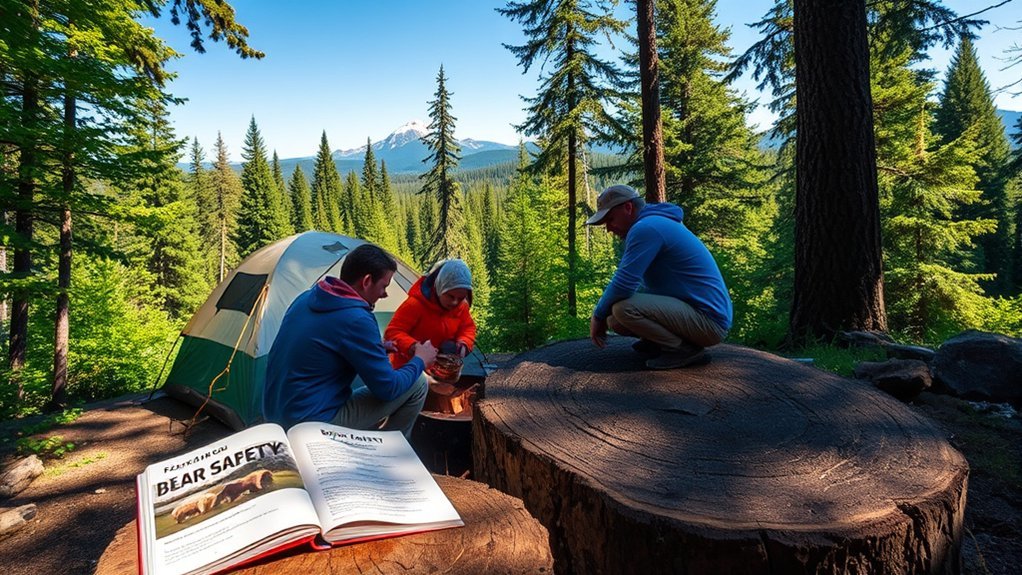
Start with the agency that manages your campground or trail. Check current bear activity, closures, minimum viewing distances, required food-storage methods, pet rules, and whether bear spray is recommended or permitted. The National Park Service bear-safety guidance is a useful baseline, but the rules posted for your exact destination take priority.
Learn which bears live in the area. Black bears are not always black, so color alone is not a reliable field mark. Grizzly or brown bears and black bears may require different responses if physical contact occurs. Adults should understand those differences before explaining a simple plan to children.
Family Bear-Safety Packing List
- Required food storage: a campground locker, approved bear-resistant container, or another method allowed by the land manager.
- Odor control: resealable bags for crumbs, diapers, wipes, toiletries, menstrual products, pet food, and trash. Bags organize odors but are not bear-resistant by themselves.
- Bear spray: an EPA-registered product where recommended and legal, carried by a responsible adult in a hip or chest holster—not buried in a backpack.
- Navigation and communication: a map, charged phone or satellite communicator where appropriate, emergency contacts, and a trip plan left with someone at home.
- Basic safety gear: first-aid kit, headlamps or flashlights, whistles for emergencies, weather layers, and enough water.
Note: “Bear-resistant” is the accurate term. Even tested containers can fail if they are left open, unlatched, overfilled, or used where the land manager requires a different storage method.
Establishing a Clean Camp
A clean camp prevents most food-related bear problems. Secure all attractants as soon as you arrive; do not wait until bedtime. In a developed campground, use the provided locker, dumpster, cooking area, and posted rules. In an undeveloped backcountry site, separate sleeping, cooking, and food-storage areas when the terrain and local rules allow it.
Never keep food, drinks, wrappers, toothpaste, sunscreen, insect repellent, lip balm, trash, dirty cookware, pet food, or scented clothing in a tent. Check child car seats, stroller pockets, jacket pockets, and daypacks for crumbs or snacks before nightfall.
Food Storage Techniques
Use this order of preference, while following the destination’s posted requirements:
- Use the provided bear locker and latch it after every use.
- Use an approved bear-resistant container where allowed, and keep it closed and locked whenever food is not being handled.
- Use a hard-sided vehicle only where local rules permit it. Some parks prohibit overnight vehicle storage or require food lockers even when a vehicle is present.
- Hang food only where hanging is legal and effective. Exact rules vary. A common federal standard is 10–12 feet above the ground and 4–6 feet horizontally from the trunk or supporting limb; follow the stricter local measurement.
- Keep food attended while it is out. Put ingredients, snacks, coolers, and cookware away as soon as the meal or cleanup ends.
The National Park Service treats anything with an odor as a potential attractant. Its food-storage guidance includes toiletries, cosmetics, trash, drinks, fuel, coolers, and food-preparation items—not just meals.
Trash Management Practices
Trash must be handled like food. Do not bury it, leave it in a fire ring, or rely on a partially burned campfire to remove odors. Store garbage with the rest of the attractants until it can be placed in a latched bear-resistant dumpster or packed out.
| Action | Why It Matters | Family Routine |
|---|---|---|
| Pack out every scrap | Even small food remains can reward a bear | Assign an adult to inspect the table and ground after each meal |
| Latch bins and lockers | A closed lid is not secure unless the latch is engaged | Let children watch, but have an adult check the latch |
| Clean grease and dishes | Cookware, grills, and wash water can carry food odors | Clean promptly and dispose of wash water as local rules direct |
Food and scented items never belong in a tent—not for a few minutes, not in a sealed package, and not because an adult is nearby.
Educating Kids About Bear Safety
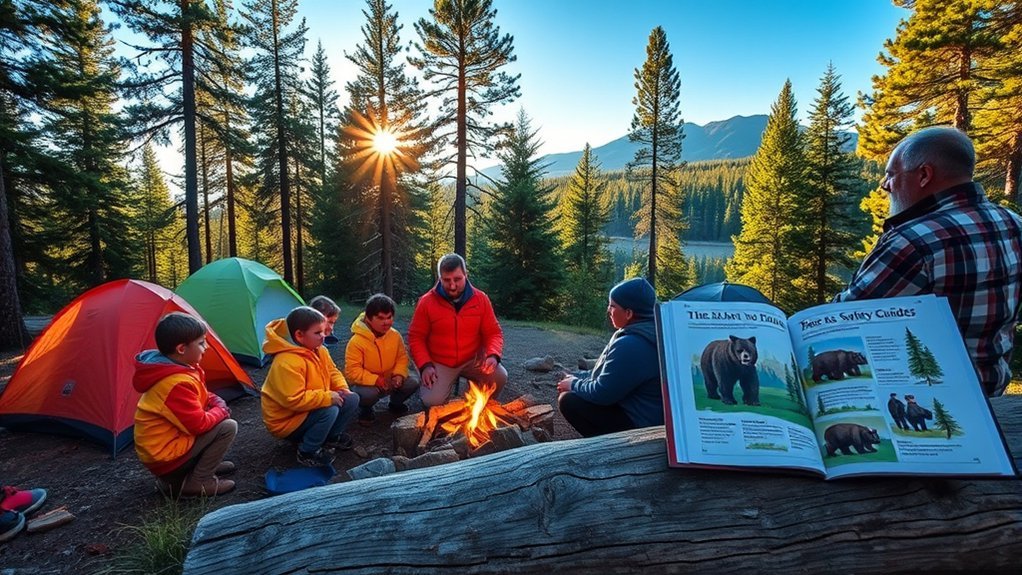
Give children a short plan they can remember under stress: “Stop, stay with the grown-up, do not run, and follow directions.” Practice it at home and again at camp. Avoid long explanations during an actual encounter.
- Stay close: Children should not run ahead, disappear around bends, or play alone near brush, streams, berry patches, or campground edges.
- Use human voices: Teach them to talk, sing, clap, or call “Hey bear” near blind corners and noisy water. The goal is to avoid surprising a bear, not to chase it away.
- Recognize signs without investigating: Fresh tracks, scat, digging, claw marks, torn logs, a carcass, or a strong animal odor are reasons to turn around and tell an adult.
- Keep snacks controlled: Food stays with an adult during hikes and goes back into approved storage after use. Check pockets and packs for wrappers.
- Let adults lead the response: If a bear appears, children should not scream, run, take photos, throw food, or reach for bear spray.
If a bear surprises the group, the National Park Service advises adults to pick up small children immediately, keep the group together, speak calmly, and avoid sudden movement.
Pro Tip: Use a two-minute family drill before every hike. One adult says, “Bear,” and everyone practices stopping, gathering together, and waiting quietly for instructions.
Safety During Hikes
Hike in a group whenever possible, stay on established trails, and travel during daylight. Some parks recommend groups of three or four or more, but the practical rule for families is simple: stay together and do not let children spread out.
- Make noise where surprise is likely: talk or call out near blind corners, dense vegetation, strong wind, and rushing water. Bear bells alone are not a reliable substitute for the human voice.
- Stay alert: leave headphones and earbuds off. Scan ahead for bears, tracks, scat, digging, berry patches, fish, or carcasses.
- Turn around when conditions feel wrong: fresh sign, limited visibility, a bear feeding near the route, or a closure notice is a reason to leave the area.
- Keep pets controlled: follow local rules, use a leash where pets are permitted, and store pet food as carefully as human food. A loose pet can provoke a bear and return to the family with the bear behind it.
- Give bears room: never approach for a photograph. Follow the park’s minimum distance and move out of a bear’s travel path.
The National Park Service hiking guidance specifically favors talking, clapping, and calling out over relying on bells.
Recognizing Bear Behavior

Body language helps you decide whether to quietly create distance, hold your ground, prepare bear spray, or defend yourself. No single sign is perfect, and every encounter is different.
- Standing on hind legs: A bear is often trying to see or smell better. Standing alone does not mean it is about to attack.
- Defensive behavior: Huffing, jaw popping, swatting the ground, a lowered head, laid-back ears, or a sudden charge may occur when a bear is surprised, guarding cubs, defending food, or protecting space.
- Curious behavior: A bear may watch, circle, or approach to identify you. Give it an escape route and do not offer food.
- Predatory or highly concerning behavior: A bear that quietly and persistently follows, stalks, enters a tent, or continues approaching after you stand your ground requires a stronger response. Move toward a secure building or vehicle if possible and prepare to fight back if attacked.
Warning: Do not base an emergency response on fur color alone. Black bears can be brown, cinnamon, or blond. Learn which species are present and follow the destination’s current encounter guidance.
Responding to Bear Encounters
Stay calm and act as a group. The first goal is to avoid turning a sighting into a close encounter; the second is to use the correct response if the bear approaches or makes contact.
If You See a Bear Before It Sees You
- Stop and keep children beside you.
- Quietly back away the way you came or take a wide detour.
- Do not approach, shout for a photograph, or block the bear’s route.
- Leave the area if the bear is feeding, with cubs, near a carcass, or close to your planned route.
If the Bear Knows You Are There
- Pick up small children and keep everyone together.
- Do not run, climb a tree, scream, or drop a food-filled pack.
- Speak in a calm, confident voice so the bear recognizes you as human.
- Slowly move away, preferably sideways, while watching the bear and leaving it an escape route. If moving away makes the bear more agitated, stop.
- Remove bear spray from its holster and be ready if the bear approaches aggressively.
Using Bear Spray
Bear spray is a last-line deterrent, not a substitute for clean-camp and hiking habits. Choose an EPA-registered product labeled for bears, check its expiration date, carry it where an adult can reach it quickly, and follow the canister’s instructions. If an aggressive bear charges within the labeled range, aim slightly downward and create a cloud between the group and the bear. Consider wind direction, keep spraying as needed, and leave the area after the bear retreats without running.
The Interagency Grizzly Bear Committee warns that bear spray is not a personal or campsite repellent. Never spray it on tents, packs, clothing, people, or the ground as a preventive measure.
If a Bear Makes Contact
- Defensive grizzly or brown bear attack: Leave your pack on, lie face down, spread your legs, clasp your hands behind your neck, protect the sides of your face with your elbows, and remain still. If the attack continues for an extended time, fight back.
- Black bear attack: Do not play dead. Escape to a secure vehicle or building if possible. Otherwise, fight back hard with available objects and focus blows on the face and muzzle.
- Predatory attack by any bear: If the bear stalks you, attacks inside a tent, or continues an attack that is clearly not defensive, fight back with everything available.
These species- and behavior-specific responses follow current National Park Service bear-attack guidance.
If a Bear Enters Your Campsite
Move children into a hard-sided vehicle or building if one is immediately available. Do not stand between the bear and an exit. From a safe position, follow campground instructions for hazing or reporting; procedures differ by park and bear species. Never retrieve food while the bear is beside it. Report a bear that enters camp, obtains food, damages property, acts aggressively, or refuses to leave.
After any attack or immediate threat, call 911 where service exists, provide first aid when safe, leave the area, and report the incident to a ranger or wildlife authority. The report can protect the next family and help managers respond appropriately.
Proper Food Storage Techniques
The correct storage method depends on whether you are in a developed campground, at a trailhead, or in the backcountry. Never assume that a locked car, ordinary cooler, or food hang is legal everywhere.
| Setting | Best Practice | Common Mistake |
|---|---|---|
| Developed campground | Use the provided locker or the exact method posted at the site; keep it latched | Leaving a cooler, stove, trash bag, or snack unattended on the table |
| Vehicle-access campsite | Use a hard-sided vehicle only when local rules allow; close windows and doors and keep attractants out of sight | Assuming a vehicle is always approved for overnight storage |
| Backcountry campsite | Use the required canister, cable, pole, locker, or legal hang; keep sleep and food areas separated where possible | Using an ordinary “camping barrel” or an improvised hang where canisters are required |
For undeveloped backcountry camping, the U.S. Forest Service advises cooking and eating about 100 yards from the tent and provides common food-hang measurements. That spacing is not a universal layout for developed campgrounds, so use the facilities and rules at your site.
Note: Never store attractants in a soft-sided tent trailer, tent, or tent vestibule. A zipped fabric wall is not a food-storage barrier.
How to Help Protect Bears
Bear safety also protects bears. A bear that receives food, trash, toiletries, or pet food may return to people, damage property, or become aggressive. Wildlife managers may then have to remove or kill the food-conditioned bear.
- Never feed a bear or leave food as a distraction.
- Do not bury or burn food scraps, coffee grounds, grease, diapers, or trash.
- Keep the site clean during the day, not just overnight.
- Respect closures, seasonal restrictions, and minimum viewing distances.
- Do not crowd a bear for a photo or place yourself between a mother and cubs.
- Report bears that obtain food, enter occupied camp areas, damage tents or vehicles, stalk people, or behave aggressively.
Small habits matter: latch the locker, wipe the table, check the child seat for crumbs, secure toiletries, and pack out every scrap. Those actions reduce conflict and help bears remain wild.
Frequently Asked Questions
What should I do if I see a bear while camping?
Keep the family together, pick up small children, do not run, and speak calmly. If the bear is unaware of you, back away quietly. If it knows you are present, give it an escape route and slowly create distance. Prepare bear spray if it approaches aggressively, and follow species-specific guidance if contact occurs.
How can I choose a safe campsite in bear country?
Use a designated site when available and check current closures. For dispersed camping, avoid fresh bear sign, carcasses, animal travel routes, dense brush, and concentrated natural food such as berry patches. Follow local rules for distances from water, trails, food-storage areas, and cooking areas.
Are there specific bear species I should know about?
Most family campers in the United States need to prepare for black bears, grizzly or brown bears, or both. Do not identify a black bear by color alone. Check the managing agency’s wildlife page before the trip so adults know which species are present and how local officials want visitors to respond.
What should I pack for bear safety on family hikes?
Carry accessible bear spray where recommended and legal, plus water, a first-aid kit, navigation, a communication device appropriate for the area, a flashlight, and a way to secure all food and trash. One responsible adult should manage snacks and scented items so wrappers do not remain in children’s pockets.
How do I teach kids to react if they encounter a bear?
Practice one short command: “Stop, stay with the grown-up, do not run, and follow directions.” Teach children not to scream, throw food, take photos, or reach for spray. During an encounter, an adult should immediately pick up small children and keep the group close.
Can I keep food in my car overnight?
Only when the park or forest allows it. Some locations permit food in a closed hard-sided vehicle, while others require a food locker or approved container, especially after dark. Never assume a vehicle, pickup bed, soft-sided camper, or ordinary cooler meets local rules.
Should bear spray be kept inside the tent?
Keep it readily available to an adult, protected from accidental discharge, and handled according to the label. Do not spray it on the tent or use it as a perimeter repellent. During hikes, carry it in a hip or chest holster rather than inside a backpack.
Conclusion
Camping in bear country with kids does not require fear, but it does require disciplined habits. Check local rules, secure every attractant, keep children beside an adult, make noise before blind spots, and rehearse the encounter plan. When families avoid surprises and prevent bears from getting human food, they protect themselves, other campers, and the bears that make the trip memorable.
Sources
- National Park Service — Staying Safe Around Bears — general encounter and species-specific attack guidance
- National Park Service — Bear Safety: Storing Food — attractants, campground storage, cleanup, and local-rule requirements
- National Park Service — Hiking in Bear Country — trail noise, bear bells, timing, and avoiding surprise encounters
- National Park Service — What If a Bear Finds Me? — gathering the group, picking up small children, and backing away
- Interagency Grizzly Bear Committee — Bear Spray — selection, carrying, use, and limitations
- U.S. Forest Service — Respect Wildlife — backcountry food hanging, cooking distance, pets, trash, and reporting
