
Last Updated on July 29, 2026 by Mason Reed
Condensation can make a sound tent feel as though it is leaking, but the moisture usually comes from humid air, breathing, wet gear, and cold tent fabric. The fastest fix is to combine ventilation, wiping, and careful gear management. Dry the tent as much as conditions allow in camp, then finish drying it completely before long-term storage.
Quick Answer
Open every safe vent and door to create crossflow, then wipe the inner walls with an absorbent towel. Remove wet clothing and gear from the sleeping area, shake moisture from the rainfly, and separate the fly from the tent body when practical. Air-dry fully before storage; use brief sun only, not prolonged exposure.
Key Takeaways
- Vent continuously when weather permits; high and low openings create the best airflow.
- Wipe visible droplets before they fall onto sleeping bags and clothing.
- Move wet gear out of the sleeping area and do not leave it sealed in plastic longer than necessary.
- Keep the rainfly taut and separated from the inner tent.
- Never store a tent damp, and never use a fuel-burning stove, heater, or lantern inside an ordinary tent.
At a Glance
| Time Required | 5–30 minutes in camp, plus complete air-drying before storage |
| Difficulty | Easy |
| Tools Needed | Absorbent towel, dry sack or temporary plastic bag, and optional clothesline |
| Cost | $0 with existing gear; about $5–$15 for a compact microfiber towel |
Disclosure: As an Amazon Associate I earn from qualifying purchases. Some links on this page are affiliate links, at no extra cost to you.
Why Condensation Forms Inside a Tent
Condensation forms when warm, humid air meets a cooler tent surface and the water vapor turns into droplets. Moisture comes from breathing, sweat, damp clothing, wet ground, nearby water, humid weather, and cooking too close to the shelter. NEMO notes that an adult may exhale about 1–2 pints of water overnight, so some moisture can appear even when a tent is pitched correctly.
Double-wall tents usually keep most condensation on the underside of the rainfly, away from the sleeping area. Single-wall tents place the occupant closer to the damp surface and often require more careful venting. No normal tent design can eliminate condensation in every combination of cold, humidity, rain, and still air.
Condensation is moisture from the air collecting on cold fabric; a leak is water passing through a seam, hole, zipper, or failed coating.
Open Both Vestibules for Airflow
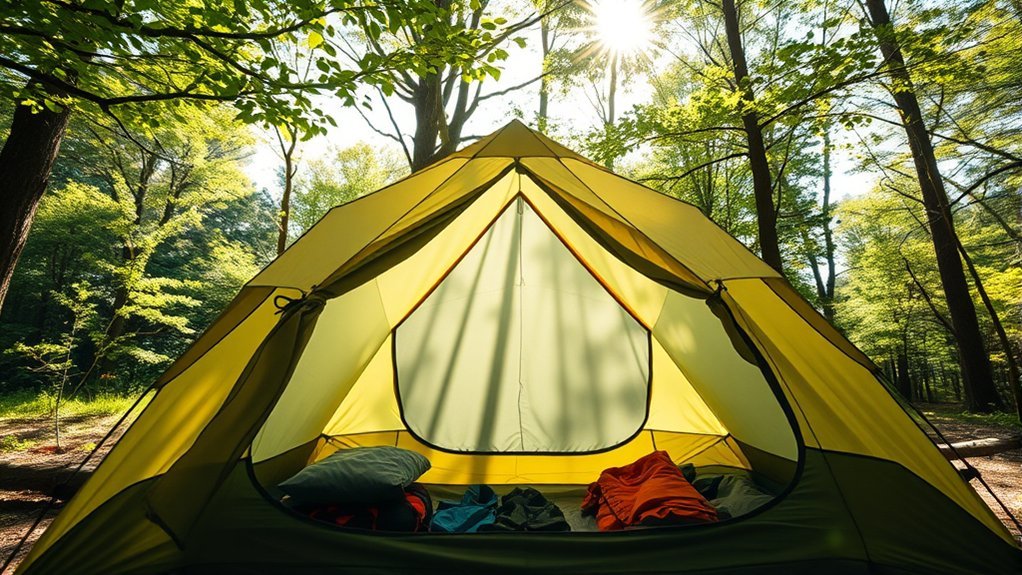
Opening both vestibules is one of the fastest ways to improve airflow in a tent with two doors. It creates cross-ventilation that helps replace warm, moist air with cooler outside air. On a one-door tent, open the available door or rainfly zipper from the top and use every built-in vent.
Keep vents open through the night when rain, snow, blowing dust, and wind direction allow. A small protected opening is better than sealing the tent completely. Use lower openings for incoming air and higher vents for warm, humid air to escape.
Wind orientation depends on conditions. In a light breeze, aim the largest mesh panels or vents toward the airflow. In strong wind, follow the tent maker’s instructions and point the shorter or lower-profile end into the wind for stability. Do not expose a large open vestibule to driving rain merely to increase ventilation.
Pro Tip: Before bed, check that the rainfly is taut and that guy lines hold it away from the inner tent. Big Agnes recommends preserving space between the fly and tent body so air can move through the double-wall system.
Use Microfiber Towels to Absorb Moisture
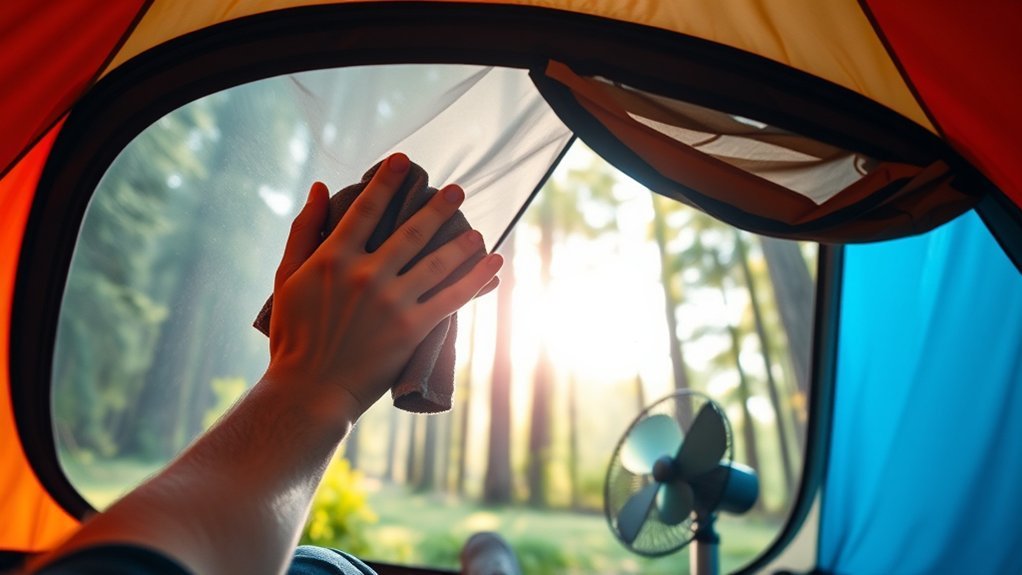
A compact microfiber towel is useful because it is light, absorbent, and usually dries faster than a thick cotton towel. Wipe droplets from the inner tent, rainfly, floor edges, and any damp gear before the water can drip onto your sleeping bag.
Wring the towel out away from the tent, then repeat as needed. A bandana, camp cloth, sponge, or regular towel also works. The best towel is the clean, absorbent one you already have; microfiber is convenient, not mandatory.
After use, rinse the towel if necessary and hang it where it can dry. Do not leave a wet towel inside the sleeping area because it adds moisture back to the air.
Isolate Wet Items in Trash Bags

Move wet clothing, boots, and rain gear out of the sleeping area. A waterproof trash bag or dry sack can keep damp items from soaking dry gear during transport, but a sealed bag also traps moisture. Use it as temporary containment, then open the bag and dry the contents as soon as conditions improve.
Keep wet gear in a covered vestibule when safe, but do not block the tent door or vents. Separate clothing from muddy footwear so you can handle each item easily. Avoid leaving valuables unattended outside, and follow campground food-storage rules rather than keeping scented items in or beside the tent.
Note: Plastic bags do not dry gear. They only stop water from spreading. Once the rain stops, hang or spread wet items where moving air can reach both sides.
Dry Your Tent Before Evening Setup
If you packed the tent damp that morning, use the first dry break to remove as much moisture as possible before the next night. Follow these steps:
- Choose a safe drying spot: Use a clean rock, line, branch, or open area that will not snag the fabric or damage vegetation.
- Shake off loose water: Hold the rainfly by reinforced edges and shake gently.
- Wipe the interior: Remove beads of water with an absorbent towel.
- Separate the layers: Dry the rainfly, inner tent, footprint, and poles separately so air reaches more surface area.
- Turn damp fabric: Flip or reposition each piece after a few minutes.
- Repack only when necessary: If the tent is still damp, keep it separate from sleeping bags and clothing and dry it again at the next opportunity.
Drying time changes with humidity, temperature, wind, fabric, and how wet the tent is. There is no reliable rule that 20 minutes will fully dry every tent.
Regular Ventilation to Maintain Airflow
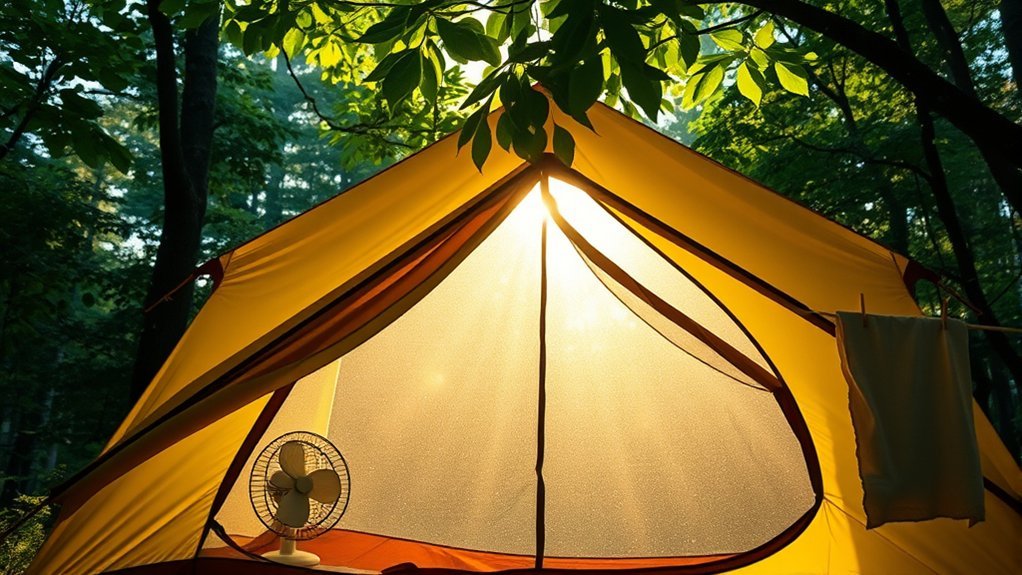
Ventilation works best as an ongoing habit, not a task performed every few hours. Open the tent’s vents when you pitch it, adjust them when weather changes, and leave as much protected airflow as conditions permit.
Open Vents and Windows
- Open built-in roof vents, low vents, mesh windows, and protected door gaps.
- Use both doors on a dual-entry tent to create crossflow.
- Roll back part of the rainfly only when the sky and wind make it safe.
- Keep mesh, vents, and the gap under the fly clear of packs, clothing, and snow.
- Reduce openings on the windward side during blowing rain, then reopen them when conditions ease.
Position for Optimal Airflow
| Condition | Tent Position or Adjustment | Why It Helps |
|---|---|---|
| Light breeze, dry weather | Aim the largest vents or mesh panels toward the breeze | Improves cross-ventilation |
| Strong wind | Point the lower-profile end into the wind and secure every required guy line | Protects stability while retaining controlled ventilation |
| Rain | Use covered vents and top-zip door gaps; keep the rainfly taut | Lets humid air escape without inviting rain inside |
| Cold or snow | Keep high vents open and clear snow from low vents | Reduces frost buildup and preserves airflow |
Use Sunlight Carefully for Quick Drying
Brief sunlight can speed evaporation, especially when paired with a breeze, but it should not be treated as a fixed 20-minute cure. Open both vestibules when practical, wipe off droplets first, and spread the rainfly and inner tent separately so light and air reach more fabric.
Do not leave a tent in strong direct sun longer than needed. REI warns that extended ultraviolet exposure degrades tent fabric and rainflies. Once the worst moisture is gone, finish drying in bright shade or a ventilated indoor space.
How to Dry a Tent When It Is Still Raining
You may not be able to dry a tent fully during ongoing rain. Focus on moisture control instead:
- Wipe the inner walls and floor edges before droplets spread.
- Keep covered roof and door vents open.
- Retension a sagging rainfly so it stays away from the inner tent.
- Pack the wet fly separately from the dry inner tent when possible.
- At the next dry stop, pitch or hang every component immediately.
If you reach home with a wet tent, set it up in a garage, covered porch, or non-carpeted room with good airflow. Turn it until every seam, corner, and floor panel is dry.
How to Handle Condensation in Freezing Weather
In freezing conditions, condensation may become frost. Brush loose frost from the fly and inner wall before it melts, and keep it away from sleeping bags. Maintain high and low ventilation, clear snow from vents, and avoid pressing insulated gear against a single-wall shelter.
Pack frosty tent layers separately when possible. At a sunny or windy break, shake and air them before the frost melts into the fabric.
Warning: Never burn a camp stove, heater, charcoal, or fuel lantern inside an ordinary tent. Ventilation intended for condensation control does not make indoor combustion safe. The National Park Service says never to burn camp stoves or lanterns in a tent or other confined space because of fire and carbon monoxide hazards.
Prevent Condensation Before It Starts
- Choose higher, drier ground: Avoid low spots where cold, damp air and water collect.
- Camp away from water when practical: Lakes, rivers, wet meadows, and saturated ground can raise local humidity.
- Pitch the tent taut: Use the required stakes and guy lines so the rainfly does not rest on the inner tent.
- Open vents during setup: Do not wait until droplets appear.
- Store wet gear outside the sleeping area: Use the vestibule without blocking exits or airflow.
- Do not cook in the tent: Cooking adds water vapor and creates severe fire and carbon monoxide risks.
- Avoid overcrowding: More occupants produce more heat and moisture.
Is It Condensation or a Tent Leak?
| Sign | More Likely Condensation | More Likely a Leak |
|---|---|---|
| Pattern | Fine droplets spread across broad cold surfaces | Water follows one seam, zipper, hole, or worn patch |
| Timing | Appears overnight in cool, humid, or still weather | Starts or worsens where rain strikes the same point |
| Response to ventilation | Usually improves with more airflow | Continues until the seam, coating, zipper, or fabric is repaired |
Test a suspected leak at home with a gentle hose or spray bottle after the tent is fully dry. Check seam tape, waterproof coatings, zippers, punctures, and the rainfly pitch. Use only repair products approved for the tent’s fabric, or contact the manufacturer when the coating is peeling, sticky, or badly degraded.
Dry Before Packing and Long-Term Storage
Dry the tent as much as possible before putting it in its stuff sack. If weather forces you to pack it wet, unpack it at the first dry opportunity. REI recommends drying a tent completely before storage because persistent moisture can encourage mildew and damage waterproof coatings.
For long-term storage, keep the clean, fully dry tent loose in a cool, dry place rather than compressed in its field stuff sack. A breathable mesh bag or pillowcase works well.
Frequently Asked Questions
What causes condensation to build up inside my tent?
Condensation forms when humid air from breathing, sweat, wet gear, ground moisture, or the weather touches colder tent fabric. Cool temperatures, high humidity, still air, rain, and overcrowding can make it worse.
How can I prevent condensation in the first place?
Pitch on higher, drier ground; keep the fly taut; open high and low vents; preserve a gap between the rainfly and inner tent; move wet gear out of the sleeping area; and avoid camping beside water when a drier site is available.
Is it safe to leave my gear outside while drying?
Dry gear outside only when it is protected from rain, wind, wildlife, and theft. Stay nearby, secure lightweight items, and keep food or scented products in the storage system required by the campground.
Can I use regular towels instead of microfiber ones?
Yes. Cotton towels, camp cloths, bandanas, and sponges can all remove condensation. Microfiber is popular because it is compact and often dries quickly, but any clean, absorbent material will help.
How often should I ventilate my tent while camping?
Keep vents open continuously when weather permits, then adjust them when wind, rain, snow, or temperature changes. Do not wait for a fixed interval or for droplets to appear.
Can a heater or stove dry condensation inside a tent?
Do not use a fuel-burning stove, heater, lantern, or charcoal device inside an ordinary tent. These devices can cause fire and carbon monoxide poisoning. Use ventilation, towels, and outdoor air-drying instead.
Should I pack a tent while it is still damp?
Only when weather or travel makes it unavoidable. Keep the wet fly away from dry gear, then unpack and dry every tent component at the first opportunity. Never leave a damp tent compressed in storage.
Conclusion
Quick action keeps tent condensation from soaking your sleep system. Open protected vents, wipe down damp surfaces, separate wet gear, and keep the rainfly taut. Use brief sunlight or moving air when available, but finish drying the tent completely before storage. With good site choice and steady ventilation, you can reduce moisture without sacrificing weather protection.
Sources
- NEMO Equipment: Minimizing and Preventing Condensation — causes, campsite choice, ventilation, wet-gear control, and wiping.
- NEMO Equipment Support: Why Condensation Forms — temperature, humidity, exhaled moisture, and ventilation.
- Big Agnes: Tent Setup and Ventilation Tips — taut pitching, rainfly spacing, guy lines, and airflow.
- REI Co-op: Tent Care Basics — field drying, UV exposure, complete drying, and storage.
- National Park Service: Camping Stove and Lantern Safety — fire and carbon monoxide precautions.
