
Last Updated on August 2, 2026 by Mason Reed
A freestanding tent is a self-supporting shelter that stands independently without stakes, offering ease of setup and flexibility in various terrains. It’s ideal for campers who need quick pitching, especially on rocky ground. With increased headroom and spacious interiors, it enhances comfort and livability. However, they can be heavier due to extra poles and may still need proper anchoring in high winds. Below, you’ll find the key features, trade-offs, and popular options to help you decide if one fits your camping style.
Quick Answer
A freestanding tent uses its own pole structure to stand up without stakes, letting you pitch it on rock, sand, wood platforms, or hard-packed ground and reposition it easily. The trade-off is extra weight from the poles, so it suits car camping and comfort-focused backpacking better than ultralight thru-hiking.
Disclosure: As an Amazon Associate I earn from qualifying purchases. Some links on this page are affiliate links, at no extra cost to you.
Definition of a Freestanding Tent
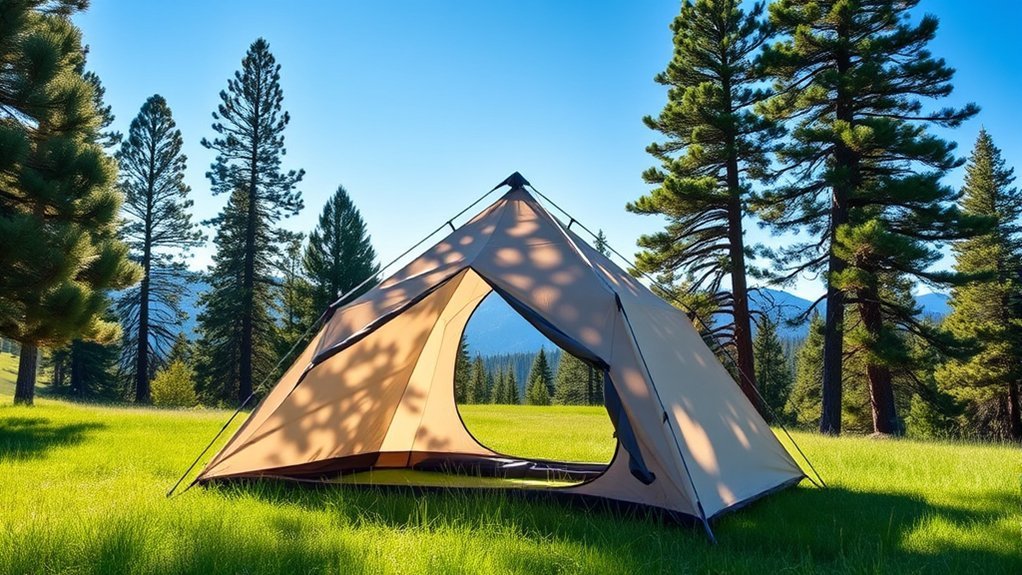
A freestanding tent is a versatile camping shelter that stands independently without relying on stakes or external support. Its pole structure provides the essential shape and stability, so you can set up camp on various terrains, including rocky or hard-packed surfaces where stakes won’t grip. This same feature makes it easy to shift the tent after pitching, which is handy if you want better shade, drainage, or a flatter spot. Most freestanding tents use double-wall construction with durable ripstop nylon or polyester, and their near-vertical walls give you more usable headroom for sitting up or changing clothes inside. The main trade-off is weight: the extra poles that make a tent self-supporting also add ounces (and sometimes pounds) compared with trekking-pole shelters. Still, that self-sustaining structure gives you the freedom to pitch in unconventional spots — a garage, a wooden platform, even indoors for a kids’ camp-out.
Key Takeaways
- Freestanding tents pitch on rock, sand, and hard ground because their own poles — not stakes — hold their shape.
- They typically weigh more than non-freestanding (trekking-pole) tents due to the extra pole material.
- Near-vertical walls and taller peak heights mean noticeably better interior livability.
- Even freestanding tents should be staked and guyed out in wind — the poles alone won’t stop them from blowing away.
- Prices generally run from around $150 to $600+, depending on materials and features.
Advantages of Freestanding Tents
Freestanding tents offer a straightforward setup process, letting you pitch quickly in a range of environments. Their mobility means you can reposition the whole tent without breaking it down, adapting to changing conditions on the fly. Their sturdier pole architecture also tends to hold up better in rough weather.
Easy Setup Process
Most freestanding tents use color-coded, clipped, or sleeved poles that snap into a dome or tunnel shape in a few minutes, without needing a taut stake pattern first. That means you can stand the tent up, check the pitch, and only then decide where to stake it down.
- Freestanding tents perform well on rocky terrain where stakes can’t penetrate.
- Many include a separate rainfly, so you can pitch the inner alone, the fly alone, or both together depending on conditions.
- Clip-in pole systems generally require fewer precise steps than trekking-pole tents, which is friendlier for beginners.
Enhanced Mobility Options
Because the poles hold the tent’s shape, you can pick it up fully assembled and move it to a sunnier, drier, or flatter spot without collapsing anything. This is especially useful on rocky or hard-packed ground where stakes won’t hold, and it’s one reason freestanding designs are popular for platform camping and car camping with kids, where flexibility matters more than shaving grams.
Weather Resistance
Many freestanding tents use double-wall construction — a separate inner tent and rainfly — which helps keep rain out while letting moisture escape, reducing condensation build-up compared with single-wall shelters. Combined with a rigid pole cage, this generally gives:
- Better shape retention: The pole structure resists collapsing under wind gusts, though it must still be staked and guyed out.
- Site flexibility: You can pitch on hard ground or rock without stakes, then anchor once you’ve found the best spot.
- Vestibule storage: Larger vestibules keep wet gear out of the sleeping area.
Warning: “Freestanding” does not mean “wind-proof.” Without stakes and guylines, even a well-built pole structure can be picked up and rolled by strong gusts. Always stake out the corners and use guy-out points in exposed or windy sites.
Disadvantages of Freestanding Tents
Freestanding tents come with real trade-offs. The biggest is weight: extra poles add bulk to your pack, which matters if you’re covering long backpacking miles. In high winds, they still need proper staking and guying, since the pole structure alone won’t keep them anchored. Cleaning can also be trickier, since the rigid shape makes it harder to reach every corner. And despite their spaciousness, some non-freestanding designs — like A-frame trekking-pole tents — actually maximize floor-to-wall efficiency better for their weight class.
Weight and Packability Considerations
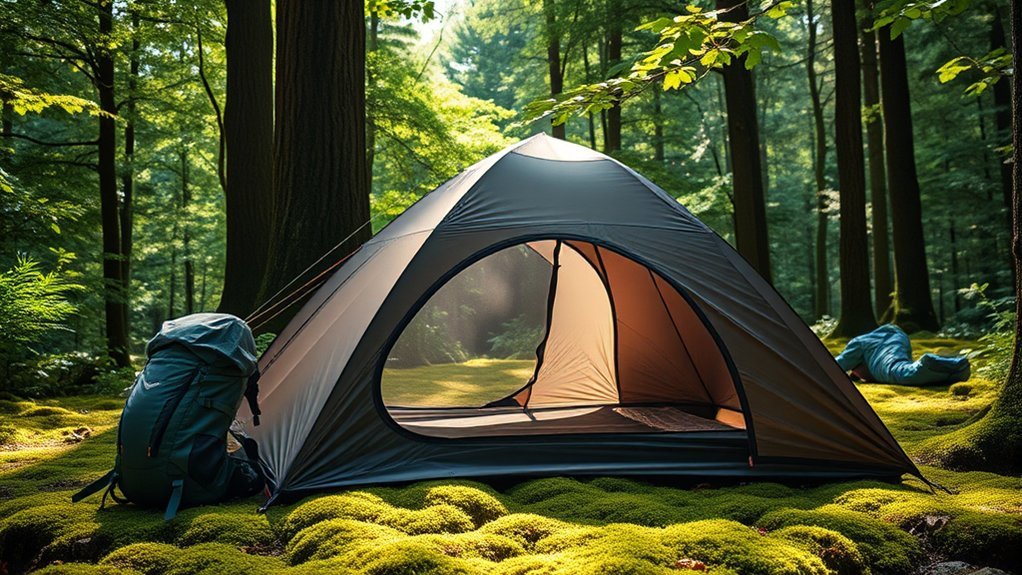
When choosing a freestanding tent, weight and packed size matter more the longer and farther you plan to hike. Freestanding tents offer spacious, comfortable interiors, but the added pole weight and bulk can make them a harder sell for ultralight backpacking.
Tent Weight Comparison
Popular two-person freestanding tents from brands like NEMO and Big Agnes generally land in the roughly 3- to 4-pound range, while comparable non-freestanding, trekking-pole shelters can weigh as little as 1 to 1.5 pounds because they skip dedicated tent poles entirely. Semi-freestanding designs — which use poles for the main structure but require a stake or two at the foot end — often split the difference in both weight and setup convenience.
Packability for Backpacking
Packed size follows a similar pattern: the poles that make a tent freestanding also take up a fixed amount of space in your pack, whereas trekking-pole tents use gear you’re often already carrying. If shaving weight is your top priority for long-distance or fastpacking trips, a non-freestanding shelter is usually the better fit; if comfort and easy pitching matter more, the extra ounces of a freestanding tent are often worth it.
Impact on Hiking Distance
On big-mile days, an extra pound or two in your shelter adds up alongside food, water, and other gear. That doesn’t rule out freestanding tents for backpacking — many thru-hikers still use them — but if you’re optimizing for daily mileage, it’s worth weighing that trade-off against the comfort and flexibility you gain.
Livability and Interior Space
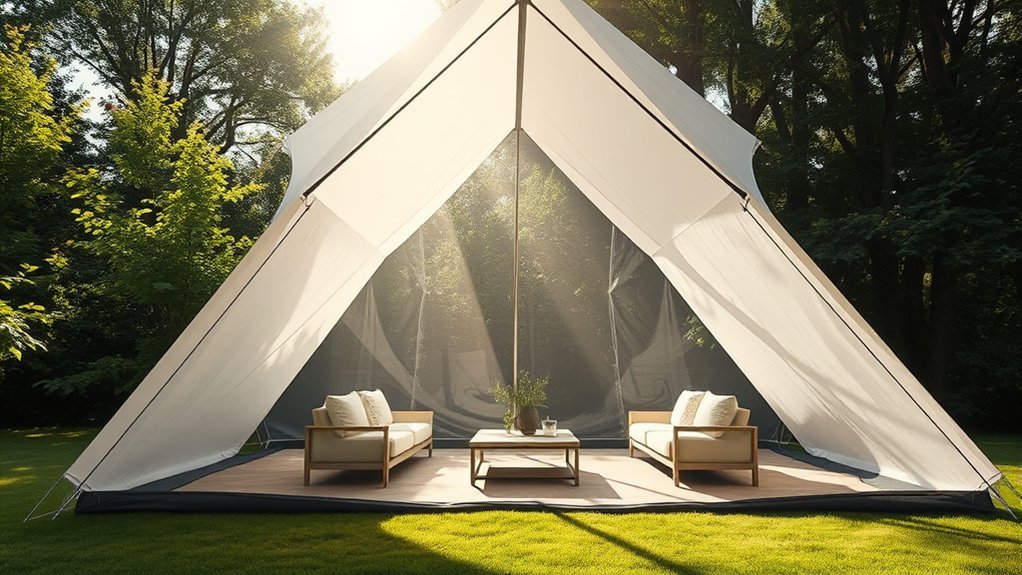
Freestanding tents are known for strong livability. Their pole structure typically creates steeper walls and taller peak heights than a basic A-frame, so there’s more room to sit up, get dressed, or wait out a storm without feeling cramped. Larger vestibules on many models add extra covered space for packs and boots. If you’re prone to feeling closed in, the more open, rectangular floor plan of a freestanding tent is usually roomier than the narrower A-frame shapes common in non-freestanding designs.
Weather Protection and Ventilation
Double-wall freestanding tents tend to manage rain and condensation well: the outer rainfly sheds water while the mesh inner tent lets warm, moist air escape instead of dripping back down on you. Adjustable vents and mesh panels help regulate airflow and reduce condensation, particularly in humid climates.
Weather Durability
A properly guyed-out, double-wall freestanding tent generally holds up well in variable conditions:
- Stability: The pole structure helps the tent keep its shape in wind and rain, provided it’s staked and guyed.
- Versatility: You can set up on hard ground or rock without staking first, then anchor once positioned.
- Reduced condensation: Vents and a separated fly improve airflow and lower moisture buildup inside.
Airflow and Condensation Management
| Feature | Benefit |
|---|---|
| Double-Wall Design | Minimizes condensation |
| Adjustable Vents | Customizable airflow |
| High Ceiling Structure | Improves air circulation |
Good airflow matters for more than comfort — it also helps prevent mold and mildew from building up on extended trips. A tent with strong ventilation features will generally stay drier inside night after night, regardless of outside humidity.
Versatility and Setup Flexibility
Because they can stand on almost any surface, freestanding tents give you real flexibility in where you camp. You can pitch on rocky ground, hard-packed dirt, sand, or platforms without needing stakes to hold the shape, and you can relocate quickly if the weather turns.
- Terrain adaptability: Pitch on rock, sand, snow, or platforms, and even indoors in a pinch.
- Simplified setup: Pole-clip systems are generally quick once you’ve practiced once or twice.
- Configurable use: Many rainflies can be pitched with just the footprint for a minimalist, ventilated shelter.
Price Comparisons With Other Tent Types
Freestanding tents generally range from around $150 to $600, depending on materials, capacity, and brand. Non-freestanding trekking-pole tents can start lower, sometimes under $100 for basic models, but ultralight versions using Dyneema Composite Fabric can actually cost more than mid-range freestanding tents despite weighing far less. Semi-freestanding designs often land in between on both price and weight. When comparing, weigh price against durability, weight, and how much setup convenience matters to you — the cheapest option isn’t always the best value over years of use.
Popular Freestanding Tent Options
A few well-regarded freestanding tents stand out for different priorities. The NEMO Dagger OSMO 2P is a genuinely freestanding, double-wall backpacking tent known for its roomy interior, tall peak height, and durable OSMO fabric — a strong pick if livability matters most to you. The Big Agnes Copper Spur UL2 is a lighter freestanding option that still delivers a full pole structure and dual doors, popular with backpackers who want comfort without a huge weight penalty. If you want the lightest possible shelter and don’t mind giving up freestanding convenience, the Zpacks Duplex is a widely used ultralight option — worth noting, though, that it’s actually a non-freestanding, trekking-pole tent (Zpacks does sell an optional Freestanding Flex Kit if you want to add that convenience).
- Double-wall designs improve ventilation and reduce condensation, which matters in varying weather.
- Capacity typically ranges from 1 to 4 people, covering solo trips and small groups.
- Larger vestibules provide flexible gear storage across different camping scenarios.
Practical Considerations for Choosing a Freestanding Tent
When picking a freestanding tent, think about where you’ll actually use it. If you regularly camp on rock, sand, or platforms, the ability to pitch without stakes is a real advantage. If you mostly camp on soft ground and prioritize low pack weight, a non-freestanding tent may serve you just as well for less weight and money.
Setup speed is another factor — freestanding tents are generally quick to learn and beginner-friendly. You’ll also want to think about capacity: sizing up by one “person rating” (e.g., choosing a 2P tent for solo use) is a common way to get extra gear storage and elbow room.
Pro Tip: After each trip, pitch the tent at home (or in the yard) to dry it out fully before storing it loosely — not stuffed tight — in a breathable bag. This simple habit prevents mildew and extends the life of both the fabric and the waterproof coating.
Ultimately, investing in a freestanding tent is a solid choice if flexible site selection and interior comfort matter more to you than shaving every possible ounce.
Frequently Asked Questions
Can I use a freestanding tent in winter conditions?
Yes, but look for a tent rated for 3-season or 4-season use, with stronger poles for snow load, good ventilation to manage condensation in cold air, and enough guy-out points to secure it in wind. A dedicated 4-season freestanding tent will handle snow load far better than a standard 3-season model.
What materials are freestanding tents typically made from?
Most use ripstop nylon or polyester for the fly and floor, often with a polyurethane or silicone waterproof coating, paired with lightweight aluminum or fiberglass poles. Aluminum poles are more common on higher-end tents because they’re stronger and more reliable under stress than fiberglass.
How long does it take to set up a freestanding tent?
Most freestanding tents can be pitched in about 5 to 15 minutes once you’re familiar with the pole layout, often faster with practice. Doing a practice pitch at home before your first trip is the easiest way to shorten that time in the field.
Are freestanding tents suitable for backpacking trips?
Yes. Many backpackers use freestanding tents for the flexibility and comfort they offer, accepting a bit more pack weight in exchange for easier setup on varied terrain. They’re a common choice for shorter trips or anyone who isn’t chasing ultralight pack weights.
What maintenance do freestanding tents require?
Clean the fabric with mild soap and water after muddy trips, check seams and poles for damage before storing, and reapply a DWR (durable water repellent) treatment periodically as the factory coating wears down. Always dry the tent fully before long-term storage to prevent mold.
Conclusion
A freestanding tent trades some pack weight for real convenience: quick setup, the ability to pitch almost anywhere, and noticeably more livable interior space. If you camp on rocky or hard-packed ground, want to relocate easily, or simply value comfort over shaving every ounce, a freestanding design is worth the extra weight in your pack. If ultralight mileage is your priority, weigh that against a non-freestanding alternative before you buy.
Sources
- Zpacks Duplex Tent product page — confirms the Duplex is a non-freestanding, trekking-pole shelter
- REI Co-op: NEMO Dagger OSMO 2P Tent — freestanding design, weight, and floor area specs
- SectionHiker: NEMO Dagger OSMO 2P Review — freestanding architecture and setup details
- Switchback Travel: NEMO Dagger OSMO 2P Review — comparison of freestanding tent weights across brands
