
Last Updated on July 29, 2026 by Mason Reed
Better tent airflow starts with the campsite, not the fan. A dry, shaded location, correctly positioned doors and vents, a well-guyed rainfly, and less moisture inside the sleeping area can make a warm night far more comfortable. Cooling accessories can help, but they should support—not replace—safe site selection and good ventilation.
Quick Answer
Improve tent airflow by pitching on a dry, shaded site, orienting a screened door toward a safe breeze, opening high and low vents, and guying out the rainfly. Add a quiet fan for comfort when conditions are moderate. Keep wet gear outside, avoid camping too close to water, and leave the tent if heat becomes unsafe.
Key Takeaways
- Choose an established, dry site with shade and no damaged trees or hanging limbs overhead.
- Create cross-ventilation by opening at least two screened vents, doors, or windows when weather allows.
- Stake and guy out the rainfly so warm, moist air has room to escape.
- Use a fan for comfort, but do not rely on it to prevent heat illness during extreme heat.
- Keep wet clothing and gear out of the sleeping area to reduce humidity and condensation.
- Follow campground rules and use an approximately 200-foot water setback where Leave No Trace backcountry guidance applies.
At a Glance
| Time Required | About 10–20 minutes during tent setup |
| Difficulty | Easy |
| Tools Needed | Tent stakes, guylines, vents or screened doors, and optional tarp and battery-powered fan |
| Cost | No added cost with existing gear; otherwise varies by tarp, fan, and power source |
Disclosure: As an Amazon Associate I earn from qualifying purchases. Some links on this page are affiliate links, at no extra cost to you.
Choose a Cooler, Safer Tent Location
Start by checking the overnight forecast, expected humidity, wind direction, and thunderstorm risk. A location that feels comfortable in the afternoon may become damp, still, or exposed after sunset.
Use an existing campsite whenever one is available. Look for flat, durable, well-drained ground rather than a hollow where cool, damp air and rainwater can collect. The REI tent-setup guide recommends higher, drier ground to reduce moisture and avoiding low areas where water can pool.
Shade helps prevent the tent fabric and trapped air from heating in direct sun. However, inspect every tree above and around the site. Do not pitch beneath dead branches, split trunks, leaning trees, or damaged limbs that could fall in wind.
Warning: A tent is not safe shelter from lightning. If you hear thunder, move to a substantial building or hard-topped vehicle and remain there for at least 30 minutes after the last thunder. Avoid exposed ridges, open fields, water, and tall isolated trees.
Orient the tent for the conditions you expect:
- Hot and dry: Point a screened door or large vent toward the prevailing breeze.
- Windy: Follow the tent manufacturer’s instructions for placing the strongest side of the structure into the wind.
- Rainy: Angle doors away from wind-driven rain while keeping protected roof or fly vents open.
- Calm: Open vents on opposite sides and use a fan to help move air between them.
Pro Tip: Before staking the tent fully, stand where the sleeping area will be and feel for airflow at knee, chest, and head height. Moving the tent a few feet or rotating it slightly may produce a better cross-breeze.
Use a Reflective Sunshade or Tarp
A tarp or reflective sunshade can reduce direct solar heating before bedtime. It works best when it shades the tent without touching the tent roof.
- Use stable anchor points, poles, guylines, and stakes that are suitable for the ground and expected wind.
- Leave an open air gap between the tarp and tent so heated air can escape.
- Angle the tarp to block late-afternoon sun while allowing breeze to pass beneath it.
- Keep tarp edges and guylines from blocking the tent’s vents, doors, or rainfly openings.
- Retension the shelter if wind, rain, or temperature changes loosen the fabric.
Do not drape a reflective sheet directly over the tent. Direct contact reduces ventilation, transfers heat to the tent fabric, and can create noisy flapping or abrasion. Lightweight emergency blankets may also tear easily, so a purpose-built tarp or sunshade is usually easier to secure.
Note: Shade can slow heat buildup, but it cannot make an unsafe heat event safe. Reassess conditions as the sun moves and relocate when necessary.
Improve Airflow With Tent Ventilation
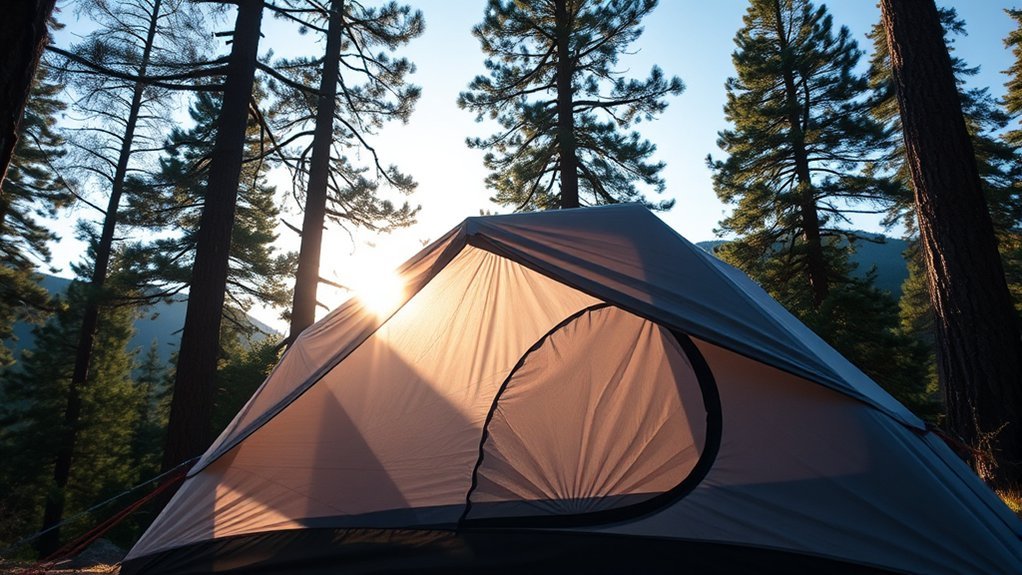
Natural ventilation needs both an inlet and an outlet. Open at least two protected vents, screened doors, or windows on different sides of the tent whenever weather permits. Cooler air can enter through a lower opening while warmer, moist air escapes through a higher one.
The rainfly must also have room to release that air. Stake its lower edges away from the inner tent, open its vents, and use the supplied guylines. According to MSR’s condensation guidance, ventilation allows cooler, drier air to enter while warm, moist air escapes.
Use Doors, Windows, and Vents Together
- Keep insect screens zipped closed while opening solid fabric panels.
- Open roof or peak vents so rising warm air has an exit.
- Roll back vestibule panels only as far as rain, privacy, and wind allow.
- Keep sleeping bags, packs, and clothing from pressing against mesh or blocking low vents.
- Clear leaves, dust, and debris from mesh panels when they restrict airflow.
Reduce Moisture Inside the Tent
Ventilation cannot remove moisture faster than it is being added when wet items fill the tent. Store damp boots, rain jackets, towels, and packs in a vestibule or another protected area when safe to do so. Never cook inside a standard recreational tent, and do not hang wet clothing across the ventilation path.
Some condensation is normal when warm, moist interior air meets a cool rainfly. Wipe heavy droplets with an absorbent camp towel, then dry the tent fully before storage.
The most effective airflow setup gives fresh air a clear entrance, warm air a high exit, and enough space between the tent body and rainfly for moisture to escape.
Use a Battery-Powered Tent Fan
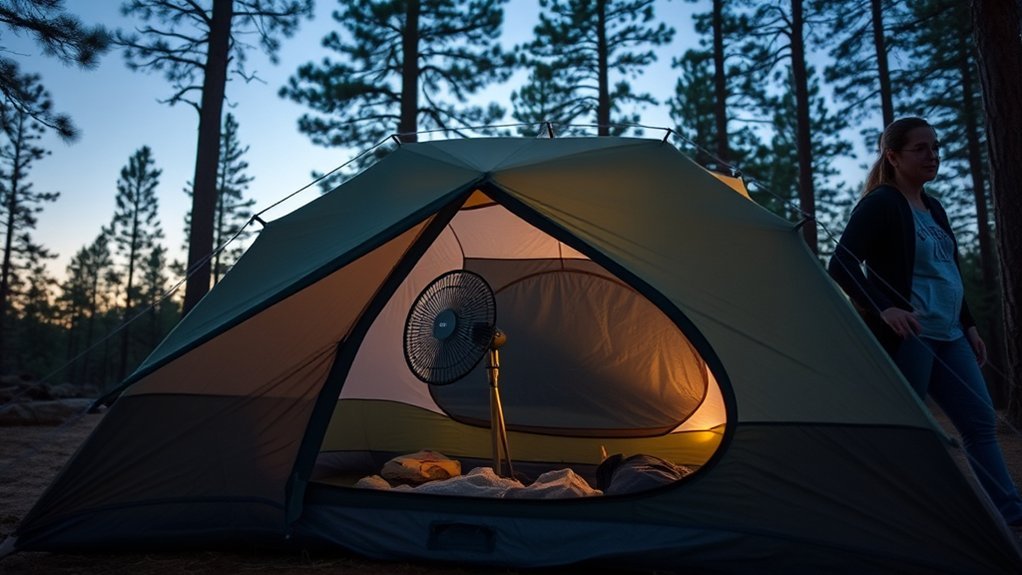
A compact fan can move air across your skin and through an otherwise still tent. It works best after the doors, vents, rainfly, and campsite orientation have already been optimized.
Fan Selection Tips
Choose a fan that fits the tent and expected trip length. Helpful features include:
- Quiet operation at the speed you plan to use overnight
- Several speed settings
- A stable base, secure hanging point, or protected clamp
- A guarded blade area that cannot contact hair, bedding, or tent fabric
- A rechargeable battery with a clearly stated runtime
- A separate light control so an integrated LED does not have to remain on
Check the manufacturer’s charging, storage, moisture, and temperature instructions. Do not use a damaged, swollen, unusually hot, or wet rechargeable battery.
Optimal Fan Placement
Place the fan where it supports the tent’s existing airflow rather than merely stirring the same pocket of warm air.
- Aim it from an open screened door or low vent toward the sleeping area.
- Alternatively, point it toward a high outlet to help push warm air out.
- Elevate it when secure, but do not suspend a heavy fan from fabric or loops that are not designed to carry the load.
- Keep the intake and outlet clear of walls, sleeping bags, and loose clothing.
- In a large family tent, add a second fan only when one fan cannot produce noticeable airflow across the occupied area.
There is no reliable one-fan-per-distance formula. Tent shape, vent size, occupancy, obstructions, and fan output all affect performance.
Battery Life Management
Test the fan at home before the trip. Record how long it operates at low, medium, and high speed so you can plan overnight use.
- Start on a higher setting while preparing for bed, then lower the speed after the tent cools.
- Use an interval or timer mode when available.
- Bring a compatible power bank or spare manufacturer-approved battery for longer trips.
- Keep batteries shaded, dry, and away from direct contact with ice packs.
- Do not charge electronics through wet connectors or unprotected outdoor extension cords.
Warning: A fan may improve comfort, but it is not dependable protection from heat illness. The CDC advises using fans only when indoor temperatures are below 90°F because hotter air can increase body temperature. Leave an overheated tent and move to a cooler place if conditions remain unsafe.
Balance Water Access With Humidity and Leave No Trace
Lakes, rivers, and streams may create cooler air or a breeze in some conditions, but water does not guarantee a cooler campsite. Shoreline air may also be more humid, which can slow sweat evaporation and increase condensation inside the tent.
Cooling Benefits and Limits
A site within reasonable walking distance of water can make it easier to refill treated drinking water or cool off where swimming is permitted. However, the temperature and wind benefit depends on terrain, vegetation, water temperature, and local weather. Do not choose a shoreline site solely because it feels cooler during the afternoon.
Avoiding Humidity Issues
Follow the land manager’s rules and use designated campsites where provided. For backcountry camping, the National Park Service’s Leave No Trace guidance recommends trying to camp about 200 feet from water.
A suitable setback helps protect shorelines and wildlife while reducing exposure to damp air, insects, changing water levels, and condensation. Avoid floodplains, dry washes, eroded banks, tidal zones, and low ground that could fill during a storm.
Choosing a Safer Water-Adjacent Site
- Use an established campsite rather than clearing shoreline vegetation.
- Choose higher ground with a safe route away from rising water.
- Check local flood, tide, dam-release, and thunderstorm information.
- Avoid wildlife trails, nesting areas, and concentrated animal activity.
- Treat or filter natural water before drinking according to local guidance.
If a water-adjacent site is humid and still, move farther inland or to slightly higher ground rather than trying to overcome the moisture with more fans.
Use Frozen Water Bottles or Ice Packs for Temporary Spot Cooling
A sealed frozen bottle or ice pack placed near a fan can briefly cool the air passing around it. This may provide local relief during the first part of the night, but it is not equivalent to an air conditioner and will become less effective as the ice melts.
To use this method safely:
- Use a leakproof bottle or intact ice pack.
- Place it in a shallow container or wrap it in an absorbent towel to catch condensation.
- Set it where meltwater cannot reach batteries, cables, bedding, or the tent floor.
- Position the fan so air passes around the cold surface without placing the fan directly against it.
- Remove or dry wet towels and containers before they add more humidity to the tent.
A frozen drinking-water bottle has the added benefit of becoming usable water after it melts. Leave enough expansion space when freezing a reusable bottle, and follow the bottle manufacturer’s temperature instructions.
Follow a Seven-Step Tent Airflow Setup
- Check conditions: Review the overnight temperature, humidity, wind, rain, lightning, and heat risk.
- Select the site: Use dry, durable, shaded ground without drainage problems or overhead hazards.
- Orient the tent: Face a screened opening toward a safe breeze in hot, dry conditions.
- Create shade: Suspend a tarp above the tent with an open air gap.
- Open the airflow path: Use at least two protected openings, including a high outlet when possible.
- Guy out the rainfly: Keep it taut and separated from the inner tent.
- Add comfort measures: Use a fan, light bedding, and temporary spot cooling only after natural ventilation is working.
Choose a Tent Designed for Warm Conditions
If hot-weather camping is common, tent design matters as much as campsite setup. Look for:
- Large mesh panels in the roof, doors, or upper walls
- Two doors or openings on opposite sides
- High and low vents that can remain open beneath the rainfly
- A rainfly that can be rolled back or adjusted without exposing the sleeping area to unexpected rain
- Enough vestibule space to store damp gear outside the inner tent
- Interior room that prevents sleeping bags from covering vents or touching condensation-prone walls
On a dry night with no rain expected, some double-wall tents can be used without the rainfly for maximum airflow. Confirm that the manufacturer permits this setup, and consider dew, privacy, wind, and rapidly changing weather before removing it.
Use Cooler Bedding and Sleep Habits
- Use a lightweight sheet or warm-weather sleeping bag instead of an unnecessarily insulated bag.
- Wear loose, breathable sleep clothing and change out of damp hiking clothes.
- Hydrate throughout the day rather than drinking a large amount only at bedtime.
- Cool your skin with a damp cloth or permitted shower before entering the tent.
- Wait until the tent has fallen into shade before closing it for the night.
- Keep unnecessary people, pets, electronics, and wet equipment out of a small sleeping area when practical.
Troubleshoot Common Tent Airflow Problems
| Problem | Likely Cause | What to Do |
| Tent remains hot after sunset | Fabric absorbed afternoon sun or hot air is trapped beneath the fly | Open all protected vents, lift vestibule edges, use a fan to exhaust warm air, and improve late-day shade |
| Air feels still | Only one opening is in use or the tent is shielded from the breeze | Open an inlet and an outlet on different sides; reposition the fan or rotate the tent when safe |
| Condensation forms inside | High humidity, blocked vents, wet gear, or contact between the inner tent and rainfly | Open high vents, retension the fly, move wet gear outside, and wipe heavy droplets |
| Rain enters through an open door | The opening faces wind-driven rain | Close the exposed panel, use protected roof vents, and open a leeward door or vestibule instead |
| Fan runs out of power | High speed, cold battery, or unrealistic runtime estimate | Use a lower setting, timer mode, tested power bank, or approved spare battery |
Recognize When Ventilation Is Not Enough
Improved airflow can make a warm tent more comfortable, but it cannot always make it safe. Leave the tent and seek a cooler location if anyone develops heavy sweating, unusual weakness, dizziness, headache, nausea, shortness of breath, confusion, fainting, or worsening symptoms.
The CDC’s heat-safety guidance recommends staying cool, staying hydrated, and knowing the symptoms of overheating. People who are pregnant, very young, older, taking certain medicines, or living with chronic medical conditions may need extra precautions.
Warning: Never operate a charcoal grill, camp stove, fuel-burning lantern, heater, or generator inside a standard tent. Carbon monoxide has no color or smell and can become fatal before a sleeping person recognizes symptoms. Keep generators outdoors, well away from occupied areas, and follow the manufacturer’s instructions and campground rules.
Frequently Asked Questions
How does humidity affect tent airflow and sleep quality?
High humidity does not stop air from moving, but it makes sweat evaporate less effectively and increases the chance of condensation. Open protected high and low vents, keep wet gear outside the sleeping area, and choose dry ground away from low, damp hollows.
Can I use a portable air conditioner in my tent?
A purpose-designed electric unit may be usable at a serviced campsite when the tent, appliance manual, electrical connection, drainage setup, and campground rules permit it. The hot-air exhaust must discharge outside without blowing back into the tent. Never place a generator or fuel-burning appliance inside or directly beside the tent, and never use unprotected electrical connections in wet conditions.
What materials are best for tent ventilation?
Large no-see-um mesh panels provide insect protection while allowing airflow. A breathable inner canopy paired with a separately vented waterproof rainfly usually manages moisture better than a fully enclosed single-wall shelter in warm, humid weather.
How do insects affect tent airflow?
Insects do not normally block vents, but campers may close solid panels to keep them out. Leave the mesh screen closed and open the solid fabric panel instead. Clean dirty mesh and keep bedding away from it so the ventilation area remains open.
Are some tents designed for better airflow?
Yes. Warm-weather tents often have large mesh ceilings, two doors, opposite-side windows, adjustable roof vents, and a rainfly that can be rolled back or staked away from the inner body. These features make cross-ventilation easier to maintain.
Should I remove the rainfly on a hot night?
Removing the rainfly can increase airflow when the forecast is dry and the tent is designed to be used that way. Keep it installed or ready to deploy when rain, heavy dew, wind, or privacy is a concern. Opening its vents and rolling back protected sections is often a safer compromise.
What should I do if the tent stays dangerously hot?
Do not remain inside and keep experimenting with fans. Move to deep shade, a hard-topped vehicle with safe climate control, an air-conditioned building, or another cooler location. Hydrate, monitor everyone for heat-illness symptoms, and seek medical help for confusion, fainting, or severe or worsening symptoms.
Conclusion
To improve tent airflow, begin with dry, shaded ground and a safe campsite rather than depending on accessories. Create a clear path between screened openings, keep the rainfly taut and separated from the tent body, and remove moisture sources from the sleeping area. A fan, reflective tarp, or frozen bottle can add comfort, but each has limits.
Continue checking the weather and how everyone feels throughout the night. When heat, lightning, flooding, or another hazard makes the site unsafe, the correct response is to leave the tent and move to suitable shelter.
Sources
- Centers for Disease Control and Prevention: About Heat and Your Health — fan limitations, hydration, heat-risk groups, and overheating symptoms
- National Park Service: Leave No Trace — durable campsites and water-source setbacks
- REI: How to Set Up and Pitch a Tent — site drainage, wind orientation, shade, and damaged-tree precautions
- MSR/Cascade Designs: How to Prevent or Reduce Tent Condensation — cross-flow ventilation, moisture sources, and rainfly venting
- National Weather Service: Lightning Safety Outdoors — lightning shelter and campsite precautions
- U.S. Consumer Product Safety Commission: Carbon Monoxide Fact Sheet — fuel-burning equipment and generator safety
