
Last Updated on July 29, 2026 by Mason Reed
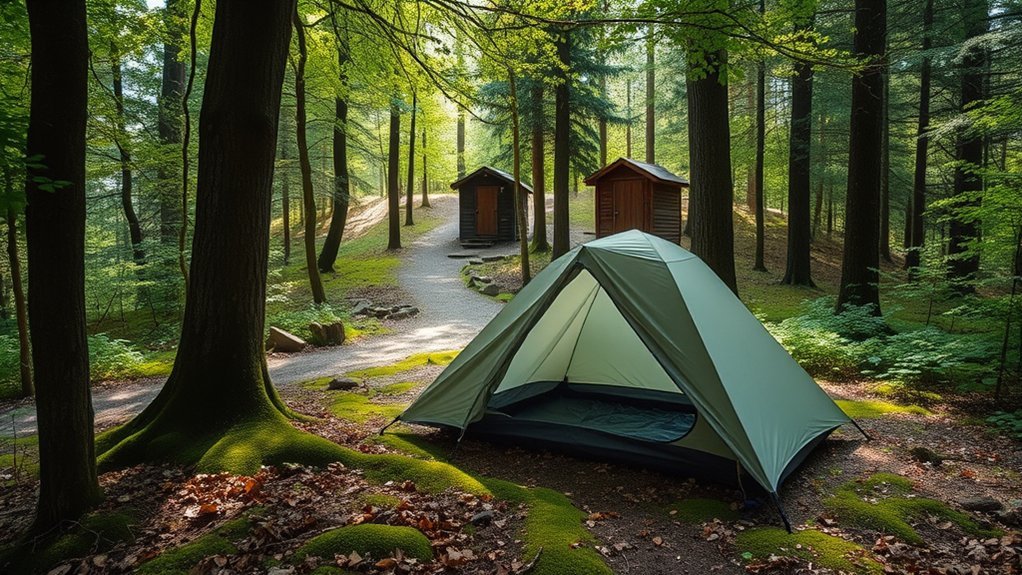
The best tent location depends on whether you are staying in a developed campground, a designated backcountry site, or a dispersed camping area. There is no universal rule requiring every tent to be 100 feet from a bathroom. In a developed campground, use your assigned site or tent pad. In dispersed areas, follow the land manager’s rules for trails, water, wildlife, and other hazards.
Quick Answer
There is no standard minimum distance between a tent and a campground bathroom. Use the assigned tent pad and choose a site farther from the restroom if you want less noise, light, odor, and foot traffic. For dispersed camping, 200 feet from water and trails is a common guideline, but local rules always take priority.
Key Takeaways
- Developed campgrounds usually require you to pitch your tent within the assigned campsite or on the provided tent pad.
- Bathroom distance is mainly a comfort and convenience decision, not a universal 100-foot health rule.
- For dispersed camping, 200 feet—about 61 meters—is a common Leave No Trace guideline for lakes, streams, and, where required, trails.
- Local park, forest, wilderness, and permit rules can require a different distance or designated site.
- Dead branches, flood channels, fire rings, low ground, and wildlife signs may be more important than restroom distance.
At a Glance
| Time Required | About 5–10 minutes to inspect the campsite |
| Difficulty | Easy |
| Tools Needed | Campground map or permit, local regulations, and optional GPS or step count |
| Cost | $0 beyond normal camping or permit fees |
Disclosure: As an Amazon Associate I earn from qualifying purchases. Some links on this page are affiliate links, at no extra cost to you.
How Far Should a Tent Be From a Campground Bathroom?
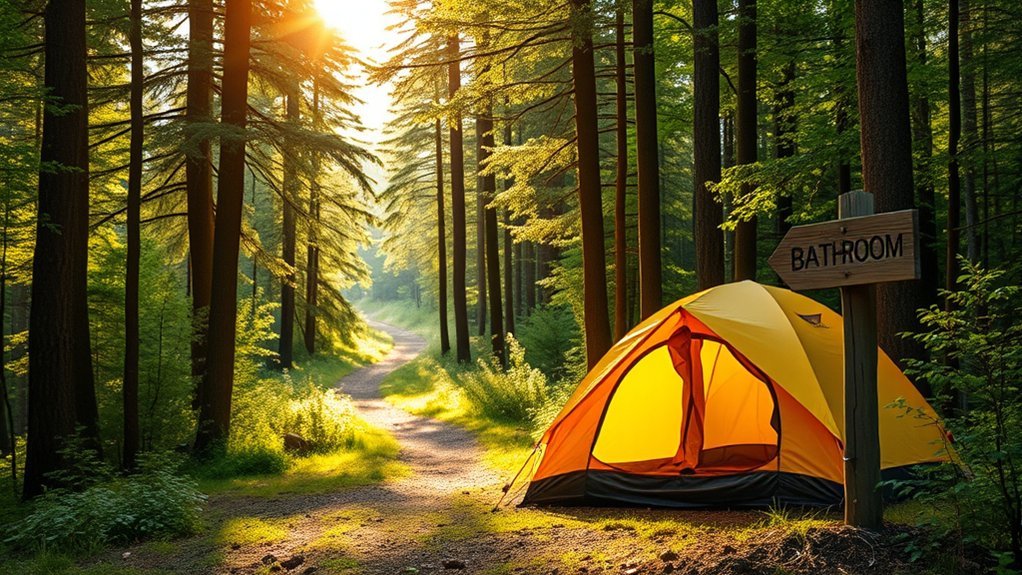
There is no nationwide rule saying every tent must be at least 100 feet from a bathroom. The right distance depends on the campground layout, your assigned site, local rules, and your personal needs.
In most developed campgrounds, you must stay within the boundaries of your reserved campsite. Where a tent pad is provided, the campground may require you to use it. The National Park Service’s Great Smoky Mountains campground rules, for example, require camping structures to be placed on tent pads where pads are available.
Being close to a restroom can be useful for families with young children, campers with mobility needs, people managing a medical condition, and anyone who expects frequent nighttime visits. The tradeoff is that nearby sites may receive more foot traffic, door noise, exterior lighting, conversation, and occasional odor.
Note: Distance from a restroom does not create a guaranteed hygiene barrier. Wash your hands after using the toilet and before preparing or eating food. Use soap and water when available or follow the facility’s posted sanitation instructions.
Choosing a Comfortable Restroom Distance
When reserving a developed campsite, study the campground map instead of relying on a fixed number of feet. A site one or two spaces away may provide convenient access without placing your tent directly beside the restroom entrance.
Look for these details:
- Access path: Avoid putting your tent next to the walkway everyone uses to reach the restroom.
- Exterior lights: Bright restroom or shower-house lights may shine into a nearby tent.
- Doors and hand dryers: Repeated nighttime use may interrupt sleep.
- Prevailing wind: If the layout allows a choice, avoid a spot directly downwind from a vault toilet or restroom vent.
- Nearby facilities: Dumpsters, water taps, dishwashing stations, showers, and parking areas can generate as much traffic as the restroom itself.
- Accessibility: Do not choose a distant site when easier restroom access is important to your health, comfort, or safety.
Is There Really a 100-Foot Camping Rule?
A 100-foot setback is used in some parks and wilderness areas, but it is not a universal bathroom rule. Local regulations may apply the distance to trails, water sources, campfires, human waste, or specific protected areas.
For example, Yosemite National Park’s wilderness regulations require campsites to be at least 100 feet from water sources and trails. Other public lands use 200 feet, require a greater distance, or limit camping to designated sites.
Warning: Never leave an assigned campsite, move beyond a designated tent pad, or pitch on vegetation just to satisfy a general 100- or 200-foot guideline. Posted campground rules, permits, ranger instructions, fire restrictions, and closure orders take priority.
Which Distance Rule Should You Follow?
Use this order when choosing your tent location:
- Follow posted regulations and your permit. These are the legal requirements for that specific place.
- Use designated campsites and tent pads. Do not create a new site when an established one is available.
- Protect water and fragile vegetation. Use durable surfaces such as an existing site, compacted soil, gravel, rock, sand, or dry grass where camping is permitted.
- Apply Leave No Trace guidelines. Use them when they do not conflict with local rules.
- Choose for comfort. Consider restroom traffic, privacy, light, wind, and noise only after legal and environmental requirements are met.
Why Water Sources Need Separate Protection
Bathrooms and natural water sources should not be treated as the same issue. The common Leave No Trace recommendation is to camp at least 200 feet from lakes and streams when dispersed camping and when local rules permit that choice. This protects riparian vegetation, gives wildlife room to reach water, and reduces concentrated activity at the shoreline.
The Leave No Trace guidance for travel and camping on durable surfaces recommends protecting riparian areas by camping at least 200 feet from lakes and streams. However, some locations establish a different legal setback, so check the current rule for the exact park, forest, wilderness, or recreation area.
Two hundred feet is about 61 meters. Leave No Trace commonly describes it as roughly 70–80 adult steps, but your permit or local regulations may require a different distance.
How Far Should a Tent Be From a Trail?
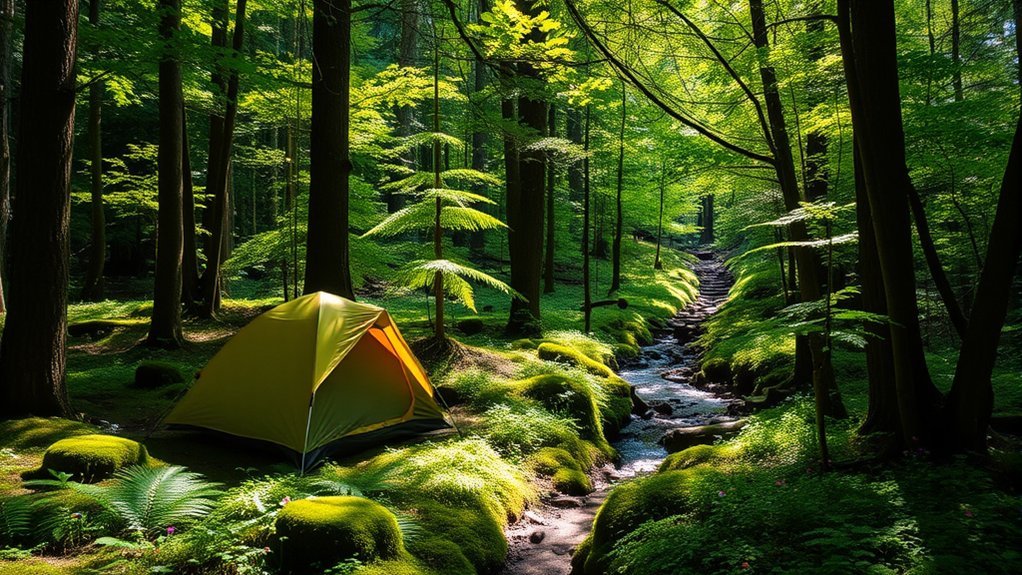
For dispersed camping, 200 feet from a trail is a useful low-impact guideline in many locations. It may improve privacy, keep tents away from passing hikers, and reduce the creation of informal paths between the campsite and the main trail.
It is not a universal legal distance. Some areas require 100 feet, some require 200 feet, and others require camping much farther away or only in designated sites. Always check the official map, permit conditions, and current regulations before leaving the trail to look for a campsite.
Staying away from a busy trail can provide:
- Less nighttime conversation and foot traffic
- More privacy for campers and passing hikers
- Less risk of tent lines extending into a travel route
- Less visual impact when the campsite is screened from view
- Fewer unnecessary side paths through vegetation
Pro Tip: To estimate 200 feet, walk about 70–80 adult steps in a mostly straight line. Pacing is only an estimate, so use a map, GPS measurement, marked campsite, or posted boundary when precise compliance is required.
How Tent Placement Affects Wildlife and the Campsite
Human activity can change how wildlife uses an area, especially when people leave food, trash, cooking odors, pet waste, or toiletries unsecured. Distance from a hiking trail alone does not guarantee that a campsite is safe for wildlife.
Before pitching your tent, look for signs that the location may be an animal travel or feeding area. Avoid obvious tracks, scat, bedding areas, burrows, nests, claw marks, heavily worn paths that do not appear on the trail map, and areas with concentrated natural food.
Avoid Wildlife Travel Corridors
A hiking trail and a game trail are not always the same thing. Do not assume that moving away from the official trail automatically removes wildlife risk. Animals may travel along streambanks, ridgelines, narrow passes, shorelines, or faint paths through vegetation.
Keep food, trash, coolers, toiletries, and cooking equipment secured according to local rules. In bear country, follow the park’s required food-storage method and campsite layout. The National Park Service campsite guide advises campers to check park-specific food-storage rules and avoid dangerous campsite hazards.
Camp on Durable Surfaces
A suitable campsite should protect soil and vegetation as well as provide enough distance from trails and water. Use an existing campsite whenever one is available. In undeveloped areas where camping is allowed, choose durable surfaces such as rock, gravel, sand, compacted soil, or dry grass.
Do not cut vegetation, dig drainage trenches, build furniture, move rocks to enlarge the site, or create a new fire ring. A good campsite is found rather than constructed.
Health and Comfort Considerations
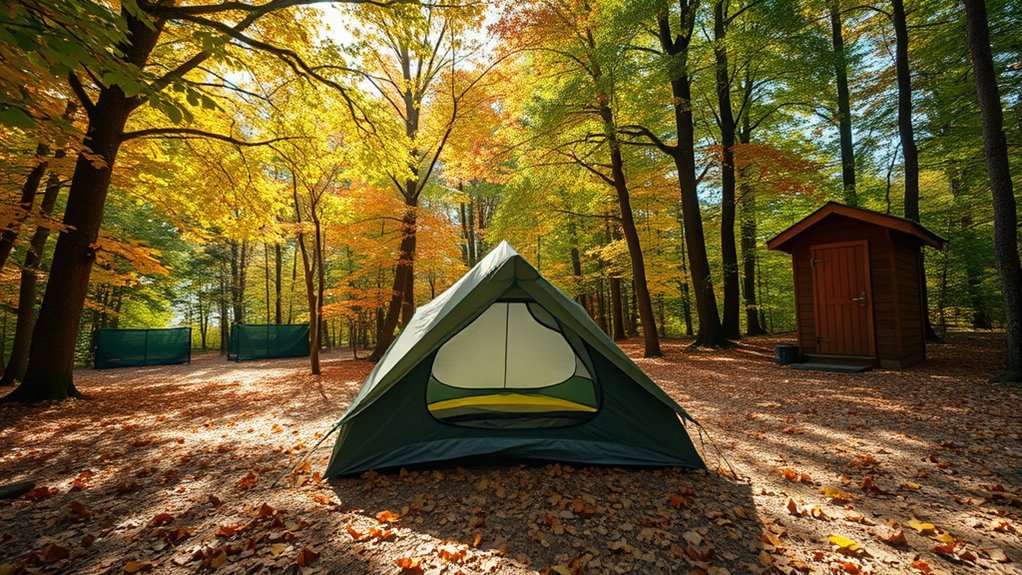
Restroom distance is only one part of a comfortable campsite. Before setting up, walk around the entire tent area and inspect the ground, overhead branches, drainage, wind exposure, fire ring, and nearby travel routes.
- Choose level ground: A gentle, even surface is more comfortable and reduces sliding during sleep.
- Avoid low spots: Depressions can collect rainwater even when the ground is dry at arrival.
- Look overhead: Do not camp beneath dead, cracked, hanging, or unstable branches.
- Check drainage: Stay out of ravines, dry washes, flood channels, and areas that could become muddy.
- Consider wind: Use natural shelter when safe, but do not pitch beneath a dangerous tree.
- Keep away from travel routes: Tent doors, stakes, and guylines should not block trails, restroom paths, roads, or neighboring sites.
- Protect sleep: Consider restroom lights, generators, parking areas, dumpsters, playgrounds, and group sites.
Tent-Placement Distance Guide
| Feature | General Guidance | Why It Matters |
|---|---|---|
| Developed campground bathroom | No universal setback. Use the assigned site or tent pad. | Choose based on convenience, noise, lighting, odor, traffic, and accessibility. |
| Hiking trail | Follow local rules. Two hundred feet is a common dispersed-camping guideline, but some areas require a different distance. | Improves privacy and helps prevent informal side trails and vegetation damage. |
| Lake or stream | Common Leave No Trace guideline: 200 feet, unless local rules specify otherwise. | Protects riparian areas and leaves access space for wildlife. |
| Flood-prone area | Avoid entirely. | Dry washes, ravines, and depressions can flood quickly. |
| Dead trees or branches | Do not camp beneath or within their fall zone. | Branches or trees can fall without warning, especially during wind or storms. |
| Wildlife path or feeding area | Stay clear and select another established or durable site. | Reduces disturbance and the chance of an unexpected encounter. |
| Fire ring or cooking area | Follow campground and manufacturer clearances; keep tents away from sparks, flame, and heat. | Tent fabric and gear can melt or ignite. |
The USDA Forest Service camping safety guidance recommends inspecting campsites for sharp objects, branches, insects, hazardous terrain, flooding, mud, and fire hazards before pitching a tent.
Leave No Trace Principles for Tent Placement
Leave No Trace guidance changes slightly between developed campgrounds and dispersed backcountry areas. In frontcountry campgrounds, use existing or designated campsites, follow facility rules, and use established paths when walking to bathrooms and other shared areas.
In dispersed areas:
- Check regulations, permits, fire restrictions, and closures before the trip.
- Use an established campsite when one is available.
- Camp on durable surfaces and keep the occupied area small.
- Follow the required setback from trails, roads, water, and developed facilities.
- Use provided bathrooms or outhouses when available.
- Keep soap, food scraps, trash, and human or pet waste out of natural water sources.
- Store food and scented items according to local wildlife rules.
- Pack out all trash and leave the site as you found it.
The Leave No Trace frontcountry guidance recommends camping only on existing or designated sites, using available bathrooms or outhouses, and protecting wildlife by securing food and trash.
Frequently Asked Questions
What happens if I camp closer than 100 feet to a bathroom?
Nothing automatically happens because 100 feet is not a universal bathroom rule. In a developed campground, stay within your assigned site and use the tent pad where required. A site close to the bathroom may have more light, odor, door noise, and nighttime foot traffic, but it may also be more convenient.
Is 200 feet from a trail always required?
No. Two hundred feet is a common low-impact guideline for dispersed camping, but legal requirements vary. Some locations require 100 feet, 200 feet, a greater distance, or camping only in designated sites. Check the official regulations and permit for your destination.
Can I use landmarks to measure the distance?
Yes, but landmarks provide only a rough estimate unless their location is mapped. For 200 feet, approximately 70–80 adult steps is a useful estimate. Use a GPS measurement, official campsite marker, map, or posted boundary when the rule requires greater precision.
How can I find trails when camping in an unfamiliar area?
Use the official park or forest map, permit map, trail signs, and the land manager’s website or app. Download maps before leaving cell service. Do not rely only on faint tracks because they may be animal paths, abandoned routes, or unofficial social trails.
Are there exceptions to the 100-foot rule for specific campsites?
Yes. Distance requirements are location-specific. A developed campground may require the provided tent pad, while a wilderness permit may establish a 100-foot, 200-foot, or larger setback. The posted rule for the location overrides a general rule of thumb.
How far should I camp from a lake or stream?
Leave No Trace commonly recommends 200 feet from lakes and streams when dispersed camping. Local regulations may require a different distance, so check the rules for the specific park, forest, wilderness, or recreation area.
How can I reduce my campsite’s environmental impact?
Use existing campsites or durable surfaces, keep the occupied area small, avoid cutting or crushing vegetation, use established paths, store food securely, keep waste out of water, and pack out all trash. Do not dig trenches or build new fire rings.
Conclusion
There is no universal requirement to pitch every tent 100 feet from a campground bathroom. In a developed campground, use the assigned campsite or tent pad and choose a location based on convenience, noise, lighting, odor, and accessibility. In dispersed areas, 200 feet from water and trails is a common Leave No Trace guideline, but the local land manager’s rules come first.
Before setting up, also check for dead branches, unstable trees, flood channels, low ground, fire hazards, wildlife signs, and fragile vegetation. A safe campsite is not defined by one measurement. It is a legal, durable, level location that protects both the camper and the surrounding environment.
Sources
- National Park Service — Finding and Setting Up a Campsite — campsite hazards, restroom-location tradeoffs, tent setup, food storage, and backcountry layout.
- National Park Service — Leave No Trace Seven Principles — durable surfaces and protection of lakes and streams.
- Leave No Trace — Travel and Camp on Durable Surfaces — established campsites, durable ground, and the common 200-foot water guideline.
- Leave No Trace — Frontcountry Guidance — designated campsites, shared facilities, waste, and wildlife practices.
- Yosemite National Park — Wilderness Regulations — an example of location-specific 100-foot trail and water setbacks.
- USDA Forest Service — Camping Safety Tips — flood, branch, terrain, fire, hygiene, and wildlife precautions.
