
Last Updated on July 28, 2026 by Mason Reed
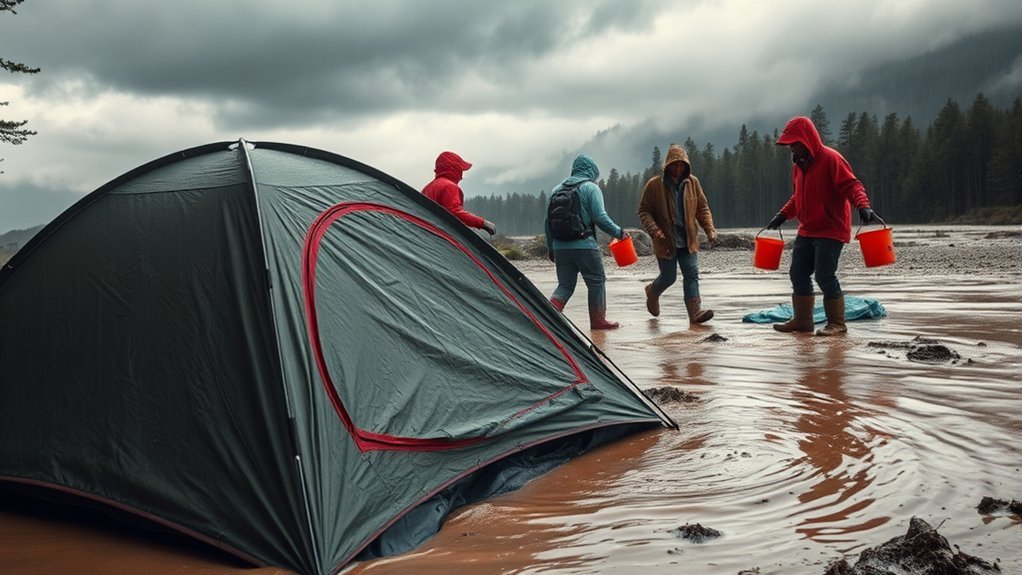
A flooded tent can turn a relaxing camping trip into a stressful scramble in minutes. The right response depends on whether you are dealing with an ordinary rain leak or actual rising floodwater. Protect people first, move away from flood danger early, and worry about wet gear only after everyone is safe.
Quick Answer
If your tent floods, first decide whether the water is a manageable rain leak or rising floodwater. For fast-rising or moving water, leave your gear and move to safe higher ground immediately. For a minor leak, protect essentials, stop more rain entering, remove pooled water, change into dry clothing, and relocate if the campsite keeps collecting runoff.
Key Takeaways
- Treat fast-rising or moving water as an evacuation problem, not a tent-repair problem.
- Grab medications, identification, phones, car keys, a first aid kit, and warm dry clothing only when you can do so without delaying a safe exit.
- Never walk or drive through floodwater to reach another campsite, road, or shelter.
- Prevent ordinary rain flooding with good site selection, a properly pitched rainfly, and a correctly sized footprint—not drainage trenches.
- If river, creek, or flash-flood water reaches your gear, treat it as potentially contaminated.
- Check weather alerts and campground evacuation information before severe rain arrives.
At a Glance
| Time Required | Immediate evacuation for rising floodwater; about 5–20 minutes for a minor rain leak once conditions are safe |
| Difficulty | Easy for routine rain leakage; emergency-level decision-making for flash flooding |
| Tools Needed | Waterproof bags, towels or absorbent cloths, flashlight or headlamp, dry clothing, first aid kit, rainfly, and correctly sized footprint |
| Cost | $0 for the immediate response if you already have your camping gear; repair or replacement costs vary |
Disclosure: As an Amazon Associate I earn from qualifying purchases. Some links on this page are affiliate links, at no extra cost to you.
Assess the Situation Calmly
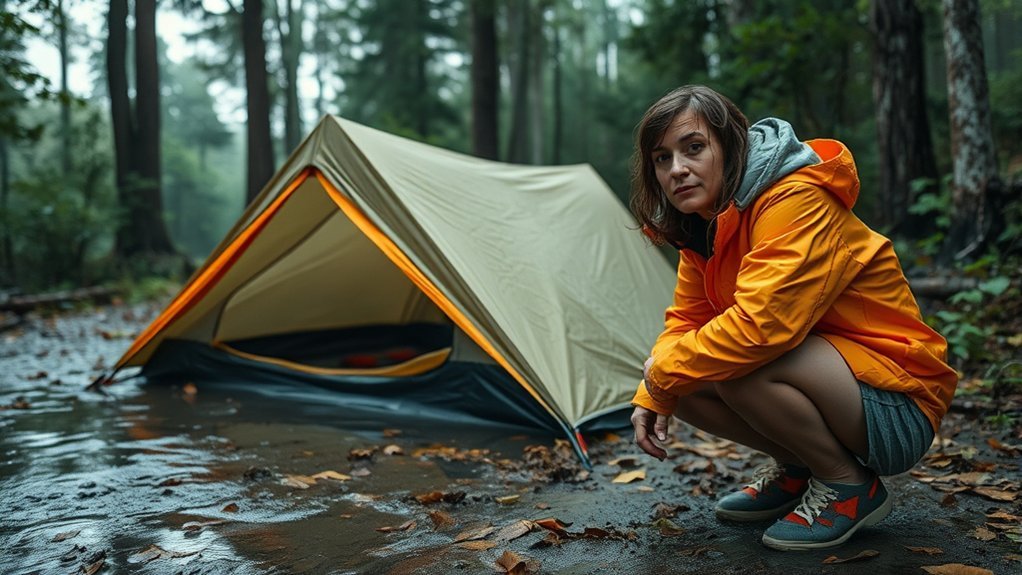
When your tent floods, first work out what kind of water problem you have. A small drip through a seam, rain blowing through an open door, or a shallow puddle from a poorly positioned footprint is usually a gear problem. Water that is rapidly rising, flowing across the campsite, coming out of a creek or wash, or carrying mud and debris is a safety emergency.
Look outside before you start packing. Check whether water is merely pooling around the tent or whether the surrounding campsite, road, drainage, river, creek, or wash is also rising.
Warning: A slow tent leak and a flash flood are not the same emergency. The National Weather Service says six inches of fast-moving floodwater can knock an adult over, about 12 inches can carry away most cars, and roughly two feet can carry away larger vehicles. If water is rising rapidly or moving across your route, move toward safe higher ground without stopping to save nonessential gear.
Six inches of fast-moving floodwater can knock an adult off their feet. Never assume shallow-looking water is safe to cross.
Know When to Stop Saving Gear
Leave immediately when a Flash Flood Warning or evacuation order affects your location, water begins rising quickly, a dry wash or creek starts flowing, debris is moving with the water, or your safe exit route is beginning to flood.
Do not spend extra minutes breaking down the tent. Phones, identification, medications, keys, and emergency equipment are useful only if they are within immediate reach. Everything else can be replaced.
Gather Essential Belongings
If conditions are stable enough to remain at the campsite briefly, gather only the belongings that matter most. A waterproof dry bag or sealed container makes this much faster.
- Medications, identification, permits, and insurance information
- Phones, emergency communication devices, chargers, and power banks
- Car keys and campsite or vehicle keys
- Dry insulating clothing and rain gear
- First aid kit and flashlight or headlamp
- Drinking water and food that has not contacted floodwater
- Sleeping bags or insulated bedding, if they can be moved without delaying evacuation
Do not sort ordinary clothing, cooking equipment, chairs, or other replaceable gear while water is rising. Keep the group together and make sure children or pets are accounted for before worrying about equipment.
Note: Store medications, documents, phones, emergency communication devices, and car keys in one waterproof grab bag whenever you camp in wet or flood-prone country. You should be able to pick it up in seconds.
Prevent Flooding Before It Starts
The easiest flooded tent to manage is the one that never floods. Start with campsite selection. The National Park Service recommends avoiding low or sunken ground that can become extremely wet during rain.
Choose a legal, established site on naturally well-drained ground. Avoid depressions, obvious drainage channels, riverbanks subject to sudden rises, and dry stream beds or washes. In desert and canyon country, a thunderstorm many miles away can produce a flash flood where the sky above you is still clear. The National Park Service’s Zion flash-flood guidance specifically warns that dry washes and narrow canyons can become dangerous with little notice.
A tent with a waterproof bathtub-style floor helps keep routine splash and shallow pooling away from low seams, but no tent floor is designed to make camping in actual floodwater safe.
Pro Tip: Before the trip, check the FEMA Flood Map Service Center for mapped flood hazards and then check the local weather forecast, campground notices, and park-specific flash-flood guidance. A flood map is a planning tool, not a substitute for current warnings or local conditions.
Understand a Flood Watch vs. a Flood Warning
The National Weather Service uses different alert levels. A Flood Watch means conditions are favorable for flooding, so prepare to move and monitor updates. A Flood Warning means flooding is imminent or occurring. A Flash Flood Warning calls for immediate action, especially if you are in a low-lying or flood-prone location.
Before going to sleep during unsettled weather, make sure emergency alerts can reach you. In areas without reliable cellular service, ask park staff about local warning systems and consider a battery-powered NOAA Weather Radio or another appropriate backcountry communication device.
Create a Barrier Against Rain
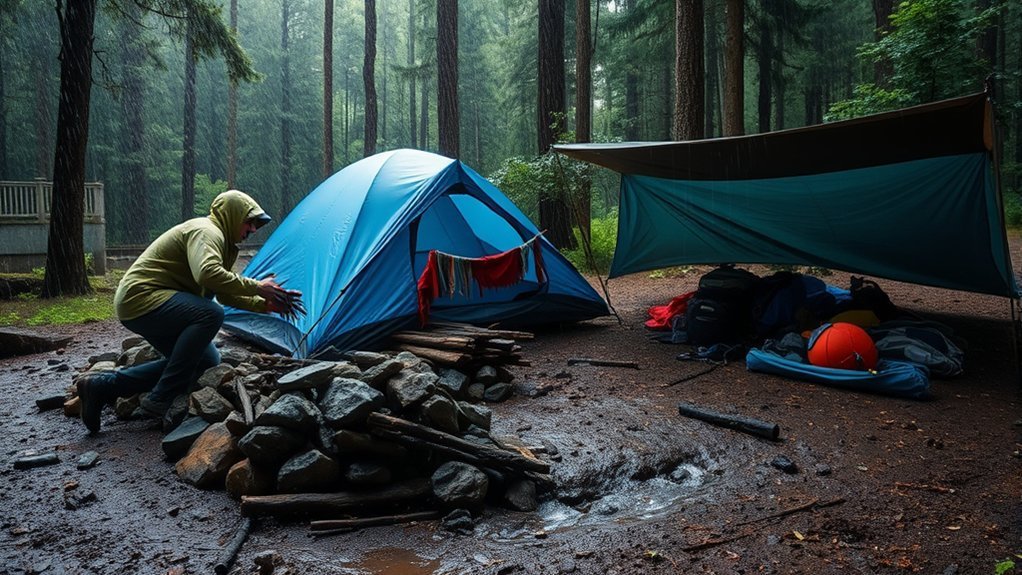
For ordinary heavy rain—not rising floodwater—start with the tent’s rainfly. Fully deploy it, tension it according to the tent manufacturer’s instructions, and keep wet fabric from sagging directly against the inner tent when the design allows separation.
If you use an additional tarp overhead, pitch it with a clear slope so water runs off beyond the tent rather than collecting in a sagging pocket or dumping beside the floor. Secure it for the expected wind and keep enough airflow around the tent to limit condensation.
A footprint or groundsheet can protect the floor from abrasion and wet soil, but it should fit under the tent rather than sticking out beyond the edges. Exposed groundsheet material can catch rain and funnel it underneath the tent.
| Action | Purpose |
|---|---|
| Tension the rainfly | Keeps direct rain away from the tent body |
| Slope an overhead tarp | Sends runoff beyond the sleeping area instead of creating a water pocket |
| Tuck the footprint under the tent | Prevents exposed groundsheet edges from catching rain |
| Use naturally well-drained ground | Reduces pooling without altering the campsite |
Warning: Do not dig drainage trenches around your tent unless a land manager has specifically directed you to do so in an emergency. Leave No Trace advises campers not to trench around tents because digging disturbs soil, vegetation, drainage, and habitat. Find a naturally suitable campsite instead.
Drain Water From Inside the Tent
Only work on water inside the tent after you have confirmed that the campsite itself is not flooding and no evacuation is needed.
- Stop the source first: close exposed doors, correct a shifted rainfly, and move gear away from a leaking wall or seam.
- Use towels, a sponge, or absorbent clothing to remove small puddles.
- Move sleeping bags and insulating layers off the wet floor before they absorb more water.
- Do not cut the tent floor or dig a drainage channel through the campsite. If outside water keeps collecting around the tent, relocate to a legal, better-drained site when conditions make moving safe.
- Make sure a footprint is fully tucked beneath the tent rather than extending beyond it.
- When the rain eases, ventilate the tent and hang wet equipment in a sheltered, ventilated place where it can drain without touching the tent walls.
If the water came from a river, creek, storm drain, flash flood, or visibly muddy moving runoff rather than ordinary rain leakage, stop treating the problem as simple tent cleanup. Avoid unnecessary contact and follow the contamination precautions later in this guide.
Find a Safe, Dry Location
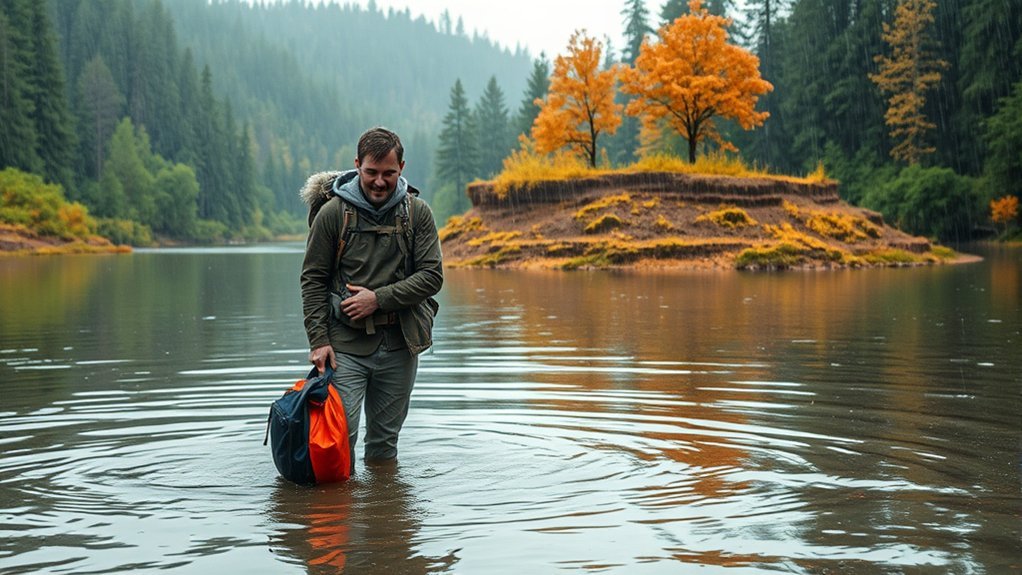
When rising water reaches your campsite, move toward safe higher ground early. Do not wait for water to surround the tent before deciding to leave.
A hard-topped vehicle can provide useful shelter from rain or lightning only when the vehicle itself is already parked on safe, unflooded ground and you can reach it without crossing moving water. During an actual flood, higher ground is more important than getting to a particular vehicle.
| Action | Why It Matters |
|---|---|
| Move to safe higher ground | Gets people away from rising or moving water |
| Use a vehicle only on unflooded ground | Avoids turning a shelter option into a flood hazard |
| Leave nonessential gear behind | Prevents dangerous evacuation delays |
Warning: Never walk, swim, or drive through moving floodwater to reach a road, vehicle, bathroom, or supposedly safer campsite. If moving water traps you, reach the highest safely accessible point and call emergency services or park authorities if communication is available.
Contact Fellow Campers or Park Authorities
Once you are moving toward safety, communication can keep a small campsite problem from becoming a larger emergency. Alert nearby campers if they appear unaware that water is rising, but do not delay your own evacuation to recover someone else’s equipment.
Park staff, campground hosts, rangers, or local emergency officials may know which roads are closed, which evacuation routes remain usable, and where designated shelters or assembly points are located.
Seek Immediate Assistance
- Contact park or campground authorities and report the location and direction of rising water.
- Call 911 or the local emergency number if someone is trapped, injured, swept into water, or cannot reach safe ground.
- Use a phone, satellite communicator, radio, or other available device to monitor warnings and evacuation instructions.
- Give rescuers a precise campsite number, trail location, GPS position, landmark, or road name when possible.
- Keep your group together so nobody returns alone to retrieve equipment.
Share Resources and Tips
Nearby campers can help with dry clothing, lighting, shelter, first aid supplies, communication, and transportation after the immediate danger has passed. Share reliable information from park staff or official weather alerts rather than rumors about road conditions or river levels.
Before future trips, save campground contact information and learn where emergency exits, high-ground assembly points, ranger stations, and severe-weather shelters are located.
Maintain Safety and Comfort
Once everyone is out of immediate flood danger, the priorities change from evacuation to staying warm, dry, hydrated, and healthy.
Assess Immediate Situation
Wet clothing can cool you quickly, especially in wind or cool nighttime temperatures. The CDC notes that hypothermia can occur even above 40°F when a person becomes chilled by rain, sweat, or cold water.
- Change out of soaked clothing and into dry insulating layers as soon as practical.
- Use dry blankets or sleeping bags only after getting the person out of wet clothes.
- Watch for persistent shivering, unusual exhaustion, fumbling hands, confusion, slurred speech, or increasing drowsiness.
- Seek emergency medical help for suspected hypothermia, especially if the person becomes confused, difficult to wake, or stops shivering despite remaining cold.
- Keep children, older adults, and anyone with limited mobility especially warm and dry.
Secure Dry Location
Move to a secure area outside the flood path. An enclosed building is preferable when one is safely accessible. A hard-topped enclosed vehicle can also provide weather shelter when it is parked on stable, unflooded ground.
If thunder is present, remember that a tent is not lightning protection. The National Weather Service recommends reaching a substantial building or enclosed hard-topped vehicle when one can be reached safely and remaining there for at least 30 minutes after the last thunder.
Retrieve Valuables Promptly
Retrieve remaining valuables only after officials, conditions, and your own observation indicate that returning to the site will not require entering floodwater or approaching unstable banks, washed-out roads, falling branches, or other storm hazards.
Phones, cameras, food supplies, personal items, and first aid equipment can usually wait. Never trade personal safety for replaceable camping gear.
Treat Floodwater as Potentially Contaminated
There is an important difference between clean rain that leaked through a seam and water from a river, creek, drainage system, or wider flood. The CDC warns that floodwater can contain sewage, hazardous waste, germs, sharp debris, and other hazards.
- Avoid unnecessary contact with floodwater.
- Wash exposed skin with soap and clean water as soon as possible.
- Clean and cover cuts or abrasions and seek medical care if a wound shows signs of infection.
- Wash clothing exposed to floodwater before wearing it again.
- Discard food or non-waterproof food packaging that has contacted floodwater.
- Do not drink from a water source that may have been contaminated by flooding unless authorities or an appropriate treatment method confirm it is safe.
Dry and Inspect Your Tent After the Storm
After conditions are safe, remove loose dirt and debris and let the tent dry completely before long-term storage. Pitch it in a breezy shaded or partly sunny area when practical, open doors and vents, and separate the rainfly, inner tent, and footprint so trapped moisture can escape.
Inspect the floor, seam tape, rainfly, zippers, pole sleeves, guy-out points, and poles. Small seam leaks may be repairable with the sealant recommended by the tent manufacturer. Torn fabric or failed waterproof coatings may require patches, professional repair, or replacement.
If the tent was exposed to actual contaminated floodwater, follow the tent manufacturer’s cleaning instructions and avoid using harsh disinfectants that could damage waterproof coatings unless the manufacturer specifically approves them.
Reflect and Learn for Future Trips
A flooded campsite usually leaves useful clues about what went wrong. Review the event while the details are still fresh.
- Was the tent in a depression, drainage path, dry wash, or unusually close to rising water?
- Was the rainfly fully deployed and properly tensioned?
- Did the footprint stick out beyond the tent floor and collect runoff?
- Did water enter through a failed seam, zipper, floor coating, open door, or condensation?
- Did your group receive weather alerts early enough to act?
- Could everyone reach medications, identification, lights, keys, and emergency communication equipment quickly?
Clean and repair the gear that failed, update your emergency kit, and choose your next campsite based on natural drainage rather than trying to reshape the ground around the tent.
Frequently Asked Questions
What should I do if my tent is damaged beyond repair?
Move everyone to safe shelter first. Once conditions are stable, inspect the tent. Small fabric punctures or seam leaks may be repairable with a manufacturer-approved patch or seam sealer. Replace the tent if major structural damage, failed poles, large tears, or deteriorated waterproof coatings make it unreliable for the conditions.
How can I prevent my tent from flooding in the future?
Choose naturally well-drained ground away from depressions, riverbanks, dry washes, and obvious runoff channels. Properly tension the rainfly, keep the footprint tucked beneath the tent floor, inspect waterproof seams before wet-weather trips, and monitor local flood watches and warnings.
Is it safe to stay in a flooded tent?
Not when the surrounding water is rising, moving, or connected to a creek, river, drainage channel, or flash flood. Leave for safe higher ground. A shallow puddle caused only by a small rain leak may be manageable after you confirm that the campsite itself is not flooding.
What essential items should I always pack for emergencies?
Keep identification, medications, a first aid kit, flashlight or headlamp, backup power, emergency communication equipment, dry insulating clothing, water, and essential keys together where they can be grabbed quickly. Waterproof bags make those items easier to protect during heavy rain.
How do I dry my tent after it floods?
Remove standing water and debris after conditions are safe, then separate the rainfly, tent body, and footprint and let every layer air-dry completely in a ventilated place. Do not store the tent while damp. After drying, inspect the floor, seam tape, poles, waterproof coatings, and zippers for damage.
Should I dig a trench around my tent when heavy rain is expected?
Generally, no. Leave No Trace guidance advises against digging trenches around tents because it disturbs the campsite and can increase erosion. Choose an existing site with natural drainage, use your rainfly correctly, and relocate if the site is collecting unsafe amounts of water.
Is my car safer than my tent during flooding?
A hard-topped vehicle may provide useful weather shelter only when it is already on stable, unflooded ground and can be reached without crossing floodwater. Never drive through a flooded road or moving water to reach safety. During a flash flood, safe higher ground takes priority.
What if floodwater touches my food or camping gear?
Treat river, creek, drainage, or wider floodwater as potentially contaminated. Avoid eating food or using non-waterproof packages that contacted it. Wash exposed skin and clothing with clean water and soap, clean reusable equipment according to its manufacturer’s instructions, and keep contaminated water away from cuts and drinking supplies.
Conclusion
When your tent fills with water, the most important question is not how quickly you can dry the floor—it is whether the campsite itself is becoming dangerous. Manage an ordinary rain leak when conditions are stable, but leave immediately for safe higher ground when water is rising or moving.
Afterward, dry and inspect your equipment, review where the water came from, and improve your site selection, rainfly setup, footprint placement, weather monitoring, and emergency grab bag before the next trip. Good preparation cannot stop a flash flood, but it can give you more time to recognize the danger and get out safely.
Sources
- National Weather Service — Turn Around Don’t Drown — supports moving-water danger thresholds and the warning not to walk or drive through floodwater.
- National Park Service — Finding and Setting Up a Campsite — supports avoiding low, sunken, and flood-prone tent locations.
- Leave No Trace — Leave What You Find — supports the recommendation not to dig drainage trenches around tents.
- FEMA Flood Map Service Center — official source for mapped U.S. flood-hazard information.
- CDC — Safety Guidelines: Floodwater — supports contamination, wound, clothing, food, and floodwater-contact precautions.
- CDC — Preventing Hypothermia — supports cold-exposure risks, symptoms, and the importance of getting wet campers warm and dry.
