

Last Updated on September 11, 2026 by Mason Reed
Duct tape earns a place in a survival or camping kit because it can handle fast, temporary repairs to shelters, packs, clothing, plastic containers, and other non-safety-critical gear. The key is choosing the right tape for the surface and knowing its limits: flexible cloth duct tape covers most field repairs, while aluminum foil tape is better suited to clean metal surfaces within its rated temperature range.
This guide compares two useful tape types plus a practical bushcraft reference, explains where each one works best, and shows how to make safer temporary repairs without treating tape as a substitute for proper medical supplies, permanent repairs, or equipment rated for extreme heat.
Quick Answer
For most survival and camping kits, a strong cloth duct tape such as Duck Max is the more versatile choice because it conforms to fabric, plastic, wood, and irregular shapes. Aluminum foil tape is a useful specialty option for clean metal and vent repairs, but it should never be treated as direct-flame or stove-pipe repair tape.
Key Takeaways
- Pack cloth duct tape first if you want one tape for general campsite and emergency repairs.
- Use aluminum foil tape mainly on clean, rigid metal or compatible plastic surfaces and stay within the product’s listed temperature limits.
- Clean and dry the repair area before applying tape whenever conditions allow; dirt, oil, water, and loose coatings weaken adhesion.
- Treat tape repairs as temporary when failure could affect fire safety, medical care, structural support, climbing equipment, electrical systems, or gas appliances.
- A survival manual can improve technique, but it complements repair supplies rather than replacing them.
Affiliate disclosure: This article contains Amazon affiliate links. If you buy through one of these links, we may earn a commission at no additional cost to you.
Top Picks
|
Category |
Product |
Score |
|---|---|---|
|
🏆 Best All-Purpose |
96/100 |
|
|
🔥 Best for Metal & Vent Sealing |
90/100 |
|
|
🎯 Best Survival Guide |
88/100 |
Note: The scores above are editorial comparison scores based on versatility, published specifications, packability, intended use, and practical limitations. They are not standardized laboratory-test results.
How We Chose
We prioritized products and resources that address realistic outdoor repair needs without asking one product to do a job it was not designed for. The comparison considers published specifications, material compatibility, flexibility, weather resistance, temperature limits, portability, ease of application, and common field uses.
For Duck Max, the manufacturer lists strong adhesion to materials including wood, masonry, plastic, and glass, along with high tear strength, conformability, an aggressive rubber adhesive, and uses such as sealing, bundling, and waterproofing. You can review those specifications on the Duck Brand product page.
For the foil tape, we treated its stated temperature limit as a maximum product specification rather than evidence that it is suitable for every hot appliance. For the book, we checked its edition information and subject coverage against the official publisher listing. Customer ratings can help show broad owner sentiment, but they change over time and were not treated as proof of safety or technical performance.
Which Tape Works for Which Survival Repair?
|
Repair |
Better Choice |
Why |
|---|---|---|
|
Torn tarp or temporary tent-fabric patch |
Cloth duct tape |
Flexible backing conforms better to soft material and irregular folds. |
|
Backpack, rain cover, or gear wrap |
Cloth duct tape |
Better suited to flexible surfaces and fast hand-tear repairs. |
|
Clean metal seam or low-temperature vent repair |
Foil tape |
Aluminum backing conforms closely to rigid metal and creates a firm seam. |
|
Direct flame, firebox, chimney, or hot stove pipe |
Neither unless specifically approved |
Use only products explicitly rated and approved for the appliance, temperature, and application. |
|
Temporary dressing or improvised splint support |
Proper first-aid supplies first |
Duct tape may help secure padding in an emergency, but it should not replace medical tape or contact an open wound. |
Warning: Do not rely on ordinary duct or foil tape for climbing gear, load-bearing safety equipment, damaged fuel lines, electrical conductors, pressurized systems, gas-appliance flues, direct-flame areas, or cookware exposed to fire. Use the equipment manufacturer’s approved repair method or replace the damaged part.
How to Make a Better Field Tape Repair
- Stop the damage from spreading. Unload or relax the damaged item before taping it. A torn pack strap or tarp under tension can continue ripping beneath the patch.
- Clean the surface. Brush away mud, dust, loose fibers, oil, frost, and standing water. Adhesives generally bond better to clean, dry surfaces.
- Dry it when possible. Wipe the area with a clean cloth and give moisture time to evaporate before applying the patch.
- Round the patch corners. Rounded corners are less likely than sharp corners to catch on clothing or peel back.
- Use overlap. Extend the patch beyond the damaged area rather than matching the tear exactly.
- Press firmly. Rub across the entire patch, especially the edges, to improve adhesive contact.
- Reduce stress on the repair. Repack a bag, loosen a tarp, or reinforce the opposite side when possible so the tape is not carrying the full load.
- Replace the temporary fix. Once you have access to proper repair materials, inspect and permanently repair or replace safety-critical gear.
Pro Tip: Instead of carrying a full heavy roll on a short trip, wrap several useful lengths of cloth duct tape around a smooth bottle, trekking pole section, plastic card, or small tube. Keep the adhesive clean and avoid wrapping it around a surface that heat may damage.
Duck Max

Duck Max is the most versatile option here for ordinary camping and emergency repairs. Duck Brand lists the silver Max Strength version at 1.88 inches by 45 yards and describes an aggressive rubber adhesive, high tear strength, stretch, and conformability around corners, curves, wood, masonry, plastic, and glass.
That combination makes it useful for temporary shelter patches, bundling gear, securing plastic sheeting, reinforcing containers, or protecting damaged equipment until you can make a proper repair. The backing is suited to outdoor and waterproofing applications, but a field patch is only as reliable as the surface preparation and the condition of the material underneath it.
What People Say
Owner feedback has historically been strongly positive, particularly around adhesion, flexibility, and easy hand tearing. Because retailer ratings and review totals change continuously, treat the chart below as a historical sentiment snapshot rather than live review data.
Common drawbacks of aggressive duct tape also apply: it can leave residue, can damage delicate finishes, and is not intended as a specialty high-temperature repair material.
Overall Sentiment: Positive historical snapshot

|
Pros |
Cons |
|---|---|
|
✅ Strong adhesion across many common repair surfaces |
❌ Can leave adhesive residue on delicate finishes |
|
✅ Easy to tear by hand for fast field repairs |
❌ Not designed for direct flame or extreme-temperature repairs |
|
✅ Flexible backing works around bends and irregular shapes |
❌ A full 45-yard roll adds noticeable weight to a lightweight kit |
Versatility
This is the most adaptable repair product in the roundup. Use it for temporary patches on tarps, packs, outer clothing, plastic sheeting, containers, pole bundles, or non-critical gear. In an emergency it can also help hold padding or a dressing in place, but use a proper sterile dressing between an injury and improvised outer securing material whenever possible.
Duct tape is also recognized as a useful emergency-preparedness item. CDC shelter-in-place guidance, for example, includes duct tape, scissors, towels, and plastic sheeting for temporarily sealing a room during certain chemical emergencies when authorities instruct people to shelter in place. See the CDC shelter-in-place guidance.
Safety
Do not place the adhesive directly over an open wound, and do not wrap tape tightly enough to interfere with circulation. Serious bleeding, fractures, burns, head or spinal injuries, breathing problems, and other significant injuries need appropriate first aid and professional medical care when available. The American Red Cross first-aid steps provide general emergency-care guidance.
Test the tape on an inconspicuous part of painted, coated, polished, or delicate gear before applying a large patch. Do not depend on it for load-bearing or life-safety equipment.
Key Benefits
- Strong multi-surface adhesion for temporary field repairs
- Hand-tearable backing for fast use without scissors
- Flexible and conformable around corners and curved objects
- Manufacturer lists sealing, bundling, plastic sheeting, and waterproofing among its uses
Retailer rating: Ratings and review totals change over time; check the live Amazon listing for the current figure.
SmaringWing Foil

SmaringWing foil tape is a specialty choice for clean, rigid surfaces rather than a substitute for flexible cloth duct tape. Its current product listing describes a 2-inch by 65-foot aluminum foil tape with a 3.9-mil construction, moisture resistance, and a stated long-term upper temperature of 120°C.
That makes it more appropriate for compatible metal seams, vent surfaces, appliance housings, and similar repairs that remain inside the listed conditions. It is much less suitable for tent fabric, clothing, packs, and other flexible materials.
Warning: A 120°C product rating does not mean this tape is approved for chimney flues, wood-stove pipes, fireboxes, exhaust systems, direct flame, or cookware. Those surfaces can exceed the tape’s listed temperature range. Follow the stove, vent, furnace, dryer, or appliance manufacturer’s approved materials and installation instructions.
What People Say
Current listings show generally favorable ratings for adhesion and metal-sealing applications, although the number of reviews continues to change. Foil tape also handles differently from cloth tape: it is stiffer, can crease, and its cut edges deserve more care.
As with the first product, the chart below is retained as a historical sentiment snapshot and is not a live measurement of current reviews.
Overall Sentiment: Positive historical snapshot

|
Pros |
Cons |
|---|---|
|
✅ Designed for compatible metal and plastic surfaces |
❌ Far less flexible than cloth tape for fabric or soft gear |
|
✅ Listed as heat- and moisture-resistant within its specified range |
❌ Foil edges can crease, catch, or feel sharp |
|
✅ Forms a firm patch across clean rigid seams |
❌ Not proof of suitability for fireboxes, flues, or direct-flame surfaces |
Versatility
This tape is most useful on compatible metal and semi-rigid surfaces: sealing small seams, patching non-structural vent surfaces, reinforcing metal housings, or covering minor holes where the actual operating temperature stays inside the tape’s listed range. It is less useful for tent repairs and clothing because aluminum foil does not flex like cloth-backed duct tape.
For permanent HVAC, dryer-vent, gas-appliance, or code-regulated work, confirm the exact tape, listing, appliance instructions, and applicable building requirements instead of assuming any foil tape is acceptable.
Safety
Keep the foil tape away from direct flame and surfaces that can exceed its rating. Do not apply it to skin. Smooth or trim exposed edges carefully, and wear suitable gloves when a cut foil edge could be a hazard.
If you are repairing an appliance or vent that carries combustion gases, high heat, or another safety-critical load, stop using the equipment until the correct repair material and method are available.
Key Benefits
- Listed long-term temperature resistance up to 120°C
- Aluminum backing suited to clean, rigid metal repairs
- Moisture-resistant construction for appropriate vent and seam applications
- Useful complement to flexible cloth tape when a kit includes both soft and rigid repair materials
Retailer rating: Ratings and review totals change over time; check the live Amazon listing for the current figure.
Outdoor Life

Outdoor Life: Ultimate Bushcraft Survival Manual is not another type of tape, so think of it as the supplementary resource in this roundup. Written by Tim MacWelch and published by Weldon Owen, the June 29, 2021 trade paperback contains 224 pages covering traditional and improvised wilderness skills.
The publisher describes material on shelter, tools, survival situations, and improvised techniques, while available contents also cover water, fire, food, first aid, foraging, navigation, cooking, signaling, and long-term primitive skills. That makes the book useful for understanding what to do when a simple tape patch is only one part of a larger problem.
What People Say
Reader feedback generally describes the book as approachable and broad rather than a specialist technical manual. Its illustrated, skill-by-skill format is especially useful for beginners and for experienced campers who want reminders of techniques they may not practice frequently.
The sentiment chart below is a historical snapshot. Current ratings differ by retailer and can change after publication.
Overall Sentiment: Positive historical snapshot

|
Pros |
Cons |
|---|---|
|
✅ Well-structured, beginner-friendly instruction |
❌ Broad reference rather than a specialist technical manual |
|
✅ Illustrations help explain practical techniques |
❌ Some subjects receive overview-level rather than exhaustive coverage |
|
✅ Covers a wide range of wilderness and survival topics |
— |
Versatility
This book works as a study resource before trips, a reference for practicing skills at home, and a teaching aid when sharing outdoor skills with others. Its subject coverage includes shelters, water, fire, signaling, foraging, navigation, first aid, hygiene, primitive cooking, tools, and other wilderness skills.
Use any foraging, trapping, fire, hunting, or medical information together with current local laws, fire restrictions, land-management rules, modern first-aid guidance, and hands-on training.
Safety
A survival manual is most useful when you practice skills before an emergency instead of trying an unfamiliar technique for the first time under stress. Firecraft, cutting tools, wild-food identification, trapping, hunting, and first aid all carry risks that cannot be eliminated by reading alone.
The official Simon & Schuster publisher page confirms the author, publisher, publication date, ISBN, and 224-page length.
Key Benefits
- 272 wilderness skills presented as a broad survival reference
- Illustrated practical instruction across multiple bushcraft subjects
- Useful for pre-trip practice and skill refreshers
- 224-page trade paperback that can be kept with larger camping or emergency supplies
Retailer rating: Ratings and review totals vary by retailer and change over time; check the live Amazon listing for the current figure.
Frequently Asked Questions
Which type of tape should you pack for survival or camping?
If you carry only one type, a strong cloth duct tape is usually the most versatile because it conforms to fabric, plastic, wood, tarps, packs, and irregular gear. Add aluminum foil tape only when you expect compatible metal or vent repairs where its rigid backing and stated temperature range provide a useful advantage.
Is duct tape safe for first aid?
Duct tape is not a replacement for medical tape or a proper first-aid kit. In an emergency, it may help secure padding, a dressing, or an improvised splint when better supplies are unavailable. Do not put the adhesive directly on an open wound, do not wrap it tightly enough to restrict circulation, and seek appropriate medical care for serious injuries.
How should you store duct tape in a camping or emergency kit?
Keep tape clean, dry, and away from prolonged high heat and direct sunlight. A resealable bag helps prevent dirt from contaminating exposed edges. For a smaller hiking kit, wrap several lengths around a smooth plastic card, bottle, or tube instead of carrying a full roll. Inspect stored tape periodically and replace it if the adhesive has hardened or become contaminated.
Can duct tape repair a torn tent?
It can make a temporary field patch on many tent or tarp materials, especially when the area is clean and dry. Patch beyond the tear and reduce tension on the damaged fabric. Because coatings and fabrics vary, test adhesion when possible and use the tent manufacturer’s recommended repair tape or patch kit for a permanent repair.
Can aluminum foil tape be used on a stove pipe?
Do not assume so. The SmaringWing product discussed here lists a long-term temperature limit of 120°C, which does not establish approval for a wood-stove flue, chimney, firebox, or direct-flame surface. Use only repair materials specifically approved by the stove, vent, or appliance manufacturer for that application.
How much duct tape should you carry?
There is no universal amount. A full roll makes sense for a vehicle, base camp, home emergency kit, or group trip. For lightweight hiking, several yards wrapped around a small smooth object may cover basic emergency patches without the weight and bulk of an entire roll. Adjust the amount for trip length, group size, and how repairable your equipment is.
Customer Preferences
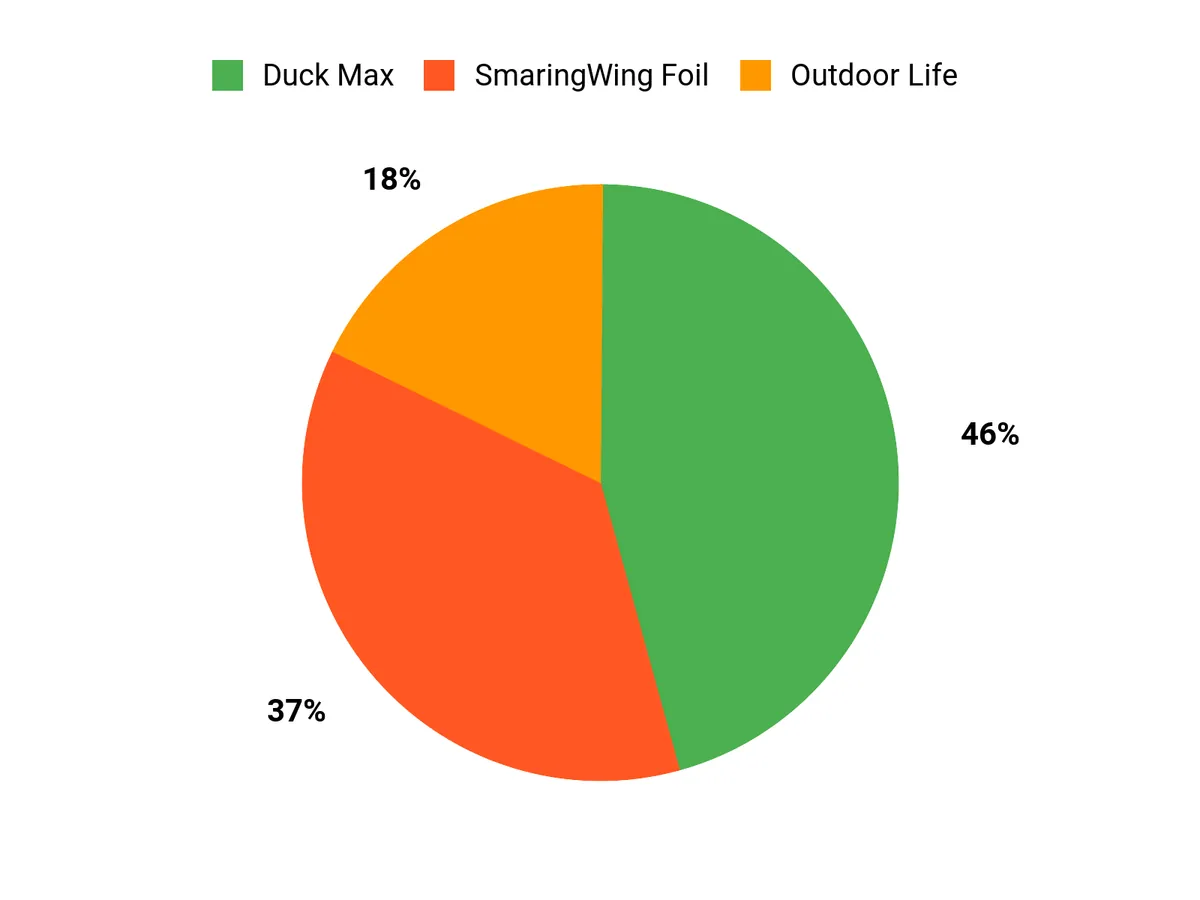
Reader priorities usually come down to the job at hand. Duck Max makes the strongest case for a general-purpose kit because its flexible backing and multi-surface adhesion cover a broad range of ordinary repairs. SmaringWing Foil makes more sense when rigid metal sealing and moderate heat resistance are the priority. Outdoor Life is different: it supplies the knowledge behind shelter, water, fire, first aid, navigation, food, and other wilderness decisions rather than acting as a repair material.
The most useful kit does not need every specialty tape. Start with the repair problems your equipment is most likely to develop, then add specialty materials only when they solve a realistic need.
Wrapping Up
For most camping repairs and emergency kits, Duck Max is the most broadly useful option of these three because a flexible cloth-backed tape can patch, wrap, bundle, and reinforce many common materials. Clean the surface first, press the patch firmly, and remember that even strong tape is usually a temporary fix when failure could affect safety.
SmaringWing Foil fills a narrower role on compatible metal and rigid surfaces within its listed temperature range. Do not extend that rating to direct flame, chimneys, wood-stove flues, or other hotter applications. The Outdoor Life manual complements both products by teaching a wider set of wilderness skills that can reduce your dependence on any single repair material. Retail prices and customer-rating totals change frequently, so check the live listings rather than relying on a fixed price printed in an evergreen guide.
Sources
- Duck Brand — Duck Max Strength Duct Tape — manufacturer specifications, dimensions, adhesion, conformability, and intended uses.
- CDC — What to Do to Shelter in Place for a Chemical Emergency — current emergency-preparedness guidance involving duct tape, scissors, towels, and plastic sheeting.
- American Red Cross — First Aid Steps — appropriate emergency assessment, first-aid care, and use of proper supplies.
- Simon & Schuster — Outdoor Life: Ultimate Bushcraft Survival Manual — official publisher, author, publication date, ISBN, and page count.
- Federal Trade Commission — Endorsement Guides — guidance on clear and conspicuous affiliate disclosures.
| Duck Brand Max Strength Duct Tape | Aluminum Foil Duct Tape Heavy Duty Waterproof | Outdoor Life: Ultimate Bushcraft Survival Manual | |
|---|---|---|---|
|
|
|
|
|
| Rating | Check live retailer listing | Check live retailer listing | Check live retailer listing |
| Material | Cloth-reinforced backing with aggressive rubber adhesive | Aluminum foil with pressure-sensitive adhesive | Trade paperback, 224 pages |
| Recommended Uses |
|
|
|
| Dimensions & Weight | 1.88 inches × 45 yards; approximately 1.4 pounds for the full roll | 2 inches × 65 feet; listed 3.9-mil construction | Approximately 6.8 × 0.6 × 8.5 inches; about 19.6 ounces |
| Shop Now | Shop Now | Shop Now |
This Roundup is reader-supported. When you click through links we may earn a referral commission on qualifying purchases.

1 Comment
Pingback: Hiking With Shelties: Complete Trail Guide [2026]