
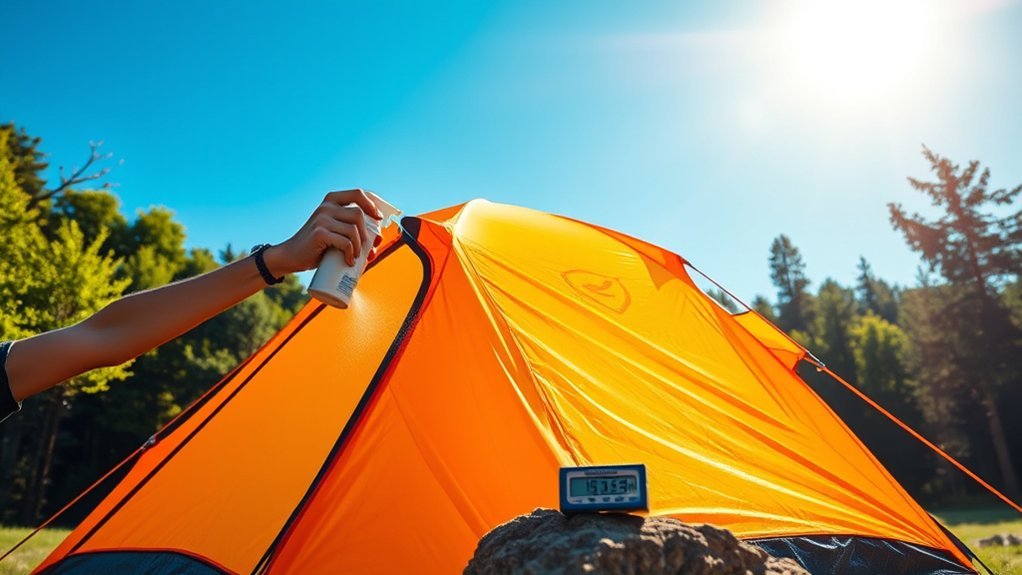
Last Updated on July 24, 2026 by Mason Reed
Ultraviolet light can gradually fade tent fabric, weaken fibers, damage waterproof coatings, and make a rainfly easier to tear. The most effective protection is not a spray alone. You need to reduce direct sun exposure, use a treatment approved for your tent material, clean the fabric gently, and store the tent completely dry and away from heat and light.
Quick Answer
To prevent UV damage to tent fabric, pitch in shade when possible, limit the time the tent stays set up, and use the rainfly or a separate overhead tarp for added protection. Apply only a tent-safe UV treatment that matches the fabric and coating, then dry and store the tent loosely in a cool, dark place.
Key Takeaways
- Reducing direct sunlight is the best way to slow UV damage.
- Polyester rainflies are generally more UV resistant than nylon, but coatings, dyes, yarns, and construction also affect durability.
- Denier is not a UV-resistance rating, so do not choose a tent by denier alone.
- Use only a treatment approved for your tent’s exact fabric and waterproof coating.
- Inspect the tent after exposed trips rather than following an arbitrary monthly schedule.
- UV protectant can slow future damage, but it cannot restore strength that the fabric has already lost.
At a Glance
| Time Required | 20–60 minutes for cleaning and treatment, plus full air-drying time |
| Difficulty | Easy, provided you identify the fabric and follow the product label |
| Tools Needed | Soft cloth or sponge, cool-to-lukewarm water, tent-safe cleaner, and compatible UV treatment |
| Cost | Varies by tent size and treatment; shade and better storage may cost nothing |
What’s in This Article
- What You’ll Need
- How UV Damage Affects Tent Fabric
- Check the Tent Material and Coating
- Reduce Sun Exposure at the Campsite
- Choose UV-Resistant Tent Materials
- Apply a Tent-Safe UV Treatment
- Store the Tent Correctly
- Clean and Inspect the Tent
- Use Helpful Protective Accessories
- Troubleshoot Treatment and Coating Problems
- Repair or Replace UV-Damaged Fabric
- Frequently Asked Questions
Disclosure: As an Amazon Associate I earn from qualifying purchases. Some links on this page are affiliate links, at no extra cost to you.
What You’ll Need
- A copy of the tent manufacturer’s care instructions or fabric specifications
- A UV treatment approved for the tent’s fabric and coating
- A tent-safe cleaner or mild, fragrance-free, non-detergent soap
- Cool-to-lukewarm water
- A clean, non-abrasive sponge or soft cloth
- A soft nylon brush for stubborn dirt, if the product instructions allow one
- Protective gloves if required by the treatment label
- A shaded, well-ventilated drying area
- A large breathable storage bag, mesh bag, or clean pillowcase
- A separate tarp or campsite canopy for extended sunny trips, if practical
Note: Product directions control the application process. Some tent treatments go on clean, wet fabric, while other products may have different requirements. Never substitute a household upholstery spray or general-purpose fabric protector.
How UV Damage Affects Tent Fabric
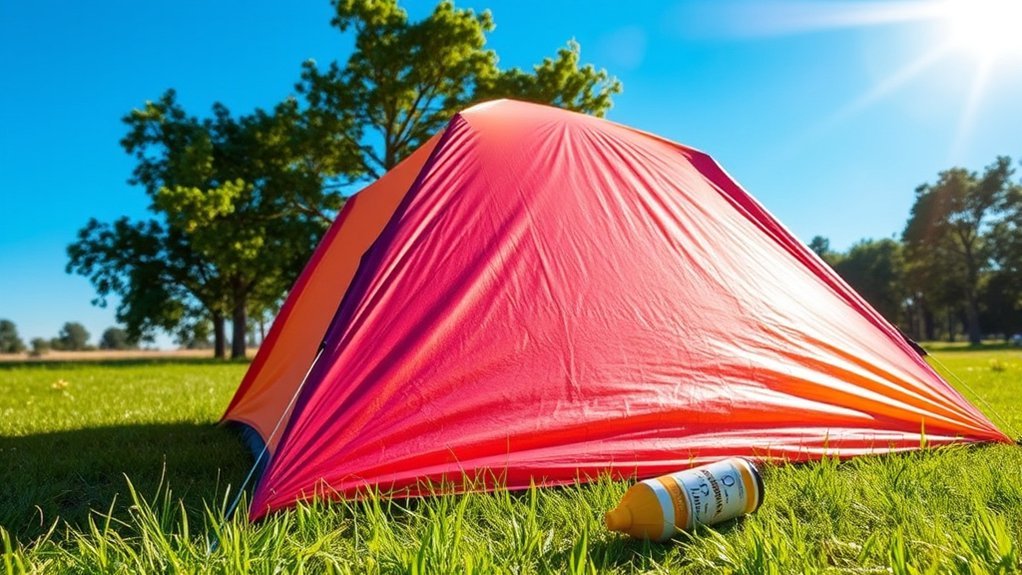
Ultraviolet radiation can break chemical bonds within synthetic fibers and gradually reduce the fabric’s tear strength. It can also damage surface water-repellent finishes, waterproof coatings, seam tape, thread, and plastic components. The result may include faded color, brittle fabric, peeling coatings, weak seams, or a rainfly that tears during setup.
UV intensity changes with the season, time of day, latitude, altitude, cloud cover, ozone, and reflected light. The World Health Organization notes that UV generally increases closer to the equator and at higher elevations. Snow, pale sand, and water can reflect additional radiation onto the tent, while thin or broken clouds do not necessarily remove the risk.
The most effective UV protection is reducing the amount of direct sunlight that reaches the tent, not repeatedly coating fabric that remains exposed all day.
Early Signs of UV Damage
- Uneven fading, especially across the roof and sun-facing side
- Fabric that feels unusually stiff, papery, or brittle
- Small tears forming around clips, seams, or tension points
- Thread or webbing that has faded and weakened
- A rainfly that develops pinholes or tears during normal handling
- Peeling or flaking waterproof coating inside the rainfly or floor
Poor water beading alone does not prove that the fabric is structurally damaged. Dirt and normal wear can reduce the performance of the exterior Durable Water Repellent finish, often called DWR, while the underlying fabric remains usable.
Check the Tent Material and Coating First
Before cleaning or treating the tent, read its sewn-in label, product page, manual, or manufacturer care guide. You need to know both the base fabric and the waterproof coating.
- Polyester: Generally handles prolonged sunlight better than comparable nylon, but it can still fade and weaken.
- Nylon: Light and strong for its weight, but prolonged UV exposure can reduce its strength.
- Canvas or polycotton: Heavy and durable, but it needs cleaning and proofing products made for cotton-containing fabric.
- Polyurethane-coated fabric: Requires cleaners, seam sealers, and retreatments compatible with polyurethane.
- Silicone-treated fabric: May reject products designed for polyurethane-coated fabric and requires silicone-compatible repair materials.
Warning: Do not apply a coating, seam sealer, or household waterproofer until you know the fabric and coating type. An incompatible product may leave residue, cause uneven color, prevent adhesion, or damage the existing finish.
Reduce Sun Exposure at the Campsite
Sun avoidance gives you more protection than any maintenance product. When possible, choose an established campsite that receives afternoon shade rather than leaving the tent in open sun from morning to evening.
Choose Shade Without Creating New Hazards
- Use natural shade that does not place the tent beneath dead branches or unstable trees.
- Consider how the sun will move before you pitch. A shaded morning location may receive strong afternoon sun.
- Move a freestanding tent into shade during the day when it is safe and practical.
- Take the tent down when you are not using it for an extended period.
- Do not assume cloudy weather means low UV exposure.
Use the Rainfly Strategically
A fitted rainfly can shield the inner canopy from some sunlight. REI notes that polyester rainflies are generally more UV resistant than nylon rainflies. However, the fly absorbs that exposure itself, so it still needs inspection and care. For a long, dry stay, follow the tent manufacturer’s ventilation guidance and avoid allowing excessive heat to build inside.
Use a Separate Tarp or Canopy for Long Stays
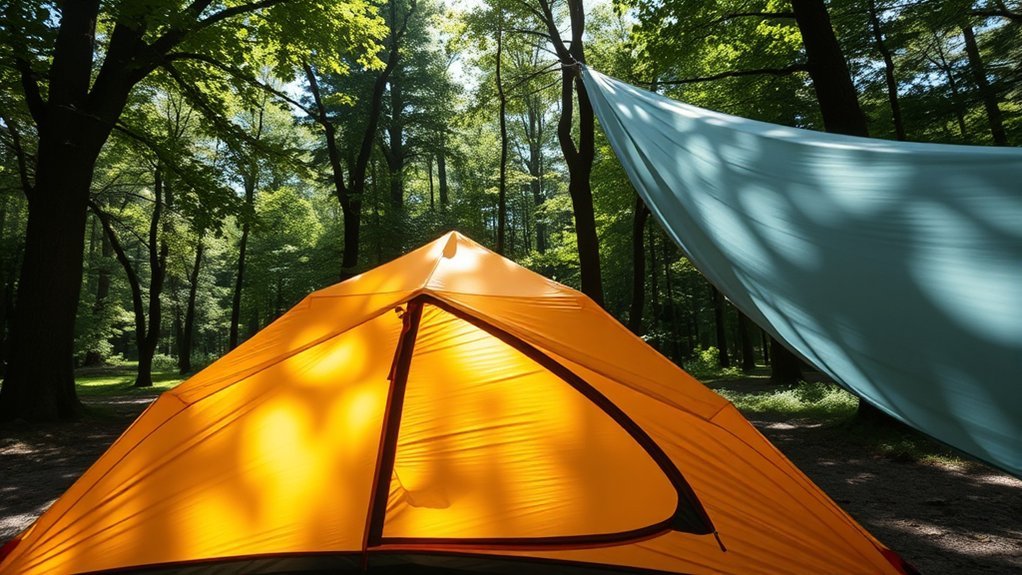
A correctly pitched overhead tarp or campsite canopy can shade the tent during extended base-camp use. Leave an air gap between the shade and tent so the materials do not rub together or trap excessive heat. Stake the shade securely and remove it if wind conditions exceed its safe setup limits.
Pro Tip: In exposed areas, orient the smallest practical side of the tent toward the strongest afternoon sun. This reduces the surface area receiving the most intense direct exposure.
Choose UV-Resistant Tent Materials
If you camp frequently in open desert, above the tree line, near reflective snow, or at a long-term base camp, consider UV performance when buying a tent. Polyester rainflies are often a practical choice because polyester generally tolerates sunlight better than nylon.
Do not use denier alone as your UV guide. A higher denier can indicate a heavier yarn, but it is not a standardized UV-resistance rating. Solution dyeing, pigment selection, high-tenacity yarns, UV-stabilizing additives, coatings, and fabric construction can all affect long-term performance.
Look for specific manufacturer statements about UV resistance, high-altitude use, solution-dyed fabric, or replaceable rainflies. A replaceable fly can extend the usable life of the tent body when the fly receives most of the environmental exposure.
How to Apply a Tent-Safe UV Treatment
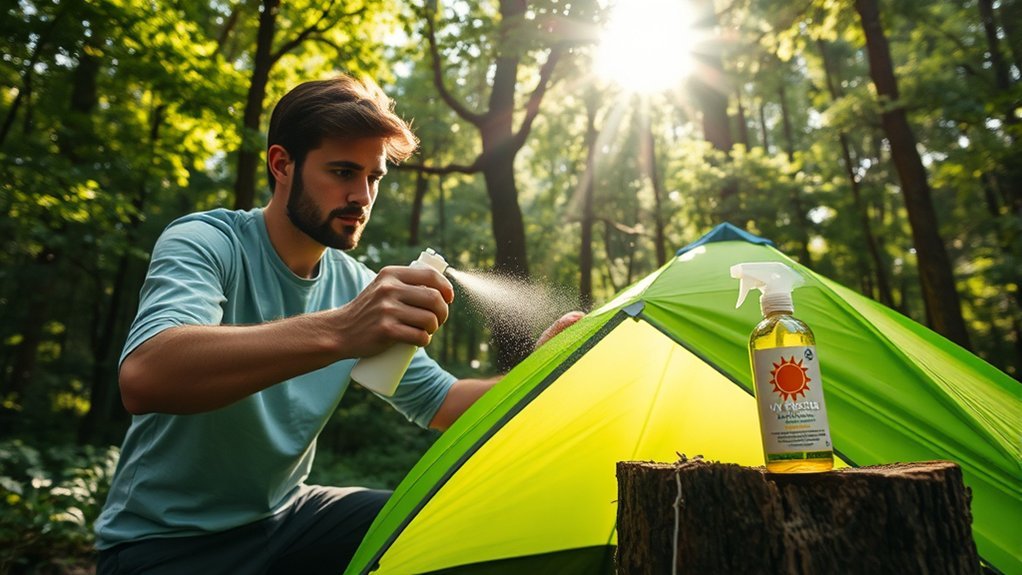
A tent-safe UV treatment can reduce future deterioration, and some products also restore exterior water repellency. It cannot rebuild fibers that have already become brittle or restore the original tear strength of seriously damaged fabric.
Choose a Compatible Product
Start with the tent manufacturer’s recommended care product. When the manufacturer does not name one, choose a treatment that clearly lists your fabric type and intended use. For example, Nikwax Tent & Gear SolarProof is currently formulated for synthetic tents and combines UV protection with water repellency. Canvas or cotton-blend tents need a product intended for cotton-containing fabric.
Check whether the product is compatible with polyurethane, silicone, acrylic, or other existing finishes. Test it on a small hidden area to check for color run, spotting, residue, or an unwanted change in texture.
Step-by-Step Application
- Read both sets of instructions. Review the tent maker’s care guide and the treatment label before starting.
- Inspect the tent. Do not coat over brittle fabric, loose seam tape, active mold, heavy sap, or peeling waterproof material.
- Clean as directed. Remove loose dirt and use a tent-safe cleaner when needed. Rinse away cleaner residue.
- Prepare the fabric. Follow the treatment label. Some products, including Nikwax SolarProof, are applied to clean, wet synthetic fabric.
- Work in sections. Apply the product evenly to the exterior surface without saturating one spot.
- Remove excess treatment. Wipe away surplus product within the time stated on the label to prevent streaking or marks.
- Check coverage. Inspect seams, corners, roof panels, and sun-facing areas for missed spots.
- Air-dry fully. Dry the tent in a ventilated, shaded location before using or storing it.
Warning: Never machine-wash or machine-dry a tent unless its manufacturer specifically permits it. Heat, agitation, bleach, strong detergent, and unsuitable solvents can damage fabric, seam tape, and waterproof coatings.
Testing and Compatibility
Test each new product on an inconspicuous area and let it dry completely before judging the result. Check for discoloration, sticky residue, altered texture, or coating lift. A successful patch test reduces risk, but it does not override a manufacturer’s warning against a product category.
Do not assume a general clothing DWR spray is suitable for a tent. Tent flies and floors may use coating systems that differ from breathable rain jackets. Use a product that specifically lists tents, shelters, awnings, or comparable outdoor gear.
How Often to Reapply Treatment
There is no universal three-month or six-month schedule. Reapplication depends on the tent, treatment, number of exposed days, UV intensity, storage conditions, and cleaning history. Follow the label and inspect after trips with prolonged sun exposure.
Consider retreatment when the manufacturer recommends it, when the approved product’s service interval has passed, or when exterior water repellency has declined and cleaning alone does not restore it. Do not keep layering product over dirty fabric or visible residue.
Best Practices for Tent Storage
Storage protects a tent from light, moisture, heat, and unnecessary compression between trips. According to REI’s tent-storage guidance, the two most important steps are drying the tent completely and storing it loosely in a cool, dry place.
Clean and Dry Before Storage
Shake out grit, leaves, and debris after each trip. Spot-clean dirt, sap, bird droppings, or salt with cool-to-lukewarm water and a cleaner approved for tents. Avoid bleach, harsh detergent, stain remover, and strongly scented household products.
Dry the tent body, rainfly, footprint, guylines, and storage bag completely. If you must pack a wet tent at camp, unpack and dry it as soon as you reach a suitable location. Trapped moisture can encourage mildew and contribute to the breakdown of polyurethane coatings.
Clean grit from zippers, release excessive tension from straps, and untangle the guy lines before storage.
Use Loose, Cool, Dark Storage
- Use a large mesh bag, breathable fabric sack, or clean pillowcase for long-term storage.
- Keep the tent away from windows and direct sunlight.
- Avoid a hot attic, vehicle trunk, or other area with prolonged heat.
- Avoid damp basements unless the dry tent is protected from the humid environment.
- Keep fuels, oils, solvents, pesticides, and leaking batteries away from the fabric.
- Do not place heavy objects on top of the stored tent.
You do not need to rotate an unexposed tent to distribute sunlight. The goal is to eliminate storage-time sunlight rather than spread it across different panels.
Regular Cleaning and Maintenance
Clean according to use and contamination rather than an arbitrary calendar. A tent used on a clean weekend trip may need only drying and brushing, while one exposed to beach sand, fine dust, sap, bird droppings, smoke residue, or salt may need prompt cleaning.
Use a non-abrasive sponge or soft cloth with cool-to-lukewarm water. For deeper cleaning, follow tent-specific cleaning guidance and the tent manufacturer’s instructions. Treat mold spots only with a product approved for coated outdoor fabric. Do not use bleach.
| Task | When to Do It | What to Check |
|---|---|---|
| Dry the tent | After every trip | Tent body, fly, floor, guylines, and bag are fully dry |
| Inspect exposed fabric | After sunny trips and before important outings | Fading, brittleness, pinholes, seam damage, and loose tape |
| Clean the tent | When visibly dirty or contaminated | Sand, dust, sap, droppings, salt, mold, and cleaner residue |
| Refresh UV protection or DWR | According to the approved product and tent maker | Compatibility, clean fabric, even coverage, and complete drying |
| Review storage conditions | At the end of the season or after moving gear | Heat, sunlight, moisture, chemicals, pests, and compression |
Pro Tip: Keep a simple note in the storage bag with the date, product name, fabric area treated, and any damage found. This prevents unnecessary reapplication and helps you track changes over time.
Tent Accessories for Additional Protection
Some accessories directly reduce sun exposure, while others support general tent longevity. Use each one for its intended purpose.
- Separate tarp or campsite canopy: Provides meaningful overhead shade when pitched securely with an air gap above the tent.
- Fitted rainfly: Shields the inner canopy and may provide better UV resistance, especially when the fly is polyester.
- Replaceable rainfly: Makes it possible to replace the most exposed component without replacing the full tent.
- Breathable storage bag: Keeps the dry tent loose and ventilated during long-term indoor storage.
- Protective footprint: Protects the floor from abrasion, dirt, and ground moisture but does not shield the roof or walls from UV.
- Properly adjusted guylines: Reduce flapping and uneven mechanical stress but do not block sunlight.
Long-Term Care Strategies
Long tent life comes from reducing cumulative exposure. Avoid leaving a backpacking tent pitched in the yard, on a roof, or at a seasonal campsite for weeks unless the manufacturer designed it for extended use. Lightweight tents sacrifice some material thickness to reduce packed weight and are not permanent outdoor structures.
Before each major trip, practice pitching the tent and inspect the fly, canopy, seams, poles, clips, and floor. Check whether replacement rainflies or professional repair services are available before damage becomes severe.
Ventilation helps control condensation and moisture-related coating problems, but it does not prevent UV deterioration. Treat sun exposure, moisture, abrasion, and mechanical stress as separate risks that require different controls.
Troubleshooting Treatment and Coating Problems
Streaks, Foam, or White Marks
Excess treatment may dry as streaks or visible marks. Follow the product instructions for removing surplus material with a damp cloth. Do not add another layer until the first application has dried and you have identified the cause.
Color Runs During Testing
Stop the application if the hidden test area releases dye or changes color. Rinse or remove the product only as directed by its manufacturer, let the area dry, and contact the tent maker before continuing.
Sticky, Flaking, or Peeling Interior Coating
A tacky or peeling interior surface may indicate deterioration of the waterproof coating rather than simple DWR wear. UV spray will not correct delamination or hydrolysis. Ask the manufacturer whether the affected coating can be removed and replaced or whether a replacement fly or tent is needed.
Water No Longer Beads on the Surface
Clean the fabric first because dirt can interfere with water beading. If cleaning does not restore performance and the base fabric remains sound, apply a compatible DWR or combined UV-and-waterproofing treatment according to its directions.
When to Repair or Replace UV-Damaged Fabric
Small punctures or clean tears in otherwise flexible fabric can often be repaired with material-compatible repair tape or adhesive. Slight seam leakage may respond to the correct seam sealer. Surface fading alone does not always require replacement.
UV damage becomes a structural problem when the fabric feels brittle, tears during normal setup, crumbles near seams, or cannot hold a repair. Big Agnes explains that severely UV-damaged fabric may be too brittle to stitch because new stitches can tear out when the tent is tensioned. Review the manufacturer’s repair limitations or request a professional assessment when the damage is widespread.
Warning: Do not deliberately pull hard on weakened fabric to test it. Inspect it under normal handling and setup tension. Replace the rainfly or tent if ordinary pitching causes tearing or if the shelter can no longer provide reliable weather protection.
Consider replacing the affected component or full tent when:
- The fabric tears during normal setup or light handling.
- Large areas feel brittle, papery, or unusually thin.
- Seams split because the surrounding fabric cannot hold stitches.
- Waterproof coating is widely peeling, sticky, or separating from the fabric.
- Repair patches lift because the base fabric is deteriorating.
- A replacement fly and professional repair are unavailable or cost-prohibitive.
Frequently Asked Questions
How often should I reapply UV treatment to a tent?
Follow the treatment label and the tent manufacturer’s instructions. There is no universal schedule. Exposure days, altitude, season, fabric, storage, and cleaning frequency all affect how often treatment may be needed.
Does UV damage affect tent waterproofing?
Yes. Prolonged UV exposure can damage exterior water repellency, waterproof coatings, seam materials, and the base fabric. However, poor water beading can also result from dirt or ordinary DWR wear, so inspect and clean the tent before assuming the fabric is structurally damaged.
Can I use regular fabric protector on a tent?
Do not use a household upholstery or clothing protector unless the tent manufacturer specifically approves it. Solvents and incompatible treatments may damage coatings, leave residue, cause color changes, or prevent future repairs from bonding correctly.
What are the signs of UV damage on tent fabric?
Common signs include uneven fading, brittle or papery fabric, pinholes, weakened thread, tearing around tension points, and seams that separate from the surrounding material. Peeling waterproof coating may also appear after prolonged heat, moisture, or UV exposure.
Can UV damage to a tent be reversed?
No treatment can rebuild fibers that have already lost strength. A compatible UV product can help slow future deterioration, and a DWR treatment can restore surface water repellency when the fabric remains sound, but brittle structural damage is permanent.
Will a tarp protect my tent from UV damage?
A properly pitched overhead tarp or canopy can significantly reduce direct sunlight. Leave space for airflow, prevent the tarp from rubbing against the tent, and secure it for expected wind. The tarp itself will also receive UV exposure and needs inspection.
Should I keep the rainfly on in strong sun?
A fitted rainfly can protect the inner canopy, and polyester flies are generally more UV resistant than nylon flies. However, the rainfly receives the exposure instead. Follow the tent maker’s ventilation advice and avoid leaving the entire shelter in direct sun longer than necessary.
Is it safe to camp in a high-UV area with a standard tent?
Yes, for normal trips, provided the tent is in good condition and you limit unnecessary sun exposure. Choose shade where safe, use the rainfly or overhead shade, check the local UV Index, inspect the tent after the trip, and avoid leaving a lightweight tent pitched as a permanent shelter.
Conclusion
Preventing UV damage starts with limiting exposure. Choose shade when it is safe, take the tent down when it is not needed, and use a rainfly or separate overhead shelter during long sunny stays. Clean the fabric gently, identify its coating before applying treatment, and follow the product label instead of relying on a fixed calendar.
After each exposed trip, check the roof, rainfly, seams, and tension points for fading, thinning, or brittleness. Dry the entire tent and store it loosely in a cool, dark place. Early care can slow future damage, but fabric that tears during normal setup or can no longer hold a repair should be replaced before you depend on it in severe weather.
Sources
- REI Co-op: How to Clean, Waterproof and Care for a Tent — direct-sun exposure, rainfly materials, cleaning, footprints, and general tent care
- REI Co-op: How to Store a Tent — complete drying and loose storage in a cool, dry location
- World Health Organization: Ultraviolet Radiation — environmental factors that affect UV intensity
- Big Agnes: Seasonal Tent Maintenance — UV deterioration, product selection, and exposure-based treatment frequency
- Nikwax: Tent & Gear SolarProof — current treatment compatibility and application directions for synthetic tents
- Big Agnes: Repair Limitations — when brittle UV-damaged tent fabric may be unsuitable for repair
