
Last Updated on July 24, 2026 by Mason Reed
Open your tent after a few months in storage, and a wall of musty, sour air may hit you before you finish unzipping the door. The odor may come from mildew, trapped organic residue, or a polyurethane coating that has started to break down. Identifying the smell first helps you clean the tent without damaging its fabric or waterproof finish.
Quick Answer
To remove mildew smell from a tent, hand wash it with cool or warm water and a tent-safe cleaner, rinse it, and dry it completely in the shade. Treat lingering organic odors with a manufacturer-approved enzyme deodorizer. A sour smell with sticky or peeling fabric usually means the PU coating must be removed and replaced.
Key Takeaways
- Check the tent’s care instructions and identify its coating before applying any cleaner or sealant.
- Use cool to warm water, a nonabrasive sponge, and a cleaner made for tents or waterproof outdoor gear.
- Follow the current bottle directions when using Revivex Odor Eliminator or another enzyme deodorizer, and do not rinse it off unless the label says otherwise.
- A sour, urine-like, or vomit-like smell with sticky or peeling fabric usually points to a failing polyurethane coating.
- Dry the tent fully in a shaded, well-ventilated place and store it loosely in a cool, dry room.
At a Glance
| Time Required | About 30 to 60 minutes of cleaning, plus 6 to 24 hours of drying. PU restoration may require about 3 hours of preparation and 24 hours before storage. |
| Difficulty | Easy for routine cleaning; moderate for removing and replacing a deteriorated PU coating. |
| Tools Needed | Tub, nonabrasive sponge, soft brush, clean towels, gloves, tent-safe cleaner, and a shaded drying area. |
| Cost | Low to moderate. Routine cleaning uses a small amount of cleaner, while recoating requires a compatible tent-fabric sealant. |
What’s in This Article
- Identify the Source of the Smell
- Safety and Material Checks
- What You’ll Need
- Understanding Mildew Smell in Tents
- Safe Cleaning Methods for Mold and Mildew
- Step-by-Step Guide to Deodorizing Your Tent
- Removing PU Odors From Tent Fabric
- Proper Storage Techniques
- Maintaining Tent Freshness
- Long-Term Tent Care
- Troubleshooting Common Mistakes
- When to Repair or Replace the Tent
- Frequently Asked Questions
- Conclusion
- Sources
Disclosure: As an Amazon Associate I earn from qualifying purchases. Some links on this page are affiliate links, at no extra cost to you.
Identify the Source of the Smell
Do not start soaking the tent until you know what type of odor you are treating. Mold, food residue, and a failing waterproof coating need different solutions.
| What You Notice | Likely Cause and First Step |
| Musty or earthy odor | Mildew, mold, or trapped organic residue. Hand wash the tent with a tent-safe cleaner, then deodorize if needed. |
| Visible fuzzy, powdery, or spotted growth | Possible mold. Clean outdoors or in a well-ventilated area while using suitable protective equipment. |
| Sour, urine-like, rubbery, or vomit-like odor | Possible polyurethane coating breakdown. Check for sticky, gummy, peeling, or flaking fabric. |
| Sweat, food, smoke, or general stale odor | Organic residue. Clean the tent first, then use a compatible enzyme deodorizer if the odor remains. |
Note: A musty smell does not prove that every part of the tent contains active mold. Dirt, body oils, food residue, and damp storage can produce similar odors. Clean visible contamination and remove the moisture source rather than trying to mask the smell.
Safety and Material Checks
Check the tent manufacturer’s care instructions before using a cleaner, deodorizer, alcohol solution, or waterproof coating. Synthetic tents, canvas tents, polyurethane-coated fabrics, and silicone-treated fabrics do not all use the same products.
Warning: Never mix vinegar, bleach, ammonia, disinfectant, alcohol, or other cleaners. Work with good ventilation and keep isopropyl alcohol away from flames, heaters, sparks, and other ignition sources.
If you can see significant mold, wear gloves and eye protection. The CDC recommends at least a NIOSH-approved N95 respirator during mold cleanup. A person with asthma, chronic lung disease, a strong mold allergy, or immune suppression should avoid cleaning heavily moldy gear.
Before cleaning, look for a label, manual, or manufacturer support page that identifies the tent fabric and coating. Seam Grip TF, for example, is made for compatible polyurethane-coated fabrics and should not be used on silicone-treated fabric or silnylon.
What You’ll Need
Estimated time: Allow about 30 to 60 minutes for ordinary cleaning and at least 6 to 24 hours for complete air drying. Removing and replacing a failed PU coating requires additional preparation and drying time.
- Cool or warm water, not hot water
- A cleaner made for tents or waterproof outdoor gear, such as Revivex Pro Cleaner
- A manufacturer-approved enzyme deodorizer, such as Revivex Odor Eliminator
- A small amount of mild, fragrance-free soap only when the tent or treatment manufacturer permits it
- White vinegar only if the tent manufacturer approves its use
- A nonabrasive sponge or soft cloth
- A soft brush for an already-failing PU coating
- Protective gloves and eye protection
- An N95 respirator when cleaning visible mold
- Isopropyl alcohol for manufacturer-approved PU-coating removal
- A compatible coating such as Seam Grip TF if the polyurethane coating must be replaced
- A tub, bathtub, or large clean container
- Clean towels for absorbing residue
- A breathable mesh, cotton, or similarly loose storage bag
Pro Tip: Test every cleaner or treatment on a small hidden area first. Stop if the color transfers, the surface becomes sticky, seam tape lifts, or the coating changes texture.
Understanding the Causes of Mildew Smell in Tents
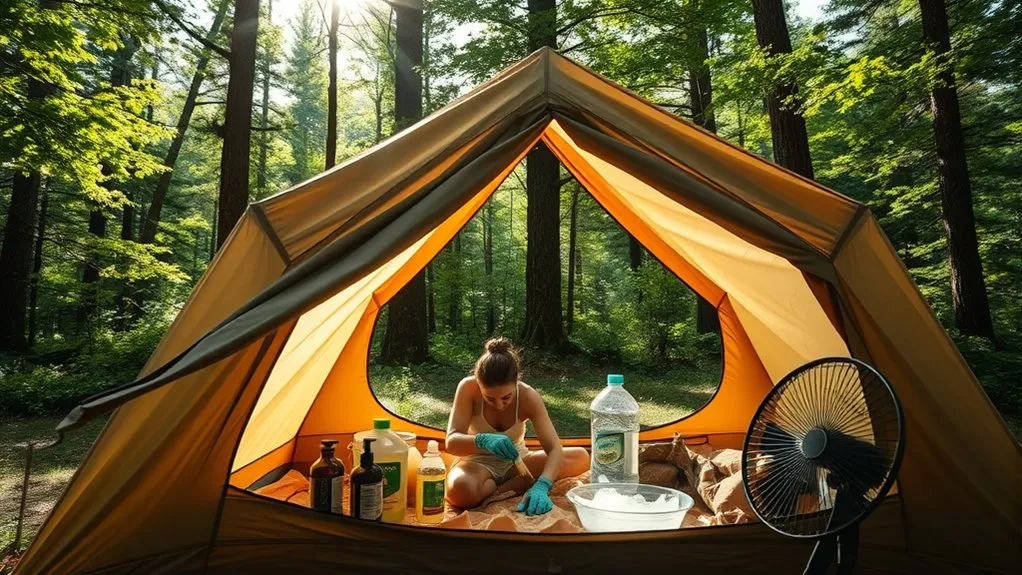
Packing a tent while it is damp is one of the most common causes of musty odors. Moist fabric, body oils, food residue, soil, and poor airflow create conditions that allow mold and mildew to grow. Damp storage can also speed up the breakdown of polyurethane waterproof coatings.
You can prevent most odor problems with a few habits:
- Dry the tent body, floor, rainfly, footprint, guylines, and storage bag before long-term storage.
- If you must pack the tent wet at camp, unpack and dry it as soon as you reach home.
- Shake out soil, leaves, food crumbs, and other debris after each trip.
- Store the tent in a cool, dry indoor location rather than a hot attic, car trunk, damp basement, or humid garage.
- Inspect the tent occasionally for moisture, discoloration, sticky fabric, peeling coating, or a returning odor.
Mold exposure may cause congestion, coughing, wheezing, eye irritation, or skin symptoms in sensitive people. Long periods of damp storage may also damage waterproof coatings and seam tape.
Safe Cleaning Methods for Mold and Mildew
Start with the least aggressive treatment. Brush or shake out loose debris outdoors, open every zipper and vent, and separate the rainfly, tent body, and footprint when possible.
Tent-Safe Cleaner
For most synthetic tents, use cool to warm water and a cleaner designed for tents or waterproof outdoor gear. The REI tent-cleaning process recommends spot cleaning first, gently hand washing the tent in a tub, rinsing thoroughly, and drying it completely in a cool, shaded area.
Avoid aggressive scrubbing on coated areas. Do not scrub the underside of a polyurethane-coated rainfly unless you are intentionally removing a coating that has already failed.
Vinegar and Household Cleaners
Some older cleaning advice suggests wiping mildew odor with one part white vinegar and two parts water. Because tent coatings and seam adhesives differ, do not use this as a universal whole-tent treatment. Check with the manufacturer, patch-test a hidden area, and rinse the treated area when the manufacturer’s instructions require it.
Do not use Lysol, bleach, laundry detergent, fabric softener, stain remover, or another household disinfectant unless the tent manufacturer specifically identifies it as safe. These products may leave residue or damage water-repellent finishes, coatings, seam tape, or fabric.
Enzyme Deodorizers
An enzyme or microbe-based deodorizer can help with organic odors that remain after cleaning. Use it only after removing dirt and visible contamination. Follow the dilution and soak time printed on the current bottle because formulations and instructions can change.
GEAR AID’s tent-specific instructions for Revivex Odor Eliminator call for a short treatment, no rinsing, and complete air drying away from direct heat or sunlight. Do not extend the soak beyond the product directions because prolonged soaking may damage a polyurethane coating.
Step-by-Step Guide to Deodorizing Your Tent
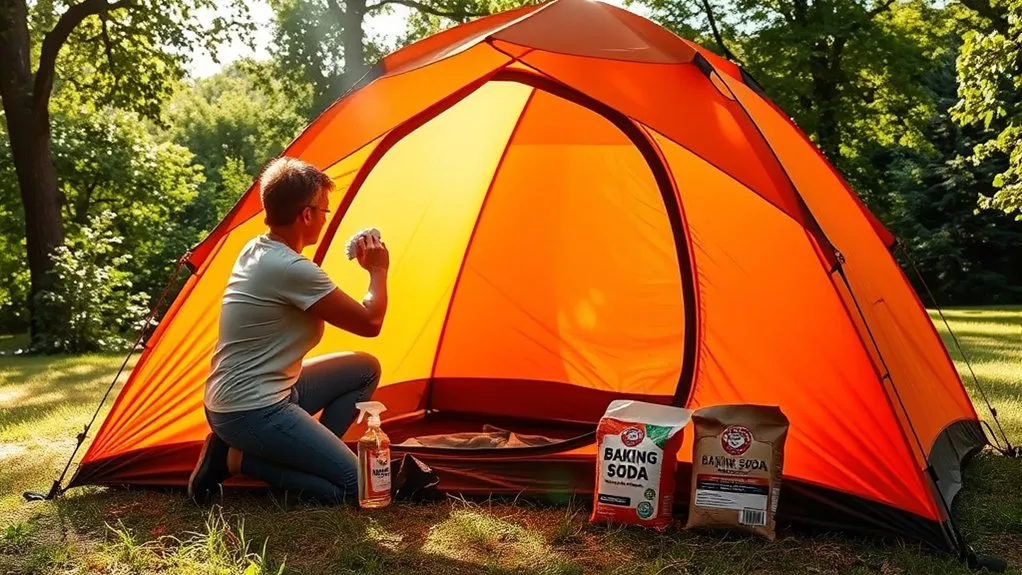
- Read the care instructions. Confirm the fabric, coating, approved cleaner, and any washing limits.
- Set up a safe work area. Work outdoors or in a ventilated space. Put on gloves and any other needed protective equipment.
- Remove loose debris. Shake out the tent, brush away dry soil, and empty every pocket.
- Open the tent. Unzip doors and vents so water can reach trapped dirt and residue.
- Spot clean first. Use a damp, nonabrasive sponge and a small amount of approved cleaner on heavily soiled areas.
- Prepare the tub. Add cool or warm water and the amount of tent cleaner listed on its label.
- Hand wash gently. Submerge the tent only for the recommended time. Gently move the fabric through the water instead of twisting, wringing, or aggressively scrubbing it.
- Rinse completely. Drain the tub and refill it with clean water until no cleaner remains.
- Deodorize if needed. Prepare the enzyme deodorizer according to its current instructions. Saturate the tent for only the stated time.
- Follow the deodorizer’s rinse directions. Revivex Odor Eliminator is normally left in the fabric and air dried without rinsing.
- Dry in the shade. Pitch or hang the tent in a cool, shaded, well-ventilated place until every panel, seam, corner, and storage bag is dry.
- Inspect before storage. Check for stains, odor, coating damage, leaking seams, and loose seam tape.
Warning: Never put a tent in a washing machine or clothes dryer. Agitation and heat can tear fabric, stretch mesh, damage seam tape, and weaken waterproof coatings.
Odor Neutralizing Techniques
If a faint odor remains after the tent is clean and dry, repeat the compatible deodorizer treatment rather than adding perfume. A small activated-charcoal pouch placed near the loosely stored tent may help absorb odor from the surrounding air, but it cannot remove mold or replace proper cleaning.
Skip dryer sheets inside the tent. Fragrance and softening residue may transfer to the fabric, attract pests, or interfere with a water-repellent finish.
Proper Storage Practices
Store the dry tent loosely rather than compressing it into its trail stuff sack. A large mesh bag, cotton bag, pillowcase, or manufacturer-provided storage sack allows the fabric to relax and reduces trapped humidity.
Removing PU Odors From Tent Fabric

Warning: A sour, urine-like, or vomit-like odor that remains after normal cleaning may mean the polyurethane coating is breaking down. Look for sticky, gummy, peeling, or flaking fabric before attempting to recoat it.
First confirm that the affected surface has a polyurethane coating. If the tent uses silicone-treated fabric, silnylon, or an unfamiliar proprietary coating, contact the tent manufacturer for the correct repair product.
For a deteriorated PU coating, GEAR AID’s restoration process uses these steps:
- Fill a tub with enough warm water to cover the affected fabric and add about five drops of mild liquid soap.
- Soak the affected section for two to three hours. This extended soak is for loosening a coating that has already failed, not for routine tent cleaning.
- Remove the tent and gently work on the deteriorated coating with a soft brush.
- Use a mixture of approximately one part isopropyl alcohol to three parts water with two drops of mild soap. Do not use a 50/50 mixture.
- Absorb the loosened residue with a clean towel and continue until the failed coating has been removed.
- Let the fabric become completely clean and dry before applying a new coating.
- Apply a thin, even coat of a compatible product such as Seam Grip TF to the inside of the tent floor or underside of the rainfly.
- Keep treated surfaces separated while they dry. Check the product label for cure time and wait about 24 hours before folding or storing the tent.
Note: Seam Grip TF is not intended for silicone-treated fabric or silnylon. Using an incompatible product may prevent adhesion and make later repairs more difficult.
Proper Storage Techniques to Prevent Future Odors
Dryness matters more than fragrance when storing a tent. Confirm that the floor corners, pole sleeves, rainfly, guylines, footprint, and storage bag are all dry before putting the tent away.
Air Circulation Importance
Choose a cool, dry indoor space with stable temperatures. A closet shelf or climate-controlled storage room is usually safer than a damp basement, hot attic, garage, or vehicle trunk.
Do not rely on direct sunlight to kill mildew or speed drying. Prolonged UV exposure can weaken fabric and waterproof treatments. Use shade and moving air instead.
Dry Storage Recommendations
- Confirm the tent is completely dry. Feel folded corners and thick seams, which often remain damp longer than flat panels.
- Pack it loosely. Use a breathable storage bag rather than the small stuff sack used on the trail.
- Choose a stable location. Keep the tent away from high humidity, direct heat, sunlight, fuel, solvents, and pests.
- Check it during long storage. Inspect it every few months for odor, moisture, sticky fabric, peeling coating, or pest damage.
If you have to pack a wet tent at camp, treat the stuff sack as temporary transport. Unpack and dry every component as soon as you get home.
Maintaining Tent Freshness Between Uses
After each trip, shake out debris and air the tent until it is fully dry. Clean it when it has visible dirt, food residue, body oils, bird droppings, tree sap, salt, or a returning odor. A tent used for many short trips may benefit from one gentle cleaning near the end of the season.
If a mild organic odor returns, clean the affected area and repeat a label-approved enzyme treatment. Do not cover the odor with air freshener, dryer sheets, perfume, or scented detergent.
Before the next trip, pitch the tent at home and test it with clean water. Check that water beads on the rainfly, the floor does not seep, and seams remain sealed. Follow the manufacturer’s instructions if the durable water-repellent finish, seam sealant, or PU coating needs renewal.
Additional Tips for Long-Term Tent Care
- Inspect rather than treating on a fixed schedule. Reapply waterproofing or UV protection when the manufacturer recommends it or when performance has clearly declined.
- Check seams and zippers. Remove grit, inspect seam tape, and repair small problems before they spread.
- Avoid unnecessary chemical exposure. Do not apply bleach, Lysol, solvent, detergent, or waterproofing treatment merely as a preventive measure.
- Protect the tent at camp. Use a footprint when appropriate, keep food out of the sleeping area, ventilate condensation, and limit prolonged UV exposure.
- Contact the manufacturer when uncertain. Proprietary fabrics and mixed silicone-PU coatings may require a specific cleaner or sealant.
Troubleshooting Common Mistakes
- The smell remains after one wash. Let the tent dry completely before judging the result. If the odor is organic, repeat a compatible deodorizer treatment. If it is sour and the fabric is sticky or flaky, inspect the PU coating.
- The tent was packed while wet. Unpack it immediately, pitch or hang every component, and dry it in a shaded place with airflow.
- The fabric became sticky after soaking. Prolonged moisture may have exposed an already-failing PU coating. Stop routine washing and inspect for delamination.
- Seam tape started lifting. Stop scrubbing. Let the tent dry and ask the manufacturer which adhesive or seam sealer is compatible.
- The smell became stronger after using a scented cleaner. Rinse the product out if the tent manufacturer permits it, then clean with a fragrance-free tent cleaner.
- Revivex Odor Eliminator was rinsed away. Prepare a fresh treatment according to the current bottle instructions and allow it to air dry without rinsing.
- The coating remains tacky after recoating. Confirm that it has cured for the full required time. For Seam Grip TF, GEAR AID advises keeping surfaces apart during drying and allows talcum powder after the coating has dried to reduce remaining tack.
When to Repair or Replace the Tent
A localized odor, small coating patch, or limited mildew stain may be repairable. Contact the manufacturer or consider replacing the tent when:
- The fabric tears easily or feels unusually weak.
- Mold covers large areas or returns after proper cleaning and drying.
- The PU coating is failing across most of the floor or rainfly.
- Seam tape is separating throughout the tent.
- The fabric remains sticky, brittle, or strongly odorous after the failed coating has been removed.
- Repair products are not compatible with the tent’s fabric or coating.
- The tent cannot be restored to reliable weather protection.
Do not depend on a questionable repair during remote travel or severe weather. Test the tent at home before using it again.
Frequently Asked Questions
Can I use vinegar to remove mildew smell from my tent?
Use vinegar only if the tent manufacturer confirms that it is compatible with the fabric, coating, seam tape, and dye. Patch-test a hidden area first. A tent-specific cleaner is the safer default, and vinegar must never be mixed with bleach or another cleaner.
How often should I clean my tent to prevent odors?
Shake out and dry the tent after every trip. Wash it when it has visible dirt, salt, food residue, body oils, sap, bird droppings, or odor. If you take many short trips, one gentle seasonal cleaning may be enough unless the tent becomes unusually dirty.
Is it safe to wash my tent in a washing machine?
No. Machine agitation can stretch or tear the fabric, mesh, seams, and seam tape. Hand wash the tent with a nonabrasive sponge and a compatible cleaner. Never place it in a clothes dryer.
What should I do if my tent has persistent odors?
Let the tent dry completely, then identify the odor. Repeat a compatible enzyme treatment for organic odors. If the smell is sour, urine-like, or vomit-like and the fabric is sticky or peeling, the PU coating may need to be removed and replaced.
Can sunlight eliminate mildew smell from a tent?
Do not use prolonged direct sunlight as a mildew treatment. UV exposure can weaken tent fabric and waterproof coatings. Clean the tent properly, then dry it completely in a shaded, well-ventilated location.
Can I use bleach or Lysol on a moldy tent?
Do not use bleach, Lysol, or another household disinfectant unless the tent manufacturer specifically approves it. These products may damage coatings, seam tape, water repellency, fabric, or color. Never mix cleaning chemicals.
Is an old tent with a sour smell worth saving?
It may be worth repairing when the fabric is still strong and the failed coating is limited. Replacement may be safer when the fabric tears easily, the coating has failed across large areas, seam tape is separating throughout the tent, or reliable waterproofing cannot be restored.
Conclusion
Getting mildew smell out of a tent starts with identifying the odor rather than covering it. Hand wash mildew and organic residue with a compatible tent cleaner, use a label-approved deodorizer for remaining odors, and dry every component completely in the shade. If the fabric smells sour and feels sticky or flaky, treat it as a coating problem and confirm the correct repair product before recoating it.
Once the tent is clean, store it loosely in a cool, dry room and inspect it before your next trip. This prevents most recurring odors and gives you time to repair coating, seams, or fabric before you depend on the tent outdoors.
Sources
- GEAR AID: How to Remove Mold, Mildew and Tent Odors — cleaning, deodorizing, PU-removal, and drying instructions.
- GEAR AID: Tips for Using Seam Grip TF — PU-coating preparation, application, compatibility, and cure guidance.
- REI Co-op: How to Clean a Tent — hand-washing, rinsing, enzyme-cleaner, and shaded-drying guidance.
- REI Co-op: How to Clean, Waterproof and Care for a Tent — machine-washing warning, storage, and coating care.
- Big Agnes Tent Care Instructions — warm-water cleaning, prohibited cleaners, drying, and UV precautions.
- Centers for Disease Control and Prevention: Mold Cleanup Guidelines — protective equipment, ventilation, and health-risk precautions.

