Last Updated on July 24, 2026 by Mason Reed
A tent zipper that fails during the night can leave the door open to insects, wind, and rain. The right fix depends on what has failed: dirt may be blocking the track, fabric may be trapped in the slider, the slider may be worn, or the zipper coil or tape may be damaged. This guide helps you identify the problem before you attempt a repair.
Quick Answer
Clean grit from the zipper, release any trapped fabric, and apply a zipper-specific lubricant. If the zipper opens behind the slider, the slider is probably worn and may need replacement. Add cord if only the pull tab is missing. Broken teeth, damaged coil, or torn zipper tape usually require professional repair.
Key Takeaways
- Do not force a stuck slider. First check for grit, trapped fabric, and excessive tension on the tent door.
- A missing pull tab, a worn slider, and damaged zipper teeth are different problems that need different repairs.
- A very slight slider crimp may provide a temporary field fix, but repeated separation normally calls for a compatible replacement slider.
- Do not cut the tent’s zipper tape or cover the moving track with repair tape.
- Seek professional help when the coil, teeth, stitching, zipper tape, or surrounding tent fabric is badly damaged.
What’s in This Article
- Common Zipper Issues on Tents
- Identify the Zipper Parts
- Tent Zipper Troubleshooting Table
- What You’ll Need
- Step 1: Reduce Tension and Check for Snagged Fabric
- Step 2: Clean the Zipper Track
- Step 3: Fix a Stuck Zipper
- Step 4: Fix a Zipper That Separates
- Step 5: Replace a Missing Pull Tab
- Step 6: Handle a Slider That Came Off
- Emergency Tent Door Closure
- Tips for Long-Lasting Zipper Functionality
- When to Replace the Zipper Entirely
- Frequently Asked Questions
- Conclusion
- Sources
At a Glance
| Time Required | About 5–20 minutes for cleaning, freeing a snag, or adding a pull cord; longer for slider replacement |
| Difficulty | Easy for cleaning and pull-tab repairs; moderate for slider replacement |
| Tools Needed | Soft brush, clean cloth, mild soap, zipper lubricant, cord, and possibly smooth-jaw pliers or a compatible slider kit |
| Cost | Minimal for cleaning or a cord pull; varies for replacement parts and professional service |
Disclosure: As an Amazon Associate I earn from qualifying purchases. Some links on this page are affiliate links, at no extra cost to you.
Common Zipper Issues on Tents
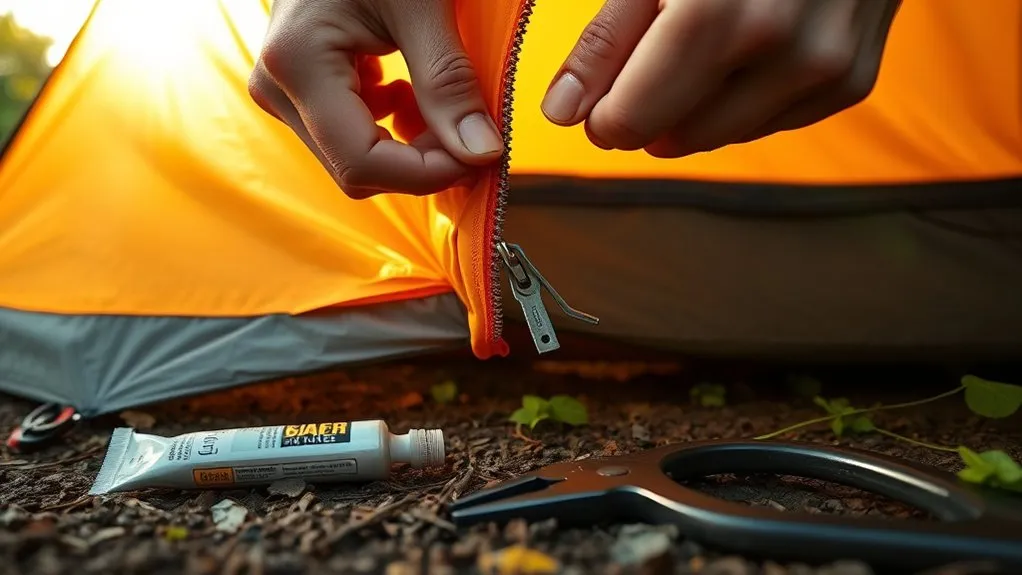
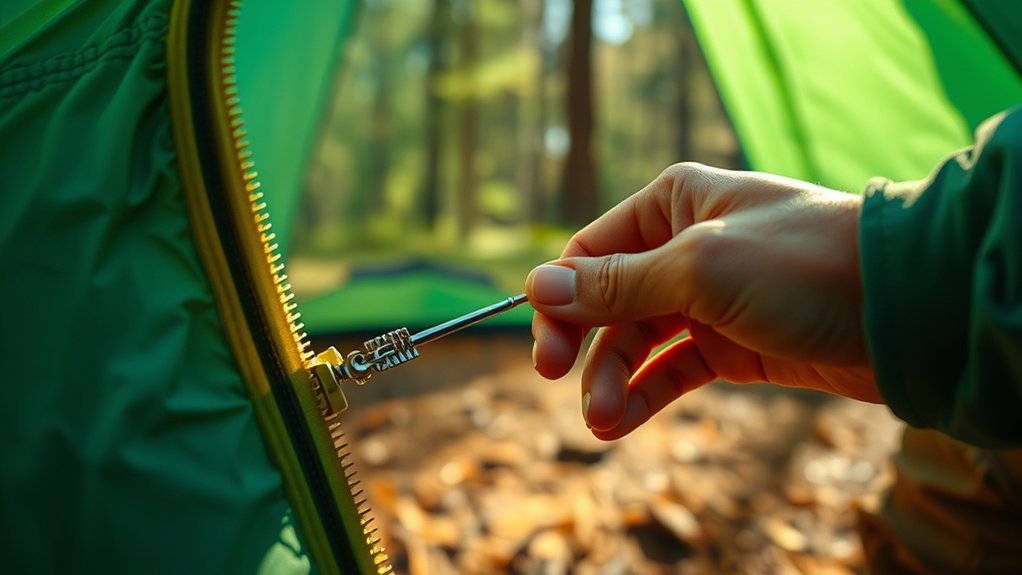
Sand, dust, dried mud, salt, and plant material can collect around a tent zipper and make the slider difficult to move. Fabric from the door flap or insect mesh can also fold into the slider and stop it suddenly.
A zipper that moves but leaves the track open behind it usually has a worn or distorted slider. The slider is no longer pressing the two sides of the coil or teeth together firmly enough. A small adjustment may help temporarily, but a recurring split normally means that the slider needs replacement.
Other problems include a missing pull tab, a slider that has come completely off the track, broken molded teeth, damaged coil, torn stitching, or frayed zipper tape. These more serious failures cannot all be solved with the same technique.
Identify the Zipper Parts
Knowing the correct part names makes it easier to diagnose the problem and order a compatible replacement:
- Pull tab: The small handle or cord you hold when opening the zipper.
- Slider: The moving body that joins or separates the zipper track.
- Coil or teeth: The interlocking elements along both sides of the zipper.
- Zipper tape: The fabric strips that hold the coil or teeth and are sewn to the tent.
- Top and bottom stops: Small barriers that keep the slider from running off the ends.
Note: Tent doors may use one slider or two opposing sliders. A replacement must match the zipper type, approximate size, orientation, and slider arrangement.
Tent Zipper Troubleshooting Table
| Symptom | Likely Cause | Best First Step |
|---|---|---|
| Slider is stiff | Grit, residue, corrosion, or door tension | Reduce tension, brush the track, and lubricate it |
| Slider stops suddenly | Fabric or mesh caught in the slider | Back the slider up gently while pulling the fabric away |
| Track opens behind the slider | Worn or distorted slider | Try a cautious temporary crimp or replace the slider |
| Handle is missing but slider works | Broken pull tab or pull cord | Install a short cord loop or replacement tab |
| Slider has come off | Failed stop, damaged slider, or track misalignment | Use the tent maker’s instructions or a compatible field slider |
| Teeth or coil are broken | Physical zipper-chain damage | Contact the manufacturer or a professional repair service |
What You’ll Need
Gather only the tools needed for the problem you identified:
- Soft toothbrush or small nylon brush for removing grit
- Clean cloth for wiping the zipper and excess lubricant
- Mild soap and lukewarm water for stubborn dirt
- Zipper cleaner or zipper-specific lubricant suitable for outdoor gear
- Thin accessory cord for replacing a missing pull tab
- Smooth-jaw or needle-nose pliers for a cautious field adjustment
- Compatible replacement slider or slider-repair kit when the original slider is worn
- Needle, strong thread, and replacement stops only when required by the repair-kit instructions
- Small clips or cord for an emergency temporary closure
Warning: Do not cut the tent fabric or zipper tape simply to reach the slider. Do not force a jammed slider, place glue in the track, or cover the moving coil or teeth with repair tape.
Pro Tip: Keep a small brush, a short piece of cord, and a model-compatible slider solution in your gear kit. Cord solves a missing pull tab, while a replacement slider addresses a worn slider body.
Step 1: Reduce Tension and Check for Snagged Fabric
A tent that is pitched too tightly can pull the zipper track sideways. Before using tools, loosen the nearest stake, guyline, or door tension point slightly. Do not leave the tent unstable in strong wind; reduce only enough tension to test the zipper.
Free Fabric From the Slider
If the slider stopped suddenly, inspect both sides for trapped mesh, door fabric, thread, or seam tape.
- Stop pulling as soon as you notice the snag.
- Hold the trapped fabric close to the slider so it cannot stretch farther.
- Move the slider backward a few millimeters while easing the fabric away from its entry point.
- Alternate between tiny backward movements and gentle fabric tension.
- After releasing the fabric, inspect it for a hole or weakened threads.
Do not yank the slider forward. This can cut lightweight mesh or bend the slider.
Step 2: Clean the Zipper Track
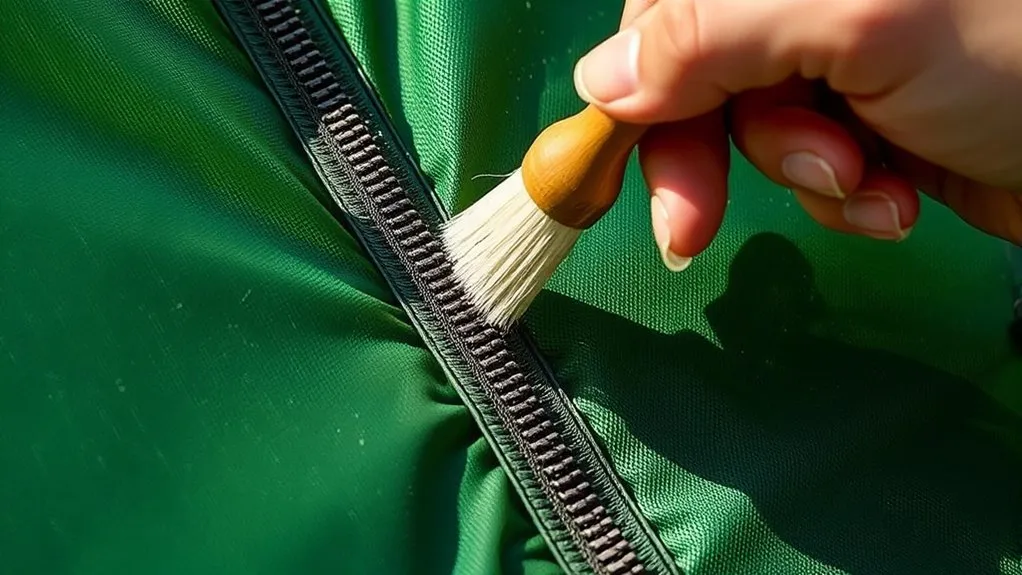
Cleaning should come before lubrication. Lubricant applied over grit can trap abrasive particles and make the problem worse.
Remove Dirt and Debris
- Open the zipper as far as it will move without force.
- Use a dry, soft brush to loosen sand, dust, dried mud, and plant material.
- Brush both the inside and outside of the zipper track.
- For stubborn grime, dampen a cloth with lukewarm water and a small amount of mild soap.
- Wipe the track without soaking the surrounding tent fabric.
- Remove all soap residue and let the area dry.
Warning: Avoid bleach, strong solvents, penetrating oils, and aggressive household cleaners. They may damage coatings, collect dirt, discolor fabric, or weaken components.
Lubricate the Zipper Track
After cleaning, apply a zipper-care product intended for outdoor gear. Follow the product label because directions vary.
- Use a small amount rather than soaking the zipper.
- Keep the product away from sleeping surfaces and unnecessary areas of coated fabric.
- Move the slider back and forth gently to distribute the product.
- Wipe away excess lubricant with a clean cloth.
- Test the zipper several times without pulling the door sideways.
An unscented candle can provide a temporary field fix when a proper product is unavailable. Clean away the wax and apply a suitable zipper-care product after the trip because wax can collect grit.
Inspect for Damage
Once the track is clean, look closely for flattened coil, missing molded teeth, cuts, loose stitches, frayed zipper tape, a distorted slider, or a failed stop. Cleaning cannot repair physical damage to these parts.
Step 3: Fix a Stuck Zipper
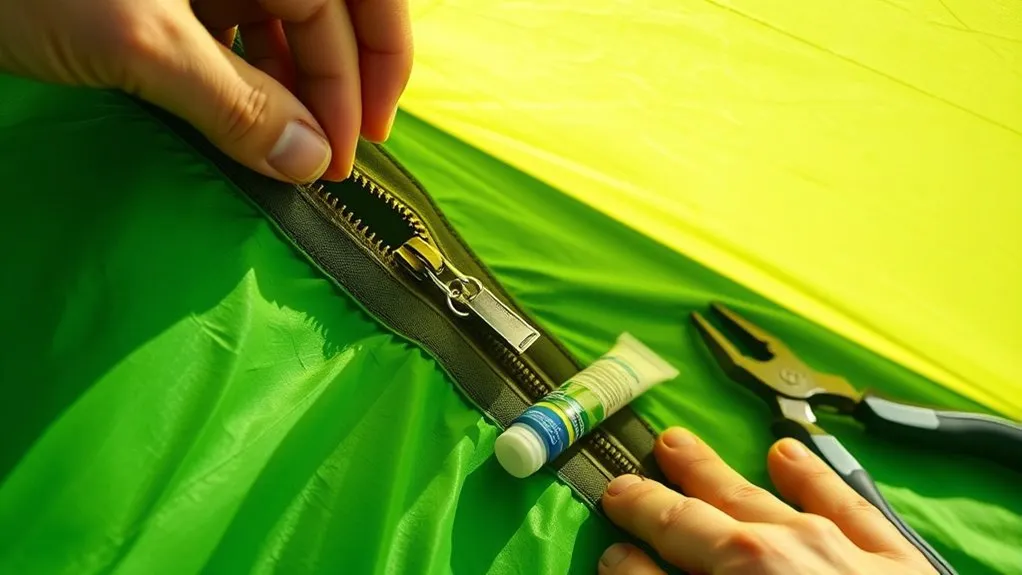
After reducing tension, removing snags, cleaning, and lubricating, work through these checks:
- Support both sides of the track. Hold the zipper close to the slider instead of pulling from the loose door fabric.
- Keep the slider straight. Pull in the direction of the zipper track rather than outward.
- Move in short strokes. Work the slider backward and forward a few millimeters instead of forcing one long pull.
- Inspect the same spot. If it jams repeatedly at one location, check that area for a bent tooth, damaged coil, thick seam, or loose thread.
- Stop if resistance increases. Continued force can turn a cleaning problem into a damaged slider or torn zipper tape.
A zipper that works when the door is slack but jams after the tent is fully tensioned may have a pitching or alignment problem rather than a failed zipper.
Step 4: Fix a Zipper That Separates
If the zipper closes at the slider but opens again immediately behind it, the slider is usually worn, spread, or otherwise unable to press the two sides together correctly.
Try a Cautious Temporary Slider Adjustment
A slight crimp may help a metal slider during a trip, but it is easy to overdo. Use this only as a temporary measure:
- Move the slider to an easy-to-reach section of undamaged track.
- Place smooth-jaw pliers over one side of the slider body.
- Apply the smallest possible amount of pressure.
- Repeat on the other side so the slider remains even.
- Test it after every tiny adjustment.
- Stop immediately if the slider becomes harder to move.
Warning: Do not crush the slider from top to bottom or squeeze it hard in one attempt. Excessive pressure can crack, twist, or permanently jam the slider.
Replace a Worn Slider
If separation returns, replace the slider rather than crimping it repeatedly. A replacement must suit the zipper’s construction and size. Check for a size marking on the back of the old slider, measure the closed track if the kit manufacturer instructs you to do so, and confirm compatibility with the tent maker whenever possible.
Some replacement kits include several coil and molded-tooth sliders, top stops, needles, and thread. Other field sliders clamp onto the track without sewing. Installation varies, especially on double-slider tent doors, so follow the instructions supplied with the part or the instructions for your exact tent model.
For example, Big Agnes provides a model-specific slider procedure for certain tents with YKK #3 zippers. That procedure involves replacing the slider itself and does not support cutting through the sewn zipper tape as a universal method.
Step 5: Replace a Missing Zipper Pull Tab
If the slider still joins the zipper correctly but the small handle is missing, you do not need to replace the entire slider.
- Inspect the bridge or opening on the slider where the original tab was attached.
- Thread a short loop of thin accessory cord through the opening.
- Tie a compact, secure knot.
- Trim the cord while leaving enough length to grip with gloves.
- Melt synthetic cord ends cautiously away from the tent, or use a knot that prevents fraying.
A small replacement zipper tab or split ring may also work if it moves freely and does not have sharp edges. Avoid an oversized metal ring that can strike the tent fabric in wind.
Step 6: Handle a Slider That Came Off
A slider that has left one or both sides of the track usually needs to be reinstalled or replaced. The correct method depends on the stop design, zipper type, and whether the door uses one or two sliders.
- Check whether a top or bottom stop is missing.
- Inspect the end of the coil or teeth for damage.
- Identify the zipper type and size before choosing a replacement.
- Follow the tent manufacturer’s instructions when available.
- When using a repair kit, follow its directions for opening the end, positioning the slider, replacing stops, and restoring any stitches.
- Test both directions before closing the repair area.
Note: Coil and molded-tooth zippers can both collect grit, but they do not necessarily use the same slider or replacement procedure. Match the part rather than relying only on its appearance.
Emergency Tent Door Closure
If the zipper cannot be repaired during the trip, close the door without putting adhesive over the working track:
- Bring the two sides together with small clips placed on reinforced seam areas.
- Use short cord loops through existing zipper pulls, fabric loops, or reinforced points.
- If necessary, use safety pins through a strong seam allowance rather than through coated wall or fly fabric.
- Use compatible repair tape only to stabilize a tear beside the zipper, keeping adhesive away from the coil, teeth, and slider path.
This is only an emergency closure. It may reduce insect entry, but it may not restore the tent’s original weather resistance or structural strength.
Tips for Long-Lasting Zipper Functionality
A few habits can reduce wear and help the zipper move smoothly from one trip to the next.
| Tip | What to Do | When |
|---|---|---|
| Brush away grit | Clean both sides with a soft, dry brush | After sandy, muddy, or dusty trips |
| Lubricate correctly | Use a compatible zipper-care product and wipe away excess | When movement becomes less smooth and before long storage |
| Pull straight | Hold the track nearby and move the slider along its natural path | Every use |
| Check pitch tension | Avoid pulling the door opening so tightly that the track bows sideways | During setup |
| Inspect the tape and coil | Look for loose stitches, fraying, distortion, and missing elements | Before and after each trip |
Store the tent completely dry in a cool place, preferably loose rather than tightly compressed for long periods. Shake out sand before packing, and avoid folding the zipper sharply at the same point every time. More detailed tent zipper care can also help reduce corrosion, trapped moisture, and storage-related damage.
Test the Zipper After a Repair
- Run the slider slowly along the full track several times.
- Test it from both inside and outside the tent.
- Check that the zipper remains closed behind the slider.
- Confirm that both sliders work when the door has two.
- Pitch the tent normally and repeat the test under normal door tension.
- Inspect nearby mesh and seams for damage caused during the repair.
When to Replace the Zipper Entirely
Cleaning and slider replacement can solve many common problems, but they cannot restore severely damaged zipper chain or fabric. Seek manufacturer guidance or professional repair when:
- Several molded teeth are cracked, bent, or missing
- The coil is cut, stretched, or detached from the zipper tape
- The zipper tape is torn, rotten, or badly frayed
- Stitching has failed along a long section of the tent door
- The surrounding mesh or coated fabric is tearing under zipper tension
- A correctly matched new slider still cannot join the track
- The zipper repeatedly jams at a physically damaged section
Repair policies vary. Big Agnes currently advises slider replacement when the zipper separates but says damaged teeth may require full-zipper replacement that it does not provide. REI currently directs customers to specialist outdoor-equipment repair partners for many fabric and tent repairs. Check the support page for your exact tent brand before cutting stitches or sending the tent away.
Frequently Asked Questions
Can I use lubricant on my tent zipper?
Yes. Clean the zipper first, then use a product intended for zippers and outdoor gear. Apply it according to the label, move the slider gently to distribute it, and wipe away excess. Avoid flooding the track with oil or using strong solvents.
Can I use candle wax on a stuck tent zipper?
An unscented candle can serve as a temporary field lubricant after you remove grit and confirm that fabric is not trapped. Clean the wax from the zipper after the trip because residue can attract dust and sand.
How do I prevent tent zippers from getting stuck?
Shake sand from the tent, brush the zipper after dirty trips, avoid trapping the door flap, and pull the slider straight along the track. Do not overtension the door opening, and store the tent only after it is clean and dry.
Why does my tent zipper close and then split open?
The slider is often worn or spread and can no longer press both sides of the zipper together. A tiny, even crimp may help temporarily, but recurring separation usually means you need a correctly sized and matched replacement slider.
Can I sew a zipper back onto a tent?
Small areas of failed stitching may be repairable with suitable thread and careful alignment. A long tear, damaged waterproof fabric, welded construction, or full-zipper replacement is better handled by the manufacturer or a specialist gear-repair service.
Can repair tape fix a separating tent zipper?
No. Repair tape may stabilize a compatible fabric tear beside the zipper, but it does not restore a worn slider or damaged track. Keep adhesive away from the moving coil, teeth, and slider path.
When should I replace the entire tent zipper?
Consider full replacement when the coil or teeth are broken, the zipper tape is badly torn, a long section of stitching has failed, or a compatible new slider cannot make the track close. Ask the tent maker whether the repair is supported before altering the zipper.
Are there specific zippers for different tent models?
Yes. Tents may use different zipper sizes, coil or molded-tooth construction, single or double sliders, and different slider orientations. Match the replacement to the original specifications or confirm the part with the manufacturer.
Conclusion
Start every tent zipper repair by reducing door tension, checking for trapped fabric, and brushing dirt from the track. Use a suitable lubricant only after cleaning. Replace a missing pull tab with cord, and treat repeated separation as a likely slider problem. When teeth, coil, stitching, or zipper tape are badly damaged, stop using temporary fixes and contact the tent maker or a professional repair service.
Sources
- REI Co-op: How to Repair a Tent — supports cleaning before lubrication, checking for trapped fabric, and using wax only as a temporary field measure.
- GEAR AID: Zipper Cleaner and Lubricant — supports cleaning grit and using a zipper-care product on tents and other outdoor gear.
- GEAR AID: Zipper Repair Kit — documents the different slider sizes and components used for outdoor-gear repairs.
- Big Agnes: DIY Tent Repairs — distinguishes worn-slider problems from damaged zipper teeth.
- Big Agnes: DIY Zipper Slider Repair — provides an example of a model- and zipper-specific slider replacement procedure.
- REI Co-op: Clothing and Gear Repair Services — supports seeking specialist repair for damage beyond a simple field repair.