
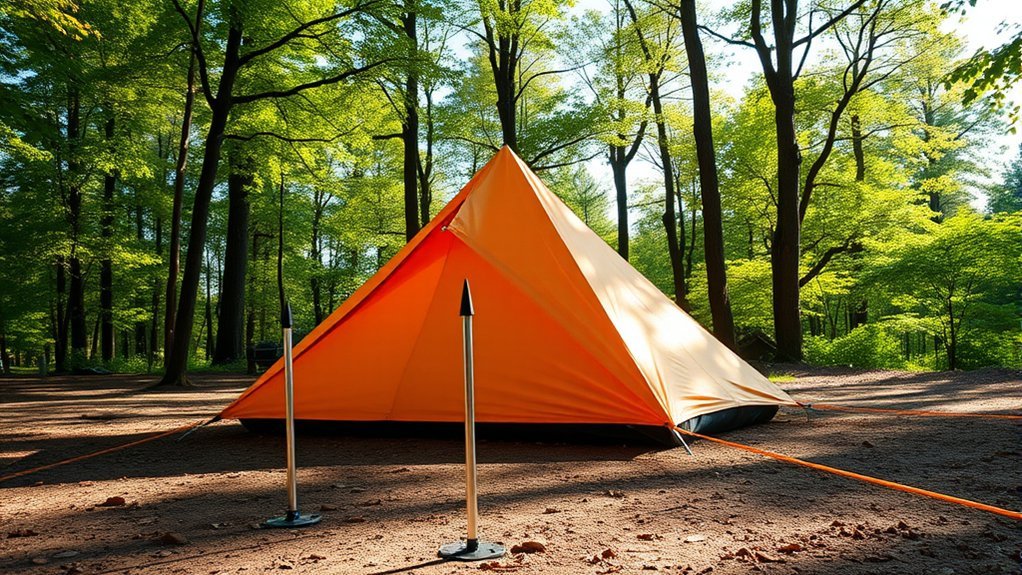
Last Updated on July 28, 2026 by Mason Reed
The number of stakes you need for your tent setup depends mainly on your tent type, its size, and the weather you’re expecting. Getting this right — and driving each stake in correctly — is the difference between a shelter that shrugs off a windy night and one that ends up flapping loose at 2 a.m.
Quick Answer
Most 2-person tents need 4–6 stakes for calm weather and 8–10 for high winds. 3-person tents require 6–8 stakes, while 4-person tents need 8–12. Non-freestanding or trekking-pole tents require at least 6–10 stakes just to establish their frame. Always drive stakes straight down at 90° for maximum holding power, extending guy lines outward at 45°.
Key Takeaways
- Stake counts scale with size: Plan on 4–6 stakes for 2-person tents, 6–8 for 3-person tents, and 8–12 for 4-person tents in stormy conditions.
- Non-freestanding tents depend on stakes: Trekking pole and non-freestanding shelters require a minimum of 6–8 critical anchor points to hold structural tension.
- Drive stakes at 90°: Insert the stake straight down into the ground perpendicular to the surface. Angle the guy line — not the stake — at roughly 45°.
- Match stakes to terrain: Swap standard hook stakes for Y-beam stakes in loose soil, steel spikes in rocky ground, or deadman anchors in snow and sand.
- Always pack 2–4 spares: Bending or losing a single key stake on a non-freestanding shelter can cause structural collapse.
At a Glance
| Time Required | 5–15 minutes |
| Difficulty | Beginner |
| Tools Needed | Tent stakes, smooth rock or stake mallet, guy lines |
| Key Metric | 90° stake angle with 45° guy line vector |
Disclosure: As an Amazon Associate I earn from qualifying purchases. Some links on this page are affiliate links, at no extra cost to you.
Understanding Tent Types and Their Stake Requirements
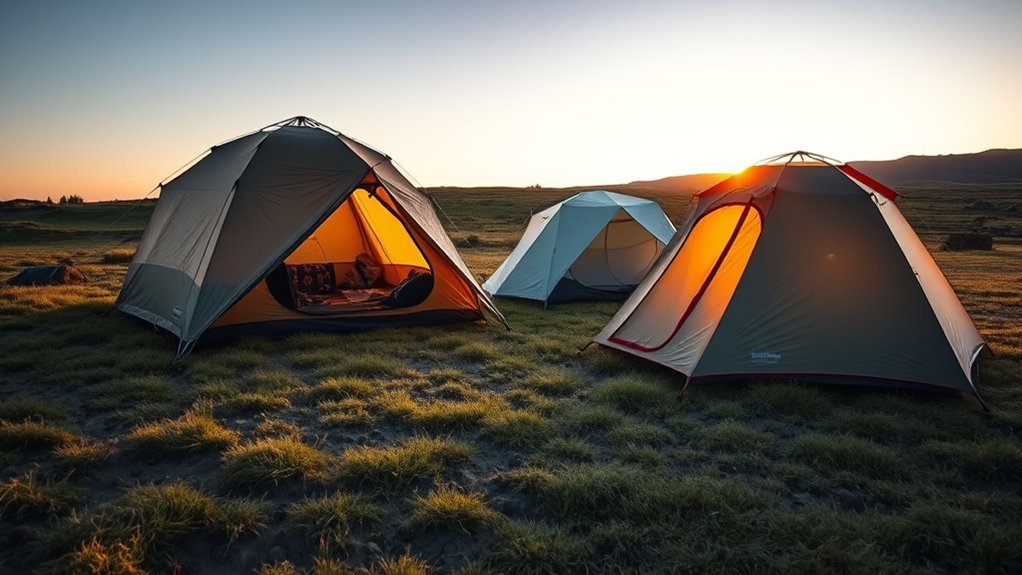
When setting up camp, understanding how your tent’s frame design interacts with the ground is critical. Different tent architectures rely on stakes for entirely different structural functions:
- Freestanding Tents: These utilize interconnected pole assemblies (like dome or hubbed setups) that hold the tent body upright independently. Stakes on freestanding tents serve primarily to prevent wind displacement, tension the rainfly for condensation runoff, and keep vestibules expanded.
- Semi-Freestanding Tents: These feature a rigid pole structure at the top or head end but require 2–4 stakes at the foot corners to keep the canopy fully tensioned and livable.
- Non-Freestanding & Trekking Pole Tents: These rely 100% on stake anchor points and taut guy lines to create structural tension. Without properly driven stakes at critical points, the tent cannot stand upright and will collapse.
Most tents include just enough basic aluminum hook stakes for mild, fair-weather conditions. However, heading into exposed mountain terrain or high winds requires extra anchoring points and specialized stake geometries, such as Y-beam or tri-flange stakes that resist rotational pull.
Standard Stake Count for Common Tent Sizes
To ensure your shelter stays grounded, use the following stake count reference based on tent capacity, tent style, and weather expectations:
| Tent Type & Size | Min. Stakes (Calm) | Guy Line Stakes (Storm) | Recommended Pack Total |
|---|---|---|---|
| 1-Person Freestanding | 4 | 2–4 | 8 |
| 2-Person Freestanding | 4–6 | 4 | 10 |
| 3-Person Freestanding | 6–8 | 4–6 | 12 |
| 4-Person Freestanding | 8–10 | 4–6 | 14 |
| Non-Freestanding / Trekking Pole | 6–8 | 4–6 | 12–14 |
Weather Conditions Impact
Severe weather dramatically changes anchor dynamics. In calm conditions, securing the 4 main corner loops is usually sufficient for freestanding tents. However, when wind speeds exceed 20 mph (32 km/h), un-guyed rainflies flap violently, bringing wet fabric into contact with the inner mesh tent wall and causing moisture transfer.
In stormy weather, roughly double your baseline stake count. Every dedicated guy line attachment loop located along the tent poles should be anchored to the ground. Guy lines transfer wind loads away from the flexible aluminum poles directly into the soil, keeping the internal structural frame intact.
Note: High winds require adding additional guy line anchors and increasing line tension, but the stake itself must still be driven straight down into the earth at 90° for optimal mechanical hold.
Proper Staking Techniques for Maximum Stability
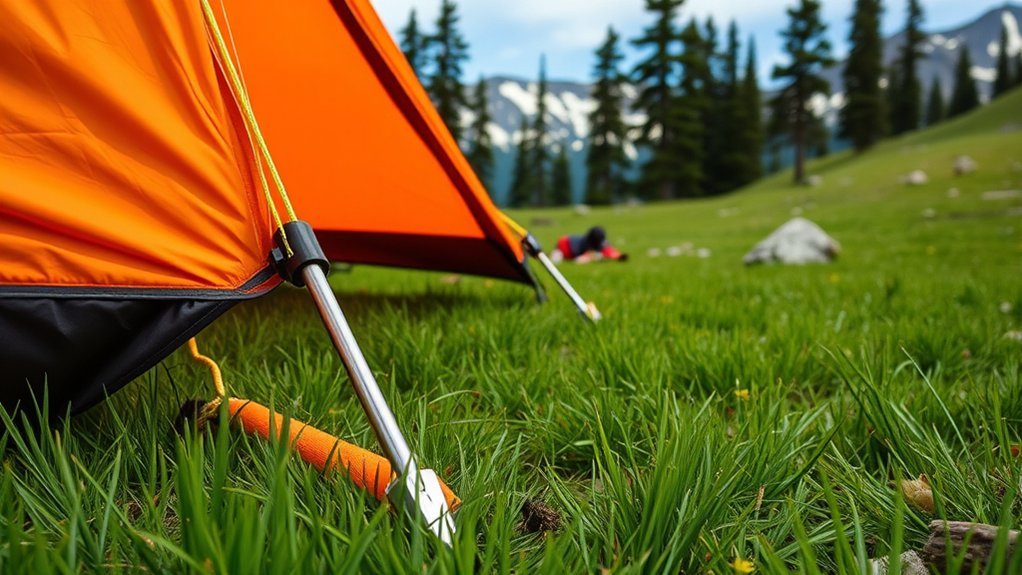
Having the right number of stakes won’t keep your shelter secured if your installation geometry is incorrect. Soil displacement mechanics dictate how effectively an anchor holds under tension.
Correct Stake Angling: The 90° vs. 45° Rule
There is a widespread misconception that tent stakes should be driven backward into the ground at a 45-degree angle pointing away from the tent. Extensive outdoor engineering field tests, such as those conducted by MSR Gear engineering labs, demonstrate that driving stakes at an angle significantly reduces holding capacity compared to vertical placement.
- The Stake Angle (90°): Drive the stake straight down into the soil at a 90-degree angle (perpendicular to the earth). Driving it vertically allows the entire front surface area of the stake to push flat against packed soil, maximizing shear resistance.
- The Guy Line Angle (45°): Extend the guy line from the tent attachment loop down to the stake notch at roughly a 45-degree slope relative to the ground.
Warning: Driving a stake angled toward or away from the tent acts as a lever when pulled under high tension, causing the soil directly behind it to loosen and leading to sudden stake pull-out.
Tension Distribution Techniques
To avoid distorting your tent’s frame geometry or creating uneven stress concentrations on rainfly seams, follow a structured staking sequence:
- Unroll the tent body and stake out two opposing diagonal corners first to square the floor.
- Pull the remaining corners taut to eliminate floor wrinkles, then stake them down at 90°.
- Attach the rainfly and stake out the main vestibule doors along the line of the structural seams.
- Attach outer guy lines to rainfly loops, extending them outward in direct line with the tent seams, and tension using line locks or a taut-line hitch knot.
Pro Tip: Place a moderate weight—such as a smooth, flat rock—directly over a driven stake in loose soil. The added weight stabilizes the surrounding dirt particles and prevents the stake from shifting under lateral wind gusts.
Staking in Challenging Terrain
Not all campsites feature ideal, well-packed dirt. Adapting your technique to difficult ground types is essential for safety and stability.
Hardpack & Rocky Ground
When camping on compacted soil or gravel, thin aluminum hook stakes often bend before penetrating deep enough. Upgrade to thick forged steel ground nails or heavy-duty round-wire titanium stakes. If solid rock prevents driving a stake deeper than an inch, use the “Big Rock, Little Rock” method:
- Tie your tent loop or guy line around a small rock (“little rock”).
- Place a heavy boulder (“big rock”) directly on top of the guy line, positioned behind the little rock to act as a physical stop.
Loose Sand & Snow Staking
Standard pin stakes offer virtually zero holding power in loose beach sand or powdery snow. Use dedicated concave snow/sand stakes or construct a deadman anchor:
- Tie your guy line securely around the center of a wide stake, stick, or stuff sack filled with sand or snow.
- Dig a trench 6–12 inches deep perpendicular to the direction of guy line pull.
- Bury the object horizontally inside the trench, stomp down the sand or snow, and let it set (or freeze) solidly in place.
Upgrading Your Stakes for Better Performance
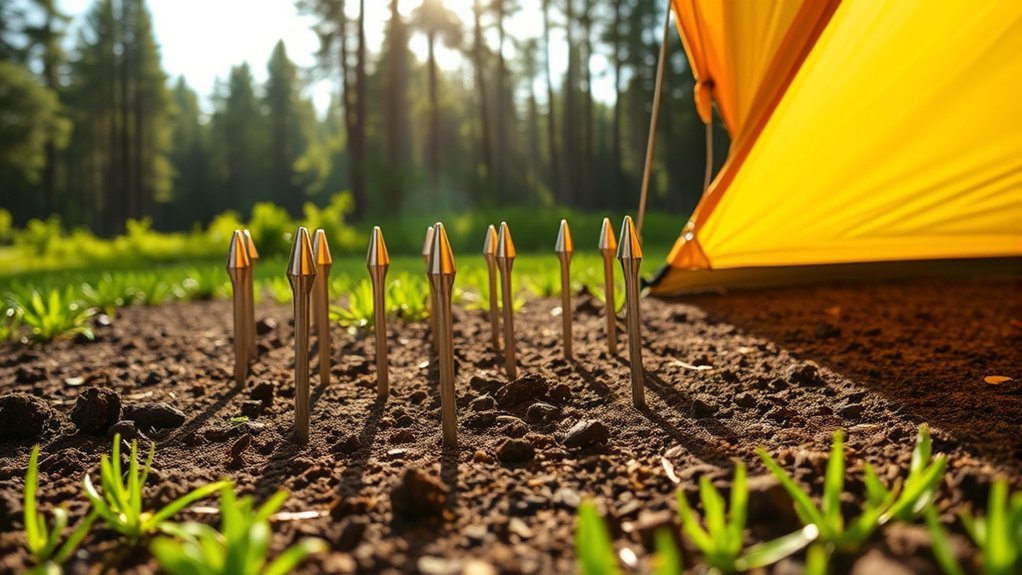
Upgrading from stock wire stakes to specialized aftermarket options improves pitch stability while saving weight in your pack.
Selecting the appropriate stake geometry for your terrain matters far more than simply carrying extra wire stakes.
Stake Material & Design Comparison
| Stake Material / Shape | Holding Power | Bend Resistance | Best Use Case |
|---|---|---|---|
| 7075 Aluminum Y-Stakes | High | High | Best all-around choice for 3-season backpacking and soft-to-medium soils. |
| Titanium Shepherd Hooks | Low–Moderate | Moderate | Ultralight backpacking in firm soil; poor hold in loose dirt or high wind. |
| Forged Steel Spikes | Very High | Extreme | Car camping, hard-packed clay, and rocky mountain ground where weight isn’t critical. |
| Concave Snow/Sand Anchors | Maximum (In soft media) | Moderate | Winter mountaineering, snow camping, and ocean beach dunes. |
Common Mistakes to Avoid When Staking Your Tent
Even high-quality stakes will fail if set up improperly. Avoid these common pitfall mistakes:
- Angling the stake toward or away from the tent: Driving a stake at 45° lowers soil holding capacity by up to 50% compared to 90° vertical driving.
- Leaving stakes partially exposed: Leaving several inches of the stake sticking out above ground creates leverage that weakens the anchor and increases trip hazards. Drive stakes flush until only the pull cord or notch is visible.
- Over-tensioning a single guy line: Pulling one corner excessively tight distorts the tent’s pole structure and pulls neighboring corner stakes loose. Balance tension evenly around the entire tent perimeter.
- Levering stakes out by hand: Pulling straight up on the guy line cord or yanking on a hook stake by hand often bends aluminum stakes. Use a notch tool or leverage another stake through the cord loop to extract stuck anchors.
Stake Removal and Storage
Proper care extends the lifespan of your camping gear:
- To remove a stubborn stake without bending it, gently tap it side to side with a boot heel or rock to break soil compaction, then pull it out along its shaft angle.
- Wipe away mud, moisture, and grit before packing stakes into their storage sack. Storing damp steel or aluminum stakes can lead to surface corrosion or soil contamination inside your tent bag.
- Always keep stakes in a dedicated heavy-duty ripstop storage pouch to prevent sharp points from puncturing your lightweight tent body or air pad.
Frequently Asked Questions
Can I use regular stakes for my tent setup?
Yes, standard pin or hook stakes work fine for average dirt soil in calm weather. However, in high winds, rocky ground, deep sand, or snow, standard stakes tend to pull loose or bend easily. Upgrading to Y-beam aluminum stakes or specialized terrain anchors provides significantly better holding power.
How deep should I drive my stakes into the ground?
Drive stakes in until only the top notch, hook, or cord loop remains visible above ground level. Burying the full shaft minimizes top-end leverage from guy line pull, reduces tripping hazards, and ensures maximum friction against the surrounding earth.
What materials are best for tent stakes?
High-grade 7075-T6 aluminum offers the best balance of low weight, affordability, and bend resistance for general backpacking. Titanium is ultralight for weight-focused hikers but more flexible. Forged steel is ideal for car camping or penetrating hard-packed, gravelly soil.
Can I stake a tent on rocky ground?
Yes. If solid bedrock prevents driving stakes, use heavy rocks to anchor your guy lines using the ‘Little Rock, Big Rock’ method. Wrap the guy line around a smaller stone, then place a larger boulder directly over the line to create a immovable friction anchor.
How do I know if my stakes are secure?
Give each guy line a firm pull in the direction of intended tension. If the stake rotates, lifts, or shifts in the dirt, re-drive it at a 90° angle or weight it down with a heavy rock. Always re-check stake tension after rain or major temperature changes, as wet soil relaxes holding grip.
Conclusion
Securing your shelter starts with bringing the right number of stakes for your tent size and expected weather conditions. By driving each stake straight down into the earth at a full 90° angle and extending guy lines outward at 45°, you maximize soil resistance and protect your frame against high winds. Always pack 2–4 spare Y-beam or multi-flange stakes, adapt your anchoring to specific ground conditions, and conduct a quick tension check before turning in for the night. Master these staking fundamentals, and your tent will remain sturdy, dry, and secure through any storm.
Sources
- MSR Gear Engineering: Tent Staking 101 — Confirms the 90° straight-down driving technique for maximum pull-out holding power.
- REI Co-op Expert Advice: How to Pitch a Tent — Outlines 45° guy line angles, tension distribution, and storm guy-out procedures.
- Camper FAQs: How to Use Tent Stakes Correctly — Validates soil resistance principles and stake depth standards.
- White Duck Outdoors: Tent Staking Guide — Details deadman anchoring methods for soft sand and snow conditions.

