Last Updated on August 26, 2026 by Mason Reed
Using a propane heater in a tent requires more than cracking a window and turning on a safety switch. A fuel-burning heater can create carbon monoxide (CO), consume oxygen, add moisture, and ignite nearby fabric. The safest approach is to use a heater inside a tent only when the exact model is specifically approved for enclosed-space or tent use in your location, then follow its manual without shortcuts.
Quick Answer
Only use a propane heater inside a tent when the exact heater is specifically approved for that use and you can meet every ventilation and clearance requirement in its manual. Keep it supervised, use a suitable carbon monoxide alarm as backup protection, and turn the heater off before anyone goes to sleep.
Key Takeaways
- Approval comes first: never assume a portable propane heater is safe for a tent just because it has an oxygen-depletion sensor or tip-over switch.
- Ventilation is model-specific: a slightly open door or window is not a universal safety rule; follow the minimum openings required by the heater manufacturer.
- Never operate a fuel-burning heater while sleeping: CPSC and heater-manufacturer guidance warn against it.
- ODS is not a CO detector: a low-oxygen shutoff senses oxygen conditions, not carbon monoxide concentration.
- Store spare cylinders safely: keep them outdoors, upright, protected from heat and ignition sources, and never refill a non-refillable DOT-39 cylinder.
At a Glance
| Time Required | About 5–10 minutes for pre-use checks and setup, plus continuous supervision while the heater is running |
| Difficulty | Moderate — safe use depends on model-specific ventilation, clearance, fuel, and operating instructions |
| Tools Needed | Approved heater and fuel cylinder, manufacturer manual, soapy-water leak-check solution, suitable CO alarm, and an appropriate fire extinguisher at the campsite |
| Cost | Varies by heater, fuel system, and CO-alarm choice |
Warning: Never use a portable fuel-burning heater in a tent unless the heater is specifically designed and instructed for that enclosed-space use. A CO alarm, open vent, fan, oxygen-depletion sensor, or tip-over switch does not make an otherwise unapproved heater safe.
Disclosure: As an Amazon Associate I earn from qualifying purchases. Some links on this page are affiliate links, at no extra cost to you.
Reasons to Use Propane as a Fuel Source
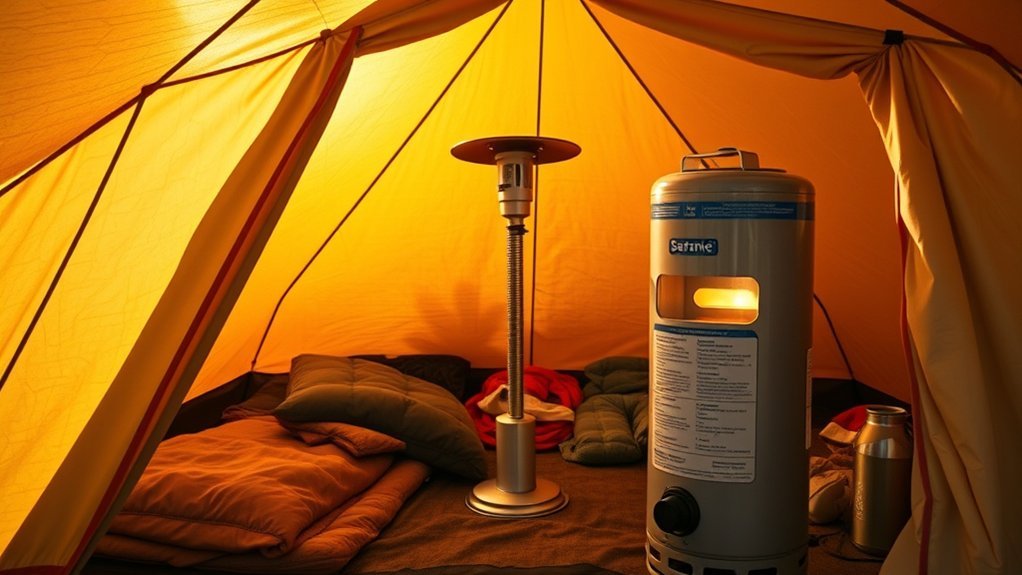
Propane is popular for camping because small cylinders are portable, the fuel provides strong heat without the ash and embers of a wood fire, and the fuel itself stores well in a sound, properly maintained cylinder. A radiant propane heater can also warm a small space quickly when it is used exactly as designed.
However, propane should not be described as a harmless or automatically “healthy” indoor fuel. The U.S. Environmental Protection Agency notes that unvented gas heaters can release combustion pollutants including carbon monoxide, nitrogen dioxide, and particles. Combustion also creates water vapor, which can increase condensation inside a tent. Propane may produce less smoke and particulate matter than wood combustion, but safe tent heating still depends on the appliance, ventilation, maintenance, and user behavior.
Note: Treat propane’s convenience as a tradeoff, not a safety advantage. A heater that burns fuel inside an enclosed or partly enclosed shelter needs specific approval and operating instructions for that environment.
Tips for Safe Propane Use
Safe propane use starts before you light the heater. Inspect the heater, cylinder, regulator, hose if used, and connections for damage. Never use a cylinder with severe rust, dents, valve damage, or evidence of leakage.
- Read the heater and cylinder labels first. Use only the fuel type, cylinder size, hose, regulator, and accessories the manufacturer approves.
- Check new gas connections for leaks. A soap-and-water solution can reveal escaping gas as bubbles. Never search for a leak with a match, lighter, or other flame.
- Keep the operating cylinder in its required position. Small propane cylinders are generally used upright unless the appliance instructions state otherwise.
- Store spare cylinders outdoors. Keep them upright in a well-ventilated area, away from flames, heaters, vehicles, and other ignition or heat sources.
- Do not refill disposable cylinders. The National Park Service warns that single-use DOT-39 one-pound cylinders are intended for one-time use and should not be refilled.
- Keep children and pets away. Heater guards and surrounding surfaces can become hot enough to cause burns or ignite clothing or tent fabric.
- Check campsite rules. Campgrounds, parks, states, provinces, or countries may restrict propane appliances or unvented heaters even when a product is sold elsewhere for enclosed-space use.
Pro Tip: Keep the heater manual downloaded on your phone before leaving home. Model-specific ventilation and clearance numbers matter more than general camping advice.
Choose a Heater Designed Specifically for Tents
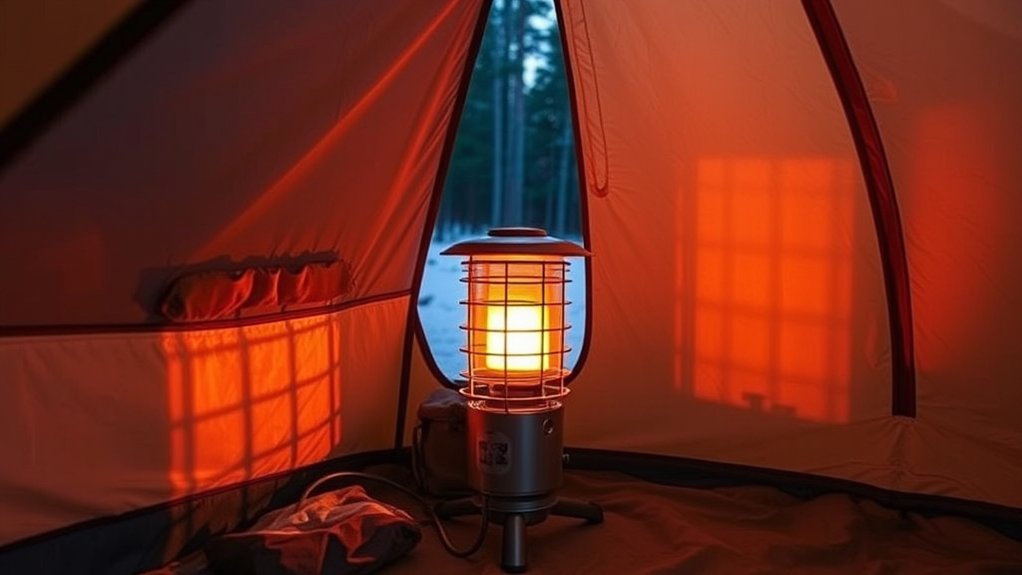
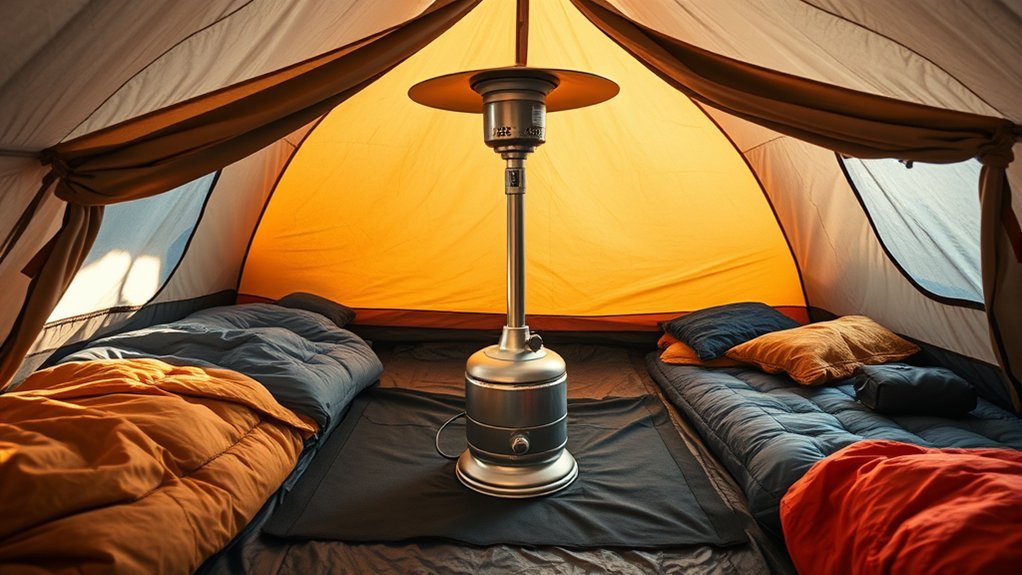
Choose a heater only after confirming that the exact model and regional version is approved for the space where you intend to use it. Look for clear manufacturer instructions for indoor, enclosed-space, camper, or tent use as applicable. Safety features such as a tip-over switch and oxygen-depletion sensor are valuable, but they do not replace ventilation, clearances, supervision, or a CO alarm.
Heater Safety Features
The most useful heater features address different hazards. Understanding what each feature can and cannot do prevents a false sense of security.
| Safety Feature | What It Does | Important Limitation |
|---|---|---|
| Oxygen-Depletion Sensor (ODS) | Shuts down some heaters when oxygen conditions fall below the device’s operating threshold | It is not a carbon-monoxide detector and does not replace required ventilation |
| Tip-Over Shutoff | Stops the burner if the heater is knocked over | It cannot prevent burns or fires caused by objects placed too close to the heater |
| Manual Shutoff / Gas Control Valve | Stops fuel flow when the heater is shut down | It does not sense or remove carbon monoxide already in the air |
| Protective Guard and Stable Base | Helps reduce accidental contact and tipping | The guard can still become dangerously hot |
| Specified Clearances | Keeps hot surfaces and radiant heat away from combustible materials | Distances vary by model; use the manual, not a universal “3-foot” rule |
| Efficient Heat Distribution | Improves comfort and may reduce the need to reposition the heater | This is a comfort feature, not a CO or fire-safety control |
Also look for recognized safety certification appropriate to your market, clear ventilation instructions, a stable footprint, an intact guard, and accessible manufacturer support. Always inspect the heater before use and follow the maintenance schedule in its manual.
Portable and Lightweight Options
Lightweight heaters are easier to carry, but portability does not determine whether a heater is appropriate for a tent. The Mr. Heater Little Buddy MH4B, for example, illustrates why the exact regional model matters: the current U.S. product page identifies the U.S. version as indoor-safe and lists tents among intended uses, while the company’s Massachusetts/Canada version lists indoor-safe as “No.” Always check the exact product page, manual, and local rules rather than relying on the product family name alone.
If you use a heater with a remote cylinder or hose, use only manufacturer-approved components and follow the instructions for where the cylinder may be placed. Do not improvise with adapters, refill disposable cylinders, or route a hose where it can be pinched, tripped over, or exposed to hot surfaces.
Ensure Proper Ventilation
Proper ventilation is essential, but there is no universal “leave the window slightly open” rule. The required opening size and location depend on the heater design. Some enclosed-space-rated heaters specify minimum high and low ventilation openings; other fuel-burning equipment should not be used in a tent at all. Follow the exact manual for your heater.
Keep required vents fully unobstructed and maintain airflow for the entire time the heater is operating. Do not seal vents to retain more heat. Cold-weather tents can feel drafty yet still develop unsafe combustion conditions if the required openings are blocked. A battery-operated fan may help circulate warm air, but it does not count as required outside-air ventilation unless the heater manufacturer explicitly says it does.
Do not rely on an oxygen meter as a substitute for the heater’s instructions. Carbon monoxide can become dangerous even before a user recognizes symptoms, and an ODS responds to oxygen conditions rather than directly measuring CO. Also watch for excessive condensation: propane combustion creates water vapor, and wet tent walls or gear can be a sign that moisture is accumulating.
Warning: If a heater is not specifically approved for enclosed-space or tent use, opening doors, windows, or flaps does not make it safe. CPSC advises against portable fuel-burning camping equipment in a tent unless it is specifically designed and instructed for enclosed-space use.
Follow Instructions for Proper Use
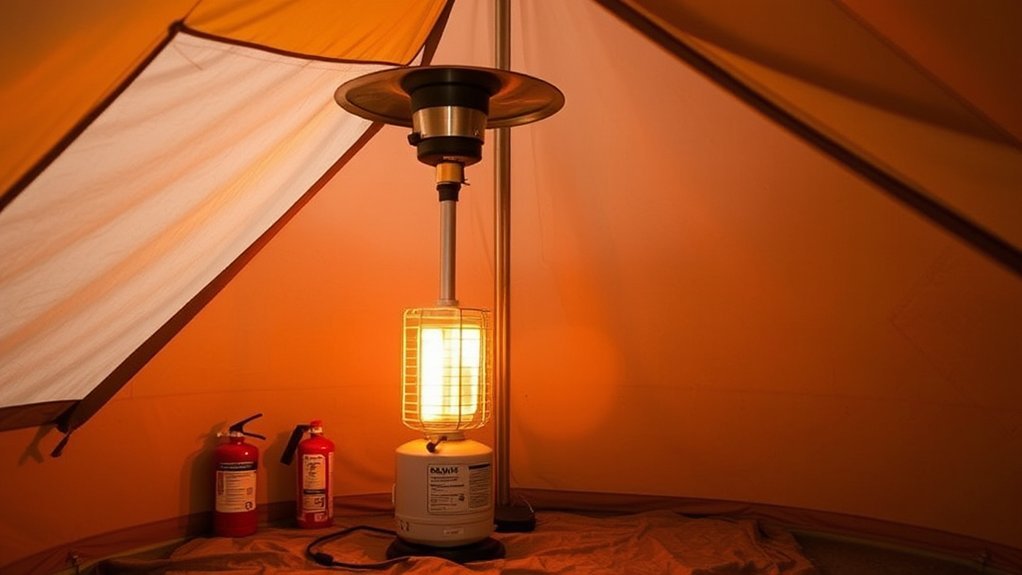
The heater manual is the primary safety reference. Before each use, confirm that your tent, weather conditions, fuel setup, and heater placement can meet the manufacturer’s instructions.
- Confirm approval. Verify that your exact heater model is approved for the intended enclosed space and permitted by local or campground rules.
- Inspect the equipment. Check the heater, guard, regulator, cylinder, seals, hose, and fittings for damage, dirt, or blockage.
- Set the required clearances. Place the heater on a stable, level surface and keep tent fabric, sleeping bags, clothing, packs, and other combustibles outside the model’s stated clearance zone.
- Open the required ventilation. Establish every high/low opening or minimum vent area required by the manual before lighting the heater.
- Check for gas leaks. After connecting fuel, use the manufacturer’s recommended leak-check method. Do not light the heater if you smell propane or find a leak.
- Light and operate it exactly as directed. Never modify the heater, bypass a safety device, cover the guard, dry clothing on it, or use it for cooking unless the appliance is specifically designed for that purpose.
- Stay awake and supervise it continuously. Do not leave a burning heater unattended. Do not operate it while anyone is sleeping.
- Shut it down safely. Turn it off before sleep, before leaving the tent, or whenever ventilation cannot be maintained. Allow it to cool before moving, disconnecting, or storing it.
There is no universal maximum “safe runtime” such as two or three hours. Fuel runtime only tells you how long a cylinder may power the appliance; it does not tell you how long unattended or poorly ventilated operation is safe. Keep the required ventilation open and supervise the heater for the entire operating period.
Invest in Carbon Monoxide Detectors
A suitable carbon monoxide alarm adds an important layer of protection when a manufacturer-approved fuel-burning heater is used in an enclosed space. CPSC recommends CO alarms that meet the current UL 2034 standard for consumer use. A CO alarm is backup protection, not a substitute for correct appliance selection, ventilation, maintenance, and supervision.
Importance of Detectors
Carbon monoxide is colorless and odorless, so you cannot depend on smell to detect it. A working alarm can warn you before you recognize symptoms, but it should never be used to justify operating an unapproved heater. If your heater or tent instructions prohibit fuel-burning equipment inside, follow that prohibition even if you have a CO alarm.
A carbon-monoxide alarm is a backup safety layer. It does not replace correct ventilation, heater approval, clearances, maintenance, or awake supervision.
Regular Testing Required
Test the alarm before every camping trip and according to its manufacturer’s schedule. Follow the alarm instructions for battery replacement, end-of-life replacement, storage temperature, and use in cold or humid environments. Some modern alarms use sealed batteries, so the old rule to “replace the battery every year” does not apply to every model.
- Press the test button before the trip and confirm the alarm is loud and functional.
- Check the expiration or end-of-life date. Replace the entire alarm when the manufacturer requires it.
- Use the alarm only within its rated temperature and humidity range. Extreme cold can affect some devices.
Placement Near Sleeping Areas
Do not use a universal distance such as “within arm’s reach” or “six feet from the sleeper.” Instead, follow the CO-alarm manufacturer’s placement instructions and the heater manufacturer’s clearance rules. Place the alarm where it can sample the tent air and be heard by every occupant, while avoiding locations the alarm maker says can cause false readings or poor detection.
Most importantly, the heater should be off before anyone goes to sleep. CPSC warns against using portable heaters or lanterns while sleeping in enclosed areas such as tents, campers, and vehicles because sleeping people may not recognize early CO symptoms.
Know the Symptoms of Carbon Monoxide Poisoning
Recognizing carbon monoxide poisoning quickly can save a life. The CDC lists common symptoms including headache, dizziness, weakness, nausea or vomiting, chest pain, and confusion. Severe exposure can cause shortness of breath, altered mental status, loss of consciousness, coma, or death. Symptoms are often mistaken for the flu.
- Headache, dizziness, or unusual weakness
- Nausea or vomiting
- Sleepiness, confusion, or trouble thinking clearly
- Chest pain or shortness of breath
- Loss of coordination or consciousness in severe cases
If a CO alarm sounds or anyone develops possible CO symptoms, get everyone into fresh air immediately. Do not stay inside to troubleshoot. Call local emergency services or a poison center for medical guidance, especially if symptoms are significant, multiple people feel ill, someone is pregnant, or anyone loses consciousness.
What to Do if the Heater Shuts Off, the CO Alarm Sounds, or You Smell Gas
Unexpected shutdowns and gas odors are warnings to stop and investigate safely, not reasons to bypass a safety control.
- If the CO alarm sounds: turn off the heater only if you can do so without delaying evacuation, then get everyone into fresh air. Seek medical help as appropriate. Do not re-enter and restart the heater until the cause is understood.
- If you smell propane: extinguish flames, do not create sparks or operate electrical switches nearby, shut off the fuel supply if it is safe to do so, and move to fresh air. Do not relight the heater until the leak or fault has been corrected.
- If the ODS or tip-over switch shuts the heater down: do not defeat or bypass the safety device. Check the manual for causes such as inadequate ventilation, incorrect placement, altitude, contamination, or a service problem.
- If you see soot, abnormal flame behavior, or repeated shutdowns: stop using the heater and have it inspected or serviced as the manufacturer directs.
Frequently Asked Questions
Can I use a propane heater in a closed tent?
No. Do not use a propane heater in a fully closed tent. Only use a fuel-burning heater inside a tent when the exact model is specifically designed and instructed for that enclosed-space use, and keep every required vent opening unobstructed. If the heater is not approved for enclosed use, opening a flap does not make it safe.
How long can I run a propane heater safely?
There is no universal safe number of hours. Run the heater only while you are awake, present, and able to maintain the ventilation and clearances required by the manual. A listed fuel runtime is not a safety limit and does not make unattended or sleeping use acceptable.
What is the best location for a propane heater in a tent?
Place it on a stable, level surface where it will not be kicked, tipped, or block an exit. Keep tent fabric, sleeping bags, clothing, and gear outside every clearance specified in the heater manual. Do not rely on a universal three-foot or six-foot rule because required clearances vary by model and direction.
Are there specific types of propane heaters for camping?
Yes. Portable radiant and catalytic-style propane heaters are sold for recreational use, but approval varies by exact model and country. Choose a heater whose manufacturer explicitly permits your intended use, and look for features such as tip-over shutoff, low-oxygen shutoff where applicable, a stable base, a protective guard, and clear ventilation instructions.
How do I know if my tent is properly ventilated?
Use the heater manual’s required vent size and location as the standard. Do not judge ventilation by whether the tent feels drafty or whether condensation is visible. Keep the specified high and low openings clear for the entire time the heater runs, and never use an enclosed-space-unapproved heater simply because the tent has mesh or open flaps.
Can I sleep with a propane heater running in my tent?
No. CPSC advises against using portable heaters or lanterns while sleeping in enclosed areas such as tents, campers, and vehicles. Turn the heater off before sleeping and use an appropriately rated sleeping bag, insulated sleeping pad, and other non-combustion cold-weather gear for overnight warmth.
Does an oxygen-depletion sensor replace a carbon-monoxide alarm?
No. An oxygen-depletion sensor is designed to respond to oxygen conditions around the heater; it does not directly measure carbon monoxide. Use a suitable CO alarm as an additional safety layer when the heater manufacturer permits enclosed-space use, and still follow all ventilation, clearance, maintenance, and supervision instructions.
Conclusion
A propane heater can make cold-weather camping more comfortable, but tent heating is a high-consequence use of fuel-burning equipment. Choose only an exact model approved for the intended enclosed space and region, follow its ventilation and clearance instructions, check every fuel connection, and keep the heater supervised. Use a suitable CO alarm as backup protection, know the symptoms of CO poisoning, and always turn the heater off before sleeping.
Sources
- U.S. Consumer Product Safety Commission — Portable Heaters & Camping Equipment — CO risks, sleeping warning, and camping-heater guidance.
- U.S. Consumer Product Safety Commission — Carbon Monoxide Fact Sheet — enclosed-space equipment and CO-alarm guidance.
- CDC — Carbon Monoxide Poisoning Basics — symptoms, risk groups, and emergency context.
- U.S. EPA — Sources of Combustion Products — pollutants from unvented gas heaters and ventilation concerns.
- National Park Service — Propane Canister Safety for Campers — one-pound cylinder handling and non-refillable DOT-39 guidance.
- Mr. Heater — Buddy Series University, FAQs & Manuals — model instructions, regional-use notes, manuals, and safety controls.