
Last Updated on July 29, 2026 by Mason Reed
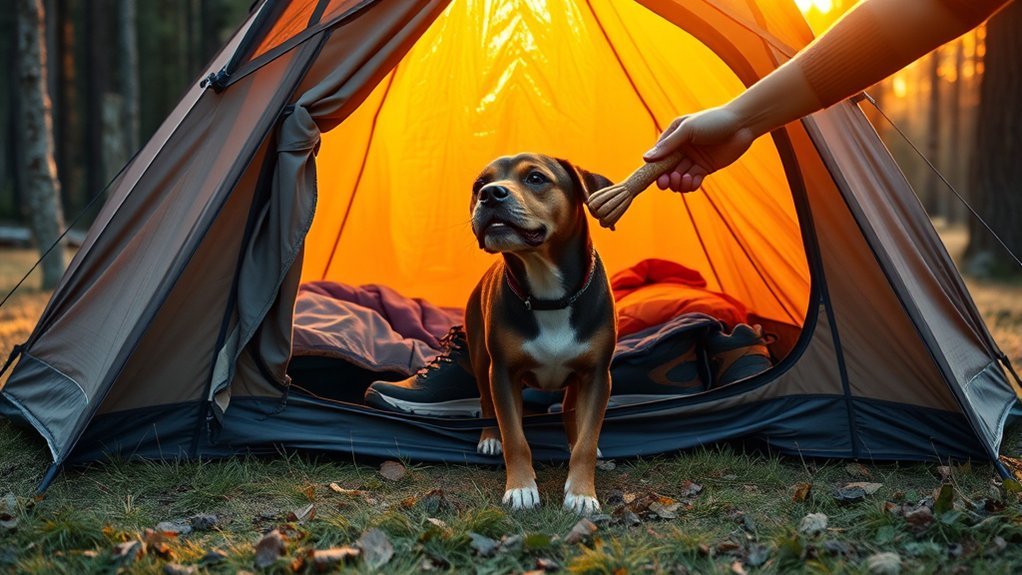
Dogs may scratch a tent floor while arranging a sleeping spot, reacting to unfamiliar sounds, releasing restless energy, or trying to escape something that frightens them. The best solution combines a comfortable interior liner, smooth nails, gradual tent practice, reward-based training, and attention to signs of pain or distress. Protecting the fabric matters, but helping your dog feel safe comes first.
Quick Answer
Stop the scratching by interrupting calmly, moving your dog to a padded, non-slip bed, and rewarding a “settle” or “place” cue. Before the trip, trim and smooth the nails, practice in the tent at home, add an interior floor liner, and address fear, heat, pain, or excess arousal instead of punishing the dog.
Key Takeaways
- A few slow scratches before lying down may be normal nesting behavior. Repeated, frantic, or escape-focused scratching needs a closer look.
- Place a fitted, non-slip protective layer inside the tent. A footprint underneath the tent does not protect the floor from claws above it.
- Trim and smooth your dog’s nails before the trip, but avoid cutting into the sensitive quick.
- Practice “place” and “settle” in the pitched tent at home before relying on those commands at a campground.
- Use rewards and environmental management rather than yelling, startling, or physically correcting the dog.
- Leave the tent and reassess if your dog is panting heavily, trembling, drooling, trying to escape, refusing treats, or unable to settle.
At a Glance
| Time Required | 5–10 minutes to protect the floor, plus several 10–15-minute tent-practice sessions over a few days |
| Difficulty | Easy to moderate, depending on your dog’s comfort in unfamiliar spaces |
| Tools Needed | Interior liner, familiar bed or blanket, dog-safe rewards, durable toy, nail clippers or grinder, towel, and tent repair patch |
| Cost | About $0–$60, depending on whether you already own a blanket, mat, grooming tools, and repair supplies |
Disclosure: As an Amazon Associate I earn from qualifying purchases. Some links on this page are affiliate links, at no extra cost to you.
Understanding Your Dog’s Behavior
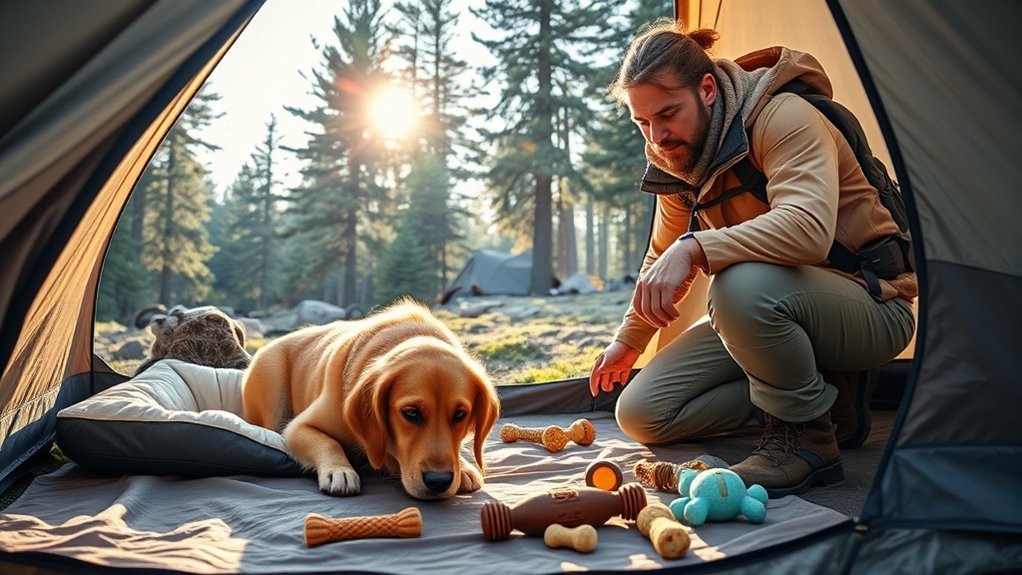
Before trying to stop the behavior, watch what happens immediately before, during, and after the scratching. According to VCA Animal Hospitals, digging can be ordinary resting-area preparation, but it may also be connected to insufficient stimulation, confinement, or anxiety.
A dog that circles, scratches two or three times, and lies down with a relaxed body is probably arranging the sleeping surface. A dog that repeatedly claws at the door, wall, seam, or floor while panting, whining, trembling, or trying to push out may be frightened or over-aroused.
Common reasons for tent-floor scratching include:
- Nesting behavior: Your dog is trying to flatten or rearrange the sleeping surface.
- Unfamiliar sounds or smells: Wildlife, wind, nearby campers, tent fabric, and nighttime noises can keep a dog alert.
- Excess arousal: The dog has not yet shifted from hiking, play, or campsite activity into rest.
- Boredom: A dog confined during camp setup may need a safe activity.
- Heat or discomfort: The bed may be too warm, lumpy, slippery, wet, or cramped.
- Toilet need: Some dogs become restless and scratch when they need to go outside.
- Pain or irritation: A sore paw, broken nail, skin irritation, joint discomfort, or another health problem can make settling difficult.
- Fear or escape behavior: The dog may be trying to get away from the tent, a sound, another animal, or separation from you.
Warning: Leave the tent and check your dog immediately if the scratching is frantic or accompanied by heavy panting when the dog is not hot, drooling, trembling, repeated escape attempts, limping, paw licking, vomiting, a swollen abdomen, collapse, or a sudden major behavior change. Contact a veterinarian or emergency clinic when symptoms are severe, persistent, or unexplained.
What to Do When Your Dog Starts Scratching
- Stay calm. Do not yell, hit the floor, jerk the leash, or physically force the dog down.
- Interrupt gently. Say the dog’s name or use a practiced cue such as “this way.”
- Move the dog to the protected bed. Use a treat or hand target to guide the dog rather than dragging them.
- Ask for “place” or “settle.” Reward the first calm behavior, even if it is only standing quietly or lowering the head.
- Check basic needs. Consider a toilet break, water, temperature, bedding comfort, paw condition, and nearby sounds or animals.
- Offer a quiet activity. A familiar food puzzle, lickable toy, or safe chew can help a relaxed dog remain settled.
- Exit if arousal rises. If the dog cannot take a familiar treat, repeatedly rushes the door, or keeps trying to escape, move to a quieter area rather than insisting that the dog remain inside.
The most reliable approach combines three things: protect the fabric, teach a clear resting behavior, and remove the reason the dog feels compelled to scratch.
Practice Tent Time Before Camping
Do not make a busy campground the first place your dog encounters the tent. Pitch it at home several days before the trip and work in short sessions. Current AAHA camping guidance recommends considering the dog’s age, health, temperament, training, and comfort in new environments before committing to an overnight trip.
- Let your dog inspect the tent with the doors fully open.
- Scatter a few familiar treats near the entrance without pushing the dog inside.
- Place the dog’s normal blanket or bed just inside the door.
- Reward voluntary entry and allow the dog to leave whenever they choose.
- Practice the “place” cue for a few seconds at a time.
- Gradually sit inside with the dog while the door remains open.
- Briefly move the zipper, rustle the fabric, and introduce a headlamp at low intensity.
- Close the door for only a few seconds, then reopen it before the dog becomes worried.
- Build toward a calm nap or short backyard evening session.
If your dog remains distressed despite gradual practice, shorten the sessions or reconsider whether tent camping is appropriate. Dogs that are highly noise-sensitive, reactive, medically fragile, or uncomfortable with confinement may be safer and happier with another arrangement.
Pro Tip: Practice with the same bed, liner, harness, toy, and nighttime routine you plan to use at camp. Familiar objects and predictable steps make the real trip less novel.
Creating a Comfortable Sleeping Area
Create a defined sleeping area that is large enough for your dog to turn around, stretch out, and change position without stepping on your sleeping pad. A low-profile dog bed, folded blanket, foam pad, or washable camp mat can provide comfort while spreading claw pressure over a wider area.
Use familiar items when practical, but make sure they are dry and appropriate for the temperature. A thick insulated bed may be welcome on cold ground but uncomfortable on a warm night. For senior dogs or dogs with mobility concerns, choose a stable surface with good traction and no high edge they must climb over.
Place the bed away from the tent door if passing people or animals trigger your dog. Keep it away from loose cords, stove equipment, repair tools, and anything the dog could swallow. Do not block ventilation panels or the exit.
Choosing Durable Ground Cover
A protective layer inside the tent is one of the easiest ways to reduce claw damage. Measure the usable floor rather than buying an arbitrary size. The liner should lie flat, cover the area where the dog walks and sleeps, and leave the door and ventilation openings clear.
Interior Liner Versus Exterior Footprint
A standard tent footprint sits underneath the shelter. It protects the exterior of the floor from rocks, sticks, mud, and ground abrasion, but it does not stop a dog’s claws from pressing into the fabric from above.
For claw protection, add a separate layer inside the tent. Some tent makers offer fitted interior “pawprint” liners. You can also use a blanket, closed-cell foam pad, outdoor rug, or other smooth, non-slip material that does not contain sharp hardware.
Ground-Cover Options
| Option | Best Use | Watch For |
|---|---|---|
| Washable blanket or moving blanket | Car camping and large tents | Bulk, moisture absorption, and bunching |
| Closed-cell foam pad | Backpacking, insulation, and pressure distribution | Chewing and raised edges |
| Outdoor carpet | Base camping and roomy family tents | Weight, packed size, and wet storage |
| Canvas painter’s drop cloth | Budget car-camping protection | Absorbed moisture and extra bulk |
| Interlocking foam tiles | Long stays and cold-ground insulation | Weight, gaps, and trip hazards at the edges |
| Tyvek or similar sheet material | Lightweight, fitted interior coverage | Noise, slipping, sharp folds, and bunching |
| Manufacturer-made interior liner | A fitted, tent-specific solution | Compatibility, availability, and cost |
Note: Avoid loose plastic painter’s sheeting as a sleeping surface. It can be slippery, noisy, and prone to bunching. Whatever material you choose, test it at home and remove it if your dog slips, chews it, or becomes more restless.
Engaging Your Dog With Toys and Treats
Interactive play and food enrichment can help a calm dog transition into rest. They are less likely to help a frightened dog that is already trying to escape, so read your dog’s body language before offering a distraction.
| Toy Type | Benefits | Examples |
|---|---|---|
| Chew Toys | Provides a familiar activity and may encourage quiet settling | Durable rubber toy or dog-safe chew appropriate for the dog’s size |
| Puzzle Feeders | Uses scent and problem-solving without requiring vigorous movement | Stuffable rubber toy, snuffle mat, or treat maze |
| High-Value Rewards | Reinforces entering, lying down, and remaining calm | Small pieces of a familiar dog-safe treat or part of the dog’s normal meal |
Rotate toys to maintain interest, supervise chewing, and remove damaged items. Use small rewards so training does not add a large number of calories or upset your dog’s stomach.
Store dog food, treats, food-filled toys, and other scented items according to campground rules. Do not leave them loose in the tent overnight where they may attract wildlife.
Establishing a Routine for Tent Time
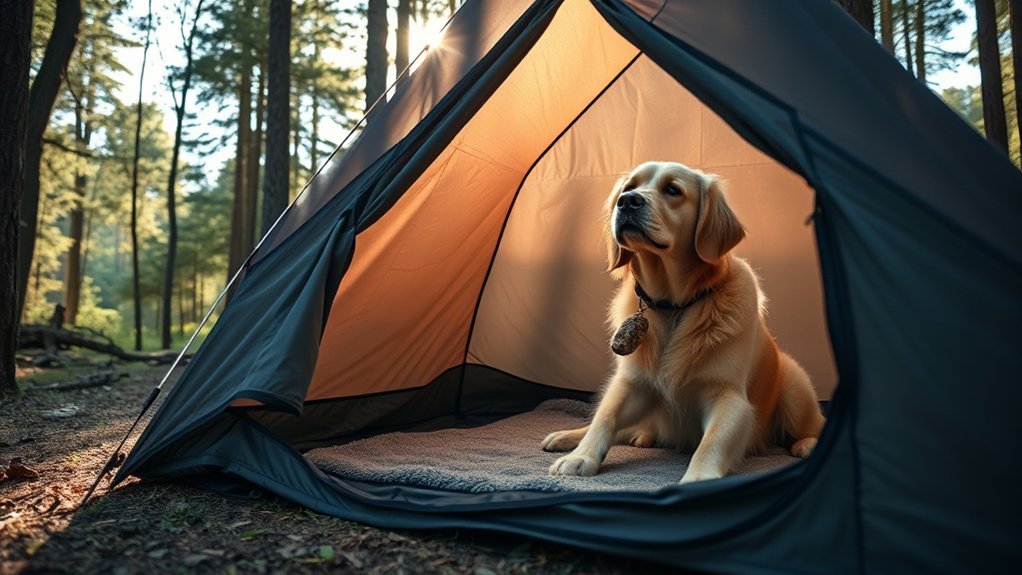
A predictable routine helps your dog understand that entering the tent leads to quiet rest. Use the same order each evening when possible:
- Take a calm toilet and sniff walk.
- Offer water and check the paws, nails, coat, and harness.
- Wipe off mud, sand, seeds, and moisture.
- Enter the tent together.
- Guide the dog to the protected bed.
- Give the “place” or “settle” cue.
- Reward calm behavior.
- Lower activity and light levels.
- Store food and scented items properly before sleeping.
Consistent Command Training
Use one cue consistently rather than switching between several words. “Place” can mean go to the bed, while “settle” can mean relax there. Teach the behavior at home before adding campground distractions.
The American Veterinary Society of Animal Behavior recommends reward-based training for behavior modification. Reward the behavior you want and manage the environment so your dog can succeed. Avoid yelling, leash corrections, prong collars, electronic collars, or startling the dog for scratching.
Designated Relaxation Area
Place the dog bed where your dog can remain near you without blocking the entrance. Gradually increase the time the dog remains there, rewarding relaxed behaviors such as shifting onto one hip, lowering the head, sighing, or resting the chin.
A harness and short leash may help guide a dog during supervised practice, but do not tie the dog to a tent pole, zipper, guyline, stake loop, sleeping pad, or loose object. Never leave a tethered dog unattended inside or outside the tent. A loose leash can become wrapped around the dog, bedding, or shelter components.
Some owners try soothing music or dog-appeasing pheromone products. These may help individual dogs, but evidence for pheromones is mixed. Treat them as optional additions rather than replacements for gradual training, a suitable sleeping area, and veterinary care when anxiety is severe.
Training Commands for Inside the Tent
Teach “Place”
- Put the bed on the floor at home.
- Reward your dog for looking at or stepping toward it.
- Reward any paw placed on the bed.
- When the dog is entering reliably, say “place” just before the movement.
- Reward all four paws on the bed.
- Add a brief pause before delivering the reward.
- Practice in different rooms before moving the bed into the tent.
Teach “Settle”
- Begin when your dog is already somewhat calm.
- Wait for a relaxed behavior such as lying down or lowering the head.
- Quietly say “settle” and place a reward between the dog’s paws.
- Space rewards farther apart as the dog relaxes.
- End the session before the dog becomes restless.
Do not repeat the cue continuously. If the dog cannot respond, reduce the distraction, increase distance from the trigger, or leave the tent for a reset.
Managing Dog Energy Levels Before Camping
Physical activity can help, but there is no universal requirement for 30–60 minutes of vigorous exercise. A puppy, senior, short-nosed dog, dog with joint disease, and conditioned working dog may all need different routines.
Choose activity based on your dog’s age, health, fitness, weather, terrain, and the hiking already completed that day. A balanced pre-tent routine may include:
- A calm sniff walk
- A toilet break
- Several minutes of reward-based training
- Gentle play suited to the dog
- A food puzzle or scent-search activity
- Time to cool down before entering the tent
Avoid exhausting the dog in an attempt to suppress behavior. Over-tired dogs can become more restless, and heavy exercise in heat or immediately after a large meal can create additional safety concerns.
Using Protective Gear for Your Dog
Trim and Smooth the Nails
Short, smooth nails reduce the chance that a sharp point will catch thin tent fabric. Trim the nails several days before the trip so you have time to address a rough edge or accidental sensitivity.
The American Kennel Club’s nail-trimming guidance recommends using dog-specific clippers or grinders, removing only a small amount at a time, and avoiding the quick, which contains nerves and blood vessels. Ask a veterinarian, veterinary technician, or groomer for help if you cannot identify a safe cutting point.
Pro Tip: After trimming, lightly smooth sharp edges with a dog-safe grinder or file. A nail can be short enough for comfort yet still have a fresh, pointed edge that catches lightweight fabric.
Dog Boots
Boots may protect paws on hot, cold, or rough ground and can reduce direct claw contact with the floor. However, they are not necessary for every dog inside a tent. Poorly fitted boots may rotate, rub, trap moisture, or reduce traction.
Choose the correct size, introduce one boot at a time during home practice, and remove the boots if your dog slips, chews at them, develops redness, or appears uncomfortable. Dry the paws before settling for the night.
Nail Caps
Nail caps are not a first-line solution for most camping dogs. Fit, traction, chewing, maintenance, and individual tolerance vary. Discuss nail caps with your veterinarian or rehabilitation professional before using them, especially for a senior dog or a dog with mobility or balance concerns.
Regular Maintenance of Tent Floor
Routine Cleaning Schedule
After each trip, pitch or spread out the tent and remove sand, grit, dog hair, seeds, and dried mud. Shake or gently sweep the floor. If your tent manufacturer permits it, use a damp cloth for spot cleaning.
Do not assume household detergent, stain remover, bleach, vinegar, or an all-purpose cleaner is safe for coated tent fabric. Follow the shelter manufacturer’s care instructions. NEMO’s tent-care guidance, for example, recommends appropriate technical fabric wash for heavier cleaning, avoiding washing machines and ordinary detergents, and drying the tent fully before storage.
Inspect for Damage
Use bright, indirect light and check both sides of the floor. Run your hand gently over the fabric without pulling at loose threads.
- Surface scuff: A mark with no opening or coating loss may only need cleaning and monitoring.
- Abrasion: Thinning, fuzzing, or worn coating needs closer inspection and may require a compatible reinforcement patch.
- Pinhole or puncture: Clean and dry the area, then apply a tent-fabric repair patch recommended for the material.
- Tear: Stop the tear from spreading and patch it according to the manufacturer’s directions. Larger damage may need professional repair.
- Peeling or sticky coating: This is a coating problem rather than a claw mark. Ask the manufacturer whether recoating or replacement is appropriate.
- Damaged seam: Use seam sealer only when the seam or seam tape is actually failing and only after confirming the correct product for the fabric and coating.
Apply Floor Protection
Install the clean interior liner before placing sleeping pads, bags, and dog bedding. Cover the dog’s main walking route as well as the bed area. Remove wrinkles and raised edges, but do not tape directly to coated tent fabric unless the manufacturer specifically approves the adhesive.
Inspect the cover during the trip. Sand or small stones trapped underneath can create abrasion even when the dog’s nails never touch the tent floor.
Monitoring and Adjusting Your Dog’s Space
Watch how your dog uses the tent rather than assuming the first setup is correct. A bed beside you may calm one dog but make another too warm. A position near the door may reassure a confident dog yet keep a reactive dog focused on every movement outside.
Adjust one feature at a time:
- Move the bed farther from the door.
- Add or remove insulation.
- Create more space between the dog and sleeping pads.
- Reduce visual access through mesh panels when the manufacturer’s ventilation design allows it.
- Open the door and provide a calm break.
- Change a slippery liner for a stable, non-slip surface.
- Remove noisy or chewable material.
- Use a quieter campsite or sleeping arrangement on the next trip.
Reward calm choices whenever you notice them. Do not wait for scratching before giving attention. Quietly reinforce the dog for entering, stepping onto the bed, lying down, ignoring a sound, and returning to rest.
Troubleshooting Common Causes
| What You Notice | Possible Cause | What to Try |
|---|---|---|
| A few scratches followed by sleep | Normal nesting or bedding adjustment | Use a durable liner and allow the brief ritual if the dog is relaxed. |
| Scratching at the door or wall | Toilet need, outside trigger, fear, or escape attempt | Take a calm leash break, check the surroundings, and return only when the dog can settle. |
| Digging under the bed | Bed is too warm, lumpy, small, or unstable | Flatten the area, change the bed, reduce insulation, or use a cooler mat. |
| Restlessness after a long hiking day | Overtiredness, soreness, heat, thirst, or paw irritation | Cool down, offer water, inspect the paws, reduce stimulation, and seek veterinary advice for pain or persistent symptoms. |
| Scratching when left alone | Separation distress or an attempt to follow you | Do not leave the dog unattended in the tent. Arrange supervision and consult a veterinarian for persistent distress. |
| Dog slips and scratches harder | Poor traction | Replace the slick sheet with a stable, non-slip mat or blanket and smooth the nails. |
| Behavior suddenly appears in a normally calm dog | Pain, illness, fear, environmental change, or injury | Stop the activity, check the dog carefully, and contact a veterinarian if the cause is not obvious and quickly resolved. |
Camping Safety Beyond the Tent Floor
- Confirm that the campground permits dogs and review leash, trail, waste, and unattended-pet rules before booking.
- Keep identification tags and microchip details current.
- Ask your veterinarian about vaccinations, parasite prevention, medications, and the dog’s fitness for the planned activity.
- Carry water, bowls, waste bags, towels, a harness, leash, bedding, and pet first-aid supplies.
- Check for ticks, burrs, cuts, broken nails, and pad irritation after outdoor activity.
- Never leave a dog alone in a tent or vehicle.
- Store pet food and treats in wildlife-resistant storage required by the campground.
- Keep the dog away from wildlife, campfires, stoves, hot cookware, sharp tools, and tent-repair chemicals.
Dogs with severe anxiety, reactivity, mobility limitations, heat sensitivity, or medical problems may need a modified trip or a different care plan. AAHA advises seeking veterinary help when a pet injures themselves while trying to escape, refuses to settle, shows sudden behavior changes, or remains distressed despite gradual training.
Frequently Asked Questions
Can certain dog breeds scratch more than others?
Breed tendencies may influence energy, persistence, nesting, or digging behavior, but breed alone does not explain why an individual dog scratches a tent floor. Look first at the dog’s body language, age, arousal, comfort, training history, health, and the specific trigger.
How can I clean scratches on the tent floor?
You cannot clean away physical damage. Remove dirt with the method approved by the tent manufacturer, let the area dry, and inspect it under bright light. Leave a harmless surface scuff alone, but repair punctures or tears with a compatible tent-fabric patch. Use seam sealer or recoating products only for the material and problem specified by the manufacturer.
What if my dog continues to scratch despite distractions?
Stop offering more distractions and reassess the cause. Take the dog outside on a leash, provide a toilet break, check the paws and temperature, and move away from nearby triggers. If the dog remains frantic, cannot take a familiar treat, tries to escape, or shows a sudden behavior change, end tent time and contact a veterinarian.
Are there specific toys that help reduce scratching?
A familiar stuffable rubber toy, food puzzle, snuffle mat, or suitable chew can occupy a calm dog. Choose an item that is durable, correctly sized, and already familiar. Supervise its use, remove damaged pieces, and store food-scented items securely when they are no longer being used.
How do I know if my dog is uncomfortable in the tent?
Watch for pacing, panting when the dog is not hot, drooling, trembling, tucked posture, pinned ears, repeated yawning, refusal of familiar treats, whining, freezing, rushing the exit, or persistent attempts to dig out. Compare the behavior with your dog’s normal body language and leave the tent if distress is increasing.
Should my dog wear boots inside the tent?
Usually, a fitted interior liner and smooth nails are simpler. Boots may help when they are needed for paw protection and the dog is already comfortable wearing them. Check fit, traction, heat, and moisture, and remove the boots if they rotate, cause rubbing, or make the dog slip.
Can I put a tent footprint inside the tent?
A clean, compatible footprint can sometimes serve as an interior liner, but test it first for fit, noise, and traction. A footprint placed beneath the tent protects against the ground but does not protect the floor from claws inside. Never use a dirty exterior footprint inside without cleaning and drying it.
What should I do if my dog scratches at the tent door?
Treat door scratching as a possible request to leave or an escape response. Clip on the leash before opening the door, take a calm break, and check for a toilet need or outside trigger. Practice zipper sounds and brief door closures at home, and never force a panicked dog to remain inside.
Conclusion
Stopping a dog from scratching the tent floor is not only a fabric-protection problem. Begin by deciding whether the behavior is relaxed nesting or a sign of discomfort, fear, pain, or excess arousal. Then combine a fitted interior liner, familiar bedding, smooth nails, gradual tent practice, and reward-based “place” and “settle” training.
During the trip, respond calmly, meet your dog’s basic needs, and leave the tent when distress is increasing. Inspect and repair the floor with products approved for its fabric and coating. A comfortable dog and a protected floor make the campsite quieter, safer, and more enjoyable for everyone.
Sources
- VCA Animal Hospitals: Dogs and Destructive Digging — reasons dogs dig and the importance of identifying the cause.
- American Veterinary Society of Animal Behavior: Position Statements — current reward-based dog-training guidance.
- American Animal Hospital Association: Dog Camping Checklist — preparing a dog for camping, enrichment, health, confinement, and food storage.
- American Animal Hospital Association: Separation Anxiety in Pets — severe-distress warning signs and when to seek veterinary help.
- American Kennel Club: How to Trim a Dog’s Nails Safely — nail-trimming, grinding, and quick-avoidance guidance.
- NEMO Equipment: Cleaning, Repairing, and Storing Your Tent — safe tent cleaning, drying, storage, and patching practices.
