

Last Updated on July 24, 2026 by Caleb Warren
That sharp, sour smell coming from your backpack may come from sweat-related bacteria, food residue, smoke, trapped moisture, or mildew. The safest solution depends on the odor source and the bag’s care instructions. This guide shows you how to inspect, clean, deodorize, dry, and store your backpack without damaging its fabric, coating, straps, or frame.
Quick Answer
Empty the backpack, vacuum out debris, and check its care label. Spot clean or hand wash it with mild soap and lukewarm water unless the label specifically permits machine washing. Rinse away all soap, deodorize with dry baking soda if needed, and air-dry the bag completely with every pocket open.
Key Takeaways
- Check the sewn-in care label before using water, detergent, a washing machine, or a dryer.
- Spot cleaning or hand washing is the safest choice for most structured and technical backpacks.
- Sweat, food, smoke, and mildew require slightly different treatment, so find the odor source first.
- Dry the padding, seams, straps, and base completely before you close or store the bag.
- Built-in anti-odor treatments can slow odor buildup, but they do not replace cleaning and proper drying.
At a Glance
| Time Required | 20 to 30 minutes of active cleaning, plus overnight or longer for complete drying |
| Difficulty | Easy |
| Tools Needed | Vacuum, soft cloth or sponge, soft brush, mild soap, clean towels, and optional baking soda |
| Cost | About $0 to $10 when you already have basic cleaning supplies |
What’s in This Article
- Quick Answer
- What Causes Bad Smells in Backpacks?
- The Science Behind Gym Bag Odors
- Which Parts of Your Backpack Trap Odors?
- What You’ll Need
- How to Get a Smell Out of a Backpack
- Cleaning Techniques for Backpacks
- Odor-Specific Troubleshooting
- Drying Your Backpack Properly
- Natural Deodorizers for a Quick Refresh
- How to Prevent Bad Odors
- Understanding Polygiene Anti-Odor Technologies
- When a Backpack Cannot Be Safely Cleaned
- Frequently Asked Questions
Disclosure: As an Amazon Associate I earn from qualifying purchases. Some links on this page are affiliate links, at no extra cost to you.
What Causes Bad Smells in Backpacks?
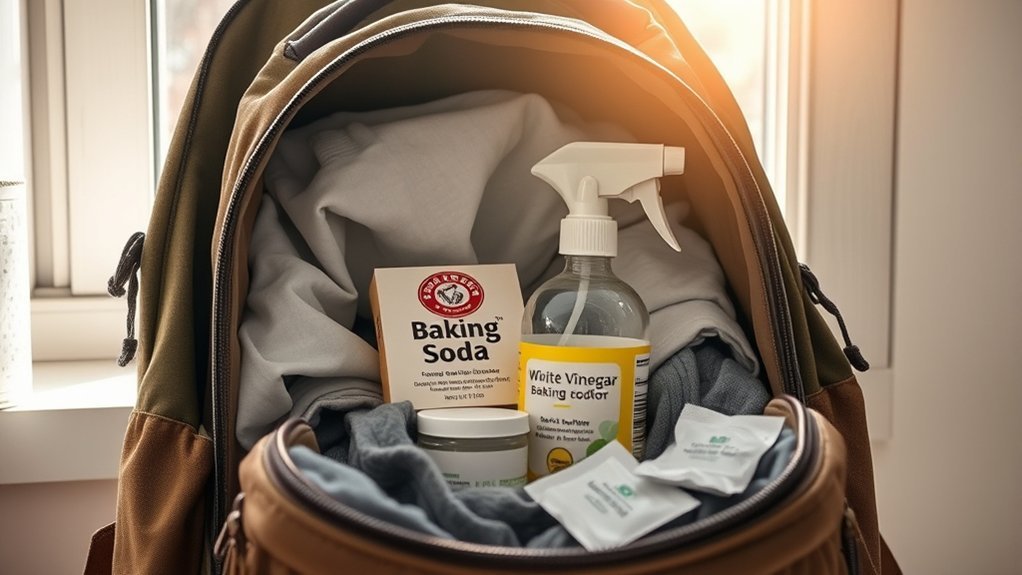
Backpacks collect sweat, skin oils, moisture, crumbs, and spills with regular use. Damp gym clothing, towels, shoes, or rain gear can create a warm, humid space where odor-producing microorganisms grow.
Food and drink residue can sour or spoil inside a pocket. Smoke, perfume, fuel, pet accidents, and other contaminants may also cling to fabric or foam. A musty smell can indicate that the bag was stored while damp, while visible spotting or fuzzy growth may indicate mold.
Small compartments, zipper tracks, seams, shoulder-strap padding, and the bottom panel often hold residue longer than the main fabric. Checking these areas helps you treat the real source instead of covering the odor with fragrance.
Regular care also protects the materials in your backpack from long-term grime and salt buildup.
The Science Behind Gym Bag Odors
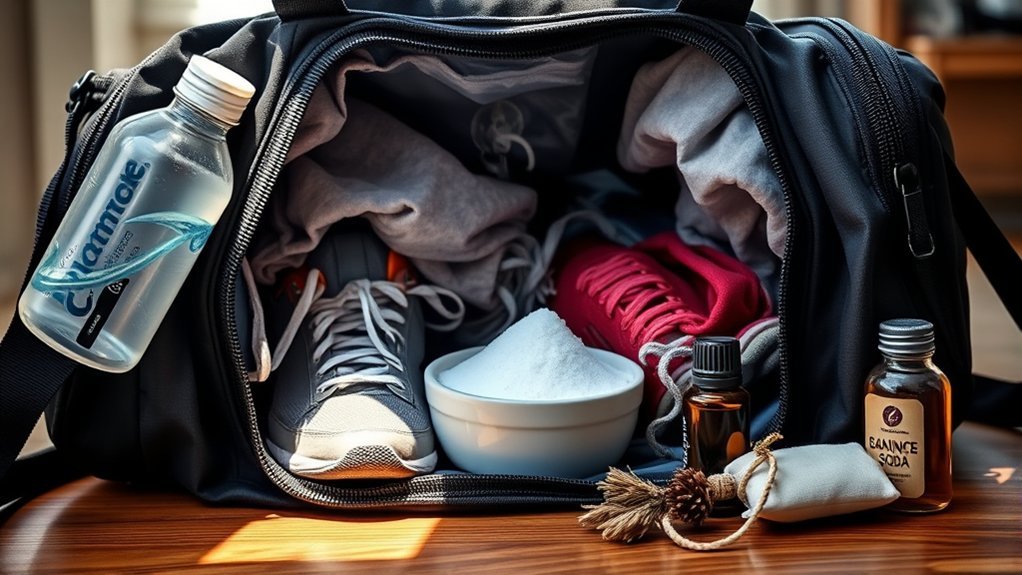
Fresh sweat is not always strongly scented on its own. Odor develops when microorganisms interact with sweat, skin oils, shed skin cells, and other organic residue. Moisture and limited airflow allow this process to continue inside a closed backpack.
Fabric type can influence how strongly odor develops or is released. In a controlled fitness study, polyester shirts smelled more intense and less pleasant than cotton shirts after exercise and incubation. That finding does not mean every polyester backpack will smell worse than every cotton bag, because coatings, foam, weave, lining, dirt, and drying conditions also affect odor. You can read the study through the National Library of Medicine.
Moisture is the factor you can control most easily. Removing damp gear and opening the bag after use interrupts the conditions that allow odors to build.
Which Parts of Your Backpack Trap Odors?
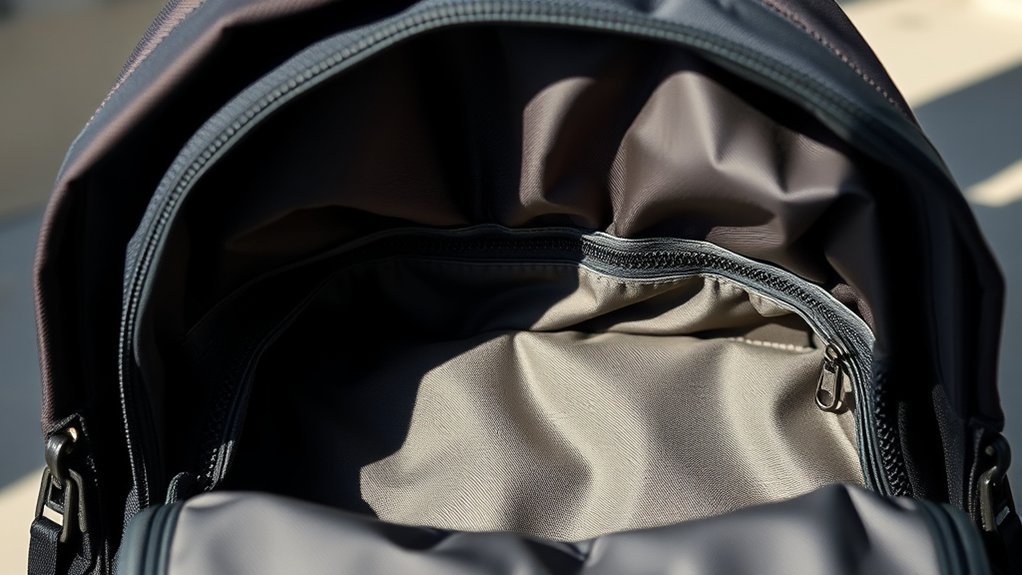
Some parts of a backpack hold moisture and residue more easily than others. Inspect these odor hotspots before cleaning:
- Main compartment: Damp clothing, towels, and shoes transfer sweat and moisture to the lining.
- Shoulder straps and back panel: Foam and mesh absorb sweat where the bag touches your body.
- Drink holders: Water, sports drinks, milk, or coffee can seep into seams and elastic.
- Small compartments: Crumbs, wrappers, cosmetics, and forgotten food can produce strong smells.
- Zippers and seams: Fine dirt, salt, moisture, and residue collect along the stitching.
- Bottom panel: Spills often settle at the lowest point and soak into padding or reinforcement.
- Hydration reservoir area: A leaking or poorly dried reservoir, hose, or bite valve may be the real odor source.
What You’ll Need
Gather the supplies that match your backpack’s care label and odor source:
- Lukewarm or cool water, as directed by the care label
- A small amount of mild, fragrance-free soap or technical-gear cleaner
- A soft sponge or clean washcloth
- A soft nylon brush or used toothbrush
- A vacuum with a crevice attachment
- Clean microfiber towels
- Baking soda or an activated-charcoal odor absorber, if needed
- Diluted white vinegar, only if the care instructions allow it
- A mesh laundry bag or pillowcase, only for a machine-washable bag
- Protective gloves and an N95 respirator if you are handling visible mold
Estimated time: Plan for 20 to 30 minutes of active cleaning. Drying commonly takes overnight or longer, especially when the bag has thick foam, a padded laptop sleeve, or a structured back panel.
Warning: Remove batteries, charging packs, lights, cables, speakers, and other electronic parts before cleaning. Do not immerse a bag with built-in electronics, a rigid wheeled chassis, leather, suede, cardboard reinforcement, or nonremovable structural parts unless the manufacturer specifically permits it.
How to Get a Smell Out of a Backpack
Start with the least aggressive method that can remove the source. A full wash is not always necessary, and washing too often can shorten the life of coatings, foam, and seam treatments.
1. Identify the Odor Source
Empty every compartment and look for the cause before adding water or cleaner. Check for:
- Damp gym clothes, towels, swimsuits, or rain gear
- Old food, crumbs, wrappers, or drink residue
- Sweat concentrated in straps or the back panel
- A leaking hydration reservoir or bottle
- Smoke, fuel, perfume, or another absorbed odor
- Visible mildew, mold spotting, or damp foam
- Pet urine or another biological spill
Remove washable accessories, removable frames, hip belts, rain covers, reservoirs, and rigid inserts according to the manufacturer’s instructions. Clean each removable part separately.
2. Check the Care Label and Test the Fabric
Read the sewn-in label and the manufacturer’s online care instructions. “Hand wash,” “spot clean only,” and “machine wash” are not interchangeable directions.
Before using detergent, vinegar, stain remover, or another product, test a small amount on a hidden area. Let it dry and check for fading, coating changes, stiffness, or discoloration.
Note: Many technical-pack manufacturers advise against machine washing because agitation can damage fabric coatings, padding, straps, frames, and hardware. Follow the instructions for your exact bag rather than relying only on its fiber name.
3. Empty and Prepare the Backpack
- Open every zipper and turn out any pocket lining that is designed to be pulled outward.
- Shake the bag upside down over a bin.
- Vacuum the corners, seams, zipper areas, and bottom panel.
- Brush away dried mud before wetting the fabric.
- Blot fresh spills instead of rubbing them deeper into the fibers.
- Loosen straps so water and air can reach folded areas.
4. Use the Safest Effective Cleaning Method
Spot clean a small odor source first. Hand wash the bag when odor or sweat affects a larger area and the care instructions permit immersion. Use a washing machine only when the bag’s own label clearly allows it.
Rinse until no slippery soap remains. Detergent residue can attract dirt, irritate skin where straps touch your body, and make fabric feel stiff.
Pro Tip: Smell the bag again after it has dried completely. Damp fabric and scented soap can hide remaining odor, so judging the result while the bag is still wet may be misleading.
5. Stop the Odor From Returning
- Air it out: Open every pocket after use and place the bag in a ventilated area.
- Remove damp items: Take out wet towels, shoes, and gym clothes immediately.
- Contain spills: Use sealed food containers and leak-resistant bottles.
- Separate dirty gear: Put wet or sweaty items in a removable washable pouch.
- Clean reservoirs separately: Wash and dry the reservoir, hose, cap, and bite valve according to their instructions.
- Store it dry: Never close a freshly cleaned or rain-soaked backpack in a closet, car trunk, or storage bin.
Cleaning Techniques for Backpacks
REI’s backpack-cleaning guidance recommends following the manufacturer’s directions, using mild soap and a soft sponge or brush, and drying the pack away from direct sunlight. Choose one of the following methods based on the label.
Why Regular Maintenance Matters
Light maintenance reduces the need for frequent deep washing. After heavy use:
- Shake or vacuum dirt from the main compartment.
- Wipe drink holders before residue dries.
- Remove food from small pockets.
- Brush dirt gently from zipper tracks.
- Rinse sweat and salt from washable shoulder straps when permitted.
- Dry the pack before storing it.
Spot-Cleaning Method
Spot cleaning is best for a small spill, a sweaty strap, a dirty base, or a bag labeled “spot clean only.”
- Mix a small amount of mild soap with lukewarm water.
- Dip a soft cloth into the solution and wring it out until damp rather than dripping.
- Blot and gently work the affected area from the outside toward the center.
- Use a soft toothbrush along seams only when needed.
- Wipe the area with a second cloth dampened with clean water.
- Press with a dry towel and leave the area open until fully dry.
Hand-Washing Technique
Hand washing is the default deep-cleaning method for many fabric backpacks, but do not immerse a pack whose instructions prohibit it.
- Fill a large sink or tub with lukewarm water and a small amount of mild soap.
- Remove detachable components and clean them separately.
- Submerge or wet the fabric only as allowed by the manufacturer.
- Use a sponge or soft brush on the lining, straps, seams, and stained areas.
- Avoid aggressive scrubbing on waterproof coatings, printed designs, and water-resistant zippers.
- Drain the dirty water and rinse repeatedly with clean water.
- Press out water gently without twisting padded panels or straps.
- Blot with towels and move the bag to a shaded, ventilated drying area.
Washing-Machine Method
Use this method only when the sewn-in care label or the manufacturer explicitly says the backpack is machine washable.
- Remove frames, rigid inserts, loose straps, electronics, and detachable accessories as directed.
- Treat visible stains with a care-label-approved cleaner.
- Close hook-and-loop fasteners and place the backpack in a large mesh laundry bag or pillowcase.
- Select the water temperature and cycle stated on the label. A cold, gentle cycle is common but is not universal.
- Use a small amount of mild detergent. Do not add fabric softener unless the manufacturer specifically permits it.
- Remove the bag as soon as the cycle finishes.
- Dry it exactly as stated on the label. Do not assume that tumble drying is safe.
| Method | Best For | Main Limitation |
|---|---|---|
| Spot cleaning | Small spills, straps, coated bags, and light odor | May not reach odor inside thick foam |
| Hand washing | Most washable fabric backpacks | Not suitable when immersion is prohibited |
| Machine washing | Only bags whose labels expressly permit it | Can damage unsupported bags, coatings, straps, and structure |
Odor-Specific Troubleshooting
Sweat and Body Odor
Focus on the shoulder straps, back panel, hip belt, and lining. Spot clean these areas with mild soap and rinse thoroughly. A full hand wash may be needed if sweat has reached deep padding and the care label permits immersion.
Food and Drink Odors
Remove all solid residue before cleaning. Blot sugary or oily spills, then use a small amount of mild detergent on the affected area. Rinse carefully because leftover sugar or soap can attract more dirt and odor.
If a drink leaked into a removable base insert or foam panel, remove and dry that part separately when the design allows it.
Smoke, Perfume, and Environmental Odors
Air the backpack outdoors in shade before washing. Clean the lining and exposed fabric according to the label, then use activated charcoal or dry baking soda after the bag has dried. Strong smoke odor may require more than one clean-and-air cycle.
Pet Urine or Biological Spills
Blot the spill promptly with disposable towels and keep it from spreading into clean padding. Use a fabric-compatible cleaner that is approved by the backpack manufacturer. If the liquid has soaked deeply into nonremovable foam and the odor returns after cleaning, replacement may be more practical than repeated soaking.
Musty or Moldy Backpacks
A musty smell without visible growth may improve after thorough cleaning and complete drying. If you see mold, move the bag away from living areas and avoid shaking it indoors.
Warning: Mold can penetrate porous fabric and foam, making complete removal difficult. Wear gloves, eye protection, and at least an N95 respirator when handling visible mold. People with asthma, mold allergies, chronic lung disease, or weakened immune systems should not perform the cleanup. Review CDC mold-cleanup guidance before proceeding.
Contact the backpack manufacturer or a professional cleaner when the growth covers a large area, has entered thick padding, returns after cleaning, or followed contaminated floodwater. A heavily affected porous bag may need to be discarded.
Drying Your Backpack Properly
Complete drying is as important as washing. A backpack that remains damp can develop the same odor again.
- Blot the exterior, lining, straps, and seams with clean towels.
- Position the backpack upside down or at an angle so water can drain from the base.
- Open every zipper, flap, and compartment.
- Separate removable parts so air reaches both sides.
- Place the bag in shade or indoors with steady airflow.
- Turn or reposition it after several hours.
- Press the padding and inspect deep seams before deciding that it is dry.
Warning: Do not put the backpack in a dryer unless its care label explicitly allows tumble drying. Heat and tumbling can damage unsupported coatings, foam, plastic hardware, frames, adhesives, and printed designs.
A lightly cleaned daypack may dry overnight, while a thick hiking pack can take 24 hours or longer. Do not close or store it until the deepest padding and seams feel completely dry.
Natural Deodorizers for a Quick Refresh
Dry odor absorbers can help after you have removed the source and dried the backpack. They do not replace cleaning when the fabric contains sweat, food, urine, or mold.
Baking Soda
Place baking soda in a breathable sachet, open container, or clean sock and leave it inside the closed backpack overnight. This reduces the chance of powder becoming trapped in zipper tracks, electronics, foam, or a hydration system.
If you sprinkle baking soda directly into a plain fabric lining, use only a light layer and shake or vacuum it out completely before use.
Activated Charcoal
Put a dry activated-charcoal odor absorber in the main compartment for one or two days. Keep it inside its original pouch so charcoal dust does not mark the lining.
Diluted White Vinegar
If the care instructions permit it, spot test a mixture of one part white vinegar and three parts water. Lightly dampen a cloth and wipe the affected lining rather than soaking the bag. Follow with a clean damp cloth and dry completely.
Warning: Never mix vinegar with chlorine bleach or another cleaning product. Use one cleaning method at a time and rinse the material before switching products.
Tea Bags, Dryer Sheets, and Essential Oils
A dry tea bag or dryer sheet may add fragrance, but it mainly masks odor and may leave residue. It should not replace cleaning.
Essential oils are also fragrances rather than dependable disinfectants. Concentrated oil can stain fabric or irritate skin. Do not pour it into wash water or apply it directly to the backpack. Keep essential oils away from children and pets.
How to Prevent Bad Odors in Gym Bags and Backpacks
Regular Airing Out
- Open the bag after every gym session, hike, school day, or trip.
- Leave it in a shaded, ventilated area for several hours.
- Remove wet clothing, shoes, towels, and rain gear immediately.
- Do not leave the bag closed in a hot car.
- Dry a rain-soaked backpack before placing it in storage.
Proper Item Storage
Use washable pouches to separate sweaty or dirty gear from the main lining. Carry food in sealed containers and check bottles for leaks. Empty crumbs and wrappers after each use.
Clean hydration reservoirs and bottle caps separately. A clean backpack will still smell bad if a damp hose, bite valve, shoe pouch, or lunch container remains inside.
Frequent Cleaning Routine
There is no single cleaning schedule for every bag. Use the following pattern as a practical guide:
- After every use: Empty damp items and air out the bag.
- After a spill: Blot and spot clean as soon as possible.
- Every few weeks: Inspect a frequently used gym bag for sweat and residue.
- Every few months: Deep clean a heavily used washable bag when needed rather than washing it automatically.
- Before long storage: Clean, dry, and leave the compartments slightly open where practical.
Understanding Polygiene Anti-Odor Technologies
Some textiles include an odor-control treatment during manufacturing. The treatment only applies when the backpack or fabric manufacturer identifies it in the product specifications.
Polygiene StayFresh is based on silver chloride and is designed to inhibit the growth of odor-causing bacteria in treated fabric. It does not clean food, dirt, sweat residue, or an untreated part of the backpack.
The original Polygiene OdorCrunch used modified silica particles to capture and break down odor molecules. The current Polygiene OdorCrunch2.0 is an updated, heavy-metal-free odor-capture technology designed to hold odor compounds in the textile until laundering releases them.
| Technology | Primary Function | What It Does Not Replace |
|---|---|---|
| StayFresh | Inhibits odor-causing bacterial growth in treated fabric | Removing spills, dirt, food, or moisture |
| OdorCrunch2.0 | Captures odor compounds within treated textiles | Cleaning contaminated or visibly dirty fabric |
| Proper care | Removes residue and prevents trapped moisture | Following the manufacturer’s care label |
When a Backpack Cannot Be Safely Cleaned
Stop repeated home cleaning and contact the manufacturer or a professional cleaner when:
- The odor returns after the bag has been washed, rinsed, and dried completely.
- Urine, spoiled food, fuel, or contaminated water has soaked into nonremovable foam.
- Visible mold covers a large area or returns after cleaning.
- The pack contains leather, suede, electronics, a wheeled chassis, or a specialized coating with unclear care instructions.
- The fabric delaminates, feels sticky, sheds coating, changes color, or develops a chemical smell.
- The odor causes coughing, wheezing, eye irritation, headache, or another physical reaction.
A persistent odor can mean that contamination remains inside foam, reinforcement, seam tape, or another layer you cannot reach. Replacing a heavily contaminated bag may be safer and less damaging than repeatedly soaking it.
Frequently Asked Questions
Can I use fabric softener on my backpack?
Avoid fabric softener unless the manufacturer specifically permits it. Softener can leave residue on fabric, mesh, and moisture-resistant finishes. Mild soap or an approved technical cleaner is usually the safer option.
How often should I clean my backpack to prevent odors?
Air it out after each use and spot clean spills immediately. Inspect a gym bag every few weeks. Deep clean only when odor, sweat, or dirt requires it and the care label allows the chosen method.
Do some backpack materials hold more odor than others?
They can. Polyester produced stronger odor than cotton in a controlled exercise study, but real backpack performance also depends on coatings, foam, lining, weave, dirt, moisture, and drying. Use the care label rather than assuming that every bag made from one fiber behaves the same way.
Can essential oils eliminate backpack odors?
Essential oils may add fragrance, but they do not reliably remove the residue causing the odor. Concentrated oils can stain fabric or irritate skin, so do not apply them directly to the bag or use them as a substitute for cleaning.
Is it safe to put a backpack in the dryer?
Only when the backpack’s care label explicitly permits tumble drying. Many technical packs must be air-dried because heat and tumbling can damage coatings, padding, plastic hardware, adhesives, or the bag’s structure.
Can I wash my backpack in a washing machine?
Use a washing machine only when the sewn-in label or manufacturer instructions clearly allow it. Otherwise, spot clean or hand wash the bag. Frames, coated fabric, leather trim, electronics, and rigid components can make machine washing unsafe.
Why does my backpack still smell after washing?
The odor may remain inside foam, seams, a removable insert, a hydration component, or another item stored in the bag. Soap residue or incomplete drying can also cause smells to return. Rinse and dry the backpack completely, then inspect each removable part separately.
Simple Habits to Keep Your Backpack Odor-Free
Getting a smell out of a backpack starts with finding the source and checking the care label. Spot cleaning or hand washing is safest for most bags, while machine washing should be reserved for models whose manufacturers expressly allow it.
After cleaning, rinse away all soap and give the padding, seams, and straps enough time to dry. Baking soda or activated charcoal can absorb a mild lingering odor, but neither can replace the removal of food, sweat, mold, or another contaminant.
The easiest long-term solution is prevention. Empty the bag after use, remove damp gear immediately, clean spills before they soak into the padding, and never store the backpack while it is wet.
Sources
- REI: How to Clean a Backpack — supports mild soap, soft cleaning tools, shaded drying, and care-label-first guidance.
- Osprey: How to Clean Your Backpack — supports hand cleaning, thorough rinsing, ventilation, and avoiding machine washing for Osprey packs.
- U.S. Environmental Protection Agency: Basic Mold Cleanup Steps — supports moisture control and cautions about mold in porous materials.
- Callewaert et al.: Microbial Odor Profile of Polyester and Cotton Clothes — supports the qualified comparison of odor development in polyester and cotton textiles.
- Polygiene StayFresh — supports the silver-chloride-based bacterial odor-control description.
- Polygiene OdorCrunch2.0 — supports the current odor-capture technology description.

