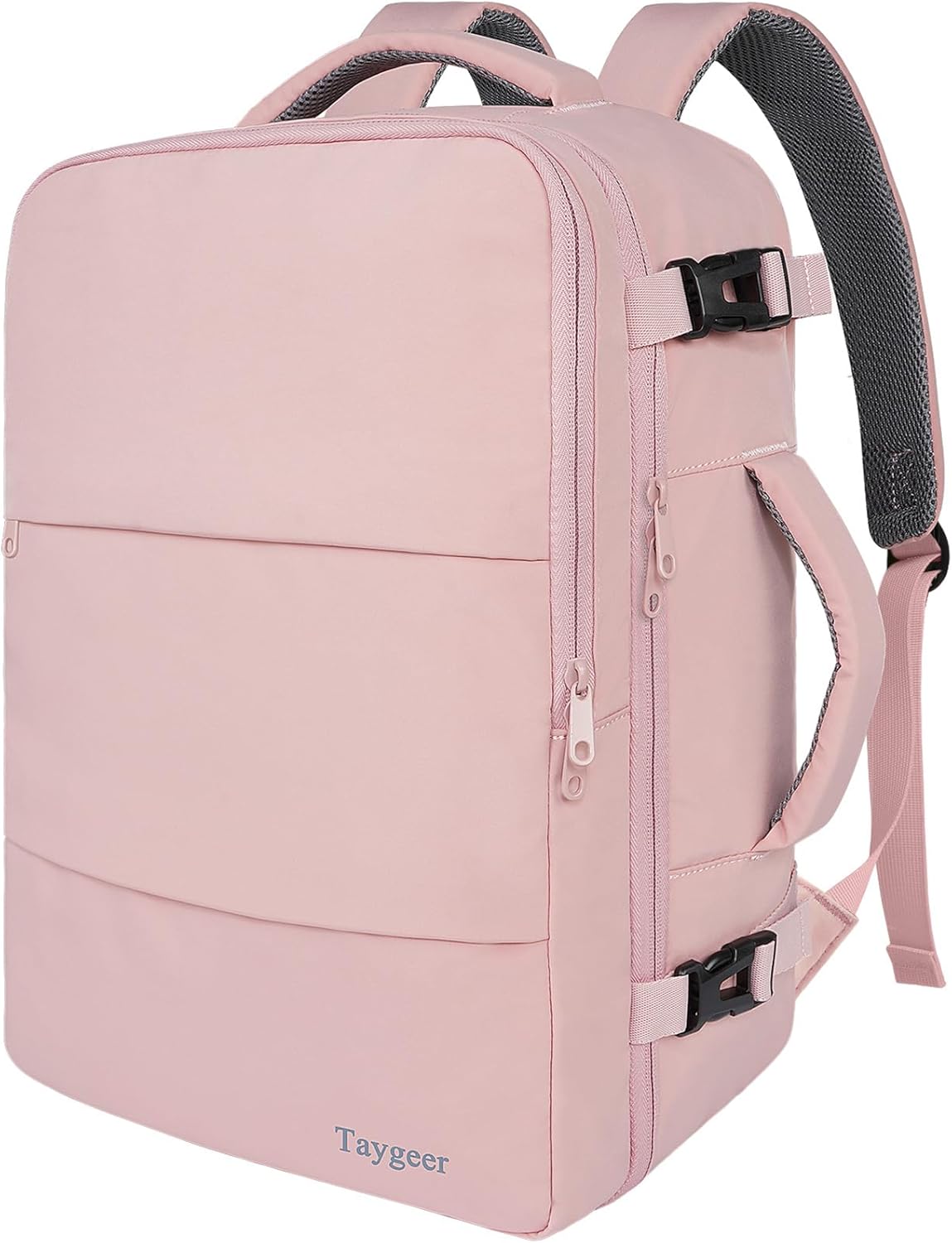
Last Updated on July 30, 2026 by Caleb Warren
Packing a backpack for summer travel is easier when you plan around your route instead of trying to prepare for every possible situation. Check the weather, activities, laundry access, airline limits, and local dress expectations first. Then choose a properly fitted backpack, pack versatile clothing, protect regulated items, and arrange the load so it remains comfortable and easy to search.
Quick Answer
To pack a backpack for summer travel, choose a bag that fits your body and the airline’s limits, make a weather-based packing list, roll soft clothes, fold structured garments, and place dense items close to your back. Keep liquids, documents, medication, water, and electronics secure but easy to reach.
Key Takeaways
- Check the operating airline’s size and weight limits before choosing a travel backpack.
- Build your clothing list around the weather, planned activities, and access to laundry.
- Use packing cubes for organization, but do not rely on them to solve overpacking.
- Pack dense items near your back and keep documents, liquids, medication, and rain gear accessible.
- Carry power banks and spare lithium batteries in the cabin, never in checked baggage.
At a Glance
| Time Required | About 30–60 minutes, plus a short loaded-pack test |
| Difficulty | Easy |
| Tools Needed | Backpack, packing checklist, small pouches or packing cubes, toiletry bag, and luggage scale if flying |
| Cost | $0 with items you own; approximately $15–$60 for optional cubes, bottles, or organizers |
Disclosure: As an Amazon Associate I earn from qualifying purchases. Some links on this page are affiliate links, at no extra cost to you.
Plan Around Your Actual Summer Trip
Start by writing down the trip length, expected weather, planned activities, transportation, accommodation type, and access to laundry. A beach weekend, a city break, and a mountain trip may all happen in summer, but they require different footwear, layers, and safety gear.
Review destination-specific weather and health information shortly before departure. The CDC’s summer travel guidance recommends preparing for heat and sun exposure, protecting against bug bites, and checking health information for your destination.
- Check the forecast: Note daytime heat, nighttime lows, rain, humidity, and strong sun.
- List your activities: Include swimming, hiking, restaurants, religious sites, work meetings, and long travel days.
- Confirm laundry access: One planned wash can reduce the amount of clothing required.
- Check local expectations: Some destinations or attractions require covered shoulders, long trousers, or other modest clothing.
- Review transport rules: Airline, rail, bus, and ferry baggage limits can differ.
Note: Create the packing list before laying out your belongings. Starting with a list makes it easier to spot duplicates and unnecessary “just in case” items.
Selecting the Right Backpack
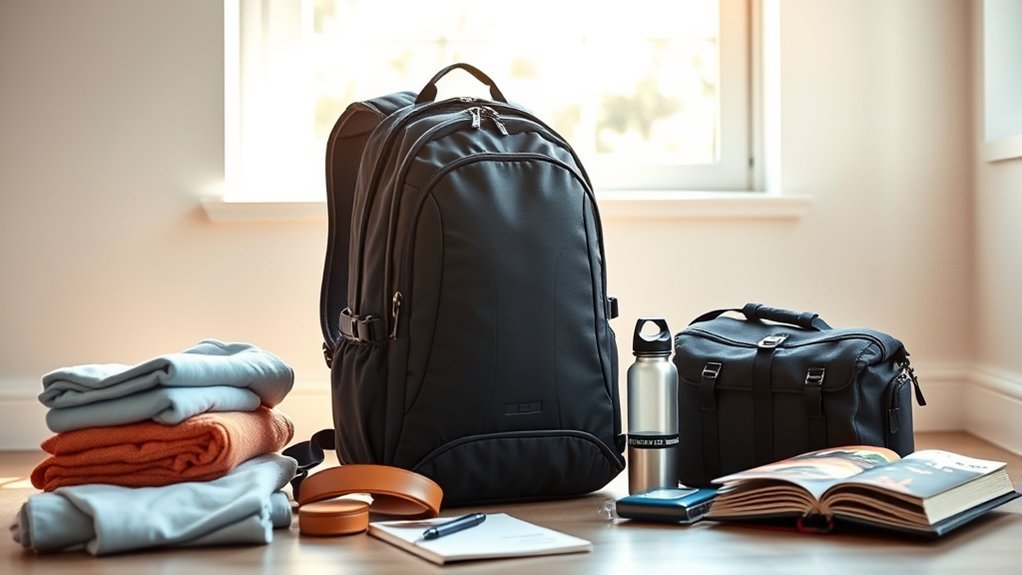
Choose the backpack according to how you will use it, not only by the number of days you will be away. A 20–30-liter daypack can work for daily sightseeing or as a personal item when its dimensions meet the carrier’s rules. Many light packers use a travel backpack of about 30–40 liters as their main bag, while larger packs may be necessary for camping equipment, cold-weather layers, family gear, or specialist equipment.
A pack’s capacity in liters does not determine whether it qualifies as cabin baggage. Airlines set their own dimensional and weight limits, which can vary by fare, route, cabin, and aircraft. Check the operating carrier’s current rules before departure. The International Air Transport Association also advises travelers to confirm baggage rules directly with the airline.
Look for durable fabric, reinforced stitching, lockable zipper pulls, a water-bottle pocket, and enough compartments to separate important items. Ripstop nylon and polyester are common choices, but material quality, fabric thickness, seams, and coatings all affect durability.
Most ordinary backpacks are water-resistant rather than fully waterproof. A rain cover can protect the outside, while an internal pack liner or dry bag gives clothing and electronics another layer of protection.
Check Backpack Fit and Comfort
Comfort depends on fit as much as weight. Adjustable padded shoulder straps and a breathable back panel help, but a larger pack should also fit your torso and hips correctly. The REI backpack-fitting guide notes that torso length—not overall height—is the key sizing measurement for backpacking packs.
- Adjust the shoulder straps so the bag sits close to your back without pulling backward.
- Position a hip belt over the top of your hip bones when the pack is designed to transfer weight there.
- Tighten compression straps after packing so the load does not shift.
- Walk for at least 10 minutes with the fully loaded bag and climb a flight of stairs if available.
- Remove or rearrange anything that causes pressure, swaying, numbness, or shoulder pain.
Pro Tip: Measure the backpack after packing it. A soft-sided bag may expand beyond the airline’s limit even when the manufacturer lists cabin-friendly dimensions.
Build a Practical Summer Packing List
A useful summer list covers clothing, hygiene, health, electronics, documents, and destination-specific equipment. Adjust the quantities for your schedule rather than packing a completely different outfit for every day.
| Category | Summer Packing Essentials |
|---|---|
| Clothing | Breathable tops, versatile bottoms, underwear, socks, sleepwear, swimwear, a light layer, and activity-specific clothing |
| Footwear | Comfortable walking shoes plus one additional pair suited to the destination or planned activity |
| Sun and heat | Refillable water bottle, sunscreen, sunglasses, hat, and lightweight sun-protective clothing |
| Health | Prescription medication, basic first-aid items, insect repellent, hand hygiene supplies, and any destination-specific items |
| Toiletries | Toothbrush, toothpaste, deodorant, skincare, hair care, and menstrual or shaving supplies as needed |
| Electronics | Phone, charging cable, approved power bank, plug adapter, headphones, and any necessary camera or work equipment |
| Documents | Identification, passport if required, boarding documents, visas, insurance details, reservations, and emergency contacts |
Organizing With Packing Cubes
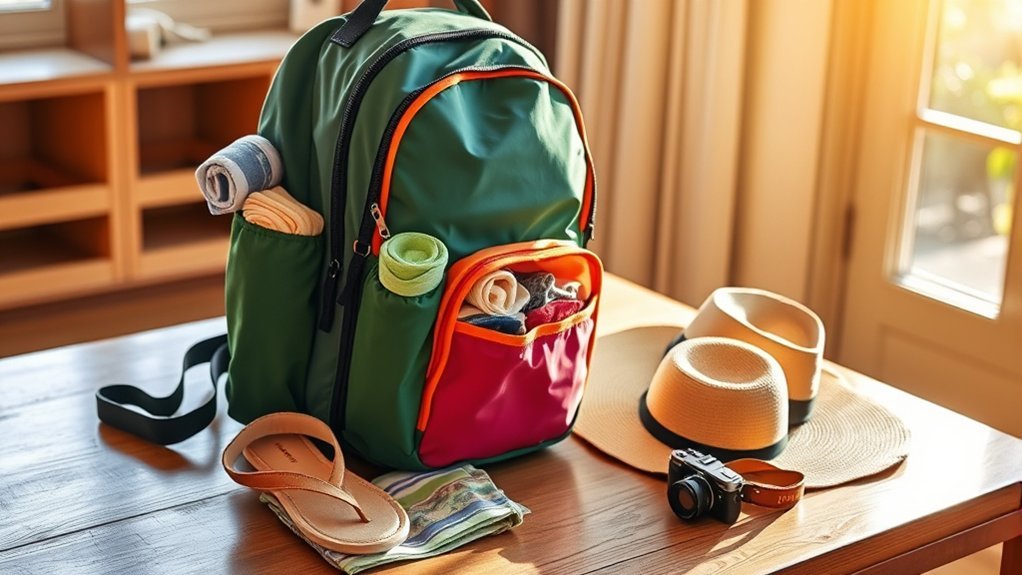
Packing cubes help separate clothing and make it easier to reach one category without emptying the entire backpack. They are especially useful when you change hotels often, share a bag, or need to separate clean and worn clothing.
Benefits of Packing Cubes
| Benefit | Practical Result | Best Use |
|---|---|---|
| Organization | Keeps clothing categories separate | Frequent hotel changes |
| Quick access | Lets you remove one group of items at a time | Shared rooms and small spaces |
| Controlled compression | May reduce bulk in soft clothing | Jackets, knitwear, and casual clothes |
| Separation | Keeps clean, worn, wet, or activity-specific items apart | Beach, hiking, and multi-activity trips |
Packing cubes do not create unlimited space, and compression can make a backpack heavier than expected. A cube should close without excessive force. If you must strain the zipper, remove an item rather than risking damage to the cube or backpack.
Organizing Clothes Efficiently
Assign each cube a clear purpose, such as tops, bottoms, underwear, sleepwear, or activity gear. Use the smallest cube that fits the category without crushing the contents. A separate lightweight bag can hold laundry so worn clothes do not mix with clean items.
- Place outfits needed first near the top of their cube.
- Use a small pouch for socks and underwear so they do not fill gaps unpredictably.
- Keep damp swimwear in a ventilated or waterproof bag only until it can be dried.
- Label similar cubes or choose different colors for faster identification.
- Do not fill every cube before deciding how the complete load fits in the backpack.
Rolling Clothes for Space Efficiency
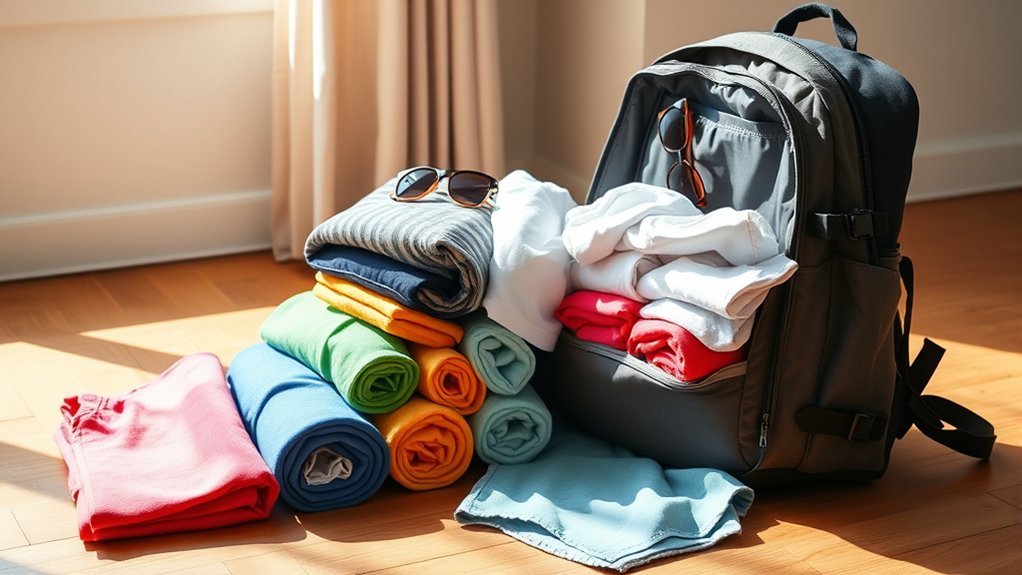
Rolling can help soft garments fit into narrow spaces and makes individual items easier to see. It does not guarantee a specific percentage of space savings, and it will not prevent every wrinkle. The best method depends on the garment and the shape of your backpack.
Benefits of Rolling Clothes
Roll soft, flexible items such as T-shirts, shorts, leggings, underwear, and casual dresses. A smooth, firm roll can reduce loose fabric and may create fewer hard fold lines than repeatedly folding an item into a small square.
Fold structured shirts, blazers, pleated clothing, and garments made from fabrics that crease easily. Place those pieces flat against the backpack’s back panel or in a shallow packing folder instead of forcing them into tight rolls.
Rolling Techniques Explained
- Smooth the garment: Fasten buttons or zippers and lay the item flat.
- Fold inward: Bring sleeves and uneven edges toward the center to create a narrow rectangle.
- Roll from the firmest end: Use steady pressure without stretching the fabric.
- Secure the roll: Place it snugly beside other items or inside a packing cube.
- Check for wasted gaps: Use socks, underwear, or small accessories to fill narrow spaces without overstuffing them.
Storage Tips for Efficiency
Vacuum-seal bags can reduce the volume of bulky soft items, but they do not reduce weight. They may also leave clothes heavily creased and can make repacking difficult when a vacuum is unavailable. For ordinary summer clothing, compression cubes or simple rolling are usually easier to manage.
Pack only after comparing everything with your written list. Removing one unnecessary pair of shoes or duplicate outfit often saves more usable space than aggressively compressing every garment.
The goal is not to fill every available gap. The goal is to carry the lightest practical load while keeping important items easy to reach.
Choosing Versatile Clothing Pieces
Choose lightweight clothing that can be combined into several outfits and worn in more than one setting. Neutral or coordinated colors make mixing easier, while quick-drying fabrics help when you plan to wash items during the trip.
A practical one-week starting point may include:
- Four or five breathable tops.
- Two or three versatile bottoms.
- Enough underwear and socks for the planned laundry schedule.
- One sleep outfit.
- One swimsuit when appropriate.
- One lightweight long-sleeved layer.
- One rain shell, compact umbrella, or poncho when rain is possible.
- One hat for sun protection.
Adjust the list for formal events, cultural requirements, outdoor activities, or professional commitments. A bodysuit, T-shirt, tank top, and button-down shirt can create varied outfits, but choose pieces you already wear comfortably. Jeans, a casual dress, travel trousers, or shorts can serve as versatile bottoms when they suit the climate and itinerary.
Limit shoes because they are heavy and awkward to pack. Wear the bulkiest suitable pair during transit and pack one lighter alternative, such as sandals, flats, or water-friendly footwear. Place shoes in individual bags so their soles do not touch clothing.
Pack the Backpack in the Right Order
A balanced backpack feels lighter and moves less while you walk. The exact arrangement depends on the bag’s opening and frame, but the following method works for many travel backpacks:
- Place light, soft items at the bottom: Sleepwear, a laundry bag, or clothing not needed during transit can fill the lower section.
- Keep dense items near your back: Position packed shoes, a toiletry kit, or other compact weight in the middle of the bag and close to the back panel.
- Fill surrounding gaps: Use rolled clothing, socks, or small pouches to stop the load from shifting.
- Put fragile items in protected areas: Use padded sleeves or surround them with soft clothing.
- Keep immediate needs near the top: A light layer, rain shell, snack, toiletry liquids bag, and travel-day pouch should be easy to remove.
- Use external pockets selectively: Store a water bottle, tissues, or other low-value essentials there, not passports or exposed valuables.
- Tighten compression straps: Compress the finished load enough to prevent swaying without damaging the contents.
Warning: Do not hang heavy shoes, bottles, or loose equipment from the outside of an airport travel backpack. They can swing while you walk, snag on equipment, or make the bag exceed the airline’s dimensions.
Essential Travel Accessories
Travel accessories should solve a specific problem without adding unnecessary weight. Prioritize items you expect to use during the trip.
| Accessory | Purpose | Packing Tip |
|---|---|---|
| Clear toiletry bag | Organizes liquids for airport screening | Keep it near the top when removal may be required |
| Reusable water bottle | Supports hydration and reduces disposable bottle use | Take it empty through airport security and fill it afterward |
| Power bank | Charges a phone when outlets are unavailable | Carry it in the cabin and protect it from damage |
| Plug adapter | Connects devices to destination outlets | Confirm whether your devices also support the local voltage |
| Small day bag | Carries daily essentials after arrival | Choose a packable model only when you will use it |
| Compact rain protection | Handles unexpected summer showers | Keep it in an external or top pocket |
Pack Power Banks and Batteries Safely
Under current U.S. aviation rules, power banks and spare lithium batteries must travel in carry-on baggage and cannot be placed in checked baggage. The FAA permits most lithium-ion batteries up to 100 watt-hours. Batteries from 101 to 160 watt-hours require airline approval, and no more than two spare batteries in that range may be carried. Batteries over 160 watt-hours are generally forbidden on passenger aircraft.
Protect a power bank from crushing, accidental activation, and short circuits. Do not travel with a swollen, damaged, or recalled battery. If airline staff gate-check your backpack, remove the power bank and all other spare lithium batteries before handing over the bag. Check the airline’s own rules because a carrier may apply stricter limits.
Packing Toiletries and Liquids
For standard U.S. airport screening, the TSA 3-1-1 liquids rule generally limits liquids, aerosols, gels, creams, and pastes to containers no larger than 3.4 ounces or 100 milliliters. The containers must fit in one quart-size, clear, resealable bag per passenger.
Travel bottles and toiletry bags are not individually “TSA-approved.” They simply need to meet the applicable size and packaging rules. Rules and screening procedures outside the United States may differ, so check the departure airport and airline before an international trip.
- Decant only what you need: Transfer products into clean, clearly labeled travel bottles.
- Check the container size: A partly empty full-size bottle may still exceed the cabin limit.
- Prevent leaks: Tighten caps, use locking pumps, and place vulnerable bottles in a secondary sealed pouch.
- Use solid alternatives when practical: Solid soap, shampoo bars, or stick products can reduce the liquid load.
- Keep the bag accessible: Place it near the top of the backpack when airport staff may ask you to remove it.
- Check the accommodation: Avoid packing shampoo, soap, towels, or hair dryers that are already provided.
Medically necessary liquids and certain other items may receive different treatment, but additional screening may apply. Review the official airport guidance before traveling with medication that exceeds normal liquid limits.
Packing Food and Snacks
Most solid foods can pass through U.S. airport screening, although officers may ask travelers to separate food for inspection. Liquid and gel foods are subject to the normal liquid limits; the TSA food guidance states that liquid or gel foods larger than 3.4 ounces generally cannot go in a carry-on bag.
Choose snacks that tolerate heat, do not leak, and will not be crushed easily. Keep strongly scented or messy foods sealed. Perishable food may require cold packs, and partially melted gel packs can be treated as liquids during screening.
Note: Airport screening rules do not replace customs and agriculture rules. A food item allowed through security may still be restricted when entering another country or region. Declare food when required and check the destination’s official rules.
Keeping Important Documents Accessible
Store your passport, identification, boarding documents, payment cards, insurance details, and essential reservations in a secure internal pocket or travel wallet. The pocket should be easy for you to reach but difficult for someone else to open unnoticed.
Use a waterproof pouch to protect paper documents from rain, condensation, and spills. Keep documents in the order you expect to use them, with the next boarding pass, ticket, or reservation at the front.
- Do not place a passport or wallet in an open external pocket.
- Do not attach a marker showing where valuables or documents are stored.
- Keep digital copies of important documents in a secure account, but remember that copies do not replace originals.
- Store emergency contacts and insurance information where they remain available if your phone battery dies.
- Separate backup payment methods so one lost wallet does not leave you without access to money.
Prepare for Summer Heat, Sun, and Insects
Summer packing is not complete without basic protection from heat, sun, and insects. Carry a refillable water bottle, sunscreen, sunglasses, a hat, and lightweight clothing that covers exposed skin when needed. Pack insect repellent when mosquitoes, ticks, or other biting insects are a concern.
Keep prescription medication in your cabin bag and bring enough for the trip, plus a reasonable delay when permitted. Original labeled containers can make identification easier. Check storage requirements because some medications can be damaged by high temperatures.
Warning: Heat illness can develop during sightseeing, hiking, transit delays, and other ordinary travel activities. Drink fluids regularly, take cooling breaks, reduce strenuous activity during extreme heat, and seek medical help for confusion, fainting, or other severe symptoms.
Complete a Final Pack Check
Finish packing early enough to test the backpack instead of discovering problems at the airport or after a long walk.
- Compare every item with your packing list and remove duplicates.
- Confirm the packed dimensions and weight against the operating carrier’s rules.
- Check that the backpack closes without forcing the zippers.
- Confirm that dense items sit close to your back and the load does not lean to one side.
- Walk with the backpack for at least 10 minutes.
- Verify that liquids meet the departure airport’s requirements.
- Place power banks and spare lithium batteries in the cabin bag.
- Make a small gate-check pouch for medication, batteries, documents, valuables, and essential electronics.
- Empty the water bottle before airport security when required.
- Check your passport, identification, tickets, visas, payment methods, and emergency contacts one final time.
Frequently Asked Questions
What Size Backpack Is Best for a Week-Long Trip?
Many light packers can manage a week with a 30–40-liter travel backpack, especially when they have laundry access and pack for warm weather. A 40–45-liter bag may also work, but its dimensions—not only its volume—must meet the airline’s limits. A 50–70-liter pack is more suitable when carrying bulky outdoor gear and may need to be checked.
How Can I Prevent My Clothes From Getting Wrinkled?
Smooth each garment before packing, roll soft casual clothes, and fold structured or crease-prone pieces. Avoid overfilling cubes, place delicate items near the top or in a packing folder, and unpack soon after arrival. No packing method can guarantee completely wrinkle-free clothing.
Are There Any Restrictions on Packing Food in My Backpack?
Yes. Most solid food is permitted through standard U.S. airport screening, but liquid and gel food is subject to carry-on liquid limits. Airlines may have additional carriage rules, and your destination may restrict meat, produce, seeds, dairy, or other agricultural products. Check official security and customs guidance before departure.
How Do I Choose the Right Packing Cubes for My Backpack?
Measure the backpack’s main compartment and choose lightweight cubes that fit without creating unused gaps. A medium cube for tops, another for bottoms, and a small cube for underwear often provides more flexibility than one large cube. Compression models are useful for soft clothing, but they can encourage excess weight.
Can I Bring a Power Bank in My Carry-On Bag?
Yes. A power bank must be carried in the cabin rather than checked baggage. In the United States, power banks up to 100 watt-hours are generally allowed, while units from 101 to 160 watt-hours require airline approval and are limited to two spares. Larger units are generally forbidden on passenger aircraft. Check the carrier’s rules before flying.
Should I Roll or Fold Clothes in a Travel Backpack?
Roll soft items such as T-shirts, shorts, leggings, and underwear. Fold structured shirts, blazers, pleated garments, and fabrics that crease easily. Using both methods usually produces a neater result than rolling every item.
What Should Be Packed at the Top of the Backpack?
Keep items you may need during transit near the top, including a light layer, rain protection, toiletries bag, medication, snack, and travel-day pouch. Documents and valuables should be in a secure internal pocket rather than a visible outer compartment.
Conclusion
A well-packed summer backpack is organized around the trip, comfortable to carry, and compliant with the rules that apply to your journey. Choose a properly fitted bag, limit clothing to pieces you will actually wear, use cubes as organizers rather than an excuse to overfill, and balance the weight close to your back.
Before leaving, check the weather, airline limits, liquids, batteries, documents, medication, and summer safety supplies one final time. A lighter, carefully arranged backpack will be easier to carry, faster to search, and simpler to repack throughout the trip.
Sources
- Transportation Security Administration: Liquids, Aerosols, and Gels Rule — U.S. carry-on liquid limits.
- Federal Aviation Administration: Airline Passengers and Batteries — power-bank and lithium-battery rules.
- Transportation Security Administration: Food — food screening and liquid or gel food restrictions.
- Centers for Disease Control and Prevention: Summer Travel — heat, sun, insect, destination-health, and travel preparation guidance.
- International Air Transport Association: Travel and Baggage — airline-specific baggage and battery guidance.
- REI Expert Advice: How to Choose a Backpack — backpack capacity, features, and fit.