
Last Updated on July 23, 2026 by Caleb Warren
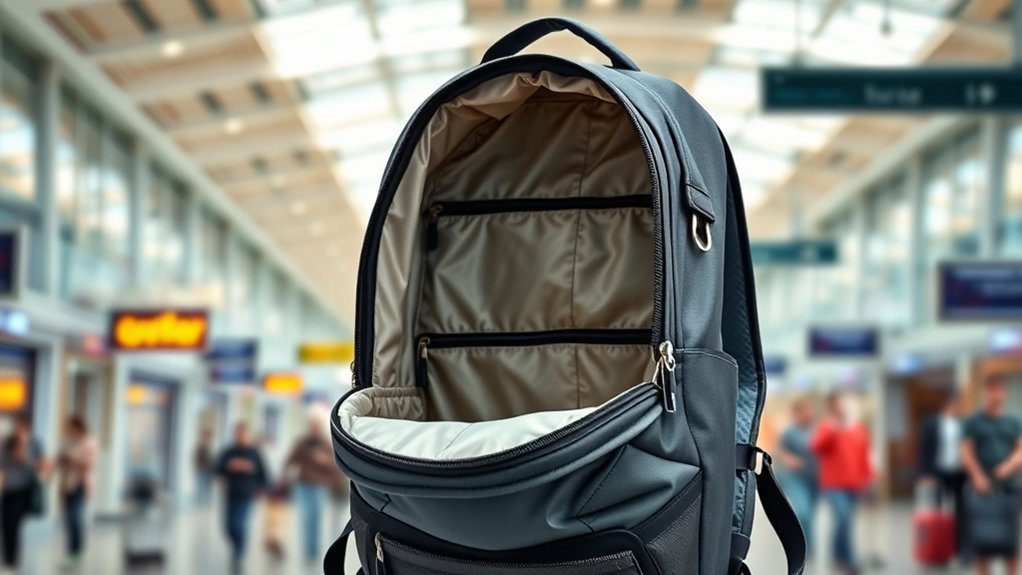
Packing a traditional backpack can feel like playing Tetris blindfolded. Your charger sinks to the bottom, snacks get crushed, and your passport disappears under a layer of clothes. A clamshell backpack reduces that frustration by opening across most of the front panel, so you can pack it like a suitcase and see the main compartment at a glance.
Quick Answer
A clamshell backpack opens around most of its front panel so it can lie flat like a suitcase. This gives you a clear view of the main compartment and makes packing, unpacking, and security access easier. Choose by external dimensions, fit, zipper quality, and organization, not liters alone.
Key Takeaways
- Clamshell backpacks open along most of three sides, giving you broad access to the main compartment.
- Capacity in liters does not determine airline compliance; compare the packed bag’s outside dimensions with your airline’s current limits.
- Packing cubes, internal dividers, and a separate laptop compartment can make the design easier to use.
- The design works especially well for travel, commuting, camera gear, and organized medical kits, but it is not automatically ideal for technical hiking.
- Prioritize comfortable carry, durable fabric, reliable zippers, and an opening style that matches how you use the bag.
What’s in This Article
- Understanding the Clamshell Backpack Design
- Key Advantages of Clamshell Backpacks
- Potential Drawbacks
- Ideal Use Cases for Clamshell Backpacks
- Comparing Backpack Opening Styles
- Choosing the Right Size
- Features to Look For
- How to Pack a Clamshell Backpack
- Clamshell Backpack Examples for 2026
- Frequently Asked Questions
Disclosure: As an Amazon Associate I earn from qualifying purchases. Some links on this page are affiliate links, at no extra cost to you.
Understanding the Clamshell Backpack Design
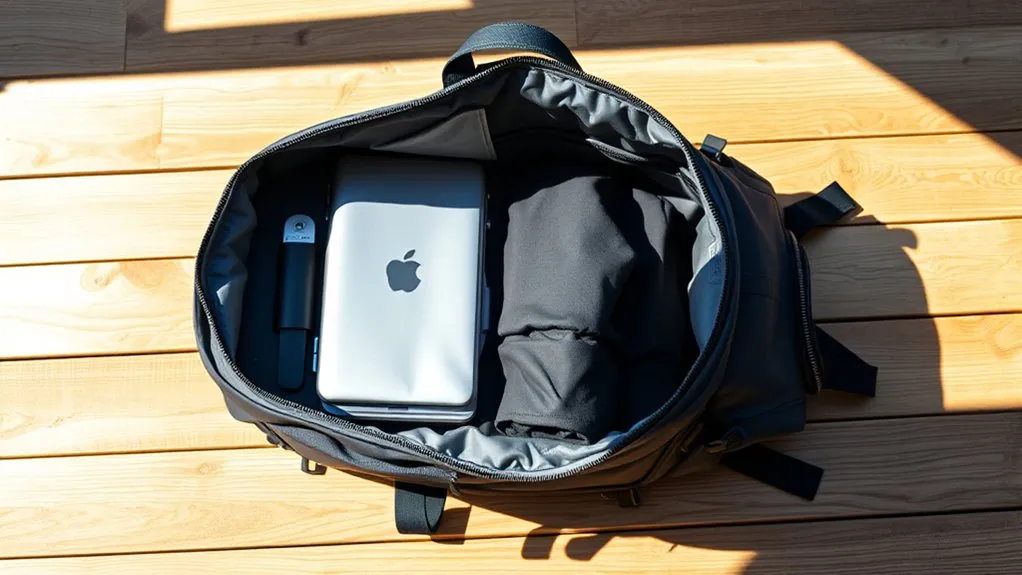
A clamshell backpack uses a zipper that runs around most of the front panel, usually along three sides. When fully opened, the panel folds away like a book cover. You can view and reach the main compartment without pulling out everything packed above the item you need.
The term describes the opening style, not a fixed capacity, shape, or purpose. A clamshell bag may be a compact work pack, a 40-liter travel backpack, a camera bag, or a medical-response pack. Some models open completely flat, while others use a partial clamshell or front-panel opening that stops before the base.
Many models include internal compartments or work well with packing cubes. The opening can also make it easier to reach a laptop and liquids at a security checkpoint, although screening instructions vary by airport and checkpoint. The Transportation Security Administration recommends keeping carry-on bags organized and following the officer’s instructions for liquids and electronics.
Clamshell backpacks are available in many sizes. A 20- to 30-liter model can be useful for a commute or weekend trip, but liters alone do not prove that a bag fits an overhead bin or under a seat.
Key Advantages of Clamshell Backpacks
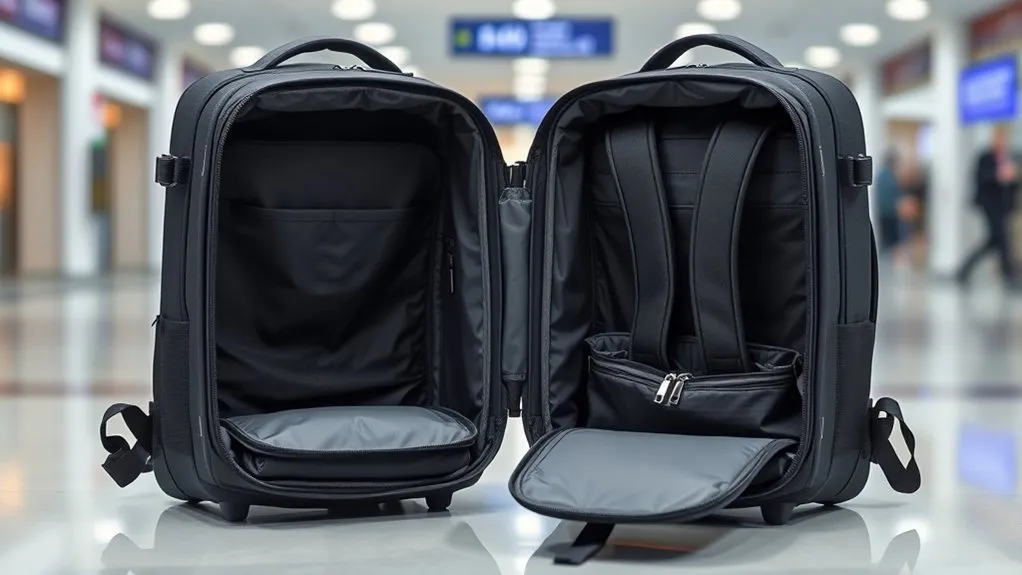
Clamshell backpacks excel at access and organization. Their front-panel opening lets you see more of the main compartment than a narrow top opening, which can save time when packing, changing locations, or retrieving a specific item.
Enhanced Accessibility Features
Opening the bag gives you a broad view of the contents. You can reach an item directly instead of removing several layers first. That is useful during a hotel check-in, at a workstation, or when you need to separate electronics and toiletries for inspection.
Access still depends on the layout. A large opening helps most when the bag also has sensible pockets, visible mesh panels, or removable organizers. Too many small pockets can add weight and make it harder to remember where you placed something.
Efficient Packing and Organization
You can lay the bag flat and pack it like a small suitcase. This makes it easier to use packing cubes, fold clothing in layers, and create zones for clothes, tech, toiletries, and small accessories.
Internal dividers and zippered mesh pockets can stop loose items from falling out when you open the front panel. A separate laptop compartment also lets you reach a computer without exposing the entire main compartment.
Pro Tip: Use two or three packing cubes instead of filling every pocket. Fewer packing zones are easier to remember, and the cubes keep clothing controlled when the bag is opened vertically.
Potential Drawbacks of Clamshell Backpacks
The wide opening is useful, but it creates tradeoffs:
- It needs room to open: You may need a bed, bench, or clean floor to spread the bag out fully.
- Loose items can spill: If the interior lacks retaining straps or zippered panels, small items may fall when the bag opens vertically.
- The long zipper carries more stress: Overpacking can strain the zipper track and corners.
- Quick access may be limited: A full opening is slower than a top pocket when you only need a snack, jacket, or water filter on the move.
- Some models are heavy: Extra zippers, dividers, frames, and laptop padding can increase empty weight.
Warning: Do not force a bulging clamshell bag closed. Move or remove items first. Pulling hard on an overloaded zipper can separate the teeth, damage the slider, or tear the surrounding fabric.
Ideal Use Cases for Clamshell Backpacks
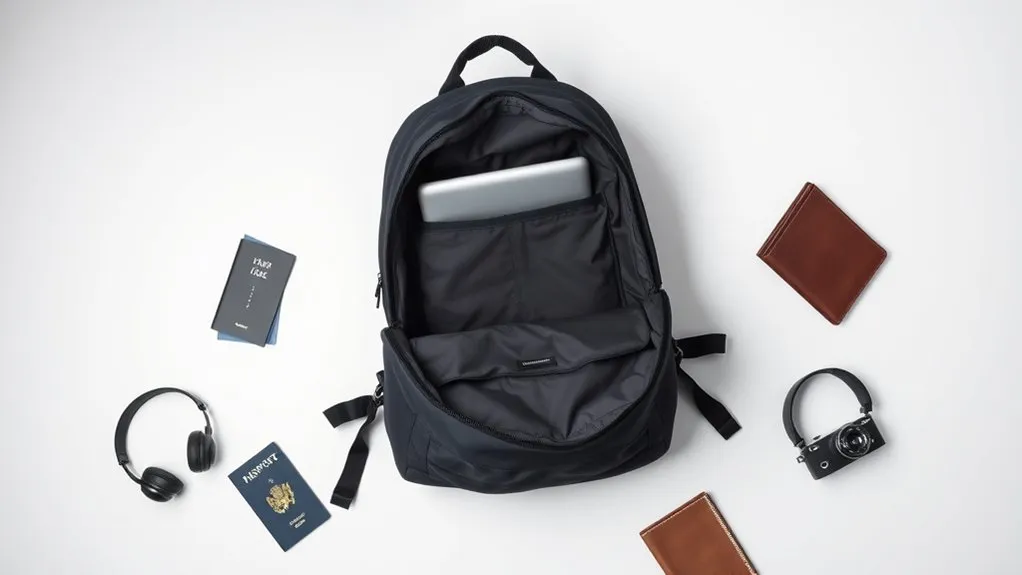
Clamshell backpacks can work across travel, commuting, outdoor recreation, photography, and emergency response. The best use depends on the bag’s harness, weather protection, pocket layout, and size, not the opening alone.
Travel and Commuting Convenience
For travel and commuting, the design reduces the time spent searching through one deep compartment. External pockets can hold a passport, phone, keys, or transit card, while a separate laptop section keeps work gear apart from clothing.
Many 20- to 30-liter bags are practical for daily use and short trips, including the kind of packing covered in this weekend travel backpack review. However, carry-on and personal-item limits vary. The Federal Aviation Administration advises passengers to check the number and maximum size of bags directly with their airline.
Note: Measure the bag after packing it. Soft-sided backpacks can become deeper than their listed dimensions when pockets are full or compression straps are loose.
Outdoor Adventures and Gear
A clamshell opening can help at camp because you can see clothing, cooking items, and small accessories without emptying the whole pack. Side compression straps can keep a partly loaded bag compact, and zippered internal panels help control loose gear.
For day hikes or multi-day trips, do not choose by opening style alone. Check torso fit, shoulder-strap shape, back ventilation, hip-belt support, hydration compatibility, load stability, and weather protection. A top-loading hiking backpack may be easier to access in rain or on a narrow trail because you do not need to lay the whole bag open.
- Hiking: Use quick-access pockets for water, snacks, navigation, and a rain shell so you do not need to open the main panel repeatedly.
- Camping: Use mesh pockets or removable dividers to separate lighting, cooking, clothing, and first-aid gear.
- Day Trips: Tighten compression straps to reduce shifting when the bag is only partly loaded.
Emergency Medical Situations
Emergency-response bags benefit from visible, repeatable organization. The Vanquest FATPack-Pro Large Medical Backpack, for example, uses a clamshell opening, removable organizer panels, a loop-lined interior, and easy-clean vinyl mesh. Those features support staged access to medical supplies, but professional users should organize and stock any kit according to their service protocols and scope of practice.
Customizable compartments can keep equipment from shifting during transport. Labels, color-coded modules, and a consistent restocking routine are often more important than the total number of pockets.
Comparing Clamshell Backpacks to Other Designs
Traditional top-loading backpacks open from above, while panel-loading and clamshell bags expose more of the main compartment. Each design suits a different workflow.
| Opening Style | Main Strength | Main Tradeoff | Best Fit |
|---|---|---|---|
| Clamshell | Broad view and suitcase-style packing | Needs room to open and can spill loose items | Travel, commuting, camera, and medical organization |
| Top loader | Simple construction and easy access from the top | Items at the bottom can be difficult to reach | Hiking, school, and flexible daily carry |
| Partial panel loader | More access than a top loader without a full perimeter zip | May not reveal the bottom corners | Everyday carry and mixed travel use |
| Rolltop | Flexible volume and a protected top opening | Slower access to items packed low | Cycling, wet-weather commuting, and variable loads |
Choosing the Right Size
Choose capacity by what you carry, then verify the bag’s external dimensions. A compact 15- to 20-liter bag may suit a light commute. A 20- to 30-liter bag often works for a heavier commute or short trip. Bags around 30 to 40 liters can hold more travel gear, but they are also more likely to exceed an airline’s personal-item limit.
Use this size-check process before buying:
- List your largest items: Measure your laptop, camera cube, shoes, or other rigid gear.
- Check the backpack’s outside dimensions: Do not rely on the capacity number alone.
- Compare with your airline: Check both carry-on and personal-item rules for the exact fare and route.
- Allow for expansion: An expanded bag or full front pocket may exceed the listed depth.
- Check weight limits: Some airlines limit cabin-bag weight even when the dimensions comply.
A backpack’s liter rating tells you about internal volume. Airlines judge the packed bag by its outside size, weight, and where it must be stowed.
Features to Look for in a Clamshell Backpack
Start with the opening. Confirm that it opens far enough for your packing style and that the panel stays out of the way. Then compare the harness, laptop protection, pocket layout, material, and repair support.
Pro Tip: Test the zipper with the bag partly loaded. It should move smoothly around the corners without pulling the fabric into the slider. Quality hardware helps, but zipper placement, stitching, and sensible packing matter too.
Prices range from basic to premium and change over time. Judge value by comfort, materials, warranty or repair support, and the features you will actually use rather than a fixed price band.
| Feature | Why It Matters | What to Look For |
|---|---|---|
| Full or near-full opening | Faster packing and a clearer interior view | Smooth three-sided zipper and a panel that folds away |
| Internal retention | Stops gear from spilling when the bag opens | Mesh panels, compression straps, dividers, or packing-cube fit |
| Quick-access pockets | Keeps small essentials outside the main compartment | Secure pockets for a phone, keys, passport, or transit card |
| Laptop compartment | Protects tech and can speed up access | Correct sleeve dimensions, padding, and a raised false bottom |
| Harness and fit | Controls comfort and load stability | Contoured straps, breathable back panel, sternum strap, and a useful hip belt on heavier packs |
| Durable construction | Supports long-term use | Reinforced stress points, reliable zippers, strong lining, and fabric suited to your environment |
| Weather protection | Helps protect clothing and electronics | Coated fabric, protected zippers, sealed seams where needed, or a compatible rain cover |
How to Pack a Clamshell Backpack
- Open the bag flat: Place it on a clean surface with the shoulder straps underneath.
- Put dense items near your back: Position a laptop, camera cube, or other heavy gear close to the back panel to reduce pulling.
- Use cubes for soft items: Keep clothing controlled so it does not fall out when the panel opens.
- Fill gaps with small soft items: Socks or a light layer can stop rigid items from shifting.
- Keep checkpoint items accessible: Place toiletries and electronics where you can reach them without disturbing the whole load.
- Use external pockets carefully: Put only small essentials there, and avoid overfilling pockets that increase the bag’s depth.
- Close without force: Compress the load, check the zipper path, and then zip the bag smoothly.
Clamshell Backpack Examples for 2026
The following current models show how the same opening style can serve different needs. They are examples to compare, not a universal ranking.
- Modern Dayfarer Backpack 24L: A work-and-gym pack with top access plus full clamshell access, a separate laptop compartment, a ventilated shoe section, and a 24-liter capacity. Its listed dimensions are 19 × 12 × 8 inches.
- NOMATIC Backpack: A structured commuting and tech bag with a full-perimeter zipper, many small organizational pockets, and 14- or 20-liter versions that expand to 17 or 24 liters.
- WANDRD PRVKE V4: A camera-friendly backpack with clamshell, rolltop, and side access. The current range includes several sizes, so compare the exact model’s dimensions and laptop sleeve before buying.
Match the model to your real load. The Dayfarer emphasizes work and gym separation, the NOMATIC emphasizes structured office organization, and the PRVKE emphasizes camera access and modular protection.
Frequently Asked Questions
Can a clamshell backpack fit under an airplane seat?
Some can, but the opening style and liter capacity do not determine the answer. Compare the packed bag’s height, width, and depth with the airline’s current personal-item limit. Seat hardware and aircraft layout can also reduce usable space.
Are clamshell backpacks waterproof?
Not automatically. Many are water-resistant, but water can still enter through seams, zipper tracks, or openings. For sustained rain, look for a clearly stated waterproof construction, sealed seams, protected zippers, or a fitted rain cover.
How do I clean a clamshell backpack?
Follow the maker’s care instructions because coatings, foam, and frames differ. A common safe method is to empty and vacuum the bag, then spot-clean it with mild soap and a damp cloth. Avoid machine washing, soaking, or heat unless the manufacturer specifically allows it. WANDRD, for example, recommends light soap and a damp rag and says not to submerge or machine wash its packs.
What material is best for a clamshell backpack?
There is no single best fabric. Nylon often offers a strong weight-to-durability balance, while polyester can be durable and cost-effective. Laminated or coated fabrics can improve weather resistance but may feel stiffer. Compare the whole construction, including seams, lining, zippers, and reinforcement.
Do clamshell backpacks come in different sizes?
Yes. Compact daypacks may be around 15 liters, everyday and short-trip models often fall near 20 to 30 liters, and larger travel packs can reach 40 liters or more. Always check external measurements because bags with the same capacity can have different shapes.
Is a clamshell backpack better than a top-loading backpack?
It is better for suitcase-style packing and seeing the full compartment. A top loader can be better when you need fast access from above, simple construction, or a weather-protected opening on the trail. The better design is the one that matches your routine.
Can I use packing cubes in a clamshell backpack?
Yes. Rectangular packing cubes usually work well because the bag opens like a suitcase. Measure the main compartment and avoid cubes that are so deep that they push against the zipper or distort the bag’s outside dimensions.
Wrapping Up
A clamshell backpack removes one of the biggest frustrations of everyday carry: not knowing where your gear is. Open it wide, see the main compartment, and pack with clear zones. Before buying, check the external dimensions, test the harness and zipper, and decide whether you value suitcase-style access more than quick top access. The right pack is the one that fits your body, your load, and the rules of the trips you actually take.
Sources
- Federal Aviation Administration: Carry-On Baggage Tips — cabin-bag size and airline-specific guidance.
- Transportation Security Administration: Travel Tips — carry-on organization, liquids, and checkpoint guidance.
- Modern Dayfarer: DAYFARER Backpack 24L — current opening style, dimensions, capacity, and construction.
- NOMATIC: NOMATIC Backpack — current sizes, expansion, full-perimeter zipper, and organization.
- WANDRD: PRVKE V4 — current access styles, sizes, dimensions, and materials.
- Vanquest: FATPack-Pro Large Medical Backpack — clamshell medical-pack layout and materials.

