
Last Updated on July 30, 2026 by Caleb Warren
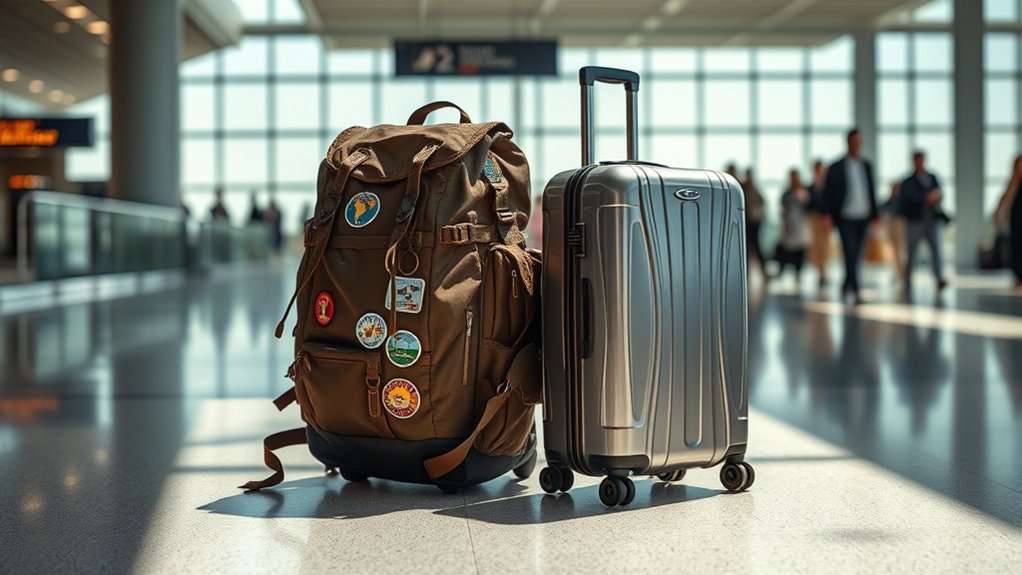
Choosing between a travel backpack and a suitcase is less about finding one universal winner and more about matching your luggage to the trip. A backpack favors hands-free movement, stairs, and uneven streets. A suitcase favors easy rolling, structured packing, and better crush protection. Your route, comfort, airline rules, and packing style should decide.
Quick Answer
Choose a travel backpack for stairs, public transit, cobblestones, frequent hotel changes, and hands-free mobility. Choose a suitcase for smooth airports, car or taxi travel, business clothing, fragile items, and trips where you will unpack once. Either can work as a carry-on only when it meets your airline’s size and weight limits.
Key Takeaways
- Backpacks win on difficult terrain: They are easier on stairs, narrow aisles, and broken pavement because you do not need to drag them.
- Suitcases win on smooth surfaces: Wheels reduce the need to carry the full load through airports, hotels, and paved city centers.
- Comfort depends on fit and weight: A well-fitted backpack can be comfortable, but an overloaded or poorly adjusted pack can strain the shoulders and back.
- Airline approval is not based on bag type: Backpacks and suitcases must both meet the operating airline’s limits, including wheels, handles, and packed bulges.
- A hybrid setup can be best: A small rolling carry-on plus a light personal-item backpack gives structure without forcing you to carry everything on your back.
Disclosure: As an Amazon Associate I earn from qualifying purchases. Some links on this page are affiliate links, at no extra cost to you.
Advantages of Travel Backpacks

A travel backpack keeps both hands free and moves with your body. That makes it useful when you are boarding trains, climbing stairs, crossing cobblestones, walking between accommodations, or navigating places where elevators and smooth sidewalks are not guaranteed.
Many carry-on backpacks also weigh less than similarly sized rolling bags because they do not have a wheel frame or telescoping handle. The exact difference depends on the model, so compare the bag’s empty weight rather than assuming every backpack is lighter.
Organization can be excellent when the bag has a clamshell opening, laptop sleeve, internal dividers, and quick-access pockets. Soft sides also make it easier to fit the bag into irregular storage spaces, although overstuffing can make it exceed an airline sizer.
- Hands-free travel: Useful for tickets, phones, railings, and children.
- Better on difficult surfaces: No wheels to catch on gravel, curbs, or stairs.
- Flexible storage: Easier to place in lockers, car trunks, and narrow luggage racks.
- Good for multi-stop trips: Faster to pick up and move when changing hotels often.
- Outdoor compatibility: Better suited to walking routes and destinations with limited infrastructure.
Disadvantages of Travel Backpacks

A backpack’s portability comes with tradeoffs. You carry its full weight whenever it is on your body, and soft construction offers less protection against crushing than structured luggage. Large packs can also bump people or fixtures when you turn in a tight space.
Limited Storage Space
Travel backpacks are sold by liter capacity, but the liter number alone does not tell you whether the bag will fit an airline’s size limit. A deep, rounded, or overpacked bag can fail a sizer even when its advertised capacity sounds suitable.
- Bulky coats, shoes, and specialized gear can consume space quickly.
- Top-loading designs may require you to unpack several items to reach something at the bottom.
- Flexible sides make overpacking tempting and can create an uncomfortable shape.
- Extra purchases may leave no room for souvenirs or gifts.
- Trips with several climates may require stricter layering and laundry planning.
A clamshell opening, compression straps, and packing cubes reduce these problems, but they do not create extra airline allowance.
Weight Distribution Challenges
A backpack can become tiring when it is too heavy, hangs away from the body, or does not match your torso. Research on load carriage shows that pack weight, design, fit, and carrying time can change posture, muscle activity, and energy use. A supportive hip belt can shift part of the load toward the hips, but fit still matters.
For a better fit, place dense items close to your back, tighten the hip belt first, adjust the shoulder straps, and then set the load lifters and sternum strap. A manufacturer fitting guide, such as Osprey’s pack-fitting instructions, can help you understand the sequence even when you own another brand.
Warning: Do not ignore sharp pain, numbness, balance problems, or straps that restrict comfortable movement. Reduce the load, adjust the fit, or switch to rolling luggage rather than forcing yourself to carry an uncomfortable pack.
Accessibility Issues in Crowds
A large backpack can be awkward on a packed bus, subway, aircraft aisle, or busy market. Because the bag extends behind you, it is easy to misjudge its space and bump another person. Taking it off before entering a dense crowd or narrow vehicle gives you more control.
- Bulky packs make quick turns harder in tight spaces.
- A pack may occupy valuable standing room on public transportation.
- Finding a clean, secure place to set it down can be difficult in small cafes or stations.
- Carrying it for long periods can be tiring, even when stairs are easier.
- Soft-sided bags need extra protection for cameras, glasses, and other fragile items.
Advantages of Suitcases

A wheeled suitcase is easy to move across smooth airport floors, hotel corridors, and paved sidewalks. Instead of supporting the full load on your back, you roll or push it. This can be a major advantage for travelers who cannot comfortably carry a backpack for long periods.
Easy Mobility and Handling
Four-wheel spinner luggage turns easily in terminals and queues, while two-wheel luggage often tracks better on rougher pavement. Both styles reduce carrying, but you may still need to lift the bag into a vehicle, onto a luggage rack, or into an overhead bin.
- Wheels reduce the need to carry the bag on smooth surfaces.
- A structured body can provide better crush resistance for fragile contents.
- The bag stands upright while you check in, wait in line, or organize documents.
- A standard carry-on suitcase is usually stored in an overhead bin; only a smaller personal-item case may fit under the seat.
- A flat exterior can make luggage straps and identification tags easier to use.
Accessible Organization and Storage
Suitcases open wide, making the full packing area visible at once. Their rectangular shape works well with packing cubes, folded clothing, garment folders, and shoes. This is especially helpful when you want to unpack into a hotel dresser or keep business clothing orderly.
Access is not always faster while you are moving. Many hard-shell suitcases have no exterior pocket, and opening a split case can require floor or bed space. If you need a laptop, passport, medication, or charger during transit, keep those items in a personal bag or choose a soft-sided suitcase with a secure front pocket.
Disadvantages of Suitcases
Suitcases work best where the ground is smooth and storage is predictable. Their wheels, rigid shape, and handle system can become liabilities on stairs, broken pavement, narrow train aisles, or routes with frequent transfers.
- Small wheels can catch on cobblestones, gravel, curbs, and gaps.
- Stairs may force you to carry the full bag by a side or top handle.
- A rigid case is harder to squeeze into a nearly full locker or luggage rack.
- Wheel and handle systems add empty weight and create extra failure points.
- Most cases must be opened widely to reach items in the main compartment.
- A suitcase occupies one hand and can be harder to manage with a stroller, mobility aid, or multiple transfers.
Hard shells can also crack or scuff, while soft-sided cases can tear or absorb moisture. Material quality and repair support matter more than the broad label “hard” or “soft.”
Packing Strategies for Each Type
Efficient packing starts with the bag’s structure rather than a single folding rule.
How to Pack a Travel Backpack
- Place dense items close to your back and near the middle of the pack.
- Keep the load balanced from left to right.
- Use packing cubes to prevent small items from settling at the bottom.
- Put transit essentials in secure pockets you can reach without exposing the main compartment.
- Use a padded sleeve or protective case for a laptop, camera, or other fragile gear.
- Tighten compression straps after packing so the load stays close to your body.
How to Pack a Suitcase
- Place heavy items near the wheel end so the suitcase is more stable when upright.
- Use the structured space for shoes, garment folders, and fragile items wrapped in soft clothing.
- Roll soft knits when it saves space, but fold structured shirts and jackets to protect their shape.
- Fill gaps without forcing the zipper or expansion panel beyond the airline limit.
- Keep valuables, medication, travel documents, and essential electronics in the carry-on item that will remain with you.
Pro Tip: Pack the bag completely, measure it at its widest points, and walk or roll it for at least 10 minutes at home. A bag that feels acceptable when empty may handle very differently when fully loaded.
Carry-On Rules Apply to Backpacks and Suitcases
A backpack is not automatically a personal item, and a suitcase is not automatically a carry-on. The operating airline decides the permitted size, weight, and number of cabin bags. The Transportation Security Administration tells travelers to check directly with the airline because cabin-bag dimensions vary. The International Air Transport Association also notes that allowances can vary by airline, cabin class, and aircraft type.
Some major U.S. airlines use a limit near 22 x 14 x 9 inches for a standard carry-on, including wheels and handles, but that is not a worldwide guarantee. Weight limits can be just as important on international and low-cost airlines.
- Measure the fully packed bag, not the manufacturer’s unfilled dimensions.
- Include wheels, side handles, top handles, and bulging pockets.
- Confirm both carry-on and personal-item rules for every operating airline on the itinerary.
- Expect smaller aircraft to have limited overhead space even when the bag meets the published limit.
- Pack medication, documents, valuables, and spare lithium batteries where they can stay with you if the larger bag is gate-checked.
Note: Smart luggage needs special attention. If a bag with a lithium battery is checked, the battery may need to be removable and carried in the cabin. Review the FAA’s current smart-baggage guidance and your airline’s policy before travel.
Comfort, Accessibility, and Physical Effort
The “easier” bag depends on which movement is hardest for you. A suitcase reduces sustained carrying but requires pushing, pulling, and occasional lifting. A backpack leaves your hands free but places the load on your body for as long as you wear it.
- Choose a backpack carefully if you have shoulder, neck, back, balance, or heat-sensitivity concerns.
- Choose a suitcase carefully if gripping a handle, managing stairs, or lifting overhead is difficult.
- Use assistance: Ask for help with overhead bins rather than risking a fall or strain.
- Consider route accessibility: Elevators, step-free stations, hotel access, and transfer distance can change the best choice.
For many travelers, a rolling carry-on paired with a light daypack is more manageable than one heavy bag of either type.
Security, Weather, and Fragile Items
Bag type affects how you protect your belongings, but neither design is theft-proof or fully waterproof.
- Backpack security: Use lockable zipper pulls, keep valuables away from exposed outer pockets, and move the bag to your front in crowded transit areas.
- Suitcase security: Choose durable zippers or latches and keep control of the bag while rolling through crowds.
- Rain protection: Water-resistant fabric slows light rain but is not the same as waterproof construction. Use a rain cover or internal dry bag when exposure is likely.
- Fragile items: A hard or structured suitcase resists crushing better, but delicate items still need padding and should not be checked when they are valuable or irreplaceable.
- Identification: Add contact information inside the bag as well as a visible luggage tag outside.
Hybrid Luggage Options
You do not have to choose a pure backpack-only or suitcase-only setup.
- Rolling carry-on plus personal-item backpack: Good for airports, laptops, and easy access during the flight.
- Convertible travel pack: Backpack straps can be hidden for checking or carrying, though the added hardware increases weight.
- Wheeled backpack: Offers two transport modes, but smaller wheels and a less comfortable harness can make it a compromise rather than the best of both.
- Suitcase plus packable daypack: Useful when you want structured main luggage and a light bag for sightseeing.
Choosing the Right Bag for Your Journey
Use the following questions to match the bag to the actual trip:
- Trip duration: How much are you truly packing, and will you have laundry access?
- Terrain: Will you face stairs, cobblestones, gravel, snow, or long walks?
- Transport: Are you using trains and buses, or mostly taxis, rental cars, and hotel transfers?
- Accommodation: Will you change locations often or unpack once?
- Physical comfort: Can you carry the packed weight safely and comfortably?
- Contents: Do you have business clothing, camera gear, medical items, or fragile souvenirs?
- Airline limits: Does the packed bag meet every carrier’s size and weight rules?
- Security and weather: Do you need lockable access, a rain cover, or a protective shell?
The best travel bag is the one you can move, lift, secure, and live out of comfortably on the hardest part of your route—not just the easiest airport floor.
Personal Experiences and Community Insights
Travelers often reach different conclusions because their routes and bodies are different. A backpack can feel liberating to someone climbing station stairs, while the same load may be exhausting for a traveler with shoulder pain. A spinner can feel effortless in a terminal but frustrating on old stone streets. The practical comparison below shows where each design tends to work best.
| Factor | Travel Backpack | Suitcase |
|---|---|---|
| Best terrain | Stairs, uneven streets, frequent transfers | Airports, hotels, and smooth pavement |
| Physical effort | Full weight carried on the body | Mostly rolled, but still requires lifting |
| Organization | Best with clamshell access and compartments | Wide opening and rectangular packing space |
| Fragile-item protection | Needs padded sleeves or protective cases | Usually better crush resistance |
| Business travel | Good with a professional design and laptop access | Good for folded or garment-style clothing |
| Typical ideal use | Mobile, multi-stop, transit-heavy trips | Single-base, hotel, car, or business trips |
Features to Check Before Buying
Travel Backpack Checklist
- Correct torso fit and adjustable shoulder straps
- Supportive hip belt if the load will be substantial
- Clamshell opening rather than only top access
- Compression straps and balanced grab handles
- Padded laptop or fragile-item storage
- Lockable zipper pulls and durable fabric
- Dimensions that remain compliant when fully packed
Suitcase Checklist
- Wheel type suited to the surfaces you expect
- A handle that extends smoothly without excessive wobble
- Strong corner, zipper, and wheel construction
- Interior compression panels or straps
- Useful exterior access if you need items in transit
- Published empty weight and external dimensions
- Clear warranty terms and access to repair parts or service
Sources
- Federal Aviation Administration: Carry-On Baggage Tips — cabin storage and general carry-on guidance.
- Transportation Security Administration: Carry-On Size Restrictions — confirms that permitted dimensions vary by airline.
- International Air Transport Association: Passenger Baggage Rules — airline-, cabin-, and aircraft-specific allowance guidance.
- National Library of Medicine: Review of Backpack Ergonomics — effects of load, design, fit, and carrying conditions.
- Osprey: Backpack Size and Fit Guide — practical fitting sequence for hip belt, harness, and load lifters.
- Travelpro: Luggage Care Guide — material-specific cleaning and storage guidance.
Frequently Asked Questions
Can you use a backpack for business travel?
Yes. Choose a clean, structured backpack with a padded laptop compartment, subdued styling, and a clamshell opening. Confirm that it meets the airline’s cabin limits, and use a garment folder or careful folding if you are carrying formal clothing.
What is the lifespan of a typical travel backpack?
There is no reliable universal lifespan. A backpack may last a few seasons or many years depending on fabric, stitching, zipper quality, load, travel frequency, storage, and repairability. Replace or repair it when straps separate, seams fail, zippers no longer close securely, or the suspension cannot support the load comfortably.
How do I clean and maintain my suitcase?
Follow the manufacturer’s care label first. In general, empty and vacuum the interior, wipe hard shells with water and mild soap, spot-clean soft fabric with a product safe for that material, remove debris from wheels, and let the case dry fully before storing it in a cool, dry place. Avoid harsh chemicals unless the manufacturer approves them.
Are travel backpacks allowed as carry-on luggage?
Usually, yes—when the fully packed backpack meets the operating airline’s carry-on dimensions, weight limit, and item allowance. Straps, handles, and bulging pockets count toward its external size. A larger backpack may need to be checked even when it is marketed as a travel pack.
What are the best brands for travel suitcases?
There is no single best brand for every traveler. Samsonite and Away are widely known options, but brand name alone does not guarantee the right bag. Compare external dimensions, empty weight, wheel and handle quality, warranty exclusions, repair access, return policy, and independent long-term reviews for the exact model you are considering.
Conclusion
A travel backpack is usually the better choice for stairs, public transportation, uneven streets, and fast-moving trips. A suitcase is usually better for smooth routes, hotel stays, business clothing, and travelers who prefer rolling to carrying. Test the packed bag, check every airline’s current limits, and choose the option that remains comfortable on the most demanding part of your journey.

