

Last Updated on July 30, 2026 by Caleb Warren
A travel backpack and a hiking backpack can look similar, but they are built around different priorities. Travel packs usually favor fast access, organized storage, and shapes that are easier to handle in airports and hotels. Hiking packs focus more heavily on body fit, ventilation, stability, and load transfer. The right choice depends on where you will carry the pack, how long you will wear it, and how much weight it must support.
Quick Answer
Choose a travel backpack for flights, trains, hotels, and city trips when easy packing and organized access matter most. Choose a hiking backpack for long trail days or overnight trips when ventilation, a fitted hip belt, and load transfer matter most. A supportive hybrid can handle both, but always test the fit and check airline dimensions.
Key Takeaways
- Travel backpacks usually provide suitcase-style access, laptop storage, internal organization, and travel-friendly handles or harness covers.
- Hiking backpacks usually provide better ventilation, trail stability, load transfer, hydration compatibility, and attachment points for outdoor gear.
- Capacity in liters does not determine whether a bag is airline compliant; its packed external dimensions and weight must meet the airline’s rules.
- Most backpacks are water-resistant rather than fully waterproof, so rain covers, pack liners, or dry bags may still be necessary.
- A hybrid pack can work for mixed trips, but it may be heavier than a simple travel bag and less trail-focused than a dedicated hiking pack.
Disclosure: As an Amazon Associate I earn from qualifying purchases. Some links on this page are affiliate links, at no extra cost to you.
Travel Backpack vs. Hiking Backpack at a Glance
| Comparison Point | Travel Backpack | Hiking Backpack |
|---|---|---|
| Best use | Airports, trains, hotels, commuting, and city travel | Day hikes, rugged trails, overnight trips, and backpacking |
| Main access | Clamshell, panel, or suitcase-style opening | Top-loading, panel-loading, or roll-top opening |
| Carry system | Ranges from basic shoulder straps to framed, adjustable suspension | Commonly includes a fitted harness, hip belt, frame, and load lifters |
| Organization | Laptop sleeves, document pockets, mesh dividers, and admin storage | Hydration sleeves, stretch pockets, gear loops, and trail-access pockets |
| Air travel | Often shaped for luggage use, but dimensions must still be checked | May have a tall frame or loose straps that are awkward for overhead bins |
| Trail comfort | Varies greatly by model and suspension design | Usually better for long carries, heavier loads, and uneven terrain |
Core Differences in Design and Functionality
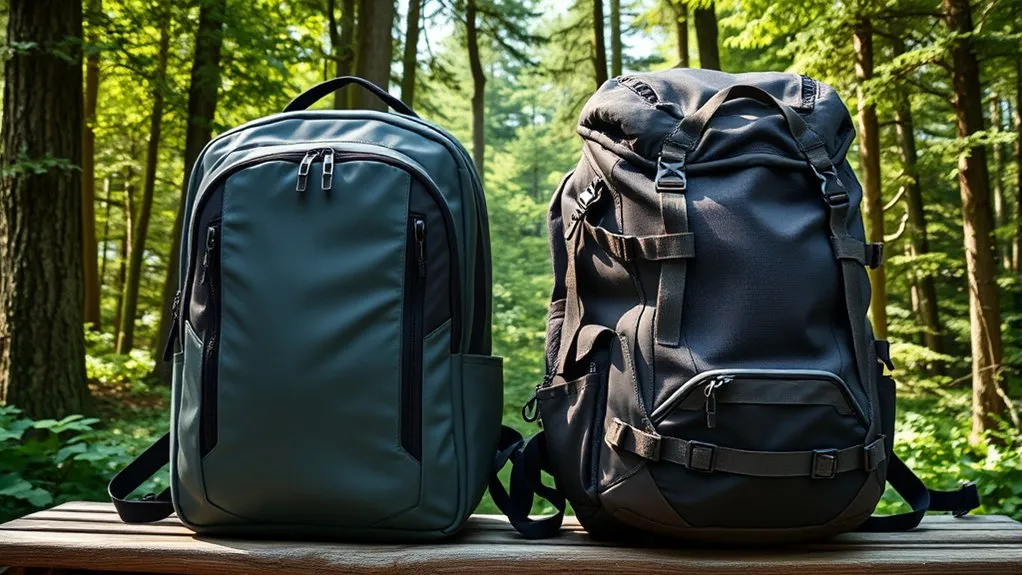
A travel backpack is commonly designed around packing efficiency and access. A clamshell or full-panel opening lets you view the main compartment much like a suitcase. Rectangular dimensions, internal compression straps, laptop sleeves, document pockets, grab handles, and stowable shoulder straps can make the bag easier to use in airports, hotels, and public transportation.
A hiking backpack is designed around movement and sustained carrying comfort. A frame or structured back panel can help transfer weight toward the hips, while load lifters, a fitted hip belt, a sternum strap, and compression straps improve stability. Hiking packs may also include ventilated back panels, hydration sleeves, trekking-pole attachments, ice-tool loops, and accessible side pockets.
These are tendencies rather than fixed rules. Some travel packs use simple foam back panels, but others borrow heavily from backpacking designs. For example, the Osprey Farpoint 40 combines travel-focused storage with an adjustable fit and load-lifting frame. Likewise, some hiking daypacks use panel openings and laptop-compatible sleeves.
Choose a backpack by how it carries your actual load, not by the category printed on its product page.
Features and Materials Comparison
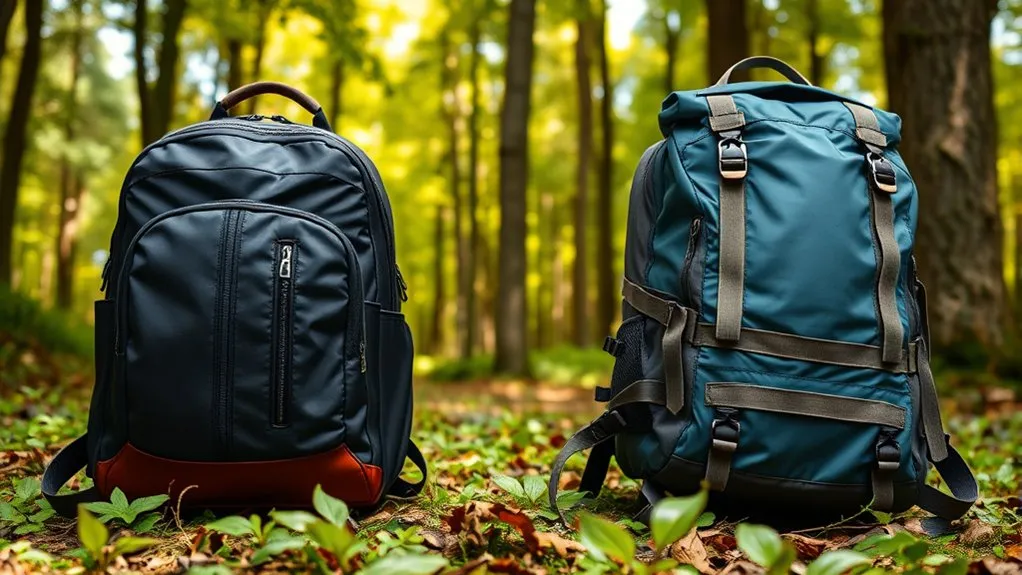
Travel and hiking backpacks can both use nylon, polyester, recycled fabrics, mesh, foam, coatings, and reinforced panels. Material names alone do not establish durability. Fabric weight, weave, coating, stitching, zipper design, abrasion zones, and construction quality all affect how a pack performs.
| Feature | Travel Backpack | Hiking Backpack |
|---|---|---|
| Common fabrics | Nylon, polyester, recycled fabrics, and coated textiles | Nylon, polyester, ripstop weaves, reinforced panels, and mesh |
| Access | Clamshell or wide panel opening | Top, panel, roll-top, or combined access |
| Organization | Laptop, document, toiletry, and admin pockets | Hydration, hip-belt, lid, stretch, and gear pockets |
| External features | Luggage pass-throughs, grab handles, and covered harnesses | Compression straps, pole loops, tool attachments, and bottle pockets |
| Back ventilation | Basic padding or ventilated foam, depending on the model | Ventilation channels, mesh, foam, or suspended panels are common |
Weather Resistance Is Not the Same as Waterproofing
Do not assume that a hiking pack is waterproof because it uses coated fabric or water-resistant zippers. Open pockets, stitching holes, access panels, and unsealed seams can allow rain to enter. REI’s wet-weather backpacking guidance recommends additional protection such as a rain cover, pack liner, dry sacks, or waterproof cases for sensitive items.
Note: Treat a pack as fully waterproof only when the manufacturer explicitly describes the complete construction as waterproof. “Water-resistant fabric” does not mean the entire backpack will keep its contents dry in prolonged rain.
Capacity Recommendations for Different Uses
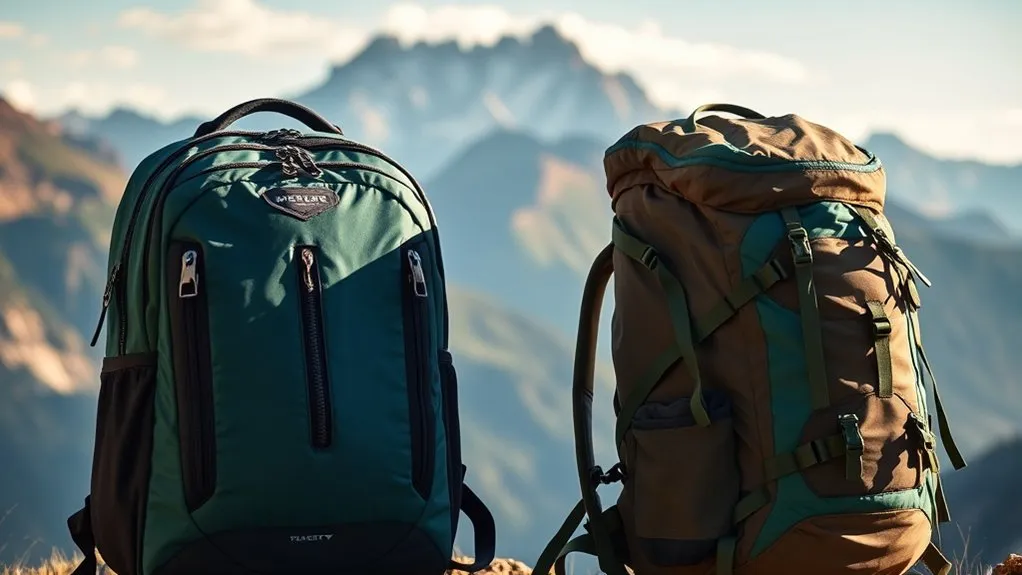
Backpack capacity should match your trip length, equipment, climate, resupply options, and packing style. The ranges below are starting points rather than universal rules:
- Everyday use or light city sightseeing: About 15–25 liters may hold water, a light layer, electronics, and daily essentials.
- Weekend travel: About 20–35 liters can work for compact packing, especially when bulky footwear or cold-weather clothing is not required.
- One-bag air travel: About 25–40 liters is common, but the bag’s packed dimensions and weight determine whether it meets airline limits.
- Short day hike: About 10–25 liters may be enough for water, food, layers, navigation, sun protection, and a small emergency kit.
- Long or technical day hike: About 20–35 liters provides more room for weather layers, traction devices, safety gear, or family equipment.
- One to three nights outdoors: Roughly 30–50 liters may work with compact gear and careful packing.
- Multi-day backpacking: Roughly 50–80 liters may be appropriate when carrying a shelter, sleep system, food, fuel, clothing, and shared equipment.
The REI backpack selection guide also ties capacity to trip duration, equipment bulk, and expected load. An ultralight hiker may use a smaller pack than these ranges, while winter equipment, child gear, camera equipment, or long water carries may require more space.
Warning: Do not use liters alone to decide whether a backpack is carry-on compliant. Measure the packed height, width, and depth, including bulging pockets, handles, frames, and wheels. The FAA notes that 45 linear inches is common for many airlines but advises passengers to verify the operating airline’s current rules before packing.
Fit Considerations for Comfort
Fit matters most when the backpack will be worn for a long time or loaded heavily. A supportive pack should match your torso length and hip circumference, sit close to your body, and allow the hip belt and harness to work as designed. A well-fitted hiking pack generally handles sustained trail use better than a frameless travel pack, but a properly fitted travel pack with a real suspension system can also carry comfortably.
Measuring Torso Length
Use a flexible measuring tape and ask another person to help. Tilt your head forward to locate the C7 vertebra, the prominent bone near the base of your neck. Place your hands on your hips with your thumbs pointing inward to identify the top of the iliac crest. Measure along the curve of your spine from C7 to the imaginary line connecting the tops of your hip bones.
Compare that measurement with the sizing chart for the exact backpack model. Pack sizing differs among manufacturers, and some packs offer adjustable torso systems. Overall height is not a dependable substitute for torso length. REI’s backpack fitting guide identifies torso adjustment as the first and most important fit setting on adjustable packs.
Weight Distribution Techniques
For a framed pack carrying a moderate or heavy load, position the padded hip belt around the top of the hip bones and tighten it until it is secure without pinching. Tighten the shoulder straps enough to bring the pack close to the body, but do not use them to lift the hip belt away from the hips.
Next, adjust the load lifters so they gently draw the upper pack toward the body. They commonly angle back from the shoulder harness rather than running horizontally. Fasten the sternum strap at a comfortable height and tighten it only enough to stabilize the shoulder straps without restricting breathing.
Place dense, heavy equipment close to the back panel and near the middle of the torso. Keep frequently needed items accessible and use compression straps to prevent the load from shifting. Adjust strap tension during the day to relieve pressure, but do not repeatedly change the measured torso setting unless the pack was fitted incorrectly.
How to Test Backpack Fit
- Load the pack with the equipment and weight you expect to carry.
- Adjust the torso system before tightening the other straps.
- Fasten and position the hip belt over the hip bones.
- Tighten the shoulder straps, load lifters, and sternum strap in that order.
- Walk for at least 15–20 minutes and include stairs if possible.
- Check for rubbing, numbness, shoulder pressure, hip-belt slipping, or restricted arm movement.
- Repeat the test with a different size or model when the harness cannot be adjusted comfortably.
Pro Tip: Test a backpack with realistic weight rather than empty. A pack that feels comfortable for two minutes in a store can develop pressure points once it is loaded and worn for a longer walk.
Cost and Value Analysis
Prices vary too widely to assign dependable ranges to all travel or hiking backpacks. Capacity, frame design, fabric, hardware, production location, warranty, and seasonal discounts can all affect the price. A more useful approach is to compare the features that matter for your specific trip.
- Fit and carry comfort: Pay more attention to torso sizing, hip-belt fit, ventilation, and suspension when the pack will be worn for hours.
- Access and organization: A clamshell opening, laptop sleeve, compression system, and protected document pocket may provide more value for frequent travel.
- Construction: Inspect stitching, stress points, buckles, zipper operation, frame attachment, and abrasion-prone areas.
- Pack weight: Added organization and heavy hardware can increase empty weight, while very light packs may require more careful handling.
- Warranty and repairability: Read the current written policy for the exact manufacturer and region. Check exclusions, proof-of-purchase requirements, shipping responsibility, replacement parts, and repair options.
A basic pack may offer excellent value for light use. A fitted suspension system may justify a higher price when you regularly carry camping equipment, water, or camera gear over long distances. Do not pay for trail attachments, laptop storage, or complex dividers that you will not use.
Customization Options for Backpacks
For individual buyers, useful customization usually means adjustable or removable components. Examples include interchangeable hip belts, adjustable torso systems, removable lids, compression straps, accessory loops, detachable daypacks, modular pouches, and hook-and-loop panels.
Commercial OEM or ODM customization is different. It may allow a business or organization to select fabrics, coatings, hardware, colors, logos, pocket layouts, and packaging. Minimum order quantities, sampling costs, tooling, lead times, and testing requirements vary by supplier.
Businesses should request current documentation tied to the exact material, component, factory, and production run. A general statement about REACH, California Proposition 65, recycled content, or another standard is not a substitute for applicable test reports, declarations, and traceable product specifications.
Use Cases for Travel and Hiking Packs
The best category becomes clearer when you focus on the conditions in which the backpack will be used.
- Urban exploration and transportation: A travel backpack is usually more convenient for airports, trains, hotels, coworking spaces, and city streets. Wide access, internal organization, protected electronics storage, and stowable straps are valuable here.
- Short, easy hikes: A comfortable travel pack can work when the load is light and the trail is straightforward. However, a hiking daypack may offer better ventilation, bottle access, stability, and weather-ready storage.
- Long day hikes: A hiking backpack is generally the better choice when carrying extra water, layers, safety equipment, or camera gear for several hours.
- Multi-day trekking: A fitted hiking or backpacking pack is normally preferable because it is designed to support a shelter, sleep system, food, clothing, and other equipment over uneven ground.
- Work trips with electronics: A travel backpack with a suspended laptop sleeve, document storage, and luggage-handle pass-through may be easier to manage than a top-loading trail pack.
- Mixed city-and-trail trips: A supportive travel pack, hybrid pack, or travel system with a detachable daypack can reduce the need to carry two full-size bags.
Hybrid Options for Versatile Needs
A hybrid backpack combines travel access with some hiking-oriented support. Common features include a clamshell opening, an adjustable harness, a padded hip belt, load lifters, compression straps, laptop storage, water-bottle pockets, and a cover that protects the harness during transit.
Some travel systems include a detachable daypack that can hold sightseeing or light-hiking essentials. This can be convenient, but the combined system may be heavier and bulkier than two simpler bags. A large main pack may also need to be checked even when the detachable daypack fits under a seat.
Before selecting a hybrid, check whether its frame fits your torso, whether the hip belt carries the expected load, and whether the back panel provides enough ventilation. Also check how the pack opens when the compression straps are tightened and whether loose straps can be secured for baggage handling.
How to Choose Between a Travel Backpack and a Hiking Backpack
At a Glance
| Time Required | About 20–30 minutes to compare measurements and complete a loaded fit test |
| Difficulty | Easy |
| Tools Needed | Flexible measuring tape, typical gear, a scale if flying, and the airline’s current baggage rules |
| Cost | $0 to compare and test; the purchase price varies by size, construction, and features |
- Define the main environment. Choose travel-first features for airports, hotels, and urban transportation. Choose trail-first features for long walks, uneven terrain, and outdoor overnights.
- Estimate your load. Gather the actual equipment you expect to carry and weigh it. Heavier loads place more importance on frame structure, torso fit, and hip-belt support.
- Choose a capacity range. Base volume on trip duration and gear bulk. Avoid buying extra space merely because it is available, since unused capacity often encourages overpacking.
- Check airline dimensions. When flying, compare the packed bag’s measurements and weight with the current rules of every operating airline on the itinerary.
- Select the access style. Choose clamshell access for suitcase-like packing or trail-oriented access when compression, weather protection, and gear attachment matter more.
- Inspect the suspension and fit. Match the torso range and hip belt to your body, then test the pack with realistic weight.
- Plan for rain and maintenance. Decide whether you need a rain cover, liner, dry bags, washable components, replacement buckles, or manufacturer repair support.
Practical Testing and Recommendations
No single brand or backpack type is best for every person. Established manufacturers such as Osprey, Deuter, Gregory, The North Face, Eagle Creek, Patagonia, and others make models with different fits and feature combinations. Evaluate the individual model rather than relying on the brand name alone.
Before buying, complete these checks:
- Confirm that the torso range and hip-belt size match your measurements.
- Load the pack with realistic weight and walk long enough to reveal pressure points.
- Open every compartment while the bag is packed to see whether access remains practical.
- Check whether bottles, phones, snacks, passports, and rain gear can be reached when needed.
- Measure the packed exterior rather than trusting the advertised capacity.
- Inspect zipper paths, stitching, buckle quality, strap storage, and frame edges.
- Read the current warranty and repair terms instead of assuming “lifetime” means every type of damage is covered.
For cleaning, empty the pack, remove loose dirt, and follow the care label for the exact model. Many fabric packs can be cleaned with mild soap, warm water, and a soft brush or sponge, then rinsed and air-dried away from direct sunlight. The Osprey cleaning guide also warns against immersing travel packs with wheeled chassis systems. Avoid machine washing, high heat, bleach, or harsh chemicals unless the manufacturer specifically permits them.
Frequently Asked Questions
Can I use a travel backpack for hiking?
Yes. A travel backpack can work for a short or easy hike when the load is light and the pack fits comfortably. For long, steep, hot, or technical hikes, a hiking pack usually provides better ventilation, load stability, bottle access, weather protection, and attachment points.
What size travel backpack is considered carry-on friendly?
There is no universally compliant capacity in liters. Many carry-on travel packs fall between about 25 and 40 liters, but the packed height, width, depth, and weight must meet the operating airline’s current rules. Frames, wheels, handles, and bulging pockets count toward the exterior size.
Are hiking backpacks suitable for everyday use?
They can be. Hiking daypacks are often comfortable and durable enough for errands, commuting, or gym use. However, a tall frame, bulky hip belt, top-loading opening, or lack of laptop padding may be inconvenient in offices, classrooms, and crowded transportation.
Can I use a hiking backpack as an airline carry-on?
Possibly. A smaller hiking pack may qualify when its packed dimensions and weight meet the airline’s limits. Large frames, curved back panels, fixed hip belts, trekking-pole attachments, and loose straps can make some hiking packs difficult to fit or safely stow.
Are hiking backpacks waterproof?
Most are not fully waterproof. They may use water-resistant fabric and coated zippers, but rain can enter through seams, openings, and pockets. Use a rain cover, pack liner, or dry bags unless the manufacturer explicitly states that the complete pack has waterproof construction.
How do I clean and maintain my backpack?
Follow the manufacturer’s care label. Empty the pack, brush away dirt, clean stains with mild soap and a soft brush or sponge, rinse away residue, and air-dry it in a ventilated area away from direct sunlight. Check zippers, buckles, seams, straps, and frame connections for wear before the next trip.
What are the best brands for travel and hiking backpacks?
There is no single best brand because fit and features vary by model. Osprey, Deuter, Gregory, and similar outdoor manufacturers offer many hiking-focused packs, while Osprey, Eagle Creek, The North Face, Patagonia, and other travel brands offer travel-oriented models. Compare torso fit, suspension, dimensions, weight, warranty terms, and access style before choosing.
Conclusion
Choose a travel backpack when organized access, protected electronics, compact handling, and transit-friendly features are the main priorities. Choose a hiking backpack when you need ventilation, trail stability, a fitted suspension system, and comfortable support for a longer or heavier carry.
For mixed trips, compare supportive travel packs and hybrid models rather than assuming one category cannot perform the other role. Measure your torso, load the pack with realistic gear, walk with it, plan for rain, and verify airline dimensions before buying. The model that fits your body and your actual trip is more important than the label attached to it.
Sources
- REI Co-op: How to Choose a Backpack — capacity, features, torso sizing, hip-belt support, and load lifters
- REI Co-op: Backpacks—Adjusting Fit — hip-belt position, shoulder straps, load lifters, and sternum-strap adjustment
- Federal Aviation Administration: Carry-On Baggage Tips — common carry-on measurements and the need to check airline-specific rules
- REI Co-op: Backpacking in the Rain — unsealed seams, rain covers, pack liners, dry sacks, and wet-weather protection
- Osprey: How to Clean Your Backpack — mild cleaning, rinsing, air drying, and wheeled-pack precautions
- Osprey Farpoint 40 — example of a travel backpack with an adjustable fit and load-supporting frame

