

Last Updated on September 10, 2026 by Daniel Globe
The words rucksack and backpack often describe the same basic item: a bag carried on your back with two shoulder straps. In everyday use, however, “rucksack” may suggest a rugged, top-loading, military-style, or trekking design, while “backpack” is the broader term used for everything from school bags to expedition packs. The name alone does not determine capacity, comfort, or durability.
Quick Answer
A rucksack is a type of backpack or a regional name for one, not a completely separate category. Products called rucksacks often emphasize rugged materials, large compartments, or military-inspired features. Products called backpacks range from small school bags to framed expedition packs. Choose by fit, capacity, suspension, access, and intended use—not the label.
Key Takeaways
- Rucksack and backpack often overlap: “Rucksack” is especially common in British English and is frequently used as a synonym for backpack.
- Labels are not standardized: A backpack may have a frame, hip belt, large capacity, flap closure, or heavy-duty fabric.
- Choose by activity: Daily commuting, air travel, day hiking, multiday trekking, and weighted rucking require different features.
- Fit matters more than the name: Torso length, hip-belt fit, suspension, and a realistic loaded test determine carrying comfort.
- Do not assume a pack is waterproof: Coated fabric may still leak through seams, zippers, and openings.
Note: According to the Cambridge Dictionary, “rucksack” is mainly a British term for a bag carried on the back. Product manufacturers and retailers may use “rucksack,” “backpack,” “pack,” and “daypack” differently, so always read the actual specifications.
Disclosure: As an Amazon Associate I earn from qualifying purchases. Some links on this page are affiliate links, at no extra cost to you.
Rucksack vs. Backpack: Quick Comparison
| Question | Rucksack | Backpack |
|---|---|---|
| Basic meaning | A bag carried on the back; often a regional synonym for backpack | The broad category of bags carried with two shoulder straps |
| Common marketing use | Rugged, military-inspired, trekking, or top-loading pack | School, laptop, travel, hiking, climbing, or expedition pack |
| Typical closure | Often flap, drawcord, roll-top, or zipper—but not always | Often zipper, panel opening, roll-top, or top lid |
| Capacity and load support | Depends on the model, frame, harness, and manufacturer rating | Ranges from small frameless bags to high-capacity framed packs |
| Best selection method | Compare fit, volume, suspension, access, materials, weather protection, weight, and intended use. | |
The product label tells you less than the pack’s fit, capacity, suspension, access, and weather protection.
What Is a Backpack?
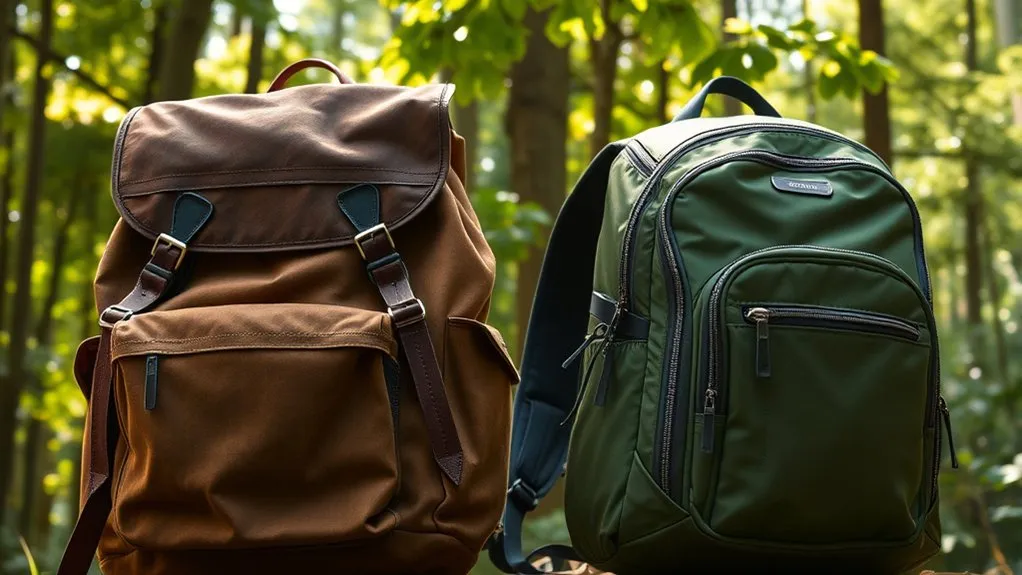
A backpack is any pack designed to be carried on the back, normally with two shoulder straps. The category includes school bags, laptop backpacks, camera packs, travel bags, hydration packs, daypacks, climbing packs, and framed backpacking packs.
Small everyday models often prioritize low weight, quick access, and organization. They may include a padded laptop sleeve, document pocket, key clip, bottle pockets, and several zippered compartments. Larger hiking models may add a frame sheet or internal frame, padded hip belt, sternum strap, load lifters, ventilation, hydration compatibility, and attachment points.
Because “backpack” is the broader term, it does not indicate a specific capacity or construction standard. A basic school backpack may be frameless and lightly padded, while an expedition backpack may be designed for multiday trips and substantial gear.
What Is a Rucksack?

A rucksack is also a bag carried on the back. In British English, the word is commonly used where an American speaker might say “backpack.” In modern product marketing, it may also describe a rugged or military-inspired pack with a large main compartment, external webbing, a flap, buckles, or a drawcord closure.
Those features are common associations, not a formal definition. Compact commuter rucksacks, zippered tactical rucksacks, lightweight trekking rucksacks, and fashion rucksacks are all available. The term therefore cannot tell you how much the pack holds, what it can safely carry, or how comfortable it will be.
Rucksack Design Features
Products marketed as rucksacks often use one or more of these features:
- A top-loading main compartment
- A flap or lid over the main opening
- A drawcord, buckle, zipper, or roll-top closure
- External compression straps
- Daisy chains or modular webbing
- Reinforced grab handles and high-wear areas
- A hip belt, sternum strap, or structured back panel
- Fewer internal dividers to make room for bulky equipment
None of these features is exclusive to rucksacks. Many hiking and travel backpacks use the same construction.
Ideal Usage Scenarios
A rucksack-style design can work well when you want a large, flexible main compartment or need to attach equipment outside the bag. Common uses include hiking, camping, military duty, bushcraft, work equipment, and weighted rucking.
For commuting or air travel, check whether the design provides the organization and access you need. A deep top-loading compartment can hold bulky gear efficiently, but it may be less convenient than a clamshell or panel-opening backpack when you need to reach a laptop, passport, charger, or clothing near the bottom.
Note: MOLLE stands for Modular Lightweight Load-Carrying Equipment. It refers to a military load-carriage system and compatible attachment webbing. MOLLE-style webbing can appear on both products called rucksacks and products called backpacks.
Load-Bearing Capabilities
A pack’s useful load range comes from its complete carrying system—not its name. Important components include the frame or frame sheet, hip belt, shoulder harness, torso adjustment, compression straps, stitching, and the manufacturer’s recommended load.
| Feature | What “Rucksack” May Suggest | What “Backpack” May Include |
|---|---|---|
| Load support | Often marketed for rugged or weighted use | Anything from a light school bag to a framed expedition pack |
| Weight distribution | Good only when the model has a suitable harness and fits correctly | Good on models with a fitted hip belt, frame, and adjustable suspension |
| Safe carrying limit | Check the individual product’s load recommendation. Do not assume a limit from the category name. | |
| Loaded comfort | Depends on torso fit, hip-belt fit, adjustment, packing balance, terrain, and the wearer. | |
Warning: Do not load a pack beyond the manufacturer’s recommendation or continue carrying it when it causes numbness, sharp pain, loss of balance, or persistent pressure points. A larger bag is not automatically designed to support a heavier load.
Design and Structure Differences
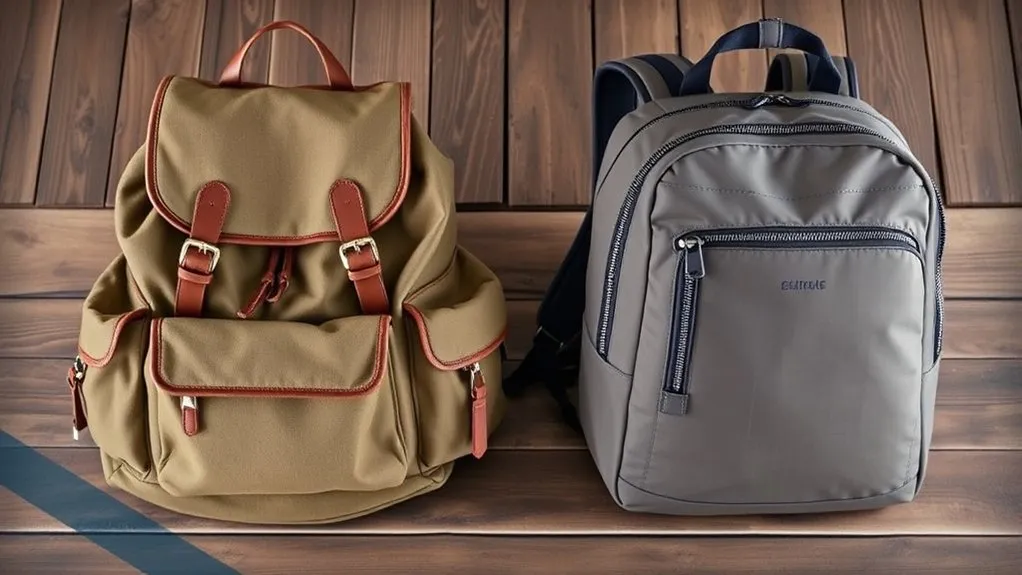
The practical differences are between individual designs, not between two strictly defined categories. Compare the fabric, frame, harness, opening, pocket layout, compression system, and attachment points of the models you are considering.
Construction Materials Comparison
Everyday backpacks often use lightweight nylon or polyester because low weight and easy handling matter for commuting or school. Outdoor and military-style packs may use heavier woven fabric, reinforced panels, stronger webbing, and more substantial hardware in high-wear areas.
However, both labels can appear on either type of construction. Fabric weight alone also does not determine durability. Stitching quality, seam design, zipper protection, buckle quality, abrasion panels, repairability, and how the pack is used all affect its service life.
Frames are also model-specific. Small urban bags are commonly frameless or use a thin frame sheet. Larger hiking packs may use internal stays, a structured frame sheet, a perimeter frame, or an external frame to transfer and stabilize the load.
Closure Mechanisms Explained
Closure style affects access, organization, weather resistance, and how easily the pack can expand. It does not reliably identify a product as a rucksack or backpack.
| Closure or Feature | Main Advantage | Tradeoff |
|---|---|---|
| Flap and drawcord | Flexible space for bulky equipment | Items at the bottom can be harder to reach |
| Panel or clamshell zipper | Broad access and easy packing | Long zippers add potential wear and water-entry points |
| Roll-top | Adjustable volume and a simple main opening | Limited access unless side or front zippers are added |
| Multiple zippered compartments | Strong organization for electronics and small items | Compartments reduce the flexibility of the main storage area |
| External webbing or pockets | Quick access and added attachment options | Exposed gear can snag, shift, or get wet |
Capacity and Storage Comparison
Capacity is normally measured in liters. Choose volume according to your equipment, season, trip length, and packing style rather than whether the product is called a rucksack or backpack.
REI’s backpack-selection guidance uses these general ranges for backpacking:
- 30–50 liters: Many one- to three-night trips for efficient packers
- 50–80 liters: Many three- to five-night trips or trips with bulkier equipment
- 70 liters or more: Extended trips, winter equipment, family gear, or gear-intensive activities
These are starting points rather than strict limits. A warm-weather day hike may require a small daypack, while cold-weather hiking, photography, climbing, or carrying gear for children may require more volume.
Storage layout matters as much as total capacity. A single large compartment works well for bulky items and packing cubes. Multiple internal pockets are useful for commuting and electronics. External stretch pockets, compression straps, tool loops, and modular webbing improve access but may add weight or snag on branches and tight spaces.
Pro Tip: Gather the equipment you expect to carry before choosing a capacity. A pack that is too small forces awkward external attachments, while an oversized pack adds weight and makes it easier to bring unnecessary items.
Usage Scenarios: Which One to Choose?
Instead of choosing by name, match the pack’s design to the job.
School and Commuting
Look for a padded laptop compartment, easy-access pockets, a stable base, comfortable shoulder straps, and a size that does not extend far beyond your torso. A zippered backpack is often convenient, but a rucksack-style commuter bag can work equally well if it provides the organization you need.
Air Travel and City Travel
A panel-opening or clamshell pack makes clothing and electronics easier to reach. Check the packed external dimensions against the specific airline’s current personal-item or carry-on limit. Compression straps, lockable zipper pulls, a protected laptop sleeve, and handles on more than one side can improve travel use.
Day Hiking
Choose enough room for water, food, extra clothing, navigation, sun protection, first aid, and weather gear. Ventilation, bottle access, a sternum strap, and a light hip belt may improve stability. A product described as a daypack, hiking backpack, or small rucksack can all be suitable.
Overnight and Multiday Hiking
Prioritize torso fit, a supportive hip belt, a suitable frame, load lifters, compression straps, and enough capacity for your complete equipment list. Test the pack with realistic weight before a long trip. A purpose-built backpacking backpack may provide the same ruggedness and load support that the article’s original wording associated only with rucksacks.
Weighted Rucking and Tactical Use
For weighted exercise or duty use, choose equipment designed for that purpose. Look for a secure weight compartment, limited load movement, reinforced stress points, suitable hardware, and a manufacturer-stated load range. Tactical appearance or MOLLE-style webbing does not by itself prove that a pack is safe for heavy weighted training.
Selection Checklist
- What equipment must fit inside?
- How long will you carry it?
- Does the capacity match the trip without excessive unused space?
- Is the torso length correct for your body?
- Does the hip belt wrap securely around the top of your hips?
- Does the suspension suit the expected load?
- Can you reach important items without unpacking everything?
- Are the fabric, seams, zippers, and hardware suitable for the environment?
- Do you need a laptop sleeve, hydration sleeve, tool loops, or modular attachments?
- Does the loaded pack remain stable when you walk, climb stairs, and bend?
Material and Durability
Pack fabrics commonly include nylon, polyester, canvas, and laminated or coated textiles. Heavier fabric can improve abrasion resistance, but it also increases weight. High-quality lightweight fabric may outperform a heavier material when the seams, reinforcements, and overall construction are better designed.
Inspect areas that receive the most stress: shoulder-strap anchors, the bottom panel, compression-strap attachments, zipper ends, haul handles, and hip-belt connections. Replaceable buckles, accessible stitching, manufacturer repair services, and a useful warranty can also extend the life of a pack.
Warning: Water-resistant fabric does not necessarily make the complete pack waterproof. As REI explains, water can enter through unsealed seams, zippers, lids, and other openings. Protect sleeping bags, electronics, documents, and spare clothing with a pack liner, dry bags, waterproof cases, or a fitted rain cover.
Comfort and Ergonomics
Comfort depends on the pack fitting your body and controlling the expected load. For structured hiking packs, torso length—not overall height—is the main sizing measurement. Hip circumference also matters because the hip belt must wrap the body correctly.
REI’s fitting guidance recommends measuring from the C7 vertebra at the base of the neck to the level of the iliac crest at the top of the hips. Because sizing ranges vary by manufacturer and model, compare that measurement with the product’s size chart.
When fitting a structured pack:
- Load it with weight similar to what you expect to carry.
- Position and tighten the hip belt around the top of your hips.
- Snug the shoulder straps without lifting the hip belt out of position.
- Adjust the load lifters, when present, to bring the upper pack closer to your body.
- Fasten the sternum strap comfortably without restricting breathing.
- Walk, turn, climb stairs, and lean forward to check stability and pressure points.
A hip belt transfers part of the load away from the shoulders, while a sternum strap helps stabilize the shoulder harness. Load lifters can draw the upper pack closer to the body. These features are common on hiking backpacks as well as products marketed as rucksacks.
Pro Tip: Never judge fit with an empty pack. Add realistic weight and wear it for at least several minutes. Watch for concentrated pressure, shoulder gaps, slipping at the hips, restricted movement, or a load that pulls you backward.
Frequently Asked Questions
Can I use a rucksack for everyday commuting?
Yes. A rucksack can work for commuting when it fits comfortably and has suitable storage for your laptop, documents, water bottle, and small accessories. Check how easily you can reach items near the bottom, because a deep top-loading design may be less convenient than a panel-opening bag.
Are there specific brands known for high-quality backpacks?
Patagonia, The North Face, Osprey, Deuter, Gregory, Fjällräven, and other established manufacturers offer backpack or rucksack lines. Brand reputation is only a starting point. Compare the specific model’s fit, intended load, materials, hardware, warranty, repair support, and user instructions.
How do I clean and maintain my rucksack?
Follow the care label or manufacturer’s instructions first. A common method is to empty the pack, brush out loose dirt, remove detachable components, and clean it by hand with mild soap, warm water, and a soft sponge or brush. Rinse it thoroughly and air-dry it in a ventilated area away from direct sunlight. Osprey advises against machine washing its packs because it may damage the fabric and structure.
Which is more suitable for hiking: a rucksack or backpack?
Choose a purpose-built hiking pack with the right capacity, torso fit, hip belt, suspension, ventilation, and weather protection. It may be sold as a hiking backpack, backpacking pack, trekking rucksack, or simply a rucksack. The label does not determine trail performance.
Can backpacks be used for travel purposes?
Yes. Travel backpacks can be lighter and easier to carry than wheeled luggage on stairs, public transportation, and uneven streets. Look for a comfortable harness, secure openings, useful handles, a laptop compartment, and dimensions that comply with the airline you will use.
Conclusion
A rucksack is not automatically larger, stronger, or better for hiking than a backpack. The terms often overlap, and manufacturers use them inconsistently. For daily commuting, prioritize organization and quick access. For travel, consider opening style and packed dimensions. For hiking or heavy equipment, focus on torso fit, hip-belt support, suspension, capacity, and the model’s recommended load. The best choice is the pack that fits your body and equipment—not the one with a particular name.
Sources
- Cambridge Dictionary: Rucksack — supports the definition and regional usage of “rucksack.”
- Merriam-Webster: Backpack — supports the broad definition of backpacks, including framed hiking packs.
- REI: How to Choose a Backpack — supports capacity, features, suspension, rain-cover, and backpacking guidance.
- REI: How to Size and Fit a Backpack — supports torso measurement, hip-belt fit, and pack adjustment guidance.
- REI: Backpacking in the Rain — supports the distinction between coated pack materials and complete waterproof protection.
- Osprey: How to Clean Your Backpack — supports hand cleaning, rinsing, air drying, and avoiding machine washing for Osprey packs.

