
Last Updated on July 30, 2026 by Caleb Warren
Traveling with one backpack is less about forcing everything into a small bag and more about choosing the right items for your route, weather, airline, and daily needs. A simple plan helps you avoid baggage fees, move through stations faster, and keep important gear within reach without sacrificing comfort.
Quick Answer
To travel with one backpack, confirm your airline’s exact size and weight limits, build a small mix-and-match wardrobe, pack only trip-specific essentials, limit shoes and toiletries, and keep documents and electronics easy to reach. Measure and weigh the packed bag before leaving home.
Key Takeaways
- Check the operating airline’s rules before choosing a backpack; liters alone do not determine whether a bag qualifies as a personal item or carry-on.
- Choose a capsule wardrobe that layers well and can be washed during the trip.
- Use packing cubes for organization; only compression cubes reduce volume, and neither type reduces weight.
- Follow security rules for liquids, identification, medication, electronics, and lithium batteries.
- Do a final size, weight, comfort, and accessibility test at home.
At a Glance
| Time Required | 30–60 minutes for planning, packing, measuring, and weighing |
| Difficulty | Easy to moderate |
| Tools Needed | Packing list, tape measure, luggage scale or household scale, pouches or packing cubes |
| Cost | $0 if you use gear you own; roughly $20–$150 if you need organizers, bottles, or a new backpack |
Disclosure: As an Amazon Associate I earn from qualifying purchases. Some links on this page are affiliate links, at no extra cost to you.
Check Your Trip and Airline Rules First
Start with the rules that can stop a one-bag plan at the gate. Airlines set their own limits for personal items, carry-on bags, and weight. The operating carrier may also have different rules from the airline that sold your ticket, especially on partner or regional flights.
Do not choose a backpack by its liter rating alone. A soft 40L bag may fit one airline’s overhead-bin limit when lightly packed, but it is usually too large to assume it will count as a personal item. External measurements—including a packed front pocket, handles, and wheels—matter more than the advertised capacity.
For example, American Airlines currently lists a maximum personal-item size of 18 × 14 × 8 inches and a carry-on size of 22 × 14 × 9 inches. United lists different personal-item dimensions, which shows why there is no universal “one-backpack” size.
Warning: Do not rely on squeezing an oversized bag into a sizer or wearing extra layers to hide excess baggage. If the packed bag exceeds the airline’s limit, remove nonessential items, move allowed items into a permitted second bag, or pay to check the bag.
Before making your packing list, answer these questions:
- How many days will you be away?
- Will you have access to laundry?
- What weather and temperature range should you expect?
- Will you need formal, outdoor, work, or specialty clothing?
- Does your fare include a carry-on, or only a personal item?
- Does the airline publish a carry-on weight limit?
- Will you take trains, buses, stairs, or long walks with the bag?
Embracing a Minimalist Packing Mindset
A minimalist packing mindset does not mean going without items you truly need. It means evaluating each item against the trip instead of packing for every possible situation. Replace the “just in case” habit with a clear reason for every item.
Use a simple test before anything enters the bag:
- Need: Will you use it for a planned activity, health need, or likely weather condition?
- Frequency: Will you use it more than once, or is it essential even if used once?
- Substitute: Can another packed item do the same job?
- Replacement: Could you buy or borrow it easily at the destination if needed?
- Bulk: Is there a smaller, lighter, or multipurpose version?
Lay everything out before packing. Remove duplicates first, then cut low-use clothing, full-size toiletries, extra footwear, and “maybe” accessories. Keep medications, accessibility items, weather protection, and required work gear even when they are not compact.
The best one-bag setup is not the smallest possible load. It is the smallest load that still supports your health, comfort, weather, and planned activities.
Choosing the Right Clothing for Versatility
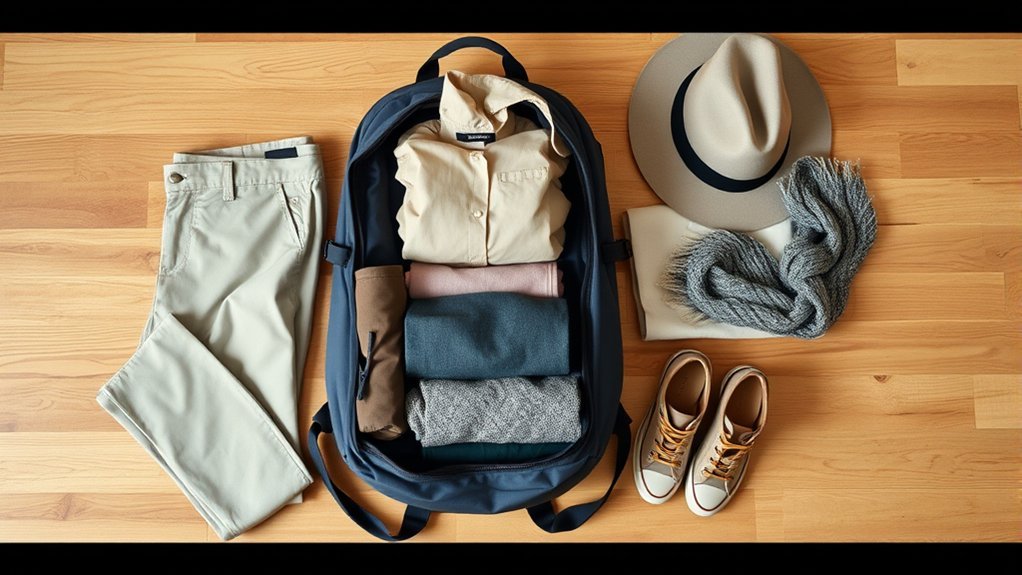
A small capsule wardrobe gives you more outfits with fewer pieces. Choose colors that work together, but do not feel limited to black, gray, and beige. The goal is coordination, not a specific palette.
Build a Small Capsule Wardrobe
For a typical trip of about one week with one laundry wash, a practical starting point is:
- Three or four tops
- Two bottoms
- One warm midlayer, such as a sweater or fleece
- One weather layer, such as a packable rain shell
- Four or five sets of underwear and socks
- One sleep outfit
- One activity-specific or dressier outfit, only if the itinerary requires it
- Two pairs of shoes total, including the pair worn in transit
Adjust the list for climate, culture, trip length, access needs, and planned activities. Hot and humid trips may require more tops, while cold trips depend more on repeatable layers.
Choose Fabrics That Match the Trip
Lightweight synthetic blends and many wool garments can dry faster than heavy cotton, but fabric choice should also account for comfort, skin sensitivity, odor, durability, and care instructions. Wrinkle resistance is useful when clothing will stay folded for long periods.
Layering is usually more flexible than packing one bulky coat. A base layer, midlayer, and outer shell can be combined as conditions change. Wear the bulkiest comfortable layer during transit when it makes sense, but keep enough space in the backpack to store it if you become too warm.
Pro Tip: Before packing a garment, pair it with at least two other pieces. Clothing that works with only one outfit takes up valuable space.
Plan Laundry Before You Leave
One-bag travel becomes much easier when you plan to rewear and wash clothing. Check whether your lodging has a washer, nearby laundromat, or sink suitable for handwashing. Pack a small amount of travel detergent in a compliant container or buy detergent after arrival.
Quick-drying items can be washed at night and hung where the accommodation allows. Give heavier clothing more drying time, and never hang wet items where they can damage furniture or block heaters and vents.
Mastering Packing Techniques With Cubes
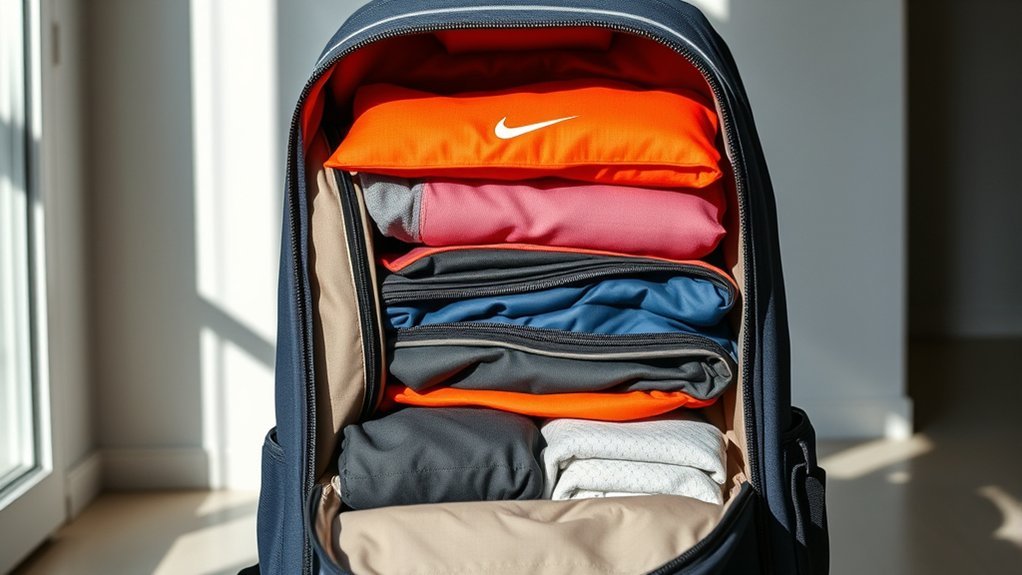
Packing cubes make it easier to group clothing and find items without emptying the whole backpack. Standard cubes organize; compression cubes use an extra zipper or panel to reduce volume. Neither type reduces the actual weight of what you pack.
Choose lightweight cubes that fit the backpack’s shape. Oversized or overfilled cubes can create hard bulges that keep a soft bag from fitting an airline sizer.
Organize Cubes by Use
A simple setup may include one cube for tops and bottoms, one smaller cube for underwear and sleepwear, and one pouch for cables or accessories. Another option is to pack by activity, such as transit clothes, daily clothes, and outdoor gear.
Fold or roll clothing based on the fabric and cube shape. Rolling can work well for casual knits, while folding may reduce creases in structured clothing. Do not compress fragile items, bras with molded cups, or anything that can be damaged by pressure.
Pack Weight Close to Your Back
Place dense items near the back panel and around the middle of the bag so the load stays close to your body. Put lighter clothing farther from your back and use soft items to fill gaps. Keep items needed in transit—documents, medication, a charging cable, and your liquids bag—in quick-access pockets.
Do not place a heavy water bottle in an unsecured outer pocket. Use a pocket with enough depth or a retention strap, and keep the left and right sides reasonably balanced.
Selecting the Ideal Backpack for Travel
The right travel backpack should fit both your body and the airline’s published limits. A comfortable bag that fails the sizer is not a carry-on solution, while a compliant bag that causes pain is not a good travel choice.
Choose Dimensions Before Capacity
Start with the smallest limit on your itinerary, then compare the backpack’s stated external dimensions. Measure the bag again after packing because soft pockets can expand. A 30L to 40L travel backpack may work as an overhead carry-on on many routes, but a 40L label is not proof of compliance and usually should not be treated as a personal-item guarantee.
Look for Comfort and Access
Useful features include:
- Contoured, adjustable shoulder straps
- A sternum strap that can be positioned comfortably
- A padded back panel with airflow channels
- A removable or supportive hip belt for heavier loads
- A clamshell or wide-opening main compartment
- A padded laptop section close to the back panel
- Lockable zipper pulls or zipper tabs
- A secure bottle pocket
- Grab handles for overhead-bin handling
Try the backpack with realistic weight before the return window ends. Walk, climb stairs, sit down, and lift it overhead. Check for pressure on your neck, numbness, strap rubbing, and a load that pulls backward.
Consider Durability Without Marketing Hype
Inspect stitching, zipper movement, fabric abrasion resistance, and warranty terms instead of relying only on broad claims such as “sustainable” or “adventure ready.” Recycled materials can be a useful preference, but construction quality, repairability, and long service life also matter.
Downsizing Toiletries for Space Efficiency
Toiletries are easy to overpack because full-size bottles contain far more product than most trips require. Start with daily essentials, remove duplicates, and check which products your accommodation supplies.
Liquid Container Reduction
For U.S. airport screening, the TSA 3-1-1 rule generally limits carry-on liquids, gels, aerosols, creams, and pastes to containers of 3.4 ounces (100 milliliters) or less, with the containers placed in one quart-size bag. A half-full 6-ounce bottle is still a 6-ounce container and does not meet the standard rule.
Decant shampoo, lotion, cleanser, and similar products into clean, leak-resistant travel containers. Label containers so you do not confuse products. Contact-lens cases can hold tiny amounts of thick products for very short trips, but they are not ideal for runny liquids and should not replace properly labeled medication containers.
Note: Medically necessary liquids and certain infant and child nourishment items may follow different screening procedures. Review the current TSA rules and tell the officer about medically necessary items at the checkpoint.
Solid Toiletry Alternatives
Solid shampoo, bar soap, deodorant sticks, toothpaste tablets, and similar products may reduce the number of liquids in your quart-size bag. Choose products you have tested before the trip so you know they work for your skin, hair, and destination.
Store damp bars in a draining case and let them dry when possible. A wet bar sealed in an airtight container can become messy and may soften during the trip.
Check Accommodation Amenities
Review the lodging listing or contact the property before leaving shampoo, conditioner, soap, towels, or a hair dryer at home. Amenities vary by hotel, hostel, rental, and room type. Do not assume skincare samples or specialty products will be provided.
Packing Electronics, Documents, and Medication
Electronics and documents deserve their own plan because they may need to come out during screening or remain with you if the backpack is gate checked.
Laptops, Tablets, and Cables
Use a padded sleeve or dedicated compartment and place the device close to your back. Keep the laptop accessible for screening instructions. Pack only the cables and adapters needed for the trip, and use a small pouch so loose cords do not spread through the bag.
The FAA requires spare lithium batteries and power banks to remain in carry-on baggage. Protect terminals from short circuits. If a gate agent checks your backpack, remove power banks and spare batteries and keep them with you in the cabin.
Identification and Travel Documents
Keep identification, boarding information, payment cards, and essential reservations in a secure pocket you can reach without opening the main compartment. For U.S. airport checkpoints, review the current TSA list of acceptable identification. Since May 7, 2025, a non-REAL-ID-compliant state license is not accepted as standard checkpoint identification unless you use another acceptable document.
For international travel, check passport validity, visa or electronic authorization requirements, medication laws, and destination advisories. The U.S. Department of State recommends organizing required documents and keeping copies separate from the originals.
Medication and Essential Health Items
Pack prescription medication, needed medical supplies, and a small first-aid kit where they remain accessible. Keep medicines in their original labeled containers when possible, especially for international travel, and carry copies of prescriptions when destination rules call for them. Do not reduce or skip necessary medication just to meet a minimalist packing goal.
Planning Your Travel Day Outfit
Your travel-day outfit should handle long periods of sitting, walking, temperature changes, and security checks. Choose breathable clothing with enough stretch and wear the bulkiest practical shoes or outer layer.
Layering is useful because airports, aircraft cabins, train cars, and outdoor platforms can feel very different. A light jacket or cardigan can be removed easily, but the backpack should still have room to hold it when needed.
Pockets can keep a phone or boarding pass close, but do not spread valuables across many open pockets. Use one secure, repeatable place for your passport or ID so you do not have to search for it at each checkpoint.
A multi-pocket vest may add storage, but it can slow screening and become uncomfortable when seated. Treat it as clothing, not as a way to bypass baggage rules.
Pack the Backpack in a Practical Order
Once your list is final, pack in an order that supports balance and quick access:
- Prepare the bag: Loosen compression straps and open every compartment.
- Load dense items: Place a laptop, shoes, and other heavy items near the back panel and around the middle.
- Add clothing: Fit cubes or folded garments around the dense items without forcing the zipper.
- Fill small gaps: Use socks, a packable towel, or soft accessories in unused spaces.
- Separate liquids: Put the quart-size liquids bag where it can be removed quickly if requested.
- Secure electronics: Keep power banks and spare batteries in the cabin bag with protected terminals.
- Use quick-access pockets: Add medication, documents, headphones, and a charging cable.
- Tighten straps: Compress the load only enough to prevent shifting; do not distort the bag beyond its allowed dimensions.
Sample One-Backpack Packing List
This sample list suits a casual one-week trip with one planned laundry wash. Adjust it for your destination and activities.
Clothing
- Three or four tops
- Two bottoms
- Four or five sets of underwear and socks
- One sleep outfit
- One midlayer
- One rain or wind shell
- One optional dressier or activity-specific outfit
- Two pairs of shoes total, with the bulkier pair worn during transit
Toiletries
- Toothbrush and toothpaste or tablets
- Deodorant
- Small amounts of hair and skin products
- Sunscreen appropriate for the trip
- Personal hygiene products
- Prescription medication and required medical supplies
- Small laundry detergent portion when laundry access is planned
Electronics and Travel Essentials
- Phone and charging cable
- Travel adapter when required
- Laptop or tablet only when needed
- Headphones
- Power bank packed according to airline and FAA rules
- Passport or acceptable ID
- Payment cards and a small amount of local cash when useful
- Reusable empty water bottle
- Small packable day bag only if it is allowed within your fare and can be stored inside the main backpack during boarding
Measure, Weigh, and Test the Packed Bag
Do not wait until the airport to learn that the bag is too large or uncomfortable. Finish with four checks:
- Measure: Measure the fully packed height, width, and depth, including stuffed exterior pockets.
- Weigh: Compare the total with the operating airline’s limit, if it publishes one.
- Carry: Walk for at least 10 minutes, use stairs, and lift the bag as you would at the airport.
- Access: Time how quickly you can reach your ID, liquids, medication, and laptop.
If the bag fails any test, remove the least useful items first. Do not solve an overweight problem with a compression cube; compression changes volume, not mass.
Common One-Backpack Mistakes
- Choosing by liters alone: Compare packed external dimensions with airline limits.
- Packing for unlikely scenarios: Focus on the actual itinerary and weather forecast close to departure.
- Taking too many shoes: Limit footwear to pairs that serve clearly different needs.
- Forgetting laundry: Plan where, when, and how clothing will be washed and dried.
- Overfilling every pocket: Leave a little space for food, a removed layer, or small items acquired during the trip.
- Burying documents or medication: Keep essential items in a secure quick-access area.
- Ignoring gate-check risk: Be ready to remove power banks, spare lithium batteries, documents, medication, and valuables.
- Using too many organizers: Pouches add weight and can waste space when every category has its own container.
Frequently Asked Questions
How do I handle laundry while traveling with one backpack?
Pack clothes that can be reworn and washed together. Plan one laundry stop for a weeklong trip, or handwash small items when the lodging allows it. Bring a small compliant amount of detergent or buy it at the destination, and allow enough drying time.
What should I do if my backpack exceeds airline carry-on limits?
Remove nonessential items, place permitted items in an allowed personal item, or pay to check the bag. Do not assume a soft bag will be accepted because it can be squeezed. Recheck the operating airline’s size, weight, fare, and regional-aircraft rules.
Can I bring a laptop or tablet in my backpack?
Yes, subject to airline and security rules. Use a padded sleeve, keep the device accessible for screening, and protect it from pressure. Devices with installed lithium batteries are best kept in carry-on baggage, while spare batteries and power banks must remain in the cabin.
How do I keep my backpack organized during the trip?
Give each category a consistent place. Use one or two packing cubes for clothing, one small pouch for cables, and a secure pocket for documents. Repack the same way each morning so you can notice missing items quickly.
What are the best travel-friendly accessories to consider?
Useful options include a small packing cube, cable pouch, reusable empty water bottle, compact travel adapter, luggage scale, packable tote, and quick-drying towel. Choose only accessories that solve a specific need on your itinerary.
Is a 40L backpack always carry-on compliant?
No. Capacity is only an estimate of internal volume. Airlines judge the packed bag by external dimensions and sometimes weight. A 40L pack may fit some overhead-bin limits, but it should not be assumed to qualify as a personal item.
How much empty space should I leave in the backpack?
Leave enough room for a removed jacket, snacks, or a small item bought during the trip. A bag packed completely rigid is harder to organize, may exceed its measured depth, and gives you no flexibility during travel.
Conclusion
Traveling with one backpack can make a trip simpler, but success comes from planning rather than extreme minimalism. Check the airline first, pack for the real itinerary, choose clothing that works together, and protect essential documents, medication, and electronics. When the finished bag fits the rules and feels comfortable to carry, you are ready to travel with less stress and more freedom.
Sources
- Transportation Security Administration: Liquids, Aerosols, and Gels Rule — carry-on container and quart-size bag requirements
- Transportation Security Administration: Acceptable Identification — current U.S. checkpoint ID and REAL ID guidance
- Federal Aviation Administration: PackSafe Lithium Batteries — power bank, spare battery, and short-circuit protection rules
- American Airlines: Carry-On Bags — example personal-item and carry-on dimensions
- United Airlines: Carry-On Bags — example airline-specific baggage dimensions and allowances
- U.S. Department of State: International Travel Checklist — passport, visa, medication, document-copy, and destination planning guidance

