
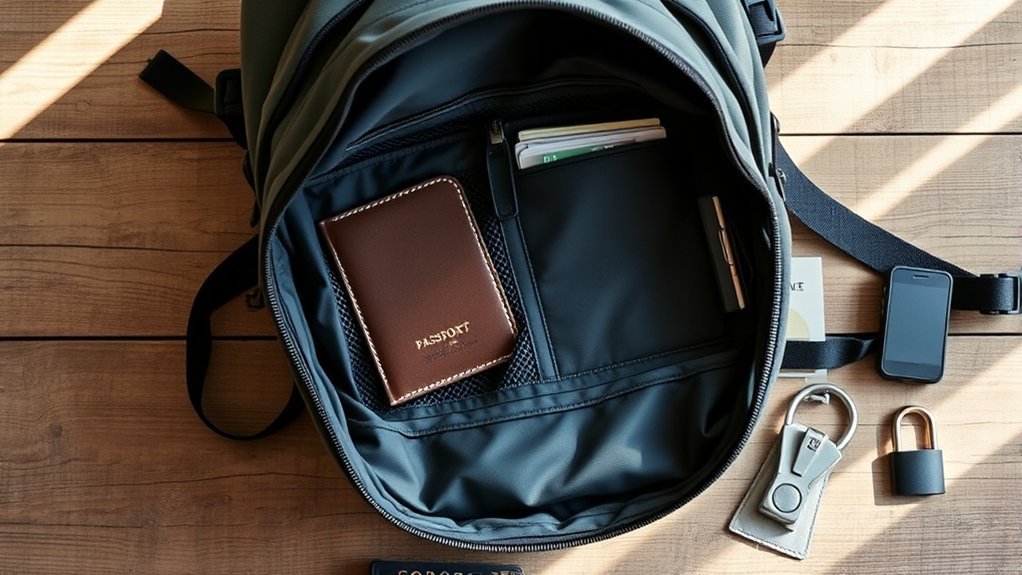
Last Updated on September 10, 2026 by Daniel Globe
Your passport is one of the most important items in your backpack, but it should never sit in an outer pocket where it can be grabbed, soaked, bent, or forgotten. The safest approach is layered: use a hard-to-reach zipped compartment, protect the document from moisture, keep backup copies elsewhere, and know how to replace it if it disappears.
Quick Answer
Keep your passport in a closed, inner zipped pocket that rests against your body—not in an outer backpack pocket. Place it in a water-resistant sleeve, keep paper and secure digital copies separate from the original, limit public handling, and store it in a working hotel safe when local rules do not require you to carry it.
Key Takeaways
- Use a deep, lockable inner pocket that is difficult for another person to reach.
- Protect the passport from water, crushing, bending, and unofficial markings.
- Keep copies separate from the original and leave another set with someone you trust.
- Check destination rules before deciding whether to carry the original or leave it secured at your lodging.
- Report a lost or stolen passport promptly and contact the nearest embassy or consulate for replacement help.
At a Glance
| Time Required | About 10–15 minutes before departure, plus brief checks at key travel transitions |
| Difficulty | Easy |
| Tools Needed | Backpack with an inner zipper, water-resistant document sleeve, paper copies, secure digital storage, and optional zipper clip or tracker |
| Cost | About $0–$30; most precautions are free |
Disclosure: As an Amazon Associate I earn from qualifying purchases. Some links on this page are affiliate links, at no extra cost to you.
Choosing the Right Travel Backpack Purse
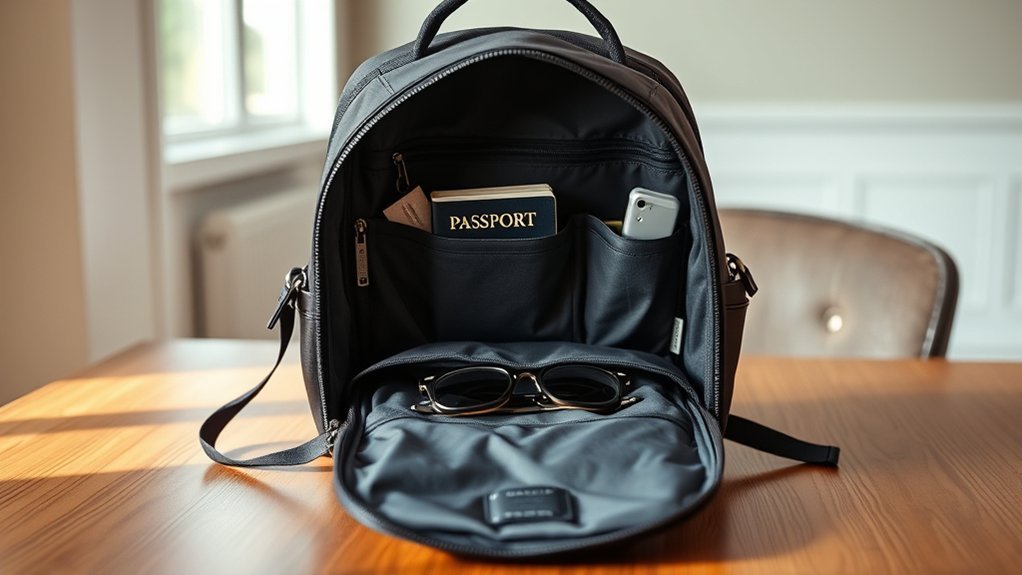
A secure travel backpack purse should make your passport easy for you to reach but difficult for anyone else to touch. Look for a deep internal compartment, a zipper that closes fully, and a pocket positioned against your back. Lockable zipper pulls, reinforced straps, cut-resistant panels, and covered openings can add resistance, but no bag is theft-proof.
Check the exact personal-item dimensions for every airline on your itinerary because size limits differ by carrier, route, and ticket type. A convertible design that works as a backpack or crossbody bag may improve control in airports, stations, and busy streets. Before buying, load the bag and confirm that you can reach the passport pocket without exposing the rest of your valuables.
Warning: Never store your passport in an open tote, bottle pocket, unzipped front compartment, or loose outer pocket. Those locations are easy to reach and offer little protection from rain or impact.
Utilizing Hidden Pockets for Security
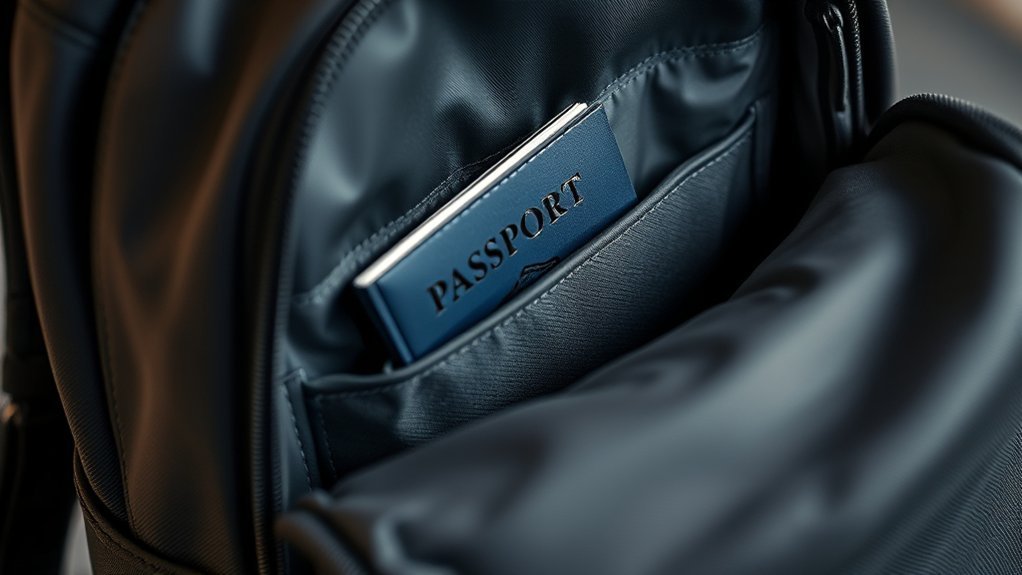
Hidden pockets work best when they are closed, close to your body, and separate from items you use often. A passport pocket should not share space with snacks, chargers, pens, water bottles, or anything that could bend, stain, or scratch the document.
Choose Ideal Hidden Pockets
Choose a pocket on the inside back panel or beneath another secure compartment. A deep inner zipped pocket is usually safer than a front pocket, even when the front pocket is described as hidden. Reinforced straps or cut-resistant panels may slow a slash-and-grab attempt, while zipper pulls that accept a small clip can discourage quick access.
Test the pocket before the trip. Put the passport inside its protective sleeve, close the bag, walk around, sit down, and make sure the document does not bend against a hard object. You should also be able to retrieve it without emptying the bag.
Securely Store Valuables
Do not place every important item in the same pocket. Keep the passport separate from most cash, backup cards, and copies of the passport. Splitting these items reduces the chance that one theft or loss removes every way to identify yourself or pay for help.
| Feature | Benefit |
|---|---|
| Inner back-panel pocket | Keeps the passport out of sight and harder to reach |
| Lockable or clipped zipper | Adds an extra step that can deter quick theft |
| Reinforced strap or cut-resistant panel | May slow slash-and-grab attempts |
| Separate document sleeve | Reduces moisture, dirt, and bending damage |
Access Without Distraction
Practice a simple access routine before you leave home. Move to the side of the line, keep the bag in front of you, open only the document compartment, remove the passport, and close the zipper immediately. After an airline agent, border officer, hotel clerk, or security worker returns it, put it back before handling your phone, ticket, or luggage.
Pro Tip: Use the same passport pocket for the entire trip. A consistent routine lowers the chance that you will place the document in a tray, jacket, seat pocket, or temporary bag compartment and forget it.
Storing Your Passport Safely
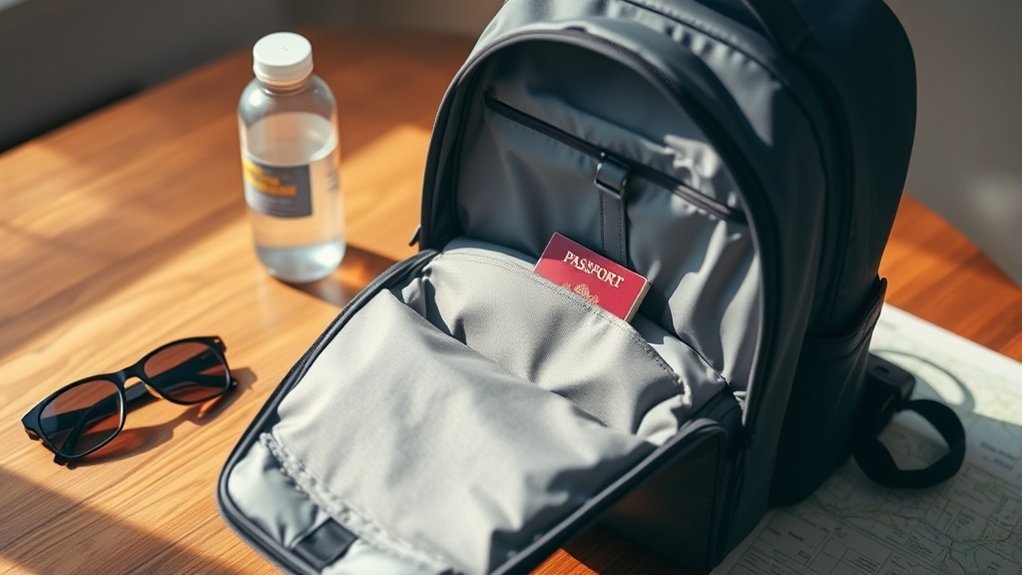
The best storage location changes during the trip. In transit, the passport usually belongs in a zipped pocket close to your body. At your lodging, a working safe or another secured location may be better when you do not need to carry the original and local rules allow you to leave it behind.
Inner Zipped Pocket
Use an inner zipped pocket that you can reach without removing everything else from the backpack. Keep the passport deep in the compartment and close the zipper every time. Check the zipper, seams, and pocket lining before departure and again if the bag is dropped, soaked, or pulled hard.
- Keep sharp objects, liquids, and food in other compartments.
- Do not place a heavy power bank, camera, or bottle against the passport.
- Keep the backpack in front of you in dense crowds or while standing on public transportation.
- Never leave the bag unattended on a chair, luggage cart, café floor, or airport seat.
Hotel Safe Storage
When you do not need the original passport, a functioning room safe or front-desk safe can be safer than leaving it in an unattended backpack. Test the safe, set your own code, confirm that it locks, and place the passport in its protective sleeve. If the room safe is broken or loose, ask the front desk about a secure alternative.
Keep a paper copy in a different bag and a protected digital copy in secure storage. A safe reduces exposure but does not guarantee against every loss, so record the lodging address and know how to contact the front desk after hours.
Hidden Money Belt
A hidden money belt can keep your passport close to your body when you must carry it through high-traffic areas. Choose a lightweight model that fits under clothing, has a reliable zipper, and does not fold the passport. Multiple compartments can separate the passport from cash and cards.
- Comfort: Make sure the belt does not rub or become soaked with sweat.
- Fit: Adjust it so it stays secure without bending the passport.
- Access: Avoid opening it openly in a crowd; step into a controlled area first.
- Optional RFID layer: An RFID-blocking pocket may be used, but physical security remains more important.
Should You Carry Your Passport or Leave It Secured?
There is no universal answer. Carry the original when you need it for an international flight, border crossing, immigration check, hotel check-in, official appointment, or any activity that specifically requires it. Some destinations also require visitors to carry original identification, so review the official destination information and local laws before your trip.
When the original is not required, consider leaving it in a secure lodging safe and carrying a paper copy or protected photo of the biographical data page. A copy helps with identification and replacement, but it is not a substitute for the original at a border or anywhere local law requires the actual passport.
Protecting Your Passport From Water and Physical Damage
Use a water-resistant document sleeve or resealable pouch inside the zipped passport pocket. The sleeve should be large enough to hold the passport flat without forcing the cover or pages to curl. After rain, a boat trip, or a spill, check the outer sleeve and let it dry before returning the passport.
The U.S. Department of State lists water damage, mold, significant tears, unofficial markings, missing pages, and other major damage as reasons a passport may need replacement. Protect it from extreme heat, crushing, bending, and immersion in water, and never punch holes, add souvenir stamps, laminate pages, or attach anything directly to the passport.
Warning: Do not attempt to dry a wet passport with a hair dryer, iron, microwave, or direct high heat. If the data page, chip area, pages, or cover are damaged, contact the passport-issuing authority before traveling.
Implementing RFID Protection
RFID protection is optional for most U.S. passport-book travelers. U.S. electronic passport books include security controls, and anti-skimming material in the cover helps prevent the chip from being read while the book is closed. Keeping the passport closed and physically secured is more important than buying a special sleeve.
An RFID-blocking sleeve can still serve as a protective cover and may provide extra reassurance, especially if you also carry contactless cards. Do not rely on a vague “RFID safe” label as proof of overall bag security. A sleeve does not prevent pickpocketing, bag theft, loss, water damage, or someone viewing the printed data page after obtaining the passport.
Note: The passport book and passport card use different systems. A U.S. passport card is designed for RFID use at certain land and sea border lanes, while a passport book contains a contactless chip used when the book is presented for inspection.
Making Paper Copies of Important Documents
Paper copies can make a lost-passport report and replacement application easier. Copy the biographical data page, relevant visa pages, and any required entry document. The U.S. Department of State advises travelers to make multiple copies, keep a set separate from the originals, and leave another set with a trusted friend or family member.
Benefits of Paper Copies
A clear copy gives officials your name, passport number, issue details, and photograph even when the original is missing. It can also help you complete forms and prove citizenship during a replacement request, although officials may still require other identification and evidence.
- Helps you provide accurate passport details during a loss report.
- Supports communication with an embassy, consulate, airline, or local police.
- Gives a trusted person at home information they can send if your own copies disappear.
- Reduces the need to handle the original for routine reference.
Best Storage Practices
Keep copies in places that will not be lost with the original. Do not put the original passport and every backup in the same backpack. Protect paper copies from moisture, and store digital images behind a strong device passcode in an encrypted vault, password manager, or similarly secured account.
| Storage Location | Purpose |
|---|---|
| Separate suitcase compartment | Paper backup if the day bag is lost |
| Crossbody bag or second secure bag | Accessible copy kept away from the original |
| Trusted friend or family member | Remote emergency backup |
| Encrypted digital storage | Secure remote access when paper copies are unavailable |
| Pre-trip review | Confirms copies are current, complete, and readable |
Keeping Track of Your Passport Information
Photograph or scan the passport’s biographical data page rather than relying on a sticker or barcode on the back cover, which may not contain the information needed for replacement. Save the passport number, issue date, expiration date, and issuing authority in secure storage. Also record the nearest embassy or consulate, your travel insurer, and an emergency contact who is not traveling with you.
An optional Bluetooth or network tracker can help locate the passport cover or backpack nearby, but it cannot guarantee recovery and should not replace careful storage. Put the tracker in a separate cover or bag pocket; do not glue, staple, punch, or otherwise attach it to the passport itself. Check its battery and privacy settings before departure.
The strongest passport-security plan combines a hard-to-reach pocket, protection from damage, separate backups, and a clear replacement plan.
Being Aware of Your Surroundings
Stay alert in airports, train stations, crowded public transportation, markets, tourist attractions, hotel lobbies, and restaurants. Theft often happens during ordinary distractions: checking a phone, lifting luggage, buying a ticket, posing for a photo, or responding to someone who bumps into you.
Keep the backpack zipped and under your control. In a dense crowd, move it to the front of your body or keep one hand on the secured compartment. Do not announce where the passport is stored, display it longer than necessary, or set it on a counter while organizing other items.
Tips for Traveling in Tourist Areas
- Keep the original passport in an inner zipped pocket or secure lodging safe, depending on local rules and your plans.
- Avoid reaching for it in the middle of a crowd; step against a wall, into a staffed area, or beside a trusted companion.
- Watch for staged distractions, unexpected touching, crowding, spills, requests for help, or one person engaging you while another moves near your bag.
- Do not hang the bag on the back of a chair or place it on the floor beside you.
- Keep the bag attached to your body during airport screening transitions, boarding, baggage claim, and ground transportation.
- Trust your instincts and move away if someone’s behavior makes you uncomfortable.
Emergency Preparation for Lost Passports
Prepare for loss before departure. Save the contact details for the nearest embassy or consulate, keep copies separate from the original, and write down your itinerary and emergency contacts. U.S. travelers can also enroll in the Smart Traveler Enrollment Program (STEP) to receive embassy alerts and help officials reach them during an emergency.
If a U.S. passport is lost or stolen abroad:
- Move to a safe place and check carefully. Retrace only when it is safe, contact the transport company or lodging, and use a tracker if one is present.
- Report the passport promptly. Use the U.S. Department of State lost-or-stolen passport guidance. Once reported and canceled, the passport cannot be used for travel even if you later find it.
- Contact the nearest U.S. embassy or consulate. You generally must appear in person to apply for a replacement. Travelers from other countries should contact the embassy or consulate of the country that issued their passport.
- File a police report when appropriate. A police report is not always required for a U.S. replacement, but it can document theft and may be needed for insurance or local procedures.
- Bring what you have. Useful items include a passport photo, identification, proof of citizenship or a passport copy, travel itinerary, required forms, and payment. Consular staff may still be able to help if some documents are missing.
- Explain urgent travel. If there is not enough time for a regular passport, a U.S. embassy or consulate may issue a limited-validity emergency passport, which may be valid for up to one year.
Note: Most U.S. embassies and consulates cannot issue passports on weekends or holidays. After-hours duty officers handle life-or-death emergencies, but routine replacement may wait until the next business day.
| Preparation | What to Save | Why It Helps |
|---|---|---|
| Embassy details | Address, phone number, hours, and after-hours instructions | Speeds contact after loss or theft |
| Passport information | Bio-page copy, passport number, issue date, and expiration date | Helps complete reports and replacement forms |
| Travel proof | Flight, train, hotel, or cruise itinerary | Shows the urgency and timing of replacement |
| Optional tracker | Battery status, app access, and recovery contact | May help locate the bag or cover nearby |
Engaging With Travel Communities for Insights
Travel communities can help you learn about common theft patterns, secure-bag features, and practical storage routines for a specific destination. Advice from experienced travelers can be useful for comparing backpacks, hidden pockets, zipper clips, money belts, and document sleeves.
Treat community advice as supplemental. Verify entry rules, identification requirements, safety alerts, and passport-replacement procedures through the issuing government, embassy, consulate, airline, or official destination page. Product claims and local rules can change, and one traveler’s experience may not apply to your route.
Frequently Asked Questions
What should I do if my passport is stolen while traveling?
Move to a safe place, report the theft to the passport-issuing authority, and contact your nearest embassy or consulate. U.S. travelers generally must appear in person for a replacement. A police report is not always mandatory for a U.S. replacement, but it can document the theft and support an insurance claim.
How can I quickly access my passport when needed?
Use one designated inner zipped pocket for the entire trip. Step aside, hold the bag in front of you, open only that compartment, and close it as soon as you remove or replace the passport. Never set the passport down while handling a phone, ticket, or other luggage.
Are there specific backpack brands known for security features?
Pacsafe sells models built around anti-theft features, while Osprey and Deuter offer travel packs whose hidden pockets, lockable zippers, and reinforced materials vary by model. Check the current product specifications instead of assuming that every backpack from a brand has the same security features.
What are the signs of a pickpocket in tourist areas?
Watch for staged distractions, unusual crowding, repeated bumping, someone trying to block your path, or one person demanding your attention while another moves close to your bag. These behaviors do not prove theft, but they are good reasons to secure your belongings and move away.
How often should I check my passport during my trip?
Check at key transitions rather than repeatedly opening your bag in public: before leaving lodging, after airport or border screening, after using the passport at a hotel or ticket desk, after changing transportation, and before moving to a new destination.
Do I need an RFID-blocking passport sleeve?
It is optional for a U.S. passport book because the book already includes chip-security measures and anti-skimming material in the cover. A sleeve can still protect against wear and moisture, but it does not replace a secure pocket, careful handling, or theft awareness.
Should I carry my original passport or a copy?
Carry the original when required for travel, border control, hotel check-in, official business, or local identification laws. When it is not required, a secure lodging safe plus a copy may reduce theft risk. Check the official rules for every destination because a copy is not always legally sufficient.
Conclusion
Keeping your passport safe is less about one special product and more about a repeatable system. Store it in a deep inner pocket, protect it from water and bending, keep backups elsewhere, limit public handling, and use a secure lodging location when appropriate. With a replacement plan ready, you can focus on the trip instead of worrying about your most important document.
Sources
- U.S. Department of State: International Travel Checklist — document copies, destination research, and STEP preparation
- U.S. Department of State: Lost or Stolen Passport Abroad — reporting, replacement documents, embassy visits, and emergency passports
- U.S. Department of State: Design and Security of U.S. Passports — current passport-book and passport-card security features
- U.S. Department of State: Passport Glossary — examples of passport damage and normal wear
- U.S. Department of State: Crime Prevention While Abroad — awareness, securing IDs, and official safety information
- U.S. Department of State: Lodging Safety — evaluating lodging security and reporting suspicious activity

