

Last Updated on July 30, 2026 by Caleb Warren
Wrinkles are hard to avoid when a backpack is packed too tightly, but the right method can reduce deep creases and keep dressier clothes presentable. The best approach depends on the garment: bundle-wrap shirts, trousers, and jackets; roll soft knits; and use packing cubes mainly for organization rather than heavy compression.
Quick Answer
To keep clothes wrinkle-free in a backpack, smooth each garment, place wrinkle-prone pieces on the outside of a bundle, wrap them around a soft core, and load the bundle flat without crushing it. Roll casual knits, use packing cubes for organization, and leave enough room so the pack does not press sharp folds into the fabric.
Key Takeaways
- Bundle wrapping works best for dress shirts, trousers, skirts, and light jackets because it avoids many small, sharp folds.
- Use a soft core, keep every layer smooth, and wrap without stretching or crushing the fabric.
- Roll wrinkle-resistant knits, but fold structured or delicate garments along their natural seams.
- Compression bags save volume but can set wrinkles, so reserve them for underwear, socks, and casual knits.
- Pack shoes separately and follow each garment’s care label when removing wrinkles after arrival.
At a Glance
| Time Required | About 10–15 minutes |
| Difficulty | Easy |
| Tools Needed | A flat surface, your backpack, and an optional soft packing cube or pouch |
| Cost | $0 with items you already own; optional cubes or spray cost extra |
Disclosure: As an Amazon Associate I earn from qualifying purchases. Some links on this page are affiliate links, at no extra cost to you.
Why Clothes Wrinkle in a Backpack
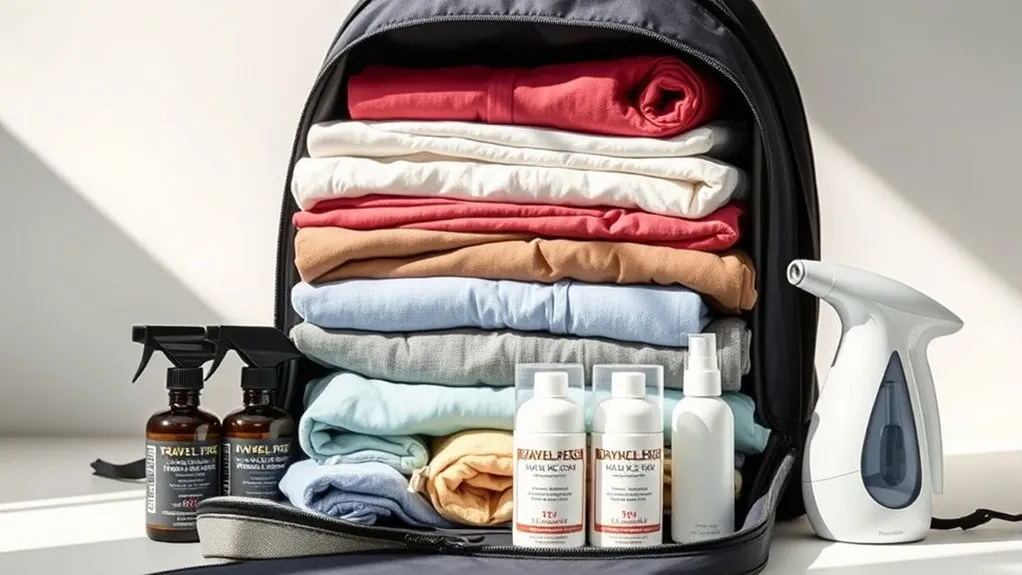
Wrinkles form when fabric is bent, pressed, and held in the same position. A tightly packed backpack can make the problem worse because folded edges sit under pressure while the load shifts during travel. Moist or warm clothing also creases more easily, so pack only clean, fully dry garments.
Fabric matters too. Knit garments and many polyester, nylon, merino-wool, or elastane blends usually recover from creases better than crisp cotton, linen, rayon, or heavily structured clothing. Construction and finishing still matter, so check how a garment behaves at home before relying on it for a trip.
Note: No packing method can guarantee perfectly pressed clothing. The goal is to reduce deep creases and make any remaining wrinkles easier to release after arrival.
Benefits and Limits of Bundle Wrapping
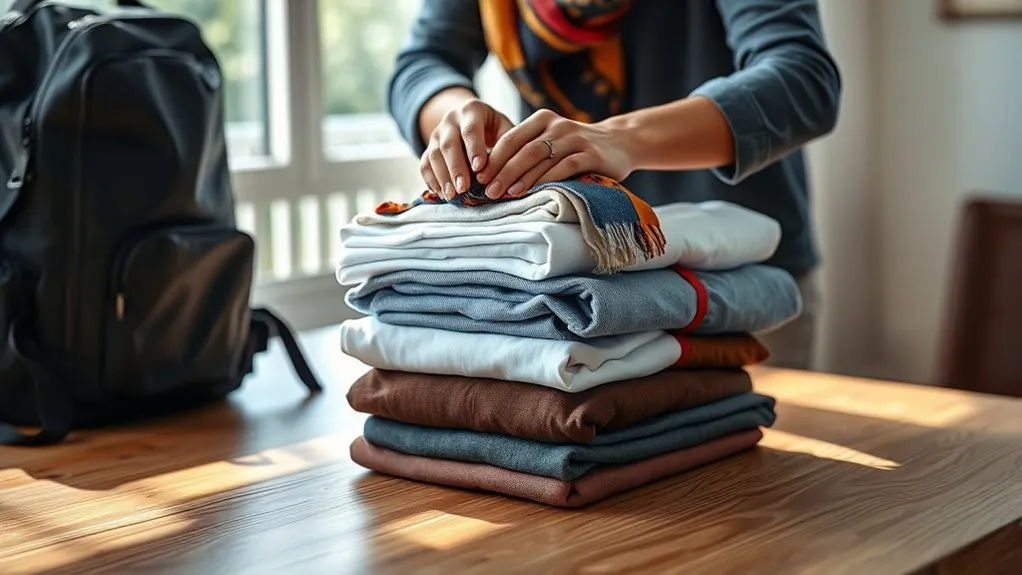
Bundle wrapping places several garments around one soft center. It reduces the number of hard folds, spreads bends over wider curves, and helps stop individual pieces from sliding around. It is especially useful when you need to carry a dress shirt, trousers, a skirt, or a lightweight jacket in a backpack.
- Fewer sharp folds: Garments curve around the core instead of being stacked with pressed edges.
- One stable unit: A properly sized bundle moves less than a loose pile of clothing.
- Good use of a panel-loading pack: The bundle can lie flat against the back panel or inside the main compartment.
The tradeoff is access. To reach an item near the center, you may need to unwrap most of the bundle. The method is also less useful for bulky sweaters, technical gear, or trips where you unpack and repack every day.
The main wrinkle-control principle is simple: use broad curves, smooth fabric, and light pressure instead of sharp folds and heavy compression.
Step-by-Step Guide to Bundle Wrapping
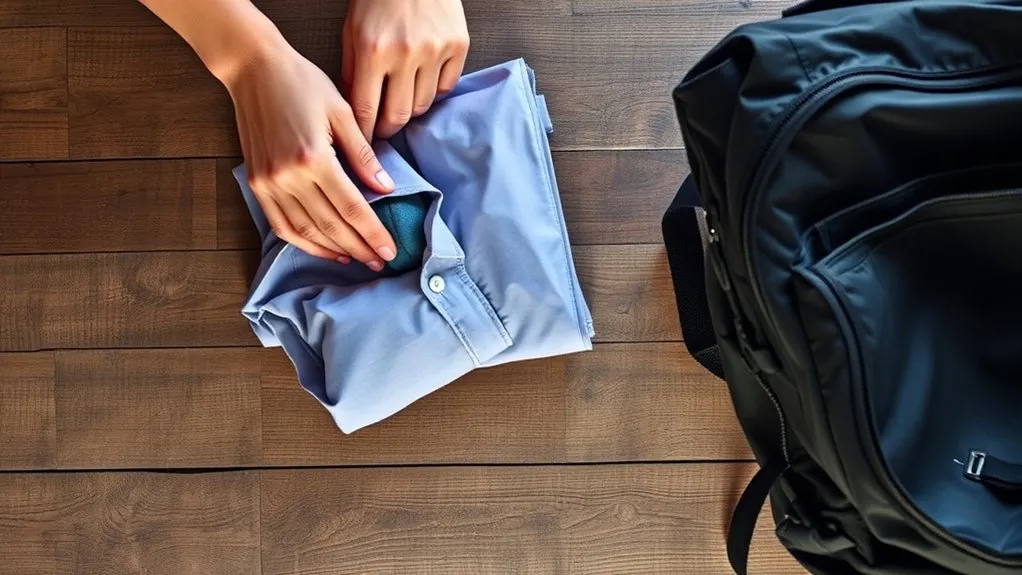
Choose a clean, flat surface and gather the clothes you want in one bundle. A small or medium bundle is easier to wrap evenly than your entire wardrobe.
Preparing Your Core
Use a soft, rectangular core that has no hard corners. A packing cube or pouch filled with socks, underwear, and a folded T-shirt works well. Keep toiletries, chargers, buckles, and shoes out of the core because hard objects can leave pressure marks.
Layering Clothes Strategically
- Lay the most wrinkle-prone outer garment first. Place a light jacket or blazer face down with the collar straight and the sleeves extended.
- Add dress shirts next. Alternate their direction so collars and sleeves do not form one thick stack. Button a few front buttons and smooth the placket, collar, and cuffs.
- Add trousers, skirts, and casual tops. Lay each item flat, following natural seams. Let the fabric extend beyond the center so it can wrap around the core later.
- Place the soft core in the middle. Center it over the layered garments. The core should be firm enough to hold its shape but not tightly compressed.
Wrapping Technique Tips
- Wrap in reverse order. Fold the last garment placed around the core first. Smooth each panel before wrapping the next layer.
- Handle sleeves gently. Bring sleeves across the bundle along their natural line. Do not twist or pull them tight.
- Finish with the jacket or outer shirt. Wrap the body around the bundle, then fold the sleeves across without creating a hard bend at the elbows.
- Move the bundle as one piece. Lift it with both hands and place it flat in the backpack.
Warning: Do not cinch compression straps hard across a blazer, dress shirt collar, or other structured garment. Strong pressure can set the very creases you are trying to avoid.
Mastering the Wrapping Technique
A smooth bundle matters more than an extremely tight one. Before wrapping each layer, run your hands from the center toward the edges to remove bunching. Keep collars flat, align trouser creases if the garment is designed to have them, and avoid folding over buttons, zippers, or belt loops.
For a jacket, keep the shoulders supported and avoid forcing the lapels backward. For a dress shirt, lightly button the front and place a thin layer of tissue paper between folds if the fabric grips itself easily. For delicate items, use a clean garment sleeve or tissue rather than a scented sheet that may transfer fragrance or residue.
Pro Tip: Practice once before the trip. Pack the bundle for a few hours, unpack it, and adjust the size or garment order based on where creases appear.
Tips for Successful Bundle Packing
- Do not overpack. The backpack should close without forcing the zipper or bowing the back panel.
- Fill empty spaces lightly. Place socks or soft knits around the bundle so it cannot slide, but do not wedge hard items against it.
- Separate shoes. Put each shoe in a cloth or washable shoe bag with the soles facing away from clean clothes.
- Protect against leaks. Keep liquids in a separate sealed toiletry bag, away from the clothing bundle.
- Load for balance. In a larger backpack, keep dense items close to your back and near the middle of the pack rather than automatically placing everything heavy at the bottom. This follows general backpack-loading guidance from REI Co-op.
- Unpack soon after arrival. Hanging clothes promptly prevents travel creases from becoming more stubborn.
A bundle can be inconvenient during a security inspection because several garments are connected. Keep electronics, liquids, travel documents, and anything you may need to remove in separate, easy-to-reach compartments.
Additional Packing Strategies for Travel
Bundle wrapping is not the best choice for every item. Match the method to the garment instead of using one technique for your entire backpack.
| Strategy | Best For | Wrinkle Guidance |
|---|---|---|
| Bundle wrapping | Dress shirts, trousers, skirts, light jackets | Reduces sharp folds when layers are smooth and lightly packed |
| Rolling | T-shirts, leggings, underwear, soft knits | Roll smoothly rather than tightly; poor rolls can create narrow creases |
| Flat folding | Jeans, sweatshirts, structured pieces with natural fold lines | Use broad folds and place the item where it will not be crushed |
| Packing cubes | Organization and separating outfits | Choose a cube that fits without bulging; cubes control movement but do not erase wrinkles |
| Compression bags | Socks, underwear, puffy or casual items | Avoid using them for crisp shirts, linen, rayon, or tailored clothing because heavy compression can set creases |
A dryer sheet may add fragrance and reduce static, but it is not a wrinkle-control tool. Skip it if you are sensitive to fragrance or worried about residue. A clean sheet of tissue paper is a better separator for delicate clothing.
How to Remove Wrinkles After You Arrive
Unpack and hang wrinkle-prone clothes as soon as possible. Light creases may relax overnight. For faster results, use a travel steamer, an iron, or a wrinkle-release spray only when the garment’s care label allows it. The Federal Trade Commission’s care-label guidance explains why following the manufacturer’s cleaning and ironing instructions matters.
- Steam: Keep the steamer moving and test delicate fabric in an inconspicuous area.
- Iron: Use the temperature shown on the care label and a pressing cloth when needed.
- Wrinkle-release spray: Test for spotting or color change before treating the visible front of a garment.
- Bathroom steam: Hanging clothes in a steamy bathroom may relax light wrinkles, but keep garments away from direct water and allow them to dry fully.
Frequently Asked Questions
Can I Use Plastic Bags for Packing Clothes?
Yes, but use them mainly to isolate shoes, damp items, or possible leaks. A regular plastic bag does not prevent wrinkles, and squeezing out too much air can press creases into clothing. Make sure garments are fully dry before sealing them for more than a short trip.
How Do I Pack Shoes Without Wrinkling Clothes?
Place each shoe in a separate cloth or washable shoe bag. Pack the soles against an outside wall or in a dedicated shoe compartment, then put a soft layer between the shoes and your clothing bundle. Stuffing clean socks inside the shoes can save space and help them hold their shape.
What Types of Fabrics Are Least Prone to Wrinkling?
Many polyester, nylon, merino-wool, and elastane-blend garments resist or recover from wrinkles better than crisp linen, rayon, or untreated cotton. Knits often travel better than woven fabrics. Results vary by weave, thickness, and finish, so test the garment before your trip.
Should I Bring Travel-Sized Fabric Spray for Wrinkles?
It can be useful for washable fabrics, but test it first and follow the product and garment labels. In a U.S. carry-on, liquids, aerosols, gels, creams, and pastes generally must follow the TSA liquids rule, including the 3.4-ounce (100-milliliter) container limit unless an exemption applies.
How Can I Avoid Overpacking While Traveling?
Build outfits around a small color palette, choose pieces that work more than one way, and wear your bulkiest items in transit. Lay everything out before packing, remove duplicates, and stop adding clothes once the backpack closes easily without compressing the main bundle.
Is Rolling or Folding Better for Preventing Wrinkles?
Neither method is best for every garment. Roll soft, wrinkle-resistant knits; fold jeans and structured casual pieces along natural seams; and bundle-wrap dressier garments. Smooth fabric before packing and avoid hard compression whichever method you use.
Can I Access Clothes Easily With Bundle Wrapping?
Not always. Items near the center require partial or full unwrapping. For multi-stop trips, make smaller bundles by outfit or day, or place frequently used casual clothes in a separate packing cube.
Conclusion
Keeping clothes presentable in a backpack is less about packing everything tightly and more about controlling folds, pressure, and movement. Bundle-wrap wrinkle-prone garments around a soft core, roll casual knits, keep shoes and liquids separate, and unpack promptly. You may still see a few light creases, but they should be easier to release before you head out.
Sources
- REI Co-op: How to Pack a Backpack — supports balanced load placement and keeping dense items close to the back.
- Transportation Security Administration: Liquids Rule — supports carry-on limits for travel-sized wrinkle-release sprays and other liquids.
- Federal Trade Commission: Complying With the Care Labeling Rule — supports following garment care instructions before ironing, steaming, or treating fabric.
- Patagonia Product Care — provides manufacturer guidance on fabric care and extending garment life.

