
Last Updated on July 30, 2026 by Caleb Warren
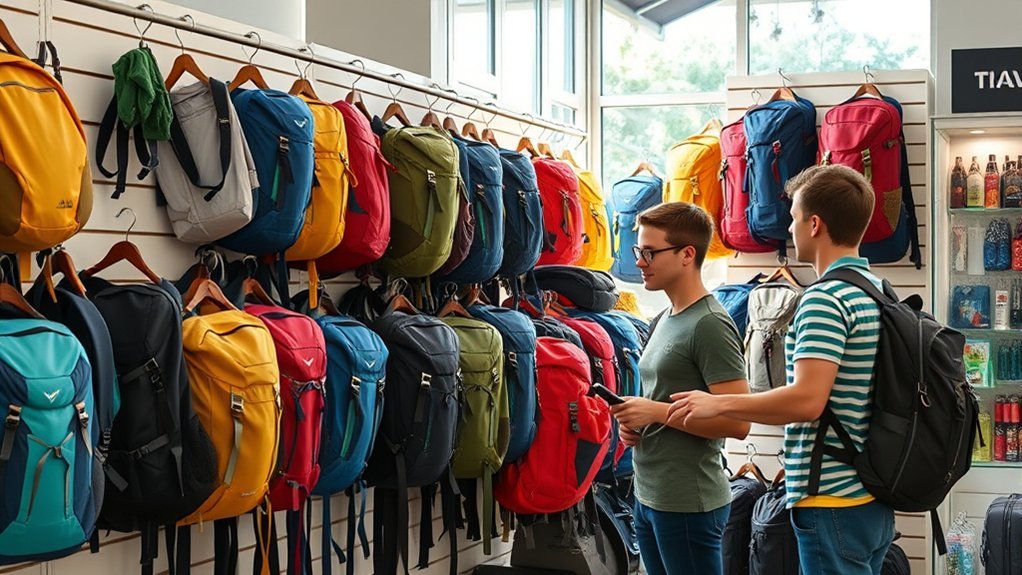
The best travel backpack is not simply the largest bag you can carry. It should match your trip, fit your body, stay within your airline’s limits, and organize your gear without adding unnecessary weight. Use this guide to compare capacity, outside dimensions, comfort, materials, access, security, and price before you buy.
Quick Answer
Choose a travel backpack by checking its measured outside dimensions first, then its capacity. For many trips, a 30- to 40-liter pack offers a useful balance. Prioritize a comfortable torso fit, low empty weight, clamshell access, durable hardware, weather resistance, and a return policy that lets you test the loaded bag.
Key Takeaways
- Airlines judge carry-on bags by outside dimensions, not liters. Measure the packed bag, including handles and any bulging pockets.
- A 30- to 40-liter backpack works for many travelers, but climate, laundry access, gear, and packing habits matter more than trip length alone.
- Fit is personal. Test the pack with the weight you expect to carry and adjust the hip belt, shoulder straps, load lifters, and sternum strap where provided.
- Look beyond fabric denier. Zippers, buckles, seams, stitching, frame structure, repair support, and warranty terms also affect durability.
- Water-resistant fabric and coated zippers help in light rain, but they do not automatically make the entire backpack waterproof.
At a Glance
| Time Required | 30–60 minutes to compare and fit; longer if you test-carry it at home |
| Difficulty | Easy |
| Tools Needed | Tape measure, luggage scale, and a realistic test load |
| Cost | $100–$250 is a useful midrange starting point, but suitable bags may cost less or more |
Disclosure: As an Amazon Associate I earn from qualifying purchases. Some links on this page are affiliate links, at no extra cost to you.
Key Features to Look for in a Travel Backpack
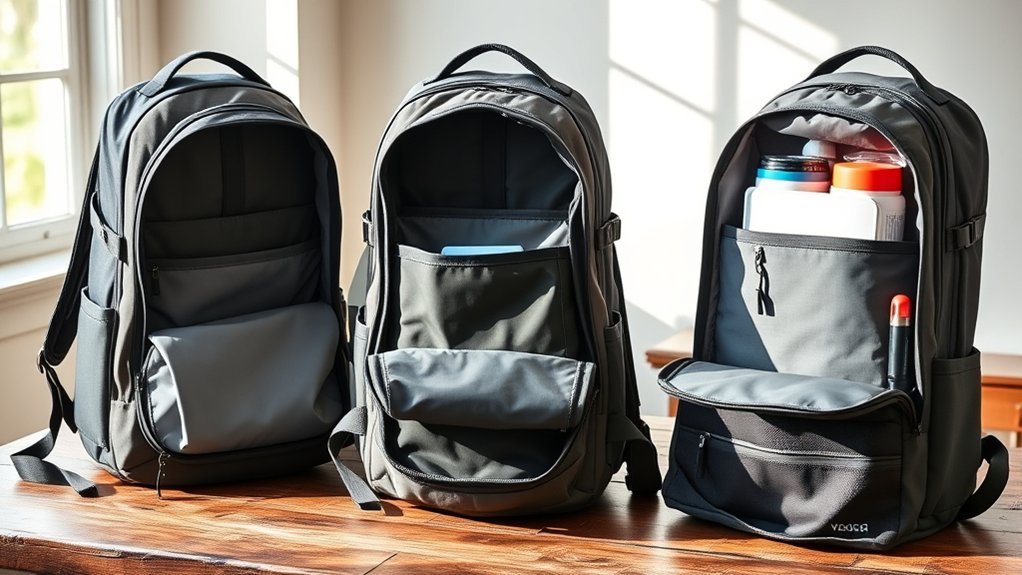
Start with the way you travel. A bag for weekend flights has different needs from one used for business trips, long train journeys, hostel stays, or outdoor trekking. Make a short list of your non-negotiables before comparing models.
- Correct outside dimensions: The packed bag must fit your airline’s allowance. Capacity alone cannot confirm this.
- Comfortable carrying system: Look for supportive shoulder straps, a back panel that fits your torso, and a useful hip belt if you expect to carry heavier loads or walk long distances.
- Low empty weight: A heavy bag uses part of your baggage allowance before you pack anything.
- Practical access: A clamshell or panel-loading opening makes it easier to pack clothing and reach items without emptying the entire bag.
- Useful organization: Choose pockets that match what you carry, such as a protected laptop sleeve, document pocket, water-bottle holder, and small-item compartment.
- Compression and stability: Compression straps reduce shifting and help control the bag’s depth when it is not full.
- Weather protection: Water-resistant fabric, covered or coated zippers, and an optional rain cover can protect against brief showers.
- Travel-ready details: Lockable zipper pulls, sturdy grab handles, and stowable shoulder straps are helpful when the bag may be gate-checked.
Note: More compartments are not always better. Extra dividers, zippers, and panels add weight and can reduce the usable space in the main compartment. Choose organization that matches your gear rather than the longest feature list.
Selecting the Right Size for Your Travel Needs
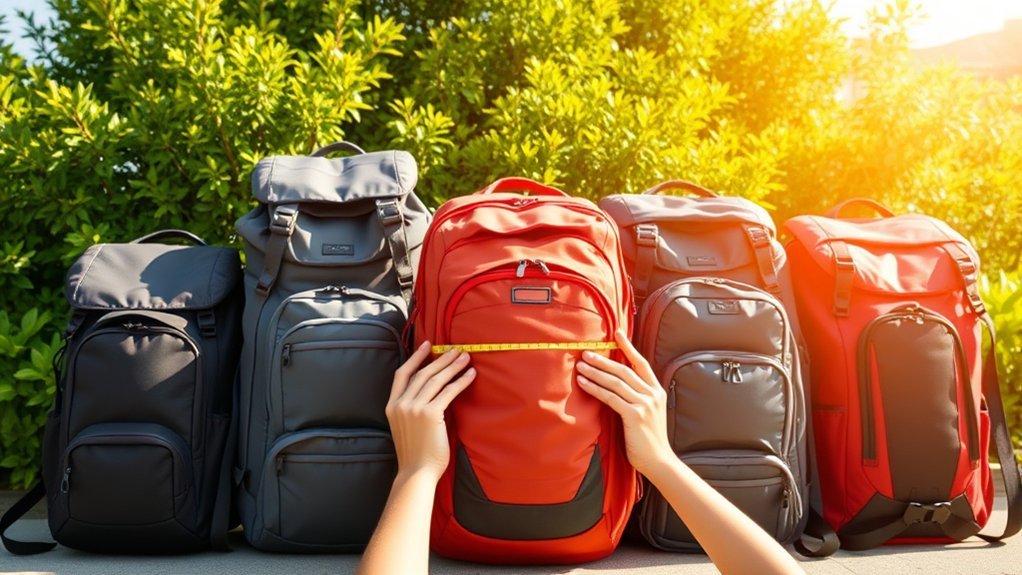
Backpack size has two separate meanings: capacity, measured in liters, and outside dimensions, measured in inches or centimeters. Capacity tells you roughly how much the bag holds. Outside dimensions determine whether it can fit under a seat or in an overhead bin.
Ideal Backpack Capacity
There is no universal number of liters for a certain trip length. A warm-weather traveler who does laundry may use a much smaller pack than someone carrying winter clothing, camera equipment, medical supplies, or formalwear. Use the ranges below as planning guides rather than guarantees.
| Capacity | Often Suits | Main Trade-Off |
|---|---|---|
| 20–30 liters | Day trips, minimalist weekends, and some personal-item setups | Limited room for extra shoes, bulky layers, or specialized gear |
| 30–40 liters | Many carry-on trips, including longer trips with careful packing and laundry | Requires packing discipline, especially in cold climates |
| 40–45 liters | Travelers who need more clothing or equipment | Many bags in this range are too tall, wide, deep, or heavy for a particular airline |
| More than 45 liters | Extended travel, outdoor equipment, or checked-bag use | Less likely to qualify as cabin baggage |
A 40-liter backpack can be a useful one-bag travel size, but the label does not guarantee that it is carry-on compliant. Soft bags can also bulge beyond their listed dimensions when overpacked.
Check Airline Dimensions, Not Just Liters
Check the baggage page for every airline on your itinerary, including regional or low-cost carriers. For example, American Airlines lists a 22 x 14 x 9-inch carry-on limit, and United lists 9 x 14 x 22 inches. These examples are not a worldwide standard, and aircraft or fare restrictions may be tighter.
Warning: Do not rely on a “carry-on approved” product label. Measure the fully packed backpack yourself, including handles and stuffed exterior pockets, and compare each dimension with the operating airline’s current rule.
Personal Item vs. Carry-On Backpack
A personal item must fit under the seat, while a standard carry-on normally goes in the overhead bin. Personal-item limits can be much smaller and vary widely by airline and aircraft. A compact, flexible backpack may work better under a seat, but it should not be packed so tightly that it cannot fit the airline’s sizing box or available space.
Evaluating Comfort and Fit
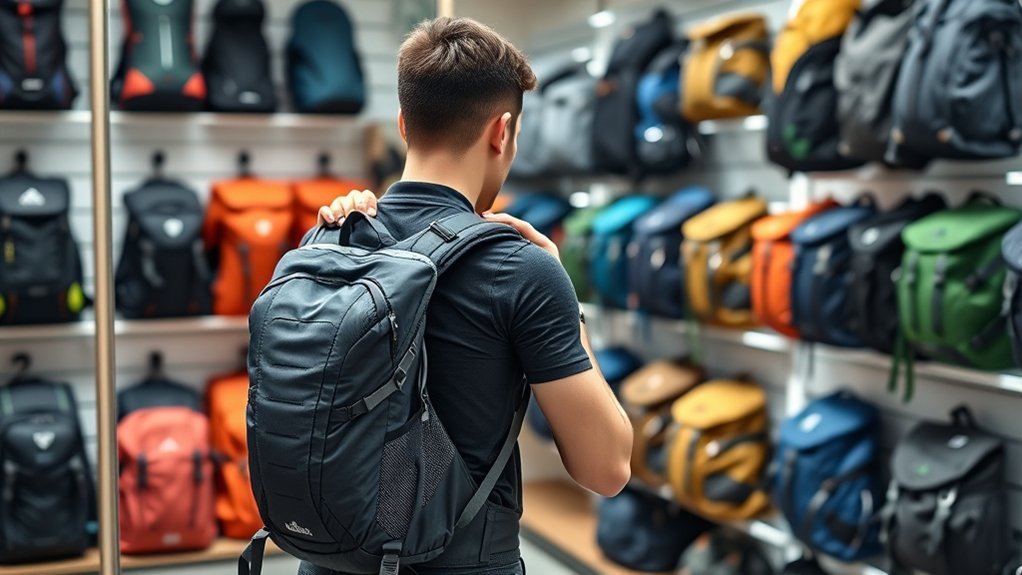
Comfort depends on body fit, pack structure, load weight, and how long you carry the bag. A soft, lightly padded backpack may feel fine in a store but become uncomfortable after a long airport connection or a walk across town.
Measure Your Torso and Check the Harness
For packs with a structured harness, torso length matters more than overall height. The Osprey fit guide recommends positioning the hip belt over the hip bones, tightening the shoulder straps, and then adjusting the load lifters and sternum strap. The shoulder harness should wrap comfortably without large gaps, pinching, or pressure on the neck.
Also check whether the hip belt actually lands on your hips. Some travel backpacks include a thin waist strap that controls movement but does not transfer much weight. A padded, well-positioned hip belt is more useful when the load is heavy.
Testing Backpack Fit
Test the pack with a realistic load rather than an arbitrary universal weight. If you normally travel with 18 pounds, test near 18 pounds. If you expect 25 pounds, test near 25. Distribute the weight as you would on a trip, then follow this sequence:
- Loosen the shoulder straps, hip belt, load lifters, and sternum strap.
- Put on the backpack and center the hip belt over the top of your hip bones.
- Tighten the hip belt until it feels secure but does not pinch.
- Tighten the shoulder straps until the pack sits close to your back.
- Adjust the load lifters, if present, to stabilize the upper part of the pack.
- Fasten the sternum strap lightly so it steadies the shoulder straps without restricting breathing.
- Walk, climb stairs, bend, and sit for at least 10–15 minutes.
Watch for numbness, rubbing, pressure points, a gap behind the shoulders, or a load that pulls you backward. If you cannot solve the problem with normal adjustment, try a different size or harness shape.
Pro Tip: Buy from a retailer with a practical return policy, keep the tags attached, and test the loaded pack indoors. A 20-minute home test often reveals issues that a quick fitting cannot.
Understanding Organizational Features
The best layout is the one that lets you reach important items without creating wasted space. Think about what must be accessible during transit and what can remain packed until you reach your accommodation.
Compartment Variety Importance
Useful compartments may include:
- A padded laptop sleeve positioned close to your back for balance
- A quick-access pocket for travel documents and small electronics
- An interior pocket for chargers, medication, or keys
- A water-bottle pocket that still works when the bag is full
- A separate area for shoes or damp clothing, if you will use it
- Internal compression straps that keep clothing from shifting
Hidden pockets and lockable zipper pulls can discourage casual access, but no backpack is theft-proof. Keep passports, money, and essential medication under your direct control.
Access Methods Consideration
A clamshell or full panel opening works much like a suitcase and is convenient for clothing. A top-loading bag can be lighter and may handle outdoor loads well, but items at the bottom are harder to reach. Some hybrid designs combine a large front opening with a top quick-access pocket.
Check how the main zipper behaves when the bag is full. It should move smoothly around corners without forcing the teeth apart. Coated or covered zippers can improve rain resistance, but the complete bag is only as weather-resistant as its fabric, seams, openings, and construction.
Packing Cube Compatibility
Packing cubes can separate clothing, underwear, toiletries, and electronics while making a clamshell bag faster to unpack. Before buying cubes, measure the backpack’s usable interior rather than matching cubes to the advertised liter capacity. Leave enough room for the zipper path and any internal laptop compartment.
Travel packs such as the Cotopaxi Allpa use a suitcase-style opening and divided internal pockets, while the TOM BIHN Techonaut can accept several packing-cube combinations. These examples show why it is useful to inspect the exact interior shape instead of assuming every cube fits every 30-, 35-, or 40-liter bag.
Weather Resistance and Rain Protection
Water-resistant means a backpack can slow water entry under some conditions. Waterproof is a stronger claim and usually requires more than coated fabric. Stitching holes, seams, zipper openings, and unsealed panels can still leak.
- For city travel and short exposure, water-resistant fabric and coated zippers may be enough.
- For frequent rain, choose a fitted rain cover or use a waterproof pack liner.
- For boating, paddling, or prolonged downpours, consider a purpose-built waterproof bag with sealed construction.
- Protect electronics and documents in their own waterproof pouches even when the backpack is marketed as weather-resistant.
Assessing Durability and Materials
High-denier nylon or polyester can be durable, but denier is only one part of the design. It describes yarn size, not the quality of every fabric or the strength of the finished backpack. Fiber type, weave, coating, seam design, stitching, and abrasion exposure all matter. For example, CORDURA Classic fabric is offered in several deniers and constructions, with performance tied to high-tenacity fibers and the way the fabric is built.
| Part to Inspect | What to Look For | Why It Matters |
|---|---|---|
| Main fabric | Abrasion resistance, appropriate coating, and reinforced high-wear areas | The bottom and corners often receive the most wear |
| Zippers | Smooth movement, sturdy sliders, and replaceable or repairable parts | A failed main zipper can make the bag unusable |
| Stitching | Even seams and reinforcement at handles, strap anchors, and load points | These areas carry repeated stress |
| Buckles and adjusters | Easy operation, secure grip, and common replaceable hardware | Broken hardware can affect fit and compression |
| Warranty and repairs | Clear exclusions, repair options, parts support, and realistic turnaround terms | A repairable bag may offer better long-term value |
Security and Checked-Bag Readiness
Travel backpacks are often designed for cabin use, but full overhead bins or aircraft restrictions can lead to gate-checking. Prepare for that possibility.
- Choose lockable zipper pulls if you want to use a small luggage lock.
- Look for stowable shoulder straps and hip belts so webbing is less likely to snag on baggage equipment.
- Use sturdy top and side grab handles for lifting the bag into bins or handing it to staff.
- Keep your passport, medication, valuables, keys, and a small set of essentials in a removable pouch.
- Remove spare lithium batteries and power banks before checking the bag. The FAA requires spare lithium batteries to remain in carry-on baggage, subject to size and airline-approval rules.
Budgeting for Your Ideal Backpack
A budget of $100 to $250 covers many mainstream travel backpacks, but it is not a rule or a guarantee of quality. Smaller or sale-priced bags may cost less, while premium materials, adjustable harnesses, specialized construction, or wheeled systems can cost more.
Spend first on the features that affect daily use:
- Correct dimensions for your usual airlines
- A harness that fits your body
- Comfort at your expected load
- A manageable empty weight
- Reliable zippers, stitching, and handles
- A layout that suits your clothing, electronics, and travel documents
- A useful return, warranty, and repair policy
Seasonal sales and used gear can reduce the price, but inspect second-hand bags for peeling coatings, worn shoulder-strap foam, damaged zipper teeth, loose stitching, odors, and missing buckles.
How to Compare Travel Backpacks Before Buying
- Write down your trip needs. Include typical trip length, climate, laundry access, electronics, footwear, and any medical or specialty gear.
- Check airline limits. Record the smallest carry-on or personal-item dimensions among the airlines you use.
- Set a capacity range. Start with the gear you truly need rather than choosing the largest allowed bag.
- Compare outside dimensions and empty weight. Confirm that the listed measurements include the full bag and remember that soft packs can bulge.
- Inspect the opening and compartments. Make sure your laptop, packing cubes, bottle, and documents fit where you expect.
- Load and fit the pack. Adjust it in the correct order and walk with your expected travel weight.
- Check weather and durability details. Review fabric construction, seams, zippers, handles, buckles, rain protection, and repair support.
- Review return and warranty terms. A lifetime warranty may still exclude normal wear, misuse, or certain damage.
- Measure again after packing. Your final decision should be based on the packed bag, not the empty product specifications alone.
The right backpack is the smallest bag that carries your necessary gear comfortably and still meets the strictest limit on your itinerary.
Frequently Asked Questions
Can I use a travel backpack for everyday activities?
Yes. A travel backpack can work for commuting, the gym, or errands if its size and organization suit your routine. Large 40- to 45-liter bags may feel bulky for daily use, so check whether the bag compresses well or whether a smaller daypack would be more comfortable.
What is the best way to clean a travel backpack?
Follow the manufacturer’s care label first. In general, empty the bag, remove detachable parts, brush out dirt, and clean stains with mild soap, warm water, and a soft sponge or brush. Rinse away residue and air-dry the bag in a ventilated place away from direct heat. Osprey’s official guidance uses this approach and advises special care for wheeled chassis.
Are there specific backpacks for hiking or trekking?
Yes. Hiking and trekking packs often emphasize ventilation, load transfer, hydration compatibility, trail-access pockets, attachment points, and an adjustable suspension. Travel packs usually emphasize clamshell access, laptop storage, stowable straps, and a suitcase-like shape. A hybrid can work when you need both, but it may involve compromises.
How do I pack efficiently in a travel backpack?
Pack dense items close to your back and near the middle of the bag, keep frequently used items accessible, and avoid filling every pocket just because it is available. Packing cubes can organize clothing, while compression straps reduce movement. Weigh and measure the backpack after packing.
Can I carry a travel backpack on a plane?
Usually, yes, when the packed backpack meets the operating airline’s size, weight, and fare rules. Check each flight rather than relying on a universal carry-on size. A bag may also be gate-checked when overhead space is limited, so keep medication, documents, valuables, and spare lithium batteries in a removable personal-item pouch.
Is a 40-liter backpack always carry-on size?
No. Two 40-liter bags can have different heights, widths, depths, frames, and exterior pockets. Compare the packed outside dimensions with the airline’s limits. A soft bag that fits when empty may exceed the limit when overfilled.
Do I need a hip belt on a travel backpack?
A hip belt is most useful when the backpack is heavy, structured, and carried for longer periods. A well-fitted padded belt can transfer some load to the hips. For a light personal-item bag or short airport carry, a simple waist strap may add little value and can create extra bulk.
How much should an empty travel backpack weigh?
There is no single ideal weight. Lighter bags preserve more of your baggage allowance, while heavier bags may include a frame, thicker padding, more organization, or a stronger harness. Compare empty weight only after confirming that the bag provides the support and features you need.
Conclusion
Choosing the right travel backpack comes down to fit, measured dimensions, usable capacity, and the way you travel. Start with your strictest airline limit and essential packing list, then test the bag with a realistic load. A comfortable, repairable backpack with a practical layout will serve you better than an oversized bag chosen only for its liter rating or feature count.
Sources
- American Airlines Carry-On Bags — current carry-on and personal-item dimensions.
- United Airlines Carry-On Bags — current overhead-bin bag dimensions and measurement guidance.
- Osprey Backpack Size and Fit Guide — torso sizing and strap-adjustment sequence.
- CORDURA Classic Fabric — fabric construction, denier options, abrasion resistance, and tear strength.
- FAA PackSafe: Lithium Batteries — cabin-baggage rules for spare lithium batteries and power banks.
- Osprey Backpack Cleaning Guide — mild-soap cleaning, rinsing, and air-drying guidance.
