
Last Updated on July 30, 2026 by Caleb Warren
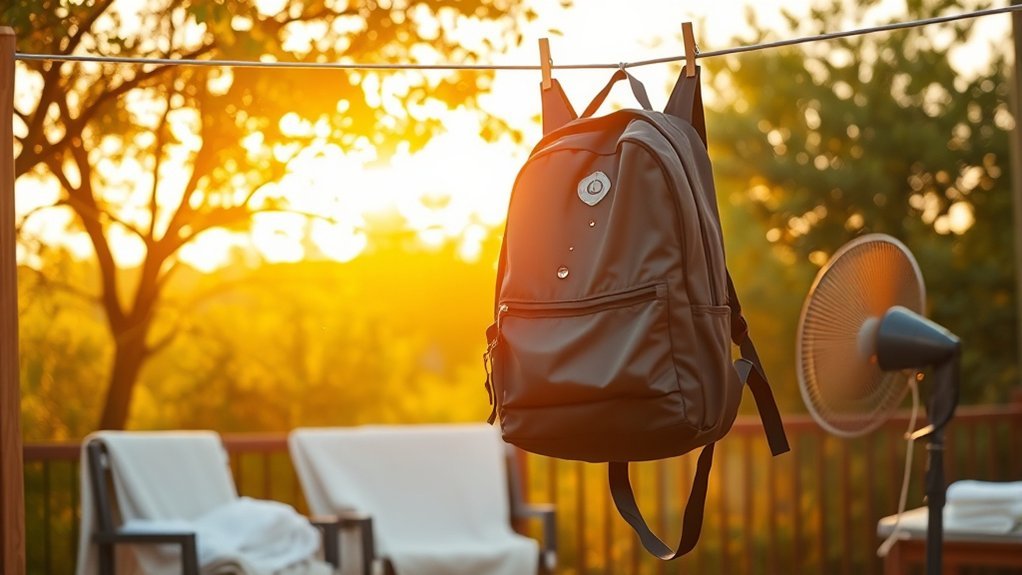
A wet backpack can take a long time to dry because water hides in padded straps, seams, pocket corners, and the back panel. The safest way to speed up the process is to remove as much water as possible, open every compartment, and use steady room-temperature airflow rather than direct heat.
Quick Answer
To dry a backpack quickly, empty it, remove detachable parts, drain any trapped water, and press it between absorbent towels. Open every zipper and pocket, hang the bag upside down in the shade, and aim a fan across it. Use a dehumidifier in humid rooms, and avoid dryers, radiators, or concentrated heat.
Key Takeaways
- Check the care label before washing, soaking, or applying heat to any backpack.
- Blot and press out water with towels; do not twist or wring padded sections.
- Open all pockets and hang the backpack upside down in a shaded, ventilated area.
- A fan and dehumidifier are safer speed-up methods than a dryer, heater, or hairdryer.
- Do not store the backpack until seams, straps, foam, and pocket corners feel completely dry.
At a Glance
| Time Required | Several hours to 24 hours or longer, depending on saturation, padding, humidity, and airflow |
| Difficulty | Easy |
| Tools Needed | Absorbent towels, hanger or drying rack, and an optional fan or dehumidifier |
| Cost | $0 with household items; optional equipment cost varies |
Disclosure: As an Amazon Associate I earn from qualifying purchases. Some links on this page are affiliate links, at no extra cost to you.
Why Proper Backpack Drying Matters
A backpack can feel dry on the outside while moisture remains inside its shoulder straps, foam back panel, seams, zipper flaps, or bottom corners. Storing it in that condition can lead to musty odors, staining, corrosion on metal hardware, coating damage, and mold growth.
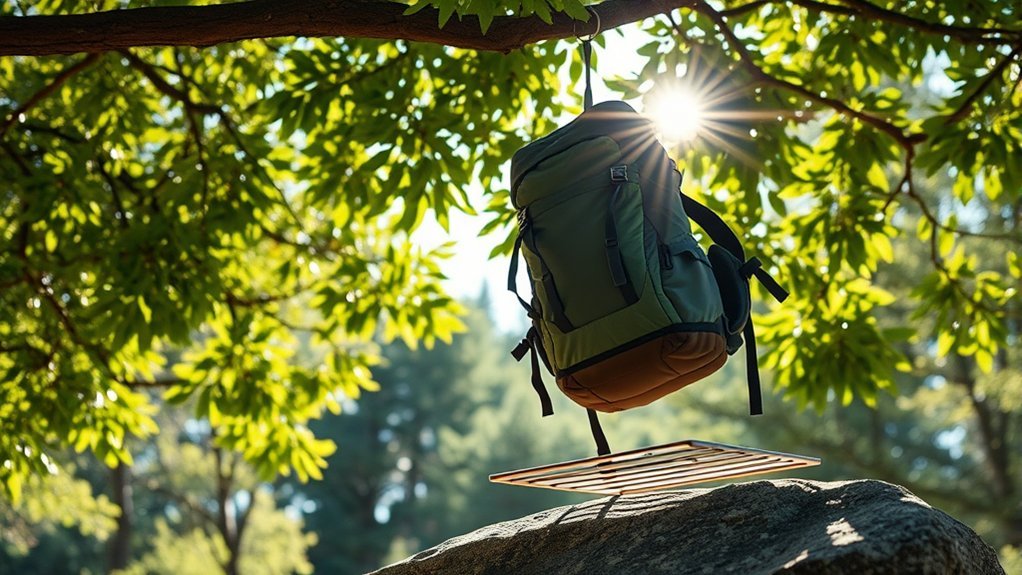
The safest general method is air drying. Osprey recommends hanging a pack in a well-ventilated location away from direct sunlight. Deuter similarly advises opening the zippers, hanging the pack upside down, and keeping it away from sunlight and heat sources.
Dry a wet backpack promptly. The EPA advises drying damp materials within 24–48 hours when possible to reduce the chance of mold growth.
The EPA guidance is a mold-prevention window, not a promise that every backpack will dry within two days. Thick padding, several layers of fabric, humid weather, and poor airflow can all extend the drying time.
How to Dry a Backpack Quickly: Step by Step
- Read the care label. Follow the backpack manufacturer’s instructions before submerging the bag, removing a frame, or using any appliance. Some packs should only be spot cleaned.
- Empty every compartment. Remove electronics, paper, food, cardboard inserts, loose organizers, and anything hidden in small pockets.
- Detach removable parts. Take off the rain cover, hipbelt, shoulder straps, frame sheet, or hydration reservoir only when the manufacturer says those parts are removable. Dry each part separately.
- Drain trapped water. Hold the pack upside down over a bathtub or sink. Gently tilt it so water can leave pocket corners, seams, and the bottom panel.
- Press with absorbent towels. Place a clean towel inside the main compartment and use another on the outside. Press firmly to transfer water into the towels. Replace saturated towels and repeat. Do not twist or wring padded straps or coated fabric.
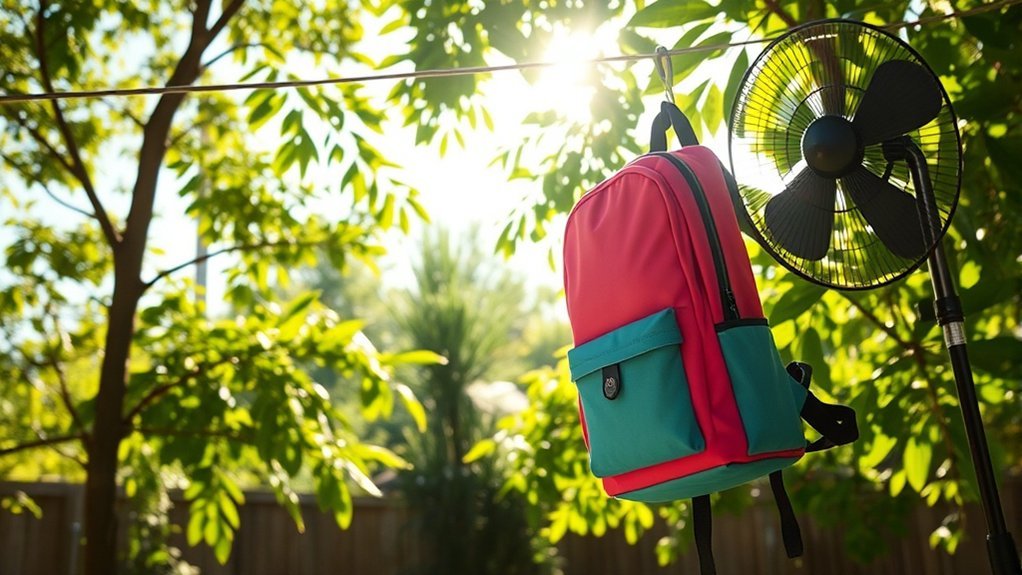
- Open the bag fully. Unzip every pocket, loosen compression straps, and spread pocket openings so air can reach the lining. Hang the pack upside down or position it on a rack where both sides remain exposed.
- Add moving air. Aim a fan across the backpack rather than directly into one spot. Rotate the pack every few hours so the back panel, straps, base, and interior receive similar airflow.
- Lower indoor humidity when needed. In a humid room, close the windows and run a dehumidifier nearby. In dry weather, an open window can improve cross-ventilation.
- Check hidden areas before storage. Squeeze the shoulder straps and back padding, then feel inside seam folds, zipper garages, and pocket corners. Continue drying if any area feels cool, heavy, clammy, or damp.
Warning: Do not place a backpack in a tumble dryer, on a radiator, beside an open fire, or against a space heater unless its care label expressly allows that method. Heat can damage coatings, foam, adhesives, seam tape, buckles, and laminated fabric.
Pro Tip: Roll the wet backpack inside a large dry towel and press down with your hands. This removes more water than surface blotting without twisting the bag or stressing its seams.
Safe Ways to Speed Up Backpack Drying
Products Worth Considering

PHD 200 Compact Dehumidifier Hanging Kit. 200,Black,Compact,Dehumidifier,Drieaz,F526,Hanging,Kit,medium,PHD
Use a Fan for Continuous Airflow
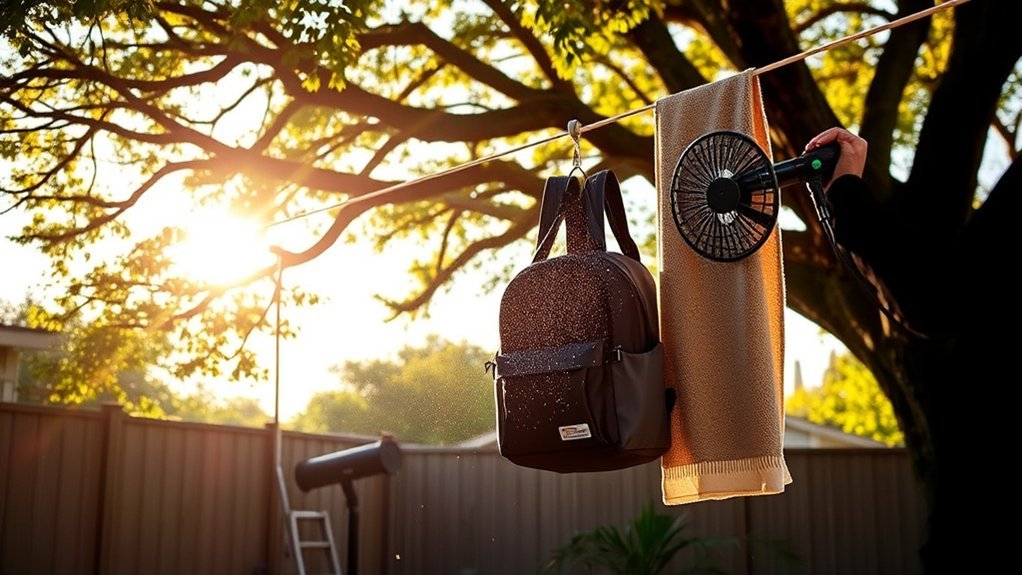
A standard room fan is usually enough; it does not need to be a high-speed industrial fan. Place it several feet away and aim the airflow across the open backpack. Moving air helps moisture evaporate from the fabric without exposing one area to concentrated heat.
Change the bag’s position every few hours. Lay it with the back panel facing the fan, turn it so the inside faces outward, and separate thick shoulder straps so air reaches both sides.
Use a Dehumidifier in Damp Weather
Outdoor air may slow the process when the weather is warm and humid. In that situation, move the bag indoors, close the room, and run a dehumidifier. The EPA recommends dehumidification, ventilation, and increased air movement for moisture control.
Keep Pockets and Padding Open
Do not stuff the bag with clothing or leave towels inside after they become damp. Use a clean plastic hanger, drying rack, or loosely rolled dry towel to hold a compartment open, but make sure air can still flow around it.
Dry Removable Parts Separately
Spread out the rain cover, detachable straps, hipbelt, and reservoir rather than leaving them bundled together. A hydration reservoir should be opened and hung so water drains from the reservoir, tube, and bite valve. Do not reinstall any component until both the component and backpack are dry.
Note: Avoid using a hairdryer as a routine shortcut. Even a low setting can create concentrated heat around polyurethane coatings, laminated panels, foam, glue, and plastic hardware. A room-temperature fan is the safer choice.
How to Dry Different Backpack Materials
The backpack’s care label is more important than general material advice. Two packs made from similar fabric may use different coatings, padding, seam tape, adhesives, or internal frames.
| Material or Construction | Recommended Approach | Main Risk |
| Nylon or polyester | Blot, open all compartments, and air dry in shade with a fan. | Heat or UV exposure can affect fabric, coatings, foam, or plastic parts. |
| Coated or waterproof fabric | Follow the care label, drip dry, and avoid scraping or high heat. | PU or TPU coatings, seam seals, and laminates may be damaged by heat or harsh cleaning. |
| Canvas or waxed cotton | Reshape the bag and allow extra time for room-temperature air drying. | Dense fabric may stay damp internally; improper washing can affect wax or finish. |
| Leather or suede | Blot gently, reshape, and dry slowly at room temperature. Follow the maker’s leather-care instructions. | Rapid heat can cause stiffness, cracking, shrinkage, or discoloration. |
| Framed, wheeled, or structured laptop pack | Do not remove fixed supports. Wipe or spot clean when required and concentrate airflow around padded areas. | Water may remain around frames, wheels, thick foam, electronics pockets, or glued panels. |
For example, Patagonia specifies hand washing and drip drying for one laminated fishing backpack. That does not establish a rule for every pack, but it shows why the individual product instructions matter.
Products Worth Considering

PERFECT DESIGN:Designed a convenient rotating neck, smooth swivel hook. The 360° rotatable clip hangers can be rotated to any angle you want and it is easy to dry laundry from all directions. Hanger clips are perfectly spaced to efficiently maximize air flow. Our clip and drip hanger - your lifestyle change-maker

【PERFECT DESIGN】Designed a convenient rotating neck, smooth swivel hook. The 360° rotatable clip hangers can be rotated to any angle you want and it is easy to dry laundry from all directions. Hanger clips are perfectly spaced to efficiently maximize air flow. Our clip and drip hanger - your lifestyle change-maker

【PERFECT DESIGN】Designed a convenient rotating neck, smooth swivel hook. The 360° rotatable clip hangers can be rotated to any angle you want and it is easy to dry laundry from all directions. Hanger clips are perfectly spaced to efficiently maximize air flow. Our clip and drip hanger - your lifestyle change-maker
How Long Does a Backpack Take to Dry?
There is no reliable drying time based only on whether a pack is nylon, polyester, canvas, or leather. A lightly rain-damp daypack may dry within several hours, while a fully soaked trekking pack with thick foam can require a full day or longer.
Drying time depends on:
- How wet the pack is
- The thickness of its foam and padding
- The number of fabric layers
- Whether it has a frame sheet or rigid structure
- Room temperature and relative humidity
- Air movement around the interior and exterior
- Whether pockets, straps, and removable parts are separated
How to Tell When It Is Completely Dry
- Press a dry paper towel against the bottom corners and inner seams; it should remain dry.
- Squeeze the shoulder straps and hipbelt. They should not feel cool, clammy, or unusually heavy.
- Feel behind the back-panel padding and inside small organizer pockets.
- Check zipper covers, folded seam allowances, and attachment points.
- Smell the interior. A damp or musty odor means the bag needs more drying or cleaning.
Common Backpack-Drying Mistakes
- Using a tumble dryer without label approval: REI advises against drying backpacks in a dryer, and Deuter warns that dryer use can damage polyurethane coatings.
- Placing the pack in direct sunlight: Strong UV exposure can degrade fabric and fade colors.
- Putting it beside a radiator or fire: High heat can affect foam, adhesive, coatings, leather, and plastic hardware.
- Leaving pockets zipped: Trapped moisture remains in seams and corners.
- Keeping wet towels inside: Towels help only while they are absorbing water. Remove or replace them once damp.
- Wringing the backpack: Twisting can distort foam, crease coatings, and stress seams.
- Removing a fixed frame: Do not dismantle a back system unless the manufacturer says it is designed for removal.
- Washing a clean rain-wet pack unnecessarily: If the bag is only wet, dry it. Wash it only when dirt, salt, food, or contamination needs removal.
- Storing it too soon: The exterior can dry well before the foam and seams.
Troubleshooting a Damp or Smelly Backpack
The Back Panel Is Still Damp
Turn the backpack so the back panel faces the fan. Loosen the shoulder straps, lift the pack away from the wall or floor, and make sure air can pass behind it. Thick foam often holds moisture longer than the outer shell.
The Backpack Is Still Wet After a Full Day
Replace any damp towels, increase room-temperature airflow, and use a dehumidifier in an enclosed room. Check whether water is trapped beneath a removable base insert, inside the hipbelt, or behind an internal organizer.
The Backpack Smells Musty
Do not store it or cover the smell with fragrance. Inspect every compartment for damp fabric, food residue, or visible mold. Clean the pack according to its care label, rinse away any approved soap thoroughly, and dry it again with all compartments open.
If visible mold covers a large area, has entered thick padding, or returns after cleaning, contact the backpack manufacturer or a professional cleaner. Avoid aggressive bleach or household disinfectants unless the manufacturer specifically approves them, because they may damage fabric and coatings.
The Backpack Was Exposed to Dirty Floodwater or Sewage
Keep it separate from clean gear and avoid handling contaminated areas with bare hands. A porous, heavily contaminated backpack may not be practical to clean safely. Follow local public-health guidance or consult a professional remediation service before reusing it.
Final Tips for Backpack Maintenance
Routine care reduces the need for deep washing and helps the backpack dry more easily. Empty crumbs and damp clothing after every trip, brush away loose dirt, and wipe fresh mud before it hardens. Clean zipper tracks gently so grit does not interfere with their movement.
Dry removable rain covers and hydration components separately. Once the backpack is fully dry, fasten loose straps and store it uncompressed in a cool, dry cupboard rather than a damp basement, sealed plastic bag, hot attic, or car trunk.
After cleaning, test a water-repellent outer fabric by placing a few drops of water on it. If the drops soak in instead of beading, consult the manufacturer before applying a compatible reproofing treatment. Do not spray waterproofing products onto shoulder straps unless the product instructions specifically allow it.
Sources
- Osprey: How to Clean Your Osprey Backpack — supports ventilated, shaded air drying and the warning against machine washing.
- Deuter: How to Clean a Backpack — supports opening zippers, hanging the pack upside down, avoiding heat, drying rain covers separately, and avoiding tumble dryers.
- REI: How to Wash a Backpack — supports following manufacturer instructions, drying in shade, protecting coatings, and avoiding tumble dryers.
- U.S. Environmental Protection Agency: Mold, Moisture, and Your Home — supports prompt drying, ventilation, fans, and dehumidification for moisture control.
- Patagonia: Stealth Fishing Backpack Care Instructions — provides a manufacturer example specifying hand washing and drip drying for a laminated pack.
Frequently Asked Questions
Can I use a hairdryer to speed up drying?
A hairdryer is not recommended as a general method. Concentrated heat can affect coatings, foam, glue, seam tape, leather, or plastic parts. Use a room-temperature fan instead unless the backpack manufacturer specifically approves another method.
How long does it typically take for a backpack to dry?
A lightly damp pack may dry within several hours, while a soaked or heavily padded backpack may need a full day or longer. Humidity, airflow, padding, lining, and construction matter more than the outer fabric alone.
Is it safe to dry a waterproof backpack the same way?
Most waterproof or water-resistant packs should be drip-dried or air-dried away from direct heat, but always check the care label. Laminates, welded seams, polyurethane coatings, TPU films, and removable rain covers can require different handling.
What materials are most prone to drying damage?
Leather, suede, waxed cotton, laminated fabric, polyurethane coatings, foam, adhesives, seam tape, elastic mesh, and plastic hardware can all be damaged by excessive heat or harsh cleaning. The sewn-in care label is the safest guide.
Can I dry my backpack indoors without ventilation?
It will dry much more slowly without air movement. Open all compartments and place it near a fan. In humid weather, use a dehumidifier in the room rather than opening a window to damp outdoor air.
Can I put a backpack in a tumble dryer?
Do not use a tumble dryer unless the backpack’s care label explicitly permits it. Many outdoor-pack manufacturers advise against dryers because heat and tumbling can damage coatings, frames, foam, straps, and plastic components.
How can I prevent mold while the backpack dries?
Start drying it promptly, remove wet contents, open every compartment, use moving air, and lower indoor humidity when needed. Do not leave the wet bag in a car, hamper, plastic sack, or dark closet.
Conclusion
To dry a backpack quickly without damaging it, remove trapped water first and then maximize safe airflow. Press the pack with absorbent towels, open every pocket, hang it upside down in the shade, and use a fan or dehumidifier as needed. Avoid dryers and concentrated heat unless the care label clearly permits them. Before storing the bag, check its straps, foam, seams, and pocket corners for hidden moisture.
