Last Updated on July 28, 2026 by Caleb Warren
Getting caught in torrential rain doesn’t have to mean arriving at camp with a soaked sleeping bag and damp clothes. While few backpacks are 100% waterproof on their own, using a combination of waterproof storage layers, smart packing organization, and preventative gear maintenance will ensure everything inside your pack stays bone-dry no matter how hard it pours.
Quick Answer
Keep your backpack dry by lining the inside with a heavy-duty trash compactor bag or dry sack, fitting a custom rain cover over the outside, keeping frequently needed items in hipbelt pockets, elevating your pack during trail breaks, and treating worn backpack fabric with a spray-on DWR water repellent.
Key Takeaways
- A heavy-duty pack liner (or trash compactor bag) provides the most reliable primary moisture barrier for internal gear.
- Waterproof stuff sacks isolate sensitive gear like sleeping bags, down jackets, and electronics.
- Fitted rain covers protect outer fabric from becoming waterlogged and heavy, but must be paired with internal protection.
- Store wet gear (rain fly, damp jacket) in outer mesh pockets so it doesn’t soak dry items inside your pack.
- Reapply Durable Water Repellent (DWR) coating to aging pack fabric to restore water-beading performance.
At a Glance
| Time Required | 10–15 minutes before packing |
| Difficulty | Beginner |
| Tools & Supplies | Pack liner (trash compactor bag/Nylofume), dry bags, pack rain cover, DWR spray |
| Cost | $5 – $40 depending on gear used |
Disclosure: As an Amazon Associate I earn from qualifying purchases. Some links on this page are affiliate links, at no extra cost to you.
Pack Your Gear in Waterproof Stuff Sacks, Dry Bags, or Pack Liners
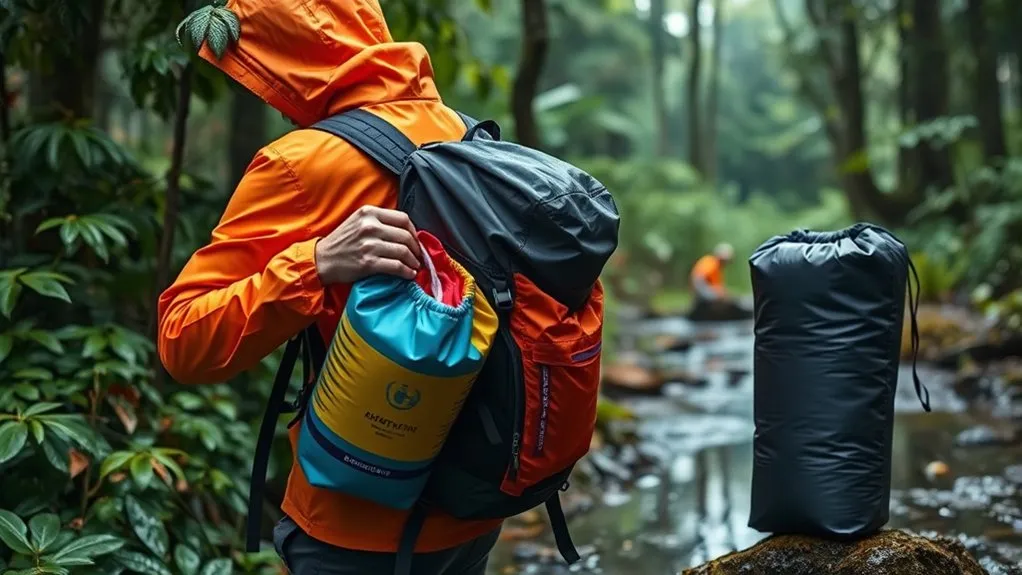
When preparing for wet weather, internal waterproofing is your primary line of defense. Because standard backpack nylon and zippers eventually leak under heavy downpours, packing your gear inside waterproof stuff sacks or dry bags is essential.
The Sea to Summit Ultra-Sil Dry Bag is a favorite among hikers due to its 2,000mm hydrostatic head waterhead rating and fully taped, double-stitched seams that keep sleeping bags and dry clothes safe during steady rain.
Note: Most lightweight dry bags, including silicone-coated nylon models, are engineered to resist rain and splashes but are not designed for full underwater submersion during river crossings.
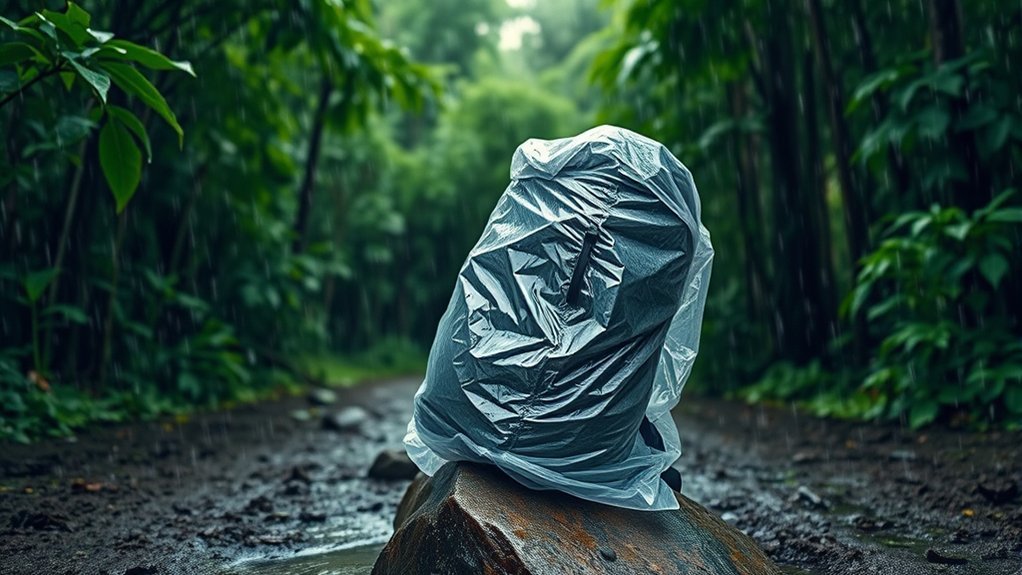
For a lighter and highly cost-effective setup, consider using a heavy-duty pack liner. Instead of buying multiple dry sacks, line your entire main compartment with a heavy-duty trash compactor bag or a Nylofume bag. Trash compactor bags are much thicker than standard kitchen trash bags and resist punctures from sharp gear edges.
Pro Tip: Use a “double bagging” technique for critical items. Insert a heavy-duty compactor bag into your backpack first, put your dry clothes and sleeping bag into individual dry sacks, and place those inside the liner. Even if outer zippers fail, your essential warm gear remains entirely dry.
Use a Custom Rain Cover or Pack Cape
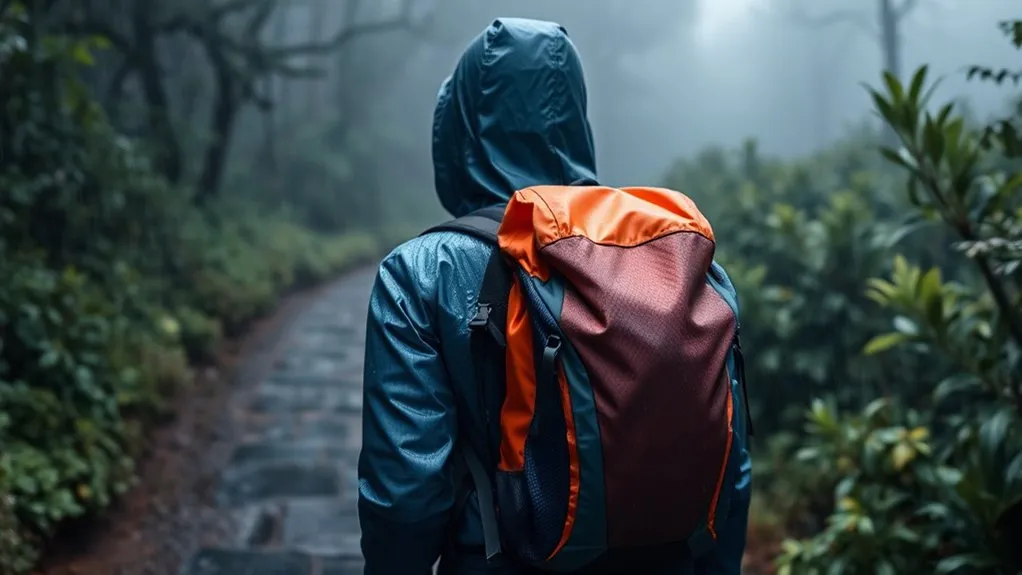
To shield the exterior of your backpack from soaking up water, using a custom rain cover is an effective external defense. Made from durable, polyurethane-coated nylon or polyester, these covers fit snugly around your backpack to deflect falling rain before it saturates the pack’s outer fabric and heavy foam padding.
To get effective coverage and prevent wind from blowing the cover off:
- Select a cover sized specifically for your pack’s volume (measured in liters).
- Tighten the shock cord cinch harness across the back panel to secure the elastic edges.
- Ensure the top cap and bottom corners are completely covered without sagging pockets where rainwater could pool.
While rain covers work exceptionally well during active hiking, water can still trickle down your back between the pack frame and your coat. To combat this, experienced backpackers often pair a rain cover with internal dry bags or use a 3-in-1 rain poncho/pack cape that covers both the hiker and the entire backpack simultaneously.
Inspect your rain cover regularly for wear, tears, or peeling internal coatings. Proper care ensures you can stay focused on the trail without worrying about wet gear.
Restore Your Backpack’s DWR Water-Repellent Finish
Over time, dirt, abrasion, and UV exposure degrade the factory Durable Water Repellent (DWR) coating applied to your backpack’s outer fabric. When DWR wears off, the fabric begins to “wet out”—absorbing water, gaining heavy water weight, and leaking through seam stitching.
You can restore water-beading performance by re-proofing your backpack once or twice a year according to REI’s backpack care guidelines:
- Clean the Pack: Sponge off dirt and trail grime using warm water and a technical fabric cleaner like Nikwax Tech Wash.
- Apply Spray-On DWR: While the pack is damp, spray a uniform layer of spray-on water repellent (such as Nikwax TX.Direct Spray-On) across all exterior fabrics and zippers.
- Wipe and Dry: Wipe away excess drip marks with a damp cloth and hang the pack upside down in a shaded, well-ventilated area to cure.
Minimize Pack Openings and Separate Wet Gear
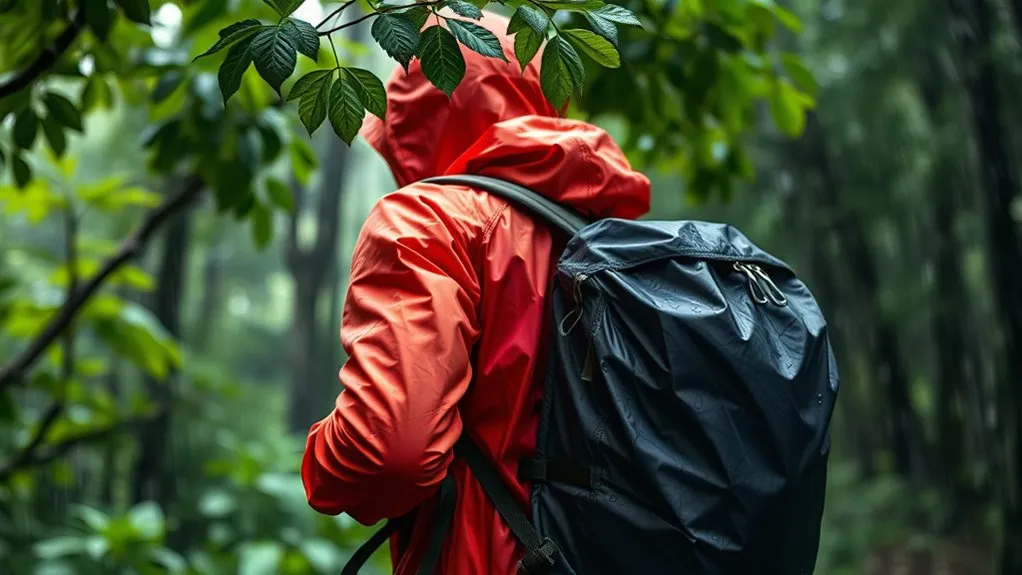
Every time you open your main backpack compartment during a downpour, rain enters directly into your dry storage space. Organizing your gear strategically helps limit main-compartment access while walking.
Keep high-frequency items—such as trail snacks, water purification tablets, navigation tools, and your first aid kit—stored inside waterproof hipbelt pockets or exterior shoulder-strap pouches.
Warning: Never pack a wet rain fly, soaked rain jacket, or muddy shelter stakes inside your main waterproof pack liner. Store damp items exclusively in outer front mesh pockets or strapped externally under compression cords so condensation doesn’t transfer to your dry sleeping gear.
Organize your main compartment logically:
- Bottom: Sleeping bag and sleeping pad inside dry sacks (lowest priority during the day).
- Middle: Extra clothing layers and spare socks inside the main pack liner.
- Top: Lunch, insulation jacket, and lightweight electronics in dedicated waterproof pouches near the opening.
Keep Gear Elevated During Breaks
Ground moisture, muddy soil, and puddles pose a constant threat during trail rest stops. Placing a wet backpack directly onto saturated grass or mud allows water to seep through bottom seams and soak into dense lumbar foam padding.
Always elevate your backpack off wet ground during breaks:
- Hang your pack from a sturdy tree branch using the top haul loop or a lightweight carabiner.
- Lean your pack upright against a clean rock, boulder, or tree trunk rather than laying it flat.
- Place your pack on top of a waterproof sit pad or ground sheet if no elevated spots are available.
Keeping your pack elevated not only prevents moisture absorption but also keeps zipper tracks free of sand and grit, prolonging the life of your equipment.
Monitor Weather Conditions and Plan Accordingly
Staying aware of shifting weather patterns allows you to prepare your backpack’s rain defenses before the deluge starts.
- Check Weather Forecasts: Review localized hourly weather forecasts and radar before leaving the trailhead, paying special attention to precipitation probability and wind conditions.
- Observe Cloud Patterns: Keep an eye on dark, lowering clouds, sudden wind shifts, or dropping temperatures, which indicate approaching storm fronts.
- Prepare Gear Early: Install your rain cover and stash sensitive handheld items into waterproof pockets *before* precipitation begins, preventing frantic adjustments during heavy rain.
Frequently Asked Questions
Can I use a regular backpack instead of a waterproof one?
Yes. Standard backpacks are rarely fully waterproof. You can make any standard backpack rain-ready by lining the main compartment with a heavy-duty trash compactor bag, using waterproof stuff sacks for individual items, and putting on a fitted rain cover.
How can I tell if my pack cover fits properly?
A properly fitted cover completely envelops the back and sides of your backpack without sagging. The elastic shock cord should wrap securely around the back panel harness, leaving no large gaps where water runoff can collect.
What should I do if my backpack gets wet inside?
Unpack all gear immediately, shake out standing moisture, and dry each item individually. Turn the backpack inside out or hang it upside down in a warm, shaded, well-ventilated area to air dry completely. Avoid direct heat sources or prolonged intense sunlight, which degrades polyurethane coatings and seam tape.
Are there specific materials that offer superior waterproofing?
Nylon and polyester coated with Polyurethane (PU) or Silicone (Silnylon), as well as Dyneema Composite Fabrics (DCF), offer excellent waterproof performance. Look for a hydrostatic head rating of 1,500mm to 10,000mm on dry bags and liners for reliable heavy-rain resistance.
How often should I re-waterproof my gear?
Inspect and test your gear’s water resistance at least once per season. If water stops beading on the surface of your backpack fabric and begins soaking in, clean the pack and reapply a spray-on DWR finish.
Conclusion
Keeping your backpack and gear dry in torrential weather comes down to layered preparation and smart packing habits. By pairing an internal pack liner or dry sacks with a fitted external rain cover, keeping wet gear separated, and restoring your pack’s DWR coating, you can face stormy forecasts with complete confidence on the trail.
Sources
- Sea to Summit — Ultra-Sil Dry Bag Specs — Hydrostatic rating, material technical specifications, and seam construction details.
- REI Co-op Expert Advice — Backpack Care & Maintenance — Guidelines for cleaning backpack fabrics and restoring DWR coatings.
- Nikwax Waterproofing Solutions — Technical wash and DWR application standards for outdoor gear.