

Last Updated on July 30, 2026 by Caleb Warren
Minimalist travel is not about carrying the smallest bag at any cost. It is about packing only what supports your actual trip, keeping important items easy to reach, and choosing a backpack you can carry comfortably. A simple plan, a small capsule wardrobe, and a final weight check can turn one-bag travel into a practical routine.
Quick Answer
To pack a backpack for minimalist travel, check your airline’s size and weight limits, build a small mix-and-match wardrobe, limit shoes and electronics, separate liquids, and pack heavy items close to your back. Finish by weighing the bag, wearing it for 10 minutes, and removing anything you cannot justify.
Key Takeaways
- Pack for the weather, activities, laundry access, and local dress expectations—not for every possible situation.
- Airline carry-on limits vary, so measure the loaded backpack and check the operating airline before departure.
- Use a coordinated capsule wardrobe and usually limit yourself to two pairs of shoes, including the pair you wear.
- Keep documents, medication, valuables, and spare lithium batteries in the cabin and easy to reach.
- Leave a little empty space. A tightly packed bag is harder to carry, inspect, and repack during the trip.
At a Glance
| Time Required | 30–60 minutes, plus time to wash or prepare clothing |
| Difficulty | Easy |
| Tools Needed | Carry-on backpack, packing checklist, luggage scale, and optional packing cubes or pouches |
| Cost | $0 when using gear you already own; optional organizers and travel-size containers vary in price |
Disclosure: As an Amazon Associate I earn from qualifying purchases. Some links on this page are affiliate links, at no extra cost to you.
Benefits of Packing Light
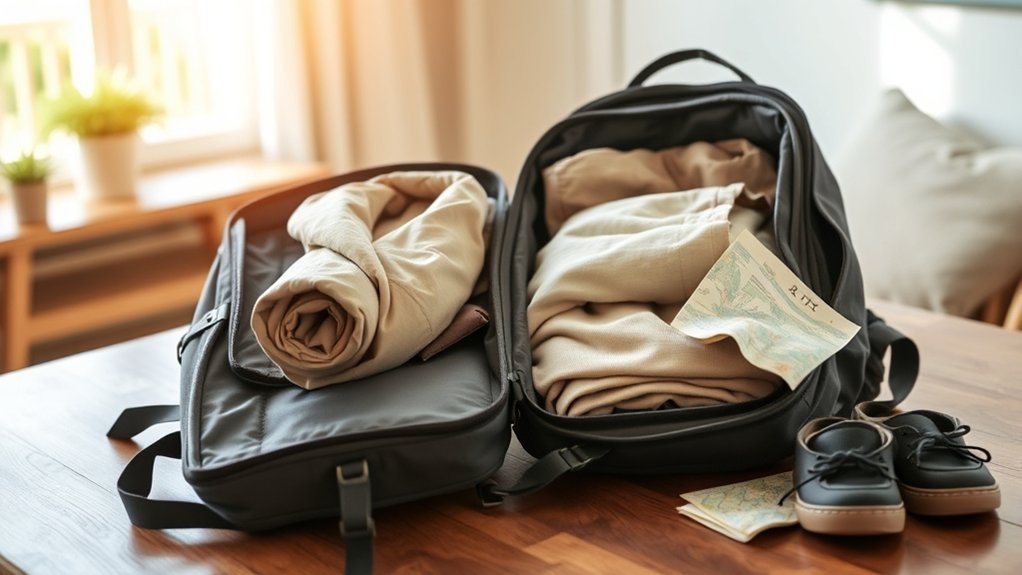
Packing light can bring a real sense of freedom to your travel experience. With one manageable backpack, you can move through airports, train stations, stairs, and crowded streets without wrestling with several bags. You may also avoid checked-bag delays and reduce the risk of a checked suitcase being misplaced, although some airlines still charge for larger cabin bags.
A minimalist approach also cuts decision fatigue. Instead of packing several “just in case” outfits, you choose pieces that work together and support the plans on your itinerary. That makes it easier to get dressed, repack, and notice quickly when something is missing.
Less luggage does not mean going without essentials. The goal is to remove duplication, bulky single-use items, and fear-based extras while keeping the clothing, medication, documents, and equipment you genuinely need.
The best minimalist packing list is not the shortest one. It is the lightest list that still supports your real itinerary.
Plan Before You Pack
Start with the trip rather than the bag. Write down the number of travel days, expected weather, planned activities, local dress expectations, laundry access, and any formal events. Then check what your accommodation provides, such as towels, a hair dryer, toiletries, an iron, or laundry facilities.
- Check transportation limits: Confirm the size and weight rules for every airline you will use, especially the operating carrier on regional or codeshare flights.
- Review the forecast and itinerary: Pack for the most likely conditions, then add one compact layer for a reasonable temperature change.
- Choose a laundry plan: For trips longer than about a week, washing a few items is usually lighter than carrying fresh clothing for every day.
- Make a category list: Use clothing, footwear, toiletries, medication, technology, documents, and trip-specific gear.
- Set a personal weight target: Your airline’s limit is the legal ceiling, not necessarily a comfortable carrying weight.
Pro Tip: Pack from a written itinerary. If an item does not support a listed activity, solve a likely problem, or meet a health or legal need, leave it out.
Choosing the Right Bag
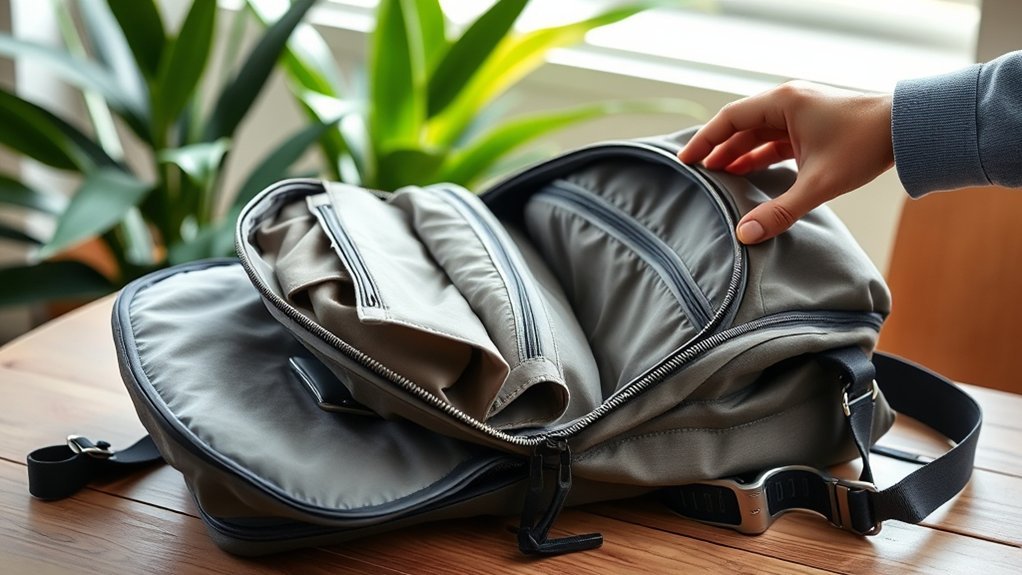
Choose a backpack that fits your body, your trip, and the strictest baggage rule on your route. The International Air Transport Association notes that cabin baggage limits vary by airline, cabin, and aircraft. Measure the fully packed bag, including handles, exterior pockets, and anything attached to the outside.
For many travelers, a soft-sided backpack is easier to fit into an overhead bin than a rigid case, but capacity alone does not determine comfort. Look for adjustable shoulder straps, a supportive back panel, a sternum strap, and a hip belt when the load is heavy enough to benefit from one. Test the bag with weight inside before your trip.
Useful organization may include a wide-opening main compartment, a protected electronics sleeve, and one quick-access pocket. Too many small compartments can add weight and make packing harder. Nylon and polyester are common backpack materials; rigid polycarbonate is more typical of hard-shell luggage than soft travel backpacks.
Water-resistant fabric or a rain cover can help in light rain, but do not assume a bag is waterproof. Put passports, medication, and electronics in sealed pouches when water exposure is possible.
Note: A bag advertised as “carry-on size” is not guaranteed to meet every airline’s rules. Check the exact dimensions and weight allowance for your ticket before each trip.
Minimalist Travel Packing List
This sample list works as a starting point for roughly one week in a mild climate with access to basic laundry. Adjust it for your destination, activities, health needs, and personal comfort.
Clothing
- Four tops or base layers that coordinate with every bottom
- Two or three bottoms, such as travel pants, jeans, shorts, or a skirt
- One lightweight jacket, sweater, or blazer
- One sleep set
- Three to five pairs of underwear and socks when you can wash them
- One compact weather layer, such as a rain shell, when conditions call for it
- One trip-specific item, such as swimwear, exercise clothing, or a modest cover-up
Footwear
- One comfortable walking pair worn in transit
- One lighter second pair only when it serves a different purpose
Toiletries, Medication, and Personal Items
- Toothbrush, toothpaste, floss, deodorant, and basic skin care
- Small containers of products your accommodation will not provide
- Prescription medicine in appropriate packaging, plus copies of prescriptions for international travel
- Glasses or contact lenses and essential hygiene products
- A small first-aid selection suited to your needs and destination
Technology and Documents
- Phone, charging cable, compact charger, and headphones
- Power bank carried in the cabin
- Laptop or tablet only when the trip requires it
- Passport or identification, visas or travel authorizations, itinerary, insurance details, and payment cards
- Paper and digital copies of important documents stored separately from the originals
Packing Methodology and Techniques
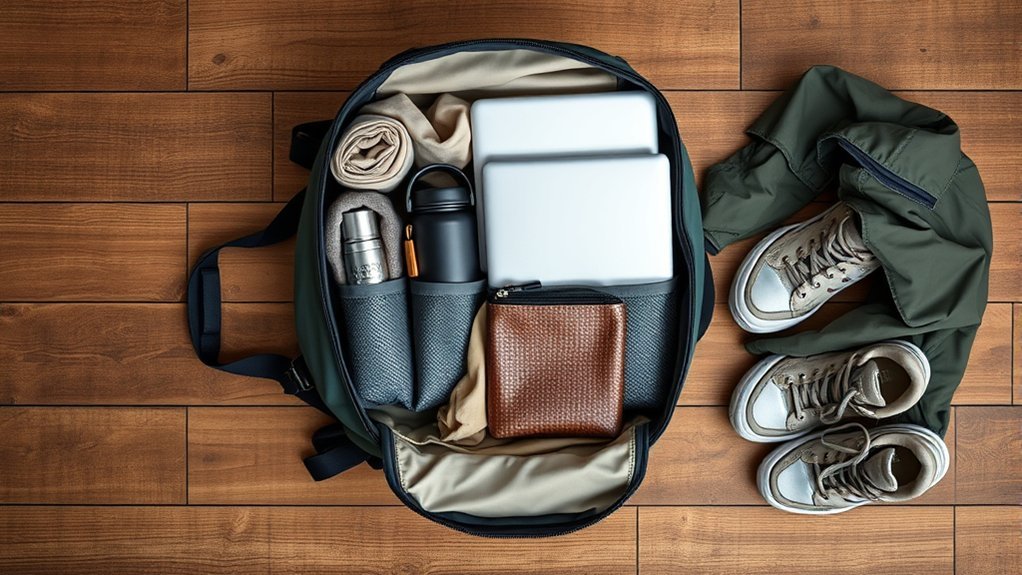
A packing formula can provide structure, but there is no single official “54321” rule. Different versions use different numbers of tops, bottoms, shoes, layers, dresses, or accessories. Treat any formula as a starting point and adjust it to your itinerary rather than forcing your trip into a fixed count.
- Lay everything out by category. Seeing the full load makes duplicates and “just in case” items easier to spot.
- Build complete outfits. Every top should work with at least two bottoms, and each layer should work with most outfits.
- Remove the least useful item in each category. Start with extra shoes, electronics, full-size toiletries, and duplicate clothing.
- Pack heavy items close to your back. Place a laptop, dense packing cube, or other heavy item against the back panel and near the middle of the bag.
- Use the bottom for sturdy or less-used items. A packed second pair of shoes, sleepwear, or a compact jacket can sit lower in the bag.
- Keep checkpoint and in-transit items accessible. Place liquids, documents, medication, headphones, and charging items where you can reach them without unpacking everything.
- Weigh and test the finished bag. Walk with it for at least 10 minutes, climb stairs if possible, and remove anything that creates strain.
Rolling, Folding, and Packing Cubes
Rolling works well for T-shirts, underwear, and other soft garments. Folding is often better for structured shirts, trousers, and items that crease easily. Packing cubes organize categories and can make frequent repacking faster, but they do not reduce weight. Compression cubes may reduce bulk, while vacuum bags can make clothing dense and awkward to repack during a trip.
Whichever method you use, avoid filling every gap. A little open space makes the backpack easier to close, inspect, and use throughout the journey.
Warning: Spare lithium batteries and power banks must remain in the aircraft cabin. If your backpack is gate-checked, remove them and keep them with you, following current FAA battery guidance.
Selecting Versatile Clothing
Choose versatile clothing that suits the destination instead of building a generic travel wardrobe. Start with a small color palette, practical fabrics, and pieces you already know are comfortable. New clothing that has not been tested can cause chafing, poor fit, or laundry surprises.
Essential Clothing Pieces
A simple capsule can create several outfits without overpacking. Useful starting pieces include:
- Bodysuit, T-shirt, or base layer: Choose a comfortable top that works alone and under a jacket.
- One durable everyday bottom: Jeans may work for city trips, while lighter travel pants may dry faster and weigh less.
- Lightweight jacket, sweater, or blazer: Select a layer that matches most outfits and suits the expected weather.
For a short trip, one pair of underwear and socks per day plus an extra is simple. For a longer trip, packing three to five sets and washing them usually saves more space.
Color Coordination Strategy
Choose three or four coordinating colors so every top works with most bottoms. Neutral shades are easy to combine, but your palette does not need to be dull. One accent color, pattern, or textured piece can add variety without creating a separate outfit system.
Try on the planned combinations before packing. Take quick photos of the outfits if that helps you remember them. This prevents you from carrying a piece that looks useful on its own but does not work with the rest of the bag.
Adapt Clothing to the Destination
Minimalist does not mean underprepared. Add sun protection for high-UV destinations, a warm layer for cold evenings, rain protection for wet climates, and clothing that respects religious sites or local dress expectations. Specialized activities such as hiking, business meetings, or formal events may justify one dedicated outfit or item.
Packing Shoes Efficiently
Shoes often take more space than any other clothing item. For many trips, two pairs are enough: one versatile walking pair and one lighter pair for a different need, such as sandals, formal shoes, or water-friendly footwear.
- Wear the bulkiest pair: Travel in the heavier shoes when they remain comfortable for the journey.
- Use a washable shoe bag: Separate soles from clothing without relying on a packing cube to contain dirt or moisture.
- Fill empty space: Put clean socks or small non-fragile items inside packed shoes.
- Pack soles outward: Position shoes along the side or bottom of the backpack so they form a stable shape.
Do not bring a third pair unless your itinerary clearly requires it. “Maybe” shoes are one of the fastest ways to overfill a minimalist backpack.
Organizing Toiletries and Personal Items
For U.S. airport screening, the TSA 3-1-1 liquids rule generally limits carry-on liquids, aerosols, gels, creams, and pastes to containers of 3.4 ounces (100 milliliters) or less inside one quart-size bag. “TSA-approved bag” is common marketing language, but TSA does not require a particular brand.
Decant shampoo, lotion, and other products into smaller leak-resistant containers only when needed. Label reusable bottles, keep them within their usable life, and avoid transferring prescription medication into unmarked cosmetic containers. Solid soap, shampoo bars, and other non-liquid alternatives can reduce the amount in your liquids bag.
Check what your accommodation provides before packing. A toothbrush, floss, deodorant, sunscreen, and essential skin or hair products may be enough for many trips. Keep liquids upright in a leak-resistant pouch and place them where they can be removed quickly at security.
Note: Medically necessary liquids may be allowed in larger quantities, but they must be declared for screening. Review current TSA instructions before departure.
Packing Medication and Health Items
Keep essential medication in your carry-on so it remains available if a checked or gate-checked bag is delayed. Bring enough for the trip plus a reasonable delay, and keep prescription details with you. For international travel, the U.S. Department of State advises travelers to verify medication restrictions with the destination and any transit countries because some prescription and over-the-counter products may be restricted.
Vaccination records are not a universal requirement for every international trip. Check the CDC destination pages and official entry rules for your route, then carry the records that are recommended or required. Also bring your insurance information and emergency contacts, while confirming how your coverage works outside your home area.
Warning: Do not assume a medicine that is legal at home is legal abroad. Check official destination rules and keep medication in properly identified packaging when required.
Incorporating Tech Gear
Technology can replace books, printed maps, entertainment devices, and some paperwork, but it can also become the heaviest category in your backpack. Start with your phone, then add only the devices your itinerary or work truly requires.
- Phone: Download offline maps, tickets, emergency contacts, and key documents before leaving.
- Laptop or tablet: Bring one only when a phone cannot do the job. A 15-inch laptop is not a minimalist essential for every traveler.
- Portable charger: Choose a capacity that fits your needs and keep it in the cabin under airline and battery rules.
- Charger and cables: Use one compact multi-port charger and the fewest compatible cables practical.
- Travel adapter: Match the plug type at your destination and check the voltage rating on your devices. A plug adapter changes the plug shape; it does not automatically convert voltage.
Protect electronics from rain and spills with a sealed pouch or case. Use one designated tech pouch so cables do not tangle and you can remove the category quickly during screening or at your seat.
Essential Travel Documents
Keep your passport or identification, visas or electronic travel authorizations, payment cards, itinerary, accommodation details, and emergency contacts in a secure but accessible pocket. Check passport validity and entry rules early; requirements vary by destination and may extend beyond the dates of your trip.
The U.S. Department of State international travel checklist recommends making copies of important travel documents. Keep a set separate from the originals, leave another set with a trusted person, and store protected digital copies. A copy does not replace the original, but it can help if documents are lost or stolen.
Carry only the cards and cash you expect to use, and store a backup payment method separately. Keep sensitive documents out of exterior pockets that can be opened without your notice.
Handling Laundry While Traveling
Laundry is what allows a small wardrobe to support a longer trip. Choose quick-drying pieces when practical, but test them at home first. A fabric that dries quickly but feels uncomfortable or holds odor is not a good minimalist choice for you.
- Use accommodation laundry, a laundromat, or a wash-and-fold service when available.
- For sink washing, pack a small amount of suitable detergent in your liquids bag or use a solid laundry sheet.
- Roll wet clothing in a towel to remove extra water, then hang it where airflow is good and dripping is permitted.
- Do not plan to wash every item every night. Rotate outfits and allow enough drying time for the climate.
Pro Tip: Test your laundry plan at home. Wash one complete outfit by hand and check whether it is comfortable, clean, and dry by the next morning.
Adjusting the List for Trip Length
Weekend Trip
Pack one travel outfit, one alternate outfit, sleepwear, underwear and socks, one layer, and the smallest practical toiletry and tech kits. A personal-item-size bag may be enough when airline rules and the itinerary allow it.
One-Week Trip
Use the sample capsule list above, with four tops, two or three bottoms, one layer, and two pairs of shoes including the pair you wear. Add one laundry session if you prefer fewer undergarments or expect hot, active days.
Two Weeks or Longer
Do not double the clothing. Keep a similar capsule and plan regular laundry. Add only items required by additional climates, activities, or work needs. Long trips usually demand a better routine, not a much larger bag.
Final Packing Tips for Success
- Wear bulky but comfortable items: Use your heaviest practical shoes and outer layer during transit, but do not create an uncomfortable airport outfit just to save space.
- Keep liquids easy to remove: Place your quart-size bag near the top or in an accessible pocket when U.S. screening rules apply.
- Protect electronics and documents: Use sealed pouches rather than relying on the backpack fabric alone.
- Leave room: Aim for a bag that closes without force and has space for food, a temporary layer, or a small purchase.
- Do a final test: Weigh the bag, confirm its dimensions, wear it for 10 minutes, and practice opening the items you will need in transit.
A small foldable umbrella can be useful when the forecast supports it, but a light rain shell may serve more purposes in windy conditions. Keep your essential documents and wallet in a secure location that remains easy for you—not a stranger—to access.
Common Minimalist Packing Mistakes
- Packing for an imaginary version of the trip: Bring clothing for confirmed activities, not every event that could happen.
- Ignoring airline weight limits: A bag can meet the size rule and still be too heavy.
- Bringing too many shoes: Each pair should solve a distinct need.
- Carrying duplicate electronics: Avoid a laptop, tablet, e-reader, camera, and several chargers unless the trip truly requires them.
- Compressing instead of editing: Packing cubes can hide overpacking; they cannot make excess weight disappear.
- Skipping the comfort test: A bag that feels manageable for one minute may become painful after a long walk.
- Assuming “water-resistant” means waterproof: Protect critical items separately.
- Removing needed health or safety items: Minimalism should never override medication, accessibility equipment, or destination-specific protection.
Frequently Asked Questions
How do I choose the best travel destination for minimalist packing?
Look for a trip with predictable weather, easy laundry access, and activities that share similar clothing. However, almost any destination can work with one backpack when you plan for its climate, local rules, and specialized activities instead of using a generic list.
What are the best fabrics for minimalist travel clothing?
Choose fabrics that are comfortable, durable, easy to wash, and suitable for the climate. Merino blends, nylon blends, lightweight polyester, and some wrinkle-resistant natural-fiber blends can work well. Test each item at home because drying time, odor control, and comfort vary by garment.
Can I pack snacks without adding much weight?
Every snack adds weight, but compact dry foods such as nuts, dried fruit, crackers, or energy bars can provide useful calories without much bulk. Check security, customs, and agricultural rules for your route, especially when crossing an international border.
How do I handle laundry while traveling minimally?
Pack enough clothing to reach your first realistic laundry opportunity. Use a laundromat, accommodation machine, service, or sink wash, then allow enough drying time. Three to five sets of underwear and socks can support a long trip when you wash regularly.
What are common mistakes to avoid when packing light?
The biggest mistakes are packing too many shoes, bringing duplicate electronics, ignoring airline weight limits, choosing untested clothing, and compressing excess items instead of removing them. Do not cut medication, accessibility equipment, or required safety gear just to reach a smaller bag size.
What size backpack is best for minimalist travel?
There is no universal best size. Many one-bag travelers can use a backpack in the roughly 25- to 35-liter range for simple trips, but the correct choice depends on your body, gear, season, and airline limits. Always compare the bag’s exterior measurements and loaded weight with your ticket rules.
Are packing cubes necessary for one-bag travel?
No. Packing cubes can improve organization and make frequent repacking easier, but simple pouches or careful folding also work. Use cubes only when their structure saves you time; they do not reduce the weight of your belongings.
Conclusion
Packing light is a repeatable skill, not a contest. Start with the trip, choose a comfortable bag that meets the actual airline rules, build a small coordinated wardrobe, and keep safety-critical items accessible. After the first trip, note what you used, what you missed, and what never left the backpack. That simple review will make your next minimalist packing list lighter and more useful.
Sources
- International Air Transport Association: Travel and Baggage — cabin baggage size and weight rules vary by airline, cabin, and aircraft.
- Transportation Security Administration: Liquids, Aerosols, and Gels Rule — U.S. carry-on screening limits for liquids, gels, creams, pastes, and aerosols.
- Federal Aviation Administration: Airline Passengers and Batteries — cabin rules for spare lithium batteries and power banks.
- U.S. Department of State: International Travel Checklist — travel documents, copies, entry planning, insurance, and destination preparation.
- U.S. Department of State: Medicine and Health — checking foreign medication restrictions and preparing prescriptions.
- Centers for Disease Control and Prevention: Travelers’ Health Destinations — destination-specific health and vaccine guidance.

1 Comment
Pingback: Bagage minimaliste : créer une capsule wardrobe de voyage – Baliturismo Vie Voyage