
Last Updated on July 24, 2026 by Caleb Warren
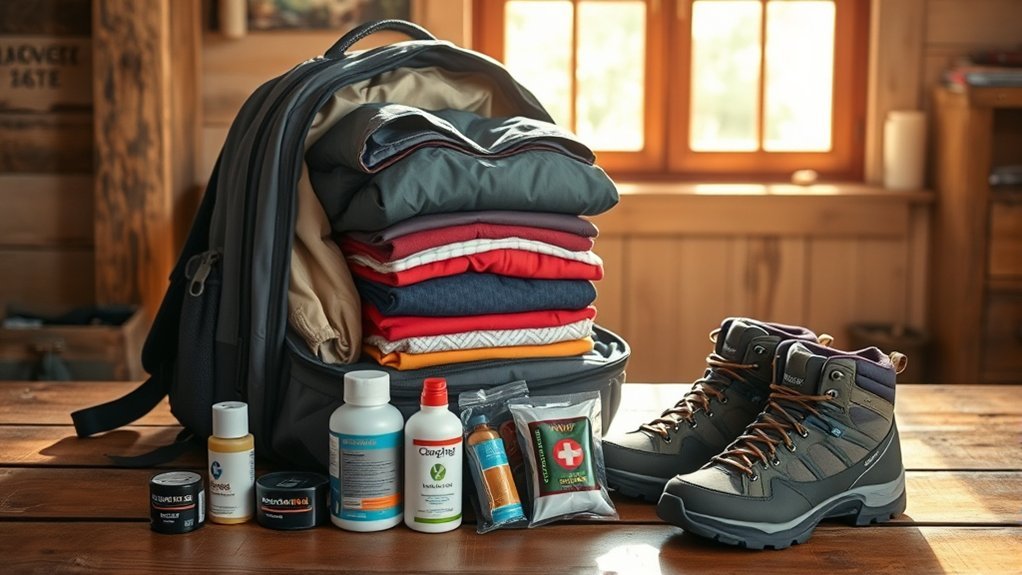
A poorly packed backpack can pull you backward, shift on uneven ground, and make a reasonable trail feel much harder than it should. A good packing system keeps dense gear close to your body, protects items from rain, and puts frequently used supplies where you can reach them without emptying the main compartment.
Quick Answer
Pack soft, bulky camp gear at the bottom. Place water, food, a bear canister, and other dense items in the middle close to your back. Keep rain gear, insulation, first aid, and other trail essentials near the top. Fill open spaces, balance both sides, and tighten the compression straps before hiking.
Key Takeaways
- Put your sleeping bag, sleep clothes, and other soft camp items at the bottom.
- Keep the heaviest gear centered in the pack and close to the back panel.
- Fill and install an internal hydration reservoir before loading the main compartment.
- Use the top and accessory pockets for items you may need while hiking.
- Carry bear spray on your body in a proper holster, not inside the backpack.
- Check local food-storage rules before every trip because approved methods vary by destination.
At a Glance
| Time Required | About 20 to 40 minutes for an overnight or multi-day load |
| Difficulty | Easy to moderate |
| Tools Needed | Backpack, pack liner or dry bags, packed hiking gear, and a scale if you want to check total weight |
| Cost | No added cost if you already own the backpack and gear |
Disclosure: As an Amazon Associate I earn from qualifying purchases. Some links on this page are affiliate links, at no extra cost to you.
What You’ll Need Before You Start
This method works with most internal-frame and frameless backpacking packs. Your backpack does not need a top lid or a specific pocket layout. Use the compartments, straps, and attachment points provided by your model.
- Properly fitted backpack: Choose the size by torso length and hip measurement rather than overall height.
- Pack liner or dry bags: Protect your sleeping bag, sleep clothes, electronics, and other moisture-sensitive gear.
- Sleep system: Sleeping bag or quilt, sleeping pad, and sleep clothes.
- Hydration system: Water bottles or a filled hydration reservoir that has been checked for leaks.
- Shelter: Tent body, rain fly, footprint, poles, stakes, and guylines as required.
- Food-storage system: An approved bear-resistant container when required by the park, forest, or wilderness area.
- Cooking equipment: Stove, fuel, lighter, pot, utensils, and food.
- Trail essentials: Rain gear, warm layers, first aid, navigation, headlamp, water treatment, toilet supplies, repair items, and emergency shelter.
The National Park Service recommends carrying the Ten Essentials, including navigation, illumination, insulation, first aid, emergency shelter, extra food, and water-treatment supplies.
Note: Check the weather, water availability, fire restrictions, food-storage requirements, and wildlife guidance for your exact route. Rules can differ between nearby parks and wilderness areas.
Prepare the Backpack Before Loading It
Check the Pack Fit
A well-packed load will still feel uncomfortable if the backpack is the wrong size. Measure your torso and adjust the suspension before loading the pack. The hip belt should wrap securely around the top of your hip bones, and the shoulder straps should follow your shoulders without carrying most of the load.
Use the fitting process in REI’s backpack fit guide when adjusting an unfamiliar pack.
Lay Out and Inspect Your Gear
Spread everything where you can see it. Group items by sleep, shelter, cooking, clothing, water, safety, and quick access. Remove unnecessary duplicates and check that fuel bottles, water reservoirs, food bags, and toiletry containers are closed securely.
Protect sharp or hard-edged equipment. Cover tent stakes, cooking tools, crampon points, and other items that could puncture the pack, damage a reservoir, or press into your back.
Install the Pack Liner and Reservoir
Place a waterproof pack liner inside the main compartment before adding gear. A rain cover can help protect the outside of the pack, but a liner or sealed dry bags provide more direct protection for critical equipment.
If your pack uses an internal hydration sleeve, fill the reservoir, check the cap and hose connection, and insert it before packing anything else. Route the hose through the correct port and confirm that it reaches your shoulder strap without kinking.
Warning: Do not place a filled reservoir at the outer edge or loose at the top of the pack. Water is dense, so it should remain supported close to your back. Keep sharp equipment away from the reservoir.
Packing the Bottom of the Backpack
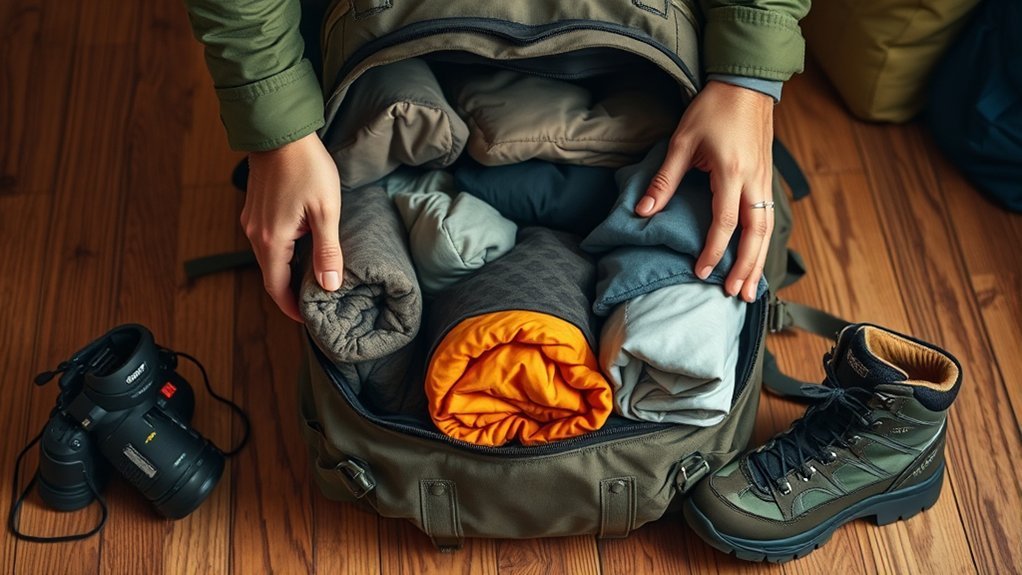
Start with bulky, soft items that you will not need until camp. Suitable bottom-zone items include:
- Sleeping bag or quilt
- Sleep clothes
- Compact sleeping pad
- Camp shoes or down booties
- Other light, compressible camp items
These items create a stable base for the denser gear above them. Keep the sleeping bag inside the pack liner or a waterproof dry bag. Do not rely only on the backpack fabric or rain cover to keep it dry.
A large closed-cell foam pad may not fit inside. Secure it evenly outside the pack only when necessary, and make sure it does not block your view, interfere with your arms, or extend so far that it catches vegetation.
Warning: Dense items placed at the very bottom can make the backpack sag and pull away from your body. Hard equipment may also press through soft gear and create uncomfortable pressure points.
Packing the Middle of the Backpack
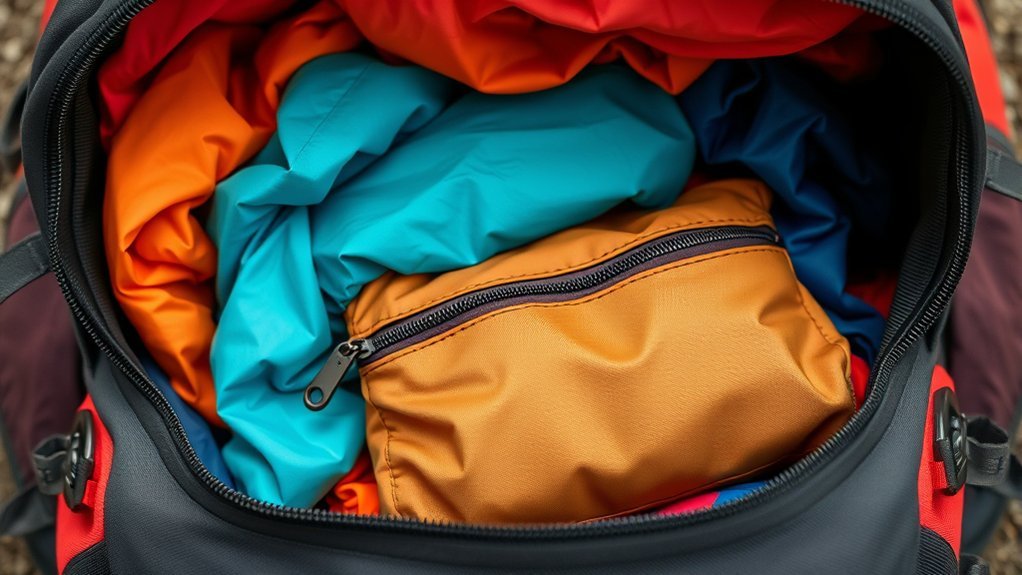
The core is the main weight-bearing zone. Place your heaviest and densest items here, centered between your shoulder blades and lower back rather than against the outer face of the backpack.
REI’s backpack-loading guidance recommends using the core for food, cooking equipment, a water reservoir, and a bear canister.
Pack Dense Gear Close to Your Back
Common core-zone items include:
- Main food supply
- Bear-resistant food canister
- Cook pot and stove
- Water reservoir in its dedicated sleeve
- Dense electronics or group equipment
Keep the load balanced from left to right. A cook kit on one side may need to be balanced by food, water, or another dense item on the other. Avoid placing every heavy object in one vertical column because that can create pressure points and side-to-side imbalance.
Pro Tip: After positioning each dense item, press your hand against the back panel from outside the pack. If you feel a hard corner or ridge, add a soft buffer or rotate the item.
Pack a Bear Canister Correctly
Carry a bear-resistant container inside the backpack whenever it fits. Center it close to your back and surround it with soft gear so it cannot roll or press against you. A horizontal position often balances well, but some pack shapes require a vertical position.
Food is not the only concern. Where regulations require protected storage, scented toiletries, trash, medications, lip balm, sunscreen, and similar items may also need to fit inside the approved container.
Check the current rules for the area you will visit. For example, Yosemite National Park requires specific food-storage methods and does not allow backpackers to rely on hanging food as a general substitute.
Separate Fuel From Food
Close liquid-fuel bottles tightly and keep them upright. Place liquid fuel below and away from food so a leak is less likely to contaminate meals. Do not store fuel inside a bear canister with food unless the container manufacturer and land manager specifically permit that use.
Fill Gaps Without Overcompressing Gear
Use tent fabric, a footprint, spare clothing, or other soft items to fill open spaces around dense equipment. This keeps hard objects from moving while also preventing them from rubbing against the hydration reservoir.
Do not force the pack so tightly that zippers, seams, frames, or buckles remain under extreme pressure. You should be able to close the pack without sitting on it or pulling hard on fragile components.
Packing the Top of the Backpack
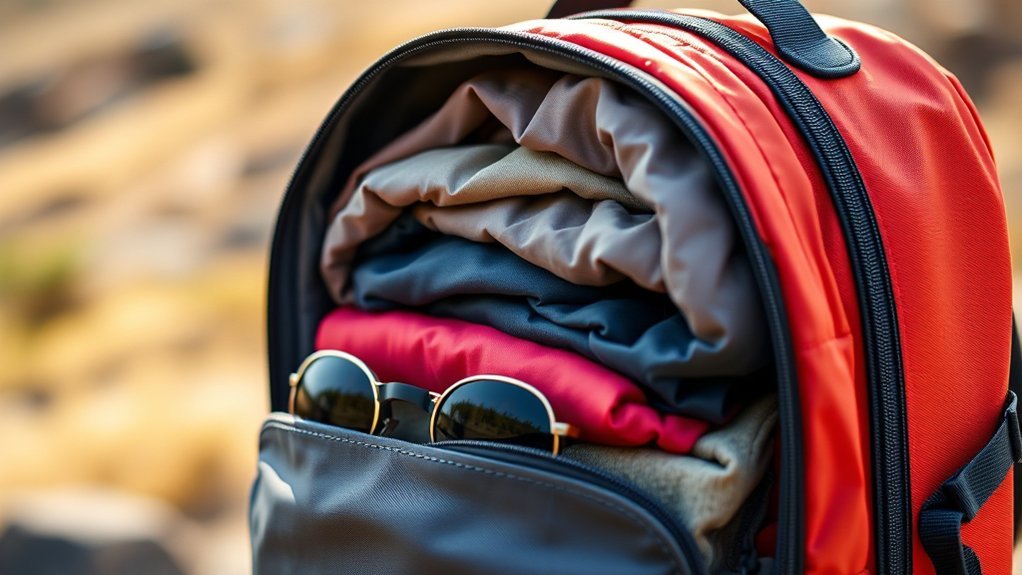
The top zone should hold items you may need before reaching camp. Suitable items include:
- Rain jacket and rain pants
- Insulated jacket or fleece
- First aid kit
- Water filter or purifier
- Toilet supplies
- Emergency shelter
- Gloves, hat, or other weather layers
You can place a tent near the top when fast setup is important, such as during a wet forecast. In dry conditions, the tent body, footprint, and rain fly can fill gaps around core gear instead. Keep a wet tent or rain fly in the outer stretch pocket or another location where it will not soak your sleeping bag and dry clothing.
Tent poles often fit along one side of the pack under compression straps. Balance their weight, secure both ends, and keep them from extending far above or below the backpack. Protect tent stakes so they cannot puncture fabric.
Note: There is no single correct location for every tent. Pack shape, tent size, weather, and how quickly you need the shelter should determine its position.
How to Use External Pockets
Accessory pockets are for small items you use urgently or often. Your pocket layout may include side pockets, a front stretch pocket, hip-belt pockets, shoulder-strap pockets, or a removable lid.
- Side pockets: Water bottles, tent poles, or a compact tripod.
- Front stretch pocket: Rain gear, wet shelter fabric, a water filter, or an extra layer.
- Hip-belt pockets: Trail snacks, lip balm, sunscreen, a small camera, or a phone.
- Top lid: Headlamp, navigation backup, first aid supplies, gloves, and other small essentials.
- Secure inner pocket: Keys, identification, cash, permits, and wallet.
- Separate toilet kit: Trowel, toilet paper, hand sanitizer, and a sealable waste bag where required.
Keep the toilet kit separate from food and eating equipment. Seal used hygiene materials according to local Leave No Trace and land-manager requirements.
Carry Bear Spray on Your Body
Do not bury bear spray in the main compartment or place it in a pocket you cannot reach instantly. The National Park Service recommends carrying bear spray in a belt or chest holster rather than inside a backpack.
Keep the safety clip installed until use, check the expiration date, and follow the product label. Bear spray is a last-resort deterrent, not a repellent for spraying on tents, clothing, people, or packs. Also confirm that possession is permitted at your destination.
Warning: A backpack pocket is not a substitute for a body-mounted bear-spray holster. You may not be able to reach the pocket quickly, and the pack may not be on your body when an encounter occurs.
How to Secure Quick-Access and External Items
Use external attachment points only for equipment that is too long, wet, sharp, or bulky to carry safely inside. Examples include trekking poles, tent poles, an ice axe, crampons, a foam sleeping pad, or a climbing rope.
Use the attachment system designed for the item. Cover crampon points, secure an ice axe correctly, and lock trekking poles so they cannot slide free. Do not attach technical equipment unless you know how to carry and use it safely.
Keep external gear to a minimum. Loose equipment can swing, catch branches, scrape rocks, become wet, or change the pack’s balance. Never allow attached items to cover reflective details, block access to water, or hang near your legs.
How to Keep Your Gear From Shifting
- Center the dense items: Keep food, water, and cooking gear close to your back rather than near the outer face.
- Balance both sides: Compare the left and right sides as you add gear.
- Fill open spaces: Use soft clothing and shelter fabric to support irregular items.
- Close the pack properly: Roll, buckle, or zip the main opening according to the manufacturer’s design.
- Tighten compression straps: Pull them evenly until the load is stable, but do not crush fragile equipment.
- Secure every external item: Check both ends of poles, pads, and tools.
Perform a Movement Test
Lift the pack upright and shake it gently. Listen for cookware, fuel, tent stakes, or other hard items moving inside. Put the pack on and walk for several minutes. Climb stairs, turn your upper body, lean slightly from side to side, and step over a low obstacle.
The load should remain close to your body without pulling strongly to one side. Stop and repack if you feel rolling, hard pressure against your back, or repeated movement.
A correctly loaded backpack should feel like one stable unit resting on your hips, not a collection of loose objects swinging behind you.
Adjust the Backpack After Packing
Loosen the main adjustment straps before putting the loaded pack on. Then make the adjustments in this order:
- Hip belt: Position it around the top of your hip bones and tighten it until secure but not painful.
- Shoulder straps: Pull them snug so they follow your shoulders without taking most of the load off your hips.
- Load lifters: Tighten them gently to bring the upper pack closer to your body. Do not pull them until the shoulder straps lift away from your shoulders.
- Sternum strap: Buckle it at a comfortable chest height and tighten only enough to stabilize the shoulder straps.
Walk again after making these adjustments. Small strap changes can reduce pressure, but straps cannot correct a pack that is the wrong torso size or a load that is packed badly.
How to Lift a Loaded Backpack Safely
Avoid lifting a heavy backpack by one shoulder strap. That can make the load difficult to control and may place unnecessary stress on the harness.
- Loosen the shoulder straps slightly.
- Stand beside the upright backpack with your knees bent.
- Hold the haul loop at the top of the back panel.
- Lift the pack onto your thigh while keeping control of the haul loop.
- Slide one arm into the nearest shoulder strap.
- Lean forward, guide the pack onto your back, and insert the other arm.
- Fasten the hip belt and readjust all straps.
Practice this movement at home with the packed weight you expect to carry.
Final Check Before You Start Hiking
- The sleeping bag and dry clothing are protected from water.
- The reservoir cap and hose connections do not leak.
- Heavy items are centered close to the back panel.
- The left and right sides feel balanced.
- Fuel is closed, upright, and separated from food.
- Sharp items have covers or protective storage.
- Rain gear, insulation, first aid, navigation, and water treatment are reachable.
- Bear spray is on your body in an approved holster where permitted.
- Food and scented-item storage follows current local rules.
- Compression straps and external attachments are secure.
- The pack remains stable during the walking and movement test.
Troubleshooting Common Packing Problems
The Pack Pulls You Backward
Move dense items away from the outer face and closer to the back panel. Tighten the upper compression straps and load lifters gently. If the pack still pulls backward, check whether external items or an overfilled top section are moving the center of gravity away from you.
The Pack Leans to One Side
Compare the dense items on both sides. Move water, food, cooking equipment, or electronics until the weight feels even. Check whether a full side-pocket bottle is balanced by an item on the opposite side.
Your Shoulders Hurt Quickly
Confirm that the hip belt sits on the top of your hip bones and carries most of the load. Loosen overtightened shoulder or sternum straps. Recheck torso length if the hip belt slides down or the shoulder straps do not follow your body correctly.
A Hard Object Presses Into Your Back
Rotate the object, move it farther from the back panel, or place soft clothing around it. Check cook pots, bear canisters, fuel bottles, tent stakes, and electronics for corners that may create pressure.
The Reservoir Hose Kinks or Pulls Loose
Empty enough space to reseat the reservoir in its sleeve. Route the hose through the intended opening and secure it along the shoulder strap. Do not force the hose between tightly packed hard items.
The Load Starts Shifting During the Trip
Food use creates empty space, especially inside a bear canister. Refill safe open space with soft equipment, tighten compression straps, and rebalance the pack. Repack whenever the load becomes uncomfortable rather than following a fixed daily schedule.
Frequently Asked Questions
What are the best materials for a lightweight backpack?
Many lightweight backpacks use nylon or polyester fabrics, sometimes with ripstop construction or stronger reinforcement in high-wear areas. Mesh is commonly used for pockets rather than the main load-bearing body. Compare fabric strength, coating, stitching, frame design, repairability, and total pack weight instead of choosing by one material name alone.
How do I choose the right backpack size?
Choose the physical pack size by torso length and hip measurement. For capacity, roughly 30 to 50 liters often works for one- to three-night trips, while about 50 to 80 liters is common for three- to five-night trips. Cold weather, group gear, and bulky equipment may require more room.
What should I do if my backpack feels unbalanced?
Move dense items close to the back panel, balance weight between the left and right sides, and tighten compression straps. Then adjust the hip belt, shoulder straps, load lifters, and sternum strap. Repack the load if strap adjustments do not solve the problem.
Can I pack food without attracting animals?
No container makes food completely free of wildlife concerns. Keep food, trash, toiletries, and other scented items clean and sealed while hiking, then use the storage method required by the local land manager. Some destinations require an approved bear-resistant canister and prohibit hanging food.
How often should I repack my backpack during a trip?
Repack when food use, wet equipment, or changing weather alters the load. You do not need to empty the pack every day when it remains balanced and organized. Recheck dense items and compression straps whenever the pack begins to shift or feel different.
Where should a hydration reservoir go?
Place it in the pack’s hydration sleeve close to your back. Fill it, check for leaks, install it before loading the main compartment, and keep sharp equipment away from it. A full reservoir should not sit loose at the top or outer edge of the pack.
Should I pack my tent inside or outside the backpack?
Pack as much of the tent inside as practical. Soft tent fabric can fill gaps around core gear, while poles may ride securely along the side. Keep the tent near the top when rapid setup is important. Carry wet shelter fabric outside the waterproof liner so it does not soak dry gear.
How heavy should my backpack be?
There is no safe universal weight that fits every hiker. Your pack, body, conditioning, terrain, weather, water needs, and trip length all matter. Carry the required safety equipment, remove unnecessary duplicates, and test the complete load on a shorter walk before the trip.
Pack It Right, Hike It Better
Start with dry, compressible camp gear at the bottom. Keep water, food, and other dense equipment centered close to your back. Reserve the top and pockets for items you may need while moving, and attach gear outside only when necessary.
Before leaving, tighten the compression straps, adjust the suspension, and walk with the finished load. A few minutes spent correcting a leak, pressure point, or imbalance at home can prevent hours of discomfort on the trail.
Sources
- REI: How to Pack and Hoist a Backpack – packing zones, reservoir placement, external attachments, and safe lifting.
- REI: How to Size and Fit a Backpack – torso measurement, hip-belt position, and suspension adjustment.
- National Park Service: Ten Essentials – minimum hiking and emergency equipment.
- National Park Service: Bear Spray and Firearms – body-mounted bear-spray access and safe use.
- Yosemite National Park: Food Storage While Backpacking – bear-resistant containers, scented items, and destination-specific storage rules.

