

Last Updated on September 11, 2026 by Daniel Globe
Choosing a mobile plan in France is easier when you compare the full offer rather than the headline monthly price. Start with your actual data use, then check network coverage, 4G/5G access, EU roaming, contract length, SIM or activation fees, and any handset payments. If you plan to keep your existing French number, also understand the RIO portability process before cancelling anything.
Quick Answer
To compare French mobile plans, check five things first: monthly data, coverage where you actually use your phone, commitment period, roaming allowance, and the total price after promotions and fees. For most people, a SIM-only no-commitment plan is the simplest starting point, but the best offer depends on coverage and usage.
Key Takeaways
- Do not choose by data allowance alone; network coverage at home, work, school, and regular travel locations matters just as much.
- French plans often include generous data and unlimited domestic calls and messages, but inclusions vary by operator and offer.
- Check the regular price after any introductory promotion, plus SIM, activation, handset, and optional-service costs.
- EU/EEA roaming generally follows Roam Like at Home rules, but fair-use limits can apply to mobile data.
- If you want to keep your French mobile number, obtain your RIO and let the new operator handle the number transfer instead of cancelling the old line first.
Disclosure: As an Amazon Associate I earn from qualifying purchases. Some links on this page are affiliate links, at no extra cost to you.
What’s Included in French Mobile Plans?

French mobile plans commonly combine calls, SMS/MMS, and a monthly mobile-data allowance. The exact amount of data varies widely, and current offers can extend well beyond 100 GB, so an old rule such as “French plans range from 5 GB to 100 GB” is too restrictive.
The features worth comparing are:
- Data in France: Check the full-speed monthly allowance and what happens after you use it.
- 4G and 5G access: Confirm that the plan and your phone support the network generation you want.
- Calls and messages: Verify whether unlimited calls, SMS, and MMS apply only within France or also to selected international destinations.
- EU/EEA roaming: Check how much of your domestic data allowance can be used while travelling.
- Commitment: Look for sans engagement if you want a plan you can leave without completing a minimum contract period.
- SIM or eSIM: Confirm whether the operator supports eSIM and whether a SIM or activation fee applies.
- Promotional pricing: Check whether the displayed price is permanent or rises after a set number of months.
Before subscribing, read the contractual summary. French consumer guidance says telecom operators must provide clear pre-contract information covering the main service characteristics, price, commitment period, and cancellation conditions. DGCCRF explains the information consumers should check before accepting a telecom offer.
How Much Data Do You Need?
Your ideal data allowance depends on what you do away from Wi-Fi. Messaging, email, navigation, music streaming, social media, video, cloud backups, and hotspot use can produce very different monthly totals.
As a useful real-world benchmark, Arcep reported that customers with mobile plans used an average of 18.4 GB per month per subscription in the fourth quarter of 2025. An average is not a target, but it shows why many people do not automatically need the largest available package.
Arcep measured average mobile-data use of 18.4 GB per month for mobile-plan subscriptions in Q4 2025.
A practical starting point is:
| Usage level | Starting allowance | Typical use |
|---|---|---|
| Light | Up to about 10 GB | Messaging, email, maps, occasional browsing |
| Moderate | About 10–30 GB | Regular browsing, social media, music and occasional video |
| Heavy | About 30–100 GB | Frequent video streaming, uploads or hotspot use |
| Very heavy | 100 GB or more | Extensive streaming, tethering or limited access to Wi-Fi |
These are practical comparison ranges rather than official classifications. Your phone’s data-usage screen is usually a better guide than a generic label. Check several recent months and leave a reasonable buffer for travel or unusually heavy use.
Which Plan Fits Your Usage?
The best French mobile plan is the one that meets your normal usage without charging you for capacity or extras you rarely use. Compare data, network quality, roaming, contract flexibility, and the final monthly price together.
Data Needs
If you spend most of the day on Wi-Fi, a smaller plan may be enough. If you stream video on mobile data, share your connection with a laptop, upload large files, or travel frequently, a higher allowance gives you more breathing room.
Do not assume that the biggest allowance is automatically the best value. Check what happens after the allowance is exhausted: the operator may reduce speed, block additional data, or charge according to the offer terms.
Coverage and Network Quality
A cheap plan is poor value if the signal is unreliable where you use it. Before changing operator, compare coverage at your home, workplace, school, regular commute, and other important locations.
Arcep’s Mon réseau mobile tool compares operator coverage and quality of service across France, including calls, SMS, mobile internet, transport routes, and performance measurements.
Pro Tip: Check coverage by exact location before comparing prices. A plan that costs a few euros less is not a bargain if you regularly lose service indoors or on your commute.
Commitment Flexibility
If you expect your needs to change, a sans engagement plan can be convenient because it does not impose a minimum commitment period. You can move to another offer without waiting for a 12- or 24-month commitment to expire, although normal billing and cancellation procedures still apply.
A committed plan may make sense when it is tied to a handset purchase or a specific promotion. Compare the total amount paid over the entire period rather than only the first monthly bill.
Short Stays and Visitors
If you are visiting France rather than living there long term, compare prepaid, short-duration, and no-commitment options. Check whether the provider supports eSIM, what identification or payment method is required, when the SIM expires, and whether the included roaming allowance covers other countries on your trip.
No-Commitment vs. Contract Plans
The main difference is flexibility. A no-commitment plan lets you leave without completing a minimum service term. A committed plan can run for a defined period and may be linked to a discounted or financed handset.
No-Commitment Flexibility
A forfait sans engagement is a strong default for people who already own an unlocked phone, want to compare operators easily, or expect their data needs to change.
Do not assume that no commitment automatically means more expensive service. French mobile pricing is highly competitive, and the correct comparison is the full cost and included services of each specific offer.
Contract Plan Tradeoffs
With a committed plan, check:
- the exact end date of the commitment;
- whether a handset is subsidized or financed separately;
- the regular monthly price after promotions;
- early-cancellation charges that may apply;
- whether changing to a cheaper plan affects a device discount;
- the remaining device balance if you leave the operator.
Arcep advises consumers to check the remaining commitment period before cancelling. The rules for amounts due can differ depending on the contract length and whether a subsidized handset is involved, so the contract and current consumer rules should be reviewed before an early exit.
How Calls, Texts, and Roaming Work
Many French mobile plans include domestic calls, SMS, and MMS, but you should still read the destination rules. “Unlimited” does not necessarily mean every international number or premium service is included.
Roaming means using your French SIM while you are temporarily travelling outside France. This is different from making an international call while you are physically in France.
For temporary travel within the EU/EEA, Roam Like at Home rules generally allow you to use calls, messages, and mobile data at domestic rates. However, fair-use rules can limit the amount of data available at the domestic price, particularly on unlimited or very low-cost plans.
Warning: Do not assume EU roaming rules apply worldwide. Switzerland, the United Kingdom, overseas destinations, ferries, cruise ships, aircraft networks, and other non-EU situations can have different pricing depending on the operator and plan.
Before travelling, check the destination in your operator’s roaming tariff and confirm the included data allowance, fair-use limit, and out-of-bundle price. The European Union’s official roaming guidance explains Roam Like at Home and fair-use protections.
What Should You Check Before Switching Providers?

Before switching, check your current contract, network coverage, phone compatibility, number-porting requirements, and the total first-year cost of the new offer. If you are keeping your number, the French RIO process is especially important.
Contract Terms
Review your bill or customer account for:
- the commitment end date, if any;
- remaining handset payments;
- current discounts that will disappear;
- notice or cancellation conditions;
- any separate services billed with the mobile plan.
If you want to keep your mobile number, call 3179 from the line to obtain the RIO (relevé d’identité opérateur). Give that RIO to the new operator when requesting portability.
Arcep states that when number portability is used, you normally should not separately cancel the old contract first. The new operator manages the porting request, and the old contract is terminated when the number is effectively transferred. See Arcep’s official number-portability guidance.
Note: Cancelling the old line before starting a number transfer can complicate portability. Obtain the RIO first and let the new operator process the transfer when you want to keep the number.
Total Switch Costs
Calculate more than the advertised monthly price. Depending on the offer, switching costs can include:
- SIM or eSIM charges;
- activation fees;
- remaining handset payments;
- early-cancellation amounts under an existing commitment;
- the loss of a bundle discount;
- a higher monthly price after an introductory period;
- optional roaming, multi-SIM, smartwatch, security, or entertainment services.
A simple comparison is to calculate what each option will cost over the next 12 months, including one-time charges and any known price change. If a handset is involved, calculate the service and device costs separately so a discounted phone does not hide an expensive plan.
How Device Deals Affect Cost
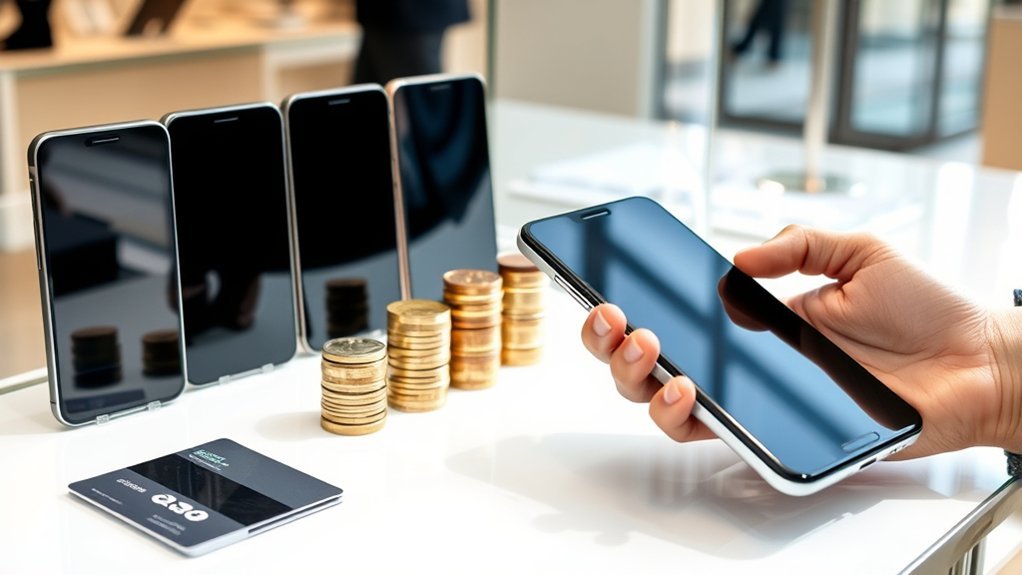
A handset promotion can reduce the phone’s upfront cost while increasing the amount you must keep paying over time. Before accepting a device deal, separate the cost of the mobile service from the cost of the phone.
- Check the cash price: Know what the phone costs without financing or promotional credits.
- Check the financing period: Confirm how many monthly payments are required.
- Check the plan requirement: Some handset discounts depend on keeping a particular mobile plan.
- Check early-exit consequences: Find out what happens to the remaining handset balance or discount if you change plan or operator.
- Check compatibility: If you bring your own phone, make sure it is unlocked and supports the operator’s required 4G/5G frequencies and calling features.
For many users who already own a suitable phone, comparing SIM-only offers separately from handset financing makes the real mobile-service cost easier to see.
Which Extras Are Worth Paying For?
Only pay for an extra if you will actually use it. Useful options can include:
- Extra roaming data: Useful for frequent travel outside the allowance included in your plan.
- Hotspot or tethering: Important if you regularly connect a laptop or tablet through your phone.
- eSIM or multi-SIM: Useful for dual-SIM phones, tablets, watches, or maintaining separate personal and travel lines.
- International calling: Worth comparing if you regularly call numbers outside France.
- VoWiFi/Wi-Fi calling: Helpful in buildings where indoor mobile reception is weak.
- Entertainment or cloud bundles: Valuable only when they replace subscriptions you would otherwise pay for separately.
Compare the standalone value of an add-on with the increase in your mobile bill. A bundled feature is not a saving if you would not otherwise buy it.
How to Cancel a Mobile Contract
If you are cancelling without porting your number, first check whether your plan has a remaining commitment. Arcep states that a no-commitment communications contract can be cancelled at any time and that the operator generally has ten clear days after receiving the request to end the contract, unless a later date is requested.
French consumer rules also require covered subscription businesses, including telecom operators, to provide an online cancellation function. The online process lets you submit the cancellation decision and receive confirmation of its receipt and effect.
- Check your remaining commitment and handset balance.
- Decide whether you want to keep the phone number.
- If keeping the number, obtain the RIO via 3179 and use the new operator’s portability process instead of separately cancelling first.
- If not keeping the number, use your operator’s supported cancellation process, including its online cancellation function where applicable.
- Save the confirmation and final bill.
- Check that any equipment, optional service, or separate financing agreement has been handled correctly.
For the latest rules on commitment periods and cancellation, see Arcep’s guidance on mobile contract commitments.
Useful French Phrases for Comparing Plans
These phrases can help when comparing an offer online, in a store, or with customer service:
| French | Meaning |
|---|---|
| Quel est le prix mensuel ? | What is the monthly price? |
| Est-ce un prix promotionnel ? | Is this a promotional price? |
| Quel sera le prix après la promotion ? | What will the price be after the promotion? |
| Combien de données sont incluses ? | How much data is included? |
| Combien de Go puis-je utiliser en Europe ? | How many GB can I use in Europe? |
| Le forfait est-il sans engagement ? | Is the plan no-commitment? |
| Y a-t-il des frais d’activation ou de carte SIM ? | Are there activation or SIM-card fees? |
| Puis-je garder mon numéro ? | Can I keep my number? |
| Puis-je utiliser une eSIM ? | Can I use an eSIM? |
In French telecom advertising, Go means gigaoctets, the French term used for gigabytes of data.
Frequently Asked Questions
What is a good mobile plan in France?
A good French mobile plan has reliable coverage where you use your phone, enough data for your normal month, a clear regular price, suitable roaming, and acceptable contract terms. There is no single best plan for everyone because coverage and usage vary by person and location.
How much mobile data do I need in France?
Check your phone’s recent data-use history. Light users may be comfortable below 10 GB, while frequent video streaming or hotspot use can justify 30 GB, 100 GB, or more. Arcep reported average usage of 18.4 GB per month for mobile-plan subscriptions in Q4 2025.
Can I keep my French mobile number when changing operator?
Yes. Call 3179 from the mobile line to obtain its RIO, then give the RIO to the new operator when requesting portability. The new operator handles the transfer, and the old contract is terminated when the port is completed.
Are French mobile plans available without a contract commitment?
Yes. Many offers are sold as sans engagement, meaning there is no minimum commitment period. Other offers can include a commitment, especially when linked to handset financing or a promotion, so always check the contractual summary.
Is EU roaming included with a French mobile plan?
For temporary travel in the EU/EEA, Roam Like at Home rules generally allow calls, messages, and data at domestic rates. Fair-use data limits can still apply, particularly to unlimited or very inexpensive data plans, so check the plan’s roaming allowance before travelling.
Can visitors to France buy a prepaid SIM or eSIM?
Yes, prepaid and short-term options are available, and some operators support eSIM. Availability, identification requirements, payment methods, validity periods, and roaming inclusions vary, so compare those details before buying.
Sources
- DGCCRF — How to analyze telephone and internet subscription offers — contract summaries, pricing, commitment, and consumer information.
- Arcep — Mon réseau mobile — network coverage and quality comparison.
- Arcep — Number portability — RIO, 3179, and operator-switching procedure.
- Arcep — Contract commitment periods — commitment and cancellation guidance.
- Your Europe — Mobile roaming costs — EU/EEA Roam Like at Home and fair-use rules.
- Arcep — Electronic communications market observatory, Q4 2025 — current mobile-data consumption statistics.
Conclusion
To choose a French mobile plan, start with your actual data use and the network quality where you spend the most time. Then compare the regular monthly price, EU roaming allowance, commitment period, phone or activation costs, and any optional services.
If you are switching while keeping your French number, obtain your RIO through 3179 and let the new operator manage the portability process. If you are cancelling without porting, check the commitment terms and use the operator’s supported cancellation process. A few minutes spent checking coverage and total cost can prevent months of paying for the wrong plan.
