
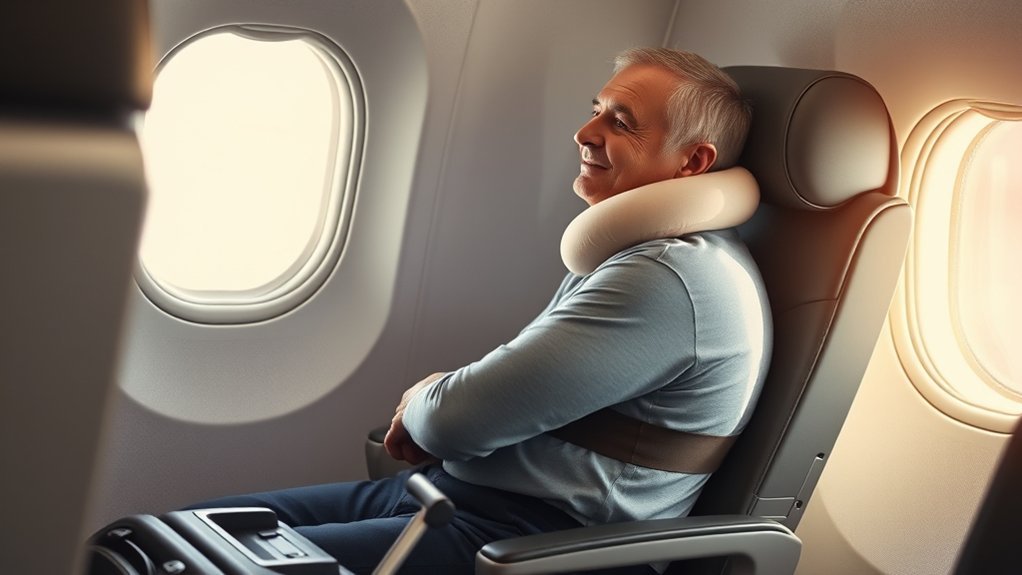
Last Updated on September 11, 2026 by Daniel Globe
Air travel following spine surgery requires careful timing, as prolonged sitting, cabin pressure shifts, and airport physical demands can place significant stress on a stabilizing vertebral graft. Most orthopedic and neurosurgical teams recommend waiting at least 6 to 8 weeks before taking commercial flights after a spinal fusion. While some low-risk, short-duration flights may be permitted as early as 2 to 4 weeks post-operation for minor single-level procedures, long-haul travel demands substantially more biological healing to minimize the risk of hardware displacement and vascular complications.
Quick Answer
You can generally fly 6 to 8 weeks after spinal fusion surgery once your surgeon confirms initial bone graft stability and you are off prescription opioid medications. Short domestic flights under 2 hours may be cleared at 2 to 4 weeks for single-level procedures, while international or long-haul flights typically require waiting 8 to 12 weeks due to elevated blood clot (DVT) and spinal stiffness risks.
Key Takeaways
- Surgeon Clearance is Mandatory: Never book non-refundable travel until your surgeon reviews your post-operative imaging and incision site.
- Strict BLT Restrictions Apply: You must observe “No Bending, Lifting (over 5–10 lbs), or Twisting” at all times—never lift luggage into overhead bins.
- Vascular Protection: Wear 15–20 mmHg graduated compression stockings and perform active calf pumps every 30 to 60 minutes in flight to reduce Deep Vein Thrombosis (DVT) risk.
- Airport Accommodations: Titanium and PEEK spinal implants rarely trigger modern airport body scanners, but requesting wheelchair service from curb to gate protects spinal energy.
At a Glance
| Safe Travel Timeline | 2–4 weeks (short flights <2 hrs); 6–8 weeks (standard domestic); 8–12 weeks (long-haul/international) |
| Primary Risks | Deep Vein Thrombosis (DVT), incision breakdown, muscle spasm, severe axial back/neck pain |
| Essential Gear | Graduated compression socks (15–20 mmHg), memory-foam lumbar roll or cervical collar, prescribed medications in original bottles |
| Mobility Requirements | Aisle seat booking; mandatory standing/walking interval every 45–60 minutes |
Disclosure: As an Amazon Associate I earn from qualifying purchases. Some links on this page are affiliate links, at no extra cost to you.
When Can You Fly After Spinal Fusion?
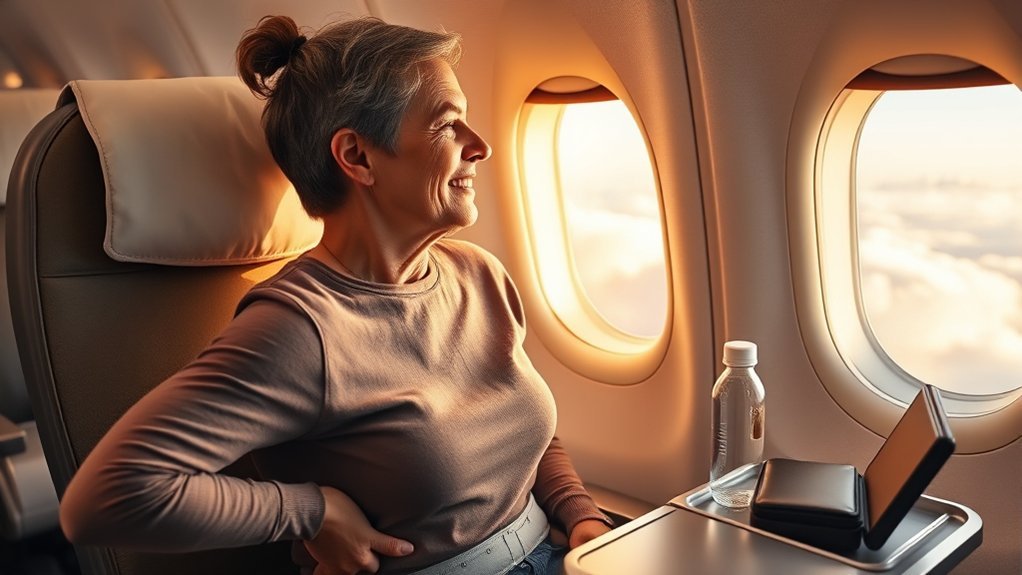
The timeline for returning to commercial flight depends directly on the surgical approach, the number of fused levels, and how smoothly your recovery progresses. Bone healing is an ongoing physiological process: bone grafts require several months to fully consolidate into solid bone, making early post-operative mechanics vulnerable to mechanical vibration, sudden turbulence, and prolonged upright spinal loading.
Surgeons evaluate readiness based on functional mobility milestones rather than calendar days alone. As a standard framework established by spine specialists at organizations such as the American Academy of Orthopaedic Surgeons (AAOS), post-operative flying timelines generally fall into three distinct recovery phases:
- Phase 1: Weeks 1 to 2 (No Flying): High acute inflammation, active surgical wound healing, elevated thromboembolic risk, and reliance on sedating narcotic medications preclude safe air travel.
- Phase 2: Weeks 2 to 4 (Conditional Short-Haul): Permissible only for select patients who underwent single-level minimally invasive procedures (such as single-level ACDF or micro-TLIF), have stopped all daytime narcotic pain medications, and need to fly for under 2 hours.
- Phase 3: Weeks 6 to 8+ (Standard Domestic Clearance): The baseline milestone where most patients with uncomplicated single- or two-level fusions demonstrate stable construct alignment on X-ray and sufficient muscular endurance for 3 to 5 hours of travel.
- Phase 4: Weeks 10 to 12+ (Long-Haul and International Flights): Mandatory waiting window for extensive multi-level open fusions, deformity corrections (scoliosis), or long-haul transoceanic journeys where prolonged immobility is unavoidable.
What Affects Flight Timing After Spinal Fusion?
Every spine surgery is anatomically unique. Several distinct clinical variables dictate whether your surgeon will clear you at 6 weeks or postpone your travel:
- Surgical Location (Cervical vs. Lumbar): Anterior Cervical Discectomy and Fusion (ACDF) patients often regain basic mobility faster than Lumbar Fusion (TLIF, PLIF, ALIF) patients because the cervical spine does not carry the full axial weight of the upper body. However, cervical patients require careful headrest ergonomics to prevent sudden neck hyperextension during take-off and landing.
- Number of Fused Levels: A single-level fusion heals faster with lower structural stress compared to a three- or four-level construct, which requires longer protection against torque and rotational shearing forces.
- Incision and Soft Tissue Healing: Any persistent wound drainage, local erythema, or delayed superficial wound closure strictly delays travel to prevent severe deep surgical site infections.
- Medication Status: Airlines and federal aviation guidelines discourage traveling while impaired. You must be able to navigate terminals without relying on strong opioid analgesics that impair balance and slow reflexes.
- Neurological Recovery: If your surgery addressed severe spinal stenosis or cord compression involving active nerve root regeneration, prolonged seating may trigger significant radicular flare-ups and leg cramps.
Pro Tip: Schedule your follow-up clinic visit 5 to 7 days before your target departure date. This allows your surgeon to inspect your incision, obtain current standing radiographs, and issue an official medical travel clearance letter on hospital letterhead.
What Are the Risks of Flying Too Soon?
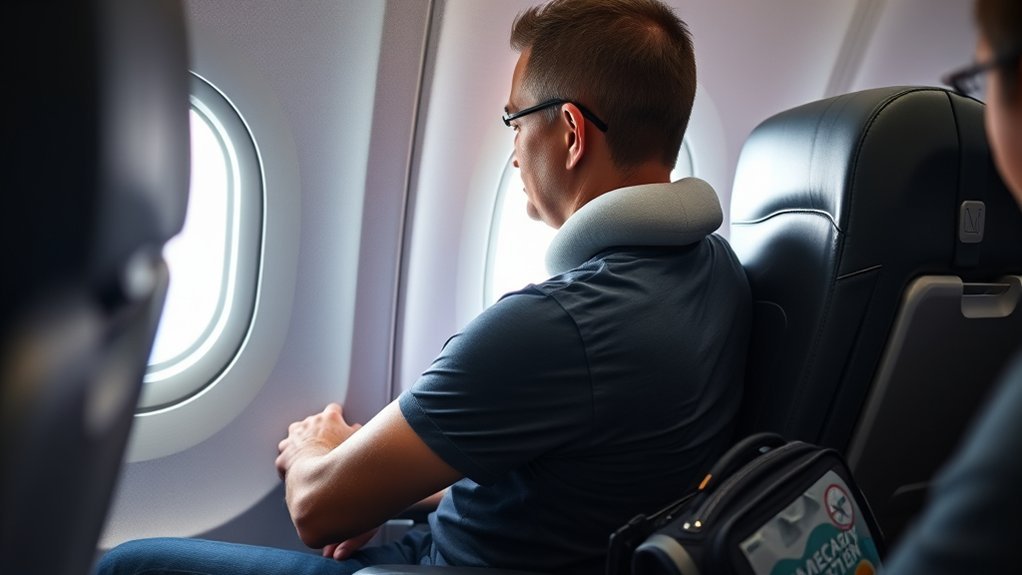
The aircraft cabin presents a unique combination of atmospheric and biomechanical stressors that do not exist during home recovery. Flying prior to adequate tissue healing exposes patients to serious medical hazards:
1. Deep Vein Thrombosis (DVT) and Pulmonary Embolism (PE)
According to data tracked by the Centers for Disease Control and Prevention (CDC), long-distance flights exceeding 4 hours significantly elevate the risk of blood clots. In post-surgical patients, vascular endothelial injury, altered systemic coagulation, and static blood pooling in the lower extremities multiply this risk. If a clot breaks free and travels to the lungs, it becomes a life-threatening pulmonary embolism.
2. Axial Loading and Hardware Stress
Airplane seats force the spine into sustained lumbar flexion or posterior pelvic tilt. This static position dramatically increases intradiscal pressure and places continuous tension across newly placed pedicle screws, rods, and interbody cages before full bony arthrodesis has formed.
3. Low Cabin Humidity and Dehydration
Aircraft air is maintained at low relative humidity (typically 10% to 20%), which accelerates systemic fluid loss. Dehydration thickens blood viscosity—further elevating clot risk—and exacerbates muscular cramping across paraspinal surgical sites.
Warning — Emergency Symptoms: Seek immediate emergency medical care if you experience any of the following symptoms during or after a flight: sudden calf tenderness, swelling or warmth in one leg, acute shortness of breath, chest pain when inhaling, sudden loss of bowel/bladder control, or progressive numbness in the groin/saddle region.
How to Prepare for a Flight After Spinal Fusion
Strategic preparation eliminates unnecessary spinal strain and reduces travel-day exhaustion. Organize your itinerary around these essential pre-flight steps:
- Reserve an Aisle Seat: Book an aisle seat well in advance. This grants you the freedom to stand up and walk every 45 to 60 minutes without climbing over neighboring passengers or twisting your torso.
- Carry Medication in Original Packaging: Keep all prescription muscle relaxants, anti-inflammatories, and pain medications in your personal carry-on item. Keep them in their original pharmacy-labeled bottles to prevent security confiscation at TSA checkpoints.
- Equip Graduated Compression Stockings: Wear knee-high or thigh-high 15–20 mmHg medical-grade compression stockings on travel day. Put them on in the morning before lower extremity fluid pooling begins.
- Arrange Non-Lifting Luggage Solutions: Use four-wheeled spinner luggage that glides beside you with minimal shoulder and spinal torque, or travel with a companion who can handle all bags.
“The golden rule of post-fusion air travel is strict adherence to the BLT protocol: No Bending, No Lifting over 5 to 10 pounds, and No Twisting. Never attempt to place or retrieve bags from the overhead bin.”
Airport Logistics: TSA Screening and Mobility Assistance
Navigating large airport terminals involves standing in long security lines and walking thousands of paces across hard concourses—both of which cause severe fatigue in a healing spine.
TSA Metal Detectors and Body Scanners
Modern spinal instrumentation is primarily constructed from medical-grade titanium, cobalt-chromium alloys, or PEEK (polyetheretherketone). These non-ferromagnetic materials rarely trigger standard airport walk-through metal detectors and do not set off Advanced Imaging Technology (AIT) millimeter-wave scanners. While the Transportation Security Administration (TSA) does not require a doctor’s note for security passage, carrying a surgical implant card or a brief physician letter can streamline secondary screening if pat-downs are required.
Requesting Airport Wheelchair Service
You can request free electric cart or wheelchair transport from ticket counter to departure gate directly through your airline’s special assistance line at least 48 hours prior to departure. Utilizing wheelchair support conserves your physical reserves for the seated flight itself.
Note: You are legally entitled to priority pre-boarding under the Air Carrier Access Act. Inform the gate agent that you need extra time to settle safely into your seat without being bumped by other passengers.
How to Stay Comfortable on a Flight After Spinal Fusion
Once settled in your seat, prioritize active circulation, spinal alignment, and hydration throughout the flight:
- Optimize Lumbar and Cervical Support: Use an orthopedic inflatable lumbar cushion or a rolled airline blanket positioned directly behind the small of your lower back to maintain a neutral lordotic curve. If recovering from cervical fusion (ACDF), utilize an ergonomic U-shaped memory foam collar to stabilize head posture.
- Execute Hourly Seated Exercises: Perform 20 repetitions of ankle pumps, heel-to-toe raises, and gentle quadriceps contractions every 30 minutes while seated to stimulate the venous calf pump mechanism.
- Walk the Aisle During Cruise: As soon as the flight crew extinguishes the seatbelt sign, stand up and walk down the aisle for 2 to 3 minutes every hour to relieve disc compression and paraspinal muscle fatigue.
- Maintain Continuous Hydration: Consume 8 ounces of water for every hour spent in the air. Avoid all alcohol and limit caffeinated drinks, both of which accelerate systemic dehydration and increase muscular irritability.
- Adjust Foot Placement: Rest your feet flat on the floor or on a small personal bag beneath the seat in front of you so that your hips and knees remain positioned at a comfortable 90-degree angle, removing hamstring tension from your lumbar spine.
Frequently Asked Questions
How long after spinal fusion can I go on a plane?
Most spine surgeons clear patients for short flights (under 2 hours) between 2 to 4 weeks post-op if healing is progressing well and narcotic medications have stopped. For cross-country, long-haul, or international travel, the standard recommended waiting period is 6 to 8 weeks, with complex multi-level reconstructions often requiring 10 to 12 weeks.
How long does it take to recover from L4-L5 fusion surgery?
Initial soft-tissue recovery and return to basic daily activities generally takes 6 to 12 weeks. However, complete biological bone fusion across the interbody space typically takes 6 to 12 months, monitored via follow-up radiographs and functional physical therapy progressions.
What kind of surgery can you not fly after?
You should avoid air travel following complex major spine surgeries with active surgical drainage, untreated cerebrospinal fluid (CSF) leaks, procedures with unhealed wounds, surgeries requiring high-dose narcotic management, or cases complicated by acute deep vein thrombosis until formally cleared by your clinical team.
Does flying put pressure on your spine?
Yes. Prolonged sitting increases intradiscal and hardware loading compared to standing or reclining. In addition, exposure to mild cabin barometric changes and continuous low-frequency aircraft vibration can aggravate healing paraspinal muscles and surgical nerve tissues.
Will titanium spine rods set off airport security metal detectors?
Titanium, PEEK, and cobalt-chromium implants are non-magnetic and rarely trigger standard walk-through metal detectors or modern full-body scanners. Carrying a medical device card or surgeon’s verification note can help clarify any questions during secondary screening.
Conclusion
Flying after spinal fusion surgery is entirely achievable when approached with careful surgical timing, diligent blood clot prophylaxis, and proactive airport logistics. While short domestic trips may be feasible within 2 to 4 weeks for minor procedures, the 6 to 8 week window remains the gold standard for standard commercial flights. By booking an aisle seat, arranging wheelchair assistance, strictly obeying BLT (no bending, lifting, or twisting) restrictions, and walking every hour in flight, you protect your healing spine while traveling safely.
Medical Disclaimer: This guide is for educational purposes only and does not substitute for professional medical advice. Always obtain direct, personalized clearance and specific travel instructions from your treating spine surgeon prior to scheduling or boarding any commercial flight.
Sources
- American Academy of Orthopaedic Surgeons (AAOS) — Clinical guidelines on recovery protocols, bone consolidation, and rehabilitation following spinal fusion surgery.
- Centers for Disease Control and Prevention (CDC) — Evidence-based guidance on air travel, prolonged immobility, and deep vein thrombosis (DVT) prevention.
- Transportation Security Administration (TSA) — Official security screening protocols for travelers with medical implants, external braces, and assistive mobility devices.
- National Center for Biotechnology Information (NCBI / PMC) — Clinical research examining venous thromboembolism incidence, risk factors, and prevention in adult spinal surgery.
