
Last Updated on September 11, 2026 by Daniel Globe
Recovery after rotator cuff surgery is different for every patient. Your restrictions depend on the size of the tear, the quality of the tendon, the type of repair, and whether your surgeon also performed a procedure such as biceps tenodesis. Protect the shoulder, take medicine only as directed, and follow the written plan from your surgical team rather than advancing activities on your own.
Quick Answer
After rotator cuff repair, avoid lifting, pushing, pulling, unsupported reaching, driving in a sling, and exercises your surgeon has not approved. Sling use often lasts several weeks, but rehabilitation may start earlier or later depending on the repair. Call your surgical team for worsening pain, drainage, fever, persistent numbness, or circulation changes.
Key Takeaways
- Your surgeon’s written instructions take priority over any general recovery timeline.
- Do not lift, push, pull, or support your body weight with the operated arm until you are cleared.
- Do not drive while wearing a sling or taking medicine that affects alertness or reaction time.
- Physical therapy may begin early for a smaller repair or be delayed for six weeks after a large repair.
- Report infection signs, uncontrolled pain, persistent numbness, or changes in hand color promptly.
At a Glance
| Time Required | Several months. Many patients need about 4 to 6 months, while large or massive repairs may take 6 to 12 months or longer. |
| Difficulty | High. Recovery requires protection of the repair, help with some daily tasks, and a gradual rehabilitation program. |
| Tools Needed | Prescribed sling or immobilizer, pillows, cold pack, medication list, dressing supplies, and approved therapy equipment. |
| Cost | Varies by insurance coverage, physical therapy needs, medication, sling type, and follow-up care. |
Medical note: This guide provides general education and does not replace your surgeon’s discharge instructions. Your operation-specific protocol should control your sling use, wound care, medicine, exercises, and return to activity.
Disclosure: As an Amazon Associate I earn from qualifying purchases. Some links on this page are affiliate links, at no extra cost to you.
First 48 Hours After Rotator Cuff Surgery
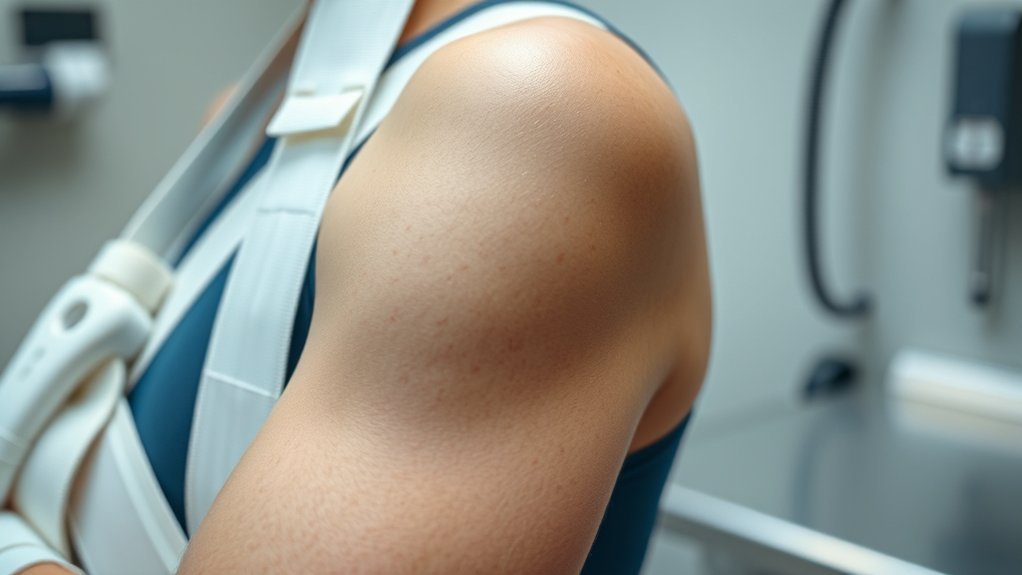
During the first two days, focus on pain control, safe movement, hydration, and protection of the repair. Keep the sling or shoulder immobilizer in the position shown by your nurse or physical therapist. Remove it only when your instructions allow, such as for washing or approved hand, wrist, and elbow exercises.
A regional nerve block can leave the arm and hand numb, heavy, or difficult to control for several hours. Protect the numb arm from heat, pressure, falls, and accidental movement. Start prescribed pain medicine according to your discharge plan rather than waiting until the block has completely worn off and the pain has become severe.
- Use a cold pack with a thin cloth between the pack and your skin.
- A common instruction is 10 to 20 minutes at a time, but follow the timing given by your surgical team.
- Keep the incision and dressing clean and dry.
- Eat light food if anesthesia has upset your stomach, then return to your normal diet as tolerated.
- Take short walks around your home if you feel steady. Protecting the shoulder does not require staying in bed.
Some swelling, bruising, tiredness, and soreness are expected. Your symptoms should become more manageable rather than steadily worsening. Keep your follow-up appointment and have your surgeon’s contact information available.
Warning: Do not place a heating pad directly on a numb shoulder or arm. Reduced feeling can allow a burn to develop before you notice it.
Rotator Cuff Surgery Restrictions for the First 6 Weeks
The first six weeks are usually focused on protecting the tendon as it begins to attach to the bone. However, not every patient follows the same schedule. A smaller repair may allow limited passive motion early, while a large or massive repair may require six weeks of immobilization before shoulder motion begins.
Your plan may also change if the surgeon repaired the subscapularis tendon, performed a biceps tenodesis, repaired more than one tendon, or found poor tissue quality. Do not copy another patient’s exercises or advance to the next phase because your pain feels better.
Sling and Arm Protection
Wear the sling for the number of weeks listed in your discharge instructions. Many patients use one for about four to six weeks, but the exact duration varies. Some slings include an abduction pillow that holds the arm slightly away from the body. Do not remove the pillow unless your surgical team tells you to do so.
- Keep the elbow fully supported in the sling.
- Keep the hand near or slightly above elbow level if instructed.
- Make sure the straps lie flat and do not cut into your neck or skin.
- Check your fingers for normal warmth, color, and feeling.
- Use the sling while sleeping if your protocol requires it.
- Remove it only for approved hygiene or exercises.
You may be told to move your fingers, wrist, and elbow several times a day. An additional biceps procedure can limit elbow movement, so use only the movements demonstrated by your care team.
Lifting, Driving, and Motion
Do not lift objects with the operated arm during the protected phase unless your surgeon gives you a specific allowance. Also avoid pushing, pulling, opening heavy doors, carrying bags, supporting your body weight, or using the arm to rise from a chair or bed.
Do not actively reach overhead, behind your back, or far away from your body until those movements are included in your rehabilitation plan. A repaired shoulder can feel comfortable before the tendon has developed enough strength to handle those forces.
Do not drive while wearing a sling. You also should not drive while taking an opioid or another medicine that makes you sleepy, dizzy, or slower to react. Return only after your surgeon clears you and you can safely steer, shift, check blind spots, and perform an emergency maneuver.
How to Wear Your Sling Correctly
A correctly fitted sling supports the whole forearm and reduces accidental shoulder movement. The elbow should sit fully inside the sling rather than hanging out of the back. Your wrist and hand should not droop below the elbow unless your fitting instructions say otherwise.
- Support the operated arm with your other hand while putting the sling on or taking it off.
- Place the elbow into the back corner of the sling.
- Rest the forearm securely across your abdomen or in the position shown by your therapist.
- Fasten the waist strap or abduction pillow if your sling includes one.
- Adjust the neck strap so the arm is supported without pulling hard on your neck.
Check the skin under the straps and around the elbow each day. Contact your care team if the sling causes skin damage, severe neck pain, increasing hand swelling, numbness, or a blue or unusually pale hand.
Pro Tip: Practice putting on and removing the sling with a family member before surgery or before leaving the surgical center. It is much easier to learn while a nurse or therapist can correct the fit.
What You Can Lift After Rotator Cuff Surgery
During early recovery, the safest general rule is to lift nothing with the operated arm unless your surgeon or physical therapist has given you a specific limit. Even a light object creates more strain when it is held away from the body.
Early Lifting Limits
For the first several weeks, use the unoperated arm for cups, phones, cookware, bags, doors, and household items. Do not use the operated arm to push yourself out of a chair, steady yourself on a railing, or catch a falling object.
- Place a coffee mug on the counter instead of carrying it in the operated hand.
- Use a backpack only if your surgeon approves it and it does not press on the surgical shoulder.
- Ask for help with groceries, laundry, pets, children, and heavy doors.
- Keep frequently used items between waist and chest level.
Using the fingers for a light task while the elbow remains supported may be allowed in some protocols. This is not the same as lifting or moving the shoulder. Follow the exact limits provided by your surgeon.
Gradual Strength Return
Strengthening commonly begins after motion has improved and the surgeon believes the tendon has healed enough to accept resistance. In one specialist protocol, rotator cuff strengthening after a small-to-medium repair begins around weeks 13 to 16 with medical clearance. A large or massive repair may not begin its initial strengthening phase until about weeks 18 to 22.
Your therapist may start with isometric contractions, resistance bands, or very light weights. The amount is less important than pain-free control and good shoulder-blade movement. Do not increase the weight, repetitions, or range without approval.
Stop the exercise and contact your therapist if you develop sharp pain, sudden weakness, a new loss of motion, or pain that remains much worse for more than a day after the session.
Sleeping, Showering, and Daily Tasks
Many people sleep more comfortably in a recliner or with the upper body raised on several pillows during the first part of recovery. Keep the operated arm supported so it does not fall backward. Wear the sling at night for as long as your protocol requires, and do not sleep directly on the operated shoulder until your surgeon or therapist says it is safe.
- Place a pillow under the elbow and forearm for support.
- Keep a clear path between the bed, bathroom, and kitchen.
- Use loose shirts that button or zip in the front.
- Put the operated arm into a sleeve first when dressing.
- Remove the operated arm from the sleeve last when undressing.
Showering instructions depend on the incision and dressing. Some patients who had arthroscopic surgery may shower after 48 to 72 hours. Patients who had an open repair may need to wait until the surgeon approves it. Keep the arm close to your side, do not actively lift it, and consider a shower chair if your balance feels uncertain.
Do not soak the incision in a bathtub, pool, or hot tub until it is fully closed and your surgical team approves soaking. A water-resistant dressing does not always mean the incision can be submerged.
Arrange help for cooking, cleaning, transportation, dressing changes, pet care, and childcare. Prepare simple meals and move important items into easy reach before surgery.
Pain Relief and Ice After Rotator Cuff Surgery

Take pain medicine only as prescribed or approved by your surgeon. Your plan may include acetaminophen, an anti-inflammatory medicine, a short course of an opioid, a regional nerve block, or a combination of treatments.
Do not automatically avoid ibuprofen, naproxen, or every other anti-inflammatory medicine for 12 weeks. A 2024 systematic review of randomized trials found no significant increase in retear rates with postoperative NSAID use. However, these medicines are not suitable for everyone and may be restricted because of bleeding risk, kidney disease, stomach ulcers, blood thinners, allergies, or your surgeon’s preference. Ask before taking them.
If you receive an opioid:
- Use the lowest prescribed amount needed for the shortest practical time.
- Do not drive, drink alcohol, or combine it with sedating medicine unless a clinician has approved the combination.
- Keep it locked away from children and other adults.
- Ask about fluids, fiber, or a stool softener because constipation is common.
- Contact your clinician if you develop severe nausea, vomiting, confusion, or excessive sleepiness.
For cold therapy, place a thin cloth between the cold pack and your skin. A common schedule is 10 to 20 minutes at a time, repeated during the day as directed. Check the skin after each session and stop if it becomes very pale, blistered, or painfully numb.
When to Start Physical Therapy and Exercise
There is no single physical therapy start date for every rotator cuff repair. Rehabilitation is based on both time and progress. Tear size, number of repaired tendons, tissue quality, pain, stiffness, age, health conditions, and additional procedures all affect the schedule.
The following table shows examples from Mass General Brigham rehabilitation protocols. It does not replace your own plan.
| Recovery phase | Small-to-medium repair example | Large-to-massive repair example |
|---|---|---|
| Early protection | Limited therapist-directed passive motion may begin during weeks 0 to 3. | The shoulder may remain immobilized for about 6 weeks with no shoulder motion. |
| Assisted motion | May begin around weeks 4 to 6 if milestones are met. | Passive motion may start near week 6; active-assisted motion may begin around weeks 10 to 14. |
| Active motion | May begin around weeks 7 to 8. | May be delayed until approximately weeks 14 to 18. |
| Strengthening | Rotator cuff strengthening may begin around weeks 13 to 16 with medical clearance. | Initial strengthening may begin around weeks 18 to 22 if motion and pain goals have been met. |
| Strenuous work or sport | Often considered gradually after 4 to 6 months. | Often delayed longer and based on strength, control, healing, and job or sport demands. |
Warning: Do not start pendulum exercises, cane exercises, wall slides, resistance bands, or shoulder stretching simply because they appear in an online guide. A movement that is safe for one repair can overload another.
During passive motion, another person or gravity moves the arm while your shoulder muscles remain relaxed. During active-assisted motion, the unoperated arm, a therapist, or another approved aid helps. Active motion means your shoulder muscles lift the arm. These stages should not be treated as interchangeable.
When You Can Drive and Return to Work
Do not drive until you are out of the sling, no longer taking medicine that affects alertness, and able to control the vehicle without hesitation. You should be able to turn the steering wheel, shift if needed, look over your shoulders, fasten the seat belt, and react to an emergency without protecting the operated arm.
Johns Hopkins Medicine advises patients not to resume driving until their surgeon says it is safe. Your insurance policy and local driving laws may also matter.
| Activity | Common planning range | Readiness requirement |
|---|---|---|
| Driving | Often several weeks, but no fixed date applies to everyone | Out of sling, off impairing medicine, safe control, and surgeon clearance |
| Desk work | Sometimes 1 to 6 weeks | Pain controlled, arm supported, safe travel, and no prohibited arm use |
| Light manual work | Often several weeks to several months | Adequate motion and strength with modified duties |
| Heavy or overhead work | Often 4 to 6 months or longer | Surgeon clearance and job-specific strength, endurance, and control |
Ask your employer about temporary duties, voice-to-text software, an adjusted workstation, shorter shifts, or remote work. Returning early is not helpful if the job forces you to break your restrictions.
When to Call Your Surgeon
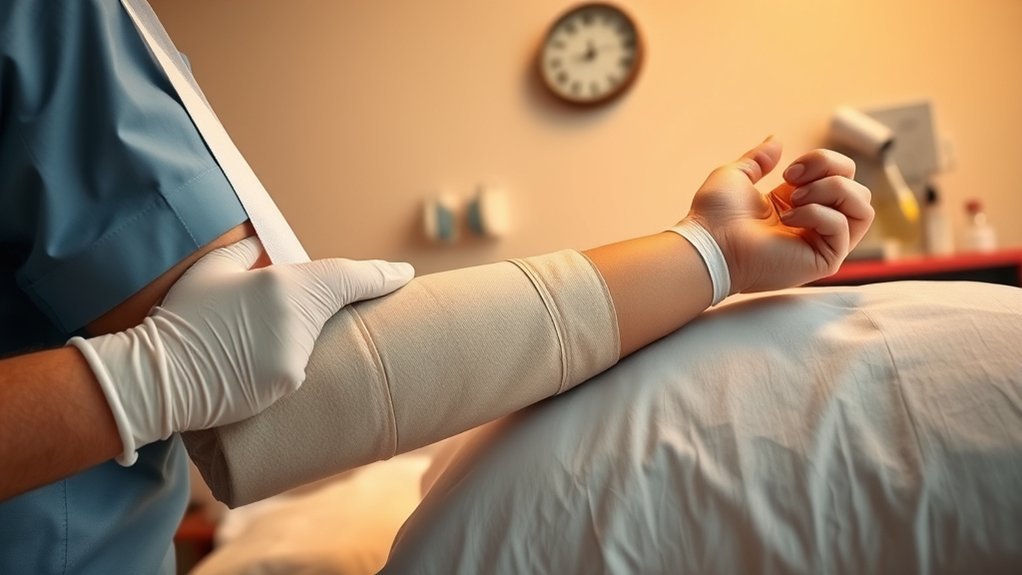
Call your surgeon or seek prompt medical care if your recovery changes in a way that concerns you. According to MyHealth Alberta’s rotator cuff repair aftercare guidance, important warning signs include uncontrolled pain, incision problems, infection signs, and circulation or sensation changes.
- Pain that remains severe after taking medicine as directed
- Increasing redness, warmth, swelling, or pain around the incision
- Pus, heavy drainage, persistent bleeding, or an incision that opens
- Fever or chills
- Persistent numbness or tingling after the expected nerve-block period
- Fingers or a hand that become blue, very pale, unusually cold, or increasingly swollen
- New weakness or loss of movement after a fall or sudden pulling event
- Repeated vomiting or inability to keep fluids down
Emergency: Call your local emergency number for severe trouble breathing, fainting, sudden chest pain with shortness of breath, or coughing up blood. Do not wait for a routine office appointment.
A comfortable shoulder is not automatically a fully healed shoulder. Protect the repair until your surgeon and physical therapist confirm that it can safely handle more motion or load.
Frequently Asked Questions
What can you never do after rotator cuff surgery?
There is no single activity that every patient is permanently banned from doing. Lifting, pushing, pulling, overhead reaching, behind-the-back motion, and sports are usually restricted temporarily. Long-term limits depend on healing, tendon quality, strength, symptoms, and your surgeon’s advice.
What will I need at home after rotator cuff surgery?
Useful items include your prescribed sling, pillows, cold packs, easy-to-open food, loose front-fastening clothing, slip-on shoes, medication and dressing supplies, and frequently used items placed between waist and chest height. Arrange help with transport, meals, bathing, laundry, pets, and childcare.
Can I let my arm hang after rotator cuff surgery?
Do not allow the arm to hang or swing without support unless your surgeon or therapist has approved that position. Prescribed pendulum exercises are different because the shoulder stays relaxed and the movement is controlled. Do not start pendulums on your own.
How many days should I rest after rotator cuff surgery?
Rest when you feel tired, especially during the first few days, but do not stay in bed for four to six weeks. Short walks are commonly encouraged as tolerated. Continue protecting the operated shoulder and follow all arm restrictions.
How long will I need to wear the sling?
Many patients wear a sling for about four to six weeks. A smaller repair may use a different schedule, while a large or complex repair may require six weeks or more. Follow the duration written in your surgical instructions.
When can I sleep on the operated shoulder?
Avoid sleeping directly on the operated shoulder during the early healing period. Many patients wait at least six weeks, but comfort alone is not enough to determine safety. Ask your surgeon or therapist when side sleeping is appropriate for your repair.
When can I drive after rotator cuff surgery?
Do not drive in a sling or while taking medicine that impairs alertness. You also need enough pain-free movement and control to manage the vehicle during an emergency. Wait for clearance from your surgeon.
How long does full recovery take?
Many patients need about four to six months to regain useful motion and strength. Recovery after a large or massive tear may take six to twelve months or longer. Some soreness, weakness, or stiffness can continue while strength returns.
Conclusion
Recovery after rotator cuff surgery takes patience because the tendon needs time to heal before it can safely accept force. Wear the sling as instructed, avoid unapproved lifting and shoulder motion, take medicine only as directed, and attend follow-up and therapy appointments. Your timeline may differ from another patient’s timeline even when the operations sound similar.
A systematic review found retear percentages of approximately 15% to 21% at several common follow-up periods, but the risk varies with tear size, tissue quality, rehabilitation, and other factors. Following restrictions cannot guarantee perfect healing, but it helps avoid unnecessary stress while the repair is vulnerable.
Contact your surgeon when symptoms worsen instead of improve, and seek emergency care for serious breathing difficulty, fainting, or sudden chest symptoms.
Sources
- Johns Hopkins Medicine: Rotator Cuff Repair — recovery duration, sling use, driving clearance, incision care, and warning signs
- Mass General Brigham: Small-to-Medium Rotator Cuff Repair Protocol — early motion, sling, precautions, strengthening, and return-to-sport phases
- Mass General Brigham: Large-to-Massive Rotator Cuff Repair Protocol — delayed motion, six-week protection, lifting limits, and staged rehabilitation
- MyHealth Alberta: Rotator Cuff Repair Aftercare — home care, bathing, ice, walking, medication, incision care, and urgent symptoms
- PubMed: NSAIDs and Healing After Rotator Cuff Repair — 2024 systematic review and meta-analysis of randomized controlled trials
- PubMed: Retear Rates After Rotator Cuff Surgery — systematic review of retear timing and associated factors

