
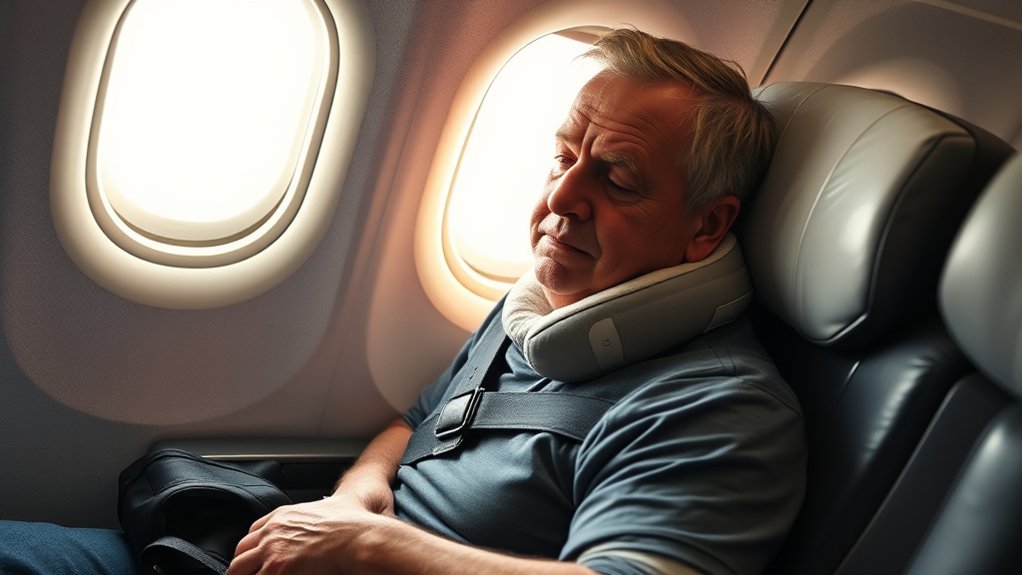
Last Updated on September 11, 2026 by Daniel Globe
You can often fly with a torn rotator cuff if the injury is stable and you can manage your pain, sling, seating, and luggage safely. Flying after rotator cuff surgery requires more caution because the operation, reduced mobility, and long periods of sitting can increase complication and blood-clot risks. Your surgeon should decide when you are ready to travel based on your procedure and recovery.
Quick Answer
A rotator cuff tear by itself does not automatically prevent air travel. If you recently had rotator cuff repair surgery, however, there is no universal safe waiting period. Ask your surgeon before booking, especially during the first several weeks after surgery, and consider your pain, mobility, clot risk, sling use, and ability to travel safely.
Key Takeaways
- An untreated rotator cuff tear does not have the same flight restrictions as a recently repaired shoulder.
- After rotator cuff surgery, get advice from your surgeon rather than relying on a fixed 1-day, 2-week, or 6-week rule.
- Do not lift luggage overhead with the injured or operated arm; use wheeled luggage and request help when needed.
- Recent surgery increases blood-clot risk during prolonged travel, so discuss your individual risk and prevention plan with your clinician.
- Seek urgent medical care for symptoms such as unexplained limb swelling, chest pain, difficulty breathing, coughing up blood, or fainting.
Medical Warning: This article provides general travel information and does not replace advice from your surgeon, doctor, or physical therapist. Recent surgery, previous blood clots, severe weakness, uncontrolled pain, infection, breathing problems, or other medical conditions can change whether flying is appropriate for you.
Disclosure: As an Amazon Associate I earn from qualifying purchases. Some links on this page are affiliate links, at no extra cost to you.
Can You Fly With a Torn Rotator Cuff?
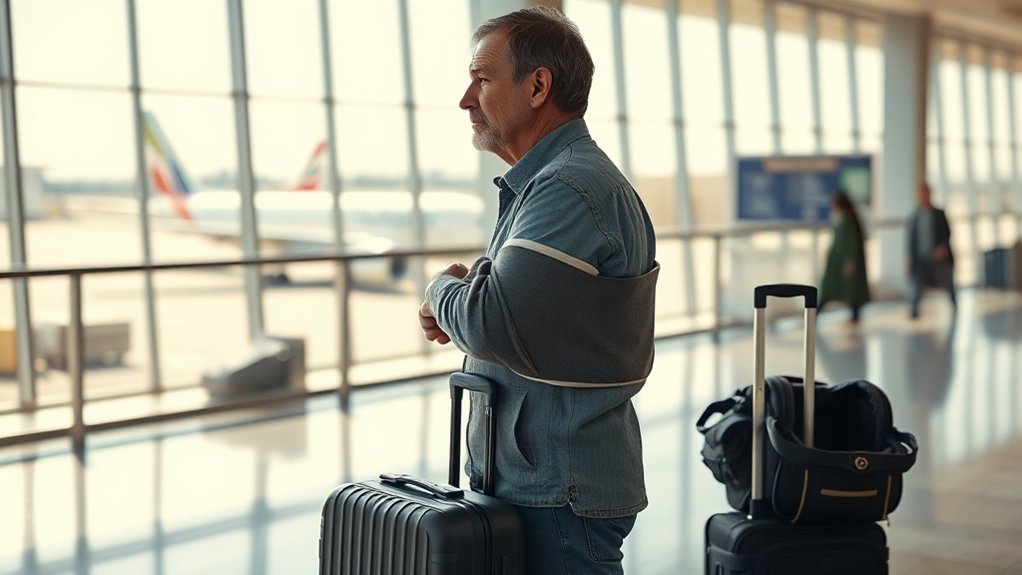
Yes, many people can fly with a rotator cuff tear, particularly when the shoulder has not recently been operated on and symptoms are under reasonable control. The important questions are whether you can sit comfortably, fasten and release your seat belt, move through the airport, manage your medication, and protect the shoulder without lifting or reaching overhead.
A fresh traumatic injury deserves more caution. Severe pain, sudden weakness, major loss of movement, visible deformity, numbness, or an injury caused by a fall or accident should be medically assessed before travel. The American Academy of Orthopaedic Surgeons notes that rotator cuff tears can cause pain, weakness, and difficulty with ordinary arm movements, and some tears can enlarge over time.
Choose an aisle seat if it helps you stand without twisting or bumping your shoulder. Avoid a middle seat when possible if your injured arm would be crowded by another passenger. Use wheeled luggage, keep your carry-on light, and ask another person or airline staff for help rather than lifting a bag into an overhead bin.
Pro Tip: Decide before leaving home who will lift your carry-on into the overhead bin. Even a brief overhead lift can put unnecessary load on an injured or recently repaired rotator cuff.
When Is It Safe to Fly After a Torn Rotator Cuff?
If you have a rotator cuff tear but have not had surgery, there is no standard number of days you must wait before flying. Your ability to travel depends mainly on the severity of the injury, your pain and strength, whether another injury such as a fracture or dislocation is present, and whether you can safely manage the trip.
If you have had rotator cuff repair surgery, the answer is different. There is no single waiting period that applies to every patient. The timing depends on the type and extent of repair, complications, mobility, pain control, medications, clot risk, flight duration, and your surgeon’s rehabilitation protocol.
For example, Gateshead Health NHS Foundation Trust advises patients who want to fly within six weeks of rotator cuff repair to discuss the trip with their consultant and the airline’s medical department because of clot risk. This should not be interpreted as a universal six-week ban or as permission to fly automatically after six weeks.
Recent surgery is also a recognized risk factor for venous thromboembolism. The CDC lists recent surgery or injury among factors that can increase blood-clot risk during long-distance travel.
Note: A short flight and an eight-hour flight do not create the same practical challenges. Tell your surgeon how long you will be traveling, whether you have connections, and how much walking or luggage handling the journey requires.
When Should You Postpone the Flight?
Contact your surgeon or another healthcare professional before traveling if you have uncontrolled pain, worsening weakness, a new injury, fever, wound drainage, increasing redness around a surgical incision, significant arm swelling, or difficulty managing your sling or daily activities.
Do not board a flight if you have symptoms that could suggest a serious blood clot or pulmonary embolism without urgent medical assessment. According to the CDC, concerning symptoms include unexplained swelling or pain in a limb, warmth or redness, difficulty breathing, chest pain, coughing up blood, an unusually fast heartbeat, lightheadedness, or fainting.
What Should You Ask Your Surgeon Before Booking?
Before booking a trip after rotator cuff surgery, ask your surgeon whether your repair is stable enough for travel, whether the planned flight length changes the recommendation, and whether your medical history puts you at increased risk for blood clots. Also ask what you may safely do with the operated arm while traveling.
Surgery Timing Clearance
Ask for a specific answer based on your operation, not a generic rule from the internet. Useful questions include:
- Is my shoulder sufficiently healed for this flight and itinerary?
- Does the length of the flight change your recommendation?
- How long must I continue wearing my sling?
- Can I remove the sling for security screening or exercises?
- What movements must I avoid while traveling?
- Do I have additional blood-clot risk factors?
- Should I change any part of my rehabilitation schedule while away?
Rotator cuff rehabilitation can continue for many months. NHS shoulder-repair guidance commonly keeps the arm protected in a sling during the early healing phase, although the exact protocol depends on the repair and surgeon.
Travel Restrictions
Ask whether you have restrictions on lifting, reaching, carrying, sleeping position, or shoulder movement. These restrictions may matter more during air travel than cabin pressure itself because airports require walking, transfers, security screening, and baggage handling.
Also check the airline’s rules if you need mobility assistance, special seating, medical equipment, or unusual medication supplies. A recent surgical procedure can qualify as a temporary disability when it substantially limits a major life activity under U.S. air-travel disability rules.
Medication And Support
Review your medication plan with your clinician before departure. Confirm when to take prescribed pain medication and whether time-zone changes affect your schedule. If you already take an anticoagulant, follow the prescribing clinician’s instructions exactly.
Do not start aspirin, anticoagulants, or other medication solely to prevent a flight-related blood clot unless a qualified clinician recommends it for your individual risk. Current CDC travel-health guidance treats pharmacologic clot prevention as an individualized decision for higher-risk travelers.
| Question | Why It Matters | Action |
|---|---|---|
| Flight timing | Recovery differs by procedure | Get individualized surgeon advice |
| Medications | Doses and travel rules may vary | Carry medication in your hand luggage |
| Clot prevention | Recent surgery raises VTE risk | Ask whether extra precautions are needed |
| Airport support | Long walks and bags can strain the shoulder | Arrange assistance when needed |
What Should You Pack for Shoulder-Safe Flying?
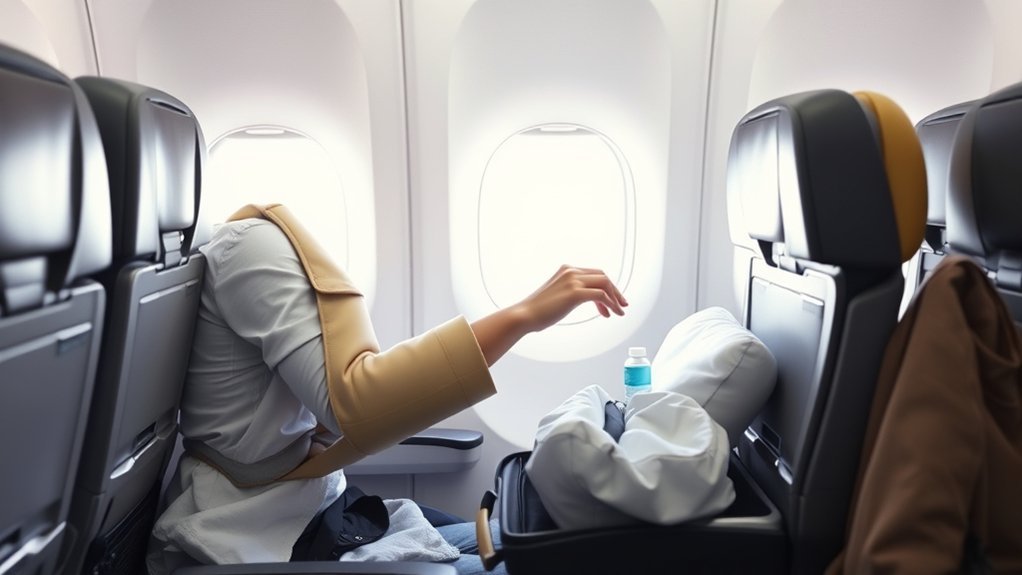
Pack only what you can manage without pulling, lifting, or repeatedly reaching with the injured arm. Keep medications, documents, your sling or brace, and any comfort items where you can reach them without using the overhead bin.
Must-Have Shoulder Aids
A supportive pillow can cushion your elbow or forearm and reduce pressure on the shoulder. If your clinician has prescribed a sling or brace, wear and remove it only according to your rehabilitation instructions.
Loose clothing is easier to put on and adjust without forcing the arm into painful positions. After shoulder surgery, some NHS rehabilitation guidance specifically recommends loose-fitting clothing and protecting the operated shoulder from unnecessary strain.
If icing is part of your treatment plan, consider an empty leak-resistant zip bag that can be filled with ice after security or a permitted cold pack. Always place cloth between ice and skin and follow your clinician’s instructions on duration.
Carry-On Essentials
| Item | Purpose | Travel Tip |
|---|---|---|
| Sling or brace | Protects the shoulder when prescribed | Follow your surgical team’s instructions |
| Travel pillow | Supports the arm and back | Keep it at your seat |
| Cold-pack supplies | May help pain or swelling when prescribed | Check security rules before departure |
| Medication | Keeps treatment accessible | Carry it with you, not in checked luggage |
| PT instructions | Keeps rehabilitation consistent | Only perform exercises already approved for you |
Keep the bag compact and easy to reach. Avoid packing anything that will force you to lift the bag overhead or twist your shoulder.
Medications And Documents
Keep essential medications in your carry-on so they remain available if checked baggage is delayed. TSA permits medications through security screening, including medically necessary liquids subject to additional screening procedures.
- Carry enough prescribed medication for the trip, plus a reasonable reserve when practical.
- Keep prescription information or pharmacy labels available, especially for international travel where medication laws may differ.
- Carry your surgeon’s contact details, postoperative instructions, rehabilitation plan, and relevant travel-insurance information.
- If your airline has specifically requested a medical certificate because of your circumstances, confirm exactly what information it requires before traveling.
A metal implant alone does not normally mean that you need a fit-to-fly letter. The Transportation Security Administration advises travelers to tell the TSA officer about metal implants and other internal medical devices before screening.
How Can You Stay Comfortable on the Plane?
Comfort starts with limiting pressure and movement around the injured shoulder. An aisle seat can make it easier to stand and move without twisting across another passenger. If the injured shoulder is on one side, consider which aisle position will expose it to less bumping from passengers and service carts.
Place a small pillow, folded blanket, or other soft support under the forearm or elbow if that matches your clinician’s instructions. Keep the shoulder in the position recommended by your surgical team instead of repeatedly changing the sling or arm position for comfort.
Do not perform shoulder exercises during the flight unless they are already part of your approved rehabilitation program. Leg and ankle movement for circulation is different from exercising a healing shoulder.
Ask a flight attendant or traveling companion for assistance with an overhead bag rather than testing whether the shoulder can lift it. After a repair, avoiding a single unnecessary lift is more important than proving that the arm feels strong enough.
How Do You Avoid Blood Clots While Flying?
Long periods of sitting can contribute to venous stasis, and recent surgery can increase your baseline risk. The CDC Yellow Book recommends maintaining mobility and exercising the calf muscles during long-distance travel when appropriate.
- Move your ankles and calf muscles regularly while seated.
- Stand or walk periodically when it is safe and your mobility allows.
- Consider an aisle seat if it makes regular movement easier.
- Drink fluids normally for comfort, but do not rely on hydration as a proven method of preventing travel-related VTE.
- Take prescribed anticoagulants exactly as directed.
- Do not start aspirin, blood thinners, or compression stockings solely for the flight without discussing your individual risk with a healthcare professional.
For long-distance travel, immobility matters more than simply being on an airplane. Recent surgery adds another important risk factor, so postoperative travelers should discuss clot prevention with their clinician before departure.
If you develop unexplained leg or arm swelling, pain, warmth, or redness, contact a healthcare professional promptly. Difficulty breathing, chest pain, coughing up blood, severe lightheadedness, or fainting require immediate medical attention.
How Do You Protect Your Shoulder at the Airport?
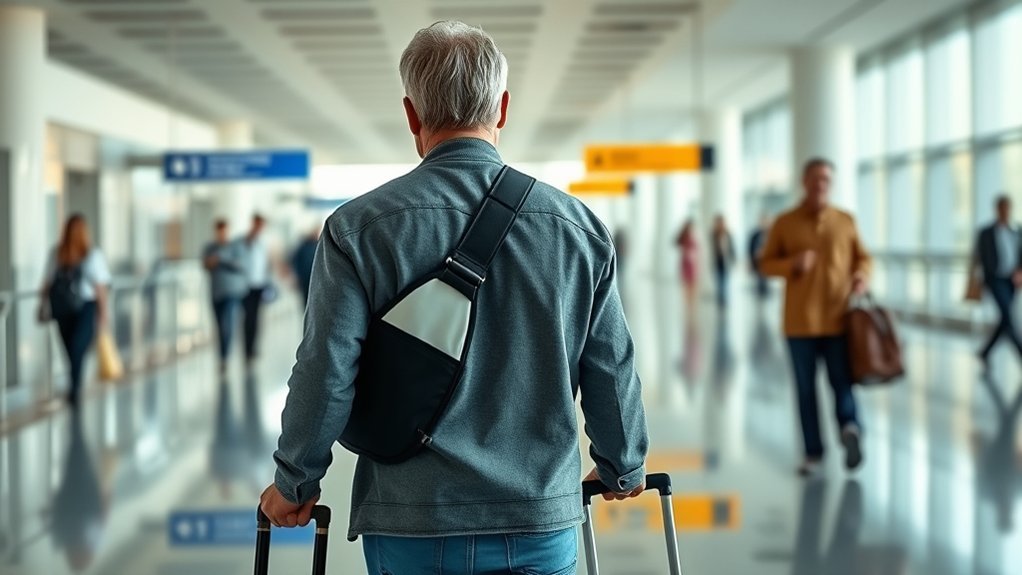
Wear your sling or brace as prescribed and avoid carrying bags on the injured side. Use wheeled luggage whenever possible. Ask a companion or airline employee to handle bags that require lifting.
If walking long airport distances or handling luggage is difficult because of the injury or recent surgery, request assistance from your airline. The U.S. Department of Transportation explains that qualifying passengers with disabilities can request wheelchair or guided assistance through the airport and assistance with carry-on luggage when they cannot carry it because of their disability.
It is helpful to request assistance when booking or before departure, although many forms of disability assistance do not require advance notice. When you arrive, identify yourself to airline staff as the passenger who needs the service.
At a U.S. security checkpoint, tell the TSA officer about your shoulder condition, sling, brace, or metal implant before screening. Medical devices and supports may require additional screening, but having an implant does not automatically mean you need a doctor’s certificate.
Frequently Asked Questions
How Long After Rotator Cuff Surgery Can I Fly on a Plane?
There is no universal number of days that is safe for every rotator cuff repair. One NHS rotator-cuff-repair guide advises patients planning to fly within six weeks to discuss the trip with their consultant and airline medical department because of clot risk. Your surgeon should consider your repair, mobility, medications, complications, clot risk, and flight duration before clearing you.
What Should You Avoid Doing if You Have a Torn Rotator Cuff?
Avoid activities that cause or worsen shoulder pain, particularly heavy lifting and repeated overhead reaching. During travel, do not lift luggage into overhead bins with the injured arm. If you have had surgery, follow the movement and lifting restrictions given by your surgeon or physical therapist.
What Surgeries Require the Longest Wait Before Flying?
There is no reliable universal ranking of surgeries by how long a person must wait to fly. Restrictions depend on the operation, complications, trapped gas, clot risk, mobility, and the patient’s medical condition. Follow the treating surgeon’s procedure-specific instructions rather than comparing your shoulder operation with unrelated surgeries.
Can a Slightly Torn Rotator Cuff Heal Itself?
Most rotator cuff tears do not anatomically heal on their own. However, many people improve without surgery through activity modification, physical therapy, pain treatment, and other nonsurgical care. AAOS notes that good function can often be achieved even when the tendon itself has not healed.
Can I Go Through TSA Screening With a Shoulder Sling or Metal Implant?
Yes. Tell the TSA officer about your sling, brace, metal implant, or other medical device before screening. Additional screening may be necessary. Follow your doctor’s instructions if removing the sling would be unsafe.
Can I Request Airport Assistance After Shoulder Surgery?
Yes. If the injury or recent surgery substantially limits your mobility or ability to handle luggage, contact your airline about wheelchair, guided, boarding, or baggage assistance. Requesting help in advance can make the airport process smoother.
Conclusion
You can often fly with a torn rotator cuff when the injury is stable and you can travel without putting extra strain on the shoulder. Flying soon after rotator cuff surgery needs a more individualized decision because healing restrictions and blood-clot risk vary from one patient to another.
Before booking, confirm your travel timing with your surgeon, arrange help with luggage, keep your medications and shoulder support accessible, and ask about blood-clot precautions if your surgery was recent. On the plane, protect the shoulder, avoid overhead lifting, and keep your legs moving during longer journeys. Seek urgent medical care for symptoms of a possible blood clot or pulmonary embolism.
Sources
- American Academy of Orthopaedic Surgeons — Rotator Cuff Tears — symptoms, tear progression, nonsurgical treatment, and healing guidance.
- Gateshead Health NHS Foundation Trust — Rotator Cuff Repair — postoperative rehabilitation and flying guidance.
- CDC — Understanding Your Risk for Blood Clots With Travel — travel-related VTE risks, warning signs, and movement advice.
- CDC Yellow Book — Deep Vein Thrombosis and Pulmonary Embolism — evidence-based travel VTE prevention guidance.
- Transportation Security Administration — Disabilities and Medical Conditions — security screening with implants and medical devices.
- U.S. Department of Transportation — Wheelchair and Guided Assistance — airport and airline assistance rights.
