
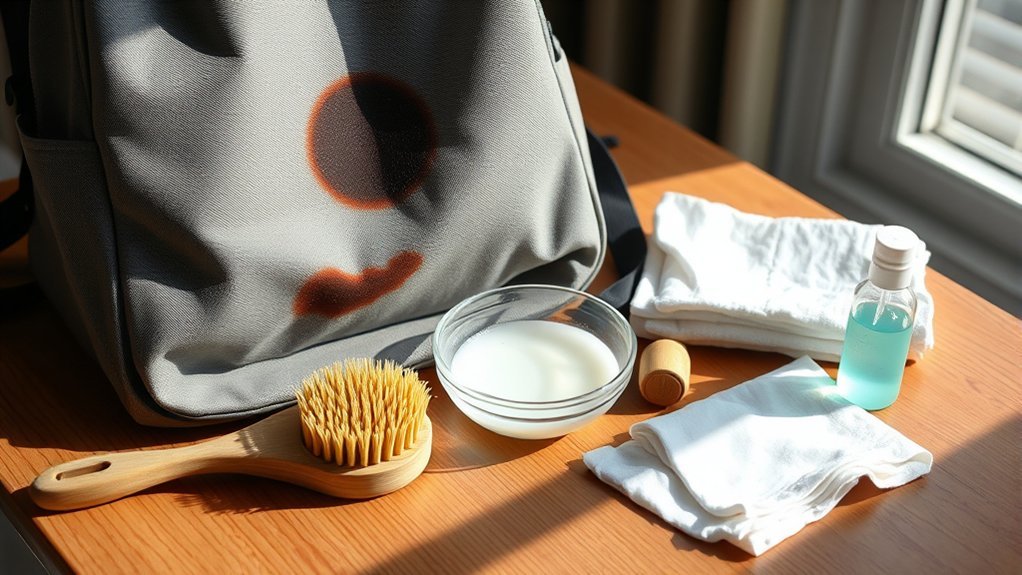
Last Updated on July 30, 2026 by Caleb Warren
Stains on a backpack should be treated with the gentlest method that its fabric, coating, trim, and construction can safely handle. Before applying detergent or putting the bag in water, check the sewn-in care label and the manufacturer’s instructions for your exact model. A method that works for a simple polyester school bag could damage a coated hiking pack, leather-trimmed backpack, or wheeled travel bag.
Quick Answer
Check the care label first. Empty and brush out the backpack, then blot the stain and spot-clean it with cool water and a small amount of label-approved mild cleaner. Hand-wash only when the pack can be submerged; machine-wash only when the manufacturer allows it. Rinse thoroughly and air-dry with every pocket open.
Key Takeaways
- The sewn-in care label and model-specific instructions override generic cleaning advice.
- Spot cleaning is the safest starting point for most stains and lightly soiled backpacks.
- Do not automatically use a washing machine, bleach, alcohol, vinegar, degreaser, or strong stain remover.
- Blot stains gently, rinse away cleaner residue, and check the area before drying.
- Dry the backpack completely with its pockets open and away from strong heat or direct sunlight unless its label gives different instructions.
At a Glance
| Time Required | 15–30 minutes for spot cleaning; 30–45 minutes for hand washing, plus approximately 8–24 hours of air drying |
| Difficulty | Easy, provided the care instructions are followed |
| Tools Needed | Clean white cloths, soft sponge or brush, vacuum attachment, basin or tub when permitted, mild label-approved cleaner, and dry towels |
| Cost | Usually $0–$15, depending on the approved cleaner already available |
The care label—not a generic cleaning hack—determines whether a backpack should be spot cleaned, hand washed, machine washed, or kept away from heat.
Disclosure: As an Amazon Associate I earn from qualifying purchases. Some links on this page are affiliate links, at no extra cost to you.
Check the Care Instructions First
Backpack-care instructions can differ even between products from the same brand. For example, Patagonia lists its Refugio Daypack as hand-wash and drip-dry, while its Black Hole Pack permits warm machine washing and low tumble drying. That difference is why the label inside your exact backpack must come first.
Before cleaning, look for instructions covering:
- Whether the pack is spot-clean-only, hand-washable, or machine-washable
- The safest water temperature
- Permitted detergent or technical cleaner
- Bleach, fabric-softener, dry-cleaning, ironing, and dryer restrictions
- Separate care for a rain cover, frame, hip belt, removable insert, or hydration system
Warning: Do not submerge a backpack containing nonremovable electronics, cardboard stiffeners, rigid wheeled components, leather, suede, or other water-sensitive materials unless its manufacturer expressly permits it. Never combine cleaning products.
Prepare the Backpack for Cleaning
- Empty every compartment. Check small organizer pockets, hydration sleeves, laptop sections, and hidden security pockets.
- Remove loose components. Take out a removable frame sheet, hip belt, rain cover, laptop sleeve, or hydration reservoir only when the product instructions say it is designed to be removed.
- Shake out debris. Turn the empty pack upside down and gently shake out crumbs, sand, and dust.
- Brush or vacuum the interior. Use a soft brush or low-suction vacuum attachment around seams and pocket corners.
- Inspect the stain. Identify what caused it, whether it is wet or dry, and whether the fabric is coated, printed, faded, or damaged.
- Test the cleaner. Apply a tiny amount to a hidden area, let it dry, and check for color transfer, stiffness, tackiness, or surface changes.
Pro Tip: Use a clean white cloth during the patch test. It makes transferred dye easier to see than a colored towel does.
Identify the Type of Stain
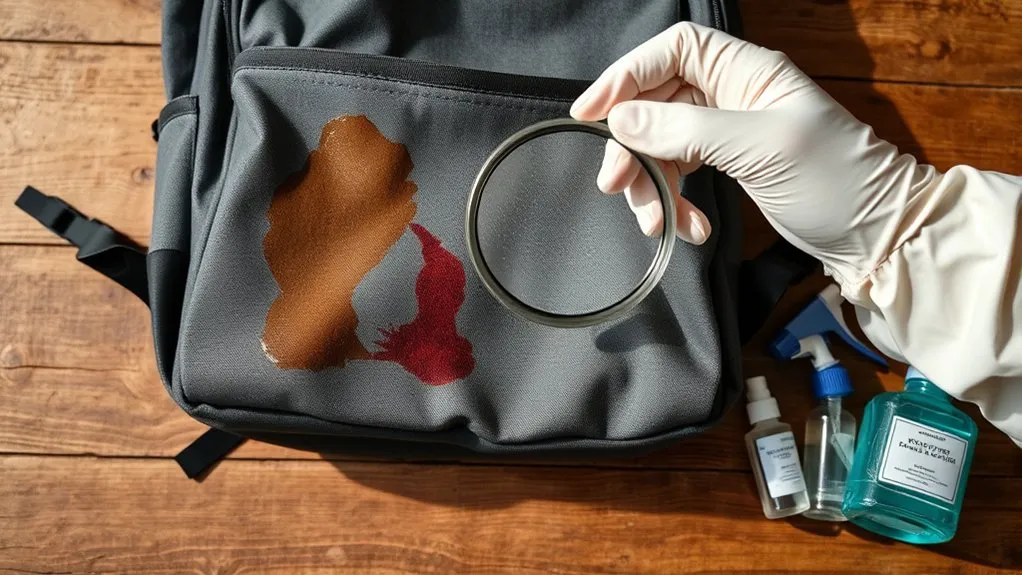
Different stains respond to different treatments. Start with the least aggressive method and increase cleaning strength only when the care label permits it. Avoid hard scrubbing, which can spread the stain, roughen the fibers, remove a printed finish, or weaken a waterproof coating.
| Stain Type | Safe Starting Method | Important Caution |
|---|---|---|
| Dry mud or dirt | Let it dry, brush away loose material, and wipe with a damp cloth. | Wetting thick mud immediately can push it farther into the weave. |
| Food, coffee, or juice | Lift off solids, blot liquid, then use cool water and a small amount of approved mild cleaner. | Do not rub the spill across a larger area. |
| Sweat or salt marks | Wipe repeatedly with clean water; use mild soap if the instructions permit it. | Rinse thoroughly so soap and salt do not remain in the padding. |
| Grease or oil | Blot excess oil, then apply a tiny amount of label-approved textile cleaner. | Do not assume a strong household degreaser is safe for a coated backpack. |
| Ink | Blot without spreading. Ask the manufacturer about a compatible ink treatment. | Alcohol may affect coatings, graphics, dyes, and adhesives. Use it only when the fabric instructions allow it and a patch test passes. |
| Blood or another protein stain | Use cool water and a compatible cleaner while following appropriate hygiene precautions. | Hot water can make some protein stains harder to remove. |
| Mildew or visible mold | Move the empty pack to a ventilated area and consult the manufacturer about a suitable treatment. | Extensive growth, recurring odor, or mold inside thick foam may require professional cleaning or replacement. |
The American Cleaning Institute’s stain guide provides stain-specific advice for washable textiles. However, a backpack may also contain coatings, foam, structural sheets, adhesives, and trims that are not present in ordinary clothing. Manufacturer approval is therefore still essential.
Pre-Treating Stains Effectively
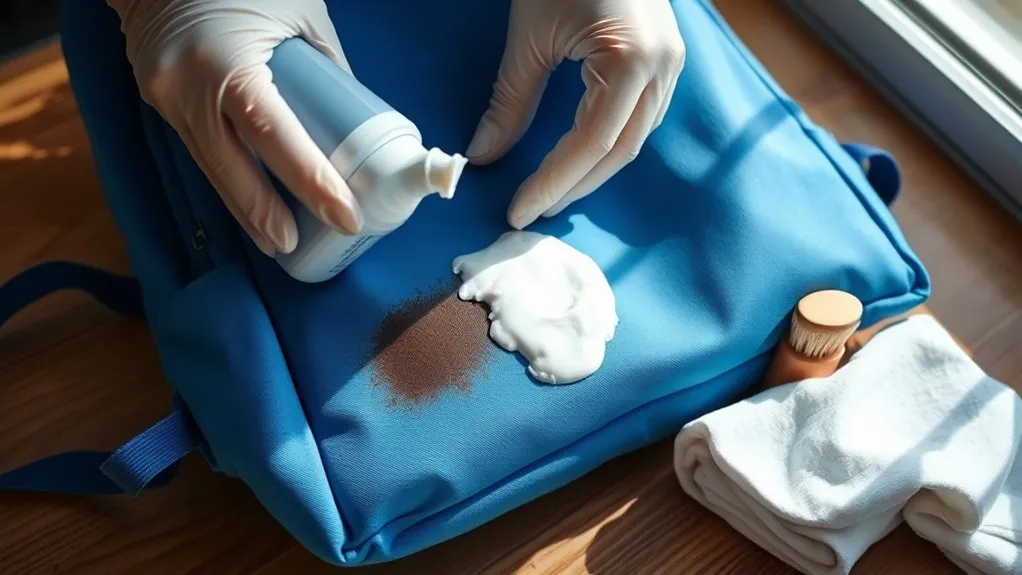
Pre-treating loosens the stain before a larger section of the backpack is washed. It also prevents an unnecessary full wash when a small spot is the only problem.
- Remove excess material. Lift solids with a spoon or dull edge. Blot liquids with a clean absorbent cloth.
- Place a towel behind the stain when possible. This helps absorb transferred material instead of pushing it into another layer.
- Dampen the area. Use cool or lukewarm water according to the care instructions.
- Apply approved cleaner to the cloth. Do not pour a concentrated product directly onto the backpack unless its directions specifically call for that method.
- Blot from the outside inward. This helps prevent the mark from spreading.
- Use a soft brush only when needed. Work gently along the fabric weave rather than grinding the bristles into the coating.
- Let the cleaner work for the label-directed time. Do not allow it to dry on the fabric unless the product instructions say to do so.
- Rinse or wipe away residue. Repeat with a clean damp cloth until no soap remains.
- Inspect before drying. Repeat the gentle treatment if the stain is fading and the fabric remains undamaged.
Note: Stop immediately if the cloth picks up substantial dye, the surface becomes sticky, a coating flakes, printed graphics smear, or bonded layers begin to separate.
Choosing the Right Cleaning Method

Choose the least intensive method that can remove the stain. Spot cleaning is suitable for small marks and light surface dirt. Hand washing may be appropriate for a heavily soiled pack that can safely be submerged. Machine washing should be used only when the exact product label or manufacturer explicitly permits it.
- Spot clean: Best for isolated stains, delicate trim, rigid structures, coated packs, and bags that cannot be submerged.
- Hand wash: Best when the label allows immersion but machine agitation is prohibited.
- Machine wash: Use only when expressly permitted, following the listed cycle, temperature, detergent, and drying instructions.
Major manufacturers provide different directions. Osprey, JanSport, and Deuter advise hand cleaning for many of their standard backpacks and warn that machine agitation may harm the fabric, finish, coating, shape, or structure.
Hand Washing vs. Machine Washing
Hand washing gives you more control over water exposure, cleaner placement, and scrubbing pressure. Machine washing can save active cleaning time when a backpack is specifically designed for it, but it should never be selected merely because it is more convenient.
Benefits of Hand Washing
| Benefit | Why It Helps |
|---|---|
| Gentler on Fabric | Reduces aggressive agitation that may wear coatings, seams, printed areas, and hardware. |
| Targeted Cleaning | Allows extra attention on stained straps, the base, zipper areas, and pocket edges. |
| Controlled Water Exposure | Lets you keep sensitive trim or structural areas above water when the manufacturer permits partial washing. |
| Adjustable Pressure | Makes it easier to clean mesh and durable body fabric with different levels of pressure. |
How to Hand Wash a Backpack
- Confirm that the care instructions permit hand washing or immersion.
- Fill a clean basin or tub with the recommended water temperature.
- Add only the approved amount of mild soap or technical cleaner.
- Place the washable portion of the backpack in the water. Keep non-submersible sections out.
- Gently squeeze water through padded straps and fabric. Do not twist, wring, or sharply bend structural parts.
- Use a soft sponge or brush on stubborn dirt, seams, and zipper surrounds.
- Drain the dirty water and rinse with clean water until no suds or slippery residue remains.
- Support the backpack with both hands when lifting it because saturated padding can be heavy.
- Press with clean towels to remove surface water without wringing the material.
Advantages of Machine Washing
When the sewn-in label explicitly permits it, machine washing can provide consistent agitation and detergent distribution while cleaning pockets and seams with less manual work. Follow the stated cycle and water temperature exactly. Remove only components designed to detach, protect straps and hardware as directed, and use a laundry bag or pillowcase when the manufacturer recommends one.
Do not force out stays, rods, frame sheets, or back-system parts that are not intended for user removal. Do not improvise with a hot cycle, heavy-duty detergent, bleach, fabric softener, or high-speed spin.
Warning: A “polyester” or “nylon” fabric label alone does not prove that the complete backpack is machine-washable. Coatings, foam, adhesives, zippers, frames, and decorative panels also determine the correct method.
Clean Zippers, Straps, and Pockets
Zipper tracks, shoulder straps, the back panel, side pockets, and the bottom of the bag often hold more grime than the main body fabric.
- Zippers: Brush away grit with a soft dry brush before wiping the area. Do not force a slider over trapped dirt.
- Shoulder straps and back panel: Use repeated gentle squeezing and rinsing when immersion is permitted. These padded areas can retain sweat and detergent.
- Pockets: Turn liners outward when possible and wipe into corners with a damp cloth.
- Rain cover: Follow its separate instructions. Deuter, for example, recommends removing and spot cleaning the rain cover rather than washing it with the pack.
- Leather or suede trim: Keep it dry unless the manufacturer provides a compatible cleaning method.
Proper Drying Techniques
Most backpacks should be air-dried, but the care label remains the final authority. Some products prohibit all dryer heat, while a small number permit low tumble drying.
- Open every pocket and zipper to expose damp seams and corners.
- Hang the pack upside down or position it so water can drain freely.
- Choose a shaded, well-ventilated place.
- Keep the bag away from radiators, hair dryers, open flames, and other concentrated heat.
- Blot water trapped around foam, seams, and pocket corners with a clean microfiber towel.
- Turn or reposition the backpack during drying so both sides receive airflow.
- Wait until padding, pocket linings, and seams are completely dry before closing or storing the pack.
Osprey recommends drying in a ventilated location out of direct sunlight. Deuter likewise recommends opening the zippers, hanging the pack upside down, and avoiding direct sun and heat.
Pro Tip: Point a room fan toward—not directly into—the open backpack to improve airflow without applying heat.
Remove Backpack Odors Safely
Odor usually returns when its source remains in the bag. Crumbs, drink residue, sweat in the straps, damp foam, and retained detergent are common causes.
- Empty and vacuum the backpack thoroughly.
- Clean visible spills and heavily used contact areas with the approved method.
- Rinse away all cleaner residue.
- Dry the bag completely with its pockets open.
- Air the empty backpack again before storing it.
Do not automatically soak the bag in vinegar or sprinkle powder throughout its lining. Those methods can leave residue or affect specialty materials. Use an odor-removal product only when its label and the backpack manufacturer confirm compatibility.
A persistent musty smell, spotting that returns, or visible growth inside thick padding may indicate a deeper moisture problem. Contact the manufacturer or a professional cleaner before continuing. A severely contaminated pack may not be practical to restore.
Maintaining Your Backpack’s Cleanliness
Regular light care reduces the need for aggressive washing. The correct schedule depends on how the backpack is used rather than a fixed number of months.
- Empty food, damp clothing, and trash after each use.
- Brush out dirt before it becomes embedded in the fabric.
- Treat spills as soon as practical.
- Air out sweaty or rain-dampened packs before storage.
- Keep zipper tracks free of sand and grit.
- Store the backpack completely dry in a cool, ventilated area.
- Perform a full wash only when needed and permitted.
If water stops beading on a previously water-repellent surface, check the manufacturer’s instructions before applying a treatment. Use only a compatible spray or wash product, and keep it away from shoulder-strap fabric if the manufacturer warns that it could irritate skin.
Frequently Asked Questions
Can I use bleach on backpack fabric?
Do not use chlorine bleach unless the care instructions for the exact backpack expressly permit it. Many backpack manufacturers prohibit bleach because it can discolor fabric and damage coatings or trim. A product described as color-safe should still be used only when the care label allows it.
How do I remove odors from a backpack?
Empty and vacuum the bag, clean food or sweat residue with the approved method, rinse away soap, and dry the backpack completely with all pockets open. Persistent musty odor can signal trapped moisture or mildew and may require manufacturer or professional advice.
Is vinegar safe for fabric backpacks?
Not automatically. Vinegar is used for selected stains on some washable textiles, but backpacks may contain coatings, dyes, adhesives, foam, leather, or printed graphics. Use it only when the backpack’s manufacturer permits it and a hidden-area test shows no damage.
What should I avoid when cleaning a backpack?
Avoid harsh scrubbing, unapproved solvents, chlorine bleach, fabric softener, concentrated heat, pressure washing, and machine washing without permission. Do not mix cleaning chemicals or force-remove structural parts that were not designed to detach.
How often should I clean my backpack?
Spot-clean spills and stains promptly. Brush out debris and air the backpack whenever it becomes dirty or damp. A full wash is needed only when soil, sweat, or odor cannot be removed through lighter care and the manufacturer permits washing.
Can I put a backpack in the washing machine?
Only when the sewn-in label or official instructions for that exact model allow it. Many hiking, school, and structured backpacks are hand-wash-only because machine agitation can damage coatings, shape, seams, hardware, or internal support parts.
What if the stain remains after cleaning?
Let the area air-dry enough to inspect it, then repeat the same gentle treatment if the fabric remains stable. Do not keep increasing chemical strength. For old ink, dye transfer, paint, extensive grease, or damage to a coated surface, contact the manufacturer or a textile-cleaning professional.
Conclusion
The safest way to treat stains on backpack fabric is to begin with the care label, remove loose debris, identify the stain, and spot clean with the mildest approved method. Hand wash only when the pack can be submerged, and use a washing machine or dryer only when the exact product instructions allow it. Careful rinsing and complete air drying protect the fabric, padding, coatings, seams, and hardware while helping the backpack remain clean and usable for longer.
Sources
- Osprey: How to Clean Your Osprey Backpack — supports hand cleaning, ventilation, shade drying, and machine-washing cautions.
- JanSport: How to Clean a Backpack — supports emptying the pack, hand cleaning, bleach restrictions, stain-cleaner limits, and complete drying.
- Deuter: How to Clean a Backpack — supports spot cleaning, hand washing, separate rain-cover care, zipper cleaning, and drying away from heat.
- American Cleaning Institute: Stain Removal Guide — supports prompt treatment and stain-specific methods for compatible washable textiles.
- Patagonia Refugio Daypack Care Instructions — demonstrates a hand-wash, no-bleach, drip-dry backpack label.
- Patagonia Black Hole Pack Care Instructions — demonstrates that certain individual backpacks permit machine washing and low tumble drying.

