
Last Updated on September 10, 2026 by Daniel Globe
Electric scooters can make short urban trips convenient, but their drawbacks are easy to underestimate. Riders have little physical protection in a crash, battery range and charging can limit longer trips, weather and rough roads reduce usability, and many models are heavier than they look. Local rules, theft, maintenance, battery safety, pedestrian conflicts, and environmental impacts also deserve consideration before you buy or rely on one.
Quick Answer
Electric scooters have several drawbacks: riders are exposed in crashes, real-world range can be lower than advertised, charging takes hours, weather and rough roads reduce usability, and many models are awkward to carry. Battery fire risk, local riding rules, theft, maintenance, sidewalk conflicts, and life-cycle environmental impacts also matter.
Key Takeaways
- Safety is the biggest concern because an e-scooter offers little protection from falls, vehicles, curbs, potholes, and other road hazards.
- The U.S. Consumer Product Safety Commission estimated 79,300 emergency-department-treated e-scooter injuries in 2024.
- Range varies widely by model and can fall below the advertised figure when speed, temperature, hills, stops, rider weight, and other conditions change.
- Charging can take several hours, and damaged batteries or incompatible chargers create a fire risk.
- Some commuter scooters weigh more than 20 kg, so folding does not necessarily make them convenient to carry.
- Local riding and parking rules vary, so check the current rules where you plan to ride.
Disclosure: As an Amazon Associate I earn from qualifying purchases. Some links on this page are affiliate links, at no extra cost to you.
Why Electric Scooter Safety Is a Concern?
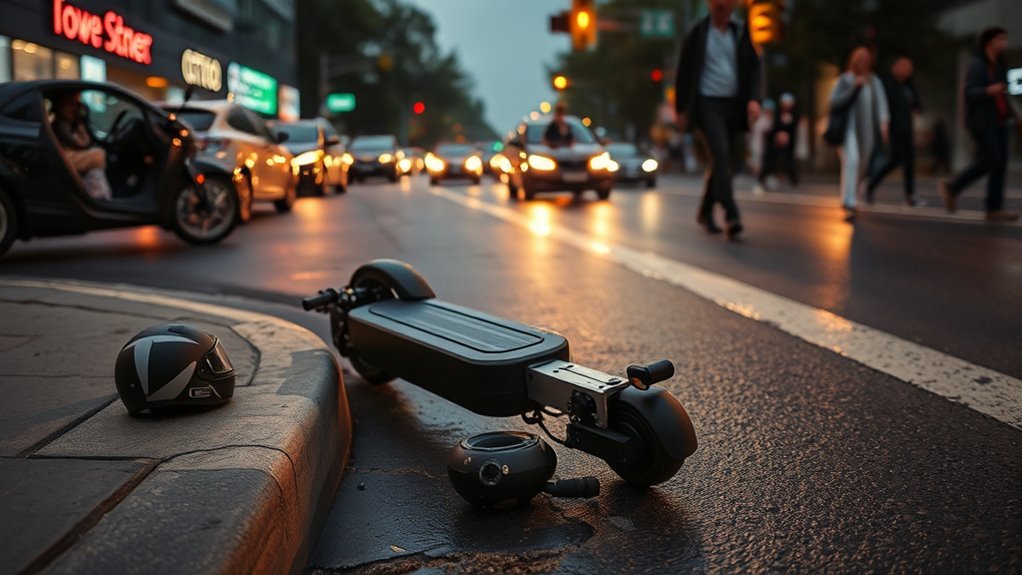
Electric scooter safety is a concern because riders have almost no protective structure around them. A pothole, curb, vehicle collision, loss of balance, or sudden stop can send the rider directly onto the road.
The U.S. Consumer Product Safety Commission’s April 2026 micromobility report estimates that about 79,300 e-scooter-related injuries were treated in U.S. emergency departments in 2024. CPSC estimates roughly 380,000 such injuries from 2017 through 2024.
CPSC estimated 79,300 emergency-department-treated e-scooter injuries in the United States in 2024.
Head and facial injuries and injuries to the arms and hands appear frequently in clinical research. Falls are a common crash mechanism, while collisions with motor vehicles can cause particularly severe injuries. Alcohol or drug impairment is also repeatedly identified as a risk factor in published injury studies.
Helmet use remains an important concern. In CPSC’s 2024 special study, a helmet was reported in only 18% of the estimated injury cases. A helmet cannot prevent every injury, but it is an important layer of protection, particularly because the rider’s head is otherwise exposed.
Warning: CPSC advises riders to wear a helmet, keep both hands on the handlebars, avoid abrupt movements, watch for obstacles, never ride while impaired, and carry only one rider on a scooter.
Small wheels are another disadvantage. CPSC notes that obstacles and uneven surfaces can stop an e-scooter’s tires suddenly and throw the rider off. That makes potholes, cracks, raised pavement, debris, rail tracks, and curbs more consequential than they may appear from a car.
How Limited Range Can Disrupt Rides?
Limited range can disrupt a commute when the scooter’s usable battery capacity is lower than the distance you need to travel. There is no dependable single range for all electric scooters because battery size, motor power, speed, rider weight, hills, wind, temperature, tire condition, and repeated acceleration all affect consumption.
Manufacturer specifications show how wide the difference can be. Segway lists its E2 Plus at about 15.5 miles of theoretical range and about 12.4 miles at maximum speed, while its heavier Max G2 is rated for a substantially longer theoretical range. These are manufacturer test figures rather than guarantees for every rider.
Range also changes with operating conditions. Segway states that speed, repeated starts and stops, and ambient temperature can affect range. Battery aging can gradually reduce usable capacity as well.
- Compare your full round-trip distance with the scooter’s realistic range, not just the headline maximum.
- Leave a battery reserve for detours, wind, hills, and unexpected stops.
- Remember that a discharged scooter may be too heavy to carry comfortably.
- Do not assume a convenient charging outlet will be available at your destination.
Pro Tip: Before buying, compare the manufacturer’s range-testing conditions with your own commute. A flat test route at moderate speed and mild temperature may not represent a hilly, cold, stop-and-go ride.
Charging Time and Access Can Be Inconvenient
Recharging an electric scooter usually takes far longer than refueling a gasoline vehicle. Charging time varies by battery and charger. For example, Xiaomi lists approximately five hours for its Electric Scooter 4, while some Segway E2-series specifications list longer charging times.
This becomes inconvenient if you forget to charge overnight, make several long trips in one day, live somewhere without a safe charging location, or cannot bring the scooter near an outlet. Public charging infrastructure is also much less standardized for stand-up scooters than it is for larger electric vehicles.
What Electric Scooter Laws Still Don’t Cover?
Electric scooter rules can be confusing because operating restrictions are often set by states, cities, transportation agencies, parks, campuses, or other local authorities rather than one universal rule. The Federal Highway Administration notes that micromobility regulation is an active local-policy issue.
| Rule that may vary | Why it matters |
|---|---|
| Speed limits | The legal maximum may be lower than the scooter’s capable speed. |
| Sidewalk riding | Some locations restrict or prohibit riding on sidewalks. |
| Bike-lane or roadway use | Permitted riding areas differ by jurisdiction. |
| Parking | Improperly parked scooters can obstruct pedestrian access. |
| Helmet and age rules | Requirements may depend on age and location. |
Note: Check the current website of your city, state, transportation department, campus, park, or other relevant authority before riding. Do not rely solely on a scooter retailer’s description of what is legal.
Why Battery Production Raises Green Questions?
Electric scooters produce no tailpipe exhaust while they are being ridden, but that does not make their total environmental impact zero. Their footprint includes raw-material extraction, manufacturing, shipping, electricity, maintenance, end-of-life treatment, and—in shared fleets—collection and redistribution.
Lithium-ion batteries use critical minerals and other raw materials. According to the U.S. Environmental Protection Agency, common battery materials can include lithium, nickel, cobalt, manganese, graphite, iron, copper, and aluminum, depending on battery chemistry. Calling these simply “rare earth metals” is inaccurate.
- Mining and processing raw materials require energy and can create environmental impacts.
- Manufacturing the scooter and battery contributes to its lifecycle footprint.
- Shared fleets may add emissions when vehicles are used to collect, charge, repair, and redistribute scooters.
- Longer product life can spread manufacturing impacts over more miles of use.
- Replacing a car trip generally offers a stronger environmental case than replacing a walk or bicycle trip.
A peer-reviewed life-cycle study of shared dockless e-scooters found that manufacturing and fleet collection were major contributors to lifecycle emissions, while the electricity used for charging represented a much smaller share in the study’s base case. The results were highly sensitive to scooter lifetime and collection practices.
End-of-life handling matters too. EPA advises consumers not to place lithium-ion batteries in household trash or ordinary curbside recycling. They should go to an appropriate battery recycler or hazardous-waste collection program.
Battery Fire and Charging Risks
Lithium-ion batteries add another disadvantage: damaged, defective, modified, or improperly charged battery packs can overheat and catch fire. The risk is especially serious indoors because battery fires can spread rapidly.
The CPSC has specifically warned against unapproved “universal” micromobility chargers. Between January 1, 2023 and May 16, 2024, CPSC received 156 reports of fire and thermal incidents involving universal chargers for micromobility products.
Warning: Use only the charger supplied or approved for your exact scooter, follow the manufacturer’s charging instructions, stay present while it charges, do not charge while sleeping, and do not use a damaged or improperly modified battery pack.
CPSC also urges consumers to choose micromobility products designed, manufactured, and certified for compliance with applicable consensus safety standards. For personal e-mobility electrical systems, UL 2272 is an important standard referenced by CPSC.
How Weather and Terrain Limit Electric Scooters?
Weather and terrain can limit how practical an electric scooter is for everyday transportation. Wet pavement reduces traction, poor visibility makes riders harder to see, strong wind can affect stability, and cold or hot temperatures can affect battery performance.
Water resistance also varies by model. An IP rating does not mean a scooter is waterproof under every condition. For example, Segway describes some E2-series models as IPX4 for the scooter body and specifically warns users not to charge the product while it is wet or in a moist environment.
Terrain creates additional problems. Small wheels react strongly to potholes, cracks, gravel, curbs, and uneven pavement. Models with limited suspension transmit more vibration to the rider, while steep hills increase power demand and can reduce range.
- Rain and wet leaves can reduce grip.
- Ice and snow can make a standing scooter especially difficult to control.
- Potholes and road seams can destabilize small wheels.
- Steep hills can increase battery consumption.
- Rough roads can increase wear on tires, bearings, fasteners, and suspension components.
If your normal route includes poor pavement, steep grades, frequent heavy rain, snow, or ice, an electric scooter may not be dependable enough to serve as your only transportation.
How Much Electric Scooter Maintenance Really Costs?
An electric scooter has fewer drivetrain components than a gasoline vehicle, but it is not maintenance-free. Tires, brakes, bearings, folding mechanisms, lights, fasteners, suspension parts, cables, and electronics can all need inspection or repair.
Actual maintenance cost depends on the scooter, how often you ride, road conditions, local labor rates, parts availability, and whether repairs are covered by warranty. Battery replacement can become one of the larger ownership expenses, but there is no accurate universal replacement-price range because battery size and manufacturer pricing differ substantially.
- Check tire pressure or tire condition regularly.
- Inspect brakes and lights before relying on the scooter for commuting.
- Watch for loose fasteners or play in the stem and folding mechanism.
- Follow the manufacturer’s service and charging instructions.
- Confirm that replacement tires, brake parts, chargers, and batteries are actually available before buying.
Repair Access Can Be Limited
Repairability is another cost issue that buyers often overlook. Bicycle shops do not necessarily service electric scooters, and some models depend heavily on proprietary electronics, batteries, controllers, or app-based diagnostics. A low purchase price can become less attractive if parts are hard to find or the nearest authorized repair center is far away.
Why Electric Scooters Are Hard to Carry?
Electric scooters can look compact in photographs, but many are awkward to carry. Folding reduces their height, yet it does not remove the weight of the battery, motor, wheels, frame, brakes, and suspension.
Weight also varies more than the original 10-to-20-kg rule suggests. Segway lists the E2 Plus at about 14.4 kg (31.7 lb), while the Max G2 is approximately 24.25 kg (53.5 lb). That difference matters if you climb stairs, transfer to a train, or carry the scooter into an apartment every day.
Heavy Battery Weight
The battery contributes to scooter weight, although the frame, motor, suspension, and other components also matter. Larger batteries can extend range, but they often make the entire scooter heavier.
- Repeatedly lifting a scooter upstairs can become tiring.
- Heavy models are inconvenient on buses and trains.
- Carrying a folded scooter through a crowded station can be awkward.
- Weight may make the scooter unsuitable for riders with limited lifting ability.
Folding Still Cumbersome
A folding mechanism does not automatically make a scooter easy to carry. The folded frame can remain long and bulky, and some stems or handlebars are uncomfortable to hold for more than a short distance.
Before buying, check the actual weight, folded length, handle position, and whether you can comfortably lift the scooter high enough for your stairs, vehicle trunk, or public-transport routine.
Limited Cargo and Passenger Capacity
Electric scooters are poor cargo vehicles. Carrying shopping bags, luggage, work equipment, or other items can interfere with steering and balance. Hanging bags from the handlebars is particularly risky because the load can swing and affect control.
CPSC’s 2024 e-scooter special study estimated that riders were carrying or holding something in their hands in 32% of the injury cases covered by that survey. CPSC advises keeping both hands on the handlebars.
Standard stand-up scooters are also intended for one rider. Carrying a passenger changes the scooter’s balance, braking, and weight distribution and can exceed the manufacturer’s load limit.
How Electric Scooters Affect Pedestrians and Streets?
Electric scooters can create conflicts when riders, pedestrians, bicycles, and vehicles share the same limited space. Sidewalk riding can make pedestrians uncomfortable, while scooters left across a walkway can obstruct people using wheelchairs, walkers, strollers, or other mobility devices.
Pedestrian Safety Risks
Most e-scooter injuries involve riders themselves, but pedestrians can also be hurt. In its 2017–2024 fatality review, CPSC identified six pedestrian fatalities in which the pedestrian was struck by an e-scooter rider.
Risk increases when riders travel too quickly for a mixed-use area, pass without enough clearance, ride unpredictably, or operate where pedestrians cannot easily anticipate them.
- Slow down around pedestrians.
- Follow local sidewalk and shared-path rules.
- Give people with disabilities adequate space.
- Do not park across the clear pedestrian path.
Street Congestion Issues
Shared scooters can add clutter when large numbers are left around curb zones or sidewalks without designated parking. FHWA has discussed dedicated micromobility parking and street design as ways to keep sidewalks clearer and improve the accessible pedestrian zone.
Dedicated bike and micromobility infrastructure can reduce some conflicts, but many streets still force scooters to mix with cars, bicycles, or pedestrians. That makes the quality of local infrastructure an important part of deciding whether a scooter is practical.
Why Electric Scooter Theft and Vandalism Are Common Risks?
Electric scooters are attractive theft targets because they are valuable, portable, and frequently left in public places. Folding designs make transport convenient for the owner, but they can also make a stolen scooter easier to move.
Shared fleets can also be damaged or vandalized, although there is no reliable universal percentage that applies to every city or operator. Damage raises repair and replacement costs and may reduce the availability of functioning scooters.
- Store a privately owned scooter indoors when possible.
- Use a strong lock attached through a secure structural part of the scooter.
- Do not assume an electronic lock prevents someone from physically taking the scooter.
- Consider models with location tracking as an additional layer rather than a substitute for physical security.
Who Should Think Twice Before Buying an Electric Scooter?
An electric scooter is most useful when its limitations match your routine. You may want another transportation option if several of the following apply:
- Your daily round trip is close to the scooter’s maximum advertised range.
- You regularly need to carry the scooter up several flights of stairs.
- Your route has frequent potholes, gravel, steep hills, snow, or ice.
- You have no safe indoor place to store or charge it.
- You regularly carry groceries, large bags, tools, or another passenger.
- Local rules prevent riding on the routes you need.
- Replacement parts or authorized service are difficult to obtain.
- You need transportation that works reliably in almost all weather.
For those situations, a bicycle, e-bike, public transit, or another transportation option may be more practical.
Frequently Asked Questions
What Are the Negatives of E-Scooters?
The main negatives are crash exposure, limited or variable range, several-hour charging times, poor performance on rough roads and in bad weather, battery degradation, charging and fire risks, maintenance, theft, portability problems, cargo limits, and local legal restrictions.
What Are the Top 3 Scooter Brands?
There is no authoritative universal top-three ranking. Segway-Ninebot, Xiaomi, NIU, and Unagi are examples of widely recognized brands, but the better choice depends on local service support, parts availability, weight, realistic range, braking, safety certification, water resistance, and your budget.
Do Police Enforce Electric Scooter Rules?
They can. Enforcement depends on local law and local priorities. Speeding, prohibited sidewalk riding, unsafe behavior, improper parking, age restrictions, and other violations may lead to warnings, fines, or other penalties where those rules apply. Check the current rules for the specific place where you will ride.
What Is the Main Problem With Electric Scooters?
Safety is often the biggest concern because the rider has little physical protection and small wheels can react sharply to potholes and road defects. For commuters, limited range, charging time, weather, and portability can be equally important depending on the route.
Can You Ride an Electric Scooter in the Rain?
It depends on the scooter’s manufacturer instructions and water-resistance rating, but wet pavement still reduces traction even when the electronics can tolerate splashes. Never assume water-resistant means waterproof, and do not charge a wet scooter unless the manufacturer specifically says it is safe.
How Long Does an Electric Scooter Battery Last?
There is no single lifespan that applies to every battery. Capacity gradually declines with age and charge cycles, and heat, cold, storage conditions, charging practices, battery chemistry, and manufacturing quality can all affect longevity. Follow the manufacturer’s charging and storage guidance and use only an approved replacement pack.
Conclusion
Electric scooters can work well for short, predictable trips, but their convenience comes with real tradeoffs. Riders are exposed in crashes, range and charging require planning, rough roads and bad weather reduce usability, and some models are surprisingly heavy. Battery safety, theft, maintenance, local regulations, pedestrian conflicts, and environmental impact also deserve attention.
The best decision is to compare these disadvantages with your actual commute. Check realistic range, scooter weight, folded dimensions, local riding rules, charging access, water-resistance instructions, replacement-parts availability, and the safety of your normal route before buying.
Sources
- U.S. Consumer Product Safety Commission — Micromobility Products-Related Deaths, Injuries and Hazard Patterns 2017–2024 — injury estimates, fatalities, rider circumstances, and safety-equipment data.
- U.S. Consumer Product Safety Commission — Micromobility Information Center — riding, charging, battery, obstacle, helmet, and passenger safety guidance.
- U.S. Environmental Protection Agency — Lithium-Ion Battery Recycling — lithium-ion battery materials, critical minerals, and recycling.
- U.S. Department of Transportation / FHWA — Micromobility Fact Sheet — regulation, access, safety, and transportation-policy context.
- Environmental Research Letters — Are E-Scooters Polluters? — peer-reviewed lifecycle assessment of shared electric scooters.
- Segway — E2 Plus Specifications — manufacturer weight, range, and operating specifications used as a real-world product example.
