
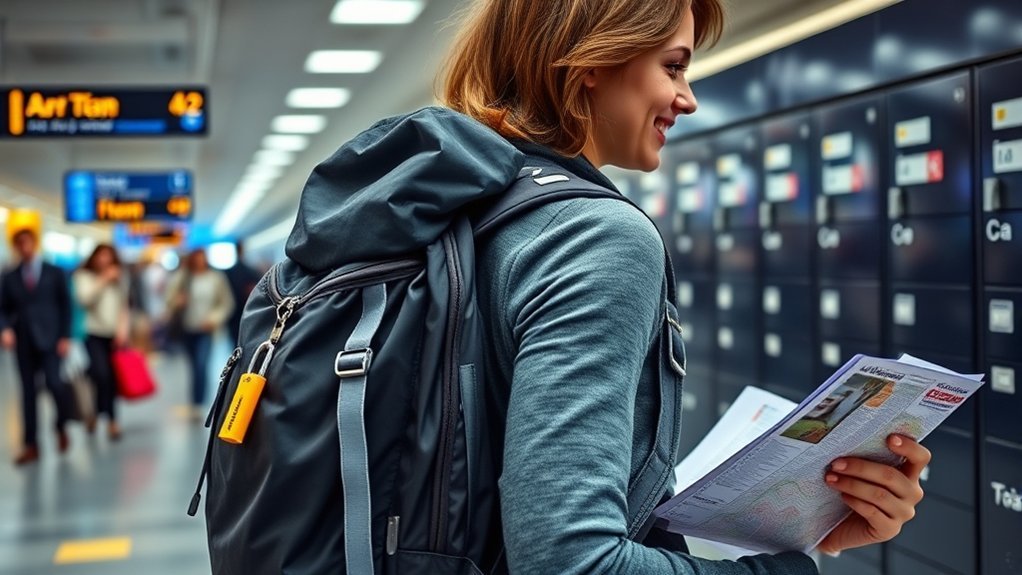
Last Updated on July 30, 2026 by Caleb Warren
Keeping your backpack safe while traveling takes more than adding a small lock. The best approach combines preparation, close control of the bag, discreet storage, sensible use of locks, and a recovery plan. These steps cannot eliminate theft, but they can make your backpack a less convenient target and limit the damage if it disappears.
Quick Answer
Keep your backpack within reach, carry passports and other essentials on your body or in a small personal bag, secure easy-access zippers, and use a short cable lock where permitted. Avoid advertising expensive contents, prepare document and device backups before departure, and know whom to contact if the bag is stolen.
Key Takeaways
- Keep your passport, wallet, phone, medication, keys, and backup payment method under your direct control.
- Use zipper locks, clips, and cables as deterrents—not as proof that a bag cannot be opened or stolen.
- Pay extra attention at stations, security checkpoints, cafés, attractions, and vehicle stops.
- Avoid displaying expensive brands or discussing valuable contents where strangers can hear.
- Prepare copies, device-recovery tools, emergency contacts, and a theft-response plan before leaving home.
At a Glance
| Time Required | 10–20 minutes of preparation, plus a few seconds whenever you sit down or change transportation |
| Difficulty | Easy |
| Tools Needed | Optional cable lock, zipper clips or small padlocks, internal ID card, document copies, and device-location tools |
| Cost | $0–$35, depending on the security accessories you already own |
Disclosure: As an Amazon Associate I earn from qualifying purchases. Some links on this page are affiliate links, at no extra cost to you.
Prepare Your Backpack Security Before You Travel
A few preparations can reduce the impact of a lost or stolen backpack. Start by reviewing the official travel advisory for your destination and saving the contact details for local emergency services, your accommodation, transportation providers, and your embassy or consulate.
U.S. travelers can use the Department of State International Travel Checklist and enroll in the Smart Traveler Enrollment Program when traveling abroad. Travelers from other countries should use the equivalent service provided by their foreign ministry.
- Copy important documents: Save a secure digital copy of your passport information page, visa, insurance policy, itinerary, and emergency contacts. Keep a separate paper copy when practical.
- Record valuable items: Photograph electronics and note model and serial numbers. Keep receipts when they may be needed for an insurance claim.
- Enable device recovery: Set a strong screen lock and confirm that Apple Find My or Google Find Hub works before departure.
- Split your payment methods: Do not keep every card and all your cash in one wallet or one backpack compartment.
- Add identification: Put a name, email address, or reachable phone number inside the bag. Avoid displaying more personal information than necessary on the outside.
- Test the locks: Make sure a lock, clip, or cable fits without bending delicate zipper pulls or damaging the bag.
Pro Tip: Build a small “must-stay-with-me” kit containing your passport, phone, wallet, keys, essential medication, one backup payment method, and any document needed that day. Carry it on your body or in a compact personal bag rather than placing it in a bus hold or unattended luggage rack.
Be Smart on Buses
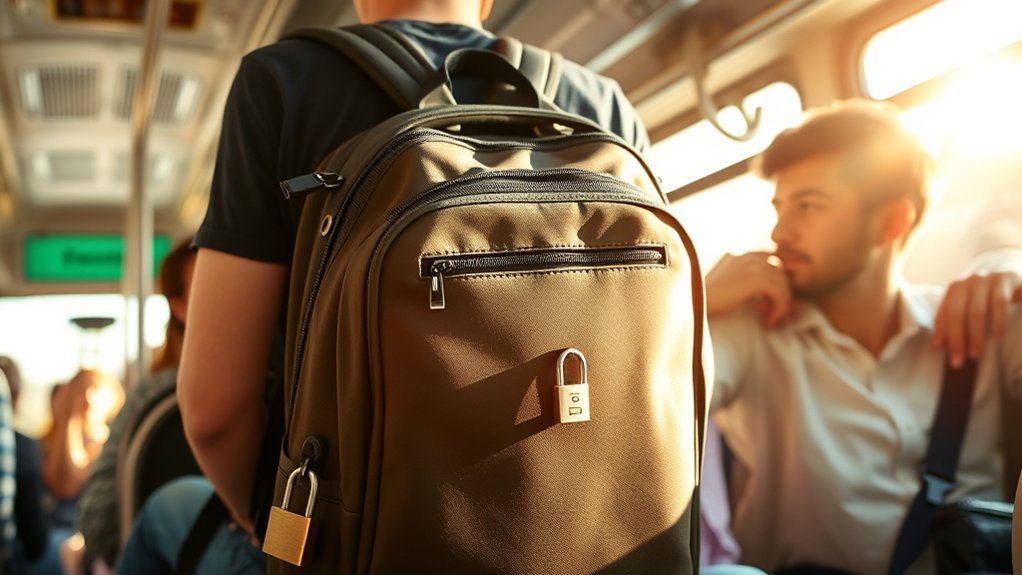
Bus stations, vehicle stops, and luggage-loading areas create opportunities for confusion. Before boarding, ask the operator where large bags will be stored and whether you will receive a numbered claim ticket. Keep your smaller essential bag with you unless the operator requires a different arrangement.
- Do not put your passport, money, medication, phone, keys, or critical electronics in the cargo hold.
- Watch your large backpack being loaded when it is safe and permitted to do so.
- At stops, remain aware of the luggage area without entering traffic or restricted loading zones.
- Confirm that you have the correct bag before leaving the vehicle.
- Keep the bag’s straps contained so they do not snag during loading.
If you place a backpack beneath your seat or between your feet, keep a strap under your leg or use a short cable around a sturdy seat support when the operator permits it. Never attach a bag to emergency equipment, a moving seat mechanism, a door, or anything that blocks an aisle.
Make a Safe Backpack Leash
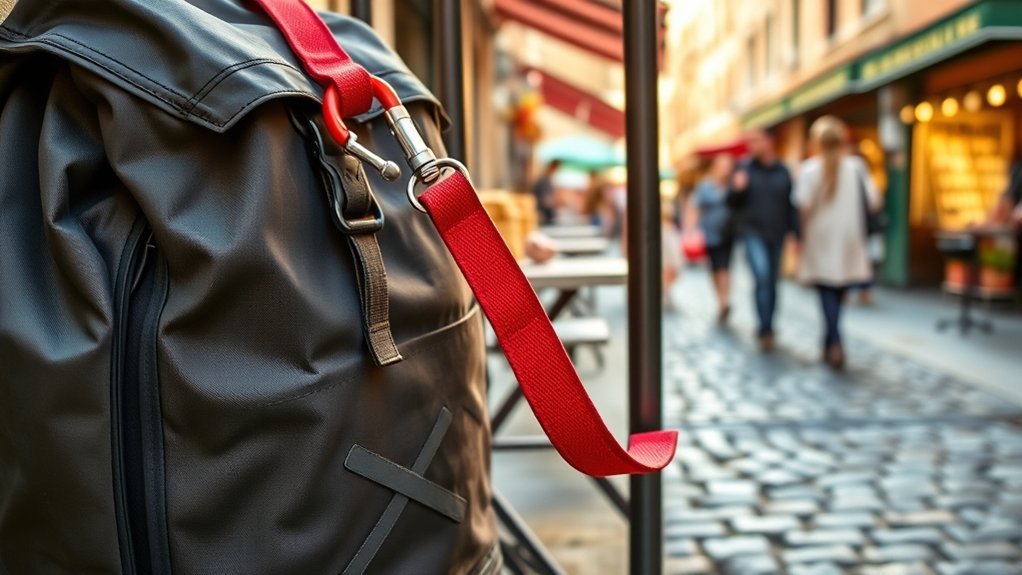
A short tether can make a quick grab-and-run theft more difficult while you are seated. A purpose-made coated security cable is usually easier to control than a long clothesline or loose cord. Route it through a structural handle, reinforced loop, or other strong part of the backpack rather than a thin zipper pull.
Secure Your Bag Without Creating a Hazard
Attach the other end only to a sturdy fixed object that you are allowed to use, such as a locker anchor, bed-frame rail, or heavy chair support. Keep the cable short enough that it does not cross a walkway.
Warning: Never loop a cord or cable around your neck, tie it tightly around a wrist or ankle, or create a trip hazard. Do not use a tether as a reason to sleep in an unsafe public place. If someone threatens you, prioritize your safety and do not physically fight over the backpack.
Use Simple Secondary Barriers
When a cable is impractical, a few low-profile barriers can still slow casual access:
- Clip paired zipper pulls together with a small carabiner or locking clip.
- Turn the zippered side of the backpack toward your body or a wall.
- Place a chair leg through a loose shoulder strap while seated, provided it does not create a hazard.
- Keep the bag between your feet rather than hanging it from the back of a chair.
- Use a locker or secure luggage room when one is available.
These methods work by adding time and movement. They do not prevent a determined person from cutting a strap, forcing a zipper, or taking the object to which the bag is attached.
Stay Aware Near Your Bag
Physical contact with the backpack is most useful when paired with awareness. Check the bag after boarding, after someone bumps into you, after passing through a crowd, and before leaving a seat. Avoid placing it where another person can quietly move it out of view.
| Method | Main Benefit | Limitation |
|---|---|---|
| Short security cable | Discourages a fast grab | Cable, bag, or anchor may be cut or forced |
| Zipper clip | Slows casual pocket access | Does not protect the fabric or zipper track |
| Bag between your feet | Keeps movement noticeable | Requires continued attention |
| Locker or secure storage | Separates the bag from public access | Security depends on the locker and access controls |
Keep a Low Profile When Appropriate
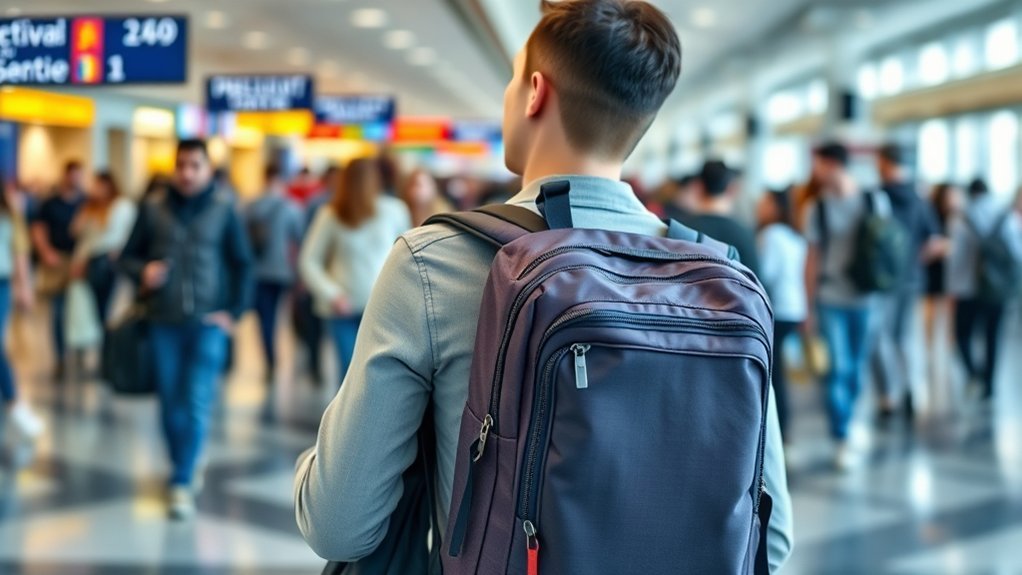
A low-profile backpack can attract less interest than one covered with expensive outdoor, camera, or electronics branding. However, a bright color, patch, or national symbol is not automatically dangerous. The better rule is to review local conditions and avoid advertising wealth or valuable equipment.
Consider Local Context Before Displaying Symbols
Flags, political messages, military-style patches, and other symbols may be harmless in one destination and sensitive in another. Check current destination travel advisories and local laws rather than relying on a universal rule.
Do not remove a symbol solely because the article claims that all national markings attract thieves. Base the decision on the destination, event, and surrounding conditions.
Avoid Advertising Expensive Contents
You do not need to imitate local clothing to travel safely. Instead, avoid obvious signals that the bag contains high-value equipment. Large camera logos, premium laptop branding, expensive luggage tags, and conversations about cash or electronics may reveal more than necessary.
| Consider Avoiding | Reason |
|---|---|
| Large luxury or electronics logos | May suggest expensive contents |
| Open display of cash or multiple devices | Reveals what you carry and where you store it |
| Sensitive political or military-style symbols | May be restricted or draw attention in some destinations |
| A visible home address | Exposes more personal information than needed |
Choose a Practical Design
Neutral colors can be convenient because dirt and wear may be less obvious, but color is only one factor. Prioritize comfortable straps, strong seams, an internal valuables pocket, zipper pulls that can be clipped together, and a shape that stays close to your body.
A distinctive ribbon or tag can also help you identify the bag at a distance. Place identifying information inside the backpack in case the outside tag is removed.
Use a Bicycle Lock or Cable Lock Carefully
A compact cable lock can secure a backpack to a permitted fixed object in a hostel, train compartment, luggage room, or waiting area. Thread the cable through a reinforced carry handle or structural webbing. Do not rely on a removable accessory loop or thin zipper pull.
A heavy bicycle U-lock is usually awkward for a soft backpack. A flexible coated cable is easier to route, but thin cables can be cut. Locking multiple bags together may make them harder to move quickly, although it does not replace individual supervision.
- Choose the shortest practical cable to reduce slack and trip risk.
- Keep the lock body off the floor where it could be stepped on or struck.
- Ask permission before attaching a bag to furniture or property.
- Do not block doors, aisles, ramps, emergency equipment, or cleaning access.
- Do not attach the bag to a vehicle part unless the operator expressly allows it.
A lock is a delay, not a guarantee. Strong backpack security comes from layers: close control, discreet storage, backups, and a recovery plan.
Secure Outside Pockets
Exterior pockets are convenient for items such as tissues, snacks, or an empty water bottle, but they are poor locations for a passport, wallet, phone, room key, or cash. Move valuable items to a concealed internal pocket, a pocket against your back, or a small personal bag.
Use Combination Locks Correctly
A small combination lock can discourage someone from quietly opening paired zipper pulls. Select a lock that fits without forcing or bending them. Change the combination if another person has seen it or if you have shared it—not simply because a calendar reminder says to do so.
Note: TSA uses the term TSA-recognized lock. Such a lock may allow TSA officers to open checked baggage with a compatible tool during screening. It is not a theft-proof rating, and it is not required for ordinary backpack pockets. Review the TSA Travel Checklist before flying in the United States.
Avoid Easy Access
- Clip zipper pulls together when walking through dense crowds.
- Carry the zippered side toward your body where practical.
- Do not leave a phone protruding from an open side pocket.
- Use internal organizers so you can find essentials without exposing the entire bag.
- Close every pocket immediately after using it.
Check Zippers in Crowded Areas
Distraction is often more important than force. Check your zippers after someone bumps you, asks an urgent question, spills something, crowds a doorway, or draws your attention away from the bag. Do not let concern about the backpack distract you from traffic, stairs, or personal safety.
Pack Important Items Deep—but Keep Essentials With You
Valuables that do not need frequent access can go in an internal compartment against the back panel. This location is harder to reach than an open front pocket and generally keeps dense items closer to your body.
Do not interpret “pack deep” as “put every important item at the bottom.” Your passport, phone, wallet, keys, medication, and travel documents may need to remain accessible during an emergency or transport inspection. Keep them in a controlled inner pocket or personal bag that stays with you.
| Item Type | Safer Placement |
|---|---|
| Passport, wallet, phone, keys, medication | Concealed personal pocket or small bag that remains with you |
| Laptop or tablet | Padded internal compartment against the back panel |
| Backup cash or card | Separate concealed location from the main wallet |
| Snacks, tissues, inexpensive accessories | Exterior or top pocket for easy access |
Don’t Announce the Contents
Avoid telling strangers exactly what you carry or where you keep it. When using a laptop, camera, or large amount of cash, put it away discreetly rather than making a show of returning it to a particular pocket.
- Avoid luggage labels that advertise camera, gaming, or premium computer equipment.
- Do not leave retail packaging visible inside an open backpack.
- Use an ordinary protective sleeve rather than packaging that identifies an expensive model.
- Keep cash counting, card sorting, and equipment checks private.
Patches or removable covers may hide an expensive logo, but do not alter the bag in a way that damages reflective safety material, identification, or structural stitching.
Don’t Draw Unnecessary Attention
The goal is not to look fearful or disguise yourself. It is to avoid making the backpack unusually attractive as a target. Carry it naturally, close open pockets, and avoid leaving it alone while taking photographs, buying tickets, checking a map, or using an ATM.
When you need to reorganize valuable items, move to a controlled location such as your room, a staffed lounge, or another place where you can see who is nearby.
Keep Your Backpack Close
Maintain physical control of the backpack in crowded places. A practical position depends on the situation:
- Standing in a crowd: Move the backpack to your front when space and balance allow.
- Sitting in a café: Place it between your feet or against a wall beside your leg, not over the back of the chair.
- At a ticket counter: Keep a foot through a loose shoulder strap while handling documents, provided you can step away safely.
- In a restroom: Use a hook only if it is strong and the bag remains in sight; otherwise keep it with you.
- At an attraction: Follow bag-check rules and collect a receipt or claim ticket when one is issued.
Do not use the backpack as a pillow in an exposed public place or place your full body weight on electronics, glasses, batteries, or medication inside it.
Minimize Your Load
A lighter backpack is easier to keep close, carry to a restroom, lift onto a rack, and move through stations. Packing less also makes it easier to notice when a pocket has been opened or an item has moved.
Before departure, remove duplicate tools, excessive packaging, unnecessary documents, and valuables that have no purpose on the trip. Do not pack expensive jewelry or backup electronics merely because space is available.
Use packing cubes or pouches to keep categories separate, but avoid labeling a pouch “cash,” “passport,” or “electronics” where another person can read it.
Protect Your Backpack at Airports and Security Checkpoints
Airports combine crowds, open bags, document checks, and moments when travelers are separated from their belongings. Prepare before reaching the screening area so you do not need to empty the backpack unexpectedly.
- Confirm current security rules before packing.
- Place removable electronics where you can access them without exposing cash or documents.
- Count your trays and collect every item before leaving the checkpoint.
- Do not walk away from the screening area until your phone, wallet, passport, shoes, and backpack are accounted for.
- Keep the backpack in front of you while boarding and while standing in congested gate lines.
- Place important medication, identification, and valuables in carry-on baggage rather than checked baggage when rules allow.
A TSA-recognized lock may be useful on checked baggage in the United States, but an officer may still need to open the bag, and a damaged or incompatible lock may be removed. Follow the airline’s rules and TSA’s current guidance.
Secure Your Backpack in Hotels and Hostels
Use a properly functioning room safe, locker, staffed luggage room, or other controlled storage when available. A locker is only useful when the door, hinges, latch, and anchor appear sound.
- Check whether you need to provide your own lock.
- Test the locker before placing valuables inside.
- Do not leave the key or combination beside the locker.
- Keep your passport location consistent unless local law requires you to carry the original.
- Store document copies separately from the original passport.
- Ask for a receipt or claim tag when leaving luggage with staff.
- Inspect the backpack and its contents before leaving the property.
If no secure storage exists, keep the most important items with you and use a short cable to attach the main backpack to a strong bed-frame component where permitted. A cable around a lightweight chair, removable slat, or loose pipe provides little protection.
Understand the Limits of Locks and Anti-Theft Backpacks
Anti-theft features can be useful, but no soft backpack is theft-proof. A fabric may resist ordinary abrasion without resisting a knife. A lockable zipper may stop quiet opening while leaving the zipper track or surrounding fabric vulnerable.
Useful features may include:
- Zippers that sit against the wearer’s back
- Paired zipper pulls that accept a clip or small lock
- Reinforced carry handles and cable attachment points
- Concealed internal pockets
- Cut-resistant reinforcement in selected panels or straps
- A comfortable fit that encourages you to keep the bag on your body
Choose features based on your route and habits. A well-fitted standard backpack that stays under your control may be safer than an uncomfortable “anti-theft” model that you frequently put down.
Use Trackers as Recovery Tools, Not Confrontation Tools
A compatible tracker can help locate a misplaced bag or provide information after theft. It cannot prevent the backpack from being taken, may stop reporting, and may be discovered or removed.
- Set up and test the tracker before travel.
- Do not place it beside your only identification card.
- Review airline rules for the tracker and its battery.
- Share useful location information with police or the transport provider.
- Do not enter a private or unsafe location or confront someone based only on a tracker signal.
What to Do if Your Backpack Is Stolen
Act in order of urgency. Your personal safety comes first.
- Move to a safe place: Do not chase or confront a suspected thief, especially if a weapon or group may be involved.
- Notify staff: Tell the transport operator, hotel, station, airport, or venue immediately. Ask whether security footage, claim records, or lost-property procedures are available.
- Report the theft: Contact local police and obtain a report or case number when possible. The U.S. Department of State’s Victims of Crime page explains how consular staff can assist U.S. travelers abroad.
- Protect payment accounts: Lock or cancel missing cards and notify the issuers promptly. Review the FTC guidance for lost or stolen cards.
- Report a missing passport: Contact your embassy or consulate and follow its replacement procedure. U.S. citizens should use the State Department’s lost or stolen passport abroad guidance.
- Secure connected devices: Use Apple Find My or Google Find Hub to locate or secure a supported device. Follow the manufacturer’s instructions before erasing it because erasure may affect further location tracking.
- Protect important accounts: Change exposed passwords, starting with the primary email account, financial accounts, and cloud storage. Revoke sessions where available.
- Contact your insurer: Follow the policy’s reporting deadline and submit the police report, receipts, photographs, serial numbers, and transport or accommodation records it requests.
- Replace essentials: Arrange medication, keys, travel documents, and communication access before replacing less urgent property.
Warning: Property can be replaced; serious injury may not be. Do not physically resist an armed robbery, pursue a suspected thief, or use a tracker to conduct your own recovery operation. Contact local authorities and follow their instructions.
Sources
- U.S. Department of State International Travel Checklist and Travel Advisories — pre-trip planning, destination guidance, emergency preparation, and STEP.
- U.S. Department of State: Victims of Crime — consular assistance and resources after a crime abroad.
- U.S. Department of State: Lost or Stolen Passport Abroad — reporting and replacing a U.S. passport overseas.
- Transportation Security Administration Travel Checklist — baggage-lock terminology and U.S. screening preparation.
- Federal Trade Commission: Lost or Stolen Cards — protecting payment accounts and reporting missing cards.
- Apple stolen-device guidance and Google Find Hub guidance — locating, locking, and erasing supported devices.
Frequently Asked Questions
What should I do if my backpack gets stolen?
Move to a safe place and notify local police, the transport operator, hotel, or venue. Lock missing cards, report a missing passport, secure connected devices, change exposed passwords, and contact your insurer. Obtain a police report or case number when possible. Do not chase or confront a suspected thief.
How can I identify my backpack easily?
Use a distinctive but inexpensive ribbon, tag, patch, or strap. Put your name and a reachable email address or phone number inside the bag as well. Avoid displaying your full home address or information that reveals the value of the contents.
Are anti-theft backpacks worth the investment?
They can be worthwhile when their features match your needs. Concealed zippers, reinforced lock points, internal pockets, and selected cut-resistant panels may slow casual access. However, no soft backpack is theft-proof, and comfort matters because an uncomfortable bag is more likely to be set down.
What are the best materials for a secure backpack?
Look beyond the material name. Dense nylon or polyester, reinforced seams, protected zipper tracks, strong carry handles, and well-anchored straps can improve durability. Leather and so-called ballistic fabrics may resist wear, but material alone does not prevent cutting, forced entry, or removal of the entire bag.
Can I use a regular lock for my backpack zippers?
Yes, when the shackle fits without bending or stressing the zipper pulls. A small lock can slow casual opening, but it does not protect the zipper track or fabric. For checked baggage screened in the United States, consider a TSA-recognized lock rather than assuming that every ordinary lock can remain in place during inspection.
Where should I keep my passport while traveling?
Keep it under your direct control in a concealed personal pocket, neck wallet worn safely beneath clothing, money belt, or small personal bag. In a hotel, a functioning safe may be appropriate when local law does not require you to carry the original. Keep a secure copy separate from the passport.
Does a luggage tracker prevent backpack theft?
No. A tracker may help locate a misplaced bag or provide information after theft, but it does not stop removal and may be disabled or discarded. Give useful location information to police or the transport provider. Do not confront anyone or enter an unsafe place based on a tracker signal.
Conclusion
Keeping a backpack safe while traveling is a matter of layers, not one perfect gadget. Keep irreplaceable items under your control, close easy-access pockets, use locks and cables only where they add a practical delay, and avoid advertising expensive contents. Prepare document copies, account controls, and emergency contacts before departure so one stolen bag does not stop the entire trip.
Stay alert, but keep the risk in perspective. A backpack can be replaced. If a theft becomes a confrontation, protect yourself, move to safety, and let local authorities handle the recovery.
