
Last Updated on July 30, 2026 by Caleb Warren
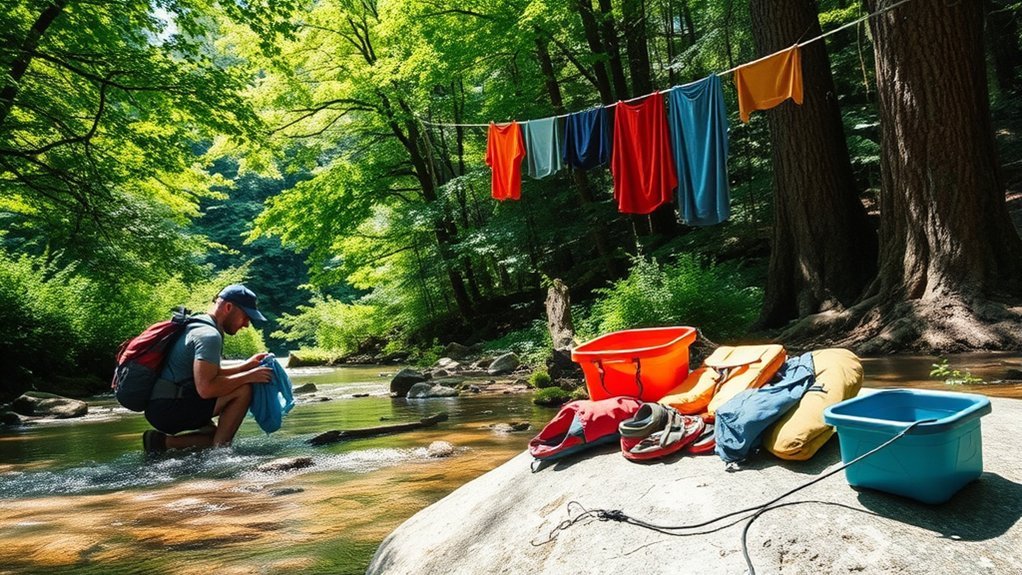
Doing laundry while backpacking is less about making every garment spotless and more about controlling odor, protecting your skin, and keeping one dry set of clothing for camp and sleep. The safest method is to collect water, carry it away from lakes and streams, wash only what you need in a container, and dispose of the used water according to local rules.
Quick Answer
To do laundry while backpacking, collect water and carry it at least 200 feet from lakes, rivers, streams, trails, and campsites. Wash clothing in a dry bag or separate container, using plain water when possible. Use minimal unscented biodegradable soap only when allowed, then dispose of the gray water responsibly.
Key Takeaways
- Never wash or rinse clothes directly in a river, lake, stream, spring, or desert water source.
- Carry water at least 200 feet away and wash in a dedicated container.
- Plain water and gentle agitation are often enough for lightly soiled trail clothing.
- “Biodegradable” soap is not harmless to aquatic life and must stay out of natural water.
- Protect one completely dry set of sleep clothing instead of using your sleeping bag to dry wet garments.
At a Glance
| Time Required | 15–30 minutes to wash, plus drying time |
| Difficulty | Easy |
| Tools Needed | Water container, sealable dry bag or wash bag, clothesline, and optional unscented biodegradable soap |
| Cost | $0–$10 when using gear already in your pack |
Disclosure: As an Amazon Associate I earn from qualifying purchases. Some links on this page are affiliate links, at no extra cost to you.
The Magic of Merino Wool and Quick-Drying Fabrics
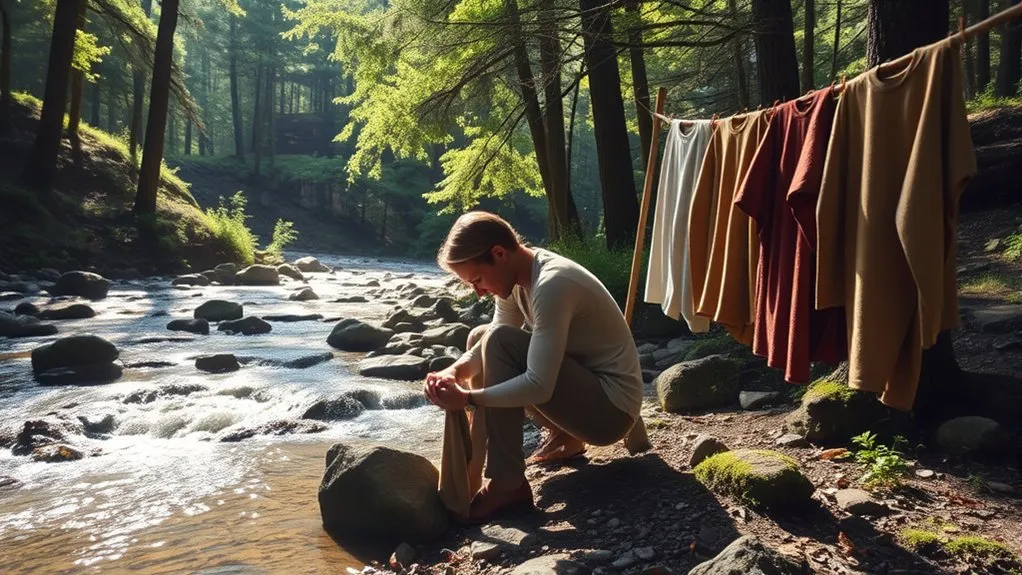
Choosing the right clothing reduces how often you need to wash on the trail. Merino wool is breathable, soft against the skin, and naturally resistant to odor. Wool fibers absorb moisture vapor and hold odor compounds within the fiber, which helps garments stay fresher between washes. The Woolmark Company’s research on wool and odor supports this benefit.
Merino is a strong choice for socks, underwear, T-shirts, and base layers on multi-day trips. However, “quick-drying” is relative. Lightweight merino can dry reasonably fast, but thin polyester and nylon garments generally dry faster and are often more durable. A merino-synthetic blend can provide a useful balance of odor control, drying speed, and strength.
Avoid relying on cotton for clothing that may become wet. Cotton absorbs a large amount of water and can remain damp for a long time, which is uncomfortable and potentially dangerous in cool or windy weather.
Note: Always check the garment’s care label before washing. Some wool clothing should be handled gently, and waterproof-breathable shells may require a specialized cleaner and controlled washing conditions that are difficult to provide on the trail.
What to Pack for Trail Laundry
A small laundry kit is enough for most backpacking trips. You may already carry several of these items for other purposes:
- A lightweight water container
- A waterproof dry bag or purpose-built wash bag that is not used for food storage
- A few feet of reflective cord or a lightweight travel clothesline
- A tiny amount of concentrated, unscented biodegradable soap
- A small quick-drying cloth for spot treatment
- A waterproof bag for isolating heavily contaminated clothing
Do not wash more clothing than necessary. Airing garments, rotating socks and underwear, and keeping hiking clothes separate from sleep clothes can reduce water use and drying problems.
Rinsing and Swimming
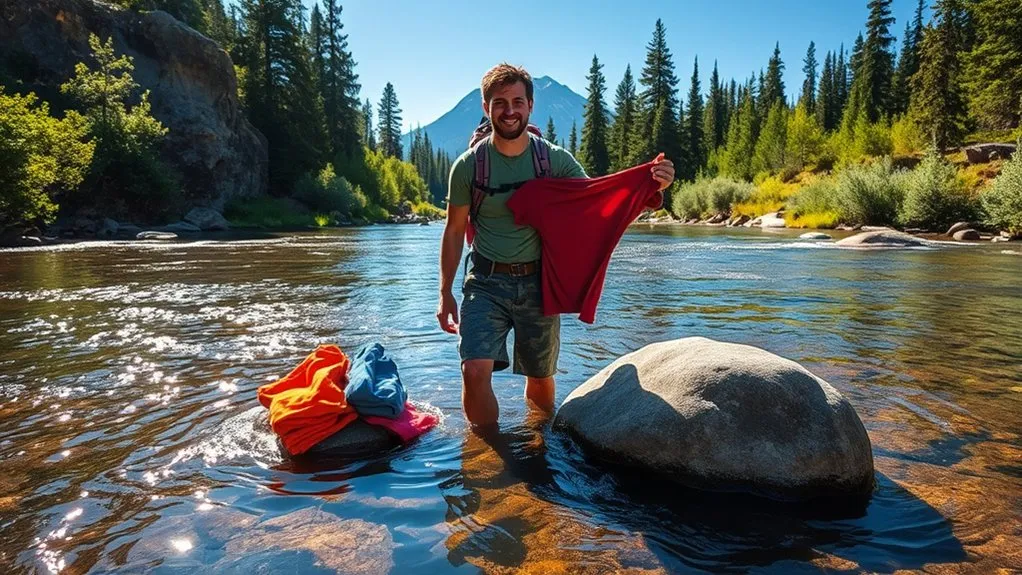
A river or lake may provide the water you need, but it should not become your wash basin. Collect only the amount of water you need, move to a durable location at least 200 feet away, and complete all washing and rinsing there.
Do not dip, swish, scrub, or rinse clothing directly in the water. Even without soap, garments may carry sunscreen, insect repellent, sweat, body oils, dirt, and other residues. Swimming may also be prohibited or restricted, so check posted rules before entering any natural water source. Swimming should never be treated as a laundry technique.
Warning: Never add soap to a river, lake, stream, spring, or desert pond. A biodegradable label does not make soap immediately safe for fish, amphibians, plants, or drinking-water sources.
Water Source Considerations
The general 200-foot guideline applies in many backcountry settings, but local regulations always take priority. Some parks require gray water to be packed out, deposited in a designated facility, or handled in another specific way.
| Water Source Type | Recommended Action | Special Concern |
|---|---|---|
| Rivers | Collect water and wash at least 200 feet away. | Moving water does not make soap or clothing residue harmless. |
| Lakes | Collect water without disturbing the shoreline, then move away. | Still water can retain pollutants, especially in small or alpine lakes. |
| Streams and Springs | Keep all washing and gray water at least 200 feet away. | These may be downstream drinking-water sources. |
| Desert Ponds and Scarce Water | Avoid using the water for laundry unless regulations and supply conditions clearly permit it. | Wildlife may depend on a limited supply, and the surrounding soil may not absorb gray water well. |
Rinsing Techniques Explained
For lightly soiled clothing, plain water is often enough to remove sweat, loose dirt, and some odor. Two practical methods work well:
- Dry-bag method: Place the garment and a small amount of water in a waterproof bag. Seal it, gently shake and knead the fabric, then pour the used water into your gray-water container.
- Container rinse: Place the garment in a pot, basin, or dedicated container. Gently agitate it, press out the water, and repeat with clean water only when necessary.
Use as little water as practical, but do not leave soap trapped in the fabric. Soap residue can irritate skin and may increase odor by holding dirt.
How to Wash Clothes While Backpacking
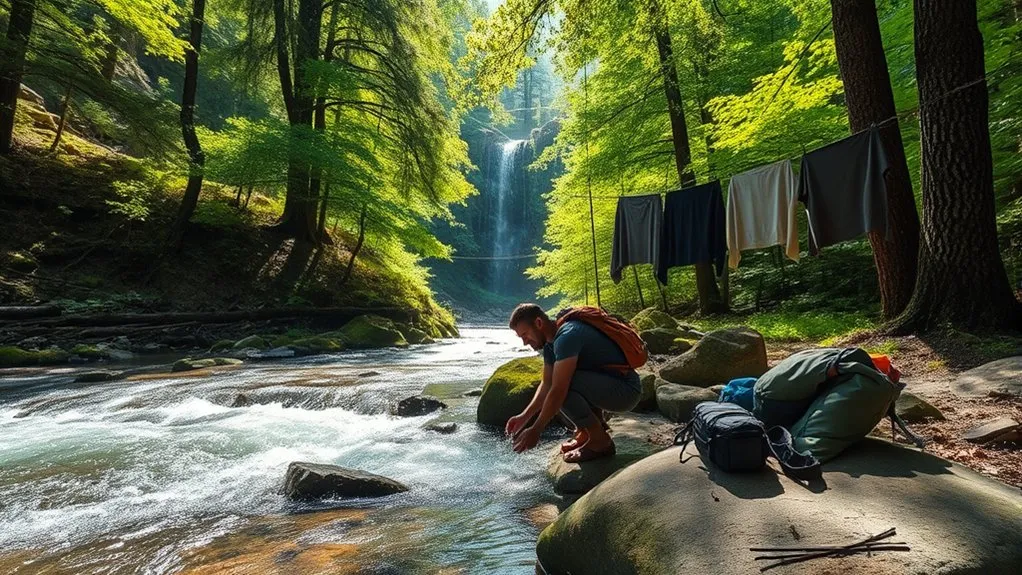
Follow this process when clothing needs more than airing or spot cleaning:
- Check local regulations. Read trailhead notices, permits, campsite rules, and park guidance. Use a designated laundry or gray-water facility when one is available.
- Select a durable wash site. Move at least 200 feet from water, trails, and campsites. Avoid fragile vegetation, cryptobiotic soil, animal habitat, and places where used water will flow back toward a water source.
- Collect water. Carry only what you need to the wash site. Do not take more than is reasonable from a scarce source.
- Start without soap. Place the clothing in a dry bag or container. Add water, seal the bag, and gently shake and knead it.
- Add soap only when necessary. When local rules permit it, use one or two drops of concentrated, unscented biodegradable soap. More soap requires more rinse water and creates more gray water.
- Rinse thoroughly. Replace the dirty water with a small amount of clean water and gently agitate the garment. Repeat only until the soap is removed.
- Remove excess water. Press or roll synthetic garments rather than twisting them aggressively. For merino wool, follow the care label and avoid rubbing, stretching, or wringing.
- Dispose of gray water correctly. Follow the local rule or use a designated facility. When scattering is permitted, spread the water widely over durable soil at least 200 feet from water, trails, and campsites.
- Dry the garment completely. Use airflow and warmth, and keep wet clothing away from your dry sleep system.
The National Park Service advises campers to wait for a laundromat when possible. When backcountry clothing must be washed, it recommends carrying water at least 200 feet away and using little or no biodegradable soap. See the National Park Service backcountry camping guidance.
Pro Tip: Wash as soon as you reach camp rather than after dinner. The extra daylight and warmth can make the difference between dry clothing and a damp item that must be carried the next morning.
Washing Merino Wool on the Trail
Merino needs gentler handling than many synthetic garments. Check the care label first. Use cool or lukewarm water, mild soap only when needed, and gentle agitation. Do not scrub wool against itself or twist it tightly.
After rinsing, press out excess water without wringing. Lay the garment on a clean towel or cloth, roll it, and press gently if you have a suitable item available. Reshape it before drying. Woolmark’s wool hand-washing guidance recommends gentle agitation and warns against rubbing, pulling, and wringing.
Heavily Soiled Clothes and Stains
For ordinary mud or food stains, apply a tiny amount of suitable soap to the affected area and press gently. Let it sit briefly, then rinse in the wash container. Aggressive scrubbing can damage thin trail clothing and spread the stain.
Isolate clothing contaminated with fuel, harsh chemicals, feces, vomit, or significant blood in a waterproof bag. Do not rinse that contamination into the soil or a natural water source. Wait for an appropriate laundry, sanitation, or waste-disposal facility.
Drying Your Clothes
Drying begins before the garment reaches the clothesline. Gently press out as much water as the fabric safely allows, spread the material so layers do not overlap, and expose as much surface area as possible.
Optimal Drying Techniques
- Use moving air: A shaded, breezy location often dries clothing more evenly than a hot but still location.
- Use brief sunlight when appropriate: Sun can speed drying, but prolonged ultraviolet exposure can fade colors and weaken some fabrics.
- Turn garments: Reverse socks, open pockets, separate waistbands, and turn thick items so trapped moisture can escape.
- Space items apart: Do not bunch several garments together on one section of cord.
- Wear nearly dry clothing only in safe conditions: Body heat can finish drying a slightly damp shirt during mild weather, but do not wear wet clothing in cold, windy, or exposed conditions.
Merino sweaters and other shape-sensitive wool garments are often best dried flat. Lightweight merino socks and shirts may be hung when their care labels permit it, but avoid stretching wet fabric from a single narrow point.
Environmental Considerations
Hang clothing over a durable surface where dripping water will not enter a stream, damage vegetation, or create muddy areas. Keep the line visible, do not strip bark from trees, and remove every cord before leaving camp.
Do not use your sleeping bag as a dryer for wet clothing. Moisture evaporation pulls heat from your body, and transferring moisture into the sleeping bag can reduce nighttime comfort. Keep a dry base layer and dry socks sealed in a waterproof bag for sleeping. REI’s wet-weather backpacking guidance also recommends preserving clothing used only for sleeping.
Drying in Cold, Rain, or High Humidity
Clothes may not dry fully when the air is cold or humid. In these conditions:
- Wash only essential items, such as one pair of socks or underwear.
- Press out as much water as the care label allows.
- Hang items beneath a tarp or vestibule without blocking ventilation.
- Keep wet clothing from touching the tent wall or sleeping gear.
- Attach damp items securely to the outside of your pack only when weather and trail conditions allow them to continue drying.
- Stop washing nonessential clothing when you cannot maintain a dry sleep layer.
Ventilate the shelter while clothing is nearby. Drying garments inside a sealed tent adds moisture and can increase condensation.
What About Soap?
Soap is optional for many trail-laundry jobs. Water, agitation, airing, and complete drying can refresh lightly soiled clothing without producing soapy gray water.
When soap is genuinely needed, choose a concentrated, unscented biodegradable product and use the smallest effective amount. “Biodegradable” means the ingredients can eventually break down under suitable conditions. It does not mean the soap is safe to release into a river or lake.
The safest soap for a natural water source is no soap at all. Collect the water, move away from the shoreline, and keep every drop of wash water on land.
- Keep soap away from water: Use it at least 200 feet from lakes, streams, rivers, springs, and wetlands.
- Avoid fragrance: Scented soap and essential oils can leave residue and may attract wildlife.
- Use very little: Extra soap does not guarantee cleaner clothes, but it does require more water for rinsing.
- Handle gray water properly: Follow local rules, use a designated facility when available, and scatter water only where doing so is permitted.
Leave No Trace explains that even biodegradable soap can remain in streams and lakes and affect aquatic life. Its guidance on soap in the outdoors makes clear that no soap should enter a natural water source.
How to Prevent Odor Without Washing Every Day
- Air out socks, shirts, and underwear as soon as you reach camp.
- Turn damp garments inside out so sweat-prone areas can dry.
- Rotate between two pairs of socks rather than wearing one pair continuously.
- Keep dirty hiking clothing separate from your dry sleep clothing.
- Choose merino wool, polyester, nylon, or blends instead of cotton.
- Wash your skin and dry it before changing into camp clothing.
- Do not apply essential oils, perfume, or scented deodorizer to trail clothing.
A garment that still smells after a water rinse may contain body oils or detergent residue. It may need a small amount of soap and a thorough rinse, or a proper machine wash after the trip.
More Backpacking Resources
Laundry is only one part of staying comfortable and healthy outdoors. Before a longer trip, review reliable guidance on outdoor hygiene and human-waste disposal, including advice for people who feel uncomfortable managing these tasks in the woods.
It is also useful to learn how trekking poles affect balance and joint loading, prepare easy no-cook backpacking breakfasts, and use a trip-planning workbook or checklist to organize mileage, permits, food, clothing, emergency gear, and water needs. These skills reduce last-minute packing mistakes and make it easier to carry only the clothing you can realistically keep dry.
Frequently Asked Questions
How often should I wash my clothes while backpacking?
Wash clothing when odor, salt, dirt, or chafing becomes a problem rather than following a rigid schedule. Socks and underwear may need attention every one to three days, depending on heat, moisture, trip length, and personal needs. Shirts and outer layers can often be aired and worn several times.
What should I do with heavily soiled items?
Spot-treat ordinary mud or food stains in a wash container away from water. Isolate clothing contaminated by fuel, chemicals, feces, vomit, or significant blood in a sealed waterproof bag and wait for an appropriate laundry or sanitation facility.
Can I use regular soap for backpacking laundry?
Plain water is preferable for light cleaning. When soap is necessary and local rules permit it, use a tiny amount of concentrated, unscented biodegradable soap. Avoid strongly scented products, bleach, fabric softener, and harsh household detergent.
Is it safe to wash clothes in natural water sources?
No. Do not wash, scrub, or rinse clothes directly in a lake, river, stream, spring, or desert pond. Collect water and carry it at least 200 feet away before washing in a separate container. Follow stricter local rules when they apply.
How can I prevent clothes from smelling bad?
Air garments daily, rotate socks and underwear, dry clothing fully, and store dirty hiking clothes separately from sleep clothes. Merino wool can reduce odor buildup, while thin synthetic garments often dry faster. Avoid essential oils and other scented treatments.
Can I dry wet clothes in my sleeping bag?
It is better not to. Wet clothing increases evaporative heat loss and transfers moisture into your sleeping system. Hang the clothing in a ventilated location and keep a separate, completely dry base layer and pair of socks for sleeping.
Should I wash a rain jacket on the trail?
Avoid a full trail wash unless the manufacturer specifically allows it and cleaning is essential. Waterproof-breathable shells may require a technical cleaner, thorough rinsing, and controlled drying to protect their membrane and water-repellent finish. Wipe away small amounts of mud and complete the proper wash at home.
Conclusion
Clean clothing can make a long backpacking trip more comfortable, but protecting water and maintaining a dry sleep system matter more than achieving a perfect wash. Collect water, carry it away from the source, clean only essential garments in a container, and use little or no soap.
At camp, picture setting a small wash bag on durable ground well away from a mountain lake, gently rinsing one pair of socks, and hanging them where the afternoon breeze can reach every side. That simple routine keeps your gear manageable without turning the lake itself into a washing area.
Sources
- National Park Service: Point Reyes Backcountry Camping — washing clothing, the 200-foot guideline, soap use, and gray-water disposal
- U.S. Forest Service: Protecting Water Quality — keeping soap, body washing, and gear washing away from natural water
- Leave No Trace: The Skinny on Soap — environmental limits of biodegradable soap
- Leave No Trace: Grey Water Disposal — collecting, transporting, and disposing of wash water
- Woolmark: Wool Is Naturally Odour Resistant — merino wool’s moisture and odor-management properties
- Woolmark: Washing Instruction Symbols Explained — gentle washing and handling of wool garments

