
Last Updated on July 30, 2026 by Caleb Warren
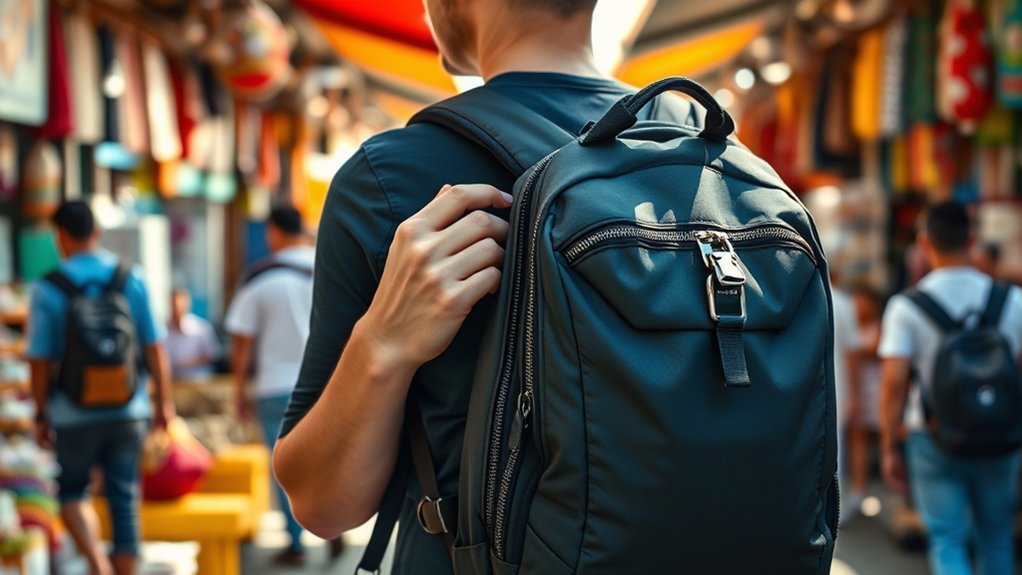
Backpack theft is easier to prevent when you combine a few layers of protection instead of relying on one lock or “theft-proof” feature. Choose a bag that slows quick access, keep essential documents and payment methods close to your body, maintain physical contact with the backpack in crowds, and prepare a recovery plan before you leave.
Quick Answer
To prevent backpack theft while traveling, use lockable zipper pulls, keep valuables in interior compartments, carry the bag in front in crowded places, and secure it to a fixed object when you cannot hold it. Split cash and cards, avoid displaying electronics, and never assume an anti-theft backpack makes your belongings theft-proof.
Key Takeaways
- Anti-theft features deter fast, opportunistic access; they do not stop every thief.
- Keep your passport, primary phone, and one payment method on your body when practical.
- On public transportation, maintain physical contact with the bag and avoid overhead racks when theft is a concern.
- Use device tracking, multifactor authentication, backups, and account-recovery options before the trip.
- If theft occurs, prioritize personal safety, then report the loss, lock devices, cancel cards, and document the incident.
At a Glance
| Time Required | About 15–20 minutes to set up before departure, plus consistent habits during the trip |
| Difficulty | Easy |
| Tools Needed | Lockable zipper pulls or small locks, optional cable lock, secure on-body pouch, and device-recovery settings |
| Cost | Good habits cost nothing; optional locks, cables, pouches, or a specialized backpack add cost |
Disclosure: As an Amazon Associate I earn from qualifying purchases. Some links on this page are affiliate links, at no extra cost to you.
Choose the Right Backpack for Security
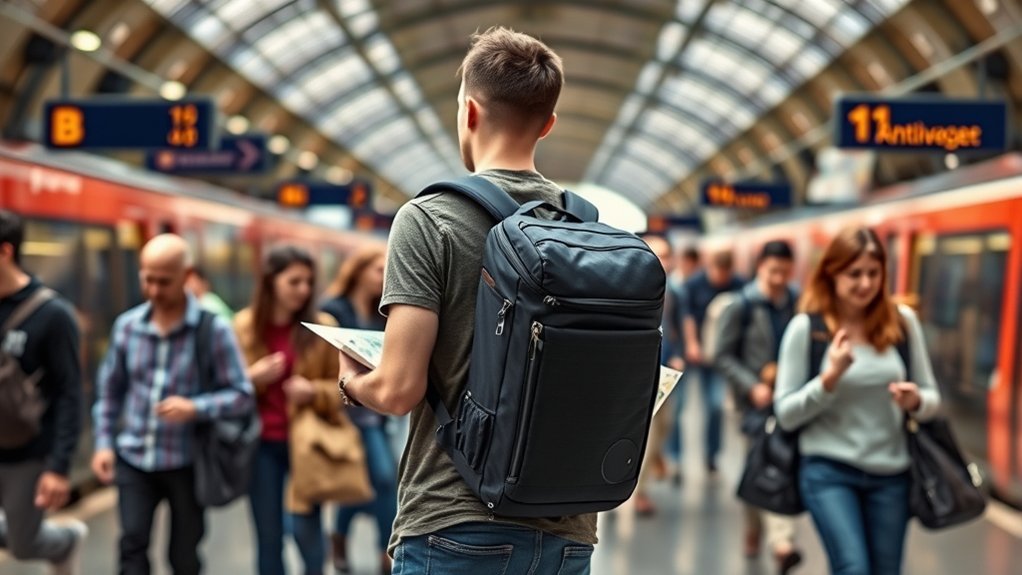
Start with a backpack that is comfortable enough to keep close and difficult to open quickly. Useful features include interlocking zipper pulls, zipper clips, cut-resistant fabric or straps, covered zipper tracks, interior pockets, and an anchor strap or cable attachment point.
The Pacsafe EXP45 is one example. The manufacturer lists lockable, puncture-resistant zippers, cut-resistant materials and straps, an eXomesh slashguard, an RFID-blocking pocket, and a PopNLock anchor strap. The correct brand spelling is Pacsafe, and the zippers are described as puncture-resistant rather than puncture-proof.
Hidden pockets can reduce casual access, but they do not protect valuables if the entire backpack is stolen. Keep your highest-priority items—such as your passport, main phone, and one payment method—in an on-body pocket or pouch when local rules and comfort allow.
Note: RFID-blocking material addresses contactless scanning. It does not prevent physical theft, zipper access, or the loss of the whole bag, so treat it as a secondary feature.
Utilize Locking Mechanisms
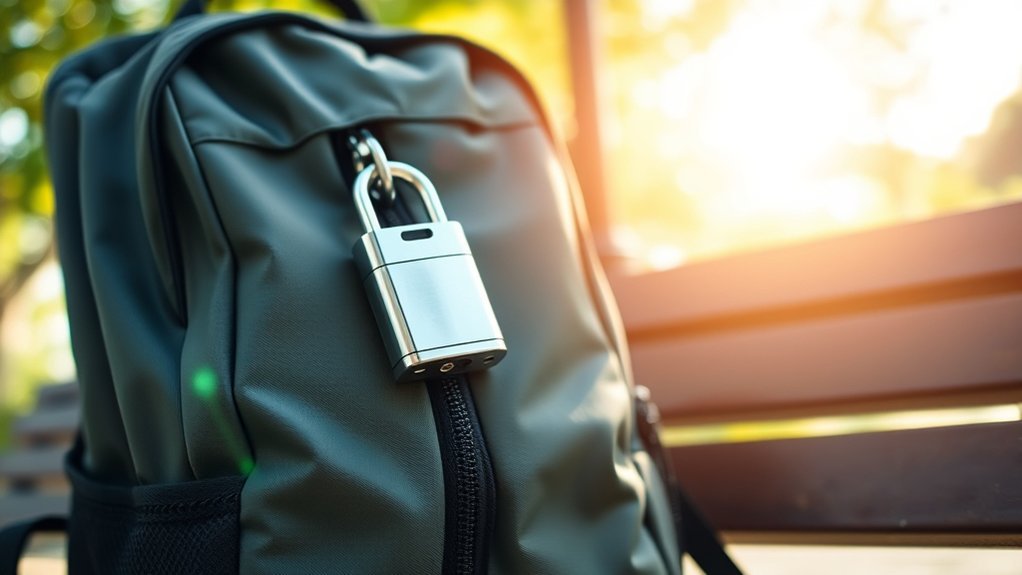
Locks are most useful against quick, quiet access. Join paired zipper pulls with a small lock, clip, or locking system whenever the compartment is not being used. Position the locked zipper pulls where you can see or feel them instead of leaving them exposed behind you.
A retractable cable or thicker security cable can help prevent a fast grab when you must set the bag down in a hostel, waiting area, or café. Loop it through a structural part of the backpack and around a solid fixed object. Do not rely on a thin cord, detachable chair part, or object that can be lifted.
| Locking Method | Best Use | Limit |
|---|---|---|
| Lockable zipper pulls | Slowing access to the main compartment | Does not stop cutting or whole-bag theft |
| Retractable cable lock | Short stops when the bag remains nearby | Thin cables can be cut |
| Thicker security cable | Hostel lockers, luggage rooms, or longer stationary periods | Adds weight and still cannot guarantee protection |
Warning: Do not fight, chase, or confront a thief over a backpack. Personal safety comes first. Move to a safe place and contact local authorities.
Wearable Security Options to Consider
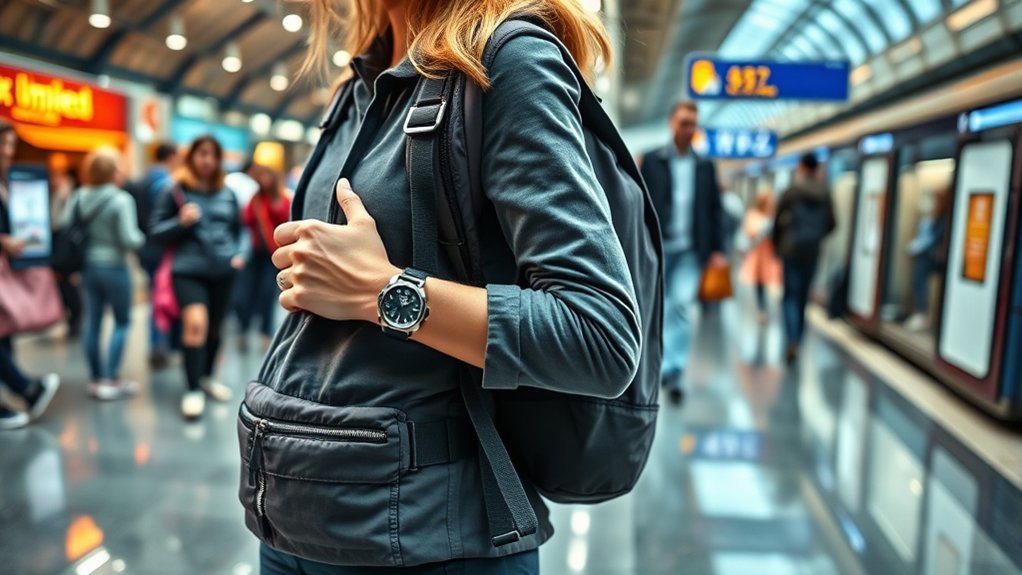
Wearable storage can keep a small number of essentials separate from your main backpack. The goal is not to carry every valuable on your body, but to make sure the loss of one bag does not remove your identification, payment options, phone, and emergency cash at the same time.
Hidden Pocket Vests
A hidden-pocket vest can hold a passport, cash, and cards in zipped interior compartments. Choose breathable fabric, reinforced seams, and pockets that do not create obvious bulges. Lockable zipper pulls and RFID-blocking material may be useful, but fit, comfort, and discreet access matter more for daily use.
Do not repeatedly open a concealed pocket in a crowded area. Move to a controlled location before taking out cash or documents so you do not reveal where they are stored.
Fanny Pack Versatility
A waist pack or compact crossbody bag can keep daily essentials in view. Wear it across the front of your body in crowded places, close the zippers fully, and turn the openings inward. Some models include zipper clips or locking hardware, but check the exact product rather than assuming every fanny pack has anti-theft features.
Use the small bag for items needed during the day and keep backup cards or cash in a separate secure location. This limits the impact of a single loss.
Tips for Hotel Room Safety
Inspect the room when you arrive. Confirm that the door, deadbolt, windows, connecting doors, and balcony access lock correctly. Review the posted emergency route, locate the nearest exit, and report damaged locks or unusual electronics to the front desk. The U.S. Department of State lodging-safety checklist also recommends checking alarms, room phones, doors, windows, curtains, and emergency exits.
When you leave, place valuables out of sight and use the hotel safe or a secure locker when available. Keep the room key separate from any sleeve that shows the room number. Do not leave a backpack on a balcony, near an open window, or in a vehicle.
A portable door alarm can add an alert while you are inside, but it should not block your emergency exit. Follow hotel rules and local fire-safety requirements.
Warning: Do not place a concealed camera in a hotel or rental to monitor staff or other people. Recording laws and property rules vary, and covert recording can violate privacy rights or local law.
Minimalist Packing to Reduce Theft Risk
Minimalist packing reduces the number of bags you must watch and makes it easier to notice when something is missing. It also lowers the value you expose in public. Pack only what you can reasonably control, and avoid carrying irreplaceable jewelry or unnecessary documents.
Essential Gear Selection
Choose versatile clothing that can be layered and re-worn when clean. Merino wool is one option because many travelers find it comfortable across changing temperatures, but any practical, quick-drying wardrobe can reduce bulk.
Store electronics in interior compartments instead of outer pockets. Keep charging cables, adapters, and low-value accessories away from the laptop or camera so opening one compartment does not expose everything. A specialized bag such as the Pacsafe EXP45 may add deterrent features, but a plain backpack used carefully can still be safer than an anti-theft bag left unattended.
Smart Packing Techniques
Split valuables by function. Carry one payment card and limited cash for the day, keep a backup payment method elsewhere, and store copies of important documents separately from the originals. Place low-value items near easy-access openings and keep higher-value items deeper in the bag.
Do not make a hidden pocket so difficult to reach that you expose the entire bag whenever you need it. Organize the pack before entering a busy station, market, or boarding area.
Pro Tip: Photograph the packed bag and record the serial numbers of major electronics before departure. The list can help with police reports, carrier claims, and insurance documentation.
Keep Control in Crowds and Public Transport
Busy stations, buses, trains, queues, escalators, and tourist attractions create opportunities for distraction theft. Carry the backpack in front or under one arm when people are pressed close together. Keep zipper openings turned toward your body and place one hand on the bag during boarding and exit.
Do not hang a backpack from the back of a chair or place it beside your feet where someone can slide it away. Loop a strap around your leg or chair frame when seated, provided the setup does not create a trip hazard. On public transportation, keep the bag with you and maintain physical contact rather than placing it in an overhead rack when theft is a concern. This matches destination-specific guidance from the U.S. Department of State, which also warns that thieves may use distractions.
Watch for staged commotion, spills, requests for help, sudden crowding, or someone pointing out a supposed problem with your clothing or bag. Move away from the distraction before checking your belongings.
A lock may slow a thief, but maintaining control of the bag prevents more opportunities than any single gadget.
Digital Security Measures for Travelers
Physical theft can quickly become account theft if a phone or laptop is not protected. Prepare your devices before departure:
- Use a strong device passcode and biometric unlock where available.
- Turn on multifactor authentication or passkeys for email, banking, cloud storage, and travel accounts.
- Save account-recovery codes in a secure place that is not only on the phone you are carrying.
- Enable Apple Find My, Google Find Hub, or the equivalent recovery service before the device is lost.
- Turn on automatic updates and back up important photos and documents.
- Hide sensitive notification previews on the lock screen.
- Use your own wall adapter or power bank instead of connecting to an unknown USB data port.
There is no need to delete email apps simply because you are traveling. A well-protected, updated app is not automatically less secure than browser access. Protect the device and the email account, and make sure you can recover the account without the stolen phone.
When using public Wi-Fi, confirm the network name, prefer encrypted websites and apps, and avoid ignoring browser security warnings. The Federal Trade Commission recommends strong passwords, two-factor authentication, and current software regardless of how you connect.
Safe Navigation and Exploration Techniques
Plan the route before entering a crowded or unfamiliar area. Download offline maps, note major landmarks, and avoid standing at the curb with an unlocked phone held away from your body. If you become lost, step into a shop, hotel lobby, or another controlled place before reviewing the map.
Use Earbuds for Navigation
Audio directions can reduce how often you display your phone, but earbuds can also reduce awareness. Use one earbud, transparency mode, a low volume, or haptic prompts where appropriate. Do not use earbuds in a way that prevents you from hearing traffic, announcements, alarms, or people approaching.
- Start the route before leaving a safe location.
- Keep the phone in a zipped front pocket or secure pouch.
- Pause in a controlled place if directions become confusing.
- Remove the earbud when crossing streets or entering a dense crowd.
Send Directions to Smartwatch
A smartwatch can provide vibration prompts and brief map cues without requiring you to expose your phone at every turn. Set the destination before you begin walking and keep the watch display dim enough that it does not advertise personal messages or account notifications.
Offline maps and saved routes are useful where mobile service is limited. A watch is a convenience, not a substitute for awareness or a backup route.
Packable Daypack for Trips
A packable daypack is useful for sightseeing, but many ultralight models have thin fabric and basic zippers. Choose one with secure interior pockets, close it fully, and carry it in front in dense crowds. Water-resistant material helps with rain but does not add meaningful theft protection by itself.
- Carry only the cash and cards needed for the outing.
- Use interior compartments for documents and electronics.
- Keep the pack within sight and physical reach.
- Transfer souvenirs without exposing your wallet or passport.
Awareness of Privacy Issues in Rentals
Review the rental listing for disclosed exterior cameras, noise monitors, and smart-home devices before booking. Platform policies differ. Airbnb’s current security-camera policy, effective April 30, 2024, prohibits cameras that monitor indoor spaces and requires disclosure of permitted exterior cameras.
When you arrive, compare the room with the listing. Look for unexpected electronics, unfamiliar power adapters, devices aimed at private areas, or objects that appear altered. Do not unplug safety equipment such as smoke or carbon monoxide alarms.
Use the platform’s payment and messaging systems rather than sending money or identity documents through an unverified channel. If a device is disclosed but makes you uncomfortable, contact the platform before tampering with it.
Identifying and Avoiding Hidden Cameras
No phone app, flashlight test, or consumer detector can guarantee that a room has no hidden camera. Use several reasonable checks without dismantling property:
- Compare devices with the listing: Check whether cameras, doorbells, smart speakers, and noise monitors were disclosed.
- Inspect unusual electronics: Look at devices facing beds, bathrooms, changing areas, or desks, but do not open smoke detectors or other safety equipment.
- Use light cautiously: A flashlight may reveal a lens reflection, but ordinary glass and reflective plastic can look similar.
- Check the network only as a clue: A network scan may show connected devices, but cameras can be offline, hidden behind another network, or labeled unclearly.
If you reasonably suspect an undisclosed recording device, photograph it without touching it, leave the area if you feel unsafe, and contact the property platform, host or hotel management, and local authorities as appropriate. Surveillance and consent laws vary by location, so avoid making legal claims or destroying equipment.
General Travel Safety Tips to Implement
| Tip | What to Do | Why It Helps |
|---|---|---|
| Secure the backpack | Close every zipper, use clips or locks, and keep openings toward your body | Slows unnoticed access |
| Use wearable storage | Keep essential documents and one payment method close to your body | Reduces the impact of whole-bag theft |
| Strengthen room security | Check locks, use the safe or locker, and keep valuables out of sight | Reduces easy access when you are away |
| Limit exposure | Avoid displaying cash, expensive jewelry, cameras, or unlocked phones | Makes you a less obvious target |
| Prepare for loss | Save document copies, card contacts, serial numbers, and recovery codes | Speeds reporting and account recovery |
Build a Recovery Plan Before the Trip
Prevention is stronger when you know exactly what to do after a loss. Before departure:
- Photograph the backpack and its major contents.
- Save copies of your passport identification page, visas, prescriptions, and itinerary in a secure account you can access from another device.
- Record device serial numbers and the phone’s IMEI where applicable.
- Save bank and card-issuer contact details outside the wallet.
- Set up device tracking, backups, recovery contacts, and offline recovery codes.
- Read the baggage and personal-property sections of any travel insurance policy, including limits, deductibles, documentation rules, and exclusions.
- Give a trusted contact a copy of the itinerary and a way to reach your lodging.
What to Do if Your Backpack Is Stolen
- Move to safety. Do not chase or confront the suspected thief.
- Report the theft. Contact local police, transit security, hotel management, or venue security and obtain an incident number or report when available.
- Lock missing devices. Use Apple Find My, Google Find Hub, or the device maker’s service. Do not attempt to recover a device from an unfamiliar location yourself.
- Contact your carrier. Suspend the mobile line or SIM if the phone is missing.
- Cancel cards quickly. The FTC advises reporting lost or stolen credit, ATM, and debit cards immediately because protections can depend on the card type and how quickly you act.
- Report a missing passport. Contact your country’s nearest embassy or consulate and follow its replacement process.
- Notify insurers or carriers. Follow deadlines and provide receipts, ownership records, the police report, and proof of loss requested by the policy.
- Watch accounts. Review email, banking, cloud, and social accounts for unfamiliar activity and change credentials when needed.
Frequently Asked Questions
What should I do if my backpack gets stolen?
Move to a safe place, report the theft, request an incident report, lock missing devices, suspend the phone line, cancel cards, contact your embassy if a passport is missing, and notify any insurer. Do not confront a thief or try to recover a tracked device yourself.
Are there specific brands known for anti-theft backpacks?
Pacsafe is a well-known example, and Travelon sells selected bags with anti-theft features. Compare the exact model for lockable zippers, cut-resistant materials, anchor points, fit, and weight. A brand name alone does not guarantee that every model has the same protection.
How can I discreetly carry cash while traveling?
Carry only the day’s cash in a front pocket or zipped on-body pouch, then keep emergency cash in a separate secure place. Avoid counting money in public or repeatedly opening the pocket that holds your main documents.
What items are most commonly targeted by thieves?
Portable, valuable, and easy-to-resell items deserve the most protection, including phones, cameras, laptops, cash, cards, and identity documents. Risk varies by destination and situation, so check current local travel guidance before departure.
Should I use travel insurance for lost belongings?
Travel insurance can help when a policy includes baggage or personal-property coverage, but limits, deductibles, exclusions, and documentation requirements vary. Compare the policy with any homeowners, renters, carrier, or credit-card coverage and keep receipts or ownership records for expensive items.
Can a lock completely prevent backpack theft?
No. A lock can slow zipper access and discourage an opportunistic thief, but a bag, strap, zipper, or cable can still be cut and the entire backpack can be taken. Combine locks with physical control, discreet packing, and a recovery plan.
Should I put a tracker in my backpack?
A compatible tracker may help locate a lost bag, but it does not prevent theft and its location may be approximate or unavailable. Follow local law and the tracker maker’s instructions, and give location information to authorities rather than confronting someone yourself.
Conclusion
The best way to prevent backpack theft while traveling is to layer simple defenses: use secure zippers, keep the bag under your control, separate essential items, limit what you display, and prepare for account or document recovery. No backpack is theft-proof, but consistent habits can make quick theft harder and reduce the damage if a loss still occurs.
Sources
- U.S. Department of State: Lodging Safety — room checks, locks, unusual electronics, and emergency exits.
- U.S. Department of State: Ecuador Travel Guidance — maintaining physical contact with bags and watching for distraction theft.
- Pacsafe EXP45 Official Product Page — model name and listed anti-theft features.
- Federal Trade Commission: Lost or Stolen Cards — immediate reporting and account monitoring.
- Federal Trade Commission: Public Wi-Fi Safety — encryption, updates, strong passwords, and two-factor authentication.
- Airbnb: Restrictions on Security Cameras and Other Devices — indoor-camera prohibition and exterior-camera disclosure rules.

