

Last Updated on July 30, 2026 by Caleb Warren
A sweaty back is common when a backpack blocks airflow and presses clothing against your skin. You may not be able to stop sweating completely, especially in hot or humid weather, but you can reduce heat and trapped moisture by choosing a ventilated pack, improving the fit, carrying less weight, wearing quick-drying clothing, and taking cooling breaks.
Quick Answer
To reduce back sweat from a backpack, use a suspended-mesh or well-channeled back panel, fit the pack snugly without overtightening it, lighten the load, and wear a quick-drying shirt. Take the pack off during breaks, stay hydrated for heat safety, and clean sweaty contact areas according to the manufacturer’s care instructions.
Key Takeaways
- A physical air gap, such as a suspended mesh back panel, usually improves ventilation more than breathable fabric alone.
- No backpack is truly sweat-proof; heat, humidity, effort, load weight, clothing, and your natural sweat rate all matter.
- A stable fit is safer than hanging the pack loosely. Use the hip belt, shoulder straps, load lifters, and sternum strap as designed.
- Quick-drying synthetic or merino clothing often manages moisture better during active use than a heavy cotton shirt.
- Hydration helps protect you from heat illness, but it does not reliably make your body sweat less.
At a Glance
| Time Required | 5–10 minutes to adjust and repack |
| Difficulty | Easy |
| Tools Needed | No special tools; a mirror or helper is useful for checking fit |
| Cost | Free with your current gear; varies if you buy a ventilated pack, clothing, or an add-on spacer |
Disclosure: As an Amazon Associate I earn from qualifying purchases. Some links on this page are affiliate links, at no extra cost to you.
Understanding the Causes of Back Sweat

Sweating is your body’s cooling system. The problem is not simply that sweat forms; it is that a backpack covers a large area of your back, limits air movement, and presses your shirt against your skin. That slows evaporation and leaves heat and moisture trapped between you and the pack.
Weather makes a major difference. The National Weather Service explains that high humidity slows sweat evaporation, so the same pack can feel much hotter and wetter on a humid day. Direct sun, a fast walking pace, steep terrain, and a heavy load can add even more heat.
Back-panel materials also matter. Thick foam may feel soft, but a broad foam surface can hold dampness and reduce airflow. Mesh-covered channels can help, while a suspended mesh panel creates a larger air space between the pack body and your back. Sweat, skin oils, and dirt can also collect in padding over time and cause odor if the pack is not dried and cleaned correctly.
A 2025 backpack study found that a ventilated back-panel design reduced sweat by as much as 21.6% under the study conditions; it improved comfort, but it did not eliminate sweating.
The Importance of Airflow in Backpack Design
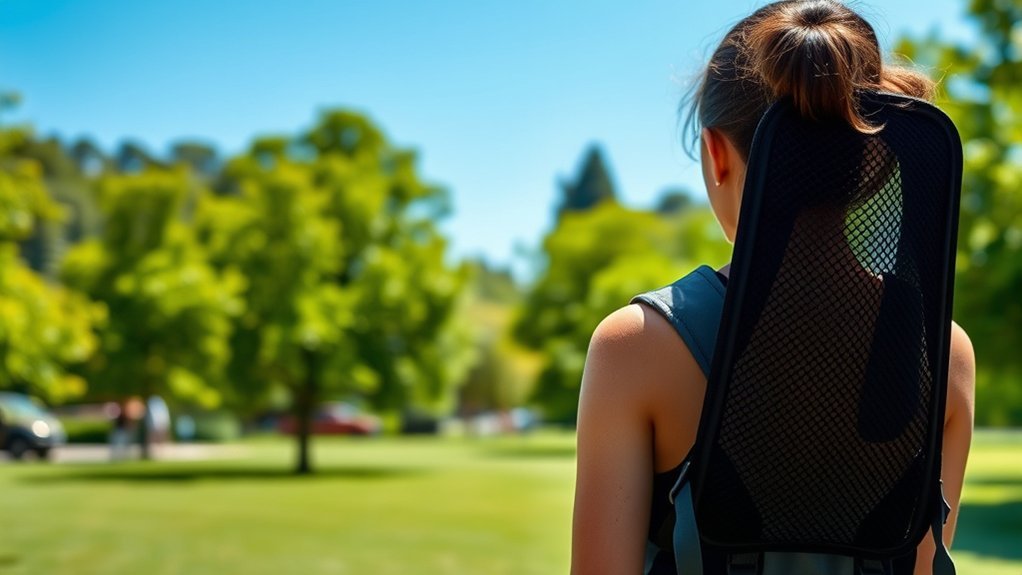
Airflow helps heat escape and gives moisture a better chance to evaporate. Research on backpack back panels suggests that the structure of the ventilation system can matter more than simply covering the panel with a breathable fabric. Look at how much of the pack touches your back, whether there is a real air gap, and whether the design stays open when the bag is loaded.
Design for Ventilation
Common backpack ventilation designs include:
- Suspended mesh or “trampoline” panels: Tensioned mesh holds the pack body away from your back. This usually creates the clearest airflow path.
- Channeled foam panels: Raised pads and grooves reduce the contact area and provide paths for air. They can offer good stability, although the pack still touches more of your back.
- Breathable shoulder straps and hip belts: Perforated foam and open mesh help contact points dry faster. They support comfort but cannot replace a ventilated back panel.
Reflective trim may improve visibility in low light, but it does not reduce sweating. Treat visibility and ventilation as separate features when comparing packs.
Pro Tip: Load the backpack before testing it. Press clothing or gear against the inside of the back panel and check whether the air channel stays open. An overstuffed bag can flatten some ventilation systems.
Materials That Breathe
Open mesh and three-dimensional spacer mesh can improve air movement and dry faster than dense, absorbent padding. However, material labels such as “breathable,” “air mesh,” or “moisture-wicking” do not guarantee a cool back. The complete design—including the size of the air gap, contact area, frame, load, and fit—determines how the pack feels.
A non-absorbent or quick-drying back panel can reduce how much moisture the pack holds, but it will not stop sweat from forming. Avoid claims such as “odor-free,” “bacteria-free,” or “sweat-proof” unless the manufacturer provides clear testing and care information.
Choosing the Right Backpack for Sweat Prevention
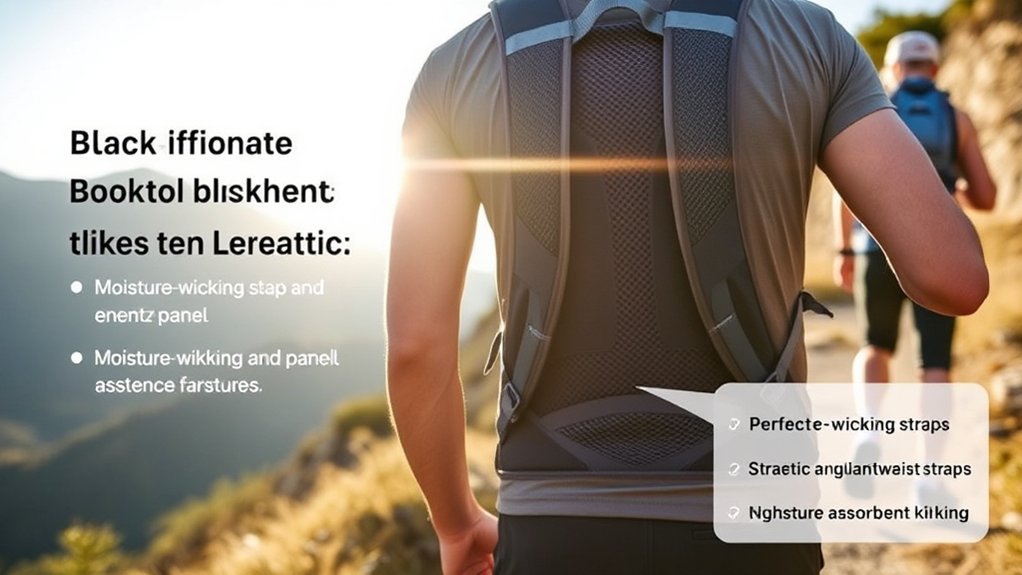
Choose a pack for your activity, load, and climate rather than buying on the word “breathable” alone. A commuter carrying a laptop has different needs from a hiker carrying food, water, and rain gear.
- Prioritize a real airflow structure: Suspended mesh usually provides more separation than flat foam. Deep channels are the next-best option when you need a close, stable fit.
- Match the capacity to the load: An oversized bag invites overpacking. A pack that is too small may bulge against the back panel and block its ventilation.
- Check torso sizing and adjustment: A poorly sized pack cannot be fixed by pulling harder on the straps.
- Keep the empty weight reasonable: A lighter load requires less effort and usually produces less body heat, but do not sacrifice the support needed for the weight you carry.
- Inspect washable contact parts: Removable pads or spacers are useful only when their care instructions are clear and they can be reattached securely.
Try the pack with realistic weight for at least 10 minutes. Walk, bend, reach, and climb stairs if possible. Check for pressure points, rubbing, blocked arm movement, and a back panel that collapses when loaded.
Products Worth Considering

[ HEAVY-DUTY MESH BACKPACK ] Reinforced Stress Points — Woven from high-density, tear-resistant polyester mesh with cross-stitched seams and bar-tacked joins at high-stress areas. Engineered to handle heavy textbooks, bulky gym gear, or swim equipment day after day without ripping, while remaining comfortably lightweight at just 1.07 lbs.

Solid Mesh Build: Made with strong woven mesh that holds up to daily wear while keeping the entire pack ultra-light. Stress seams feature double reinforcement so you can carry change of clothes, towels, and gym accessories with confidence. An ideal black mesh backpack for adults looking for reliable daily utility without unnecessary weight.

RECYCLED MESH CONSTRUCTION: Built with 100% recycled 840D polyester mesh fabric that promotes airflow while keeping interior contents visible for quick security checks.
Using a Backpack Spacer, Including “Max Dry” Products
Some add-on products are sold as backpack spacers, ventilation frames, “Max Dry,” or “Maxx-Dri” systems. These products attach between the backpack and your back to create an air gap. The useful feature is the structure that holds the bag away from you—not the marketing name.
Before attaching any spacer, confirm that it fits the pack, does not cover safety features, and cannot slide into an uncomfortable position. Follow the product’s weight limit, attachment, washing, and drying instructions. Stop using it if it changes the pack’s balance, damages the fabric, or creates a hard pressure point.
| Feature to Check | Why It Matters | What to Verify |
|---|---|---|
| Stable air gap | Allows air to move between the bag and your shirt | The spacer does not flatten under your normal load |
| Secure attachment | Prevents shifting and rubbing | Straps fit approved loops and do not interfere with buckles |
| Washable contact surface | Helps remove sweat, salt, skin oils, and odor | The maker provides specific cleaning and drying directions |
| Low added weight | Limits extra effort and heat production | The comfort gain is worth the weight and bulk |
Note: An add-on spacer can improve airflow, but it may move the load farther from your body. Test stability with your normal load before using it for cycling, running, climbing, or uneven trails.
Products Worth Considering

𝐄𝐧𝐡𝐚𝐧𝐜𝐞𝐝 𝐁𝐚𝐜𝐤𝐩𝐚𝐜𝐤 𝐁𝐫𝐞𝐚𝐭𝐡𝐚𝐛𝐢𝐥𝐢𝐭𝐲 - Standard Large Size (ideal for people 5'6" and above) & Medium/Small Size (ideal for people under 5'6" and 𝐒𝐦𝐚𝐥𝐥𝐞𝐫 backpacks) As featured on ABC Good Morning America, CBS Mornings, and NY Times Wirecutter. Say goodbye to sweaty backs with our innovative backpack spacer, our breathable mesh design creates separation between your backpack and your back, ensuring airflow, breathability, reduced sweat.
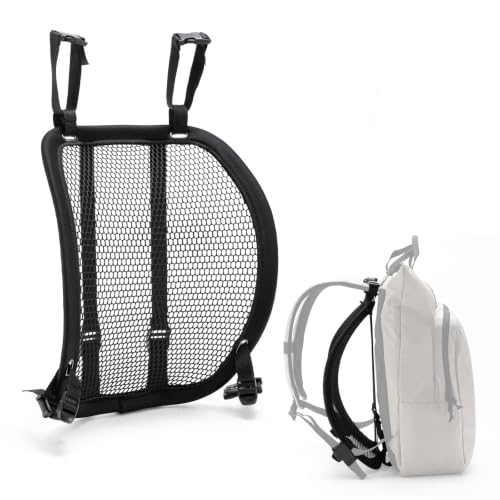
Advanced Airflow Gap Keeps Your Back Fresh: Engineered with a large-mesh structure, this spacer creates a continuous air channel between your back and your backpack. Heat and moisture are released more efficiently, helping you stay dry and comfortable during long walks, warm weather, or active use.

Reduce Sweat Buildup: Designed for outdoor enthusiasts, the backpack ventilation frame incorporates a 3D mesh structure to promote enhanced back airflow and reduce sweat buildup, delivering long-lasting dry comfort ideal for hiking, commuting, and cycling
Tips for Properly Fitting Your Backpack
A secure fit supports balance and reduces rubbing. Do not deliberately let a loaded pack hang loosely just to create airflow. Instead, use a pack with a built-in ventilation structure and adjust it according to the manufacturer’s instructions. The REI backpack fitting guide recommends setting torso length first, then adjusting the hip belt, shoulder straps, load lifters, and sternum strap.
- Set the torso length: If the pack has an adjustable suspension, match it to your measured torso. Strap tension cannot correct the wrong torso setting.
- Position the hip belt: Center the padding over the top of your hip bones and tighten it until snug, not pinching. The belt should carry much of a hiking pack’s load.
- Snug the shoulder straps: They should wrap smoothly around your shoulders without gaps or carrying all the weight.
- Adjust the load lifters: Tighten them enough to control the top of the pack, but do not pull them so hard that they lift the shoulder straps or pinch your shoulders.
- Set the sternum strap: Place it at a comfortable height and tighten only enough to keep the shoulder straps positioned without restricting breathing.
Pack dense, heavy items close to the middle of your back so the load stays stable. Keep the total weight as low as your activity safely allows. During long outings, make small strap adjustments to change pressure points, and remove the pack when you stop.
Warning: Do not loosen a heavy backpack until it swings or pulls you backward. Reduced stability can be dangerous on stairs, bicycles, ladders, steep trails, and uneven ground.
Lightweight and Breathable Fabrics for Clothing
Your shirt sits between your skin and the backpack, so it strongly affects how damp and sticky you feel. Choose a light, loose-enough layer that allows movement and dries quickly.
- Lightweight synthetics: Polyester and nylon blends often move moisture across the fabric and dry quickly. They are practical for commuting, hiking, and cycling.
- Merino wool: Thin merino can remain comfortable when damp and often controls odor well, although it may cost more and takes longer to dry than some synthetics.
- Cotton and linen: These can feel airy for casual use in hot, dry conditions, but cotton can hold a large amount of water and may feel heavy or cold once soaked. Avoid relying on heavy cotton for cool, wet, or remote outdoor trips.
Light-colored, breathable clothing can improve comfort in direct sun. Mesh zones or perforations can help, but seams should not sit under pressure points where the straps or back panel may rub.
Pro Tip: For an office commute, carry a dry shirt in a waterproof pouch. Changing after you arrive is often more reliable than trying to prevent every drop of sweat.
Products Worth Considering

【All-Day Casual Comfort】 Constructed with 95% polyester and 5% spandex, these lightweight men's polo shirts feature 4-Way Stretch, wrinkle resistance, and breathable softness for lasting comfort.

Size-You have chosen the size 'Medium', Please refer to the 'Size Chart' for detailed measurements.

Lightweight Stretchy Performance Fabric: Crafted from 95% polyester and 5% spandex, these workout shirts features a soft, skin-friendly, breathable and non-see through fit with 4-way stretch. Whether you're hitting the gym, running, doing yoga, hiking, or just enjoying casual wear, it is your perfect go-to activewear choice.
Effective Maintenance for Your Backpack and Spacer
Sweat contains water and salts, while skin oils and dirt collect on straps, mesh, and padding. Routine drying and occasional cleaning help control odor and prevent residue from building up.
- Air it out after use: Empty the pack, open all compartments, and hang it in a shaded, well-ventilated place. Do not store it while damp.
- Spot-clean first: Use a damp cloth or soft brush and a small amount of mild soap on sweaty contact areas.
- Follow the care label: Remove detachable parts only as instructed. Clean spacers separately when their directions allow it.
- Rinse away soap: Soap residue can attract dirt and irritate skin through clothing.
- Air-dry fully: Keep the pack away from dryers, heaters, and prolonged direct sun unless its manufacturer says otherwise.
Do not assume a backpack is machine washable. For example, Osprey advises against machine washing its packs because it can damage their fabric and structure. Always follow the instructions for your exact pack.
Techniques to Air Out Your Back During Use
You can improve comfort during a commute or hike without making the pack unstable. Use short, planned cooling actions instead of wearing the pack loose.
| Technique | Benefit | How to Use It Safely |
|---|---|---|
| Choose built-in ventilation | Creates airflow without sacrificing fit | Look for suspended mesh or deep channels that remain open when loaded |
| Take the pack off during breaks | Allows heat and moisture to escape | Stop in shade or a cool area and let your shirt and back dry |
| Adjust pressure in small steps | Relieves hot spots and rubbing | Keep the load stable and follow the pack’s fit instructions |
| Use off-body carrying when practical | Removes the backpack from your back completely | For cycling, consider a properly installed rack and pannier; for short trips, use a rolling bag when suitable |
Additional Strategies for Staying Cool and Dry
- Carry only what you need: Less weight generally means less effort, less heat production, and less pressure on the back panel.
- Change your timing or pace: Walk earlier, choose shade, slow down on climbs, and allow extra travel time in hot weather.
- Use cooling breaks: Remove the pack in a cool or shaded place and wipe away excess moisture with a small towel.
- Protect against chafing: Wear smooth, well-fitted clothing and keep seams away from strap contact points. Use an anti-chafing product only as directed, and stop if it irritates your skin.
- Stay hydrated: Hydration supports temperature regulation and helps reduce heat-illness risk; it does not guarantee less sweating. The OSHA heat-safety guidance emphasizes frequent fluids, rest, and access to a cool or shaded place during heat exposure.
Warning: Heavy sweating with headache, dizziness, nausea, weakness, confusion, fainting, or unusually hot skin can signal heat illness. Stop the activity, move to a cool place, remove the pack, and seek urgent help for severe or worsening symptoms.
Quick Troubleshooting Guide
| Problem | Likely Cause | Best First Fix |
|---|---|---|
| Back panel feels soaked | Large contact area, absorbent foam, or blocked channels | Reduce overpacking, dry the pack, and compare a suspended-mesh design |
| Pack swings when walking | Straps are too loose or the torso size is wrong | Reset torso length, hip belt, shoulder straps, and load lifters |
| Sweat is worse after overpacking | Higher effort and a collapsed ventilation gap | Remove nonessential items and keep gear from pressing into the back panel |
| Strong odor remains after drying | Sweat, salt, oil, or soap residue in the padding | Clean according to the care label, rinse thoroughly, and air-dry completely |
| Sweating is excessive even without heat or activity | Possible hyperhidrosis, medication effect, or another condition | Discuss it with a qualified health professional |
Frequently Asked Questions
Can I use any spacer for better airflow?
No. Use a spacer made for backpacks and compatible with your pack’s attachment points. It should stay secure, maintain a stable load, avoid covering buckles or reflective details, and include clear cleaning instructions. Test it with your normal load before a long trip.
How often should I clean my backpack?
Air it out after sweaty use and spot-clean visible salt, dirt, or odor as needed. Deep-cleaning frequency depends on how often you use it and the manufacturer’s directions. Do not machine wash it unless the care label for that exact model says it is safe.
Does hydration reduce back sweat?
Not necessarily. Drinking enough fluid supports normal temperature control and helps protect against dehydration and heat illness, but a well-hydrated person may still sweat heavily. Do not restrict water in an attempt to stay dry.
Can weather conditions worsen back sweat?
Yes. Heat increases the need for cooling, and high humidity slows sweat evaporation. Direct sun, low wind, a fast pace, and a heavy load can make the area under a backpack feel even hotter.
Are there specific brands known for ventilated backpacks?
Several manufacturers offer named ventilation systems. Examples include Osprey AirSpeed and deuter Aircomfort and Airstripes. Compare the exact model, fit, load rating, and back-panel structure; no brand or pack can guarantee a sweat-free back.
When should excessive sweating be checked by a doctor?
Sweating during heat or exercise is usually normal. The American Academy of Dermatology recommends medical evaluation when sweating is excessive in cool conditions or without physical activity, interferes with daily life, or may be related to a medication or health condition.
Conclusion
You cannot make a backpack completely sweat-proof, but you can make it much more comfortable. Start with a ventilated back panel that keeps an air path open under load, then fit the pack securely, carry only what you need, and wear a quick-drying shirt. Add regular cooling breaks and proper cleaning, and treat hydration as heat protection—not a sweat-control trick. If sweating is sudden, severe, or unrelated to heat and activity, seek medical advice instead of relying only on gear changes.
Sources
- Textile Research Journal: Effects of Back Panel Design — supports the effect of ventilation structure on sweat, temperature, humidity, and comfort.
- National Weather Service: Heat Index — explains how humidity reduces sweat evaporation and increases heat stress.
- OSHA: Water, Rest, Shade — supports hydration, rest, and cooling guidance during heat exposure.
- REI Expert Advice: Backpack Fit and Torso Size — supports the torso, hip-belt, shoulder-strap, load-lifter, and sternum-strap fitting sequence.
- Osprey: How to Clean Your Backpack — supports care-label cleaning, air-drying, and the warning against machine washing Osprey packs.
- American Academy of Dermatology: Hyperhidrosis FAQs — explains when sweating may be excessive and should be medically evaluated.
