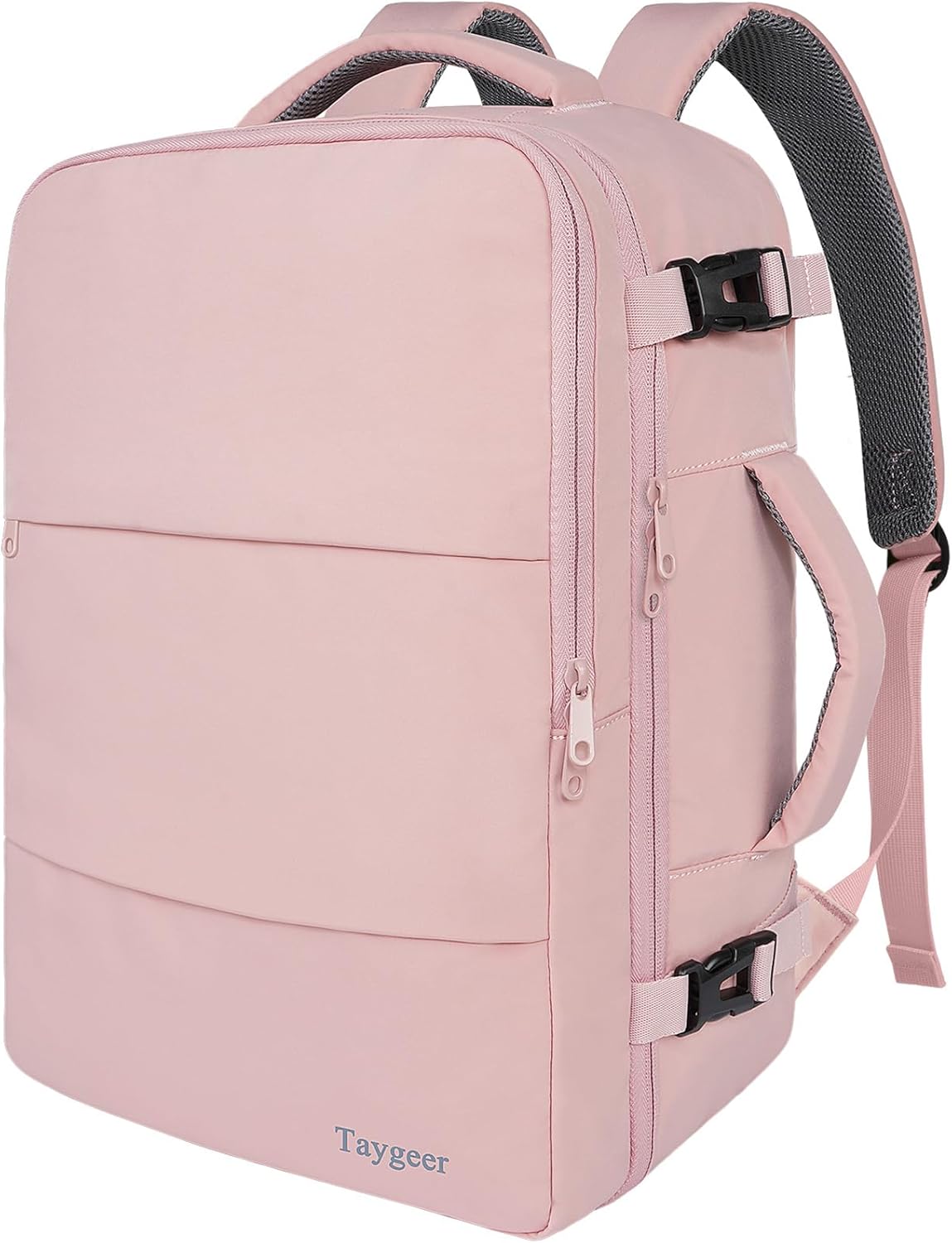
Last Updated on July 30, 2026 by Caleb Warren
A backpack can count as a personal item when it fits the operating airline’s rules and can be stowed completely under the seat in front of you. The label on the bag does not decide whether it qualifies—its packed exterior size does. Because policies vary, measure the backpack after packing and check every airline on your itinerary before leaving for the airport.
Quick Answer
Most small backpacks can be personal items if they fit completely under the seat and stay within the operating airline’s limits. A common maximum is 18 x 14 x 8 inches, but it is not universal. Measure the packed bag, including handles and bulging pockets, and verify the current policy before every trip.
Key Takeaways
- A personal item normally goes under the seat; a standard carry-on normally goes in the overhead bin.
- Airline limits differ, and some airlines publish no separate numeric size for personal items.
- Measure the backpack when packed, including handles, straps, wheels, and filled exterior pockets.
- Keep medication, documents, valuables, and spare lithium batteries in the bag that stays with you.
- Check the operating airline—not only the airline that sold the ticket—especially on partner or codeshare flights.
At a Glance
| Time Required | 5–10 minutes to measure and test-pack |
| Difficulty | Easy |
| Tools Needed | Tape measure, current airline policy, and an optional luggage scale |
| Cost | $0 when compliant; an oversized bag may trigger a carry-on or checked-bag fee |
Disclosure: As an Amazon Associate I earn from qualifying purchases. Some links on this page are affiliate links, at no extra cost to you.
Understanding Personal Item Regulations
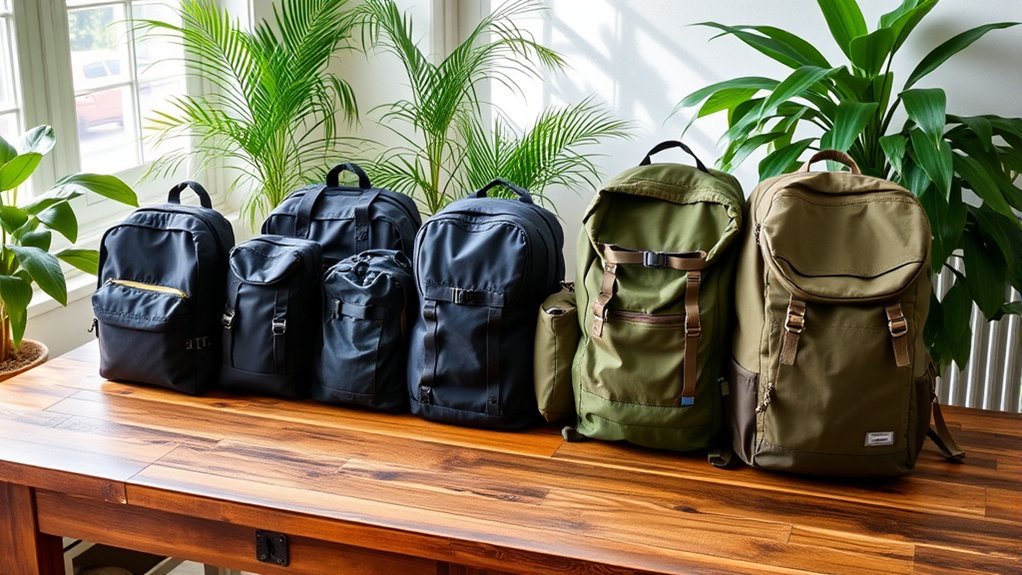
A personal item is the smaller bag in your cabin allowance. It is usually a purse, laptop bag, briefcase, compact duffel, tote, or small backpack. The key requirement is that it can be stored safely in the space assigned by the airline, normally under the seat in front of you.
A carry-on bag is the larger cabin bag intended for the overhead bin. Some fares include both items, while some low-cost fares include only a personal item and charge for a full-size carry-on. Security rules and airline baggage rules are separate: the airline decides the bag’s size and fee, while the Transportation Security Administration decides what may pass through a U.S. security checkpoint.
Note: Under-seat space can vary by aircraft, cabin, and seat location. Bulkhead and some emergency-row seats may not have usable floor stowage during takeoff and landing, so the crew may direct you to another approved storage location.
Personal Item Size Limits by Airline
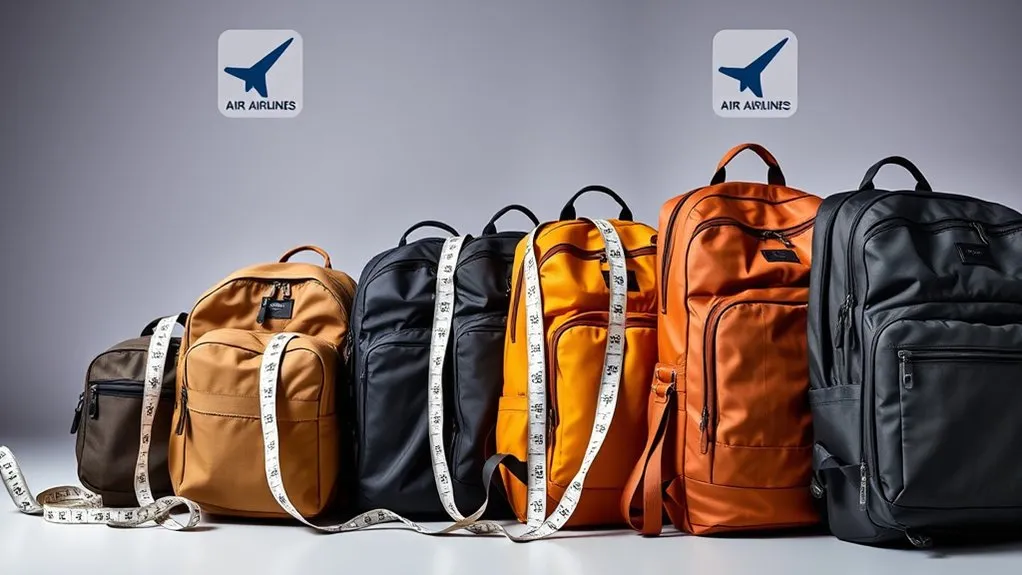
There is no single personal-item size used by every airline. The table below summarizes current published rules for several major U.S. carriers. Measurements may be displayed in a different order on each airline’s website, so compare all three exterior dimensions rather than relying on the order alone.
| Airline | Published personal-item rule | What to know |
|---|---|---|
| Allegiant Air | 8 x 14 x 18 inches | Must fit completely under the seat; exterior measurements include pockets, handles, wheels, and decorations. |
| American Airlines | 18 x 14 x 8 inches | Must fit under the seat in front of you. |
| Delta Air Lines | No separate numeric maximum published | Delta lists a purse, briefcase, small backpack, laptop bag, or similar-size item that fits beneath the seat. |
| Southwest Airlines | No separate numeric maximum published | One smaller personal item is allowed; choose a bag that can be stowed under the seat. |
| Spirit Airlines | 18 x 14 x 8 inches | Includes handles and wheels; the item must be stored in the under-seat space. |
Warning: An oversized personal item may be treated as a paid carry-on or checked bag. Airport and gate fees can be higher than advance bag fees, and the bag may have to leave the cabin.
How to Read Airline-Specific Size Guidelines
Check the policy for the operating carrier shown on your reservation. A flight sold by one airline may be operated by a partner with different baggage rules. Also check the fare conditions: a personal item may be free even when a standard carry-on is not.
Do not add the three measurements together unless the airline specifically uses a linear-inch limit. For a rule such as 18 x 14 x 8 inches, the backpack must stay within each dimension. A bag measuring 19 x 13 x 7 inches is still too long even though the total is the same.
Common Personal Item Examples
Suitable options include a compact backpack, laptop backpack, purse, tote, briefcase, camera bag, or small soft-sided duffel. A bag type is not automatically approved, however. A large school backpack or overfilled tote can exceed the limit, while a small duffel may qualify.
- Usually practical: compact daypack, slim laptop backpack, small tote, or under-seat duffel.
- Higher risk: rigid bags, wheeled under-seat cases, tall hiking packs, and bags with stuffed bottle pockets.
- Not a loophole: wearing a waist pack or crossbody bag may still count toward the airline’s item allowance.
How to Measure a Personal Item Backpack
- Pack it first. Fill the backpack with the items you plan to carry. Soft bags often become larger when the front pocket and side pockets are full.
- Place it on a flat surface. Let the bag sit naturally without pressing it smaller.
- Measure the longest, widest, and deepest points. Include handles, wheels, rigid frames, bulging pockets, and anything attached outside.
- Compare each measurement. The packed bag must meet every limit stated by the airline.
- Check its weight when required. Many U.S. airlines focus on size, but some international airlines and partner carriers also impose a cabin-bag weight limit.
- Leave a small margin. A bag exactly at the limit can become oversized after you add a jacket, snack, or water bottle.
Pro Tip: Measure the backpack twice—once at home and again after final packing. Keep the airline’s current baggage page open or saved on your phone in case the rule is questioned at the airport.
The safest personal-item backpack is the smallest bag that meets the strictest rule on your itinerary without needing to be forced into a sizer.
Choosing the Right Backpack for Travel
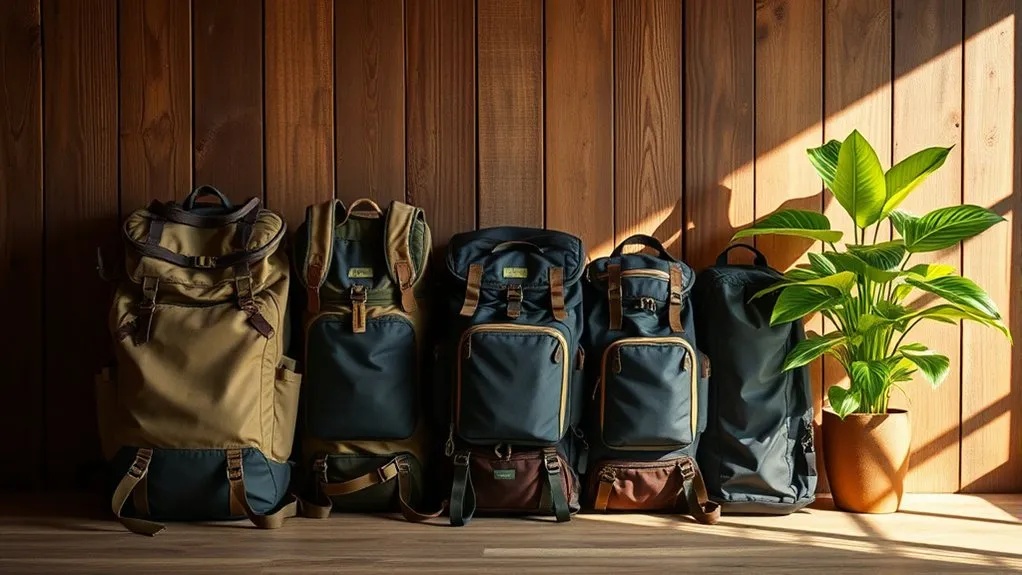
Start with the airline limit, then choose a bag that is comfortable and easy to organize. A lightweight, soft-sided design is often easier to fit under a seat than a rigid shell, but it still must remain within the allowed measurements when packed.
Useful features include:
- Low empty weight: Leaves more room for your belongings when a weight limit applies.
- Padded shoulder straps and back panel: Improve comfort while walking through terminals.
- Clamshell or wide opening: Makes packing and security access easier.
- Protected electronics sleeve: Keeps a laptop or tablet close to your back.
- Secure quick-access pocket: Holds your passport, boarding pass, and phone without exposing them.
- Luggage sleeve: Slides over a rolling suitcase handle when you also travel with a larger bag.
- Water-resistant fabric and covered zippers: Help protect the contents from light rain and spills.
Do not choose a bag by advertised capacity alone. Two 20-liter backpacks can have different exterior shapes, frames, and pocket designs. Published dimensions matter more than the liter rating.
Packing Essentials for Your Personal Item
Use your personal item for anything you cannot afford to lose or place in the cargo hold. A practical packing list includes:
- Passport or identification, boarding pass, wallet, keys, and travel confirmations
- Prescription medication and essential medical supplies
- Phone, laptop or tablet, headphones, charging cables, and an approved power bank
- One small toiletries bag that follows security rules
- A light layer, eye mask, and compact comfort items
- Snacks and an empty reusable water bottle
- A change of underwear and a clean shirt for delays or a gate-checked carry-on
- One compact book or downloaded entertainment option
Packing cubes or zip pouches can separate clothing, cables, and toiletries. Use small organizers rather than filling every pocket. Overstuffing makes the backpack harder to close, less comfortable to carry, and more likely to fail a size check.
TSA Rules for Items Inside Your Backpack
For travel through U.S. checkpoints, liquids, gels, aerosols, creams, and pastes generally follow the TSA 3-1-1 rule: containers must hold 3.4 ounces (100 milliliters) or less and fit inside one quart-size bag. Medically necessary liquids and certain infant items can receive different treatment, so review the TSA guidance before travel.
A filled water bottle normally cannot pass through the checkpoint, but an empty water bottle is allowed and can be refilled after screening.
Laptops are permitted in carry-on bags. At a standard checkpoint, you may be told to place a laptop in a separate bin. TSA PreCheck lanes and checkpoints using some newer scanners may allow electronics to remain inside, so follow the officer’s instructions at your lane.
Spare lithium batteries and power banks must stay in carry-on baggage, not checked baggage. Most consumer lithium-ion batteries up to 100 watt-hours are allowed without airline approval. Batteries from 101 to 160 watt-hours require airline approval and are limited to two spares; batteries above 160 watt-hours are generally prohibited on passenger aircraft. Airlines may apply stricter rules.
Warning: If your backpack or carry-on is gate-checked, remove power banks, spare batteries, electronic cigarettes, medication, travel documents, keys, and valuables before handing it over.
Tips for Efficient Packing
- Make a short must-have list. Pack documents, medication, electronics, and in-flight needs before optional items.
- Use small packing cubes or pouches. Group similar items so you can find them without emptying the bag.
- Choose multi-use clothing. A light layer that works on the plane and at the destination saves space.
- Keep security items accessible. Place the liquids bag and laptop where they can be removed quickly when required.
- Put heavier items close to your back. This improves balance and reduces pulling on your shoulders.
- Do not fill expansion panels. A compressed bag that barely meets the rule at home may exceed it after the trip begins.
- Leave a little space. You may need room for a snack, a light jacket, or small purchases made after security.
Maximizing Your Personal Item Allowance
Maximizing the allowance does not mean using the largest possible bag. The better goal is to carry the items you truly need while staying clearly inside the limit. A slightly smaller backpack is easier to place under the seat, quicker to access, and less likely to attract a gate agent’s attention.
Select the Best Backpack Size
Choose a backpack that meets the strictest rule on your itinerary, not the most generous one. This is especially useful for round trips with different carriers. When an airline publishes no numeric personal-item maximum, use a compact bag that clearly resembles the examples in its policy and fits under the seat without blocking the aisle.
Pack Efficiently and Lightly
Prioritize documents, medication, electronics, one change of clothes, and immediate travel needs. Wear the bulkiest suitable clothing instead of packing it. Use a small packable tote only when your airline allows it within the same item allowance; carrying an extra filled tote can count as a second personal item.
Use Pockets Smartly
Store your passport, boarding pass, and phone in a secure top or front pocket. Keep cables and small electronics in an interior pouch. Side pockets work well for an empty bottle or compact umbrella, but include those pockets when measuring the packed bag. Avoid placing valuables in exposed outer pockets.
What Happens If Your Backpack Is Too Large?
The airline may ask you to place the backpack in a sizer. If it does not fit, it can be reclassified as a carry-on or checked bag, and a fee may apply. On a full flight or small aircraft, even a compliant larger carry-on may be gate-checked, but a properly sized personal item usually remains with you.
If you are asked to check the bag, move essential and restricted cabin items into a smaller pouch before surrendering it. Do not depend on being able to compress a rigid frame, wheels, or overfilled pockets at the gate.
Benefits of Using a Backpack as a Personal Item
A backpack keeps both hands free while you handle identification, a phone, or rolling luggage. Multiple compartments can separate documents, electronics, toiletries, and snacks. Padded straps distribute the load more evenly than a single-strap tote or duffel, and a luggage sleeve can make terminal transfers easier.
The tradeoff is floor space: a backpack stored under the seat uses some of your foot area. Pack it compactly and avoid hard objects that press against your feet. During the flight, keep the aisle and emergency paths clear and follow crew instructions about stowage.
Frequently Asked Questions
Can any backpack be used as a personal item?
No. A backpack qualifies only when its packed exterior dimensions meet the airline’s rule and it can be stowed in the required space. Large school, hiking, and travel backpacks may be too big even though they are called backpacks.
Can I carry a water bottle in my personal item backpack?
Yes. For a U.S. security checkpoint, take an empty bottle through screening and fill it afterward. A filled bottle normally exceeds the TSA liquid allowance unless a specific exemption applies.
Are electronics allowed in a personal item?
Yes. Phones, laptops, tablets, cameras, and chargers are commonly carried in a personal item. Keep the laptop easy to remove when instructed, and remember that power banks and spare lithium batteries must remain in cabin baggage.
What is the best material for a lightweight personal item backpack?
Nylon and polyester are common choices because they can be light, durable, and water-resistant. Ripstop construction can help limit small tears. Fabric quality, seams, zippers, and reinforcement matter as much as the fiber name.
How do I clean my personal item backpack?
Empty every pocket and follow the manufacturer’s care label. Spot-clean most travel backpacks with mild soap, cool water, and a soft cloth, then air-dry them completely. Avoid machine washing or high heat unless the manufacturer specifically allows it.
Can I use a duffel bag instead of a backpack?
Yes. A small duffel can be a personal item when it meets the airline’s packed-size rule and fits under the seat. Soft-sided duffels are flexible, but overfilling them can make them too large.
Do airlines weigh personal item backpacks?
Some do. Many U.S. airlines emphasize dimensions and under-seat fit, while international carriers may apply a combined cabin-baggage weight limit. Check every operating airline on the itinerary.
Does a pillow or waist pack count as another personal item?
It can. Airline treatment varies, and an extra filled pillow, waist pack, shopping bag, or crossbody bag may count toward the cabin-item allowance. Consolidate loose items before boarding unless the airline lists a specific exemption.
Conclusion
A backpack is a practical personal item when it is small enough for the operating airline, measured after packing, and organized for quick access. Verify the current rule, keep critical items and spare batteries in the cabin, and leave a little room instead of overstuffing the bag. That preparation reduces gate surprises and keeps your essentials close throughout the trip.
Sources
- American Airlines carry-on bags — personal-item dimensions and under-seat requirement.
- Delta Air Lines carry-on baggage — approved personal-item examples and stowage rules.
- Southwest Airlines carry-on and personal item policy — cabin allowance and stowage guidance.
- Spirit Airlines Contract of Carriage — current personal-item dimensions and cabin-bag rules.
- Allegiant Air baggage policy — current free personal-item size and measurement details.
- TSA liquids guidance and FAA lithium battery guidance — checkpoint liquids, spare batteries, and power-bank safety.